This post is a response to a question posed in its complete format: “Are politics and marketing highly dependent upon, and structured around, the inability of the masses to think logically, act responsibly, and go beyond surface thought; especially go beyond surface thought?”
“All Publicity Works Upon Anxiety.”
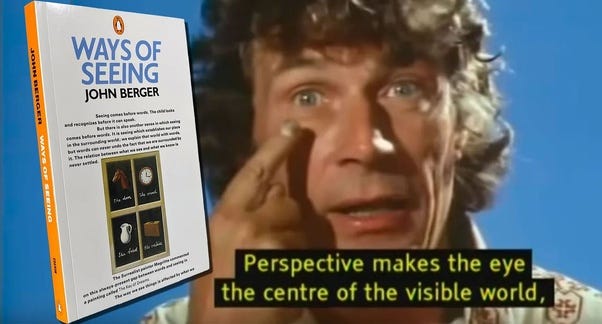
John Berger’s “Ways of Seeing” was an excellent introduction to my young mind as an art student in the early 1980s, helping me become more consciously aware of the then-daily bombardment of thousands of messages. It’s been decades, so I vaguely remember it, but I recall being repeatedly reminded of it over all this time. That suggests some “staying power” in my mind, with value over time. The book and/or the four-part documentary series created from it are both worthwhile experiences.
All four episodes have been combined into a single 2-hour YouTube presentation.
“We never look at just one thing; we are always looking at the relation between things and ourselves.”
The numerous concepts this short volume addresses introduced me to the layers of meaning in the images we encounter. The venue, the presenter’s intent, and the state of mind we bring to the viewing experience all coalesce into a unique perception we create for ourselves.
We are bombarded daily by thousands of images, according to the observations made in the early 1970s. I imagine the then-massive number I don’t quite recall at the moment (and am too lazy to scrub through the video to find it) has mushroomed by orders of magnitude since.
Marshal McLuhan challenged presumptions about media and its consumption. We learned to think strategically about the messages we consumed. His maxim, “The Medium is the Message,” gained him some notoriety among the media-savvy.
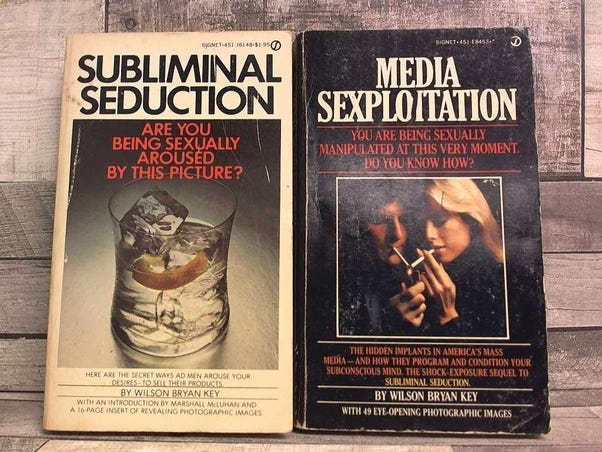
Then came “SEX” on a Ritz Cracker;
I’ve referred to a “we” requiring a definition. I think it was implied in “media-savvy” because it relates to awareness of what we are expected to believe and why it is essential to accept what is desired of us.
To be “media savvy” means being aware of the content of the ideas we consume and of how we choose which ideas to consume.
All Communication is Purposeful
We communicate not out of a compulsion to occupy idle time, not even necessarily for social entertainment, at least not when we go beyond the most superficial levels. We communicate with one another because we must to survive.
Without communication, we would not be here today to examine our communication.
Who benefits most from what we believe? It seems less about the people and more about benefiting those who have benefited most from a predatory system.
The above examples are from popular social discourse, about forty years ago and below is an example of current popular discourse:
(I refer to this example above as “popular” because it represents strategic messaging to serve a communication function of industry within the broader context of a culture structured around industry, economics, and consumption.)
The strategic manipulation of messaging is prevalent throughout society, in every domain, from interpersonal dynamics to international relations.
Whatever humans evolve into, some form of socially cohesive network of “shared perspectives” will perpetually question our experiences and compose new narratives to correct our collective perspectives.
Many of us do so with earnest and deep commitment to learning. Most will spare what time they can through highly structured days, allowing minimal opportunity for reflection.
We won’t stop thinking and talking about our experiences because we can’t. Willful ignorance may take centre stage from time to time, but it eventually gets the hook to exit left as it’s booed off the stage.
If the story doesn’t touch grass and meet reality, the people eventually figure out we’ve all been played for suckers by ever bigger games of power, and we find ourselves repeating history as ever-expanding dominions of power promise unity and deliver submission.
The barrage of imagery, sounds, videos, and merch-oriented stories has become increasingly overtly political. Factions grow around concepts and issues, not geography or physical commerce, but in the world of ideas, of how we think, how we see the world, and how the world looks back at each of us.
What do we want? Certainly not chaos?
Chaos invariably leads people to one incontrovertible conclusion: for communication to succeed, there must be a relationship of trust. Without trust, there can only be chaos.
Choosing trust is a binary decision about life and what that means to each of us, from micro to macro scales, now encircling the globe.
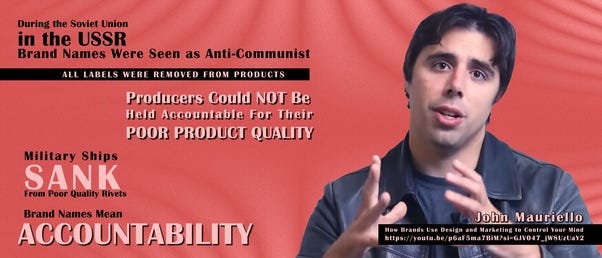
Trust Means Accountability:
One hundred years ago, our circles of trust were local and lifelong. Today’s global reach with casual effort was unimaginable then.
Where we end up one hundred years from now is provocative to contemplate. Some form of examination of the information we consume will continue for as long as some similar form of abstract thinking persists.
How Aware Are We Today? Or, how much awareness can our general public sustain without inviting chaos?
What do we reeeeeally know about what’s going on around us? Well, that’s easy, chaos.
Changes are occurring everywhere while everyone competes for resources and integration into the general machinery of social production.
We know how power structures coalesce to construct universal narratives about the acceptable social order we are encouraged to support, while our own needs are increasingly neglected.
We know that some messages aim at social disruption, whereas others aim at social cohesion. What we do as a society to facilitate cohesion after a half-century steady diet of failed promises.
I’m reasonably sure most of the public knows, or is becoming aware of, the apparent disarray in our politics. How dependent is this massive economic superstructure on our willing participation?
We must have leaders we can trust who will represent the needs of the many over the few who benefit most from a corrupted system gone askew.
This post is a response to a question posed in its complete format: “Do you think the late 21st century will be different from the early 21st Century just like the early and late 20th Century are nothing alike?”
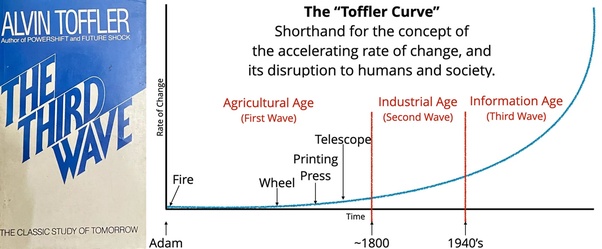
The rate of change has been steadily increasing. We (the public at large) have been made aware of this increasing rate of change since Alvin Toffler’s Future Shock was published in 1970.
“Western societies for the past 300 years have been caught up in a firestorm of change. This storm, far from abating, now appears to be gathering force.” (p.18)
Future Shock Complete Film on YouTube (1:53:13)
“Future shock is the dizzying disorientation brought on by the premature arrival of the future… [It] is a time phenomenon, a product of the greatly accelerated change in society.” (pp.19-20)
The degree of change between the two centuries will be far more pronounced at the end of this century than the changes that occurred throughout the previous century and all preceding centuries.
Most answers focus on technological change, but this is the most apparent change because many can still remember an analogue age in which telephone communication involved an electronic umbilical cord and displays were limited to televisions and equipped with oddities called “rabbit ears.”
OMG! You had to get up from your seat and move a few feet before turning a dial to watch something different. We have demanded a remote controller for almost every electronic device since enduring that torturous existence. Now, we’re drowning in remotes we can’t find when we need them, while they demand an additional expenditure of precious dollars to feed them energy from disposable batteries.
Technological change alone represents multiple dramatic transformations of human society and in how we will live from day to day. Today’s world of work will appear both alien and punitive to a world of work that will more closely resemble pre-industrial human society, according to Toffler’s third future-prediction book, “Third Wave.”
Technological change expands the possibilities of what can be considered human and redefines humanity itself. We can already see a massively transformative future for human biology through expanded medical and healthcare solutions to physiological needs and the emergence of a transhumanist movement that emphasizes the benefits of technological augmentation. While we remain cautious about biological alterations and focus on non-invasive technologies, medical solutions to limb loss, for example, are increasingly human-like in function while superior to their biological counterparts.
Like tattoos, artificial enhancements have been considered social taboos (for a short period, under the influence of Victorian sensibilities governing socially acceptable norms); however, they can conceivably become a popular means of “touching pseudo-immortality” and achieve small degrees of “super-humanity.” Genetic modifications will expand beyond preventing the transmission of genetic diseases to include prenatal selection of traits for one’s children. This will occur despite moral outrage because those with means will seek the greatest advantages they can for their lineages.
Technological change, however, is not the most radical change we are currently undergoing. Technology, however, has inspired, enabled, fueled, and empowered the most radical changes to date: ourselves.
We, as humans, are dramatically transforming, through growing pains demanded by our need to build a cooperative world in which cultures that once existed in isolation must now become interdependent to survive. Human psychology is being fundamentally restructured globally, in a way consistent with nature’s demand that we adapt or die.
Old forms of thinking and social organization cannot survive this transition without severely curtailing our social evolution, and they are trying to do precisely that. The MAGA sensibility and its adherence to a fictional nostalgia where familiar power structures continue to wreak havoc on outsiders is unsustainable in a global community that thrives on diversity.
We must learn to communicate and cooperate through mutual respect, and that’s why so much is so messy today. We haven’t grown up. We’re still in grade school, where our leaders mock 12-year-old girls and their base ignores that as irrelevant.
We are currently confronted with the sum of our human flaws and weaknesses, as well as with the social, economic, and psychological dysfunctions we have inherited from our forebears, through a focal point created by technology. Everything we once ignored and silently turned away from has become magnified and loud.
Each day that passes, the volume of discord increases as we negotiate new terms for the social contracts binding us all to a construct called “civilized society.”
“Millions of ordinary psychologically normal people will face an abrupt collision with the future.” (p.18)
We have become aware of the toxic effects of the remnants of decay left behind by our primitive ancestors. The drive for conquest, domination, and exploitation of the vulnerable in society has reached a fever pitch as dinosaur gatekeepers rail against the loss of their power while being confronted by the reality of their limits in their waning years.
We are undergoing massive power shifts and now hand-me-downs as new dynasties emerge, in which the powerful take what they want despite protestations, pleas, and persistent reminders of the values of a world of equally free people, not kingdoms with serfs ruled by rulers who deny the people their needs to favour their luxuries.
The powerful take what they want because they can And now the people are beginning to say, “No.”
We are increasingly aware that what we become is what we allow.
We have all seen this movie; while some of us seem to have slept through the Reality Onboarding Orientation Program (Introductory ROOP) to miss out on what’s going on in GongShow Reality Tunnel #42, which means we all get to enjoy the cataclysmic scenery together.
We are buffeted about in herds to feed on words, and mostly instructions, telling us how we must live. At their behest.
Humanity is changing, and the cycles can repeat only so often until enough stop and say enough. This ends here. This culture of casual cruelty ends now. Right here. Today.
We are human beings: we know we become chaos whenever bound or chained. We embrace that because human society survives only when humans are equal.
[There is] a racing rate of change that makes reality seem, sometimes, like a kaleidoscope run wild.” (p.19)
Amplifying such voices by the many through the megaphones, the powerful seek to dominate because they know how to run the show.
This dynamic ebb and flow of power in an endless game of take, take, take will last only until it breaks.
Meanwhile, numerous pressures are amplified by their instantaneity within a complex formula that quantifies interpersonal dynamics and produces opaque functions, algorithms, and equations. To result in chaos.
As it turns out, humans are not quantifiable We never were Humans have always been chaos
Automation through AI and robotics that can provide for every socially practical human need dispenses with work altogether, while consolidated powers ignore how their consumptions are destructive to our weather, but we are told that we must be bold As they raid our home of all its gold.
Conditions are ripe for a massive reset for how we live and how we think about living. What can we do?
Future Shock was an attempt to quantify chaos 50 years ago. Today, its envisioning of the future appears as quaint as the original Star Trek.
We don’t know what surprises are in store that could set us on a trajectory in any direction. We do know that we stand at a crossroads today to determine a fundamental, not cosmetic alteration of human life and society as we know it.
That’s a guarantee. The transformation ahead is far more significant for tomorrow than the Industrial Age was for today.
Tomorrow is as unimaginable as today will be tomorrow.
“Once emptied, the future can be filled with anything, with unlimited interests, desires, projections, values, beliefs, ethical concerns, business ventures, political ambitions…”
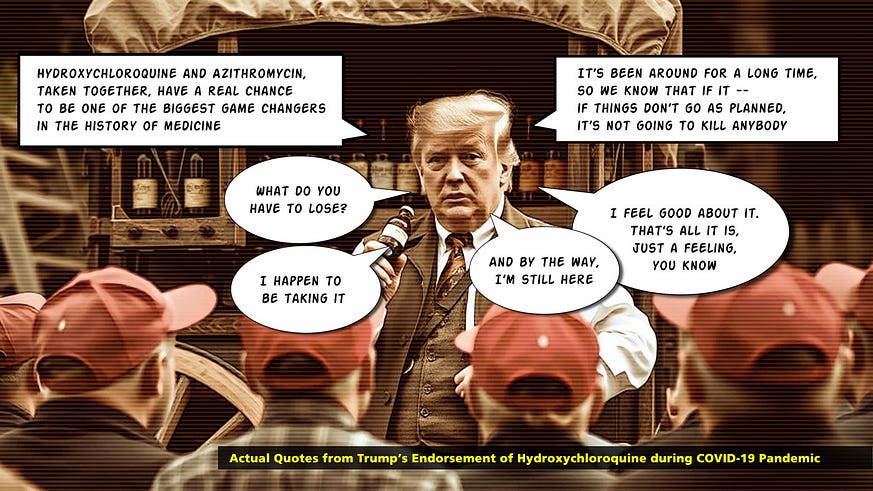
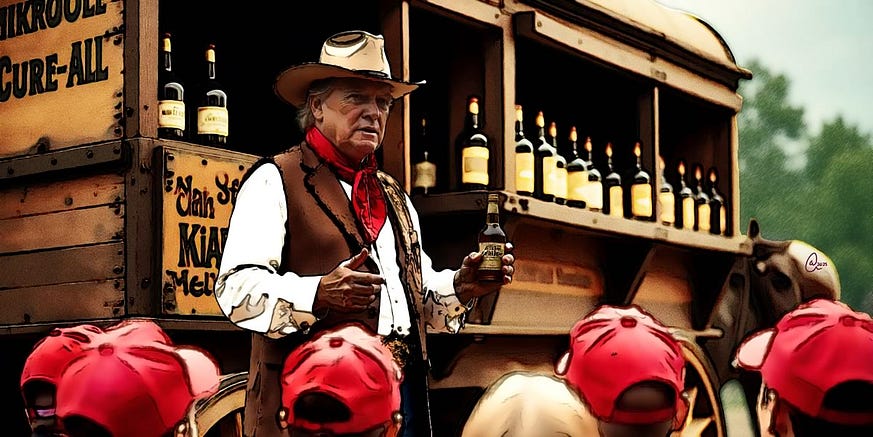
Actual Quotes from Trump’s Endorsement of Hydroxychloroquine during COVID-19 Pandemic
This post is a response to a question posed on Quora in its complete format: “Donald Trump desperately wants to be the best president. What would he have had to do differently in his two terms to be considered one of the best presidents the USA has ever had? Is it too late for him to change his ways and be the best president ever?”
That was never possible for him. He would have had to have been a fundamentally different human being for that to be possible.
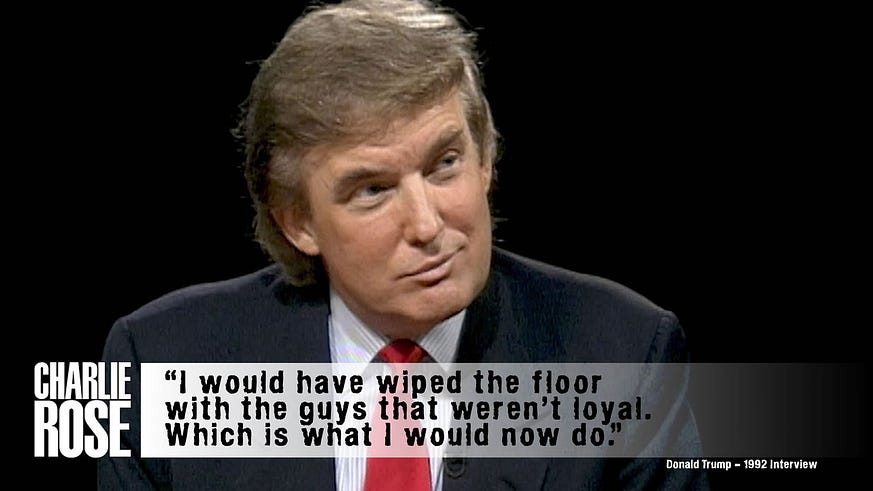
Donald Trump Interviewed by Charlie Rose in 1992
Donald J. Trump has always been a fundamentally broken human being who has left a wake of collateral damage in his journey through life.
The only way he could have achieved a status as a somewhat mediocre president, rather than a toxic stain on a nation built on freedom from tyrants, would have been by overcoming his horrifically destructive family legacy of corruption.
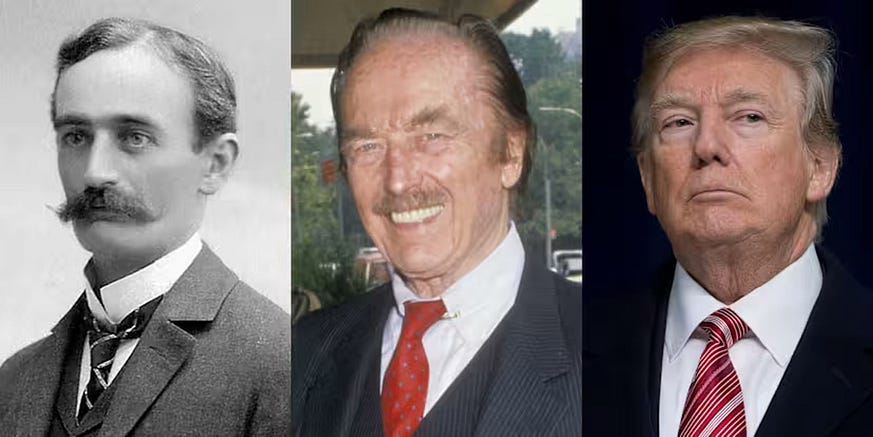
Friedrich Trump, Fred Trump, Donald Trump
Donald J. Trump’s grandfather, a 16-year-old German barber named Friedrich Drumpf, boarded a ship with a one-way ticket to America to escape compulsory military service. He was among the wave of desirable German immigrants settling in America between 1880 and 1885. He began his new life as a barber, then became a restaurateur, saloonkeeper, hotelier, and gold-rush prospector, eventually becoming a New York real-estate investor.
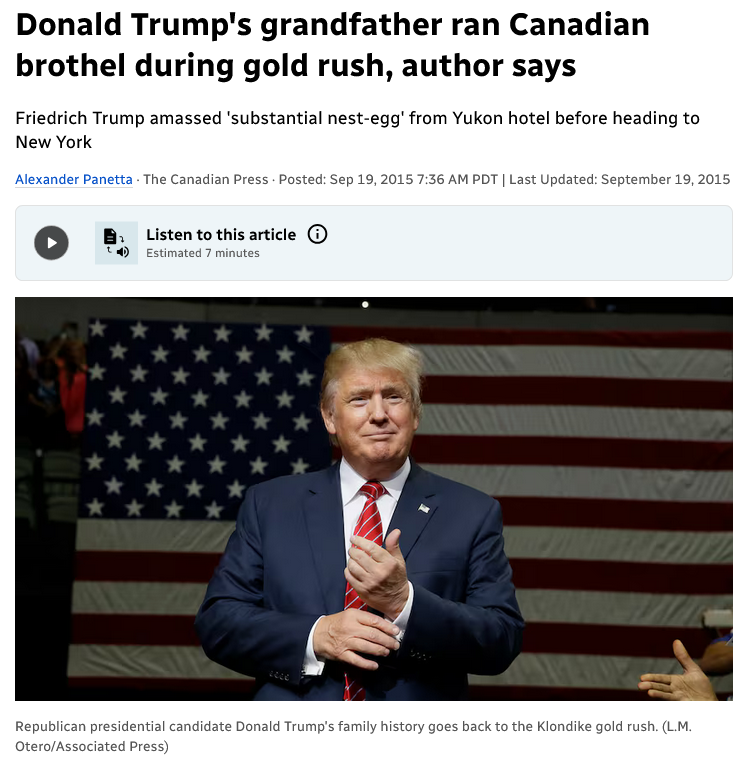
Friedrich’s fortunes, however, came from his brothel operations. “Friedrich Trump amassed a ‘substantial nest-egg’ from the Yukon hotel before heading to New York.”
Friedrich became wealthy from the exploitation of women through sex for profit.
Friedrich had three children with his Bavarian wife, and their middle child, Fred, was Donald’s father. Fred became a successful businessman who amassed a fortune while many around him slumped into financial ruin.
Friedrich died on the morning of May 30 from pneumonia, and secondarily, nephritis during the period of the Spanish flu pandemic in 1918, just before his 50th birthday, while his son, Fred and his mother continued Friedrich’s real estate work.
Fred met two Scottish sisters at a party and eventually married the younger, Mary Ann MacLeod, who had lived in poverty her entire life as the daughter of a fisherman.
Fred died in a flu pandemic just before his 50th birthday, while Donald and his mother continued Fred’s real estate work.
(This summary was extracted from a somewhat sanitized article posted on History.com,
The article fails to do more than hint at potentially embarrassing admissions of corrupt behaviour; however, Donald’s father, Fred, made several enemies among New York’s citizens, as Donald has. Woody Guthrie was considered a legendary folk singer who wrote several songs about Fred’s racist housing practices and his endorsements of segregation. Fred was clearly not a “nice man,” and it appears Donald inherited his racist hatreds from his father (just like all racist hatred has survived the generations).
“In December 1950, Woody Guthrie moved to an apartment building in Brooklyn , Beach Haven Apartments. His landlord: Fred Trump, father of Donald Trump, gained millions in federal funds to construct postwar public housing, moving people of colour out of their neighbourhoods, and creating racial codes to keep decent housing out of the hands of persons of colour.”
I suppose Old Man Trump knows Just how much Racial Hate he stirred up In the bloodpot of human hearts When he drawed That color line Here at his Eighteen hundred family project ….
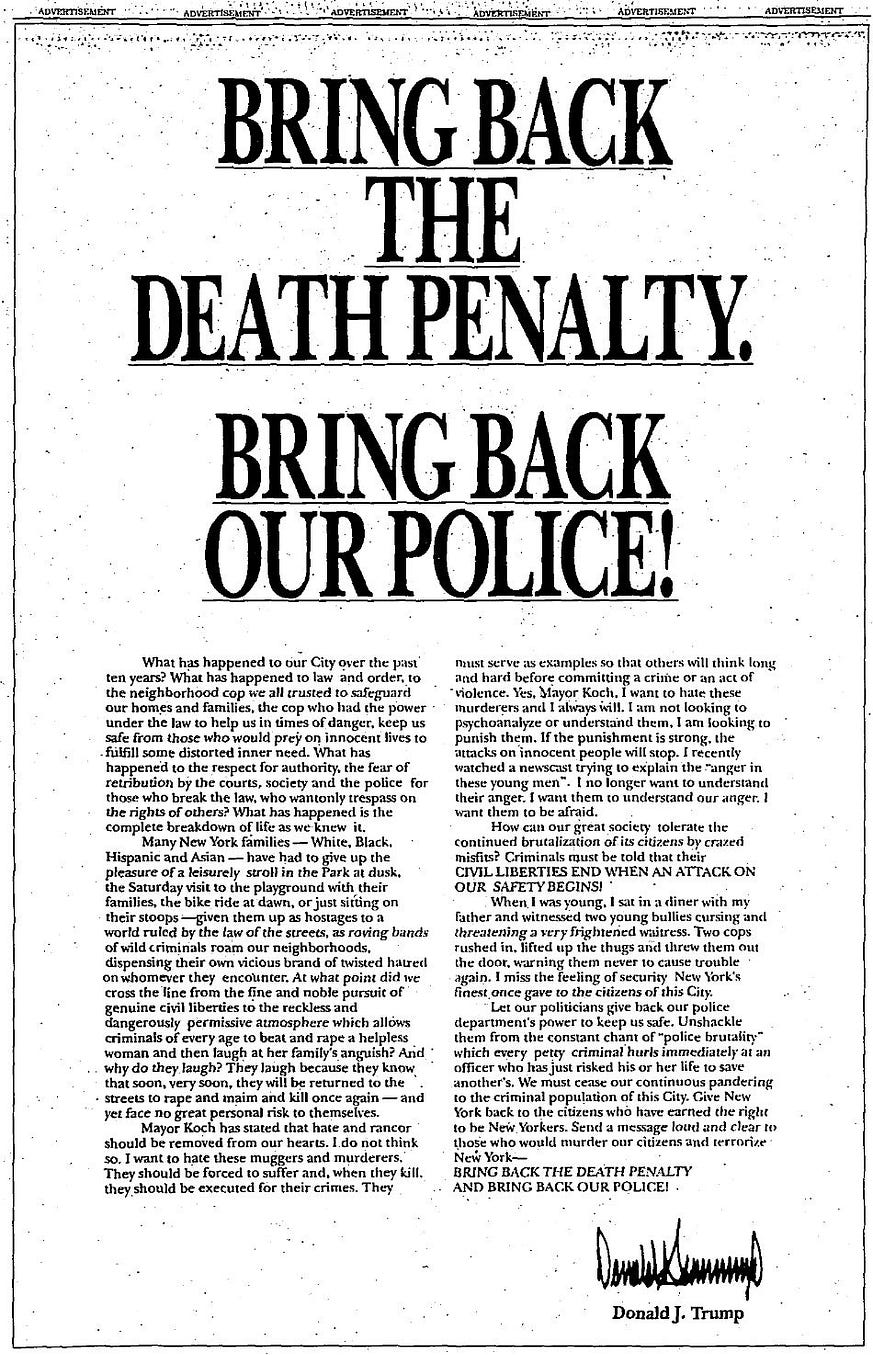
Fred Trump’s racism was an obvious influence on Donald, which explains his actions when posting a full-page editorial in the New York Times endorsing the death penalty for five innocent black men who were eventually exonerated of the rape charges levelled against them.
Given what we know now of Donald Trump’s sexual predation history, this example of over-compensating behaviour makes even more sense today. Donald Trump has since still refused to apologize for this action. Donald Trump does not have a forgiving heart, nor is he capable of assuming ownership of his actions or demonstrating remorse for their consequences.
No one can expect to become an exceptional leader of anything if they cannot rise above the pettiness they have infamously wallowed in throughout their entire life.
For Donald to have achieved a character as a decent human being meant overcoming generational odds against him. To succeed at that would have required high intelligence and immense personal suffering and sacrifice.
Donald J. Trump was, at best, an unremarkable individual, and he allowed the toxicity of his lineage to define his character. Not only was Donald born into a fundamentally corrupt family, but he also leaned into the corruption. He embraced his lineage of hatred, which is the defining characteristic of the most corrupt among us: low intelligence and high cowardice, used to justify corrupt ethics.
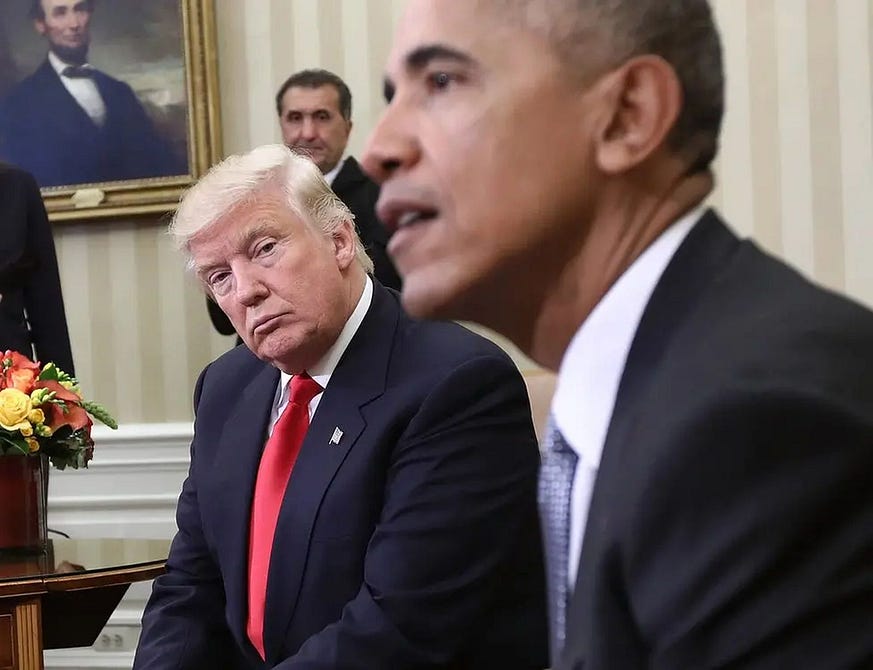
Donald J. Trump has lived his entire life as a wailing child angry at a world that cheated him of greatness and has wasted every moment of his life getting revenge on the universe for not being handed the respect that “inferior in his mind” people like Obama seemed to have had given to them on a silver platter.
Trump Stares at Obama
Trump could never achieve the kind of genuine respect that better people freely grant to public figures who deeply inspire us to become better people. He was never going to be anything better than mediocre. Instead, Trump chose the opposite, to become this century’s most destructive force for evil, we could have imagined being saddled with to teach us all some humility.
No matter how far we have gotten as a species, and no matter what it is that we have accomplished while rising above the primitive savagery we tell ourselves that we evolved past, Trump reminds us all that barbarism can easily become our future if we don’t stand against it.
Trump will die as a stain on a nation once considered great and as a cautionary tale for a future that is rapidly transforming into a world that will become either a nightmare for whomever from the billions among us who will survive an impending catastrophe, or will successfully catalyze such a resistance that our progeny can lack back on and feel proud that we, as a people, rose to the occassion and gave our all to fix what is broken and make this a better world for our future as a species on this planet.
Donald J. Trump Memurinal
Since this piece is being published on the last day of an incredibly dysphoric 2025, I want to wish you a festive New Year’s celebration filled with hope for a far better 2026 than many have had to endure.
Thank you for reading this post, and a special thank you to my Quora readers who quickly blew up a shorter version filled with errors to support my efforts with their acknowledgments (and corrections).
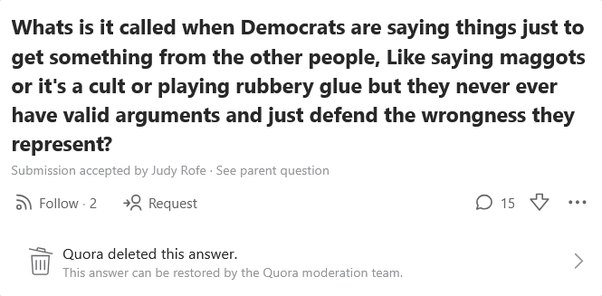
This post is a response to a question posed on Quora in its complete format: “Whats is it called when Democrats are saying things just to get something from the other people, Like saying maggots or it’s a cult or playing rubbery glue but they never ever have valid arguments and just defend the wrongness they represent?” Please note the Addendum at the end for an explanation of why I chose to expand its publishing venues beyond its original venue on Quora.
Saying “something to get something from someone else” is pretty broad. In your case, with your question, you at least defined “the other people” as Democrats, which is already a tacit admission of being an ideologue with an “anti-Democrat” bias. It could mean you’re a somewhat moderate Republican, but confidence levels in that conclusion dramatically drop because ideologues are not moderates. It’s extremist thinking, which indicates a high likelihood of being a MAGA Republican or a right-wing extremist who is further right than “staunch Republican.”
Since these categories are not part of popular discourse and are somewhat subjectively supported by my bias, I’ll explain how these work.
From this Canuck’s biased perspective, a “moderate Republican is someone like Hillary Clinton, who has essentially embraced the Neo-Liberal version of Conservativism, which endorses the view that industry is the priority in establishing economic strategy, which then leads to social development.
(To be clear, I’m not “picking on” Hillary; I’m just using her as an example because she and her politics are well known. I would consider both Joe Biden and Barack Obama as milder versions of Neo-Liberal, which is what I facetiously refer to as “Conservativism in drag.” For comparison, I would describe Bernie Sanders as slightly left of center because he also endorses, to some extent, the central role of industry in social development. These are also not entirely “my views,” or views I’ve concocted on my own in a vacuum. These are positions that can be found on the Political Compass website, which is considered an authoritative source for political orientation along a spectrum defined by political science theories developed by Herbert Kitschelt. The website address is: The Political Compass, so that you can see for yourself.
John McCain was someone I would describe as a “staunch Republican” (he was a generally decent human being with a conscience who would have been a better Republican president than every Republican president since Eisenhower). He would have acknowledged the value of human life during his presidency more than any President after Eisenhower. It’s quite possible that he would have implemented Romneycare without it being subjected to perpetual attacks by Republicans over the last few decades, like was the case with Obama (and sadly, because of reasons ALL Americans should be embarrassed by).
I write these provocative words precisely to trigger the MAGAts in the crowd who might read this, including the querent. I also am using this as a setup for identifying what is meant by a right-wing extremist Conservative Republican, or a (fascist) MAGAt. I see no point in delving deeply into defining a MAGAt because this constitutes a group of highly entrenched ideologues who put their tribal identity over and above the peaceful process of social development for what is now ironically named the “United” States OF America. (MAGAts have endlessly blamed their divisiveness on Democrats, and particularly Obama, because they know that national divisiveness is harmful and considered “bad.”)
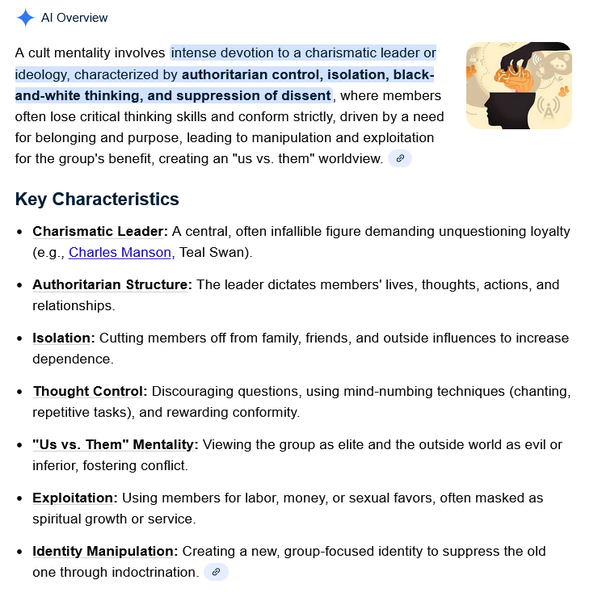
These are all characteristics of a cult mentality. Here is a comprehensive summary of a cult mentality.
Here are a few articles that elaborate on the AI summary above:
Part of the problem in dealing with the cult mentality is what it implies to those who are cult members. They can instinctively understand that it’s bad, or acknowledge how a cult mentality suggests a loss of agency, and possibly even know how they may have lost touch with their own identity. This last one may be the most difficult to grasp because they still hold a series of memories in which they see themselves at the centre of the images that come to mind when they recall.
Being indoctrinated into a cult mentality is made especially more difficult to break from because their old identity has been reshaped into a new one built around their tribal affiliation. Being surrounded by people who validate one’s feelings is a powerful motivator, like slipping into a warm, welcoming bath. The freedom to “be oneself” or indulge in self-serving views that disparage others is a far easier path than introspection. Instead of being confronted by tears, one is free to indulge in rage-fueled dopamine highs.
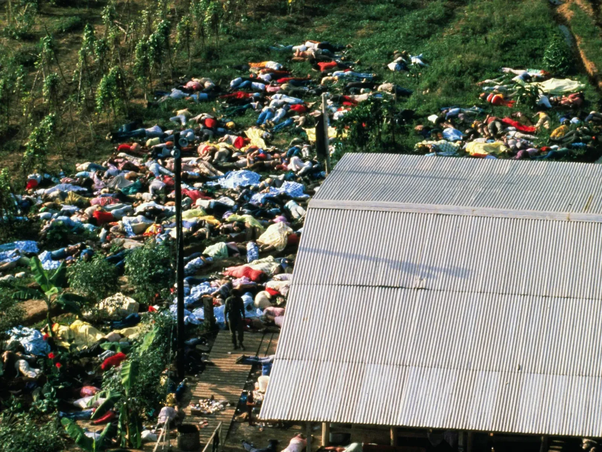
The most significant reason for rejecting the notion that one has been indoctrinated into a cult has been permanently stamped onto our collective social consciousness through the extreme consequences of cult behaviour. Cults have been associated with extremist behaviour for good reason, because the most horrifying of human behaviours have been common to cult outcomes.
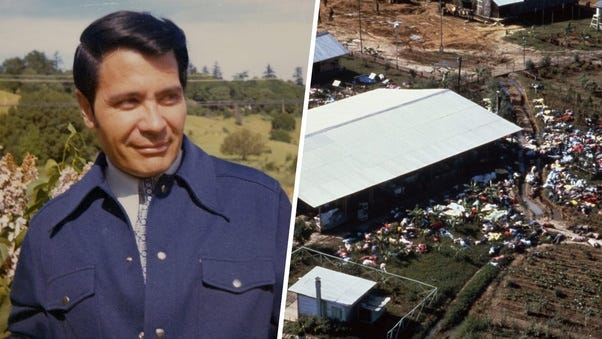
Charles Manson’s smallish cult of personality resulted in the nation’s most horrifying serial murders to that date. Reverend Jim Jones’ Peoples’ Temple took that cult/horror association to another and more extreme level through the Jonestown Massacre in 1978. The photos from that era are stark and unforgettable. One cannot see these photos and not see a cult as a “bad thing,” no matter how entrenched they may be in their tribal association. No one wants to believe they could be convinced into committing mass murder and suicide on the suggestion of a powerful personality, yet that’s what we have in Donald Trump.
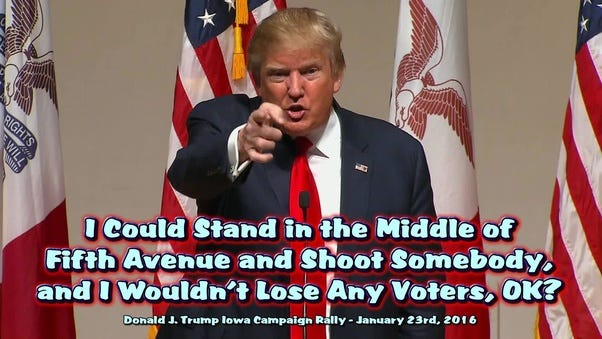
This statement that Donald Trump made on January 23, 2016, should have ended his campaign, as many other egregious behaviours should have long before. Instead, his outrageous behaviours became fuel for motivating his supporters.
Instead of becoming a limit to egregiousness to restrain his future behaviour, it became a bar for a shock jock to surpass, and surpass it he did. His entire political career has been an escalation of atrocious behaviour from scandalous to heinous, as his supporters have taken every grotesque step along with him while cheering his validation of their basest emotions.
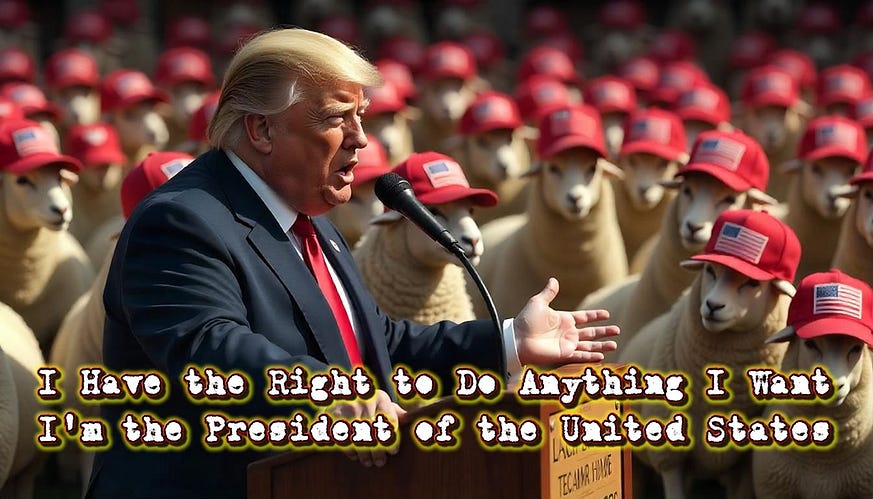
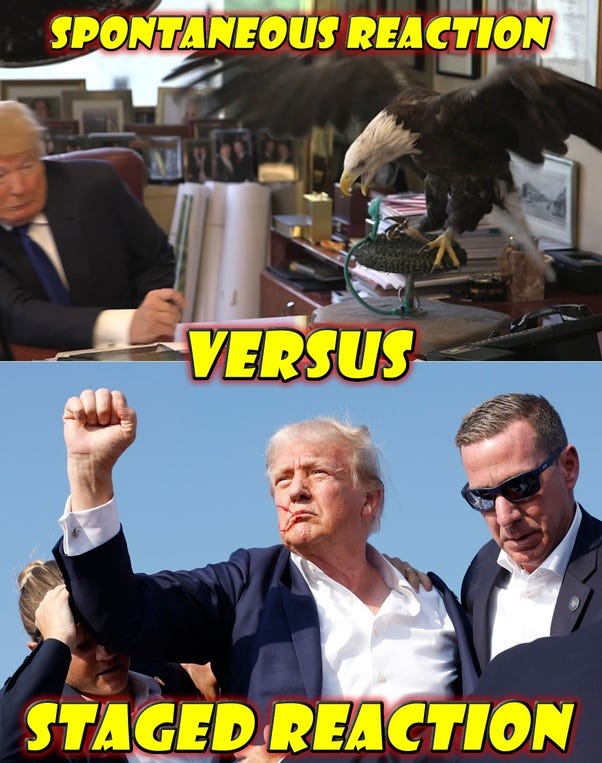
Trump has been playing his base like a fiddle, or a puppet master, or a cult leader, and he took that role to an extreme when he set himself up as a fraudulent near-martyr to secure his second term.
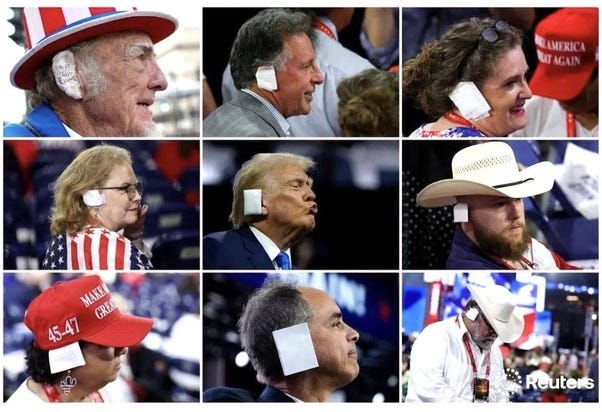
It was bad enough that he managed to incite an insurrection by making an obvious accusation of a stolen election. The wholly fraudulent B-grade movie nature of his staged assassination attempt should have ended his political career. Instead, it further cemented the naive loyalty of his base in ways that made their cult nature impossible for the rest of the world to ignore.
As easy as it can be for a psychologically healthy human being to be horrified by the scope of the Jonestown massacre, a total of only 918 people died.
Donald J Trump well exceeded that total during his first term, with 1,228,289 confirmed deaths due to the COVID-19 pandemic. Although he cannot be held accountable for all those deaths, a significant proportion of that number was due entirely to his dismissive reaction to the severity of the crisis, and his parasitically opportunistic prioritization of profiting from a catastrophic event over the survival needs of the population.
A report published by The Lancet, a leading medical journal that was founded in England in 1823, determined in an independent study that about 40% of those deaths are directly attributable to Trump’s hostile responses to medical authorities during the crisis. Those deaths of Trump’s first massive death toll, exceeding well over 400,000 victims that would still be alive today, have gone almost entirely ignored by the media and most especially by his base, who essentially believe the pandemic was a hoax, according to his wholly ignorant disregard for human life.
Making matters horrifically worse is that this death toll has been merely the beginning of a final total that is already expected to exceed 14 million when combined with the 600,000 and growing number of deaths of mostly children due to the cancellation of the USAID program. By 2030, Donald J. Trump’s death toll will be in the ballpark of Hitler’s 17 million dead.
His supporters not only ignore the surreal horrors occurring entirely due to his actions, but they also justify it as happening to people who are not “of their tribe.”
As much as they and this querent may wish to dismiss the gravity of a phenomenon that sane people cannot ignore as a cult of personality, that is entirely how history will record this travesty in our period. This is assuming we survive an escalation where we can contain his rampant destruction as he concocts new and creative ways to engage in hostilities through war crimes and interventions into the sovereignty of nations outside U.S. boundaries.
In retrospect, all the signs are impossible to ignore; however, never in my life did I ever consider how the United States would become the enemy of the world’s people. I had always envisioned, even as a child, while considering superstitiously concocted scenarios (cuz I was a naive, ignorant, and easily fooled child given to fantasies such as Nostradamus’ predictions), that the U.S. always wore the white hats and would come to the world’s rescue in any future worldwide aggressions by megalomaniacal dictators.
Never did I imagine, within the worst of scenarios, while practicing our duck and cover drills in school, to protect ourselves from fallout by a potential nuclear holocaust, that the U.S. would be wearing the black hats. This shows me how effective the propaganda has been while we have all been fooled by the oligarchs who have repeatedly pushed humanity to the brink of extinction.
I had always feared the leader of the fascist army. I should instead have been far more concerned about the wholly conditioned footsoldiers who pollute public discourse with toxic and hypocritical presumptions and disingenuous deflections of responsibility for their evil behaviour, such as evidenced by this querent’s expression.
ADDENDUM:
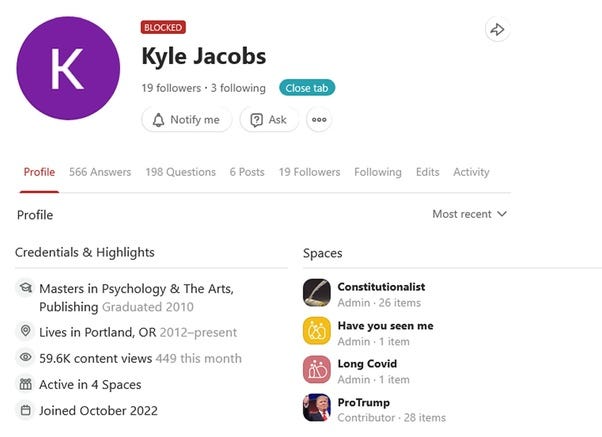
This answer was originally posted to the group “Done With the Bullshit” on Quora. I submitted this answer for approval and went to bed. I discovered, when I awoke this morning, that it had been accepted by the group and made public. I then checked to see if it was posted and found it had been deleted, not by a moderator in the group, but by Quora’s moderation team.
This indicated to me that the original querent reacted strongly enough to my answer to report it on Quora, and Quora’s algorithm responded accordingly, without any human judgment.
I have enjoyed the content on “Done With the Bullshit,” and I have had the good fortune to have a few of my answers reach a broad audience and receive a lot of support through upvotes, comments, and, most of all, fulfilling dialogues that my content has encouraged.
This entire process of social media content production is, after all, a means of encouraging public dialogue on issues that would otherwise go unaddressed, allowing problems to metastasize and grow into malignant forces in society.
The rapidity of the response by “Kyle Jacobs” (likely not this person’s real name) to have this answer removed indicates to me that this has been a very effective answer in addressing a severe condition of widespread dysphoria affecting society.
As you can see, I’ve reposted this answer at the top level of Quora’s question hierarchy, where it will be less visible due to the numerous other answers. There are over 200 answers to this troll question; almost all of them are challenges to the fundamentally flawed character of a question intended more to smear an enemy than to seek knowledge or insight into a subject of interest. Quora is rife with such questions by trolls attempting to shift focus away from their corrupt states of mind and onto their ideological enemies.
The deflection character of the “question,” and the aggressive removal of information deemed offensive to the MAGAt sensibility, is a large part of the reason why the cult mentality is so resistant to the requisite introspection they must all undergo to cure ourselves of this scourge before it escalates to such a degree that we experience catastrophic losses far beyond what we have already been forced to endure as a consequence of this mental health pandemic.
I am encouraged by the efficacy of my answer and will make it available to a broader audience beyond Quora. I will also publish it on several social media platforms through my Medium account and on my WordPress blog at kree8r.com.
I want to thank you, “Kyle Jacobs,” for your swift response, because I would otherwise have likely let this answer languish in relative obscurity, where it would remain just another of my well over 22 thousand answers.
I hope you have an excellent New Year’s celebration, and I hope this is enough encouragement for you and your fellow MAGAts to take to heart just how severe your mental health condition is. Please, for the sake of those you care for in your lives, if such people exist, get some help from a professional because the trajectory you have put us all on may not be recoverable. I doubt many of you wish to be responsible for contributing to the end of human civilization.
Please take some time to consider your loved ones and ask yourself if all the hatred consuming you is worth losing everything.
This post is a response to a question posed in its complete format: “After seeing what Trump has done in less than a year, what do you expect America to be like after his full 4 years?”
The problem we are overlooking with this question isn’t what America will be like, but what the world will be like.
America is the epicentre of a sociopolitical earthquake that will fundamentally change the global geopolitical landscape forever.
Whether that results in the further democratization of a multipolar world or in the establishment of continental empires is entirely contingent on the degree of public engagement today.
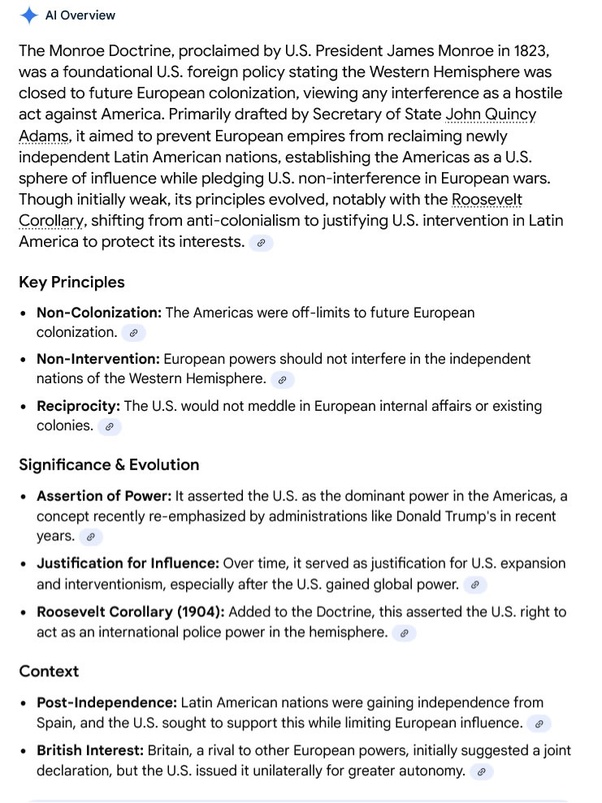
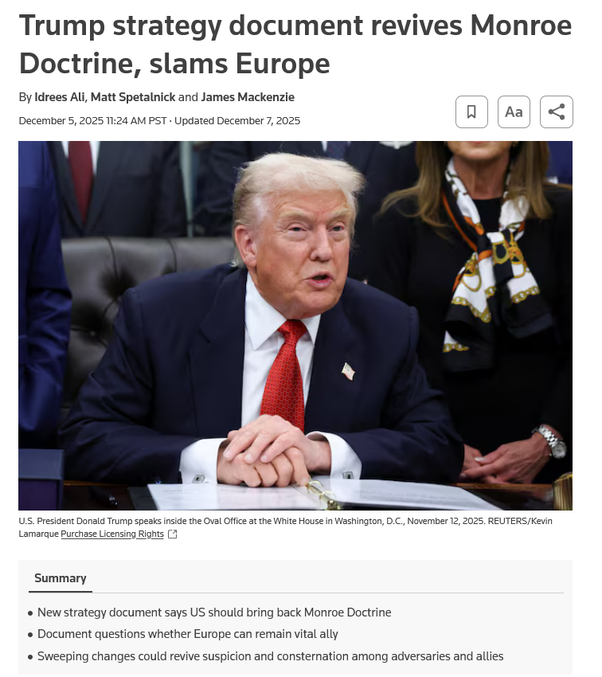
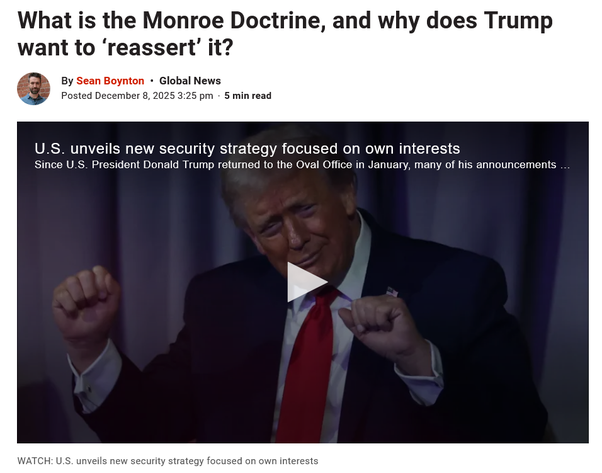
Whether we like it or not, the recent release of the American National Security Strategy , alternatively referred to as a revisionist version of the “Monroe Doctrine,” which they arrogantly and narcissistically refer to as the “Donroe Doctrine,” is a declaration of war. (citations below)
We have been witnessing their strategy play out throughout the last year with antics ranging from a cleansing of bureaucratic staffing throughout the entire government apparatus, to tariff wars, annexation threats, ICE expansion and citizen round-ups to be shipped off to concentration camps, to testing the waters of a Venezuelan aggression through the commission of war crimes to see how far they can push to trigger resistance.
All of it has appeared to be a random series of events intended to sow chaos without a guiding strategy to culminate in the long-term achievement of objectives. It’s been easy to find ourselves misdirected by an imbecile who stares at an eclipse as if immune to blindness or rambles incoherently into fractured thoughts strung together only by the mouth in which a babbling stream of consciousness flows.
It’s not randomly generated chaos, however. It is a carefully orchestrated stream of chaos that Steve Bannon conceived of as a “flood the zone” strategy. The goal is and always has been misdirection because that’s how grifters play their marks, and the marks in this case are not solely the American people, but the entire global network of interconnected enterprises and competing foreign powers.
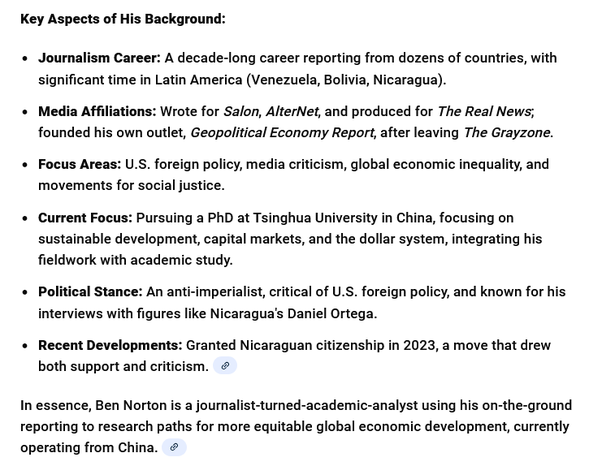
For an in-depth review of the Trump administration’s plan, Ben Norton from The Geopolitical Economy Report presents a one-hour, chapter-by-chapter interpretation and analysis of the scope and severity of the global upheaval planned in the video linked below. The intention is for the entire globe to be reconfigured into continental trading blocks, with the U.S. at the centre of a global power dynamic following the consolidation of the Americas (North and South) under U.S. control.
(Citations are below for those who may be unfamiliar with Ben Norton’s credentials as an Investigative Journalist. – Transparency on this source is provided for those whose personal political views might be triggered by Ben’s. Whether you align yourself with them or not isn’t relevant to the issue of an objective analysis of his analysis of the gravity of the issues he examines in a globally transformative initiative spearheaded by the Trump administration.)
Like all things Trump, he’s not intelligent enough to have contributed significantly to the goals and strategies outlined in this document, even as he provided little more than his name as a brand for the Project 2025 initiative. Trump’s M.O. has always been to have other people do the groundwork while he brands and sells the product to a gullible public.
Trump is a spokesperson for a movement that has essentially operated outside the spotlight and occasionally lets slip the quiet part of its plans.
You may remember the election campaign when the president of the Heritage Foundation threatened violence if people did not willingly submit to their restructuring of a New World Order conceived of by a White Supremacist ethos.
This is not “political business as usual,” where issues are bandied about like a table tennis match, and points are awarded for each winning strike the opposition fails to return as fans cheer their favourites from the bleachers. Changes or initiatives implemented by opposing parties in the past may have affected people’s lives, but they have never fundamentally transformed civilian life as this current administration seeks to do.
We have been hearing cries that the U.S. is at the precipice of full-blown fascism (and, in the interests of complete transparency, I have also been contributing to that noise), but this is the next stage in a dramatic battle for global control involving machinations in which we, the little people, are pawns in a massive game of power between the few who have no loyalty to any nation and who treat the world like a chessboard, as they position their dynasties for shaping tomorrow’s brave new world order.
We are passively watching the pieces of last century’s attempt at global dominion reassemble like a reborn T-1 Terminator. They have reinvented the Hakenkreuz symbol as a red beanie, and their little people’s army sings “Sieg Heil” in a country twang. Their base of disgruntled citizens, marginalized by society, sincerely view themselves as “patriots” who commit treason against their nation and wage war against their neighbours with righteous indignation.
Since 22 states are already in a recession and recent job reports have been terrible, the odds are excellent that the economy as a whole will be underwater by the midterm election. As much hardship as that will cause, the sad fact is that not enough truly understand what’s at stake. Many are still deluded by the shortsighted, self-serving thinking they’ve been led to believe is a patriotic fight against the evil forces that have been making their lives more difficult by the year.
A recession means they won’t be able to continue lying to themselves about who is genuinely responsible for their hardships. The polls and the recent elections show a distinct swing away from supporting the party of the plutocrats. However, the DNC is still struggling to accept that the opposition has long since lost sight of its responsibility to provide good-faith representation.
People like Chuck Schumer refer to the current situation as a fever he hopes will break, and that’s the thinking that a parent demonstrates when they’re holding out hope that their addicted child will eventually see reason in time to return to sanity. Decades of working with the same people have glossed over his perceptions with unwarranted sentiment. It is an incredibly tone deaf mistake because he’s prioritizing his relationships with his political peers rather than accepting the deadly threat they pose to a nation struggling to survive a dystopic shithole.
Whatever happens between now and the midterms, the public will need to see hope on the horizon as the economy careens headlong toward what could conceivably become a full-on depression. Without that alarm bell ringing loudly in their ears and motivating them to the polls, they may not cleanse the halls of government enough to slow down the strategic assault against the nation, its people, and the rest of the world. At the same time, the increasing consolidation of power among the plutocratic class continues their machinations and maneuvers the country into armed conflict with Venezuela.
An open war seems like a likely strategy to mobilize their base to vote for them, and, depending on how they massage the optics, they may convince a few Democrats to support them enough to hold onto enough seats to continue their agenda.
The DNC must stop resisting public sentiment, and the old guard must step aside to make way for new leadership and convince people that the two parties are not the same. The DNC has done a terrible job on their messaging, and that turns off potential support while convincing people that the entire edifice of government must be torn down. However else Trump may be perceived, he still represents the chaos they innately trust more than a government that has turned its back on them for the last 50 years.
If the DNC loses the support they’re getting now, “for free,” they’ll be stuck with tepid government shutdown strategies that will turn the public further away from a do-nothing administration.
They still don’t understand the hardships people are enduring. People like Schumer and the “old guard” are living in a disconnected reality, like it’s 1983.
The people are angry, and they have to feel that anger themselves if they want to leverage it for change.
If the DNC succeeds in winning back enough control to turn Trump into a lame duck for the remainder of his term, and even possibly initiate another impeachment process (although after two prior impeachments that accomplished nothing tangible enough to be visible to the public, that could backfire on them). The nation might have some hope of at least mitigating the economic downturn, while the entire country will be in turmoil.
Economic hardship otherwise seems unavoidable, and particularly so when destabilization becomes an international strategy for containing the expansionist MAGAt hunger for dominion.
Making matters worse, the people behind Project 2025 and the “Donroe Doctrine” will continue to push their agenda by ramping up their disinformation campaigns. They’re not going to rest while their crown falls closer within their reach. They will likely do what they can to kneecap the DNC or enough members to hamper efforts to stop them, or at least minimize their investment losses.
Results from the mid-term elections will dramatically affect the trajectory of the remaining half of Trump’s term in office. Even if Trump’s power and influence wane, the architects of Project 2025 and the U.S. National Security Strategy will have contingency plans to sow discord, escalate disinformation, and likely inflame conflicts between nations, thereby furthering their agenda.
For example, I’d been thinking the $80 billion transfer to Argentina was to cover Trump’s escape plan, should things go south and he finds himself facing insurmountable legal battles. That money, however, could also serve as a means by which they can destabilize Venezuela’s politics enough to justify American aggression.
Keep in mind that their endgame is a North and South America economic bloc that they can control.
It seems quite possible that Trump could deliberately sabotage a renegotiation of CUSMA to pressure Canada and Mexico into falling in line. He seems to be taking steps in that direction by imposing punitive tariffs on Canadian potash and proactively minimizing the impact on farmers by handing out money to quell their growing anger and disappointment with the results of his actions so far.
Moving too fast or too hard in that direction, however, risks global retaliation, such as a massive sell-off of U.S. Treasury securities, which could further destabilize the nation and the world. This would be a “nuclear option” to avoid a perceived worse outcome that would further impact global trade and exacerbate a U.S. recession into a worldwide depression, but that’s a nightmare scenario which seems least likely.
At any rate, at the end of Trump’s four-year term, the least dramatic outcome would be for Trump to voluntarily step down (as he should – but won’t without at least hurling a choice collection of his favourite words of petty spite), and the nation is left hobbling through a deep recession that would require both austerity on behalf of the little people will be so enraged by this point that the plutcrats they will demand restitution from will either begrudgingly commit to long resisted initiatives like a universal healthcare option, and quite possibly a minimum guaranteed income.
Whatever else may be the case, if the architects of this madness fail in their quest to reshape the globe into a manifestation of their “Dark Enlightenment agenda,” then the days of the U.S. as a dominant superpower are rapidly ending.
America will be in chaos at the end of Trump’s second and final term, but it will at least represent a state of turmoil with some hope shining through the end of a long and dark tunnel.
Ben Norton is an American investigative journalist, political analyst, and founder of the Geopolitical Economy Report, known for his anti-imperialist reporting on U.S. foreign policy, Latin America (where he lived for years), and China, now based in Beijing, studying at Tsinghua University to blend journalism with academic research on global development and finance. He previously worked for Salon, AlterNet, and The Real News Network, focusing on economic justice and critical media analysis.
This post is a response to a question posed in its complete format: “How do you listen to people open up about their issues without trying to solve them? How do you just comfort people?”
One of the first things a first referral counsellor learns is that you cannot solve other people’s problems for them. Even more so, you don’t want to solve their problems because what you might see as a solution for yourself is likely not a solution for them.
What you end up doing is creating a dependency relationship with someone who now has a scapegoat to blame when your solutions backfire on them.
You end up giving them permission to take the easy route of blaming you for their problems instead of learning how to solve their problems for themselves.
You don’t want that kind of monkey on your back because it could haunt you for life.
Most people want to be heard without judgment. The act of actively listening to them while validating their emotions and the struggles they are experiencing is often the only thing they want or need.
Being able to openly express oneself without fear of being misjudged for their struggles or how they deal with them is all the healing most people need most of the time. That opportunity often gives them enough space to hear themselves through your perspective and devise solutions for themselves by being able to speak freely about their problems.
If you sincerely want to help people solve their problems, you must understand that the best way to accomplish both your goal and theirs is to listen and acknowledge their struggles while validating their feelings and who they are as people.
You almost cannot help someone more thoroughly than by letting them know they matter. Most people only want to know that someone hears them and sees them as a living, breathing, independent human being with a core of reality all their own, just like how you think of yourself. People often only need assurance that they can achieve their goals if they apply themselves.
At most, you can offer ideas for where assistance is available, identify resources they may not be aware of, or repeat their statements to them in your own words. Often, simply saying something they said in different words is enough for them to see their problem with different eyes and in ways they can more easily identify solutions.
It may feel especially tough if you can spot what appears like a simple solution to you, that you would rather hand it to them so that you can continue with other matters, but it’s more important to realize how this is a learning process for both of you. Both of you can learn more about yourselves by allowing the process to evolve naturally and without trying to push it to a conclusion you see as the most optimal outcome.
A solution may appear simple to you, but you can’t know all the underlying variables, and many of which they often don’t recognize themselves. No matter how simple the solution may appear, they must find it themselves before it can succeed.
The challenge this creates for you, which you use to your benefit, is that it takes the focus off your desire to fix their problem for them quickly and puts you in a position of thinking about a strategy for helping them to see their problem from different perspectives, including how you imagine is a solution. As long as they can feel that they have identified their solution on their own and without being given instructions to follow by rote, they will be more able to apply their creativity when implementing their solution without holding you accountable for their failures.
To all my millions of readers (lol) chomping at the bit (double lol), wondering what may have happened yesterday when you didn’t receive a daily missive of my preponderant wizdumb, I have an explanation and an announcement below my typical approach to composing my publications by posting answers to questions on Quora.
Today is a departure from my standard fare in three parts: an answer to a typical Sunday question, an explanation for my derelict behaviour, and a summary of my delusion.
I don’t think so. I would argue that atheists uphold this principle better than believers.
Atheists don’t care what people believe because they value their right to disbelieve more than many believers value an atheist’s right to think differently than they do.
After all, believers perpetually impose their beliefs onto others and have been waging wars over beliefs in conflict with other believers for centuries.
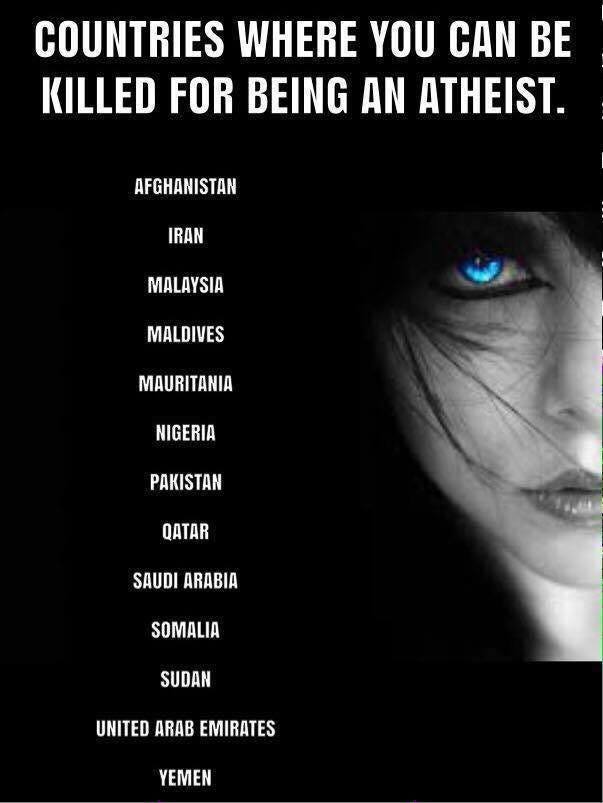
Atheists, on the other hand, have had to survive in a world where they would be killed for disbelieving the beliefs held by believers.
Atheists generally find believers’ behaviours most intolerable because they are often intolerant of those who don’t share their beliefs.
If believers stopped trying to impose their beliefs on non-believers and those with different beliefs, there would be no reason for atheists to have difficulties with believers.
There is no point in hating people for what they believe. Hating a person for beliefs they hold is a myopic way of avoiding truths about doubts one is haunted by.
Values are another matter altogether, which warrants concern because they form a foundation for one’s beliefs and the actions they inspire.
Among the many reasons I began my daily routine of publishing long-form articles on Medium, Substack, Patreon, and WordPress was a realization I had about myself after reaching a milestone of about 18,000 answers to questions on Quora. There are a lot of words inside me itching to get out, and I can’t keep my mouth shut. I write because I must.
I didn’t think I could sustain a long-term effort, particularly not one that provides no compensation and likely not for a long time. It’s much easier to stick to a discipline when some extrinsic rewards accompany the intrinsic ones. Nonetheless, even though I have written almost daily for most of my life, I began my sustained writing journey for public consumption nearly a year ago because I wanted to establish that I could find enough inspiration to maintain a long-term writing vocation.
I joined Quora in 2014 to leverage the social media site as part of a marketing funnel for myself in a career as an Instructional Designer. Long story short, I couldn’t continue that particular career for reasons I won’t get into now. Still, I did find myself relying heavily on Quora and in answering questions I believed on some level to be helpful to others, while being a form of therapy for coping with a significantly traumatic experience I’ve been struggling through for much longer than I would have believed at the outset.
Ten years later, I realized I could package my writing into publications of sufficient length that might appeal to an audience, and so that became one of my goals. I also decided to commit to an entire year of daily publishing long-form answers. I managed to reach 314 consistent days on Friday.
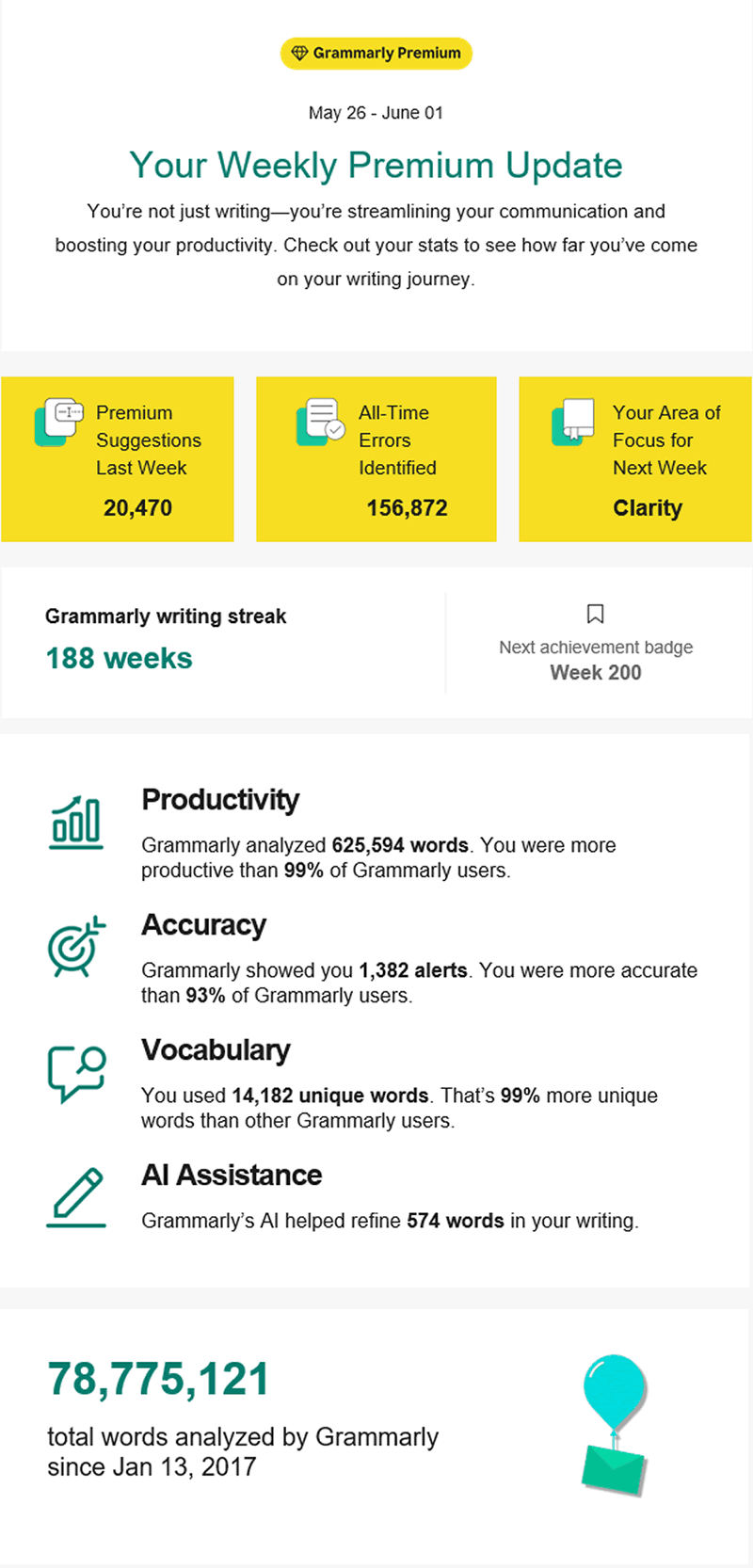
I’ve also been relying on Grammarly to save on efforts to clean up my grammatical sloppiness and have been receiving weekly reports of my performance. Since January 13th of 2017, Grammarly reports processing almost 80 million words I’ve written. I’m also less than 3 months away from a 200-week writing streak achievement badge. (woohoo)
Another reason I gained for continuing my daily publications about 50 weeks into my efforts was an article about someone who experienced new professional opportunities opening up for them on LinkedIn after one hundred days of daily publications. Since I was already halfway there, I figured if I held out long enough, I’d receive a touch of magic myself.
No such luck, but realizing I’ve been writing at a consistent volume of more than 9 million words per year, it eventually sunk into my thick skull that I’m producing enough volume to have written several books by now. Not only have I struggled to maintain my publication schedule while working on other writing projects, but I’ve also been somewhat disappointed by an issue of inconsistent quality in maintaining such a frequent publishing schedule.
I can do better by scaling back on publishing frequency, giving myself time to provide background research to support my content, and providing you, as a reader, with a much richer body of copy to engage your mind and stimulate your imagination.
…And since Saturday was my birthday, I used that as my lame excuse for taking a day off.
At any rate, I’m considering a three-day-per-week schedule — possibly Sundays, Tuesdays/Wednesdays, and Fridays from this point onward.
I intend to focus more in-depth on some ongoing topics, including elaborating on my personal experiences in ways that contribute to the public dialogues on issues of governance, UBI, and the “defunding the police” movement, and of course, including religiosity as I have each Sunday for several months and other topics I am moved by.
I hope you enjoy my more focused approach to long-form writing, and if you prefer shorter pieces, I will continue being an uncensored smartass on Quora: https://www.quora.com/profile/Antonio-Amaral-1/
I very much appreciate your support. Thank you.
Now, onto part 3, where I become an obtuse smartass once again with an answer to another question:
As such, social media is the chaos of billions of voices shouting at the universe.
If all of that were to consolidate into encapsulated messages or narratives in concise enough forms to be considered myths, then one would be that we are an ocean of rudderless beings all vying for some form of ascendence, whether individualistic or tribalistic.
We fear death as we revel in it through our rampant destruction of life, as we deny the finite nature of our existence and dream of immortality.
Social media reminds us of our insignificance as individuals on this Earth and as a species in this universe, as the cacophony of voices harmonizes into an anthem proclaiming our relevance.
This post is a response to a question posed in its complete format: “As nicely as you can, will you explain to me why Republicans think all Democrats are racist in today’s time, not 161 years ago? I don’t understand, I was told I was “a racist POS for being a democrat”.”
I’m taking a wild guess here, but if it was a MAGA hurling that accusation, then it was a projection that has been part of their denial and displacement kit for a long time now.
They internally acknowledge how racism is bad, but they don’t understand how or why, only that they can’t stand being thought of as racist. It forces them off their imaginary horse of righteous indignity, a valuable fuel for their rage addictions and transforms their Machiavellian glee into crushing shame.
They conveniently ignore the dramatic shift which occurred between political parties during the civil rights marches and the legislation they felt betrayed by.
They salivate over a fading dream of the moral superiority they once held, while Lincoln became revered for eliminating a systematic abuse they long to restore.
They cannot accept how it was their same people who fought to preserve slavery, committed genocide of the Jewish people, endorsed child labour, forcing women to exist as nothing more than birthing chambers and toys for their pleasure.
They cannot accept how utterly evil they are because they value material wealth above all. Even though the saviour they worship commands them to care for their fellow citizens, they’re too wrapped in their fears and insecurities to acknowledge a world outside their navels.
They cannot comprehend how their well-being is contingent upon the well-being of someone they would rather consider inferior to them by pigmentation than by the character within that shell.
Their saviour commands them to see life beyond a shell, but they cannot help but fixate on the shallow exterior of every issue humanity faces.
They are excellent attack dogs but they suck in every leadership capacity humans rely on for progress. They cannot see beyond internal needs due to either a biological condition of birth, environmental conditions affecting their development, or a combination of both nature and nurture.
Their capacity for developing empathy toward others outside their tribal sphere is either limited or absent. Nothing is truly real unless it happens to them, and in the case of COVID-19 fatalities, I remember reading about people who insisted that COVID-19 was a hoax while on their deathbed and breathing their last few breaths.
Making matters worse is that they sincerely believe their abysmal incompetence and their insecurity entitle them to a divine right to subjugate all those they deem their inferiors. Much of what drives the current trend toward extreme right-wing fascism is an absolutist concept drawn from religious doctrine called the “Divine Right of Kings.”
They view their assaults on the inferior class of sensitive, compassionate, and empathetic human beings as a means of achieving recognition within their sycophantic worship of power.
For example, beating up “coloureds” is a means of proving their worth to those they seek validation from. Incidents of intensely escalated conflicts, which include dynamics of violence, a blow by one is rated by a crowd of peers cheering the successful infliction of harm. Collectively, this kind of abuse dynamic is a form of validation that resembles a tribal ritual for reinforcing solidarity within a destructive context interpreted as a win against an enemy.
People who have succumbed to an addiction to hatred toward a group don’t view their victims as victims but as threats that must be eliminated. A “psychological short-circuit” triggering a debilitating degree of shame would otherwise occur when acknowledging their targets as humans victimized by their hands.
They have no means of asserting an intrinsic source of validation because their self-respect has been beaten out of them to be replaced by self-loathing.
They frequently appeal to external authorities to justify their beliefs and actions while invoking the logical fallacy of appeal to populism in enabling that validation of self.
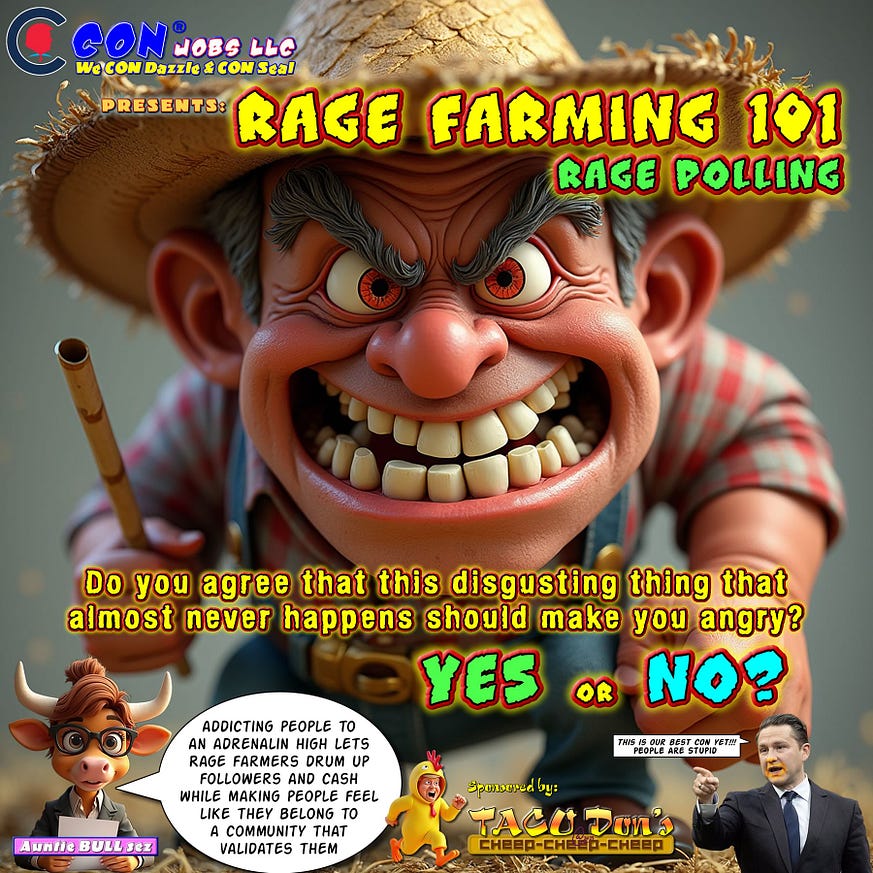
Calling you a racist PoS is a form of virtue signalling that ironically serves as a reward for them from peers who also struggle from the cognitive dissonance characterizing their existence. It also helps to feed their rage addiction, in which the many rage-farming parasites prevalent on social media exploit for political and economic advantage.
It’s a form of cognitive dissociation that allows them to escape accountability for their inner ugliness while justifying actions that empower it.
By calling you a racist PoS, they permit themselves to escalate their attack in ways that appeal to their Machiavellian proclivities.
They are telling you, by hurling their accusation, that they have created justification in their mind to assault you physically for pleasure, not accountability.
America has a humongous chasm dividing the nation. Consequently, their politics and decision-making process are subject to a see-sawing effect.
Whatever decisions a party in power might make, the next election will likely empower the opposition. When that happens within conditions of extreme differences, the next party completely reverses whatever gains one party makes.
America has no consistent long-term development or growth plan.
It is ruled by chaos, making it impossible for any other country to count on stability.
Stability is crucial to any form of success, whether for an individual, a family, a community, an organization, or a nation.
Without stability, there is no predictability, and no way to proceed without constantly reverting to a fight-or-flight disaster planning mode.
It’s impossible to develop, much less maintain confidence in one’s decisions, because circumstances could flip the next day.
It would be like trying to decide which bank would be safest to deal with to protect your savings, and being unsure whether or not they’re going out of business tomorrow.
It would be like going to multiple stores to decide which products you can buy at the best prices while building your list, and then going back to make your purchases, and all the prices doubled between visits.
No one can make any progress in that kind of environment. America has no capacity for long-term planning, while planning for a nation like the U.S. should be at least for 100 years. Meanwhile, Americans can’t even plan every quarter like a business would.
This type of ongoing chaos is the kind of dynamic that is often found in a family that is controlled by a narcissist who constantly keeps people on edge and walking on eggshells to ensure they can be overwhelmed into submission when the head chooses to flex their muscles.
This is precisely the dynamic found within criminal gangs, which are often at odds with each other while engaging in ongoing internal conflicts.
This is precisely the dynamic that Donald Trump has lived with his entire life.
The only way he can find comfort is in the knowledge that he can destroy anyone within his sphere on a whim.
It’s only a matter of time before he begins publicly trash-talking Elon Musk while he secures a relationship with Peter Thiel to pit the two against each other.
His strategy has always been that of a bully. No one wants to deal with a bully unless they can benefit from being subservient to them and are comfortable navigating such chaos while accepting subservience to their abusive mindset.
Such people are all products of a broken home, while we live in a world where one in five people are suffering from a mental health condition, and a whopping majority (70%-80%) of families are dysfunctional.
Anyone with experience in a dysfunctional family understands how the pain that drives all the members apart makes them estranged.
America is the child in the global family who has become an addict, has lost control and threatens international stability.
The world can stay as far away from America’s business as possible while shutting its doors on trade deals until America can come to its senses.
Attempting to work with America today represents a significant risk to the stability of any nation that tries to do business with it.
Donald Trump has a long history of bragging about how he doesn’t keep his promises, so only a gullible fool would trust him with anything of value.
This is why Ukraine shared nothing in advance of their counter-attack on Russian military planes with the U.S., because the nation cannot be trusted.
If that’s happening, you can bet that the rest of the world’s nations have changed their information-sharing policies to regard the U.S. as an enemy, not an ally.
The impact of Trump on America that the MAGA cult cannot see will be felt for at least the rest of this century.
If nothing else, America will emerge from this nightmare, if it survives intact, with a newfound appreciation for the importance of voting in the world’s most extended election cycles.
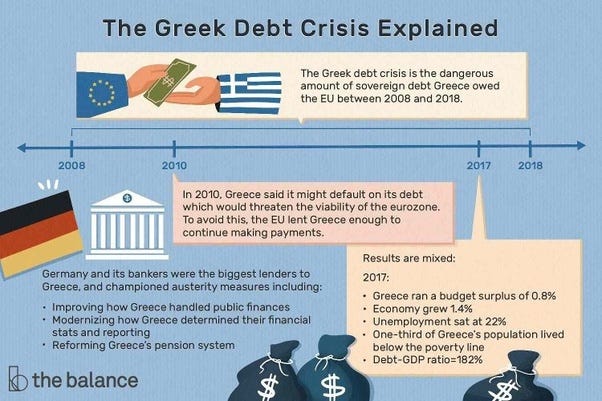
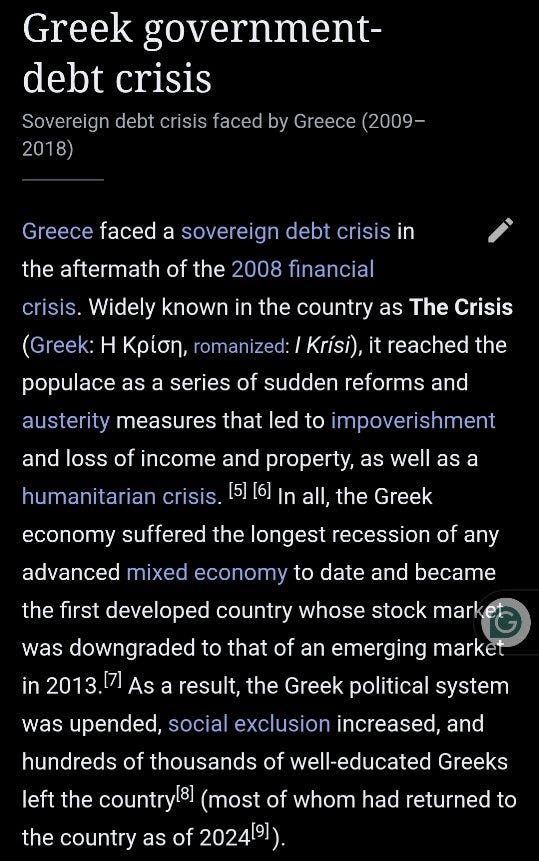
Right now, it’s only a matter of time before America becomes Greece and the U.S. becomes the world’s beggar looking for a handout to keep its economy from collapsing.
This post is a response to a question posed in its complete format: “Why do companies use so much excess plastic in their packaging? It costs them more and is worse for the environment.”
Plastic was first synthesized in 1869 as an alternative to ivory due to the growing popularity of the billiards game and the strain it put on elephant populations. A New York supplier of billiard balls offered a $10,000 prize to anyone who could provide a substitute for the genocide of elephants to support an entertainment activity.
A printer from Albany named John Wesley Hyatt developed celluloid by processing raw cellulose fibres through nitric acid and mixing them with camphor to make it a flexible and moldable material. The “plastic” originally meant “pliable and easily shaped.”
It became the name for a category of materials called “polymers,” which means “of many parts.” Polymers are compounds made of long molecular chains from cellulose, a material abundant in nature.
Plastic describes various products that are diverse in composition and very versatile in their adaptability to a wide range of use cases. We find no end of applications in which it is a commercially advantageous material for products and packaging.
Over time, as plastics production processes improved and expanded due to their popularity as a material, we developed ways to create synthetic polymers that relied less on plant material and more on carbon atoms provided by petroleum and other fossil fuels.
Fossil fuels became a popular feedstock for plastics production because they are readily available and inexpensive sources of carbon-based molecules used to create the polymers that make up plastics. The carbon density within fossil fuels resulted in higher production volumes at a much lower cost than has been available through alternative materials like natural fibres.
Additional incentives found within fossil fuel-sourced polymers have led to a broader range of properties than available with natural sources, in the plastics produced, including strength, flexibility, and durability. These properties have all lent themselves to developing attractive options in practically every product created for consumer, commercial, and industrial markets.
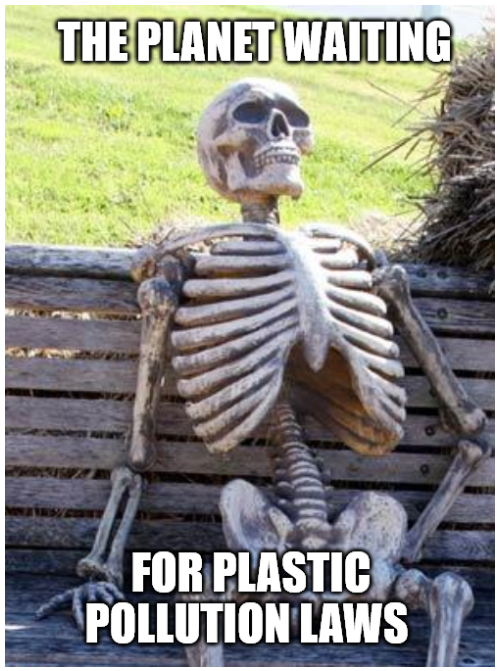
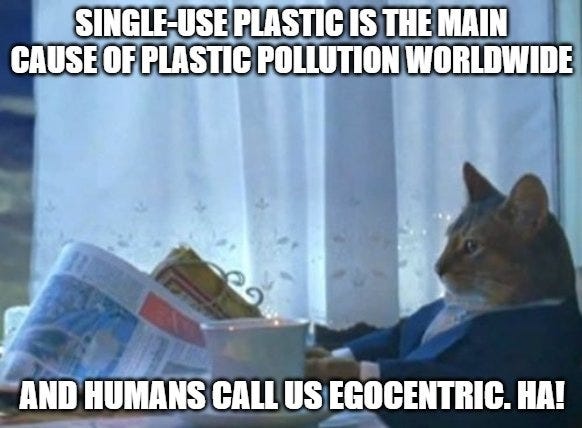
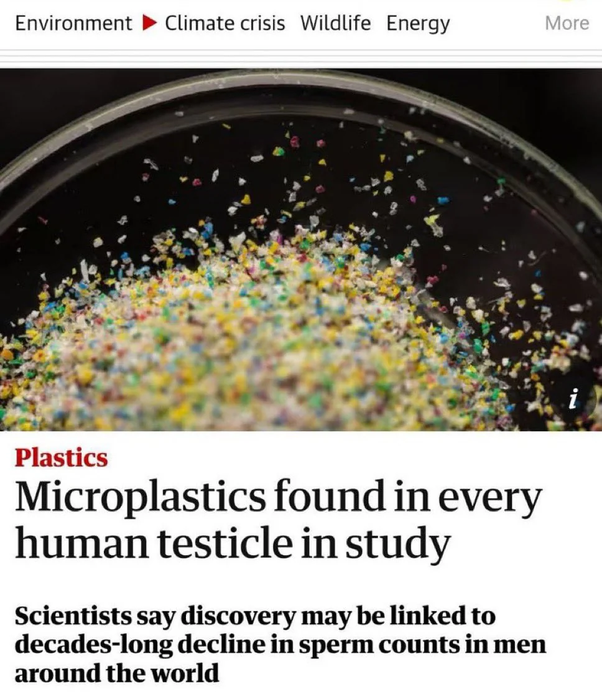
The full cost of plastics on society has never been calculated to determine what the prices of various plastics should be. We’ve never truly costed plastics from a complete life-cycle perspective and are now struggling with an overabundance of waste that threatens ecological stability.
The fossil fuel industry has known for over one hundred years now that their processes negatively affect the global environment. Instead of adopting a responsible resource management balance for their products while investing in or planning for appropriate transitions to ecologically supportable solutions, they have chosen to ravage our planet and put us in peril.
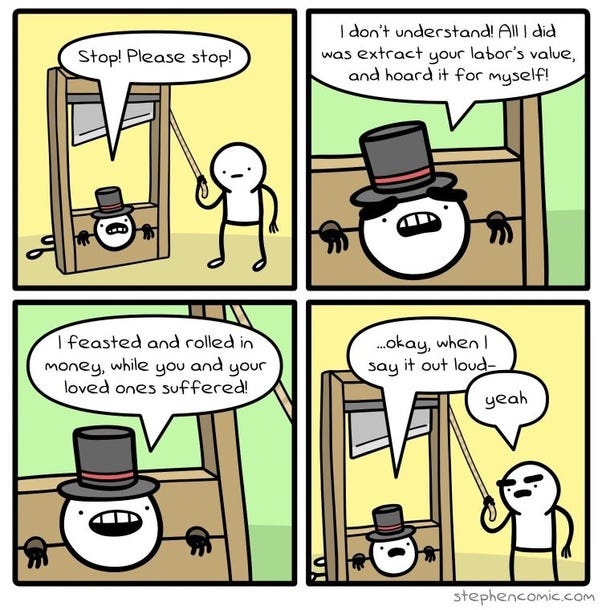
Instead of reinvesting profits in environmentally sustainable alternatives to a finite resource, they have chosen to plunder the planet to put us all in peril. As we march headlong toward a global environmental catastrophe that can threaten social stability to such a degree that widespread chaos defines human civilization seeking retribution, the first billionaires who need a date with the guillotines are the oil industry billionaires.
They’re not being charged appropriately for the impact of plastic production on the environment, mainly because it is a big oil product, and big oil has dominated global political agendas for over one hundred years.
They have been derelict as stewards of a finite natural resource. They are like the ivory hunters of the 1800s who cared not at all for the extinction of elephants as long as they could maximize their profits while they still existed. Like the ivory hunters, they will not seek alternatives until they acknowledge the approaching end of their ability to plunder our planet for profit.
Making matters worse is that although fossil fuels are declining as a source of energy production, plastics production is steadily increasing without regulations limiting the creativity of applications they can exploit for profit. They’re not being held accountable in any meaningful way for the damage they have been doing to our environment for more than a century.
Fossil fuels represent an industry that operates with impunity in society and with a global reach. Few people are unaware of at least a few war zones around the globe in which blood has been shed in territorial wars for oil dominance. Countries have been destabilized and even been forcibly regressed into a primitive state to preserve oil production dominance on behalf of a small number of plutocrats.
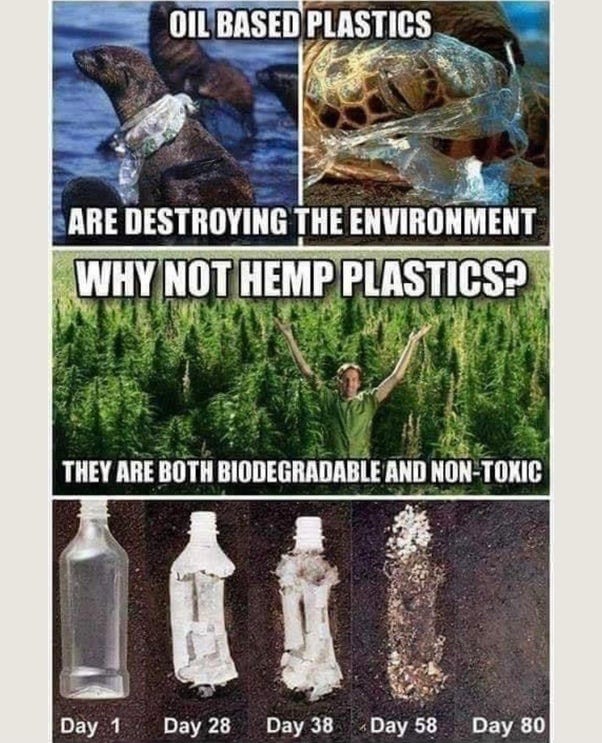
We should be actively transitioning plastics production to an expansion of alternatives meeting niche requirements, such as hemp, which has superior biodegradable properties that do not threaten global ecological stability. Our technologies have sufficiently evolved, as has our awareness of plastics needs, with a consumer, commercial, and industrial market context to define best cases for using various plastics production processes throughout the market.
We must establish production and usage regulations for plastics according to their applications. Where we can use an alternative to oil, we should use a natural alternative. Production processes have evolved such that plastics producers are providing cost-competitive alternatives to oil-based plastics. What is lacking is the incentive to facilitate a transition to a sustainable method of operation.
I can recount a personal story from a stint with a government stewardship program responsible for auditing plastics recycling. The oversight in this operation is a case of the fox guarding the henhouse. I won’t go into much detail on this issue at the moment. Still, I want to provide an example of how this operation fails to demonstrate leadership in adopting environmentally sustainable practices.
This particular operation relies heavily on plastic bags, not only for internal purposes but also for plastic bags used by recycling facilities throughout the province. In a moment of concern for the sheer volume of plastic bags, which amount to several thousand kilograms per month used throughout the province of BC, I identified a bag producer who offers a hemp-based solution at the same cost as they were purchasing their oil-based plastic bags.
The argument given as my suggestion was dismissed was that the supplier was located in a different geographic location. Rather than plastic bags purchased from an oil industry source in another province, these are hemp-based bags sourced from approximately the same distance away but in a U.S. state across the border. The cost of making the change was practically zero. This is a perfect example of leadership in responsible environmental management principles as a government stewardship program providing leadership within the recycling industry.
To my chagrin, I learned that this operation wasn’t interested in environmental leadership inasmuch as they were interested in a guaranteed annual revenue source as a government service contractor. (Sadly, this is not the only government stewardship operation that operates under a fraudulent representation as a government service with a vision toward contributing to the identified need they pretend to serve, but all of this is an entirely different tangent from this article and so, I’ll stop here and get back to answering this question. You can call me Grandpa Simpson.)
In the meantime, we must charge manufacturers through the nose for oil-based plastics while subsidizing the costs of developing ecologically superior alternatives until they become cost-effective enough to eliminate oil.
We must begin pressuring the oil industry and oil billionaires into owning up to their damage to our planet, and in taking greater initiative in supporting transitional strategies. The sooner we begin, the sooner we take steps toward avoiding chaos, massive riots, and rampant bloodshed from environmental collapse and wholesale panic.
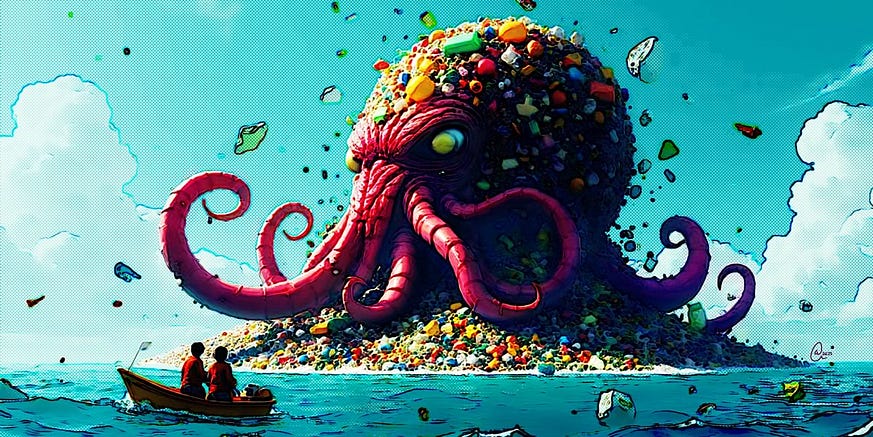
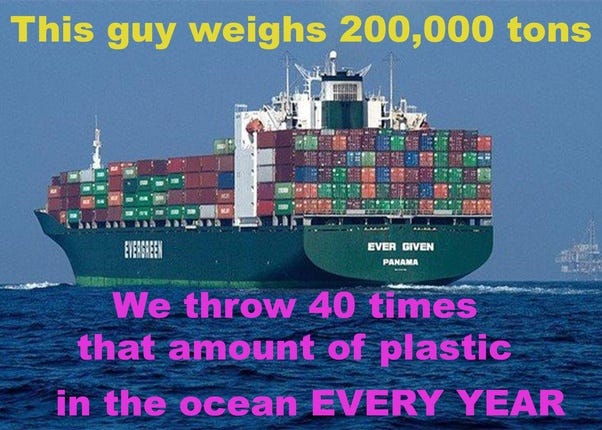
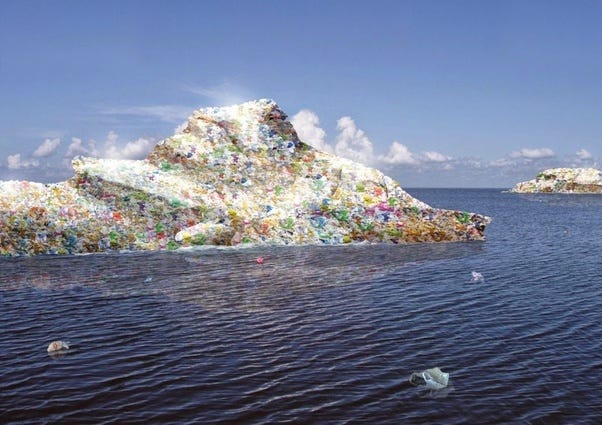
This graphic above refers to “The Garbage Patch,” an island of plastic floating in the Pacific Ocean.
































 thotbag