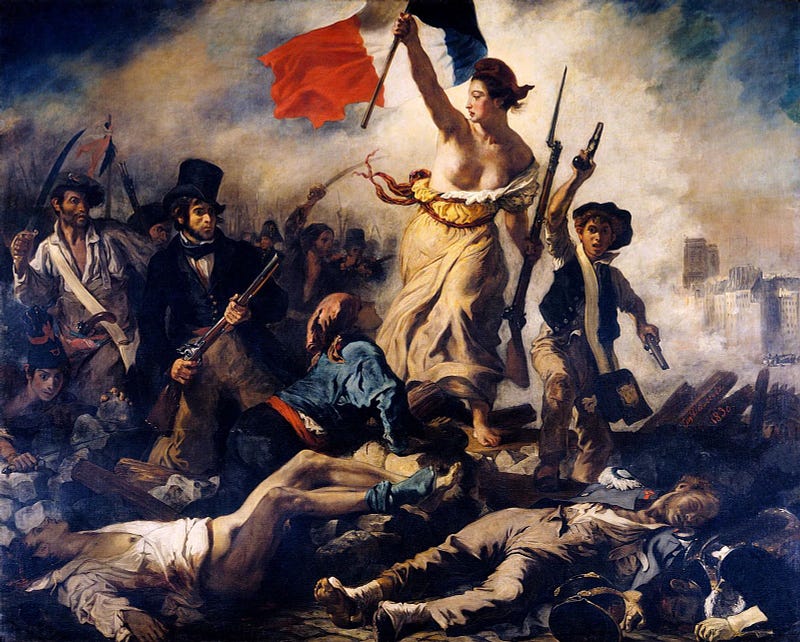
“United we stand, divided we fall.”
This phrase was first coined by a Founding Father, John Dickinson. His pre-Revolutionary War song, “The Liberty Song” was published on July 7, 1768.
“Then join hand in hand, brave Americans all,
By uniting we stand, by dividing we fall;
In so righteous a cause let us hope to succeed,
For heaven approves of each generous deed.”
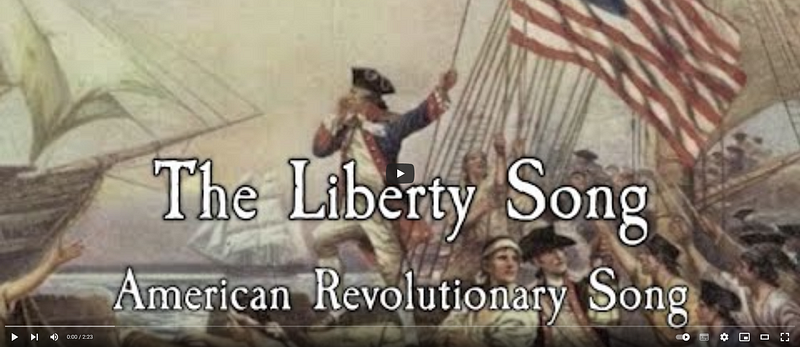
It’s a bit dated and difficult to listen to now, but it reflects the spirit of the people who rebelled against an oppressive ruler and founded a new nation.
The meaning of “united we stand, divided we fall” is timeless.
It speaks to the survival success of the human species. It invokes Margaret Mead’s insight when she describes a knit bone as the beginning of civilized humanity. We have survived by uniting together and we began that journey of survival by being united when we hunted large animals in groups to feed and clothe ourselves.
To be united is more than just a word describing proximity. To be united is a pact we make to survive and prosper as families, friends, local communities, cities, regions, states/provinces, and nations.
Now that our world has shrunk to the level where geography is no longer a boundary between people, to be united now means continents and continental trading blocks. As our global environmental emergency escalates, united means the entire globe must come together as a species to restore our home to its natural state of sustaining humanity or we may not survive the culling. Our current efforts to mitigate environmental destruction already indicate many millions won’t if we don’t begin taking bold steps to fix our mess now.
Insofar as the efficiency of managing groups of people is concerned, the larger the group, the less efficiently they can be managed, and the less able any administrative body is to meet the group’s needs.
This dynamic creates a tension between individual needs and group needs that scale beyond individuals and their tribes into tensions of needs between tribes and regions, regions and their nations, and a global community comprised of a nesting doll of associations.
Even corporate structures are defined by layers of independence within a hierarchy of authority. Sections, departments, divisions, regions, and boards represent independent areas of authority limited by scope and subordinate to an escalated chain in a hierarchy of authority.
The human mind also works similarly within a structure of escalated authority in processing information. Our AI development efforts mimic that structure because it is the most efficient way of processing and managing escalated levels of complexity at escalated degrees of abstraction.
At any rate, after all that preamble, there are limits to what any state is capable of simply because of limited resources. In Canada, the differences between provinces are a little more obvious in my mind simply because of my familiarity with differences in resources across regions. In the western province of British Columbia, forestry is the primary industry and source of economic growth for the entire world. Next door in Alberta, the oil industry has generated its wealth. Its rich resources have had its provincial politics polluted by greedy Americans like the Koch brothers. Next door to Alberta is the province of Saskatchewan, which has a farming output that has fed the world. Manitoba has a greater diversity of resources to exploit but has had essentially enough to sustain its economy. The same is true for Ontario, where national equalization payments across provinces have helped to stabilize the country’s economies during periods of instability.
I’m not as clear on the specific details of U.S. methods of assisting member states — but the point of being united, over and above the typical answer of a military force to protect the nation from foreign aggression, is the national security arising from economic stability across all states.
Each state has the freedom to operate and manage its affairs as the citizens of each state determine what is best for them.
Freedom, however, and as this question implies — along with all the numerous exclamations by many people and groups like libertarians and anarchists fail to appreciate that freedom is not free. Freedom is always defined by limitations and accompanied by obligations.
For each state to exist as its own country would make each state vulnerable to numerous enemies ranging from foreign agents (including all other states), economic volatility, and bad actors within each state. Operating as a united states means all states are members of a community working together to ensure mutual security, stability, survival, and prosperity.
Many Americans have lost sight of the significance of community synergy and have allowed themselves to buy into the toxic competitiveness that justifies selling their own families down the river for a few extra pennies in their pockets.
These Americans, Canadians, and essentially the whole of conservative ideology all across the globe today have lost sight of the value of the community while pursuing a cutthroat agenda of “I’ve got mine so fuck you”.
It is this perversion of individual desires above the needs of the many that has led the nation down a path of toxic fascism that threatens the end of 243 years of democracy. If Americans lose their crucial battle for freedom in their next election, if they install a convicted felon as their head, then that will serve as a severe blow to freedom for all people all across the globe. The hegemony of plutocrats and their medieval infrastructures of authoritarian operations we casually refer to as corporations will assert their ascendance above all who are reduced to disposable cogs in a modern facsimile of ancient serfdom.
Each state should want to be an integral part of a larger community if it wishes to survive as an independent community. It’s as much in their best interests to be united as a nation as it is in the best interests of their citizens, families, and communities, as it is also in the best interests of all citizens as a united whole.
For the reasons cited above, the citizens of the U.K. are now suffering from their childish error in judgment by voting for Brexit. They are learning to cope with their grievous error of impetuous judgment, like the petulant child in a family who decides they can cope well enough with a treacherous world to survive on their own while they still haven’t reached adulthood. They often can’t and are converted into forgotten faces buried within statistics.
The way forward for the survival of our species is not to fractionate ourselves into warring tribal units but to unite as a community to stand tall as we meet challenges far more monumental than we have ever faced.
Here’s a song based on the phrase “United we stand, divided we fall” in an easier-to-listen-to version of the expression as interpreted by “Flower Children” from the “Age of Aquarius”:

“For united we stand
Divided we fall
And if our backs should ever be against the wall
We’ll be together, together, you and I.”
As a child growing up in an era where television programming ended at the end of each day with a closing message, this song inspired me even as I struggled within my fractured community.
It still holds meaning for me, and I believe more firmly than ever before in my life that this is the way forward because the nightmare of toxic individuality we have been cultivating is responsible for creating a world of psychopaths I do not want to live in.
BONUS:
While doing some basic research to answer this question, I discovered a modern variation of the expression “United We Stand, Divided We Fall” by the group “Two Steps from Hell”. Of the three musical examples provided, this one is far less literal, far more emotive, and far easier to listen to:

I also learned it was music used in an advertisement for the MCU release of Captain America’s Civil War:

Temet Nosce
 thotbag