
This post answers a question posed on Quora’s Question and Answer site.
The major problem with the concept of “common sense” is that it’s subjectively defined gibberish.
What may construe “common sense” to one person means something else entirely to another.
For example, here is another question you posted on your profile:
“Why do liberals have a light approach on [sic] immigration policies? (serious answers only!)”
This has meaning to you, but a “light approach” is an entirely personal definition characterized by personal bias without any reference to any authoritative body that can provide a working definition of how that applies in real life.
What that term evokes to understand what you mean requires considering an oppositional view of that expression. The “opposite” of “liberal” is “conservative,” and the opposite of “light approach” is “heavy-handed.” From drawing those oppositional points of reference, one can determine what you imply within your question.
This is a general approach for deriving meaning that most people often (and subconsciously) undergo when responding to subjectively defined terms.
The expression “common sense” is interpreted similarly; “common” to “uncommon” and “sense” (in the context of awareness or knowledge) to “ignorance,” except that in this case, the result is vaguely referential gibberish — “uncommon ignorance.” The consequence of a subjectively defined expression that cannot derive meaning beyond the words themselves leaves people with the only option of accepting those words at face value — “common sense” means “common sense” (“common awareness” or “common knowledge”).
If anyone asks, “What does “common sense” mean?” It means “common sense” — a sense regarded as common — standard, familiar, expected — not specific to anyone or anything we can identify, nor does it reference any specific sense like hearing or seeing, but it does imply cognitive ability.
“If you don’t get that, you lack ‘common sense.’”
It’s an expression insulated from criticism because it refers to nothing but one’s subjective interpretation of what that applies to.
“If it makes sense to me, then it must be ‘common’ sense.”
This is where we run into trouble with that expression. Not everyone has what everyone else would consider “common sense,” and no one can devise a universal definition of what constitutes “common sense.”
That leaves us with a sticky situation in which people will read or hear something like this from a “leader” in society and think this reflects “common sense.”:

Listening to these words is easier than reading them. Listening to their sounds while one’s attention captures key concepts like “tough hurricane” makes it easier to accept the meaning conveyed within the sentence.
Reading these words, however, makes it tough to ignore all the rest of the words that, together, amount to a string of gibberish. Since when does water have a “standpoint”?
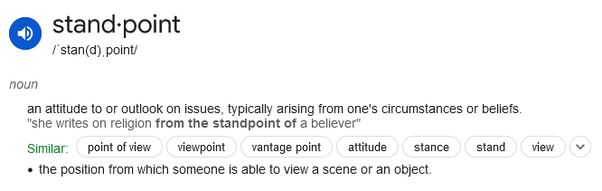
Water has no “outlook on issues,” but the gibberish of this sentence is still interpreted as “common sense” by people whose discernment of meaning is fuzzier than others.
This leads us back to understanding how the perception of having “lost” something for which no universal definition applies is due to personal bias.
Since no objective metric exists for defining “common sense” in the real world, the only explanation is that one’s awareness of something they took for granted as true of most people suddenly seems not to be the case.
It follows that the answer to your question isn’t that “common sense” has been lost but that you have awakened to realities you never before realized existed.
I don’t know why you selected 2019 as the year for which you have noticed a decline in “common sense” and have searched online for significant events that may have contributed to your conclusion. I’m pretty sure you’re not referring to July 10, 2019, when the final Volkswagen Beetle rolled off the line In Puebla, Mexico or that it was the last of 5,961 “Special Edition” cars exhibited in a museum, but I could be wrong.
I suspect that year is also a distinction of an event of personal significance beyond whatever else may have happened worldwide. It would be an explanation that makes more sense than anything listed within this record:
 thotbag