
No, but yes but no… but yes.
To “distribute wealth more evenly” implies a dictatorial imposition of a narrowly and politically defined sum of what constitutes “evenly.”
There are numerous problems with that strategy that go well beyond not fixing the underlying issues contributing to the corruption of what should be an agnostic system but isn’t due to how it has been corrupted.
This approach not only accomplishes nothing in the way of fixing the underlying issues, which, on that level alone, would create a “rubberband effect” of “snapping economics back to their originally corrupt state,” it would also justify an exacerbation of a centuries-long class warfare that has allowed the corruption of an economic system to take root. IOW. The degree of corruption existing today that has led to historic levels of income injustice would escalate from a cold war into a blazing furnace of vengeance against the little people by the wealthy. Their loss of wealth would be temporary, and they would be motivated by more than greed to rebuild their hoards; they would also be motivated by a desire for retribution.
We should focus instead on adjusting the parameters of a wealth redistribution system like capitalism to ensure wealth flows freely throughout the system rather than collect like plaque in arteries to clog up the entire system with private hoards held by a few whose obscene accruals threaten a system-wide collapse.
We need to establish rules to ensure equitability from a system-wide perspective to make fairness an inherent characteristic of the capitalist system. We need the system to rein in corruption at the top while empowering the middle and enabling the bottom.
If our economic systems were to operate on a holistic and agnostic basis, then success would not be a measure of how much wealth the wealthiest are collecting but how stable the economy is and the degree of economic mobility the system facilitates. We should measure economic success based on how people move out of poverty and into wealth. We should measure economic success on the stability and growth of the middle class. The middle class has always been the engine of the economy, and we must prioritize its health and efficiency to ensure that the entire system is stable.
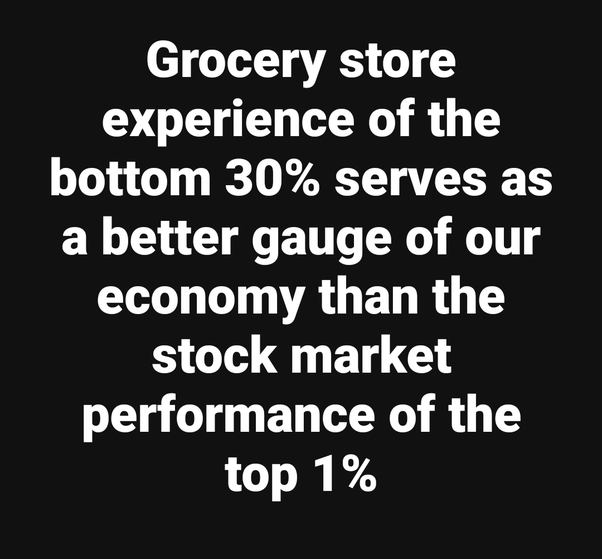
This can be “easily” accomplished (once the political will is established) through a few simple measures. We can begin with the adjustment of tax rates to levels historically proven to spur the greatest economic growth and the greatest growth of a thriving middle class.
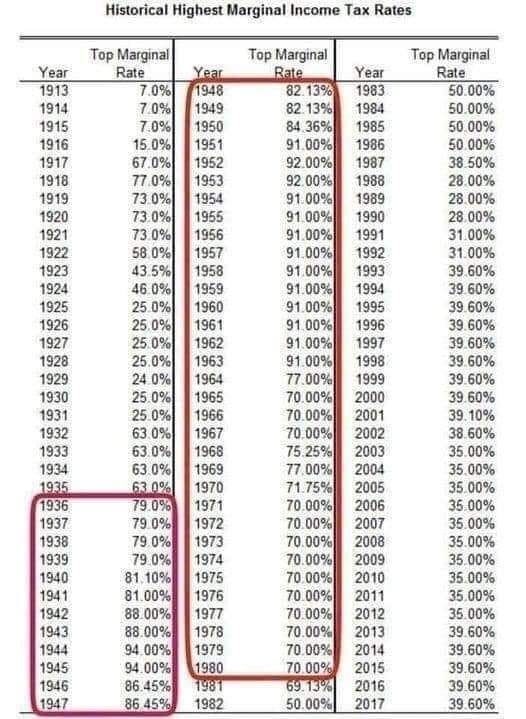
Restoring tax rates to Eisenhower levels incentivizes investments back into companies to hire more staff to minimize a tax burden. It means capital investments into the operation instead of stock buy-backs to boost share value and billionaire hoards.
Restoring tax rates to Eisenhower levels gives the economy a boost of liquidity flowing through the entire system to boost everyone’s well-being while restraining the excesses of greed, which contributes to creating a ruling class through a dynastic acquisition of wealth and political power.
Restoring taxes to sane levels permits the implementation of a universal basic income that mitigates the leverage of wealth in labour negotiations. People will no longer be forced to choose between a depressed wage and basic survival. Since unions are an easy target to attack and disempower, as occurred following Reagan’s example, which led to a strategic initiative by employers to eradicate unions, UBI eliminates that weakness.
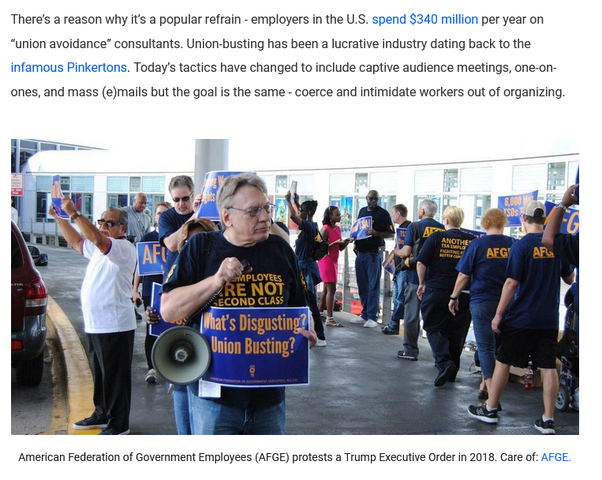
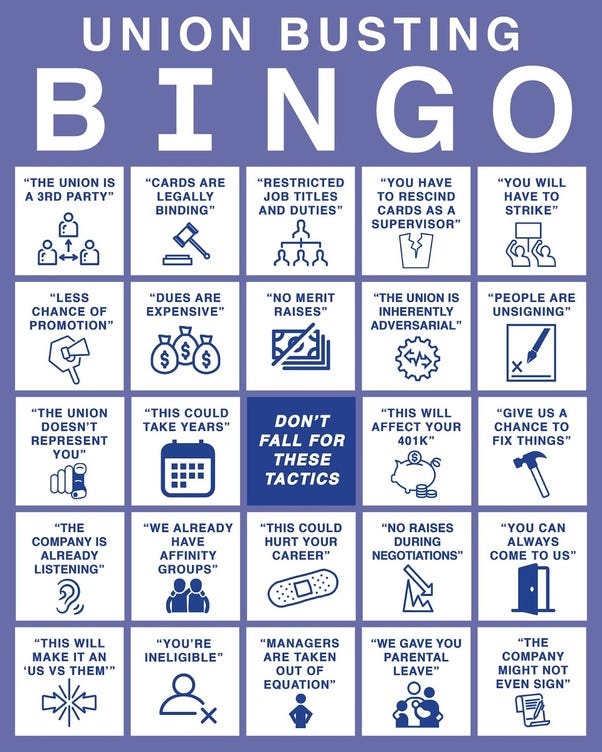
Union-busting: what to expect and how to respond
A Universal Basic Income provides economic stability for a nation because when a corporation contracts, thousands of jobs are lost, not just a few or dozens. The entire economy is impacted by an exaggerated shrinkage that benefits the wealthy at the expense of the working class.
The boom and bust outcome of a trickle-down economy is intentional because it is during a bust that the wealthiest make their greatest gains by leveraging desperation against people to buy out smaller businesses at fire sale prices.
Restoring tax rates to Eisenhower levels eliminates the boom and bust advantage while UBI insulates the vulnerable from the predatory practices of the wealthy.
The above represents two primary initiatives that would restore equity throughout the economy. These alone are temporary measures subject to reversals, putting us back on this same destructive track we are on.
We must cement fairness into our systems on levels greater than the simple vectors of corporate taxes and employee protections.
We must make fundamental changes to a vulnerable political system which allows the worst of our impulses to dominate political discourse while being manipulated through corrupt media enterprises owned by powerful stakeholders.
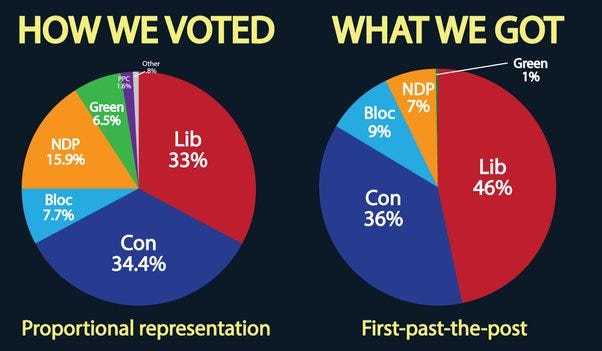
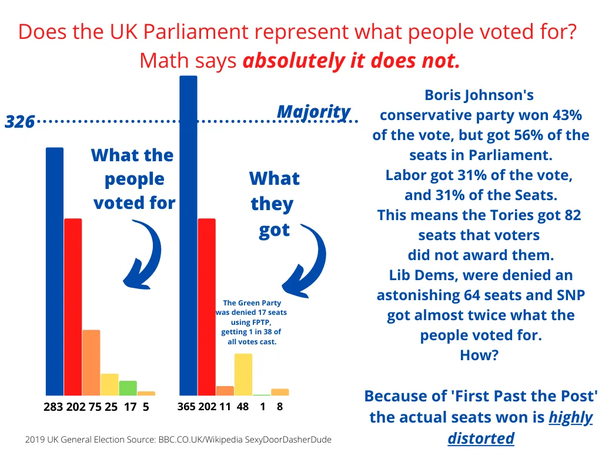
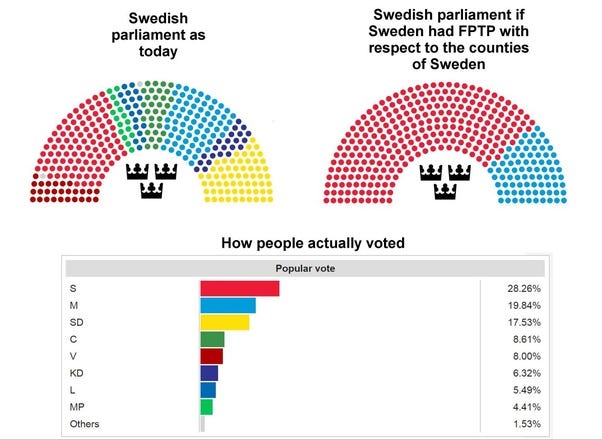
Electoral reform initiatives to eliminate the toxically competitive first-past-the-post elections and replace them with proportional representation and a ranked-choice voting process will eliminate the hegemony of party politics and allow a public to engage on an issue-resolution basis rather than be reduced to a gaggle of high school cheerleaders caught up in tribalist fervour.
This initiative also mitigates the impact of wealth on the election process because it’s much harder to “create a team of tax and revenue manipulators” when “multiple teams” exist in a multiparty system that more accurately reflects the different views and positions of a diverse voting public.
Eliminating private funding from the election process would also protect the political system from corruption. Both initiatives above would transform the entire political process into an agnostic system of representatives who fully represent the diversity of the people’s will.
First-Past-the-Post-Elections shut out most voices from representation to favour the horse race winner.
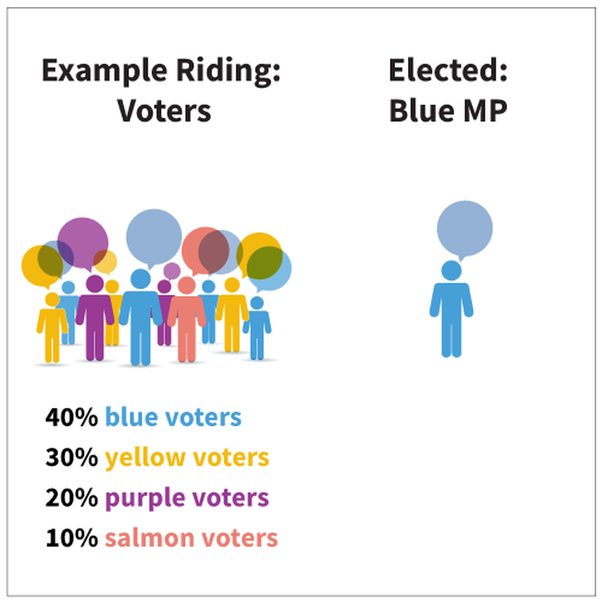
Democracy is a government that is supposed to represent the will of ALL the people, not just the horse race-winning team.

Finally, the most difficult challenge to implement and arguably the most important initiative to protect our world’s democracies from the greatest villains we have ever fought throughout history is to rein in excesses at the top around the globe.

We should not keep breeding generation after generation of entitled people who assume their wealth equates to superior humanity and the right to shape the world in their image. The wealthy class is not comprised of superior beings but flawed humans. They possess too much power at such a degree of disproportion that they can individually tip the scales of humanity’s future toward extinction or utopia.
Guess where they are collectively leading us all today:
 thotbag