
This post is a response to a question posed in its full format as follows: “66% of teen pregnancies are fathered by men over 21. Do you have a policy proposal for how to combat this?”
When I worked in community development as an “Educational Counsellor” (Residence Life Coordinator), part of my role involved developing programs to address common issues affecting college-age students. Since many were away from their rural homes for the first time in their young adult lives and often were from strict homes, they spread their wings and acted out in sometimes unhealthy ways.
The overconsumption of alcohol was one of the most common unhealthy coping mechanisms many adopted. This necessitated various strategies for mitigating the effects of over-consumption, which would develop into habits over time and become addictions if one was unable to free oneself from such a toxic dependency.
This role was how I encountered a drinking cessation strategy by Homewood Health Services in Canada that used a series of posters in one of their awareness campaigns.
All the posters were designed to provide uplifting and inspirational messaging with colourful imagery and a touch of humour to appeal to that demographic’s sensibilities. One specific poster prompted me to reply to this question. I looked for it briefly online, but it was a poster from about 40 years ago, so I unfortunately cannot see it.
A brief description in which you will have to imagine a brightly coloured illustration with a chalk pastel texture. It was an image of the back of a person’s head while propped over a toilet bowl. The image was intended to convey how unpleasant over-consumption can be. I don’t remember the caption, but I remember how popular it was.
Of the various posters available for students to pick from and post on their walls, this particular poster was far and away the most popular.
I didn’t realize at first why beyond the mockery it would generate because no one likes the experience of “driving the porcelain bus,” and everyone laughs at the people who over-indulge to such a degree.
As it turned out, the poster became a type of “scorecard” in the party apartments within the residence complex. Each time someone “chatted on the porcelain phone,” they signed the poster.
It was disheartening at first because the poster was having the opposite effect it was intended for. It’s not like it encouraged people to over-consume alcohol, but it was like a ledger keeping track of the number of times one went too far.
At the end of the academic year, as students packed up their belongings, I encountered a few as they packed up and took their posters. In each case, the expressions they conveyed were that it had been quite a year and that they had enjoyed a lot of memories from their parties, except for the experience they had with a night’s discussion with “Raaalf.” The number of times they had signed the poster was like a demerit to remind them of the unpleasant experience.
They expressed regret over how much they had over-imbibed, and when they returned for their next academic year, they were far more reserved in their behaviours. Those students went from high levels of over-consumption in their first year to being much more academically committed students in their second year who had learned to drink moderately. They still socialized in their second year but were far more responsible.
The poster had worked.
It took one full academic year, but signing the poster after a night of “hurling chunks” left an indelible impression in their minds.
That’s how an education program works, slowly and with far more spectacular results than the heavy hand of imposition. When people learn to choose a healthier alternative because they want it, the results impressively outperform any authoritarian strategy.
This is what anti-abortion people don’t understand and why they’re so disgusting when they barf up ignorantly abusive disparagements such as characterizing an oppositional view as “pro-abortion.”
No one is “pro” a bad situation.
No matter how one characterizes an abortion. Nothing about it can be considered desirable, mainly by those who feel that’s their last hope. This is also why anti-abortion people are so inhumanly disgusting. They’re stealing a final lifeline of hope for someone in desperate straights… even worse is that they force medical emergencies into becoming incidents of premeditated murder by their depraved indifference.
This is why the SCOTUS rejection of Biden’s attempt to compel the state of Texas to perform emergency abortions based on a life-saving medical procedure makes them entirely unfit to lead the nation in its laws. Their responsibility to society is to establish a higher morality that respects and preserves life.
Nothing about the alleged “pro-life” is anything but “anti-life,” and nothing can make that more accurate than the numerous horrors that have already presented themselves since they betrayed women across the country and the world by extension with their reversal of Roe v. Wade.
The only policy that will effectively address the issue of teen pregnancies by young adults above the age of 21 is the policy that creates the peer pressure necessary to make those young adults who have not managed to mature beyond an abysmal level of under-developed morals afraid of being ostracized by their peers.
Nothing works more effectively than peer pressure. Education and awareness programs are the only way to achieve that kind of pressure. The more people realize the consequences of destructive behaviour, the greater the likelihood of it being mitigated “on its own” over time.
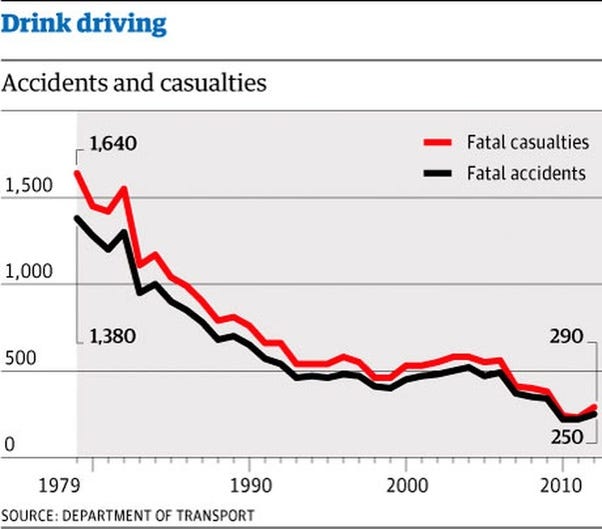
Time and patience are required to realize the benefits, but they are permanent fixtures in an evolving society. Peer pressure is how we have managed to reduce incidents of drinking and driving.
The heavy hand of an authoritarian never works. If anything, the consequence of imposition is always to make the problem worse.
 thotbag