Democracies are strengthened by the degree of engagement by the people. The more people become informed, engaged with, and involved with their government and its activities, the more secure the democracy.
A disengaged and apathetic citizenry makes a government susceptible to corruption.
Restoring and reinforcing the stability of democracy begins in the classroom with a comprehensive civics-oriented strategy for equipping students with the skills and insights to achieve success in effective governance and their personal lives.
As it turns out, the overlap in skills for effective governance and success in one’s personal life are represented as an almost clean circle in a Venn diagram.
The range of interpersonal skills one can and should develop are core competencies for life. Communication skills, negotiation skills, and conflict resolution skills are all universally valuable skills. Developing competencies in areas like Robert’s Rules of Order and understanding the nature and process of effective legislation (rules to live by) may be more niche but are transferable skills that can be applied in other areas of life, particularly when they’re not considered obscure skills by a majority like they are now.
The more people who know how to declare a point of order, the fewer conflicts could escalate into violence.
Of course, the development of logic and critical thinking skills should be included in the curriculum, if not as courses but as strategies for delivering an existing course load.
Applying critical thinking skills development within a history class, for example, would increase student engagement simply by structuring the information delivery process through a means that challenges one’s thinking skills.
On an entirely different and equally crucial level is the reinforcement of a commitment to the role of the Fourth Estate in society. The profit motive must be removed to protect objectivity in the information delivery process, ensuring the public is adequately informed of relevant news in the most agnostic way possible.
Breaking corporate media into community-based employee co-ops will create a culture of checks and balances that approach the self-regulating effectiveness of the peer review process within the scientific community.
The election process is another area that must be made as agnostic as possible. Removing the undue influence of money in elections and reducing the tribalism of the currently corrosive culture in politics is critical to mitigating ideological bias. First-past-the-post elections should be replaced with proportional representation and ranked-choice voting.
With these measures, an exceptionally stable democracy can emerge on level ground with inbuilt resistance to corruption.
This post is a response to a question posed in its full format as follows: “What are the most concerning threats to free speech and open discourse in Western democracies today?”
The people currently scaremongering that free speech is under threat are the most concerning threats to free speech and open discourse in democracies today.
People like Elon Musk, who declare themselves “free speech absolutists” and then ban them from posting on a public forum because they’ve either personally offended him with their speech or they’ve raised too much money to support a candidate he doesn’t support.
People like Donald Trump are also a threat to free speech while claiming to be a champion as he issues threats to media empires like ABC for not kowtowing to his abusive behaviour during a debate or his vow to shut down late-night comedians who mock him and his cartoonish stupidity.
Freedom of speech is healthy and under no threat by any operating democracy in the world, not even in a corporatocracy like the U.S. is freedom of speech under any imminent threat — beyond that posed by the aforementioned predators.
The people who whine the loudest about threats to their freedom of speech are mostly the cancel culture crowd who interpret freedom of speech as a right to be listened to.
You can say whatever you want, but no one is obligated to listen. That’s the fundamental reality of speech in society in general. The freedom part applies only to a government’s ability to not threaten people for saying stuff that gets under the skin of some power-hungry official — like Trump. If he’s elected, then freedom of speech will most definitely be under a severe assault — although no MAGA believes that. They will if he wins. Then they’ll complain like the regretful Brexiteers in England.
“But… But… But… he’s not hurting the people we want him to hurt. He’s hurting us, too!!! He didn’t tell us he was going to make our lives miserable. He only promised we wouldn’t have to vote any longer. We thought that meant freedom!!!”
Nope… that’s “freedumb,” and say goodbye to your right to speak your mind.
In short, the people who claim to be the most fervent defenders of “free speech” are the people who pose the greatest threat to “free speech.”
I know… that’s effed up, ain’t it… but that’s the Bizarro world we live in… ours happens to be round… or possibly flat.
The Institute for Economics and Peace provides an in-depth analysis of civil unrest in the UK specifically through the .pdf available from the link below:
Note from this quote a clue as to the causes of civil unrest:
“The UK has become less peaceful in the last decade. Peacefulness in the UK deteriorated by almost 11 percent in 2022, the most recent year of measurement. This is the eighth deterioration in peacefulness in the last decade and the first since 2020. Fifty-eight Police Force Areas (PFA) deteriorated, while eight improved. This is the largest number of PFAs to deteriorate since 2018.
Of the five UKPI indicators, homicide was the only one to improve, while the remaining four — violent crime, weapons crime, police officers, public disorder — deteriorated”
This suggests the aggravating factors for civil unrest do not lie within social dynamics among the population but an overall level of dissatisfaction with systems failing to meet the needs of the people.
Sadly, the propensity for ignoring causes and treating symptoms has exacerbated the problems as police have increasingly adopted militaristic policies for “serving and protecting” the public.
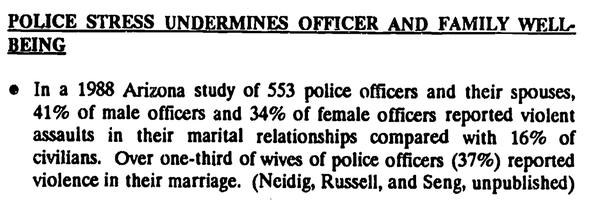
The militarization of the police has made this phenomenon worse, not better and they’ve been allowed to evolve in a counter-productive strategy that fails on every front from inciting civil unrest to increasing incidents of their wrongdoing as police are responsible for up to 40% of all domestic violence incidents.
The strategy of militarization of the police has turned them into a terrorist organization for many citizens. This is a consequence of conservative politics because imposition is the only language they understand.
Here is a summary provided by Chat GPT on social events in which Police catalyzed riots as a consequence of their inept approach to conflict de-escalation (from a U.S. perspective):
Numerous social events throughout history have seen police actions catalyzing riots. Here are some notable instances:
1. 1965 Watts Riots (Los Angeles, California):
– Trigger: The arrest of Marquette Frye, a black motorist, by a white California Highway Patrol officer.
– Outcome: Six days of rioting, resulting in 34 deaths, over 1,000 injuries, and extensive property damage.
2. 1967 Newark Riots (Newark, New Jersey):
– Trigger: The arrest and beating of John Smith, a black cab driver, by white police officers.
– Outcome: Six days of rioting, 26 deaths, hundreds of injuries, and widespread destruction.
3. 1967 Detroit Riots (Detroit, Michigan):
– Trigger: A police raid on an unlicensed bar, or “blind pig,” in a predominantly black neighbourhood.
– Outcome: Five days of rioting, 43 deaths, over 1,000 injuries, and significant property damage.
4. 1968 Chicago Riots (Chicago, Illinois):
– Trigger: The assassination of Dr. Martin Luther King Jr., followed by police actions during protests.
– Outcome: Several days of rioting, 11 deaths, numerous injuries, and extensive property damage.
5. 1980 Miami Riots (Miami, Florida):
– Trigger: The acquittal of four white police officers in the beating death of Arthur McDuffie, a black motorcyclist.
– Outcome: Several days of rioting, 18 deaths, numerous injuries, and extensive property damage.
6. 1992 Los Angeles Riots (Los Angeles, California):
– Trigger: The acquittal of four LAPD officers in the videotaped beating of Rodney King, a black motorist.
– Outcome: Six days of rioting, 63 deaths, over 2,000 injuries, and widespread destruction.
7. 2001 Cincinnati Riots (Cincinnati, Ohio):
– Trigger: The police shooting of Timothy Thomas, an unarmed black teenager.
– Outcome: Several days of rioting, resulted in injuries and significant property damage.
8. 2014 Ferguson Unrest (Ferguson, Missouri):
– Trigger: The police shooting of Michael Brown, an unarmed black teenager, by a white police officer.
– Outcome: Weeks of protests and riots, resulting in injuries, arrests, and property damage.
9. 2015 Baltimore Protests (Baltimore, Maryland):
– Trigger: The death of Freddie Gray in police custody.
– Outcome: Several days of protests and rioting, resulted in injuries, arrests, and property damage.
10. 2020 George Floyd Protests (Nationwide, USA):
– Trigger: The police killing of George Floyd, an unarmed black man, by a white police officer in Minneapolis.
– Outcome: Protests and riots across numerous cities in the U.S., resulting in deaths, injuries, and significant property damage.
These events highlight the recurring issue of police actions triggering significant social unrest, often reflecting deeper systemic issues within society.
Imposition is conflict escalation NOT conflict resolution.
Although the militarization of the police is entirely the wrong way to go in addressing social unrest, they are a symptom of resolvable political problems beginning with the short-sighted views of conservative politicians who interpret every problem as a nail because they have learned only how to wield a hammer.
Nuance escapes them.
The patience required to facilitate peaceful resolutions runs contrary to a profit-oriented mindset that equates time spent with lost dollars.
The core problem is also exacerbated by their sycophantic support of the conditions that led to last century’s Great Depression and were responsible for triggering the Second World War. We are watching those conditions and their consequences replaying themselves right now in real-time with the horrifying implications inherent within the corrupt American system.
No nation is immune to the impact of economic distortions feeding despair among the public.
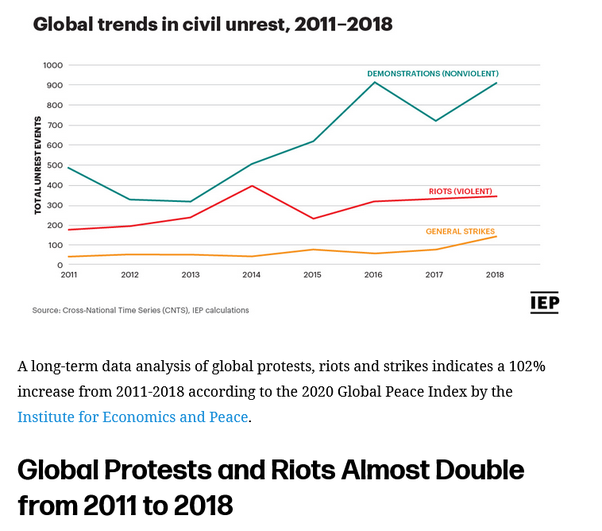
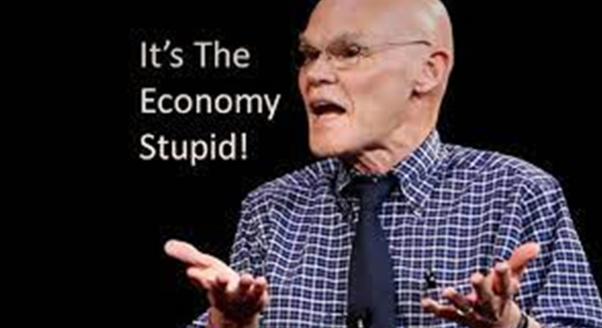
The core problem catalyzing the increase in civil unrest is economic by nature.
The core problem feeding the despair driving otherwise peaceful citizens into extreme action is the economic distortion corroding the basic patience, tolerance, and decency of otherwise peaceful people who want only to live modestly dignified lives but cannot because we have all been robbed of trillions in a class warfare that seeks to resurrect a facsimile of governance resembling a medieval caste system of two classes of people; rulers and serfs.
This trajectory is unsustainable and will continue to feed unrest.
This sociopathic profit motive cannot but lead to chaos.
Making matters worse is that the lifestyles of the wealthy class have put humanity on a trajectory toward its extinction.
No one should be surprised by an increase in public unrest.
Things are going to get MUCH uglier before they get better.
The questions we need to address are:
“How many casualties can we tolerate before we come to our senses?”
How much pain and suffering can we stomach before we lose our shit?
How many millions must die due to preventable causes and the behaviours of sociopaths hellbent on destroying this planet will it take before civilization is a chaotic mess of violent insurrections all around the world?
What will it take for the wealthiest among us to show some leadership and help set this ship of humanity onto a path toward a sustainable future?
(This post was an answer to a Question posed on Quora — where all my posts on Medium have originated; hence the personal response indicated within this article. — https://www.quora.com/profile/Antonio-Amaral-1/ )
This post is a response to a question posed on Quora
Upon encountering this question, I thought, “Who is ‘we’?”
My second thought is that this is a typical question by someone who doesn’t understand what “free speech” means.
People often misconstrue “free speech” as a right to say whatever they want wherever they go without suffering the consequences of the content of their speech.
That’s not even remotely close to what “free speech” means.
“Free speech” means only that you will not be hauled off in the middle of the night by your government for saying something that a government authority doesn’t like.
That’s it.
That’s the extent of “free speech” in society.
“Free speech” has never been, nor will it ever be, anything more than a protection against a dictatorial government determining acceptability for the concepts people publicly discuss.
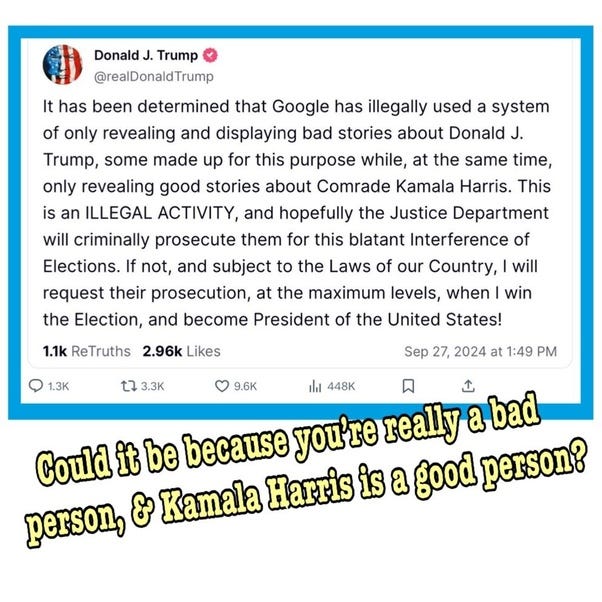
Here’s an example of a violation of the principle of “Free Speech” in society:
This is a politician who has already announced to the world that they are willing to strip fundamental rights from a people based on being personally offended over the presentation of their own words repeated verbatim.
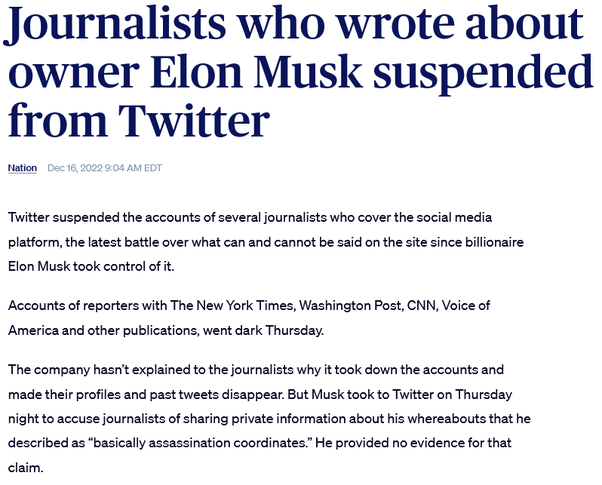
Here is an example of how a self-declared “Free Speech Absolutist” regards “Free Speech.”
This is NOT a “Free Speech” violation because Xitter is a privately owned space, not a government entity. Elon is well within his rights to ban anyone he pleases in the same way you are entitled to kick anyone you don’t like out of your house for no reason you would need to use to justify kicking them out of your house. Your home is yours. You have every right to enforce any rule you like, whether irrational or contradictory.
All Quora answers are the property of all the authors of those answers, and that’s a HUGE draw for people because it means we can delete abusive comments or turn off comments altogether. After all, “freedom of speech,” in practical terms, also means “freedom from speech” — just like “freedom of religion” also means “freedom from religion.”
“Freedom of speech” is NOT an entitlement to be heard. It is a protection from a malicious entity with the power of a government to enforce the homogenization of a public under an autocratic system.
When people reject stupidity barfed up by people they don’t want to hear from, they’re not “cancelling” anything. They’re simply exercising their right to refuse to subject themselves to personally offensive speech.
When it comes down to the notion of being cancelled as a criticism of what happens in society, if one were to create a ven diagram of the people who complain about “cancel society” and the people who endorse banning books, it would be a circle.
Otherwise, the reality of “cancelling a voice” while violating the concept and principle of “free speech” literally means hauling someone off in the dead of night because they offended some government official like Drumpf by repeating their own words to the public in the way that journalism is supposed to in society.
I think the people who complain the most about this issue should spend more time educating themselves on what “Free speech” means. The most impactful lesson one could undergo and never forget is to take a trip to North Korea. Set up a soap box on a street corner. They can then begin criticizing the North Korean government to see exactly what it means to “cancel a voice.”
Otherwise, the tiresome whining about “cancelling voices” on social media is interpreted much like enduring nails on a blackboard.
It’s by design. We have been deliberately manipulated into warring camps by the modern equivalent of bread and circuses to keep all the little people engaged in being cheerleaders to distract from addressing real issues to make our lives better.
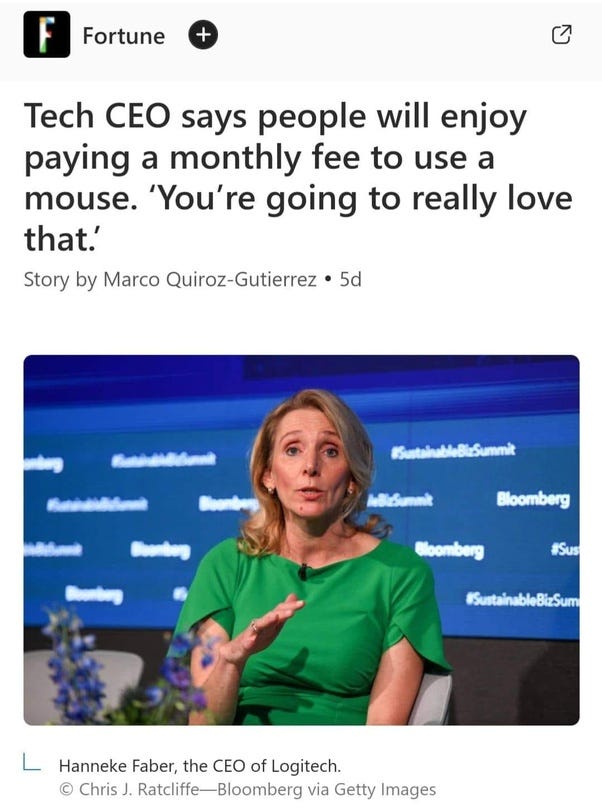
Making our lives better by solving real-world problems instead of manufactured non-problems would result in smaller hoards of wealth for those who already have too much wealth.
Sadly, they have also cultivated the belief that there is no such thing as “too much wealth”. Most people extrapolate from their impoverished conditions to believe there can never be enough wealth — which, to some degree is true, just not for individuals.
People are essentially forced into one of two camps by shutting out parties beyond the two parties dominating the U.S. political landscape.
Limiting the political environment into two warring camps just makes it easier for the oligarchs to control the chaos in ways that ensure we remain distracted from their machinations as they focus on strategies for invisibly extracting microscopic amounts of blood from our bodies so that we won’t know when we’ve been weakened too much to save ourselves.
We are treated like frogs in a pot of water with a carefully monitored temperature to ensure we sweat our value out in their service while rendered too weak and distracted to fight back and save ourselves.
To survive our hardships, we turn to those who share our struggles and our values and since our options have been limited to two oppositional camps while the media owned by the oligarchs feed us conflict porn to escalate our tribal affinities and condition us to treat our neighbours like enemy combatants who must be eradicated or die at their hands.
The more we entrench ourselves into a caricature of team sports cheerleaders, the happier the plutocrats are because that frees them up to concoct creative strategies for extracting more value from all of us like the parasites they are.
This post is a response to a question posed in its full format as follows: “Do atheists believe in fate, good and evil, or some other supernatural beliefs? Like do some atheist believe in alien life?”
This question embodies the problem with the notion of belief among believers.
Believers often need help understanding the difference between knowledge and belief. Blurring the distinction between two different but similar concepts makes it challenging for them to adopt a third option between their binary perspective on life.
To a believer, one either believes or does not believe.
Knowledge isn’t even a factor in their perceptions because knowing, to them, is just another form of belief. Belief supersedes knowing because one cannot know if their prayers are being heard by a “Father Cosmos,” so they must have faith that he is listening. This places an undue burden on the concept of belief that breaks its meaning in their minds.
They have no choice but to relegate knowledge to a subordinate relationship with belief because belief is everything to a believer.
Ironically, they have no problem with aspects of belief that require little to no consideration, such as “suspension of disbelief” because that occurs autonomically while engrossed in an entertaining fiction, as does “disbelief” when it applies to every belief system that isn’t theirs.
The notion of belief being subordinate to knowledge is like heresy, which induces a fear of straying, resulting in an eternal punishment for failing to adhere to their faith. This is why they often suffer crises of faith due to excessive cognitive dissonance.
The seemingly fearless attitude of atheists placing knowledge above belief attracts believers’ attention to notions of non-belief, like a moth to a flame. Since they fear eternal retribution for disbelief, they view atheists roaming around free to live their lives in terms not too dissimilar from how many people view a convicted felon roaming about freely to campaign for one of the most influential roles on the planet. It’s like witnessing a horrible accident. One would prefer to avert their gaze but cannot as they stand transfixed over the intense drama playing out for their unwilling minds to process.
The cognitive dissonance this generates explains the obsessions believers demonstrate over atheism every day on social media.
We see in this question how they fabricate presumptions about atheists that fit within their cognitive boxes of belief determination.
They cannot think beyond their belief paradigm to interpret reality beyond a binary state. One must either believe something or reject believing something. The meaning behind the concept of disbelief itself is lost on them. It’s like interpreting absence as a form of invisible presence.
To address the presumptions of belief in this question and many like it, one either presents a dismissive response like they would with a persistent child that fails to comprehend nuance but requires something of an answer to quell their curiosity or one burns through several boxes of crayons to bring them up to speed on basic concepts that will fly past their perceptions to leave them even more confused than before answering their questions.
This is the rub with knowledge.
Every question answered that contributes to our overall understanding of ourselves, others, and the universe we inhabit generates dozens of additional questions we never realized were questions before getting that answer we thought we wanted but sometimes regret getting.
To address the basic but flawed presumptions within the questions above, one must judiciously parse the information in ways that ignore large parts of what is implied within the question and attempt to focus on constructing a simplified answer they will understand, just like one does with a child.
For example, “Atheists don’t “believe in” alien life. Atheists know the universe is vast beyond belief, and the existence of life on this planet within a Brobdingnagian (I love this word) ocean of countless planets means the odds are beyond simply excellent that life has emerged elsewhere. We have been getting new evidence supporting that conclusion, such as the discovery of RNA embedded in spacefaring meteorites we’ve examined.”
This answer won’t be interpreted as stated, though. It will be construed as “Atheists believe in alien life.”
The same applies to concepts like “good” and “evil”. We can explain and re-explain repeatedly until the proverbial cows come home that “good” and “evil” are subjective concepts requiring context for meaning. However, their interpretations of these concepts are apprehended as objectively as one would a physical cow within their field of vision.
“Supernatural beliefs” are also subjective constructs that we can explain “exist outside of nature” because that’s what “supernatural” literally means — “beyond nature.” To accept subjectively defined notions as true, one requires belief, and that’s why one interprets these concepts in terms equivalent to knowledge.
To “believe in fate” is to subordinate one’s knowledge derived from empirical experience through an objective lens to a subjective interpretation functioning like a soothing narrative rather than a concrete mystery to resolve. This dilution of one’s senses is essentially the core of the threat to human thinking that religion poses to humanity and that limits our potential as a species.











 thotbag