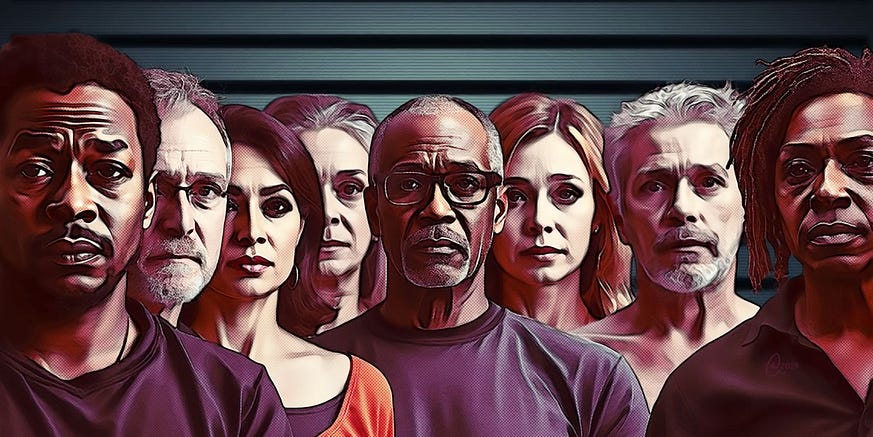
This post is a response to a question posed in its complete format: “Do atheists believe in the Jeffersonian phrase that “all men are created equal”?”
This atheist believes the word “equal” is all too often confused with “identical.”
All life is otherwise “equal” from the perspective of an experiential existence.
There is no metric nor means by which any evaluation can be established to determine degrees of consciousness that are not subjected to biases derived from ignorance of the nature of consciousness itself.
Humans can easily consider themselves “more conscious” than ants, but even that comparison is predicated upon a human bias toward the concept of consciousness.
“Ant consciousness” is observably “different” from human consciousness. It remains just as much of a mystery, taking the shape of a puzzle piece in which we cannot yet make out its composition.
The only thing we truly understand about consciousness is that we don’t understand it. We are exposed to slices of it presented within contexts appealing to the spectrum of consciousness we are most familiar with.
What broke the ice for me in an apprehension of a fundamental characteristic shaping the universe was the analogy of consciousness as a meteor crashing into another by Douglas Hofstadter in “Gödel, Escher, Bach — An Eternal Golden Braid.”
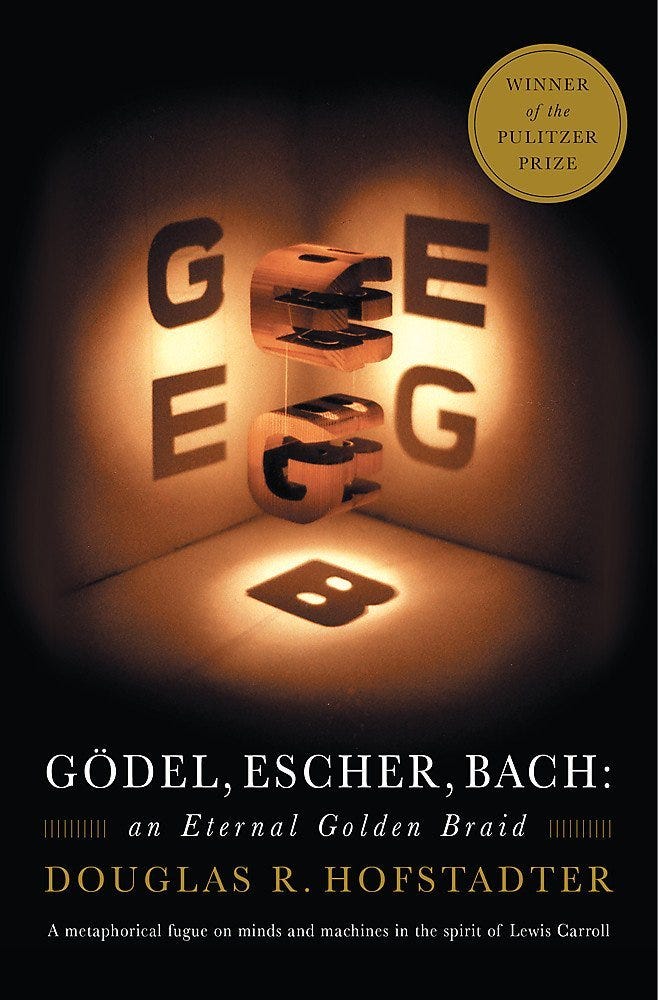
It was quite some time after reading this book as a student in the 80s that I encountered various ideas like “Integrated Information Theory,” which allowed me to progress beyond “The Thermostat Problem.”
I had always maintained a belief, however naive, in the fundamental nature of our equality as human beings. In many ways, my adherence was a reaction to coping with learning at the tender age of eleven, that my knowledge of the world far surpassed that of my mother.
(That revelation arose from her confusion over an ultrasound image on the television screen. She asked what it was, and I said it was a baby being born. The shocked expression on her face was like a sound vacuum for the room. My eldest brother turned to me and chastised me for exposing her to knowledge beyond her capacity to process it.)
Even though I was then always treated as an inferior in my family, I rejected that and struggled to assert my equality in an attempt to be accepted. That was fruitless and counterproductive because my efforts only increased the rejection.
I have learned that it is always those whose insecurities compel them to establish degrees of equality between people on the flawed notion of identicality. Over time, I have developed a bias against such a mindset, which I now view as an inferior state of being (a somewhat hypocritical attitude — but honestly earned).
Ironically, such a mindset seems most common among believers, but that may result from sheer numbers. On the other hand, I cannot ignore how that resembles the toxic competitiveness I experienced as I grew up in a dysfunctional environment ruled by a toxic personality who pitted their children against each other for favour.
Whenever the concept of equality is raised, I almost immediately think someone is struggling with their basic humanity and seeking validation to quell their insecurity.
All the pieces comprise the universe we inhabit, and parsing values between constituents is like arguing over whether red blood cells are more or less valuable than white corpuscles. All pieces of a puzzle are necessary to form a complete picture.
We will never see a complete picture if we discard pieces that fall outside our ability to comprehend the nature of their importance to the whole.
From my biased perspective, parsing out a given, like equality, to enumerate differences is more of an expression of toxic thinking that erodes the social fabric than is productive for our societies.
 thotbag