
This post is a response to a question posed in its complete format: “Could taxing Elon Musk and other people with massive fortunes 80% be the solution to paying down the national debt in the USA?”
The answer is quite simple and beyond evident to anyone with eyes and a mind that’s capable of connecting simple dots from a simple table of numbers:
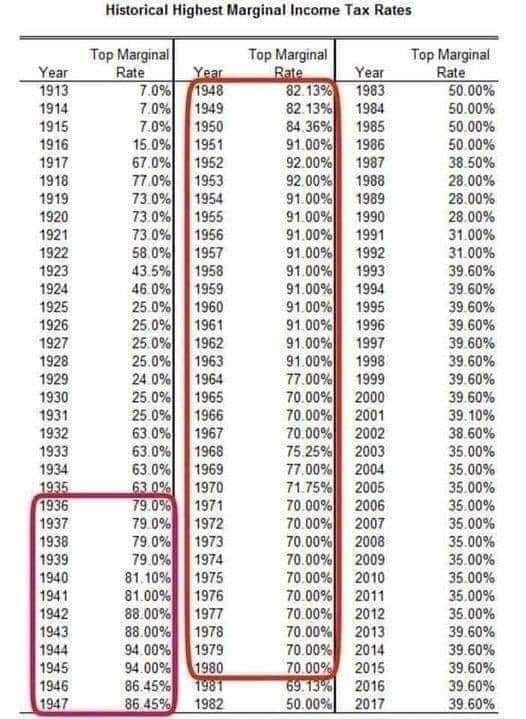
Here are a few points to address regarding regurgitated soporifics routinely employed by the enablers in the crowd.
- Taxing the billionaires won’t be enough money. — Well… DUHHH!!!! That’s not the point. The point is multifold, but let’s cover some leading characteristics. a. Force Multiplier and b. Speed of Money
- A healthily functioning economy is highly contingent upon “the speed of money flowing” through the system — like arteries in a human body. The more plaque there is that obstructs the flow, the less healthy the system is and the more prone to systemic collapse it becomes. The low tax rates that we have now and that we had leading up to the Great Depression encourage hoarding and are a leading cause of numerous social issues guaranteed to result in a dramatic economic collapse — mainly as automation speeds up.
- The more money the bottom end of the economy has, the more demand for goods and services, and the more businesses grow in a feedback loop. Even more beneficial to the economy is that when more people have more resources to invest in themselves and their futures, more innovation is introduced into a system that feeds on innovation to grow.
These two concepts alone, together, make up for what the useful idiots who defend the hoarding billionaires who lack imagination for humanity’s future beyond building space penises fail to account for. It is bloody disheartening that trickle-down stars can so thoroughly blind people and make them so addicted to the taste of billionaire orifices to understand how their misanthropic stupidity is the equivalent of suicidal ideation for humanity.
The graphic above screams the economic solution in our faces.
The lower the taxes =, the more unimaginative parasites and predators horde = the more sociopathically stupid they become =, and the more of a threat to our future as a species they become.
We create laws to mitigate the impact of excessive behaviours because we understand the destructive effects of unrestrained freedom on society. We know that if laws don’t exist to prohibit murder, many more murders would occur. The laws don’t end murder, but they function as a valve on society to mitigate and minimize the impact of widespread murder on society.
We create laws to restrain an entire host of issues resulting from the toxic extremes of human behaviour. Still, for some reason, the notion of building dynasties to rule humanity isn’t viewed as the threat that it is… even when the numbers add up to our extinction.

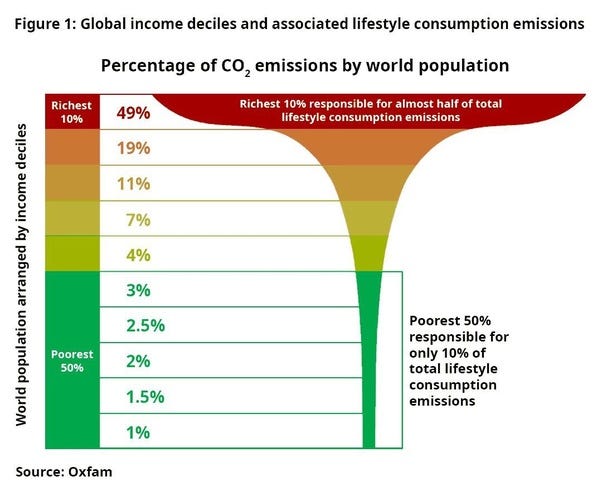
The main reason the billionaires should be taxed isn’t even economic, at least not quite directly the most important. The main reason they need to be restrained is that if they are not, they will destroy human civilization, and they don’t care because they have enough to build bunkers to ride out the apocalypse.
The people answering this question who are defending the atrocities of unrestrained wealth are as guilty of crimes against humanity as the MAGAts who are guilty of treason against the United States.
An astute argument was raised in response to this post that I’ve included here:
One point I would make is that taxing income and taxing wealth are two completely different things. Elon Musk may be worth $300 billion but that’s his wealth, not his income. If we start taxing wealth, be prepared to start paying taxes on the increased value of your house every time it appreciates in value. Politicians that tell you they would set a minimum of $100 million before taxing are telling half truths. They may set a limit initially but over time that can change. The original income tax was 0.5% of incomes over $1 million. How’s that working out for everyone ?
That argument sounds much like the fearmongering cynicism against raising the minimum wage — inflation will go up, or robots will replace jobs.
The reality is that property ownership is not the same thing as stock wealth, and there’s a fix for that — eliminate the corporate ownership of residential real estate.
Furthermore, the number of tax brackets that exist today is an unrealistic reflection of the historic levels of wealth disparity. For example, there are only seven tax brackets today. I checked to see how many existed during more realistic tax assessments. It was strange that learning how many tax brackets existed historically took more effort to identify than my bias believes it should.
This link below shows that in 1952, there were 28 tax brackets. Eliminating tax brackets benefits only the wealthiest in the land. The more tax brackets, the more granular the taxation rates and the less discriminatory tax rates are to the lower classes, and the more progressive taxes become — as they have always been intended to be. As it stands, the radical reduction of tax brackets has just been a means of waging a class war against the little people by allowing them to skip responsibilities that are inherently theirs while redistributing tax responsibility downward.
Historical Federal Individual Income Tax Rates & Brackets, 1862–2021
 thotbag