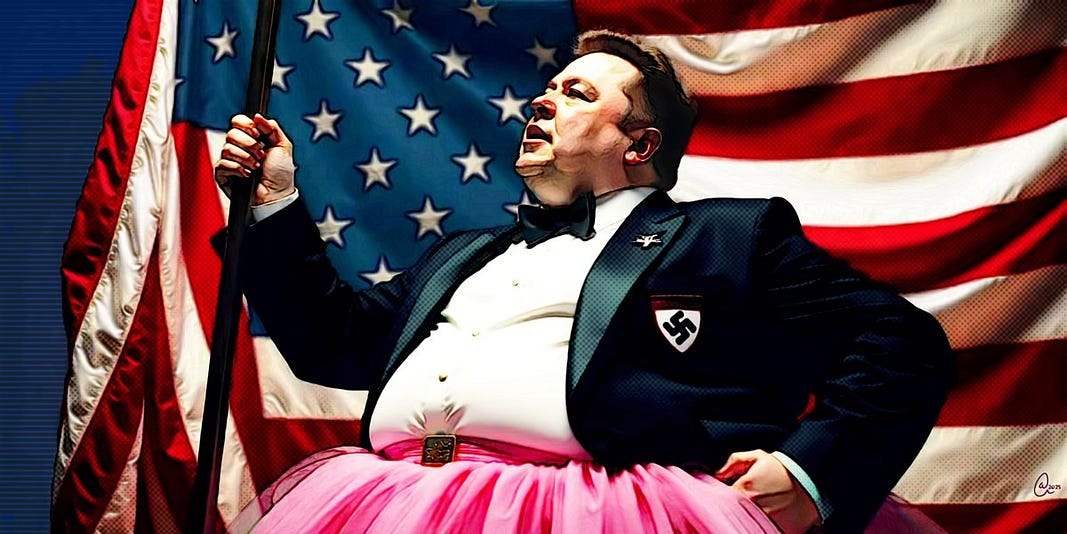
This post is a response to a question posed in its complete format: “What question/s and their answer/s best discern a true patriot from a fake one?”
This question is problematic on several levels because a “true patriot” is essentially a subjective assessment until one’s actions are identified as universally consistent within a broad recognition of patriotism.
For example, Mike Pence could have been easily viewed as a traitor while serving alongside Donald Trump, but he proved otherwise with his final official act in office as a VP.
Luigi Mangione can be viewed as someone who has betrayed the social contract by extinguishing another’s life. Still, he can also be considered as paying the ultimate price to protect the lives of countless thousands within a dysfunctional system that preys upon people while victimizing them for profit. Few actions are more patriotic than sacrificing one’s life to end corruption. Whether that’s considered patriotic is a matter for history to pass judgment.
The same applies to Edward Snowden, Julian Assange, Joe Darby, Karen Silkwood, Daniel Ellsberg, Frank Serpico, Chelsea Manning, and a panoply of whistleblowers throughout history.
List of whistleblowers — Wikipedia
Patriotism is far too nuanced to identify within a survey methodology.
People are not static objects.
People’s actions do not align directly within predictable margins, fitting generic descriptions of subjectively defined concepts that evolve as society changes.
A question as simple as “Do you love your country?” is quickly answered through deception, malicious intent or naively justified expedience. A person can believe they do love their country while acting in a treasonous way. Conversely, a person can be perceived as hating their country and acting supremely patriotic by sacrificing their life to protect it.
Adding further complications to this question is that communication is a nuanced process. At the same time, the more subjective the concepts that any survey attempts to address, the less effective the multiple-choice answers are.
Adding another level of complexity to the mix is the notion of “true” as a qualifier for suggesting patriotism is a binary state. Where is the distinction between “true” and “not true?” Is “not true” the equivalent of “false,” or can there be states of patriotism between “true” and “false?” I think I’ve already identified some of those intermediary states above.
I don’t believe any specific question or answer can identify some nebulous standard for a largely subjective state of mind that can change according to circumstances.
Ultimately, the only way to know is if the person in question can appreciate and value the social contract such that it’s the highest priority in their mind when considering political positions because it indicates a community perspective over a narcissistic one. That’s not information one can determine through a survey approach.
 thotbag