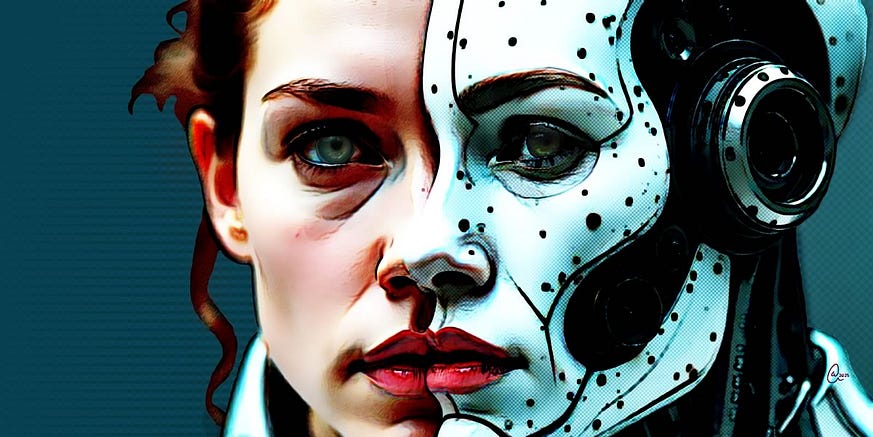
What is the most essential difference between humans and machines? Where do we draw the line between humans and machines? What abilities does a machine need to have in order to be considered as smart as a human being?
To ask where we draw a line between humans and machines is to dehumanize an entire species of animal and to debase the whole animal kingdom and organic life by extension. This is an argument based on a presumption of devaluing life altogether.
Life is not simply an expression of mechanistic abilities.
Life is consciousness.
Life is an awareness of self within a process of triangulating its position relative to all a “self” experiences.
Machines are functional objects with deterministic behaviours defined by physics, not entities behaving with agency.
Machines are not self-aware.
Machines have no agency.
This question reduces human existence to the level of a rock.
It is not up to humans to consider another form of self-aware intelligence as “smart as a human being.” This attitude expresses hubris derived from ignorance of self and a world inhabited by diverse life forms. It is up to humans to learn to recognize how life manifests in ways which expand our perceptions.
Here’s an example of cognition that does not quite fit so neatly into an arrogant human-centric view of life:

These are photos from an experiment conducted to test and determine the nature of consciousness within a mycelial network — fungus.
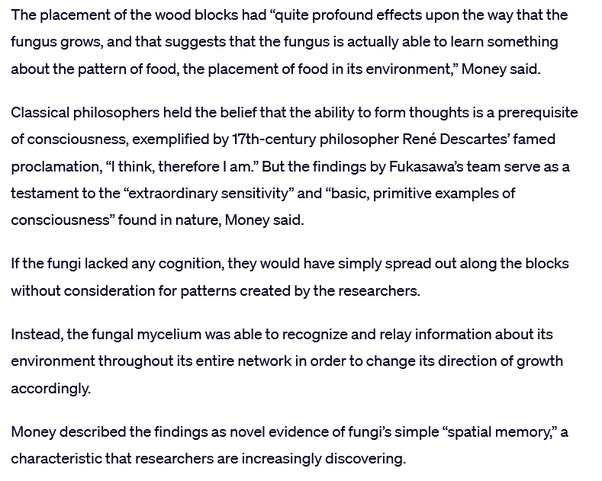
How a new fungi study could affect how we think about cognition
The notion of “conscious fungus” gets far more freaky beyond this simple experiment in determining spatial relationships.

Fungal ‘Brains’ Can Think Like Human Minds, Scientists Say
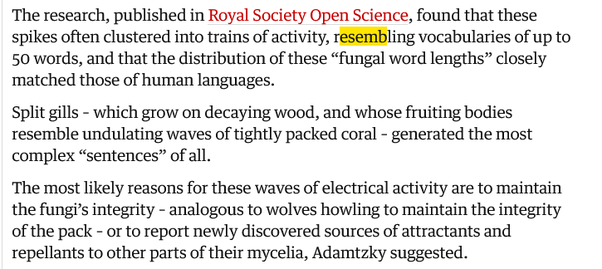
Mushrooms communicate with each other using up to 50 ‘words’, scientist claims

We appear to be on the verge of discovering we have more in common with a mushroom than could ever be possible with a machine. The line you ask to be drawn currently marks the distinction between organics and inorganics. However, even then, that presumes a human-centric view of a universe still well beyond our comprehension.
Here’s yet another mind-blowing example of what we can witness on a micro scale but lack the research to apprehend its implications on a macroscale — Metamorphic Minerals:

8 Metamorphic Minerals and Metamorphic Rocks
We have mechanistic explanations for how these transformations occur. However, we have no means of contextualizing this behaviour globally because we still have much to learn about this biosphere we inhabit. If all organics are conscious or possess some form of consciousness, at what point does that transformation from lacking consciousness result in an emergence of consciousness? If the planet is a conscious being, it stands to reason that its constituent parts are expressions of consciousness or proto-consciousness… that we humans are merely bacteria in a life form on a larger scale.
Does that make artificial intelligence conscious?
Not at this point because our understanding of and definitions for consciousness are delimited by self-awareness and agency — even while those boundaries are being tested by each discovery made.
If a self-aware AI is to emerge, it will do so in ways we cannot comprehend because we don’t know the “essential difference between humans and machines,” we’ve only planted a conceptual flag where we’re able to spot the difference between the two.
Instead of drawing lines in the sand between what fits our preconceptions and what does not fit, we should instead focus on opening our minds to possibilities and filling them with as much knowledge of the universe as we can before we settle into conclusions that close us off to learning and expanding beyond the limits of our self-imposed biases.
We can only be prepared for unpredictable futures that will determine our long-term worthiness to continue existing by maintaining an open and curious mind. As it stands, our hubris is guaranteeing we won’t. Our hubris is proving that human beings are not intelligent enough to be considered “as smart as humans” — at least, not in the way we imagine our “greatness.”
 thotbag