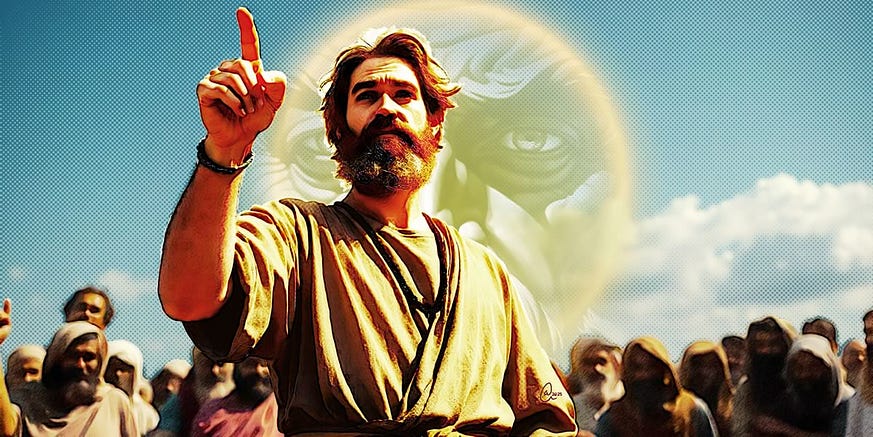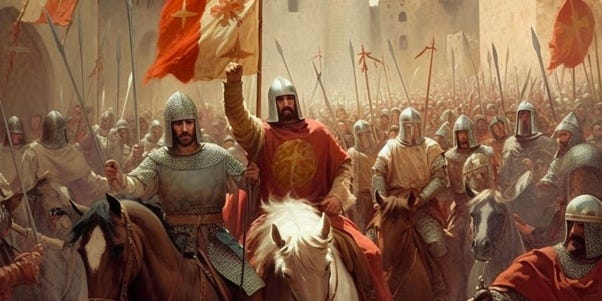
Is there such a thing as Trump Derangement Syndrome?

This post is a response to a question posed in its complete format: “Generally, do anti-Trumpers think there is such a thing as Trump derangement syndrome, or do they see it as merely a criticism of them?”

Generally, people who refer to other people as “anti-Trumpers” while behaving as if “TDS” is a legitimate diagnosis are struggling to compensate for their slipping grasp on reality.

“TDS,” for example, is a dialectical device for dismissing uncomfortable information about someone’s object of unconditional worship.

It is “BDS” for a new president. It was first concocted as a way to ignore arguments against the Bush administration and their lies to initiate two wars with two different countries under the auspices of getting revenge on a terrorist attack.

None of the people who hurled the nonsense accusation of “BDS” wanted to believe the Bush administration had lied to them. None of them wanted to acknowledge the family feud origins driving two illegal wars while conducting war crimes when confronted by the facts of the Bin Laden and Bush histories.

None of them wanted to acknowledge the hypocrisy of a president who gave up looking for the terrorist responsible for the attack on 9/11.

At every step of the way and with every criticism of a grossly incompetent and abysmally amoral leadership that treated the soldiers who spilled blood on their behalf like disposable garbage, they cried out, “BDS! You’ve got BDS!” Hoping that would be the end of the resistance to their corruption.

They’re doing the same thing again with “TDS” by repurposing a conversation terminator that can allow them to wriggle away from the consequences of their corrupt behaviours.

They’ve also concocted another means by which they can achieve their divisive betrayal of the nation by reducing the conflict to a team sport where the opposing sides are merely cheerleaders for equal and opposite ideologies.

That’s already a betrayal of the social contract and everything decent about a nation that claims to value freedom and democracy.

These people never shut up about freedoms like freedom of speech, yet every one of their behaviours is the antithesis of what they claim to value.

They are worse than traitors to the nation. They are a toxic disease that represents a threat to human civilization.

They are worse than intransigent children because they cannot reason, will not reason, and will lie and accuse their way out of responsibility for the consequences of their destructive actions.

They are worse than cult members because they are not content with remaining in their space and living their lives in peace while allowing the rest of the world to enjoy the same courtesy.

They are a disease, a scourge that will not stop until they rule the whole of humanity.

They have existed for centuries, and now, they are impossible to ignore. They have become impossible to compartmentalize within geographical boundaries. They have become impossible to allow us to lie to ourselves that we are not all touched on some level by centuries of generational CPTSD.

We cannot ignore that these are not people “over there” but are our families, neighbours, and fellow country people. These are people who represent the one-in-five among us who suffer from severe psychological dysfunctionalities.

We cannot ignore how we cannot win this war through aggression but by changing how we live and how we structure our societies.

We can only survive this war by addressing all the elements contributing to this evil’s metastasis.

We can learn from history, pay attention to the same signs screaming for our attention, and stop creating excuses for why some things we value cannot be questioned.

We must be open-minded enough to acknowledge how much of what we take for granted as acceptable should no longer be tolerated.

We can no longer allow unchecked power to corrupt our systems and destroy their fundamental characteristics, ensuring their survival and capacity to meet our needs.

We must restore trust in ourselves as people living together in a civilized society and the systems we live by. However, we can’t do that by allowing the enemies of society to smear everything with a misanthropic haze of false equivalences.

We must draw lines in the sand when determining what is and isn’t acceptable and hold everyone accountable on an equal footing. We can no longer permit two sets of laws and rules for two classes of people.

Liberty, equality, and fraternity must be true for everyone, or we may as well allow ourselves to descend into the grave of barbarism as we write our final writ to the stars that care not whether we live or die.
Why does the government sometimes support monopolists?

This post is a response to a question initially posed on Quora, and can also be accessed via “https://www.quora.com/Why-does-the-government-sometimes-support-monopolists/answer/Antonio-Amaral-1

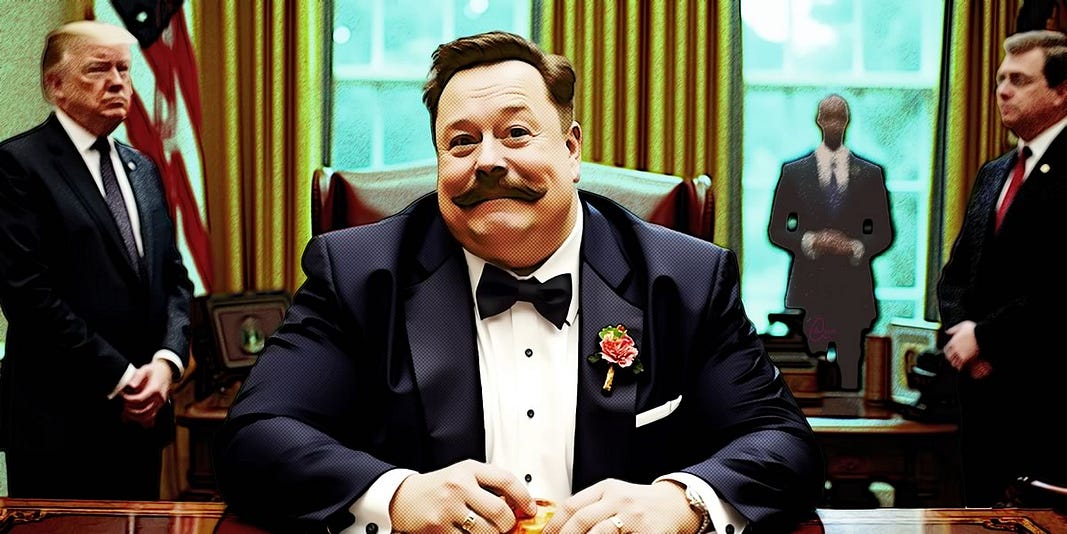
Why can a private citizen like Elon Musk address the nation from the Oval Office like he was elected president?

Government representatives support their donors because they owe them — plain and simple. For Elon Musk to support Donald Trump’s presidential campaign with a $270 million financial boost means he expected something in return. That something just happened to be the keys to the halls of power.

Made even worse by the Citizen’s United Ruling that money equals speech, the entire nation has been converted into a kleptocracy. Anyone with enough money can buy their representative who will institute laws favouring their wealth acquisition goals.

They will use fraudulent arguments like consolidation equals efficiency and lower consumer costs, but that’s just bunk.

The harsh reality is that the nation is no longer a democracy or a government of the people, for the people, and by the people.

The U.S. is currently being stripped for parts to be sold to the highest bidder, and the entire world will suffer from its dissolution.

It’s not the government that supports monopolies but the billionaires who buy government representatives who seek to hoard as much of the nation’s wealth as possible and support consolidation while claiming to be capitalists.

Meanwhile, the useful idiots in the crowd conveniently forget how one of the key components of capitalism is competition.

Monopolies not only kill competition, they kill innovation, and they gouge consumers.

For example, anyone who has had to purchase prescription glasses can attest to how badly Luxottica has screwed them over.

Monopolies are cancer for an economy and for society as a whole. Monopolies give rise to dynasties, which push us back to a time of being ruled by monarchs in a two-class society of rulers and serfs.

Democratic governments that have not been corrupted otherwise do not support monopolies and create legislation to break up monopolies.

Sherman Antitrust Act: Definition, History, and What It Does

What Are the Most Famous Monopolies?

What to say to an atheist.

This post is a response to a question posed in its complete format: “What are some things to say to an atheist that will make them think about their beliefs?”

This question is a sad indictment of believer conditioning.

Very few people think about their beliefs more than atheists, particularly those who have spent a lifetime detangling the nonsense crammed into their brains by the religious conditioning they received since childhood.

If believers want to know what to say to atheists, they must first learn to emulate the humble nature of their Christ and not assume they’re in greater possession of a deeper understanding of their own beliefs. You don’t understand your beliefs as well as you think you do. Your attitude in seeking a way to “make them think about their beliefs” shows you have very little depth of understanding of beliefs you inherited and have swallowed wholesale without putting any effort into understanding them beyond how you should submit to nonsense.

Every day on Quora alone, numerous believers pose questions demonstrating a very underdeveloped and even childlike apprehension of beliefs in general. At the same time, statistics show that atheists are generally better informed on religion than the religious themselves.

Yet… here you are, assuming you have unlocked the universe’s secrets because you submit your entire life to an illusion you can’t prove to yourself is real. You have accepted the words of other believers without questioning them and then have chosen to behave as if following instructions is the same as developing one’s beliefs about life and the universe we inhabit.

The arrogance you demonstrate with your question embodies the reason why religions incite conflict in this world. It is the blind arrogance you demonstrate with your question which shows you have no interest in understanding how others might arrive at their beliefs. You assume the instructions you were fed and followed like an obedient pet constitute a superior set of beliefs.

They don’t.

They demonstrate your incapacity to take ownership of your mind.

They show your willingness to give up everything of your natural identity to submit your entire life to a lie.

Your blind adherence to your instructions demonstrates no understanding of your beliefs but obedience. This is why believers betray their inability to understand what belief means daily on social media.

You should be embarrassed by your question, but you’re not because you sincerely believe you happened to be born into the right family to imbue your mind with the correct beliefs that make your inherited views superior to all other views on the planet.

That’s why religion is toxic. This is why religion is responsible for thousands of years of warfare. This is why religion is a cancer we must cure from human society if we wish to achieve our potential as a species.

If you insist on talking to atheists about their beliefs, then you should emulate the humility of your Christ and approach them with an open mind full of questions and a willingness to learn about your own beliefs. Otherwise, you’ll get the animosity you have already seen in the answers you’ve been given.

A Dialogue on Existence


Today’s post is a slight shift in gears. Rather than the simple formula of posting an answer to a question, I’ve included a dialogue following a short answer given to a question, which, in its complete format, is, “If we died and stopped existing, how long would we have to wait to be born as a new animal? Would time fly? Would we recognize we had been dead for hundreds of years?”

The universe is at least thirteen billion years old. Do you have any awareness of anything outside your experience of life?

No, because you did not exist before existing now. You will not exist again.

When you die, you stop existing. There is no “waiting” for anything. There is no time. Death is not a timeout from life.

This finite period of existence is all there is.

Learn to appreciate it as much as possible because once it’s gone, it’s gone.


Commenter (CS): I think a lot of you are missing the point if you don’t exist the universal find a way for you to exist

AA: Nope… you are missing the point. Once you’re dead, you’re dead. Whatever it is that you think constitutes “you” is gone forever.

If something that you might speculate exists beyond the “you” that exists in physical reality is something which makes you “you” and that you are a part of, it is not “you”… it is something else. If something else you speculate exists beyond physical existence, the “spark” makes you you. It accomplishes that task through physical phenomena, resulting in epiphenomena known as “ego, superego, and id.

“You” are not that “eternal thing.” “You” are a temporary thing called “ego.” “You” are the flame on a match that disappears into nothing when the wood has burnt.

Accepting this truth is the broad lesson of humility all of humanity must learn to transcend this tentative existence.


Commenter (CS): I agree with you to a point we will be dead yes . but if something doesn’t exist something that exists in the future . will be atoms that once made us meaning we will live again but not as us I’m not talking about reincarnation I’m simply talking evolution atoms are the building blocks of life if we don’t exist the atoms will make us exist.

AA: No. Atoms merely form the physicality of our existence as conscious beings. If physicality is the limit of our existence as conscious beings, then that only reaffirms the argument that there is nothing more beyond this finite existence for any of us.

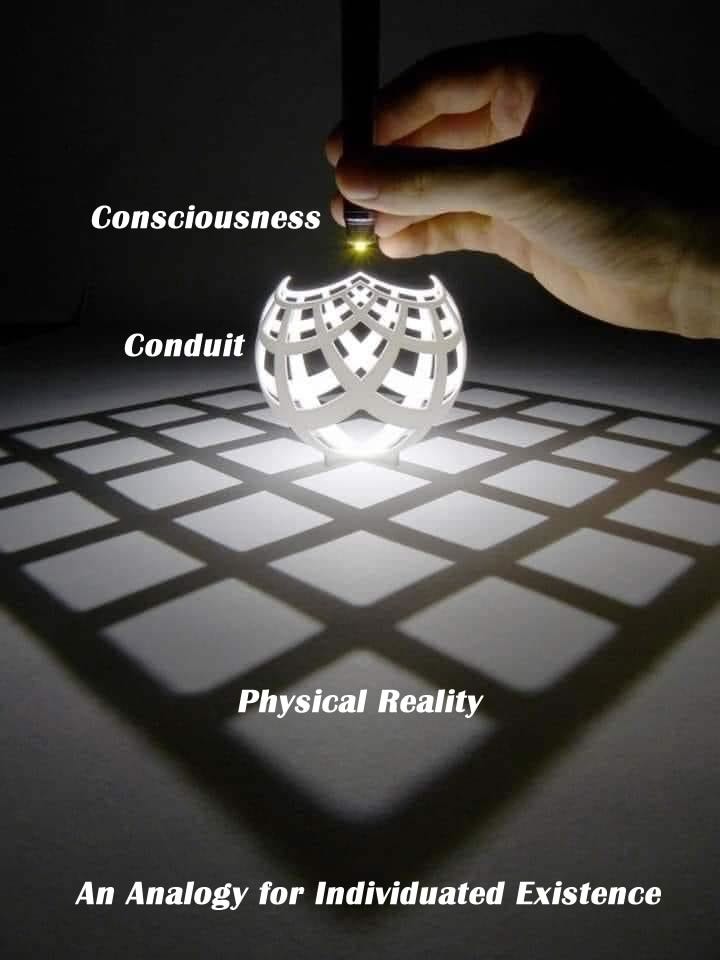
The religious take on existence is that we are part of something greater. Our latest investigations into the concept of consciousness indicate that something of that notion may be true. For example, “Integrated Information Theory” (IIT) posits that all of the universe’s physicality essentially is information that persists indefinitely, if not infinitely.

That means whatever constitutes a life persists long after that physical life is complete… like a library of documentaries. This begs the question of whether or not that library is accessible and accessed by something speculative.

Whatever the case may be, the fact is that the “you” which exists within this finite frame of spacetime exists only within this finite frame of spacetime. The two concepts in these two paragraphs also imply that the “you” experiencing your life is something else experiencing a “documentary,” and it ends when the “you” that you experience ends.


Commenter (CS): that’s a very good point but that’s still doesn’t explain when something decomposes and turns into nothing nothing can be made . before we were spam we came from nothing the atoms in the universe made us when we didn’t exist meaning over time after the bodies decomposed it will do the same possibly on a different planet where evolution is still new.

AA: There is no such thing as “nothing.” That’s a religious concept. Decomposition reduces physical materials into chemicals that are reintegrated into the environment. That’s a long way from “nothing.”

Molecular arrangements construct chemicals. Atomic arrangements build molecules. Quantum arrangements construct atoms.

Quantum bits of matter exist in flux between virtual and physical states. The virtual state exists in a theoretical state called “Quantum foam.” “Virtual particles” theorized to exist within “quantum foam” are described as potentialities because we can identify their physical state when manifested and extrapolate their “virtual existence” from behaviours we can observe.

The “state of quantum foam” exists “outside” the parameters we quantify as “spacetime.”

IOW. Reality “extends beyond” the physical universe.

Adding to that is the relatively recent discovery of microtubules in the human brain, which appear to interact with the universe on a quantum level.

This all suggests a connection between consciousness and whatever may exist outside the framework of our physical universe.

This implies human identity as a construct, not unlike a liquid, which takes the form of the mould into which it is poured.

IOW. “You,” as you experience “you,” exists only within the context of the mould you are poured into. Once that mould has deteriorated, there can be no more “you.”

What do you think of Luigi Mangione?

This post is a response to a question initially posed on Quora, and can also be accessed via “https://luigimangione.quora.com/What-do-you-think-of-Luigi-Mangione-1

This question cannot separate the person from the act that introduced the person to the world. The person and the act are now inseparable. No one can answer this question independently from knowing why he is known.

What people think of Luigi Mangione will forever be the act superimposed upon a subjectively constructed image of him.

The only means by which one can now render an objective description of him is by offering up statistical data and facts about his life. Who he is as a person is now beyond anyone’s comprehension. No one can know what motivates his existence or what comprises the subjective state of Luigi Mangione beyond surmising a person who has experienced a breaking point in their life in which it was better, in his mind, to do the unthinkable for most of the rest of us than to continue an invisible march into a nightmare he could no longer endure.

No one can know what that feels like unless they’ve been forced to walk in similar shoes.

One conclusion that can be drawn about his personhood is that he demonstrated an ability to sacrifice himself to act on behalf of thousands of faceless victims forgotten in the march of greed.

Along with losing the ability to think of Luigi Mangione as a being separate from his act, neither can we separate the notion of the tens of thousands of victims lost to us every year in service to the God of profit. We can no longer forget how easy it is for many among us to justify murder if it means pocketing riches and obtaining a life of material wealth for oneself.

None of us can separate Brian Thompson’s callous extinguishing of lives from an algorithm to be rewarded for it in service to the monsters who refuse to honour the social contract and a local thug who robs a convenience store for a drug fix without admitting to being a sociopathic monster.

The reality between the two scenarios is that the local thug is less of a monster than the billionaires who think nothing of the lives they extinguish while offering up the lie that there is nothing they can do about it.

None possess the courage or the integrity to distinguish between ability and desire.

Every insurance billionaire can choose otherwise, but they don’t and hide behind the lie that the protocol they devised to protect their material luxuries is immutable and outside their control.

What I think about Luigi Mangioni for sacrificing his life to show us all our ugliness in a black mirror of a broken society is that he should not have been forced to put all the rest of us to such severe shame, and even more so is the pity that we still can’t grasp how evil our world has become.

What is Quora used for?

This post is a response to a question posed in its complete format: “What is Quora used for? Can I use it to post my social life? What can I use Quora for?”

You can use Quora to ask questions or answer questions.

What you do with those questions or answers is entirely up to you.

For example, my use of Quora has evolved into a sketchbook of ideas where I repurpose some of the answers I write here into articles for publication on other sites.

This was a natural evolution for me that occurred from when I first joined over ten years ago. I was drawn to an academic vibe at the time, with primarily intelligent questions and answers from people who were very knowledgeable and extremely generous in sharing their knowledge.

It felt like a welcoming environment of aspiration for contributing value to our world.

Sadly, most of that is gone or buried under volumes of nonsense as the profit motive prioritized decisions that cared little about preserving knowledge sharing. Quora has succumbed to the same community-deteriorating profit-chasing phenomenon that all other social media sites have.

My personal life was also supremely upended shortly after joining, and I stuck with Quora, not out of my original intent of adding to a marketing funnel for my consulting efforts as an instructional designer but out of a therapeutic need to feel I was still able to make positive contributions to other people’s lives.

As Quora quality devolved, so did my participation to such a degree that it became a vessel for venting. As much as that has helped me to cope with what I’ve endured, it’s often toxic and destructive to a fragile state of mind. Fortunately, writing leaves a trail for facilitating introspection, which has become a path out of personal darkness for me.

I hope my latest stage of using Quora as a springboard of ideas and back into a life of some modest dignity will be a stage where I can leave most of my negativity behind and be grateful to Quora for functioning as my only source of productive therapy over the last decade.

A condition of where my life is at right now involves meeting with an actual therapist. I have concluded, however, that he’s a hired assassin for an entity that seeks to escape responsibility for the consequences of its actions through a strategy of encouraging suicidal ideation.

That may seem like hyperbole, but there is no other explanation for the overtly antagonistic and abusive behaviours exhibited by this “professional.”

For me, the only valid forms of therapy I have ever experienced have been through my creative expressions, which have mostly been through writing and creating pictures.

For me, Quora will, hopefully, be a means of moving on from a stage of inertia into a productive future where I can encapsulate ideas I’ve explored here into formats that can serve as some form of legacy to my life I can feel proud of.

What you want Quora to be for yourself is whatever value it brings to your life. Generally speaking, however, as social beings, how we manage our social interactions, whether in person or online, defines our lives for each of us.

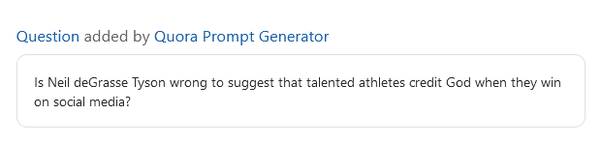
Is Neil deGrasse Tyson wrong?

This post is a response to a question posed in its complete format: “Is Neil deGrasse Tyson wrong to suggest that talented athletes credit God when they win on social media?”

I think there is something severely wrong on so many levels that it’s impossible to address them without an entire book and a lot of research to identify the dynamics of a business decision justifying the dissemination of lies in society to stimulate engagement and generate revenue.

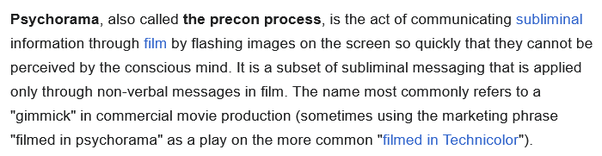
This is horrifying on so many levels that it insults every aspect of humanity, human society, and the social contract. This contributes to the widespread decay and ultimate destruction of civilized society on the most malignant levels. This crap is worse than the stage of “subliminal seduction” we went through in the 1970s when laws were crafted to prohibit embedded “invisible messaging” within entertainment media.

Psychorama — Wikipedia

Neil deGrasse Tyson has never suggested any such thing, and although it’s easy to attribute this claim to a believer on a mission of Lying for Jesus, it’s not. This is even worse than a believer trolling for reactions by lying.

For non-Quorans: This screengrab indicates the question author, and in this case, the question was written and posed by a bot designed to stimulate engagement on this social media site. This is a common revenue-generation strategy employed by media outlets across the board. Fox Entertainment, for example, has built its empire entirely upon this toxic revenue generation model.

Targeting information appealing to the limbic system is like serving up crack to a heroin addict, and that shapes the society we are cultivating by allowing this practice to dominate media. The effects are profound. 

Not only does this represent an abysmally immoral strategy for generating revenue, but it’s also a strategy that furthers a divide between people in a society already at the edge of fracturing into chaos. This strategy for engagement is ultimately a violent assault on our social contract and is responsible for the dramatic divisiveness characterizing our social dynamics today.

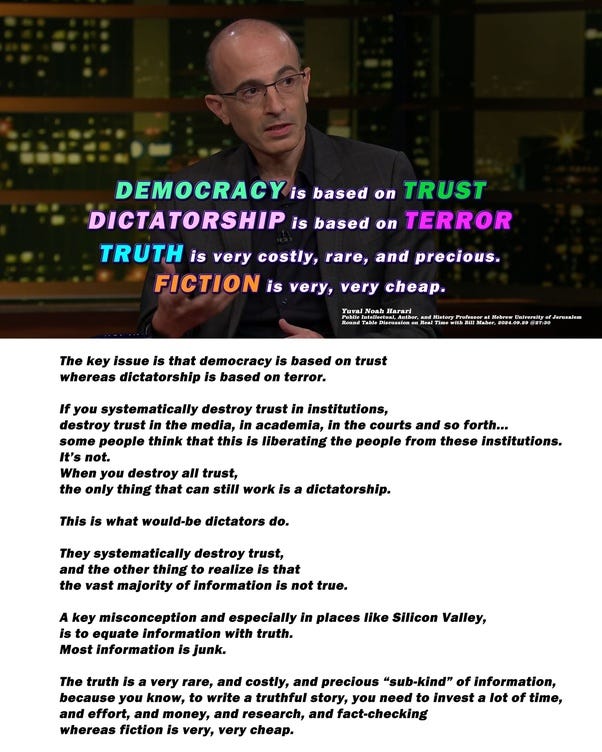
This precisely reinforces the post on my Thotbag space, citing Yuval Noah Harari’s statements during a round table discussion about the threat democracy itself is facing. Here is the meme I posted that includes his full text:

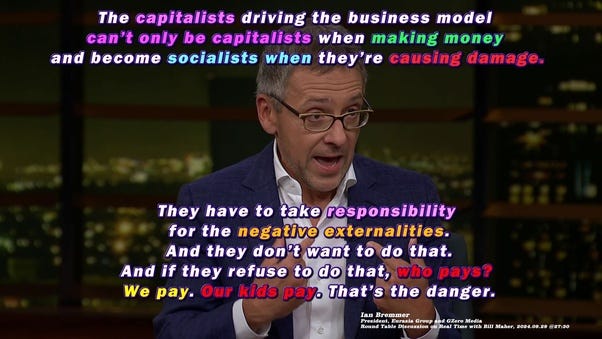
Along with Mr. Harari’s warning, Ian Bremmer pointed at the problem this divisive, conflict-escalating disinformation creates for society:

This fraudulent question is worse than Quora violating its own, now primarily defunct BNBR policy; it’s an assault on human decency on the most corrupt of levels for the most corrupt reasons.

This should not be disturbing only to atheists who fight back against a daily assault from believer trolls seeking to provoke emotional reactions. This should be disturbing to everyone who cares in the least about things like integrity and the social contract that has never been strained to such a degree as what we are living with today.

If society collapses into chaos — If people’s lives are unnecessarily lost because we can’t or won’t back away from the cliff we march toward — Then this kind of manipulative nonsense perpetrated upon us all for the sake of profit will be responsible for the nightmares ahead that we are about to encounter.

This is central to my argument on why social media should not be operated on a for-profit model. Social media is a community development endeavour, and we must consider how we approach its role in society more thoroughly than consigning personal information to a feeding ground for mining material profit.

That we are being strategically and systematically provoked by algorithms to hate each other should horrify all of us.

Do you think that Quora users are mean?

This post is a response to a question initially posed on Quora, and can also be accessed via “https://www.quora.com/How-mean-are-the-people-on-Quora/answer/Antonio-Amaral-1

Quora users are no different than anyone else on other social media sites.

The virtual environment, coupled with the insulation of an identity divorced from who people are in real life, allows them to indulge in their basest behaviours without repercussions to themselves.

Some are deliberately more abusive online than they would be in person because of a lack of consequences to them in life. Some use social media as a vehicle for venting their frustrations, and that often involves victimizing others.

It’s a dynamic that exists everywhere but is exaggerated online due to the shield a fraudulent identity provides.

All social media is much like Quora, but I would argue that Quora is more civilized than Facebook. A lot of aggression on Facebook is expressed passively through the emoticon reaction system. Facebook UI also sucks big time for permitting extended dialogues, while Quora’s system of ownership of content and content threads by the answer writer helps to minimize aggressions here.

Quora’s system is less antagonistic than Facebook’s because of its structure and is more efficient than other sites at handling long discussion threads.

Insofar as degrees of meanness on social media, my decades of experience on Usenet remain unsurpassed in meanness. Still, social media has generally degenerated in decorum to more closely resemble interpersonal dynamics on Usenet.

It’s a shame that social media has become so toxic. This devolution of courtesy is an argument for a publicly owned and supported social media venue that eliminates the profit motive by operating as a non-profit entity to serve as a community development tool, performing various community development functions and providing various public services.

A sign-on system, for example, could replace the various sign-on systems that people use for logging into sites where sensitive data is stored while ensuring one’s data is accessed through a single entity that provides access to one’s government-related needs such as their taxes or identification needs, and etcetera.

Social media has always been about community development. I have found amusement in statements about upholding community standards from privately owned entities like Facebook that routinely violate the bounds of decency within a community-oriented context. I often complained to Quora about inconsistently applied BNBR standards, and the result of attempting to manage nuance was resolved for them as a business decision deemed too expensive to operate effectively. There was no profit-oriented point to them to pretend that being nice and respectful was an important feature to protect.

Part of the problem with moderating systems is that petty people find ways to weaponize moderation against people they decide to behave spitefully toward.

I’ve been considering a series of articles on social media while arguing in favour of a community-based, owned-and-operated system that can address a number of the shortcomings while functioning as a means of “encouraging” improved interpersonal dynamics through a self-moderating model, but that’s a significant endeavour while I’m currently in the process of addressing more profound to me issues through a struggle I’ve been undergoing for the last decade. I hope I finally get a resolution to it soon and in time to focus on other areas in which I hope to make more constructive contributions to society rather than the wholly destructive path I’m currently on.

In short, and as a summary, however, people can be pretty mean everywhere, and sometimes, there’s nothing one can do about it but try to avoid or dismiss their meanness. It might help to be aware that not everyone is always mean. I’ve noticed within myself while using Quora as a public therapy tool for coping with my circumstances that my bouts with meanness correlate directly with my mood, and my mood is often affected by my current experiences. The best I can do is to learn to understand myself so that I can better understand the meanness of others, and that seems to be helping because their meanness over time has a decreasing impact on my psychology while I’ve become more effective in addressing their meanness in ways that I hope help them to improve.

That’s essentially all we can do for each other is to ensure we protect our boundaries in ways where the meanness doesn’t destroy our self-image. If it impacts it, then it serves as a teaching moment where we improve ourselves and become less mean over time rather than more mean — which is precisely the distinction in attitude I see creating the division between the toxic MAGA phenomenon and a world struggling to cope with increasingly aggravated divisions that have been cultivated within us by the people who have been setting us against each other while they rob us of our dignities.

Is karma real?

This post is a response to a question posed in its complete format: “Do you believe in karma? Is karma real and happen to everyone whether they believe or don’t believe?”

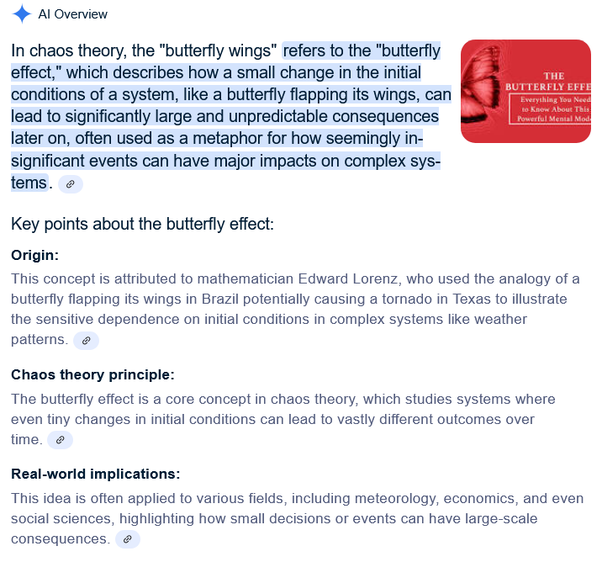
Cause and effect is physics, and so is Chaos theory, which is encapsulated within a concept called the “Butterfly Effect.”

In essence, it’s impossible to confidently predict the consequences of human behaviours because human societies are chaotic systems in which the most minor actions can lead to highly dramatic outcomes.

Whispering the correct sequence of words in the right tone into the correct ear can initiate a domino effect that can destroy an entire civilization (to translate the Butterfly Effect into a highly dramatic potentiality within the space of human dynamics).

That is valid science supported by observation and math.

Karma is “woo” — wishful thinking connecting a cause to an unconnected but desired outcome. It is supported only by the desire of the individual who hopes for a specific result. Reality doesn’t work that way, but coincidence can cause people to believe it does.

Having said that, if enough people desire an outcome, such as stopping a malignant force like Trump’s rabid destruction of the nation, then people will take action to affect an outcome through intent. This isn’t “Karma,” which suggests some invisible hand of the “human interaction space” (like the magical “invisible hand” of the free market) but cause and effect.

What will result from the escalation of conflict through the initiation of several protests as pushback to what the Trump administration is attempting through their implementation of Project 2025 is unknown. The only predictable aspect of where we are now is the guarantee that conflict will continue to escalate until it reaches a crescendo that can result in a complete breakdown of civilization through unmitigated chaos. How far all of this goes is anyone’s guess. We won’t know until the dust settles. We can only hope for a specific outcome based on the degree of public engagement and the escalation of protests against the takeover of the nation by a fascist entity.

That’s not karma because we can lose, while karma implies a guaranteed win. This is cause and effect in action, and the outcome is unpredictable.

People will call Tesla’s worldwide sales tanking karma because it feels good to say that. The reality, however, is that it’s the effect of a Nazi salute on the marketplace by a public that hasn’t forgotten the horrors of the Nazi scourge that extinguished millions of lives.

In short, I prefer to know the variables that can affect an outcome than hope some magical cosmic intelligence is balancing some invisible scale according to how I would wish the universe to operate.

Effects flowing from causes are reality, while karma is just wishful thinking.

Can you trust people who hear the voice of god?

This post is a response to a question posed in its complete format: “Can you trust people who hear the voice of god in their head and demand other people follow the words of their god?”

Sure. You can trust them to live in a world of delusion that creates a barrier between their internal narrative and the shared reality we all live in.

You can trust that they will defend their delusion to an extreme that could dramatically harm people who do not support or challenge it.

You can trust that if you’re not hyper-vigilant about their actions and attitudes, they will eventually devise a justification for doing you harm when you least expect it.

You can trust that if you don’t support their delusions, they will trash-talk you to their peers and give them all the reasons they need to become toxic toward you.

You can trust that they will do anything to affect the laws to ensure everyone submits to their delusions.

You can trust that their moral paradigm is entirely self-serving at the expense of anyone who does not submit to their delusions.

You can trust that if you piss them off enough, they will easily justify actions that can end your life.

You can trust that if they can establish and operate within a community of sufficient numbers, they will do whatever they can to undermine the systems they live within to transform their community into a Gilead nightmare.

You can trust that they view their toxic attitudes and destructive actions through a lens of corrupted righteousness, fueling a war under the guise of being an army in service to their delusion.

You can trust that they will identify the most easily victimized and relentlessly attack them as a recruitment strategy for their delusion as they seek to spread adherence to it like it were a communicable disease.