This post is a response to a question posed in its complete format: “How do you listen to people open up about their issues without trying to solve them? How do you just comfort people?”
One of the first things a first referral counsellor learns is that you cannot solve other people’s problems for them. Even more so, you don’t want to solve their problems because what you might see as a solution for yourself is likely not a solution for them.
What you end up doing is creating a dependency relationship with someone who now has a scapegoat to blame when your solutions backfire on them.
You end up giving them permission to take the easy route of blaming you for their problems instead of learning how to solve their problems for themselves.
You don’t want that kind of monkey on your back because it could haunt you for life.
Most people want to be heard without judgment. The act of actively listening to them while validating their emotions and the struggles they are experiencing is often the only thing they want or need.
Being able to openly express oneself without fear of being misjudged for their struggles or how they deal with them is all the healing most people need most of the time. That opportunity often gives them enough space to hear themselves through your perspective and devise solutions for themselves by being able to speak freely about their problems.
If you sincerely want to help people solve their problems, you must understand that the best way to accomplish both your goal and theirs is to listen and acknowledge their struggles while validating their feelings and who they are as people.
You almost cannot help someone more thoroughly than by letting them know they matter. Most people only want to know that someone hears them and sees them as a living, breathing, independent human being with a core of reality all their own, just like how you think of yourself. People often only need assurance that they can achieve their goals if they apply themselves.
At most, you can offer ideas for where assistance is available, identify resources they may not be aware of, or repeat their statements to them in your own words. Often, simply saying something they said in different words is enough for them to see their problem with different eyes and in ways they can more easily identify solutions.
It may feel especially tough if you can spot what appears like a simple solution to you, that you would rather hand it to them so that you can continue with other matters, but it’s more important to realize how this is a learning process for both of you. Both of you can learn more about yourselves by allowing the process to evolve naturally and without trying to push it to a conclusion you see as the most optimal outcome.
A solution may appear simple to you, but you can’t know all the underlying variables, and many of which they often don’t recognize themselves. No matter how simple the solution may appear, they must find it themselves before it can succeed.
The challenge this creates for you, which you use to your benefit, is that it takes the focus off your desire to fix their problem for them quickly and puts you in a position of thinking about a strategy for helping them to see their problem from different perspectives, including how you imagine is a solution. As long as they can feel that they have identified their solution on their own and without being given instructions to follow by rote, they will be more able to apply their creativity when implementing their solution without holding you accountable for their failures.
To all my millions of readers (lol) chomping at the bit (double lol), wondering what may have happened yesterday when you didn’t receive a daily missive of my preponderant wizdumb, I have an explanation and an announcement below my typical approach to composing my publications by posting answers to questions on Quora.
Today is a departure from my standard fare in three parts: an answer to a typical Sunday question, an explanation for my derelict behaviour, and a summary of my delusion.
I don’t think so. I would argue that atheists uphold this principle better than believers.
Atheists don’t care what people believe because they value their right to disbelieve more than many believers value an atheist’s right to think differently than they do.
After all, believers perpetually impose their beliefs onto others and have been waging wars over beliefs in conflict with other believers for centuries.
Atheists, on the other hand, have had to survive in a world where they would be killed for disbelieving the beliefs held by believers.
Atheists generally find believers’ behaviours most intolerable because they are often intolerant of those who don’t share their beliefs.
If believers stopped trying to impose their beliefs on non-believers and those with different beliefs, there would be no reason for atheists to have difficulties with believers.
There is no point in hating people for what they believe. Hating a person for beliefs they hold is a myopic way of avoiding truths about doubts one is haunted by.
Values are another matter altogether, which warrants concern because they form a foundation for one’s beliefs and the actions they inspire.
Among the many reasons I began my daily routine of publishing long-form articles on Medium, Substack, Patreon, and WordPress was a realization I had about myself after reaching a milestone of about 18,000 answers to questions on Quora. There are a lot of words inside me itching to get out, and I can’t keep my mouth shut. I write because I must.
I didn’t think I could sustain a long-term effort, particularly not one that provides no compensation and likely not for a long time. It’s much easier to stick to a discipline when some extrinsic rewards accompany the intrinsic ones. Nonetheless, even though I have written almost daily for most of my life, I began my sustained writing journey for public consumption nearly a year ago because I wanted to establish that I could find enough inspiration to maintain a long-term writing vocation.
I joined Quora in 2014 to leverage the social media site as part of a marketing funnel for myself in a career as an Instructional Designer. Long story short, I couldn’t continue that particular career for reasons I won’t get into now. Still, I did find myself relying heavily on Quora and in answering questions I believed on some level to be helpful to others, while being a form of therapy for coping with a significantly traumatic experience I’ve been struggling through for much longer than I would have believed at the outset.
Ten years later, I realized I could package my writing into publications of sufficient length that might appeal to an audience, and so that became one of my goals. I also decided to commit to an entire year of daily publishing long-form answers. I managed to reach 314 consistent days on Friday.
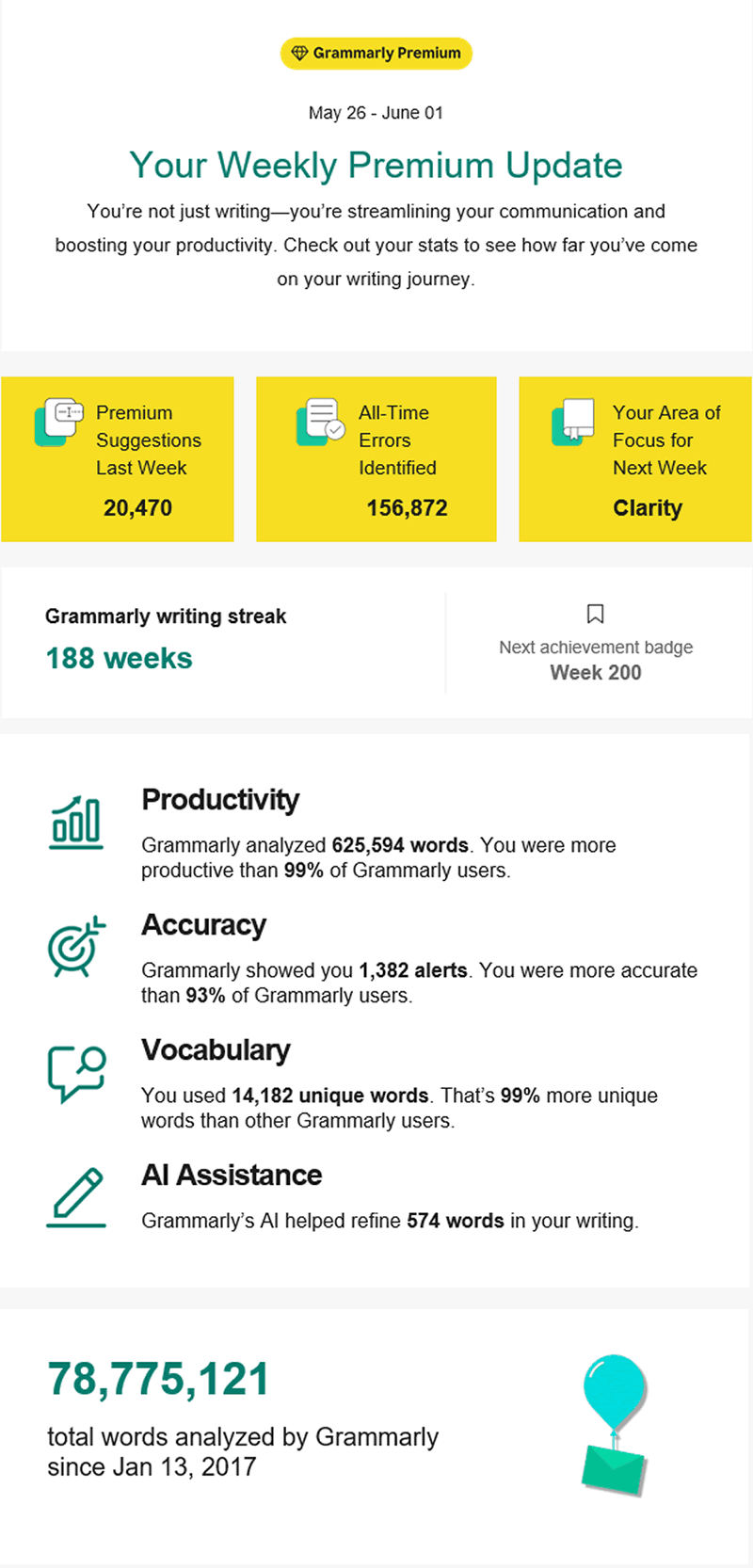
I’ve also been relying on Grammarly to save on efforts to clean up my grammatical sloppiness and have been receiving weekly reports of my performance. Since January 13th of 2017, Grammarly reports processing almost 80 million words I’ve written. I’m also less than 3 months away from a 200-week writing streak achievement badge. (woohoo)
Another reason I gained for continuing my daily publications about 50 weeks into my efforts was an article about someone who experienced new professional opportunities opening up for them on LinkedIn after one hundred days of daily publications. Since I was already halfway there, I figured if I held out long enough, I’d receive a touch of magic myself.
No such luck, but realizing I’ve been writing at a consistent volume of more than 9 million words per year, it eventually sunk into my thick skull that I’m producing enough volume to have written several books by now. Not only have I struggled to maintain my publication schedule while working on other writing projects, but I’ve also been somewhat disappointed by an issue of inconsistent quality in maintaining such a frequent publishing schedule.
I can do better by scaling back on publishing frequency, giving myself time to provide background research to support my content, and providing you, as a reader, with a much richer body of copy to engage your mind and stimulate your imagination.
…And since Saturday was my birthday, I used that as my lame excuse for taking a day off.
At any rate, I’m considering a three-day-per-week schedule — possibly Sundays, Tuesdays/Wednesdays, and Fridays from this point onward.
I intend to focus more in-depth on some ongoing topics, including elaborating on my personal experiences in ways that contribute to the public dialogues on issues of governance, UBI, and the “defunding the police” movement, and of course, including religiosity as I have each Sunday for several months and other topics I am moved by.
I hope you enjoy my more focused approach to long-form writing, and if you prefer shorter pieces, I will continue being an uncensored smartass on Quora: https://www.quora.com/profile/Antonio-Amaral-1/
I very much appreciate your support. Thank you.
Now, onto part 3, where I become an obtuse smartass once again with an answer to another question:
As such, social media is the chaos of billions of voices shouting at the universe.
If all of that were to consolidate into encapsulated messages or narratives in concise enough forms to be considered myths, then one would be that we are an ocean of rudderless beings all vying for some form of ascendence, whether individualistic or tribalistic.
We fear death as we revel in it through our rampant destruction of life, as we deny the finite nature of our existence and dream of immortality.
Social media reminds us of our insignificance as individuals on this Earth and as a species in this universe, as the cacophony of voices harmonizes into an anthem proclaiming our relevance.
This post is a response to a question posed in its complete format: “As nicely as you can, will you explain to me why Republicans think all Democrats are racist in today’s time, not 161 years ago? I don’t understand, I was told I was “a racist POS for being a democrat”.”
I’m taking a wild guess here, but if it was a MAGA hurling that accusation, then it was a projection that has been part of their denial and displacement kit for a long time now.
They internally acknowledge how racism is bad, but they don’t understand how or why, only that they can’t stand being thought of as racist. It forces them off their imaginary horse of righteous indignity, a valuable fuel for their rage addictions and transforms their Machiavellian glee into crushing shame.
They conveniently ignore the dramatic shift which occurred between political parties during the civil rights marches and the legislation they felt betrayed by.
They salivate over a fading dream of the moral superiority they once held, while Lincoln became revered for eliminating a systematic abuse they long to restore.
They cannot accept how it was their same people who fought to preserve slavery, committed genocide of the Jewish people, endorsed child labour, forcing women to exist as nothing more than birthing chambers and toys for their pleasure.
They cannot accept how utterly evil they are because they value material wealth above all. Even though the saviour they worship commands them to care for their fellow citizens, they’re too wrapped in their fears and insecurities to acknowledge a world outside their navels.
They cannot comprehend how their well-being is contingent upon the well-being of someone they would rather consider inferior to them by pigmentation than by the character within that shell.
Their saviour commands them to see life beyond a shell, but they cannot help but fixate on the shallow exterior of every issue humanity faces.
They are excellent attack dogs but they suck in every leadership capacity humans rely on for progress. They cannot see beyond internal needs due to either a biological condition of birth, environmental conditions affecting their development, or a combination of both nature and nurture.
Their capacity for developing empathy toward others outside their tribal sphere is either limited or absent. Nothing is truly real unless it happens to them, and in the case of COVID-19 fatalities, I remember reading about people who insisted that COVID-19 was a hoax while on their deathbed and breathing their last few breaths.
Making matters worse is that they sincerely believe their abysmal incompetence and their insecurity entitle them to a divine right to subjugate all those they deem their inferiors. Much of what drives the current trend toward extreme right-wing fascism is an absolutist concept drawn from religious doctrine called the “Divine Right of Kings.”
They view their assaults on the inferior class of sensitive, compassionate, and empathetic human beings as a means of achieving recognition within their sycophantic worship of power.
For example, beating up “coloureds” is a means of proving their worth to those they seek validation from. Incidents of intensely escalated conflicts, which include dynamics of violence, a blow by one is rated by a crowd of peers cheering the successful infliction of harm. Collectively, this kind of abuse dynamic is a form of validation that resembles a tribal ritual for reinforcing solidarity within a destructive context interpreted as a win against an enemy.
People who have succumbed to an addiction to hatred toward a group don’t view their victims as victims but as threats that must be eliminated. A “psychological short-circuit” triggering a debilitating degree of shame would otherwise occur when acknowledging their targets as humans victimized by their hands.
They have no means of asserting an intrinsic source of validation because their self-respect has been beaten out of them to be replaced by self-loathing.
They frequently appeal to external authorities to justify their beliefs and actions while invoking the logical fallacy of appeal to populism in enabling that validation of self.
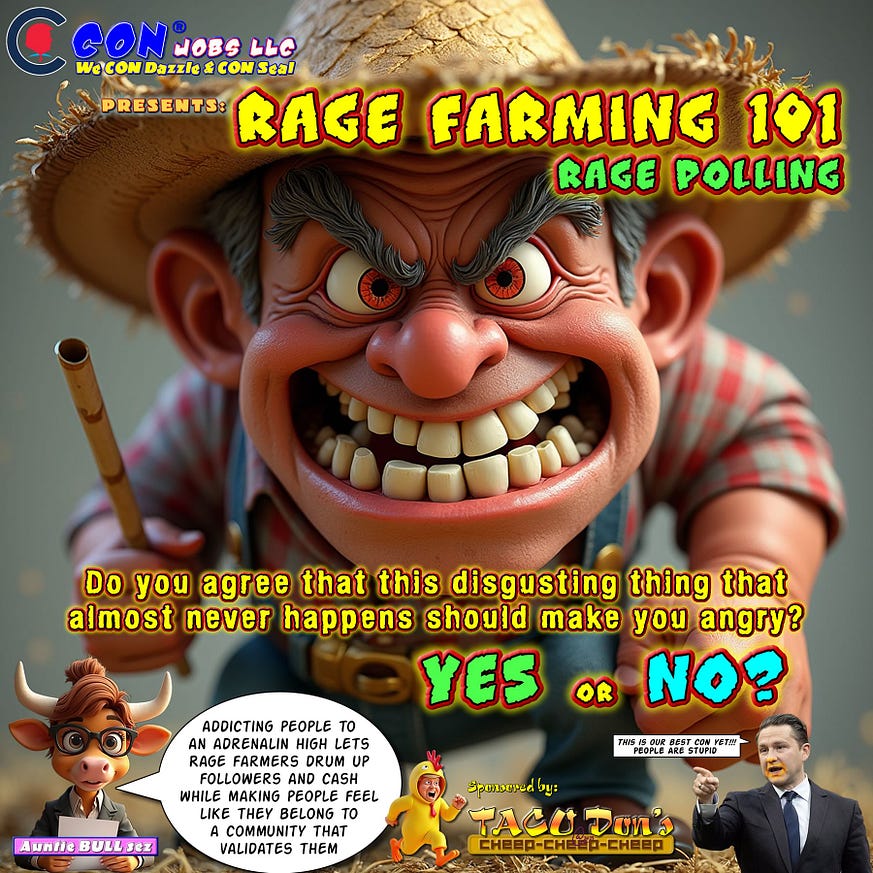
Calling you a racist PoS is a form of virtue signalling that ironically serves as a reward for them from peers who also struggle from the cognitive dissonance characterizing their existence. It also helps to feed their rage addiction, in which the many rage-farming parasites prevalent on social media exploit for political and economic advantage.
It’s a form of cognitive dissociation that allows them to escape accountability for their inner ugliness while justifying actions that empower it.
By calling you a racist PoS, they permit themselves to escalate their attack in ways that appeal to their Machiavellian proclivities.
They are telling you, by hurling their accusation, that they have created justification in their mind to assault you physically for pleasure, not accountability.
America has a humongous chasm dividing the nation. Consequently, their politics and decision-making process are subject to a see-sawing effect.
Whatever decisions a party in power might make, the next election will likely empower the opposition. When that happens within conditions of extreme differences, the next party completely reverses whatever gains one party makes.
America has no consistent long-term development or growth plan.
It is ruled by chaos, making it impossible for any other country to count on stability.
Stability is crucial to any form of success, whether for an individual, a family, a community, an organization, or a nation.
Without stability, there is no predictability, and no way to proceed without constantly reverting to a fight-or-flight disaster planning mode.
It’s impossible to develop, much less maintain confidence in one’s decisions, because circumstances could flip the next day.
It would be like trying to decide which bank would be safest to deal with to protect your savings, and being unsure whether or not they’re going out of business tomorrow.
It would be like going to multiple stores to decide which products you can buy at the best prices while building your list, and then going back to make your purchases, and all the prices doubled between visits.
No one can make any progress in that kind of environment. America has no capacity for long-term planning, while planning for a nation like the U.S. should be at least for 100 years. Meanwhile, Americans can’t even plan every quarter like a business would.
This type of ongoing chaos is the kind of dynamic that is often found in a family that is controlled by a narcissist who constantly keeps people on edge and walking on eggshells to ensure they can be overwhelmed into submission when the head chooses to flex their muscles.
This is precisely the dynamic found within criminal gangs, which are often at odds with each other while engaging in ongoing internal conflicts.
This is precisely the dynamic that Donald Trump has lived with his entire life.
The only way he can find comfort is in the knowledge that he can destroy anyone within his sphere on a whim.
It’s only a matter of time before he begins publicly trash-talking Elon Musk while he secures a relationship with Peter Thiel to pit the two against each other.
His strategy has always been that of a bully. No one wants to deal with a bully unless they can benefit from being subservient to them and are comfortable navigating such chaos while accepting subservience to their abusive mindset.
Such people are all products of a broken home, while we live in a world where one in five people are suffering from a mental health condition, and a whopping majority (70%-80%) of families are dysfunctional.
Anyone with experience in a dysfunctional family understands how the pain that drives all the members apart makes them estranged.
America is the child in the global family who has become an addict, has lost control and threatens international stability.
The world can stay as far away from America’s business as possible while shutting its doors on trade deals until America can come to its senses.
Attempting to work with America today represents a significant risk to the stability of any nation that tries to do business with it.
Donald Trump has a long history of bragging about how he doesn’t keep his promises, so only a gullible fool would trust him with anything of value.
This is why Ukraine shared nothing in advance of their counter-attack on Russian military planes with the U.S., because the nation cannot be trusted.
If that’s happening, you can bet that the rest of the world’s nations have changed their information-sharing policies to regard the U.S. as an enemy, not an ally.
The impact of Trump on America that the MAGA cult cannot see will be felt for at least the rest of this century.
If nothing else, America will emerge from this nightmare, if it survives intact, with a newfound appreciation for the importance of voting in the world’s most extended election cycles.
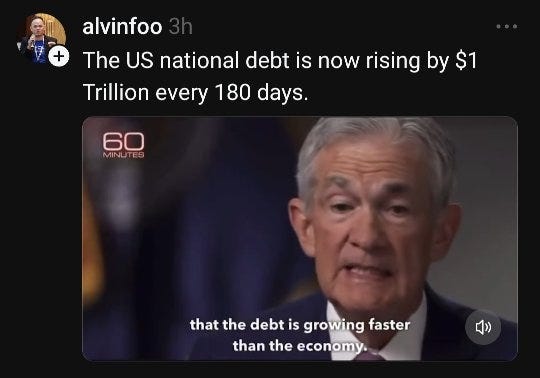
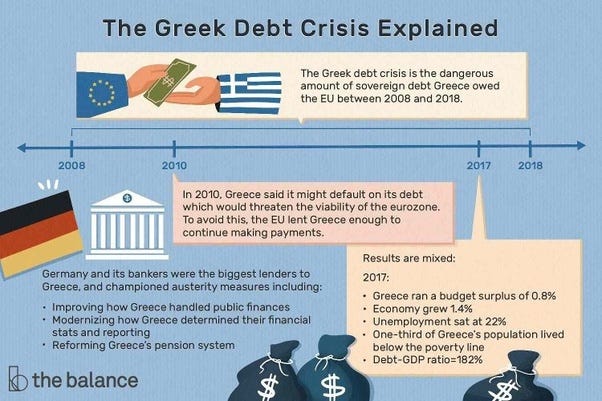
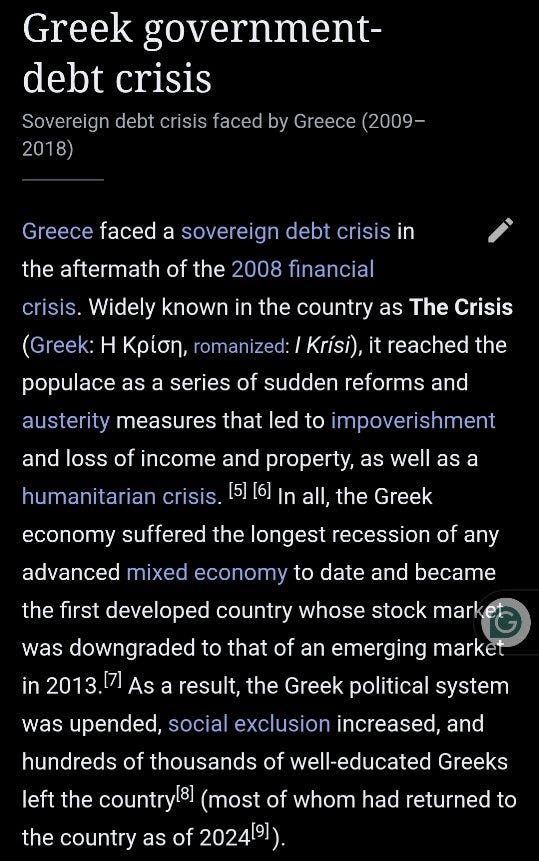
Right now, it’s only a matter of time before America becomes Greece and the U.S. becomes the world’s beggar looking for a handout to keep its economy from collapsing.
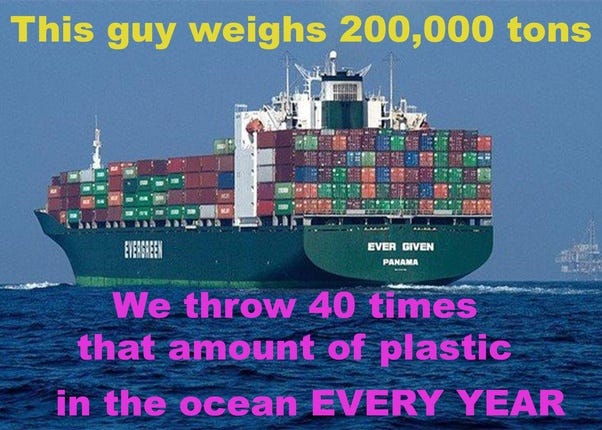
This post is a response to a question posed in its complete format: “Why do companies use so much excess plastic in their packaging? It costs them more and is worse for the environment.”
Plastic was first synthesized in 1869 as an alternative to ivory due to the growing popularity of the billiards game and the strain it put on elephant populations. A New York supplier of billiard balls offered a $10,000 prize to anyone who could provide a substitute for the genocide of elephants to support an entertainment activity.
A printer from Albany named John Wesley Hyatt developed celluloid by processing raw cellulose fibres through nitric acid and mixing them with camphor to make it a flexible and moldable material. The “plastic” originally meant “pliable and easily shaped.”
It became the name for a category of materials called “polymers,” which means “of many parts.” Polymers are compounds made of long molecular chains from cellulose, a material abundant in nature.
Plastic describes various products that are diverse in composition and very versatile in their adaptability to a wide range of use cases. We find no end of applications in which it is a commercially advantageous material for products and packaging.
Over time, as plastics production processes improved and expanded due to their popularity as a material, we developed ways to create synthetic polymers that relied less on plant material and more on carbon atoms provided by petroleum and other fossil fuels.
Fossil fuels became a popular feedstock for plastics production because they are readily available and inexpensive sources of carbon-based molecules used to create the polymers that make up plastics. The carbon density within fossil fuels resulted in higher production volumes at a much lower cost than has been available through alternative materials like natural fibres.
Additional incentives found within fossil fuel-sourced polymers have led to a broader range of properties than available with natural sources, in the plastics produced, including strength, flexibility, and durability. These properties have all lent themselves to developing attractive options in practically every product created for consumer, commercial, and industrial markets.
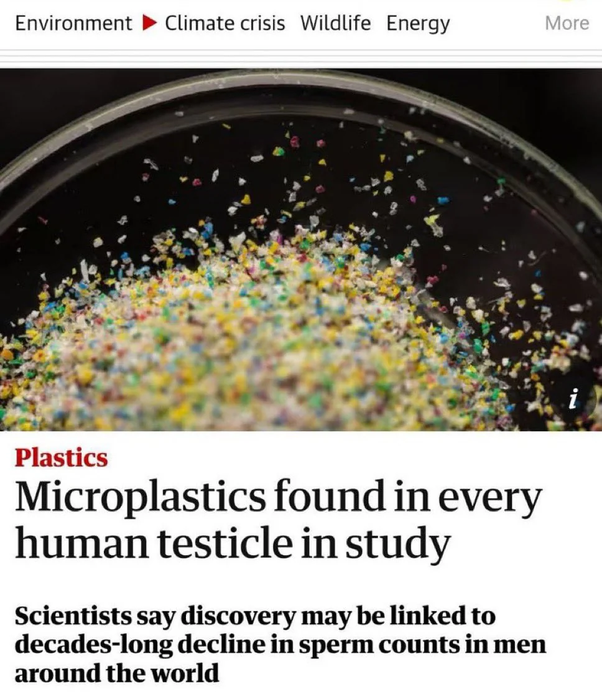
The full cost of plastics on society has never been calculated to determine what the prices of various plastics should be. We’ve never truly costed plastics from a complete life-cycle perspective and are now struggling with an overabundance of waste that threatens ecological stability.
The fossil fuel industry has known for over one hundred years now that their processes negatively affect the global environment. Instead of adopting a responsible resource management balance for their products while investing in or planning for appropriate transitions to ecologically supportable solutions, they have chosen to ravage our planet and put us in peril.
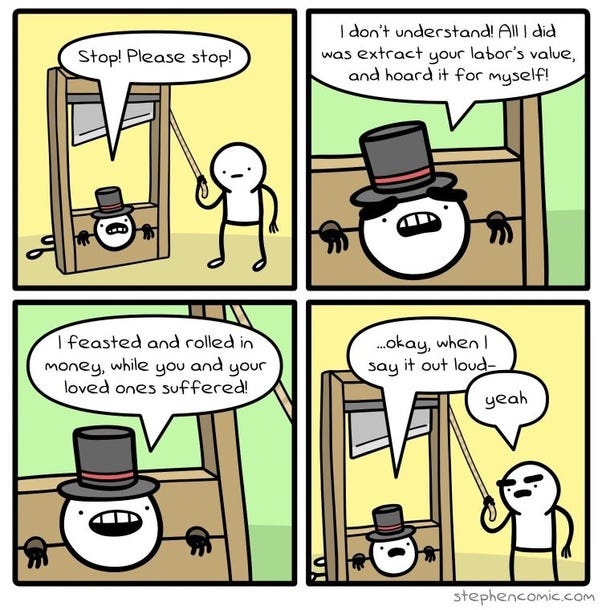
Instead of reinvesting profits in environmentally sustainable alternatives to a finite resource, they have chosen to plunder the planet to put us all in peril. As we march headlong toward a global environmental catastrophe that can threaten social stability to such a degree that widespread chaos defines human civilization seeking retribution, the first billionaires who need a date with the guillotines are the oil industry billionaires.
They’re not being charged appropriately for the impact of plastic production on the environment, mainly because it is a big oil product, and big oil has dominated global political agendas for over one hundred years.
They have been derelict as stewards of a finite natural resource. They are like the ivory hunters of the 1800s who cared not at all for the extinction of elephants as long as they could maximize their profits while they still existed. Like the ivory hunters, they will not seek alternatives until they acknowledge the approaching end of their ability to plunder our planet for profit.
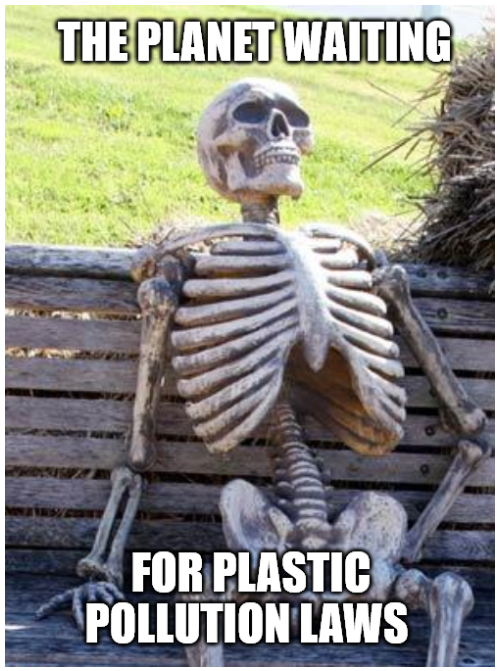
Making matters worse is that although fossil fuels are declining as a source of energy production, plastics production is steadily increasing without regulations limiting the creativity of applications they can exploit for profit. They’re not being held accountable in any meaningful way for the damage they have been doing to our environment for more than a century.
Fossil fuels represent an industry that operates with impunity in society and with a global reach. Few people are unaware of at least a few war zones around the globe in which blood has been shed in territorial wars for oil dominance. Countries have been destabilized and even been forcibly regressed into a primitive state to preserve oil production dominance on behalf of a small number of plutocrats.
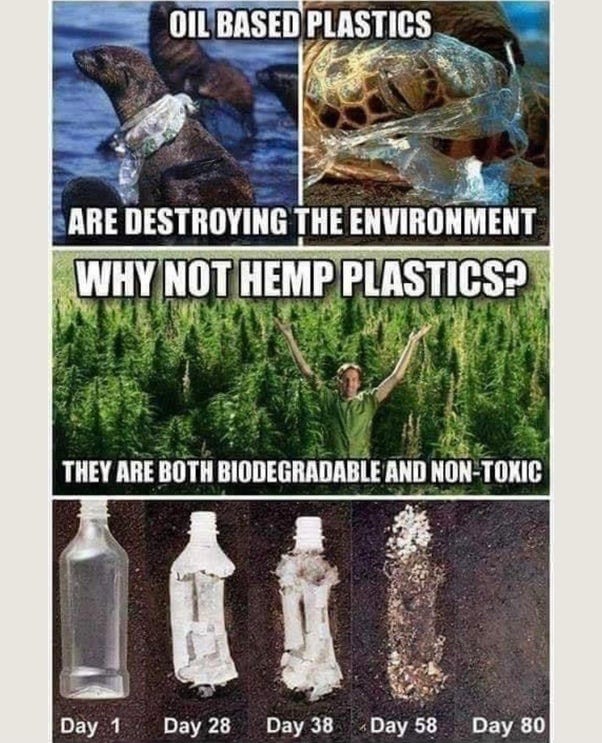
We should be actively transitioning plastics production to an expansion of alternatives meeting niche requirements, such as hemp, which has superior biodegradable properties that do not threaten global ecological stability. Our technologies have sufficiently evolved, as has our awareness of plastics needs, with a consumer, commercial, and industrial market context to define best cases for using various plastics production processes throughout the market.
We must establish production and usage regulations for plastics according to their applications. Where we can use an alternative to oil, we should use a natural alternative. Production processes have evolved such that plastics producers are providing cost-competitive alternatives to oil-based plastics. What is lacking is the incentive to facilitate a transition to a sustainable method of operation.
I can recount a personal story from a stint with a government stewardship program responsible for auditing plastics recycling. The oversight in this operation is a case of the fox guarding the henhouse. I won’t go into much detail on this issue at the moment. Still, I want to provide an example of how this operation fails to demonstrate leadership in adopting environmentally sustainable practices.
This particular operation relies heavily on plastic bags, not only for internal purposes but also for plastic bags used by recycling facilities throughout the province. In a moment of concern for the sheer volume of plastic bags, which amount to several thousand kilograms per month used throughout the province of BC, I identified a bag producer who offers a hemp-based solution at the same cost as they were purchasing their oil-based plastic bags.
The argument given as my suggestion was dismissed was that the supplier was located in a different geographic location. Rather than plastic bags purchased from an oil industry source in another province, these are hemp-based bags sourced from approximately the same distance away but in a U.S. state across the border. The cost of making the change was practically zero. This is a perfect example of leadership in responsible environmental management principles as a government stewardship program providing leadership within the recycling industry.
To my chagrin, I learned that this operation wasn’t interested in environmental leadership inasmuch as they were interested in a guaranteed annual revenue source as a government service contractor. (Sadly, this is not the only government stewardship operation that operates under a fraudulent representation as a government service with a vision toward contributing to the identified need they pretend to serve, but all of this is an entirely different tangent from this article and so, I’ll stop here and get back to answering this question. You can call me Grandpa Simpson.)
In the meantime, we must charge manufacturers through the nose for oil-based plastics while subsidizing the costs of developing ecologically superior alternatives until they become cost-effective enough to eliminate oil.
We must begin pressuring the oil industry and oil billionaires into owning up to their damage to our planet, and in taking greater initiative in supporting transitional strategies. The sooner we begin, the sooner we take steps toward avoiding chaos, massive riots, and rampant bloodshed from environmental collapse and wholesale panic.
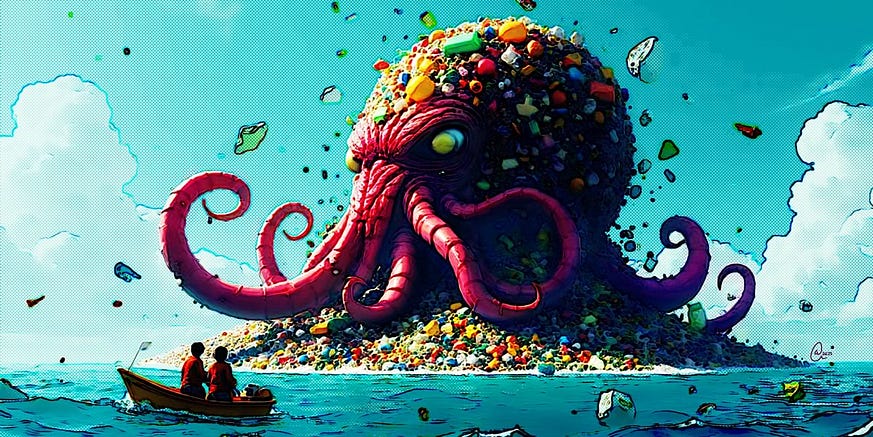
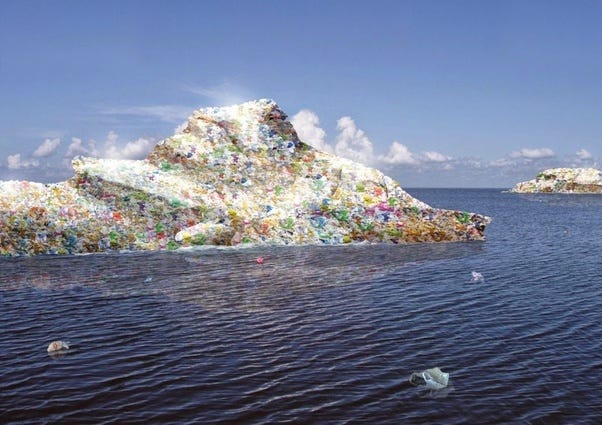
This graphic above refers to “The Garbage Patch,” an island of plastic floating in the Pacific Ocean.
Although most of my professional life (over 30 years) has followed a self-employment path, predominantly through contracting/consulting relationships, I feel underqualified to answer questions about starting a business.
There are more reasons why people engage in business startups than there are people involved in starting a business. Some people choose business startup and development as a vehicle in itself. For them, it doesn’t matter what kind of business they start as long as it fulfills a strategic impetus to develop an organization that can become a valuable product to sell for a significant profit.
These are primarily “financially-aligned types” who choose endeavours based on perceived market opportunity, potential returns, risks, and barriers to entry. They seek out unfilled market niches or attempt to determine nascent trends to capitalize on or means by which they can exploit untapped resources. Their strategies for business startups are predicated predominantly on the potential for generating profit over any other concern. They may focus on knowledge domains in which they have interests or expertise. However, they tend to be “business agnostic” in that any business concept will do as a startup if it shows revenue or resale potential.
Some people start a business to capitalize on something of personal value to themselves that they can justify a deeper involvement beyond a hobby they can share with the world. Many successful food products, for example, began as family recipes that were unique and popular enough to grow a business into an enterprise.
Here’s a link to a video of “14 Entrepreneurs Who Built Food Empires” for reference (1:45 min):
An uncle of mine began his residential construction business because, in his own words, he “got tired of kissing ass.” He rejected employment as a labourer when I was still a preteen in the 1970s and decided to work in the construction industry because that represented to him, at the time, the lowest barrier to entry with the most significant potential to generate an income.
His formal education was minimal, and so he leveraged the skills and knowledge he possessed at the time to develop and begin his journey as a contractor. At first, he worked in low-level construction roles while developing skills in related areas, such as becoming a drywaller. This approach to gainful contract employment allowed him to accrue enough capital to leverage into a bank loan on undeveloped property he could use to build a house entirely under his initiative and effort.
His goal was to invest his time and labour into developing a product that resulted in a return that he could live on, reinvest into another property, and repeat that formula until he could grow a larger business entity.
He managed to create modest success over the decades. He was also a victim of his limitations as the Peter Principle manifested itself by making his attempts to expand beyond residential construction result in failure.
His path to riches is no longer available to low-income, low-skilled entrepreneurs for numerous reasons, including, but not limited to, the real estate market, which has largely been co-opted by corporate entities and incomes for construction labour that have radically shrunk.
Nevertheless, as a youth striking out independently, I was inspired by his initiative. I chose to emulate his path, partly out of desire and partly out of the opportunities available to me in my circumstances. I began my path by pursuing a compulsion for self-expression that led me to become the only person in my immediate family who completed an undergraduate education in the arts.
My career development path wasn’t as linear as my uncle’s, nor as prone to guaranteeing revenue growth and acquiring a strong capital position. I found myself constantly pivoting as the market rapidly changed through the introduction and evolution of a rapidly changing information technology landscape.
Now that we’ve gotten through that preamble and created a context for today’s post, I’ll proceed to my regular format of answering questions.
The path to success for people with no capital is a brutal row to hoe (and it’s become much harder over the last few decades as trillions in disposable income have been stolen from the middle class)*. You begin by selling your services. You then develop marketable skills and expose yourself to a stream of parasites (yes, I’ve become somewhat cynical — what can I say?) who will exploit your desperate need to survive for bottom dollar. Over time and much hardship, you can develop a body of work and a reputation that allows you to grow a better quality of client base.
Eventually, you develop enough of a portfolio that corporate clients will hire you for contracts. You’ll earn enough to reinvest into yourself and your business when you reach that level. That’s when you plan to transition from being a service provider to being a product developer.
Service provider is the most arduous slog that forces you to deal with the greatest number of exploitative sociopaths and gains you the least value of return for your time. It is possible to succeed at that level if you can excel at networking with people. If you’re an introvert, then it’s a rough go.
Product development requires a lot of up-front investment in time and capital, so it has a much higher barrier to entry. It’s also much riskier because your products may not succeed in the market for many reasons that often concern marketing issues, rather than product quality or market demand.
If you can get that animal tamed, you’ll be well on your way to creating a comfortable nest egg for your retirement… assuming that dramatically negative and unforeseeable surprises don’t upend all your work to leave you with nothing but resentment.
Good luck.
The self-employment ecosystem as a contractor/consultant was quite different in the 1970s than it is today. The middle class had plenty of disposable income and free time outside their work days to invest in various business schemes. I remember this dynamic as a standard media trope in family comedies. The household’s father perpetually chased wacky get-rich schemes each week while losing the family fortune with each failure.
Interestingly, it’s been revived as a trope in a new animated series entitled “Universal Basic Guys.” Here’s a link to information about it on IMDb: www.imdb.com/title/tt23469464/
It hasn’t received a very flattering rating of 4.8 out of 10. Although it may not be a creative piece of formulaic comedy, I found it amusing and entertaining enough to catch the entire first season. I wasn’t aware of its rating before mentioning it here, but it has received enough viewership to be greenlit for a third season in 2026. I am now looking forward to seeing what they do with it in the upcoming second season, which may be airing in September (based on its first season premiering in the same month of 2024).
As an aside, I have considered ideas for an animated series of my own over the years. However, this approach to a business startup requires more up-front development time than I’ve been able to afford while working to keep a roof over my head. It’s for these kinds of initiatives that I strongly endorse UBI. Nothing beyond investment capital is more valuable to a creative entrepreneur than time.
I had a brief opportunity to explore the creation of a graphic novel, but realized it would take about three years to manifest my idea into a finished product. I couldn’t afford to invest that time in something requiring an additional year or two to generate enough revenue to justify the effort. I suppose I could have started with a shorter product concept that could generate revenue in a shorter period of time and develop it over a greater number of years to become a lifetime body of work. My creative imagination, however, spans a wide range of concepts beyond a graphic novel. I wasn’t prepared to limit myself to a narrow focus, particularly when I had an online educational product in development that I intended to convert into a passive revenue stream.
There is no answer to this generic question. Every person and every circumstance is different. No one can honestly assert that one route is better than the other because this isn’t deciding which flavour of ice cream you want from among the choices in a freezer.
For most people, building their own tech company is beyond their reach due to a lack of resources. A majority of the population has no choice, upon completing a relevant education, but to find work immediately so that they can avoid homelessness and spend the next couple of decades paying for the education they have just completed.
This question is posed by someone so entirely out of touch with reality that they have no clue how privileged they are to believe those are equally valid options for anyone.
This question implies that the querent can avail themselves of resources that most cannot. The blatant ignorance of this fundamental reality for most indicates their mindset is insufficiently sophisticated to succeed in a self-determined course of action for their career. A decade or two of experience in some tech aspect may trigger an inspiration they can build on after being exposed to more of this harsh reality we all share.
A third option might be best for those who can consider these two options viable for themselves, but are unsure of which they would prefer: employment within a startup or small business environment that would expose them to the challenges they would face in building their own company from scratch while insulated from the risks of failing at high levels of decision-making for their business.
Good luck
My recent focus on developing a potential income stream through my written words has grown out of a therapeutic need for self-expression (mainly in response to a traumatic event changing my life course), which led me to Quora. I understand how radically diverse the field is and how few succeed in creating a lucrative career for themselves in this kind of endeavour without focusing specifically on writing for revenue generation.
I can’t do that because I’m just not built that way. I decided this is my path now because I realized I had written quite a bit on Quora when I reached twenty thousand answers. Publishing answers to questions has been a natural evolution from venting online on social media. I’m still doing that in many ways as I randomly select topics that inspire my verbal diarrhea to construct long-form written pieces.
I’ve been somewhat surprised to discover that my words have attracted a slowly growing audience, including followers and subscribers. I want to take a moment to express my appreciation for your support.
For the record, it’s made me more self-conscious about my expressions to the degree that I have learned to restrain my salty language and become a better person.
This post is a response to a question posed in its complete format: “Do you ever get the feeling that we should just give up and let the bombs start flying? I think it’s time that the Earth gets a break from humans. Can you think of anything better than A nuclear or holocaust to do this?”
While cleaning up my Quora content, including A2As like this one. I sometimes make what I’m unsure of is a mistake or not to check out a profile. My first inclination is to pass on the question, but I’m sometimes more curious than I should be about the profile behind the question. When checking out this profile, I thought this would be another troll to mute and block. Then I started scanning the rest of the content, expecting more unhinged lunacy.
I spotted content from someone who appeared somewhat sane, non-trollish, and aware enough to grant the benefit of the doubt about this question by interpreting it as an extreme expression of frustration. We all have moments when we realize afterwards that we could have gone a different route in our expressions.
This may be one of them, so I decided to answer it instead of passing on it and blocking the querent.
I’ve never felt that destroying all life on the planet was a solution to anything. I view it as a kind of MAGAt “burn it all down” attitude that I immediately dismiss as unhinged emotionality.
Although I have encountered this sentiment occasionally, I generally scroll past or get triggered into lambasting it.
This time, however, I will respond with a simple question:
Why should all the rest of the animal and plant life be extinguished to quell the frustrations of a few humans who have lost tolerance for bullshit?
It seems rather like the kind of narcissistic attitude that’s gotten us into this mess in the first place.
Why not just pull a Frank Herbert and create a virus to eliminate humans, allowing the rest of life on Earth to continue? (Okay… Frank’s virus in “The White Plague” didn’t extinguish all life, but you get the picture.)
That seems much more representative of justice to me and perhaps even a better step in owning up to our shit as humans. By allowing all other species to learn from our stupidity (at some point in an imaginary evolutionary future) instead of turning the traces of our existence into glass that can never serve any potential life that may or may not follow, we can at least make up in part for our destructive behaviours.
There’s no upside to this kind of genocidal cleansing of life. Getting rid of humans is one thing, but taking away the opportunity to live away from all other forms of life beyond bacteria and cockroaches seems like adding insult to injury.
This reasoning reminds me of someone considering infanticide. Just because one’s life sucks, it doesn’t mean their families need to be extinguished as well. Eat a bullet or play hopscotch on a freeway to get your misery over with. If the lives you want to extinguish along with yours are innocent of causing harm, and of harming you in particular, how do you factor in punishing them? That makes absolutely no sense to me.
One should at least pick targets directly responsible for their misery, and let everyone else live, so they can learn something of value going forward.
Luigi Mangione chose this route, and he’s now viewed as a hero by many. I’ve even read claims (however trustworthy they may have been) from people about how insurance companies briefly relaxed their policies after Brian Thompson’s exit from this plane. People who would otherwise have been denied coverage and died were accepted for treatment and cured. They are still among the living when they would have died otherwise. One cannot but consider some nobility within an ignoble act.
The entire point of violence as a last resort is that it’s supposed to address the causes of unendurable misery, not eliminate all life. The Bush Doctrine’s advocacy of preemptive action seems to have proven that leading with violence is always the worst strategy to take. It’s supposed to instill hope in the lives of those left behind to continue struggling through difficult situations. That’s what Luigi accomplished.
Turning the planet into a giant glass ball accomplishes nothing more than turning the Earth into a giant glass ball. Nothing is left to praise the heroes who sacrificed their treasure for the sake of protecting the treasures of others.
Sure… I can understand wiping out mosquitoes, but what has any rabbit ever done to you to deserve wiping them all out?
Were you somehow hurt by a carrot or traumatized by tomatoes? Perhaps apples give you gas?
I’ve never met a squirrel that hasn’t made my heart flip.
I don’t see how anyone who isn’t indulging in extremely narcissistic thinking could imagine a nuclear holocaust as a solution to anything.
Please do try to think about how it is precisely that kind of self-serving thinking driving the Orange Nazi freak who likely contributes to your extreme attitude.
It’s a strategy that gives the bastards their coveted win.
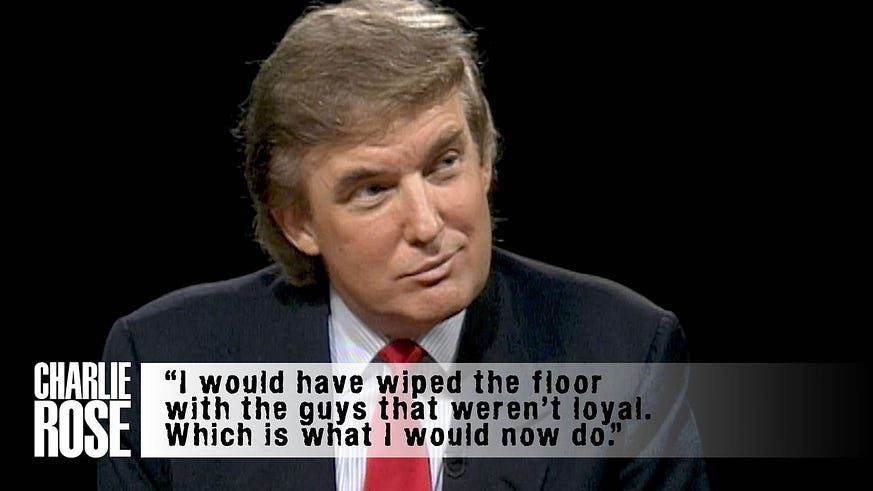
What makes you think Trump isn’t trying to get revenge on all of life in precisely that way, because he’s reaching the end of his? Right now, he seems like the guy who got into office to party like there’s no tomorrow because he knows there isn’t much longer for him. In a 1992 interview, he spent an hour talking to Charlie Rose, bragging about how much he loves revenge on people he feels have betrayed him.
1992 Charlie Rose Interview with Donald Trump
Why do you think Republicans are making such a fuss about Biden’s decline and faking outrage about it “being hidden” in the dastardly, devious way Democrats always do? My guess is that’s just another projection on their behalf.
I will predict that we’ll discover insiders within the Republican party are acting precisely in ways that run interference on TACOman to hide his decline. He may not even make it to the end of his term.
It would not surprise me to discover Jake Tapper’s got another book in progress to mirror the one he’s hawking right now.
In short… No, I can’t think of anything worse, not better than a nuclear holocaust. Feeling as if cats, dogs, or even leopards can evolve enough to rule the world comforts me.
Mondays may suck, but they don’t suck that badly.
Kamandi — Last Boy on Earth – DC Comics — by Jack KirbyKamandi — Last Boy on Earth — DC Comics
Today’s Sunday Question (for those who may have noticed a theme to my Sunday posts) is a collection of four questions posed on Quora, which were addressed with short answers. Most of my currently 22 thousand answers to questions there are quite short, and others are streams of images. I respond to questions in various ways, depending on what feels like an appropriate answer.
Most of the questions I’ve been publishing through this publication system are repurposed from long answers I’ve written there. I use Quora much like a sketchbook of ideas. I want to think some of the shorter answers have as much reading value as the longer ones, but feel they are generally inappropriate on their own in this long-format publishing system.
So, rather than letting them slip into the ether, I’ve collected a few that can add up to a cumulative reading time typical of a long answer. I hope you enjoy them.
Question 1: Why is faith not for everyone? Why is it that only some people get it?
The more comfortable people become with facts and acquiring knowledge, the less they rely on purely subjective faith as a crutch to navigate a complex world. The more one learns about their world, the more refined and sophisticated their faith-based choices become.
Everyone holds some faith in some things. The difference between those who rely on subjectively-supported faith to establish their views of the world and those dependent on understanding the world to develop their factually-supported faith boils down to intellectual curiosity and simple maturity.
The more intellectually curious one is, the less reliant they are on magic to explain gaps in their knowledge. The more intellectually curious one is, the more willing they are to explore the world to find more satisfying answers that awaken their mind to a fundamentally more complex reality.
One never loses one’s capacity for faith, even when divesting oneself of religious beliefs over time to discover that they have become an atheist. People become more selective in what they are willing to put their faith into, which correlates with their intellectual and emotional development.
Question 2: Is scientific evidence the only evidence atheists would be willing to accept for the existence of God?
There is no such thing as “scientific evidence.”
There is only “evidence,” and that evidence must be verifiable through some form of empiricism, which can, if necessary, employ scientific methods and discipline for examining it.
The evidence must be verified directly through human senses without equipment or through a technological means of detection.
We must be able to examine and test that evidence to verify any claims about it being a god creature or that it supports the existence of a god creature.
“Evidence doesn’t care” what area of inquiry it serves or what answers or conclusions it supports. “Evidence is evidence,” whether it’s to establish the existence of alleged beings or conclusions drawn in a court of law.
Question 3: Is atheism infallible?
No. Atheism is an illusion to placate believers. Atheism is a non-existent belief. Atheism is the absence of a belief. Atheism is nothing.
Nothing can fail if nothing cannot succeed because nothing does not exist.
Nothing is an imaginary spectre haunting the minds of those who doubt the veracity of claims they have been instructed to believe.
Nothing is a terrifying abyss to those who have been convinced that their lives are sustained only by submitting to an imaginary cosmic nipple. They are made so dependent upon their imaginary nipple that they fear for not just their lives but their imaginary eternal afterlife as well.
They are conditioned to believe nothing is worse than eternal torture. Their indoctrinated belief causes them to be so afraid of nothing that they cannot grasp how nothing is ever alone.
Without that indoctrination, atheism would vanish altogether to become a forgotten nothing.
Question 4: Is it possible that some atheists hate believers simply because they believe there’s a God?
Whatever happened to hate the sin, love the sinner?
Do believers believe only they believe this principle?
They don’t, and I would argue that atheists uphold this principle better than believers.
Atheists don’t care what people believe because they value their right to disbelieve more than believers value their right to believe as they choose.
After all, believers have been waging wars over beliefs in conflict with other believers for centuries.
Atheists, on the other hand, have had to survive in a world where they would be killed for disbelieving the beliefs held by believers.
Atheists generally find believers’ behaviours to be intolerable because they are often intolerant of those who don’t share their beliefs.
If believers stopped trying to impose their beliefs on non-believers and those with different beliefs, there would be no reason for atheists to have difficulties with believers.
There is no point in hating people for what they believe. Hating someone for their beliefs is just a coward’s way of avoiding the truth about themselves and the doubts that haunt them about their beliefs, or lack thereof.
For anyone interested in exploring other answers to these questions by others on Quora, these are links to each:
Bonus Question 5(this one is included as a bonus because the written part of my answer is quite short while a long stream of images would make its inclusion in this post too long to contain within an email — of all the answers I’ve given here, this one has been the most popular and has received the most upvotes):



















 thotbag