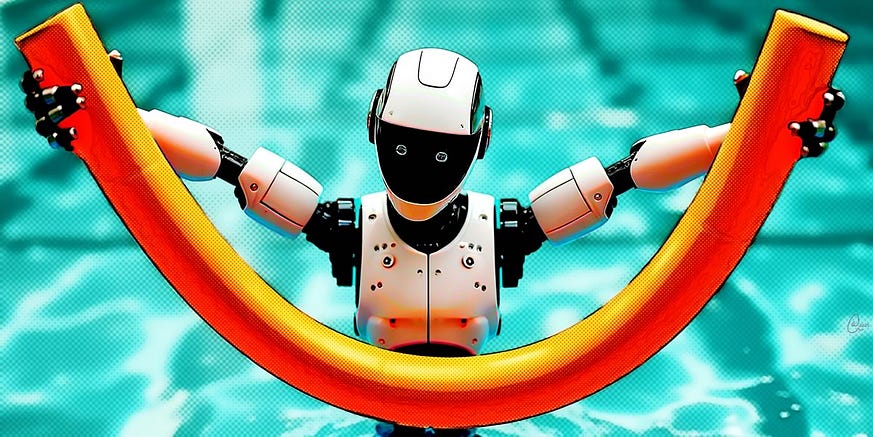
How can we ensure AI enhances human potential?

This post is a response to a question posed in its complete format: “How can we ensure AI enhances human potential rather than just automating jobs?”

We don’t need to worry about AI’s promise of enhancing human potential. AI is a multicapacity tool with an endless array of potential applications — most of which we haven’t even begun identifying.

Humans are a creative species populated by people who invent imaginative ways to utilize tools in applications beyond their original design.

Here’s an example of a floatation device designed for a specific range of purposes:

It’s called a “pool noodle.”

From Wikipedia: 
“A pool noodle is a cylindrical piece of flexible, buoyant polyethylene foam. Pool noodles are used by people of all ages while swimming. Pool noodles are useful when learning to swim, for floating, rescue reaching, in various forms of water play, and aquatic exercise.”

It was designed to fulfill a particular niche and for a minimal purpose. Yet, when the product was released to the market, it took off at a level of popularity that well exceeded its intended use.

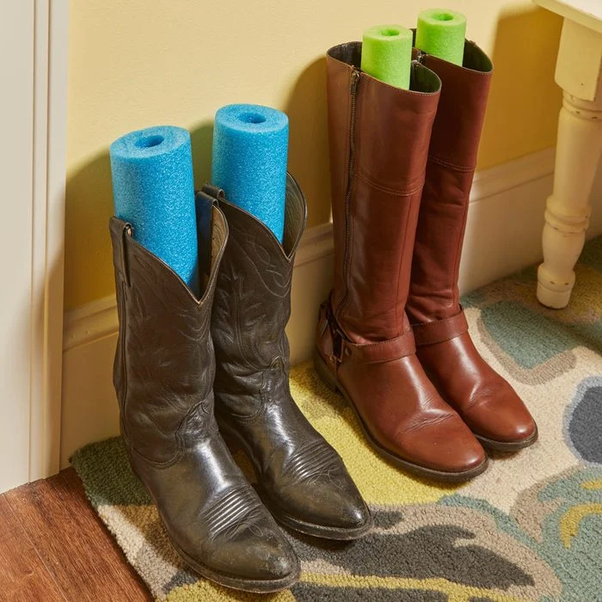
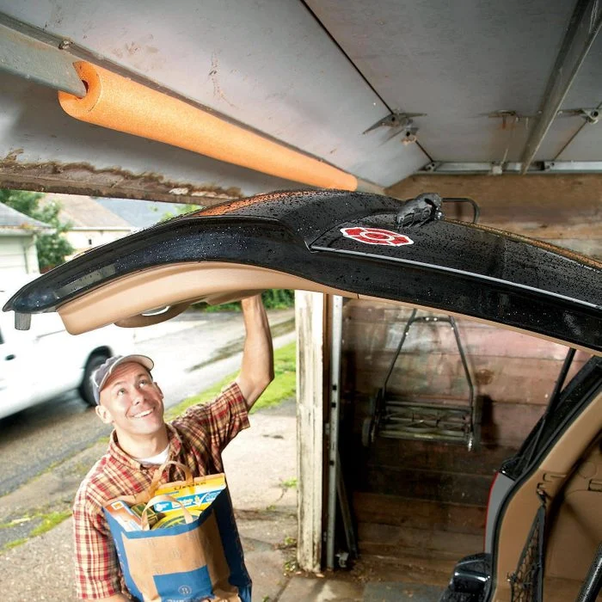
21 Unusual Uses for Pool Noodles

28 Ingenious Pool Noodle Hacks

Pool noodles have hundreds of applications invented by users who have applied some creative thinking to problems they encounter in daily living.

At the time of its design, a simple floatation device could not be imagined to fulfill other needs. It was designed for one purpose that it fulfilled so well that people became familiar with it and began applying its potential toward solving different problems.

We cannot possibly predict how AI enhances human potential without giving it over to humans to invent ways to achieve that potential under their initiative. To refer to AI in such limiting terms as a means of “just automating jobs” is a severe underestimation of its potential and an admission of an utter lack of imagination.

Don’t be too concerned about a failure of imagination, though, because no one can possibly imagine all the uses for which AI will be applied. It’s too big, too broad, and too adaptable to too many use cases for anyone to predict.

AI will enhance human potential; giving humans access is the best way to achieve that.

However, AI’s ability to enhance human potential is as much a threat as a strength. It’s like giving a loaded weapon to a child.

Much more than ensuring AI will enhance human potential, we must ensure that humans have the cognitive skills, emotional development, and psychological stability to utilize AI for beneficial rather than malignant purposes.

AI needs guardrails, but less so around it as a technological tool and more around how humans utilize it.

We should focus significant resources on AI’s development in areas that can improve human development while addressing a severe deficiency in our psychological health. Our state of mental health as a species is our most significant threat, while AI’s ability to enhance that potential is like distributing nuclear weapons throughout a population of children.
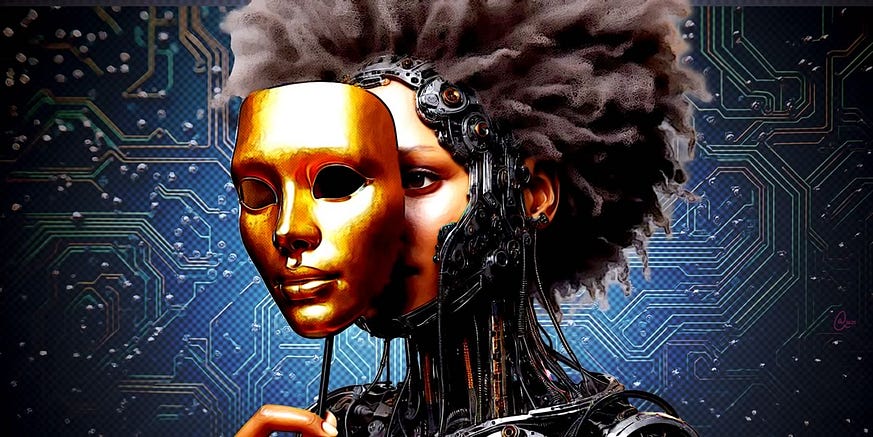
Are people presenting Chat GPT answers as their own?

This post is a response to a question posed in its complete format: “Are people taking Chat GPT answers and posting them on Quora? It seems there are many answers all with the same format every time, and sometimes people post the same answer twice. It is very annoying. How can this be stopped?”

There appears to be less of that behaviour today than about a year ago when ChatGPT became a public sensation.

AI-generated content has generally been easy to spot, and I’ve blocked several accounts where people have tried passing off AI content as their own. It may be for that reason I see less of it.

People may also have become more discerning with their inclusions of AI-generated text — by removing obvious clues and editing the content before posting it. ChatGPT has also evolved and become more sophisticated and less easy to spot.

I use Grammarly to speed up my writing and clean up errors, but I still struggle with its structure as it “suggests” changes that are not natural expressions to me.

My experience with it has affected my writing by improving it and relenting on choices I would not have made. I’m unsure how I feel about that beyond feeling a bit dirty in accepting a suggestion out of expedience rather than rewriting an entire paragraph to make it acceptable.

I will fight more vigorously against Grammarly on my desktop than on my phone because typing — especially editing- can be a pain.

Grammarly can generate content from existing text by rewriting it in a more grammatically acceptable (not always correct) format. This makes it somewhat different than the content generated by ChatGPT and other AI LLMs used for content generation.

There also exists AI systems that are designed to spot AI-generated content, of which I am sure many are included within academic budgets. I noticed recently, however, that new AI systems are emerging that claim to be capable of passing muster on being scrutinized by AI detection systems.

Whether those are effective or not, I don’t know. Still, I suspect this will continue to be an evolving issue where it will become impossible to differentiate between human-generated and AI-generated content.

For my part, it seems like I’m being encouraged to cuss more frequently to ensure people understand that they are reading words produced by a human mind over that of a “robot,” but that may be an excuse with a limited shelf life.

Is it better to have faith or not?

This post is a response to a question posed in its complete format: “Dear Atheists, do you think its better to have faith, or no faith?”

Believers should learn to understand how various forms of faith exist that don’t require you to check your brain out of service to maintain them.

For example, one can have faith in all the other drivers on the road to mostly observe the rules of the road.

One can also have faith in the referee for your game who is sincerely interested in being objective.

One can also have faith that the person they hire for a job sincerely wants to succeed and contribute to your success.

None of these forms of faith are guarantees against misjudgment but are optimistic expectations that will generally pan out positively. The odds of a negative outcome are far fewer than a positive outcome.

These are forms of faith based on an awareness of the world and an objective understanding of how people generally behave.

We know there are outliers and sometimes disappointments, but for the most part, one’s faith in these conditions is met with positive results.

This is a justifiable form of faith.

What is not a justifiable form of faith that essentially amounts to wallowing in self-serving delusion is believing in the existence of a human-like entity endowed with magical powers seen nowhere else in the universe… particularly when assuming such an omnipotent being of galactic proportions will intervene in the life of something less than a speck of bacteria to it… and most especially in matters of convenience like one’s favourite team winning a ballgame or a parking spot opening up in a timely manner.

Otherwise, it is much better to have enough faith in oneself to ignore the naysayers in one’s life than not because one will never have any hope of realizing one’s goals or dreams without it.

Why were people less racist in the ‘80s than today?

This post is a response to a question initially posed on Quora, and can also be accessed via “https://www.quora.com/Why-were-people-less-racist-in-the-80s-than-today/answer/Antonio-Amaral-1“

They weren’t.

The further back in time you look, the more racist people were.

You may be lucky enough to realize the difference between what was socially acceptable behaviour in environments that were essentially cultural silos and today’s interconnected world where no social issue is hidden from public dialogue.

You might want to take a moment to consider things you take for granted — that piss off many bigots who don’t realize they’re responsible for making those things happen. For example, gay pride parades would not exist today were it not for rampant bigotries against the gay community that lived in literal fear of their lives by random strangers who would physically assault them — often in groups and just for entertainment.

Black History Month would not exist without the KKK, lynchings, and a host of horrors in which I keep learning every year about tragedies I was never aware of that make me ashamed of humanity.

It’s a never-ending stream of vile hatred that humanity indulges in, and of which racism is only one form of evil among many that we struggle with as a species.

This is why social media is so essential today.

Bigotries are no longer incognito.

Everyone has a video recorder on their person and, within seconds, can subject an abusive monster to public shaming from around the world.

We are no longer able to pretend that racism is just part of life and that it’s okay.

We are no longer able to ignore the vile behaviours of abusive monsters in society that we used to turn our heads away from and pretend it wasn’t our business to do something about it.

We can no longer hide behind the excuses that we can’t do anything about it because all the dirty laundry is flapping about in our faces, and we either clean it up or become soiled by it.

This is a remarkable time we’re living in because we are all learning to wake up, whether we want to or not.

The troglodytes among us who endlessly wine about stupidities like “woke mind virus” or “go woke, go broke” are just verbal versions of the red alert beanies informing the world that such a person is a toxic idiot who needs to grow up and get in touch with their humanity.

They can whine and stamp their feet all they want, but their antics are nothing more than the dying last gasps of an under-evolved creature going extinct.

Because of the internet and because of social media, people are learning to become more educated and aware of the psychological dysfunctionality issues plaguing humanity. We are learning to heal ourselves because of it.

The world is undergoing an upheaval of awareness right now because the sheer volume of hatred is beyond the pale — one in five people visibly exhibit mental health issues — and a whopping majority (70%-80%) of families are dysfunctional.

These are staggering statistics.

We are sick, and we have to face the truth about our species because if we don’t, we will end ourselves.

Social media helps to make that happen. It’s a tool to help us heal that could not have come too soon.

We have desperately needed this dose of cold awareness about ourselves for a long time.

Why haven’t we seen more transparency?

This post is a response to a question posed in its complete format: “Why haven’t we seen a more transparent Federal Government until 47?”

Nothing is transparent about the obfuscating nonsense a grifter is dumping onto the public consciousness.

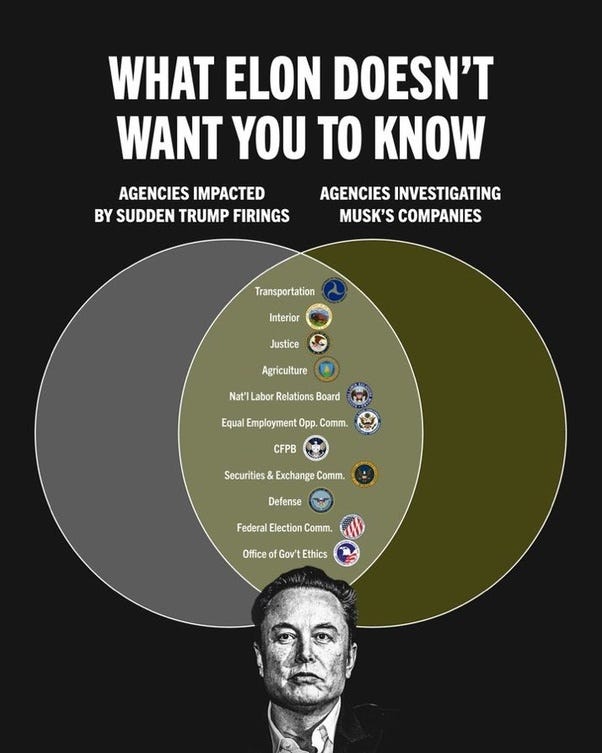
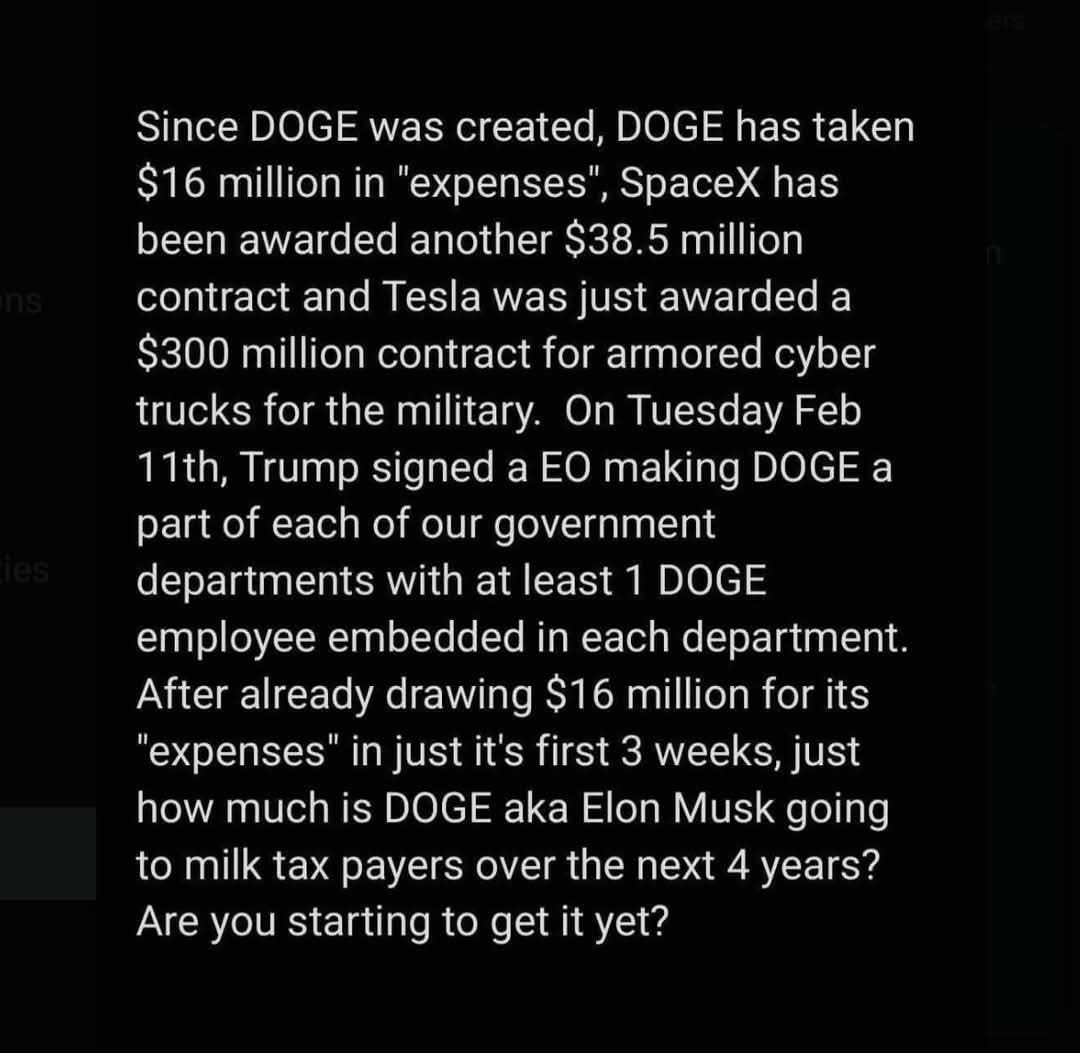
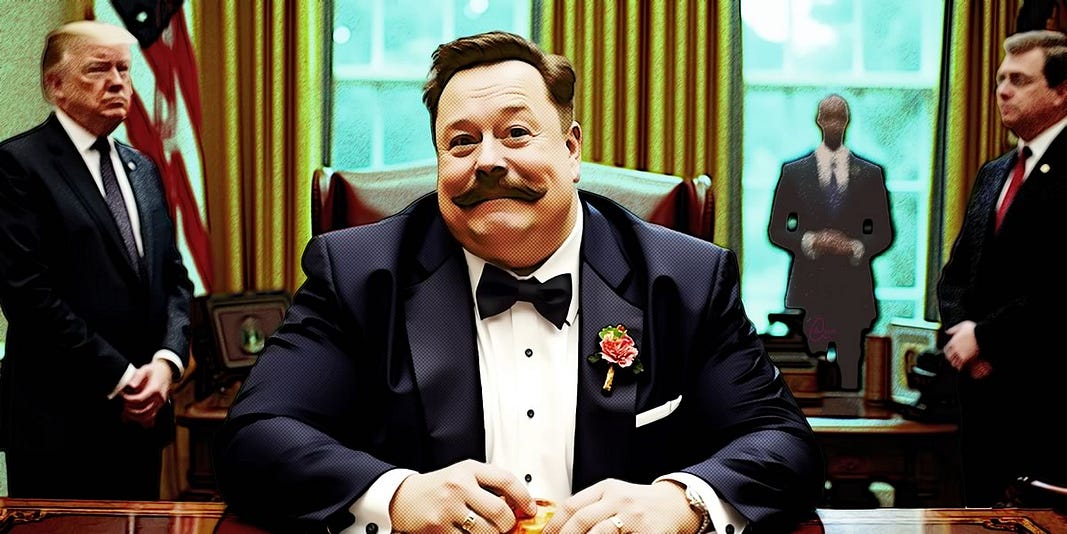
Anyone with a lick of sense who watched Elon Musk speaking from the Oval Office as if he were an unelected and self-appointed president, enacting broad changes to public infrastructure as if his words were intended to create the best outcomes for the people would have been horrified by how thick his petard was spread.

It was like watching a Fox entertainment talking head barf up a stream of irrational gibberish because he figures a gish gallop argument of nonsense is enough to sway 350 million people… and if it isn’t, it’s enough to sway 70 million people who will run defence on his behalf so that he can continue to destroy the nation.

The most obvious example of “transparency by obfuscating petard” was hiring child hackers with criminal histories to tap into the private records of 350 million people instead of forensic accountants with a clear mandate to identify waste and fraud. Their agenda, goals, and processes should have been made public before beginning his process. Instead, it was rushed through to get as far as they could into violating the nation’s protections before being stopped by the checks and balances built into the system.

The alarms should have been ringing loudly that he has overlooked the most obvious target of waste and fraud in the military budget — which has never been audited.

Why do you think that is?

Right… it’s because they’re counting on military support to rein in the disruptive elements in society when they need to ramp up their pogroms to the next level of insanity and round up citizens who get deemed dissidents by the state.

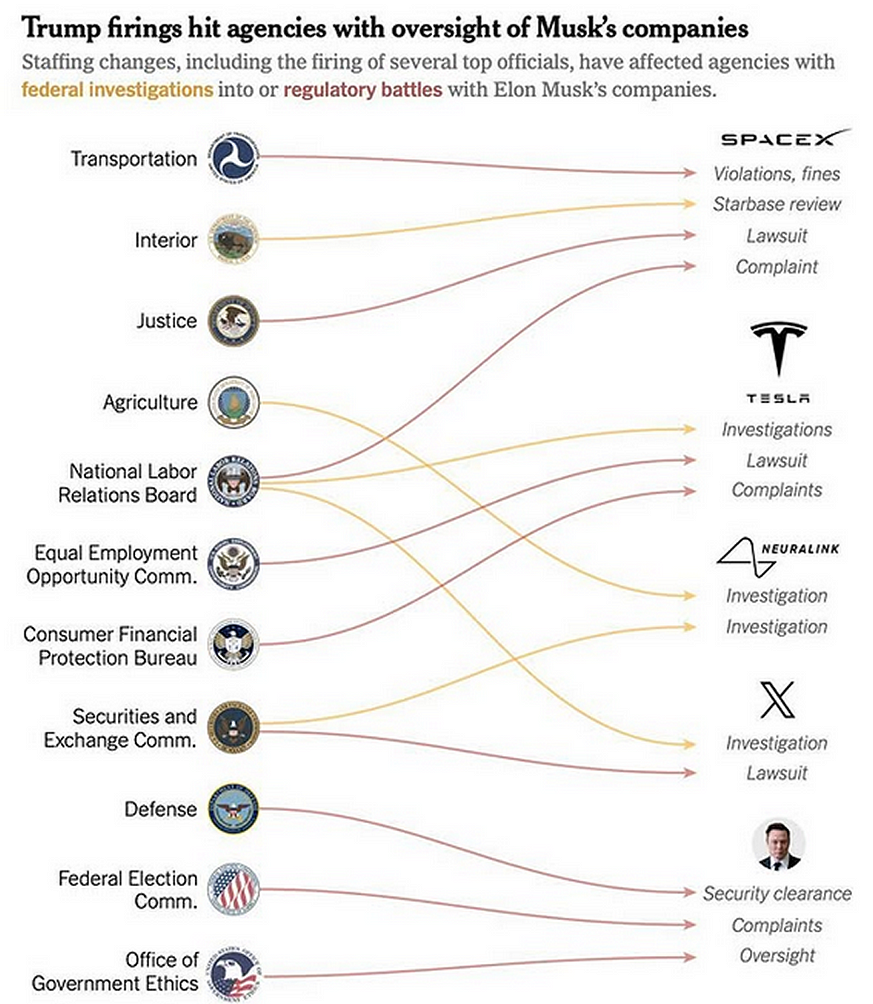
The Freedom of Information Act has already guaranteed government transparency. You can bet any effort to obtain details on the justifications of fraud and waste supporting the decisions of what has been cut will never be revealed to the public. Fortunately, it’s pretty easy to spot his motivations, considering that every target of his is a public institution designed expressly to protect the public interest, holding him accountable for his criminal behaviours.

Ask yourself this simple question:

If this administration cared about transparency, why is Trump the only president who has refused to make his taxes public?

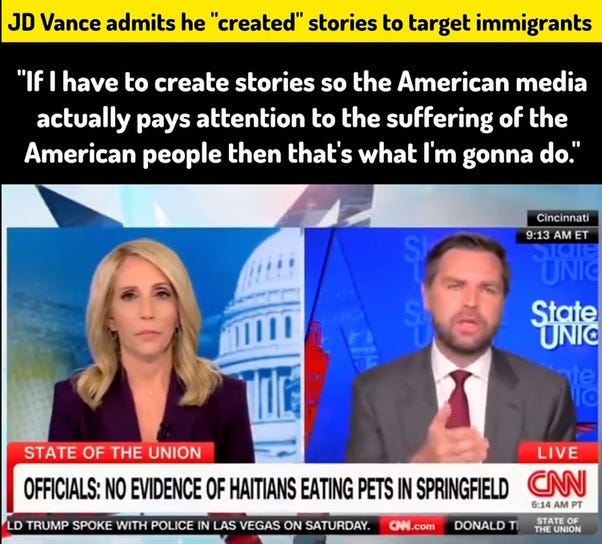
Why did Trump lie about Project 2025 during his campaign while appointing a VP who called him Hitler? Why would the VP join someone they thought was Hitler, to begin with? Why is the VP not only a contributor to Project 2025 but also someone who publicly justifies lying to capture attention?

How does any of this constitute “transparency” in your worldview?

It’s not. It’s obfuscation and inveigling.

Why doesn’t Elon save poor people?

This post is a response to a question posed in its complete format: “Why doesn’t Elon Musk want to save poor people in the world?”

He is saving the “poor people in the world.”

The disconnect is presuming he sees other people in the world as people rather than as objects placed on this Earth to cater to his poor existence.

Haven’t you noticed how much whining Trump does about life even though he was born on third base and has destroyed hundreds of thousands of lives throughout his life? After all that destruction, he still views himself as a victim.

Ironically, they’re both victims of failing to maintain contact with their essential humanity.

They will both go to their graves, completely frustrated and confused about why most people hate them.

Sure… they have devoted followers, but those are the easy and gullible idiots to manipulate. It’s not enough because they know the people who challenge them think poorly of them.

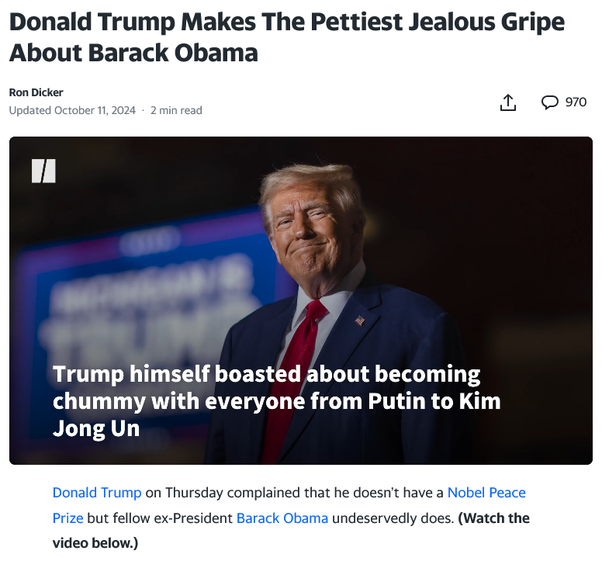
The jealousy is why Trump can still gripe about Obama a decade later.

Supporting a hated monster like Trump is the closest Musk will get to camaraderie. Meanwhile, both regard each other as useful idiots to their self-serving causes. Once the wheels fall off in their relationship — and it will because there isn’t enough room on the planet for two competing egos — eventually, one of them will step on the other’s toes hard enough to escalate into an open conflict — we’ll see embarrassing demonstrations that remind us of all the sandbox behaviours we experienced in elementary school.

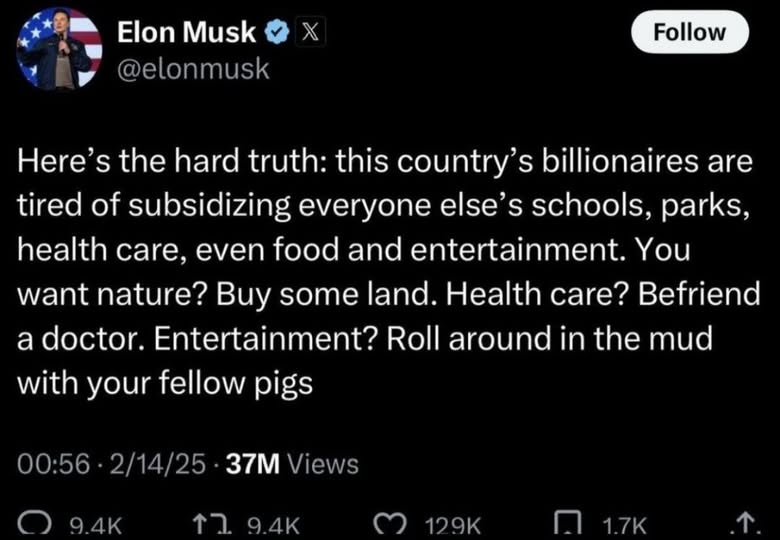
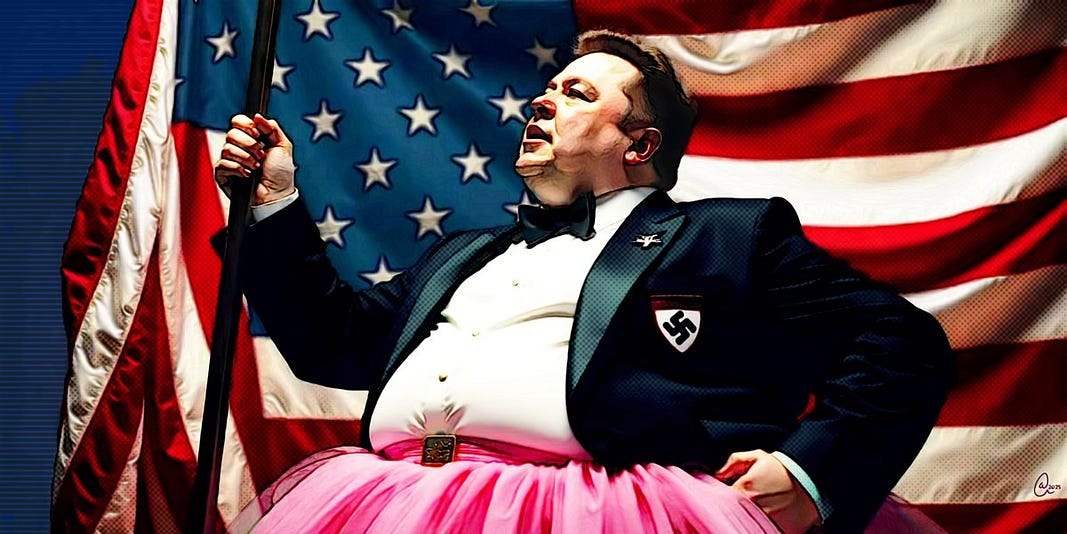
Sadly, the more Xitter fails, the harder Musk will go after austerity for the little people, and that’s how he will deal with his “poor stature.” Musk is this century’s poster boy for why restraints on personal wealth and power are crucial to the stability of human civilization.

The MAGAts won’t see that, though, because they’re conditioned to desire submission to authorities they’ve been accustomed to worship. They will identify more with Musk’s struggles than their fellow citizens who suffer from Musk’s spitefulness.

Musk is saving the most essential “poor person” in the world, himself.

What best discerns a true patriot from a fake?

This post is a response to a question posed in its complete format: “What question/s and their answer/s best discern a true patriot from a fake one?”

This question is problematic on several levels because a “true patriot” is essentially a subjective assessment until one’s actions are identified as universally consistent within a broad recognition of patriotism.

For example, Mike Pence could have been easily viewed as a traitor while serving alongside Donald Trump, but he proved otherwise with his final official act in office as a VP.

Luigi Mangione can be viewed as someone who has betrayed the social contract by extinguishing another’s life. Still, he can also be considered as paying the ultimate price to protect the lives of countless thousands within a dysfunctional system that preys upon people while victimizing them for profit. Few actions are more patriotic than sacrificing one’s life to end corruption. Whether that’s considered patriotic is a matter for history to pass judgment.

The same applies to Edward Snowden, Julian Assange, Joe Darby, Karen Silkwood, Daniel Ellsberg, Frank Serpico, Chelsea Manning, and a panoply of whistleblowers throughout history.

List of whistleblowers — Wikipedia

Patriotism is far too nuanced to identify within a survey methodology.
People are not static objects.
People’s actions do not align directly within predictable margins, fitting generic descriptions of subjectively defined concepts that evolve as society changes.

A question as simple as “Do you love your country?” is quickly answered through deception, malicious intent or naively justified expedience. A person can believe they do love their country while acting in a treasonous way. Conversely, a person can be perceived as hating their country and acting supremely patriotic by sacrificing their life to protect it.

Adding further complications to this question is that communication is a nuanced process. At the same time, the more subjective the concepts that any survey attempts to address, the less effective the multiple-choice answers are.

Adding another level of complexity to the mix is the notion of “true” as a qualifier for suggesting patriotism is a binary state. Where is the distinction between “true” and “not true?” Is “not true” the equivalent of “false,” or can there be states of patriotism between “true” and “false?” I think I’ve already identified some of those intermediary states above.

I don’t believe any specific question or answer can identify some nebulous standard for a largely subjective state of mind that can change according to circumstances.

Ultimately, the only way to know is if the person in question can appreciate and value the social contract such that it’s the highest priority in their mind when considering political positions because it indicates a community perspective over a narcissistic one. That’s not information one can determine through a survey approach.

Is there such a thing as Trump Derangement Syndrome?

This post is a response to a question posed in its complete format: “Generally, do anti-Trumpers think there is such a thing as Trump derangement syndrome, or do they see it as merely a criticism of them?”

Generally, people who refer to other people as “anti-Trumpers” while behaving as if “TDS” is a legitimate diagnosis are struggling to compensate for their slipping grasp on reality.

“TDS,” for example, is a dialectical device for dismissing uncomfortable information about someone’s object of unconditional worship.

It is “BDS” for a new president. It was first concocted as a way to ignore arguments against the Bush administration and their lies to initiate two wars with two different countries under the auspices of getting revenge on a terrorist attack.

None of the people who hurled the nonsense accusation of “BDS” wanted to believe the Bush administration had lied to them. None of them wanted to acknowledge the family feud origins driving two illegal wars while conducting war crimes when confronted by the facts of the Bin Laden and Bush histories.

None of them wanted to acknowledge the hypocrisy of a president who gave up looking for the terrorist responsible for the attack on 9/11.

At every step of the way and with every criticism of a grossly incompetent and abysmally amoral leadership that treated the soldiers who spilled blood on their behalf like disposable garbage, they cried out, “BDS! You’ve got BDS!” Hoping that would be the end of the resistance to their corruption.

They’re doing the same thing again with “TDS” by repurposing a conversation terminator that can allow them to wriggle away from the consequences of their corrupt behaviours.

They’ve also concocted another means by which they can achieve their divisive betrayal of the nation by reducing the conflict to a team sport where the opposing sides are merely cheerleaders for equal and opposite ideologies.

That’s already a betrayal of the social contract and everything decent about a nation that claims to value freedom and democracy.

These people never shut up about freedoms like freedom of speech, yet every one of their behaviours is the antithesis of what they claim to value.

They are worse than traitors to the nation. They are a toxic disease that represents a threat to human civilization.

They are worse than intransigent children because they cannot reason, will not reason, and will lie and accuse their way out of responsibility for the consequences of their destructive actions.

They are worse than cult members because they are not content with remaining in their space and living their lives in peace while allowing the rest of the world to enjoy the same courtesy.

They are a disease, a scourge that will not stop until they rule the whole of humanity.

They have existed for centuries, and now, they are impossible to ignore. They have become impossible to compartmentalize within geographical boundaries. They have become impossible to allow us to lie to ourselves that we are not all touched on some level by centuries of generational CPTSD.

We cannot ignore that these are not people “over there” but are our families, neighbours, and fellow country people. These are people who represent the one-in-five among us who suffer from severe psychological dysfunctionalities.

We cannot ignore how we cannot win this war through aggression but by changing how we live and how we structure our societies.

We can only survive this war by addressing all the elements contributing to this evil’s metastasis.

We can learn from history, pay attention to the same signs screaming for our attention, and stop creating excuses for why some things we value cannot be questioned.

We must be open-minded enough to acknowledge how much of what we take for granted as acceptable should no longer be tolerated.

We can no longer allow unchecked power to corrupt our systems and destroy their fundamental characteristics, ensuring their survival and capacity to meet our needs.

We must restore trust in ourselves as people living together in a civilized society and the systems we live by. However, we can’t do that by allowing the enemies of society to smear everything with a misanthropic haze of false equivalences.

We must draw lines in the sand when determining what is and isn’t acceptable and hold everyone accountable on an equal footing. We can no longer permit two sets of laws and rules for two classes of people.

Liberty, equality, and fraternity must be true for everyone, or we may as well allow ourselves to descend into the grave of barbarism as we write our final writ to the stars that care not whether we live or die.

Why does the government sometimes support monopolists?

This post is a response to a question initially posed on Quora, and can also be accessed via “https://www.quora.com/Why-does-the-government-sometimes-support-monopolists/answer/Antonio-Amaral-1“

Why can a private citizen like Elon Musk address the nation from the Oval Office like he was elected president?

Government representatives support their donors because they owe them — plain and simple. For Elon Musk to support Donald Trump’s presidential campaign with a $270 million financial boost means he expected something in return. That something just happened to be the keys to the halls of power.

Made even worse by the Citizen’s United Ruling that money equals speech, the entire nation has been converted into a kleptocracy. Anyone with enough money can buy their representative who will institute laws favouring their wealth acquisition goals.

They will use fraudulent arguments like consolidation equals efficiency and lower consumer costs, but that’s just bunk.

The harsh reality is that the nation is no longer a democracy or a government of the people, for the people, and by the people.

The U.S. is currently being stripped for parts to be sold to the highest bidder, and the entire world will suffer from its dissolution.

It’s not the government that supports monopolies but the billionaires who buy government representatives who seek to hoard as much of the nation’s wealth as possible and support consolidation while claiming to be capitalists.

Meanwhile, the useful idiots in the crowd conveniently forget how one of the key components of capitalism is competition.

Monopolies not only kill competition, they kill innovation, and they gouge consumers.

For example, anyone who has had to purchase prescription glasses can attest to how badly Luxottica has screwed them over.

Monopolies are cancer for an economy and for society as a whole. Monopolies give rise to dynasties, which push us back to a time of being ruled by monarchs in a two-class society of rulers and serfs.

Democratic governments that have not been corrupted otherwise do not support monopolies and create legislation to break up monopolies.

Sherman Antitrust Act: Definition, History, and What It Does

What Are the Most Famous Monopolies?

What to say to an atheist.

This post is a response to a question posed in its complete format: “What are some things to say to an atheist that will make them think about their beliefs?”

This question is a sad indictment of believer conditioning.

Very few people think about their beliefs more than atheists, particularly those who have spent a lifetime detangling the nonsense crammed into their brains by the religious conditioning they received since childhood.

If believers want to know what to say to atheists, they must first learn to emulate the humble nature of their Christ and not assume they’re in greater possession of a deeper understanding of their own beliefs. You don’t understand your beliefs as well as you think you do. Your attitude in seeking a way to “make them think about their beliefs” shows you have very little depth of understanding of beliefs you inherited and have swallowed wholesale without putting any effort into understanding them beyond how you should submit to nonsense.

Every day on Quora alone, numerous believers pose questions demonstrating a very underdeveloped and even childlike apprehension of beliefs in general. At the same time, statistics show that atheists are generally better informed on religion than the religious themselves.

Yet… here you are, assuming you have unlocked the universe’s secrets because you submit your entire life to an illusion you can’t prove to yourself is real. You have accepted the words of other believers without questioning them and then have chosen to behave as if following instructions is the same as developing one’s beliefs about life and the universe we inhabit.

The arrogance you demonstrate with your question embodies the reason why religions incite conflict in this world. It is the blind arrogance you demonstrate with your question which shows you have no interest in understanding how others might arrive at their beliefs. You assume the instructions you were fed and followed like an obedient pet constitute a superior set of beliefs.

They don’t.

They demonstrate your incapacity to take ownership of your mind.

They show your willingness to give up everything of your natural identity to submit your entire life to a lie.

Your blind adherence to your instructions demonstrates no understanding of your beliefs but obedience. This is why believers betray their inability to understand what belief means daily on social media.

You should be embarrassed by your question, but you’re not because you sincerely believe you happened to be born into the right family to imbue your mind with the correct beliefs that make your inherited views superior to all other views on the planet.

That’s why religion is toxic. This is why religion is responsible for thousands of years of warfare. This is why religion is a cancer we must cure from human society if we wish to achieve our potential as a species.

If you insist on talking to atheists about their beliefs, then you should emulate the humility of your Christ and approach them with an open mind full of questions and a willingness to learn about your own beliefs. Otherwise, you’ll get the animosity you have already seen in the answers you’ve been given.