Scratching the Surface of Self-Employment


Although most of my professional life (over 30 years) has followed a self-employment path, predominantly through contracting/consulting relationships, I feel underqualified to answer questions about starting a business.

There are more reasons why people engage in business startups than there are people involved in starting a business. Some people choose business startup and development as a vehicle in itself. For them, it doesn’t matter what kind of business they start as long as it fulfills a strategic impetus to develop an organization that can become a valuable product to sell for a significant profit.

These are primarily “financially-aligned types” who choose endeavours based on perceived market opportunity, potential returns, risks, and barriers to entry. They seek out unfilled market niches or attempt to determine nascent trends to capitalize on or means by which they can exploit untapped resources. Their strategies for business startups are predicated predominantly on the potential for generating profit over any other concern. They may focus on knowledge domains in which they have interests or expertise. However, they tend to be “business agnostic” in that any business concept will do as a startup if it shows revenue or resale potential.

Some people start a business to capitalize on something of personal value to themselves that they can justify a deeper involvement beyond a hobby they can share with the world. Many successful food products, for example, began as family recipes that were unique and popular enough to grow a business into an enterprise.

Here’s a link to a video of “14 Entrepreneurs Who Built Food Empires” for reference (1:45 min):

An uncle of mine began his residential construction business because, in his own words, he “got tired of kissing ass.” He rejected employment as a labourer when I was still a preteen in the 1970s and decided to work in the construction industry because that represented to him, at the time, the lowest barrier to entry with the most significant potential to generate an income.

His formal education was minimal, and so he leveraged the skills and knowledge he possessed at the time to develop and begin his journey as a contractor. At first, he worked in low-level construction roles while developing skills in related areas, such as becoming a drywaller. This approach to gainful contract employment allowed him to accrue enough capital to leverage into a bank loan on undeveloped property he could use to build a house entirely under his initiative and effort.

His goal was to invest his time and labour into developing a product that resulted in a return that he could live on, reinvest into another property, and repeat that formula until he could grow a larger business entity.

He managed to create modest success over the decades. He was also a victim of his limitations as the Peter Principle manifested itself by making his attempts to expand beyond residential construction result in failure.

His path to riches is no longer available to low-income, low-skilled entrepreneurs for numerous reasons, including, but not limited to, the real estate market, which has largely been co-opted by corporate entities and incomes for construction labour that have radically shrunk.

Nevertheless, as a youth striking out independently, I was inspired by his initiative. I chose to emulate his path, partly out of desire and partly out of the opportunities available to me in my circumstances. I began my path by pursuing a compulsion for self-expression that led me to become the only person in my immediate family who completed an undergraduate education in the arts.

My career development path wasn’t as linear as my uncle’s, nor as prone to guaranteeing revenue growth and acquiring a strong capital position. I found myself constantly pivoting as the market rapidly changed through the introduction and evolution of a rapidly changing information technology landscape.

Now that we’ve gotten through that preamble and created a context for today’s post, I’ll proceed to my regular format of answering questions.

Question # 1:How can someone without capital start a successful business?
https://www.quora.com/How-can-someone-with-no-capital-start-a-successful-business/answer/Antonio-Amaral-1

The path to success for people with no capital is a brutal row to hoe (and it’s become much harder over the last few decades as trillions in disposable income have been stolen from the middle class)*. You begin by selling your services. You then develop marketable skills and expose yourself to a stream of parasites (yes, I’ve become somewhat cynical — what can I say?) who will exploit your desperate need to survive for bottom dollar. Over time and much hardship, you can develop a body of work and a reputation that allows you to grow a better quality of client base.

Eventually, you develop enough of a portfolio that corporate clients will hire you for contracts. You’ll earn enough to reinvest into yourself and your business when you reach that level. That’s when you plan to transition from being a service provider to being a product developer.

Service provider is the most arduous slog that forces you to deal with the greatest number of exploitative sociopaths and gains you the least value of return for your time. It is possible to succeed at that level if you can excel at networking with people. If you’re an introvert, then it’s a rough go.

Product development requires a lot of up-front investment in time and capital, so it has a much higher barrier to entry. It’s also much riskier because your products may not succeed in the market for many reasons that often concern marketing issues, rather than product quality or market demand.

If you can get that animal tamed, you’ll be well on your way to creating a comfortable nest egg for your retirement… assuming that dramatically negative and unforeseeable surprises don’t upend all your work to leave you with nothing but resentment.

Good luck.

  • The self-employment ecosystem as a contractor/consultant was quite different in the 1970s than it is today. The middle class had plenty of disposable income and free time outside their work days to invest in various business schemes. I remember this dynamic as a standard media trope in family comedies. The household’s father perpetually chased wacky get-rich schemes each week while losing the family fortune with each failure.
  • Interestingly, it’s been revived as a trope in a new animated series entitled “Universal Basic Guys.” Here’s a link to information about it on IMDb: www.imdb.com/title/tt23469464/

It hasn’t received a very flattering rating of 4.8 out of 10. Although it may not be a creative piece of formulaic comedy, I found it amusing and entertaining enough to catch the entire first season. I wasn’t aware of its rating before mentioning it here, but it has received enough viewership to be greenlit for a third season in 2026. I am now looking forward to seeing what they do with it in the upcoming second season, which may be airing in September (based on its first season premiering in the same month of 2024).

As an aside, I have considered ideas for an animated series of my own over the years. However, this approach to a business startup requires more up-front development time than I’ve been able to afford while working to keep a roof over my head. It’s for these kinds of initiatives that I strongly endorse UBI. Nothing beyond investment capital is more valuable to a creative entrepreneur than time.

I had a brief opportunity to explore the creation of a graphic novel, but realized it would take about three years to manifest my idea into a finished product. I couldn’t afford to invest that time in something requiring an additional year or two to generate enough revenue to justify the effort. I suppose I could have started with a shorter product concept that could generate revenue in a shorter period of time and develop it over a greater number of years to become a lifetime body of work. My creative imagination, however, spans a wide range of concepts beyond a graphic novel. I wasn’t prepared to limit myself to a narrow focus, particularly when I had an online educational product in development that I intended to convert into a passive revenue stream.


Question #2: What’s the smarter move in 2025–2030 — to build your own tech company or join a stable corporation with thousands of employees?
https://www.quora.com/What-s-the-smarter-move-in-2025-2030-to-build-your-own-tech-company-or-join-a-stable-corporation-with-thousands-of-employees/answer/Antonio-Amaral-1

There is no answer to this generic question. Every person and every circumstance is different. No one can honestly assert that one route is better than the other because this isn’t deciding which flavour of ice cream you want from among the choices in a freezer.

For most people, building their own tech company is beyond their reach due to a lack of resources. A majority of the population has no choice, upon completing a relevant education, but to find work immediately so that they can avoid homelessness and spend the next couple of decades paying for the education they have just completed.

This question is posed by someone so entirely out of touch with reality that they have no clue how privileged they are to believe those are equally valid options for anyone.

This question implies that the querent can avail themselves of resources that most cannot. The blatant ignorance of this fundamental reality for most indicates their mindset is insufficiently sophisticated to succeed in a self-determined course of action for their career. A decade or two of experience in some tech aspect may trigger an inspiration they can build on after being exposed to more of this harsh reality we all share.

A third option might be best for those who can consider these two options viable for themselves, but are unsure of which they would prefer: employment within a startup or small business environment that would expose them to the challenges they would face in building their own company from scratch while insulated from the risks of failing at high levels of decision-making for their business.

Good luck


My recent focus on developing a potential income stream through my written words has grown out of a therapeutic need for self-expression (mainly in response to a traumatic event changing my life course), which led me to Quora. I understand how radically diverse the field is and how few succeed in creating a lucrative career for themselves in this kind of endeavour without focusing specifically on writing for revenue generation.

I can’t do that because I’m just not built that way. I decided this is my path now because I realized I had written quite a bit on Quora when I reached twenty thousand answers. Publishing answers to questions has been a natural evolution from venting online on social media. I’m still doing that in many ways as I randomly select topics that inspire my verbal diarrhea to construct long-form written pieces.

I’ve been somewhat surprised to discover that my words have attracted a slowly growing audience, including followers and subscribers. I want to take a moment to express my appreciation for your support.

For the record, it’s made me more self-conscious about my expressions to the degree that I have learned to restrain my salty language and become a better person.

Thank you.

Should the Earth get a break from humans?

This post is a response to a question posed in its complete format: “Do you ever get the feeling that we should just give up and let the bombs start flying? I think it’s time that the Earth gets a break from humans. Can you think of anything better than A nuclear or holocaust to do this?”

While cleaning up my Quora content, including A2As like this one. I sometimes make what I’m unsure of is a mistake or not to check out a profile. My first inclination is to pass on the question, but I’m sometimes more curious than I should be about the profile behind the question. When checking out this profile, I thought this would be another troll to mute and block. Then I started scanning the rest of the content, expecting more unhinged lunacy.

I spotted content from someone who appeared somewhat sane, non-trollish, and aware enough to grant the benefit of the doubt about this question by interpreting it as an extreme expression of frustration. We all have moments when we realize afterwards that we could have gone a different route in our expressions.

This may be one of them, so I decided to answer it instead of passing on it and blocking the querent.

I’ve never felt that destroying all life on the planet was a solution to anything. I view it as a kind of MAGAt “burn it all down” attitude that I immediately dismiss as unhinged emotionality.

Although I have encountered this sentiment occasionally, I generally scroll past or get triggered into lambasting it.

This time, however, I will respond with a simple question:

Why should all the rest of the animal and plant life be extinguished to quell the frustrations of a few humans who have lost tolerance for bullshit?

It seems rather like the kind of narcissistic attitude that’s gotten us into this mess in the first place.

Why not just pull a Frank Herbert and create a virus to eliminate humans, allowing the rest of life on Earth to continue? (Okay… Frank’s virus in “The White Plague” didn’t extinguish all life, but you get the picture.)

That seems much more representative of justice to me and perhaps even a better step in owning up to our shit as humans. By allowing all other species to learn from our stupidity (at some point in an imaginary evolutionary future) instead of turning the traces of our existence into glass that can never serve any potential life that may or may not follow, we can at least make up in part for our destructive behaviours.

There’s no upside to this kind of genocidal cleansing of life. Getting rid of humans is one thing, but taking away the opportunity to live away from all other forms of life beyond bacteria and cockroaches seems like adding insult to injury.

This reasoning reminds me of someone considering infanticide. Just because one’s life sucks, it doesn’t mean their families need to be extinguished as well. Eat a bullet or play hopscotch on a freeway to get your misery over with. If the lives you want to extinguish along with yours are innocent of causing harm, and of harming you in particular, how do you factor in punishing them? That makes absolutely no sense to me.

One should at least pick targets directly responsible for their misery, and let everyone else live, so they can learn something of value going forward.

Luigi Mangione chose this route, and he’s now viewed as a hero by many. I’ve even read claims (however trustworthy they may have been) from people about how insurance companies briefly relaxed their policies after Brian Thompson’s exit from this plane. People who would otherwise have been denied coverage and died were accepted for treatment and cured. They are still among the living when they would have died otherwise. One cannot but consider some nobility within an ignoble act.

The entire point of violence as a last resort is that it’s supposed to address the causes of unendurable misery, not eliminate all life. The Bush Doctrine’s advocacy of preemptive action seems to have proven that leading with violence is always the worst strategy to take. It’s supposed to instill hope in the lives of those left behind to continue struggling through difficult situations. That’s what Luigi accomplished.

Turning the planet into a giant glass ball accomplishes nothing more than turning the Earth into a giant glass ball. Nothing is left to praise the heroes who sacrificed their treasure for the sake of protecting the treasures of others.

Sure… I can understand wiping out mosquitoes, but what has any rabbit ever done to you to deserve wiping them all out?

Were you somehow hurt by a carrot or traumatized by tomatoes? Perhaps apples give you gas?

I’ve never met a squirrel that hasn’t made my heart flip.

I don’t see how anyone who isn’t indulging in extremely narcissistic thinking could imagine a nuclear holocaust as a solution to anything.

Please do try to think about how it is precisely that kind of self-serving thinking driving the Orange Nazi freak who likely contributes to your extreme attitude.

It’s a strategy that gives the bastards their coveted win.

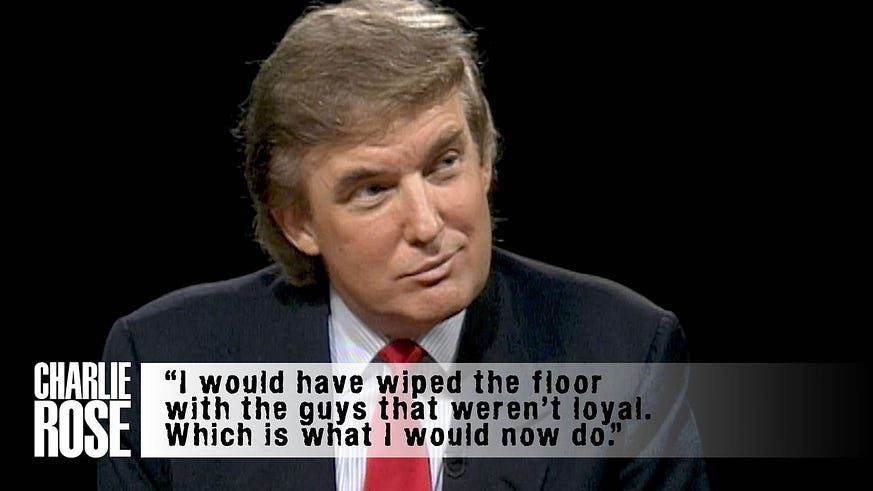
What makes you think Trump isn’t trying to get revenge on all of life in precisely that way, because he’s reaching the end of his? Right now, he seems like the guy who got into office to party like there’s no tomorrow because he knows there isn’t much longer for him. In a 1992 interview, he spent an hour talking to Charlie Rose, bragging about how much he loves revenge on people he feels have betrayed him.

1992 Charlie Rose Interview with Donald Trump

Why do you think Republicans are making such a fuss about Biden’s decline and faking outrage about it “being hidden” in the dastardly, devious way Democrats always do? My guess is that’s just another projection on their behalf.

I will predict that we’ll discover insiders within the Republican party are acting precisely in ways that run interference on TACOman to hide his decline. He may not even make it to the end of his term.

It would not surprise me to discover Jake Tapper’s got another book in progress to mirror the one he’s hawking right now.

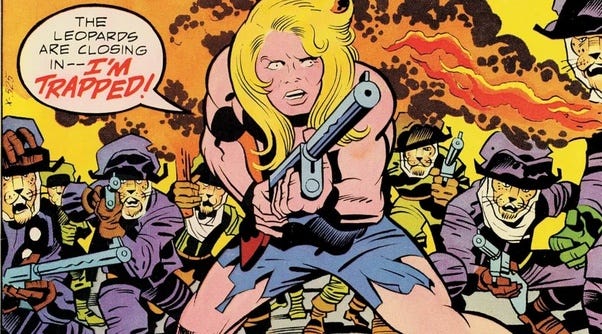
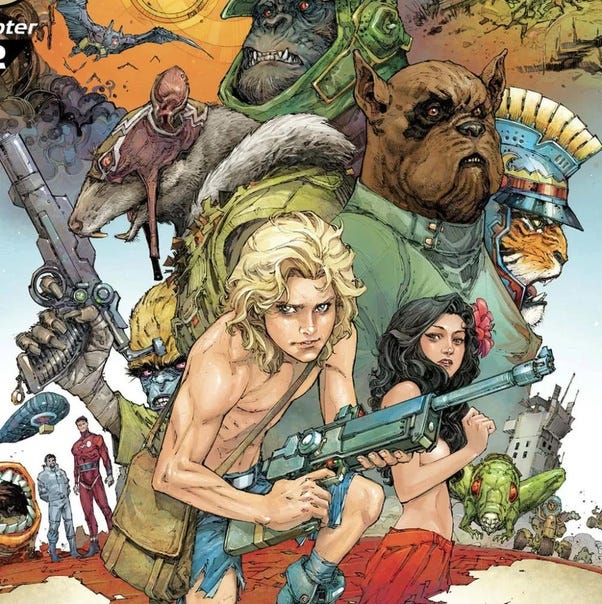
In short… No, I can’t think of anything worse, not better than a nuclear holocaust. Feeling as if cats, dogs, or even leopards can evolve enough to rule the world comforts me.

Mondays may suck, but they don’t suck that badly.

Kamandi — Last Boy on Earth – DC Comics — by Jack Kirby
Kamandi — Last Boy on Earth — DC Comics

Atheist Four-Play


Today’s Sunday Question (for those who may have noticed a theme to my Sunday posts) is a collection of four questions posed on Quora, which were addressed with short answers. Most of my currently 22 thousand answers to questions there are quite short, and others are streams of images. I respond to questions in various ways, depending on what feels like an appropriate answer.

Most of the questions I’ve been publishing through this publication system are repurposed from long answers I’ve written there. I use Quora much like a sketchbook of ideas. I want to think some of the shorter answers have as much reading value as the longer ones, but feel they are generally inappropriate on their own in this long-format publishing system.

So, rather than letting them slip into the ether, I’ve collected a few that can add up to a cumulative reading time typical of a long answer. I hope you enjoy them.

Question 1: Why is faith not for everyone? Why is it that only some people get it?

The more comfortable people become with facts and acquiring knowledge, the less they rely on purely subjective faith as a crutch to navigate a complex world. The more one learns about their world, the more refined and sophisticated their faith-based choices become.

Everyone holds some faith in some things. The difference between those who rely on subjectively-supported faith to establish their views of the world and those dependent on understanding the world to develop their factually-supported faith boils down to intellectual curiosity and simple maturity.

The more intellectually curious one is, the less reliant they are on magic to explain gaps in their knowledge. The more intellectually curious one is, the more willing they are to explore the world to find more satisfying answers that awaken their mind to a fundamentally more complex reality.

One never loses one’s capacity for faith, even when divesting oneself of religious beliefs over time to discover that they have become an atheist. People become more selective in what they are willing to put their faith into, which correlates with their intellectual and emotional development.

Question 2: Is scientific evidence the only evidence atheists would be willing to accept for the existence of God?

There is no such thing as “scientific evidence.”

There is only “evidence,” and that evidence must be verifiable through some form of empiricism, which can, if necessary, employ scientific methods and discipline for examining it.

The evidence must be verified directly through human senses without equipment or through a technological means of detection.

We must be able to examine and test that evidence to verify any claims about it being a god creature or that it supports the existence of a god creature.

“Evidence doesn’t care” what area of inquiry it serves or what answers or conclusions it supports. “Evidence is evidence,” whether it’s to establish the existence of alleged beings or conclusions drawn in a court of law.

Question 3: Is atheism infallible?

No. Atheism is an illusion to placate believers.
Atheism is a non-existent belief.
Atheism is the absence of a belief.
Atheism is nothing.

Nothing can fail if nothing cannot succeed because nothing does not exist.

Nothing is an imaginary spectre haunting the minds of those who doubt the veracity of claims they have been instructed to believe.

Nothing is a terrifying abyss to those who have been convinced that their lives are sustained only by submitting to an imaginary cosmic nipple. They are made so dependent upon their imaginary nipple that they fear for not just their lives but their imaginary eternal afterlife as well.

They are conditioned to believe nothing is worse than eternal torture. Their indoctrinated belief causes them to be so afraid of nothing that they cannot grasp how nothing is ever alone.

Without that indoctrination, atheism would vanish altogether to become a forgotten nothing.

Question 4: Is it possible that some atheists hate believers simply because they believe there’s a God?

Whatever happened to hate the sin, love the sinner?

Do believers believe only they believe this principle?

They don’t, and I would argue that atheists uphold this principle better than believers.

Atheists don’t care what people believe because they value their right to disbelieve more than believers value their right to believe as they choose.

After all, believers have been waging wars over beliefs in conflict with other believers for centuries.

Atheists, on the other hand, have had to survive in a world where they would be killed for disbelieving the beliefs held by believers.

Atheists generally find believers’ behaviours to be intolerable because they are often intolerant of those who don’t share their beliefs.

If believers stopped trying to impose their beliefs on non-believers and those with different beliefs, there would be no reason for atheists to have difficulties with believers.

There is no point in hating people for what they believe. Hating someone for their beliefs is just a coward’s way of avoiding the truth about themselves and the doubts that haunt them about their beliefs, or lack thereof.


For anyone interested in exploring other answers to these questions by others on Quora, these are links to each:

Question 1: Why is faith not for everyone? Why is it that only some people get it?
https://www.quora.com/Why-is-faith-not-for-everyone-Why-is-it-that-only-some-people-get-it/answer/Antonio-Amaral-1

Question 2: Is scientific evidence the only evidence atheists would be willing to accept for the existence of God?
https://www.quora.com/Is-scientific-evidence-the-only-evidence-atheists-would-be-willing-to-accept-for-the-existence-of-God/answer/Antonio-Amaral-1

Question 3: Is atheism infallible?
https://www.quora.com/Is-atheism-infallible/answer/Antonio-Amaral-1

Question 4: Is it possible that some atheists hate believers simply because they believe there’s a God?
https://www.quora.com/Is-it-possible-that-some-atheists-hate-believers-simply-because-they-believe-theres-a-God/answer/Antonio-Amaral-1

Bonus Question 5 (this one is included as a bonus because the written part of my answer is quite short while a long stream of images would make its inclusion in this post too long to contain within an email — of all the answers I’ve given here, this one has been the most popular and has received the most upvotes):

If they ask me what I love most, I tell them I love God. What about you, an atheist?
https://divineatheists.quora.com/If-they-ask-me-what-I-love-most-I-tell-them-I-love-God-What-about-you-an-atheist-106

New Memes Category

This is my first test of the categories feature on WordPress as I organize my thoughts under a common umbrella free from submission to often inconsistently applied rules through the various social media and other platforms I’ve been spreading my content around on like it were runny peanut butter flowing like sludge from too much oil.

At any rate, my intention in this category is to create a repository of memes, from which I’ve already created *many* over the last year and beyond. As of this posting, I’ve been revitalizing my WordPress account with a daily editorial that I’ve culled from my daily contributions to Quora while answering questions as a form of therapy for a long story I’m still trying to determine how best to share it with the world.

If I find the categories feature here on WordPress helpful and flexible enough to address my concerns with sharing that story, then I plan to add a few more categories soon. I may include my story and links to online print-on-demand sites I’ve been testing out as I adapt my content creation efforts to this site.

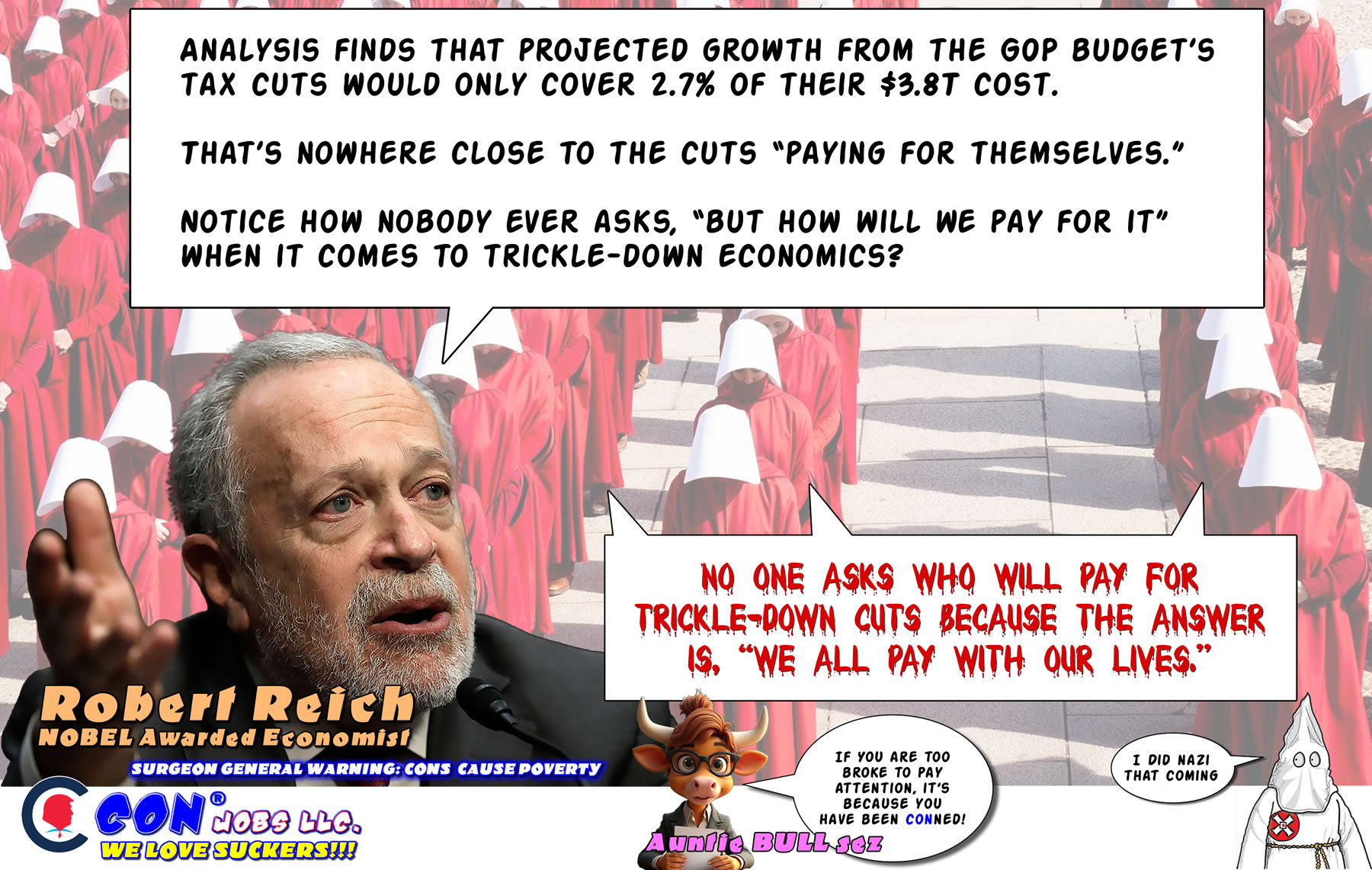
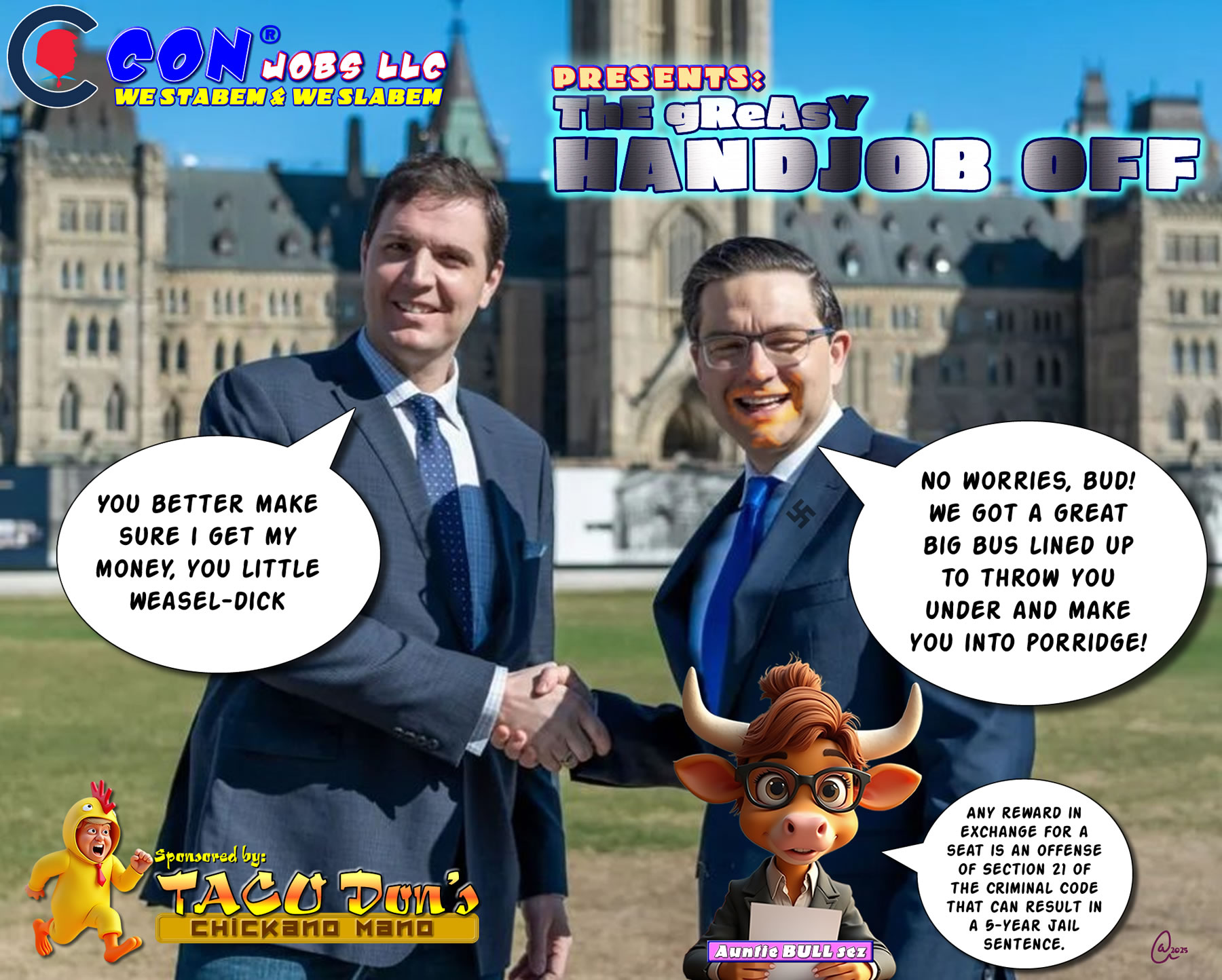
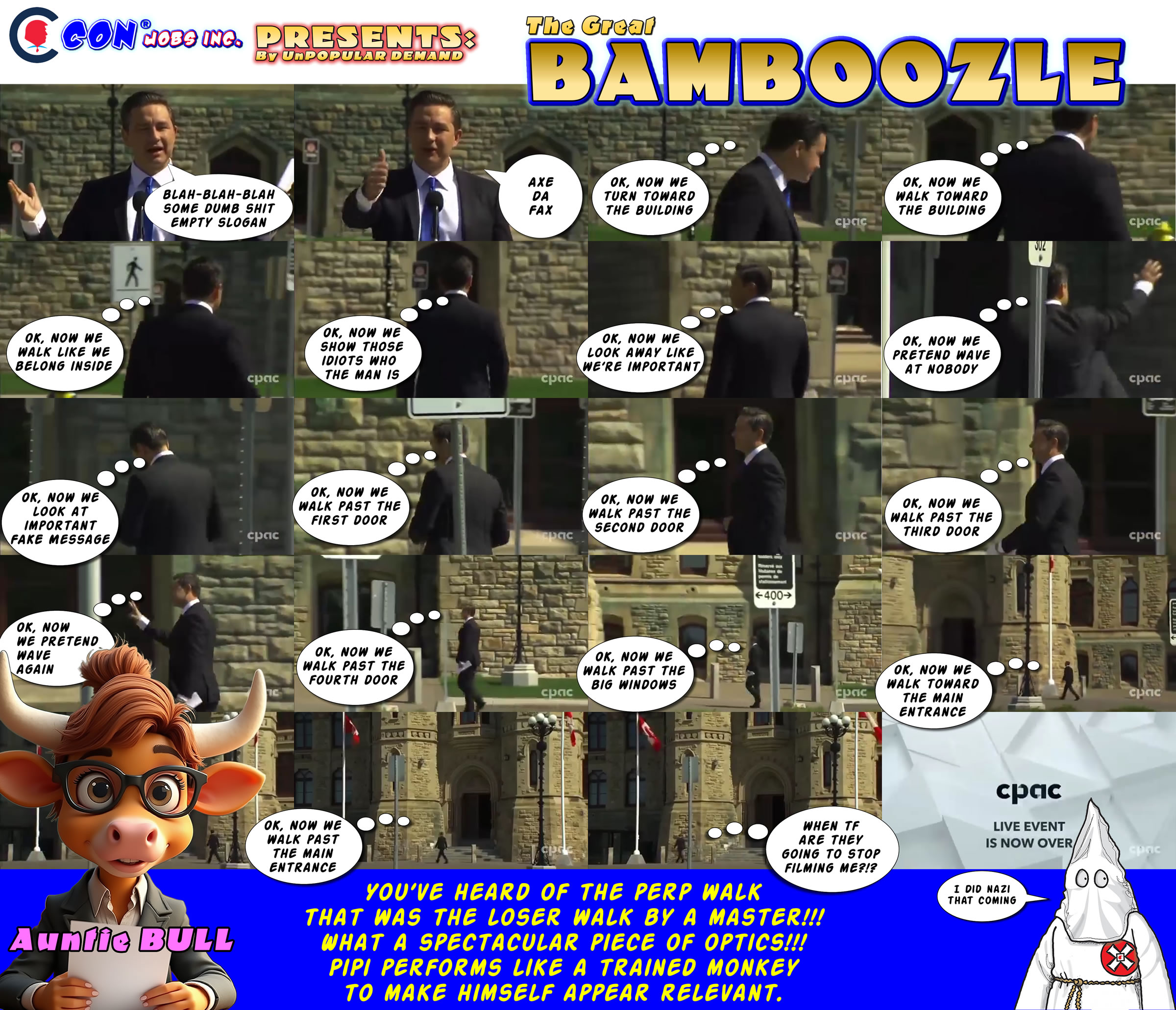
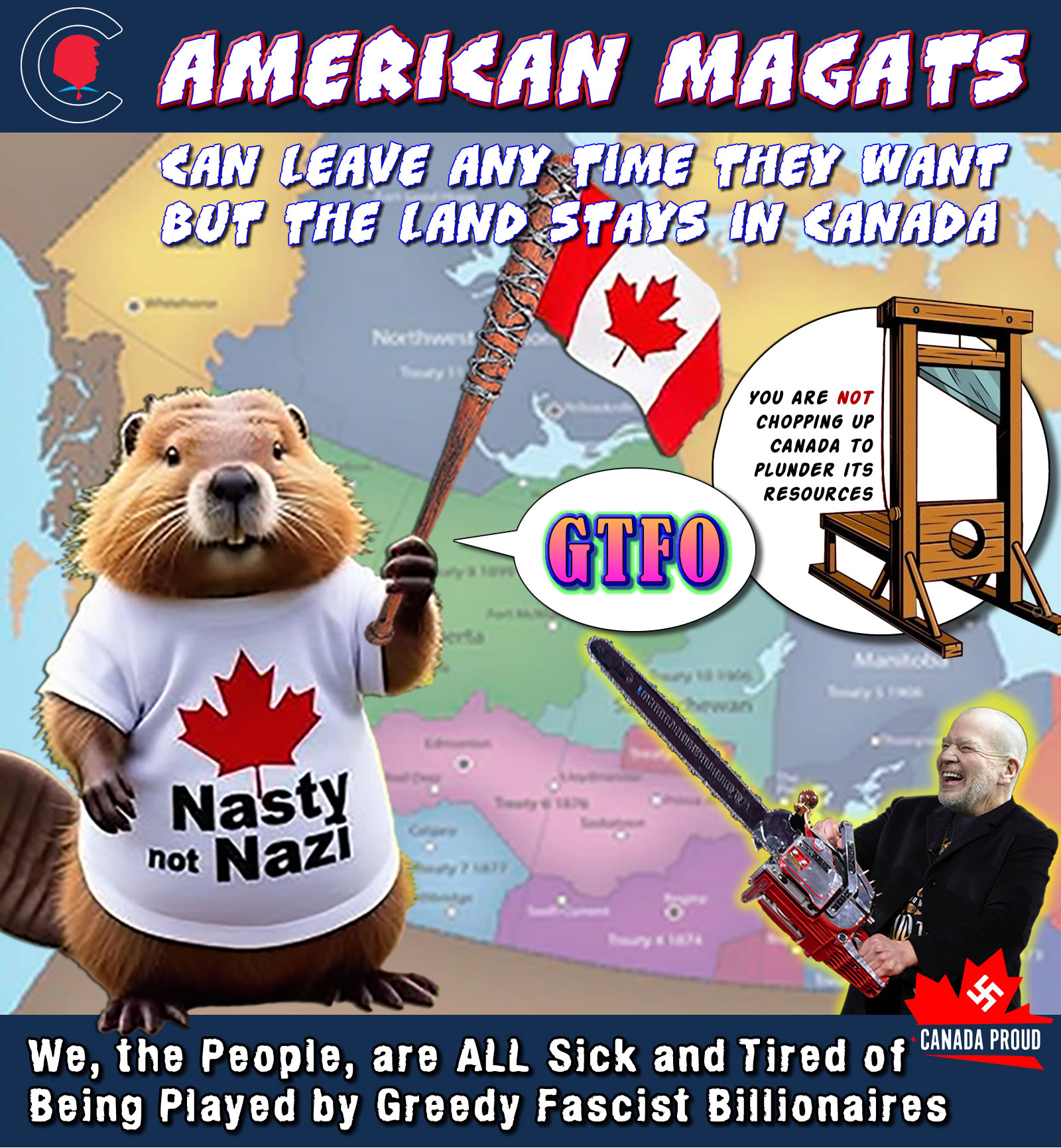
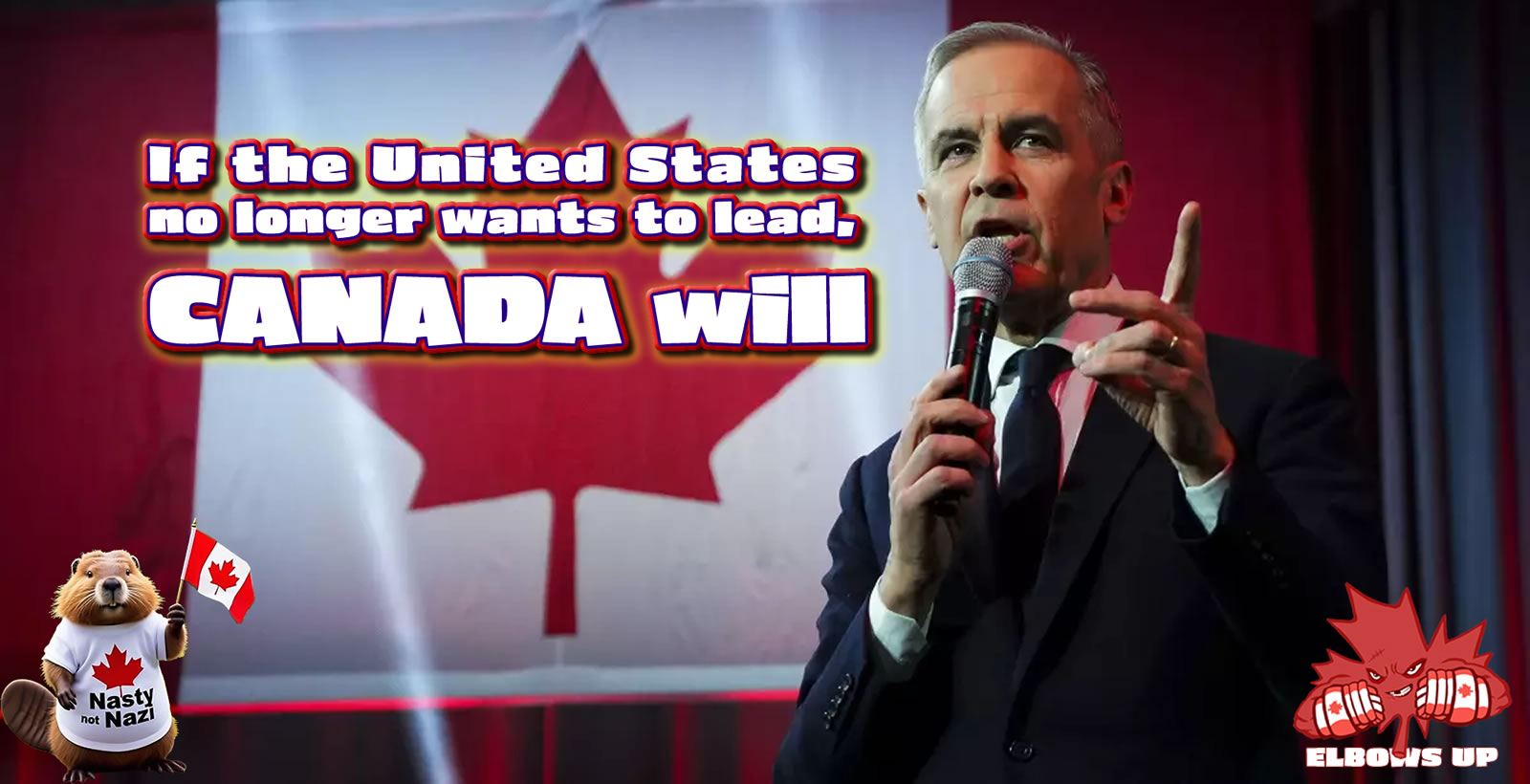
Here are a few of my most recent meme creations, which I hope you find humorous enough to steal and share.

Cheerios

Today’s memes are in the theme of political mockery (as most of my meme creations generally target Canadian and American politics, but can vary).

PS. These are all of a high enough resolution to print at a decent enough quality on letter-sized paper.

Americana Believe their Shite (This first one includes a censored version, which, you guessed it, became my inspiration to explore options while rethinking how to share my memes):

Canuckian Politics:

While posting these, I noticed a slideshow feature I may explore while posting older memes that are outdated for addressing current issues, such as memes I created during the election season.

I hope you enjoy them and can find some value in resharing them.

Thanks for reading and for your support. I hope to grow this into a viable venture that can sustain both body and mind, and I sincerely appreciate your visits, upvotes, and comments.

Thank you.
Why should I contribute to society?


This post is a response to a question posed in its complete format: “Aside from it being a moral duty, why should I contribute to society?”

As a reason to contribute to society, a “moral duty” represents a form of coercion which garners the absolute least that one will contribute. Referring to contributions made to society as a “moral duty” creates the perception that it’s like paying a tax. You do it because you have to.

That’s the best way to get the worst attitudes and the least value in contributions from people.

Paying it forward” is a far better way to frame contributions to society because it serves as a reminder of how one has benefited from society and the contributions of others as part of a shared community.

Another context that can help to imbue the concept of contributing to society with motivational meaning is as a team. As members of a species, we are all members of the same “team” in the sense of our challenge to maintain survival. This perspective is why I chose the concept of a bucket brigade to illustrate the idea of working together to put out a fire.

Understanding the difference in perspective between one who feels they “should” versus feeling like one “can” will clarify the attitude we should be cultivating in society to encourage contributions back to society. When a person feels like they’re a valued member of a supportive community that enables their members to achieve their best potential, it cultivates an attitude of gratitude that prompts people to think positively of what they can do in return for their community.

Think of it like gift-giving during the holidays, where people go to great lengths to impress someone with a special gift they know will be meaningful to the recipient, versus the sentiment people demonstrate when put in as minimal an effort into their gift as they can get away with to meet an expectation from someone they don’t care about but feel an obligation to gift them something.

To do what one “should do” invites the minimum effort to meet a bar of expectations set by the lowest common denominator and is characterized in the best of terms as an apathetic form of disengagement from one’s community. Why give something to society when you don’t value it?

Conversely, when one feels closely connected to a community that has cultivated gratitude within their mindset, they want to give as much as they can afford to adequately express their appreciation for what they value receiving from their community.

To do what one can, rather than what one must, is to be motivated by a natural desire to contribute out of a spirit of reciprocity.

This is why the social contract is crucial to our health as a society and why community development is an essential mindset for leaders to adopt and cultivate within society. Community members who feel they belong to a larger dynamic and are valued for their contributions are engaged and self-motivated to do what they can to improve life for everyone else.

They understand and value the meaning of the words, “We are all in this together.”

This sentiment is the glue that will keep society from collapsing into chaos during the most troubling times.

This sentiment is the glue that has given humanity the grace to survive and prosper to such a degree that our short presence here will be as lasting into the future as hundreds of millions of years of a planet dominated by dinosaurs has been to date within a fraction of the time they existed.

When one feels connected enough to something, they have no problem going out of their way to contribute as much as they can afford because they believe their giving is its own reward. They derive pleasure and fulfilment from giving to their community. They will go to great lengths to contribute as much as possible to their society because giving transcends moral duty.

Some people will give to causes, for example, because they want receipts to lower their tax burden through the benefit of deductions.

Other people give to cancer research, for example, because they have been personally affected by the issue. Giving as much as they can afford is a way of coping with the issue by acknowledging a loss or a deeply impactful experience. Giving is rewarded by a cultivation of hope within oneself.

Many people volunteer their time in contributions to a cause because of the social connections they create and benefit from on an intangible level. Giving energizes one’s spirit through interpersonal interactions and cultivates the interconnectedness that defines a core need for the human condition.

In all self-motivated cases, one’s contributions are made without considering moral implications because those are justifications which devalue the experience.

In all cases, people give in greater abundance and more honestly of themselves when internally motivated by intangible and intrinsic benefits than by material and extrinsic ones.

Understanding why one would want to contribute to society out of an internally motivated reason is far more crucial to the value of one’s contributions than meeting an arbitrary degree of obligation.

Understanding how one has benefited from the efforts of those who came before us and how we are each linked in a centuries-long chain of humans collectively contributing to an aspirational future for all of humanity is how to convert an obligation into a desire.

When we are disconnected from our humanity and community as humans, we lose sight of the value of our contributions to an evolving whole.

Learning to appreciate our distinctive differences between individuals and celebrating those differences while embracing the uniqueness of their contributions is how we can justify giving the best of what we can to those who will come after us and allow us to be remembered as individuals who each gave our best to make their lives better.

Cultivating this community spirit of belonging is how we survive our challenges, such as those we are struggling through today. Our connection to community allows us to cope with and overcome being inundated by the toxic influences of those who lack appreciation or reverence for the sacred nature of what we collectively benefit from.

Encouraging the creation of connections between us results in a superior form of morality that organically emerges in society to endure throughout our existence on this planet more successfully.

There is no valid reason why you “should” give back to society. However, without a desire to give back to society, you have lost out on one of the most valuable sentiments a human can experience, which is core to our development as healthy humans living fulfilled lives.


Bonus Question: How do you accept the fact that no one loves you?

Learn how much more important it is to love yourself and life than to be loved.

No two people or living creatures love in the same way.

Love is not about receiving but about giving.

If you want to be loved, get yourself a dog and/or a cat, or several.

If you can love what you do each day, it can sustain you enough to allow other forms of love to make their way into your life.

Good luck.

Why do Liberals trash Conservatives?


This post is a response to a question posed in its complete format: “Why do liberals feel it’s okay to publicly trash conservatives?”

It’s funny, but the only time I think of myself as a liberal is when an ideologue draws a line in the sand.

Whenever I encounter a nutbar, I think to myself that the idiot I have encountered is a nutbar. I don’t care much about triangulating their ideological affinity. I prefer interacting with people as people and not as idiotologues who are myopically affixed to a flag embedded in quicksand.

Sadly, though, it’s become almost impossible not to assume the nutbars I encounter are ideologically conservative. It has been so consistently this way for so long that I was surprised recently to discover a nutbar group that was ideologically left-wing.

I had to do a double-take because I hadn’t encountered anyone I could remember who had extreme views (from my biased perspective).

If you feel conservatives are unfairly trashed, then you are obliged to speak out against the people who have co-opted the conservative brand. It’s not like the MAGAts among you are the silently incognito types in your group.

You don’t get to complain about liberals mocking conservative stupidity because that’s the only brand of conservative appearing on the horizon.

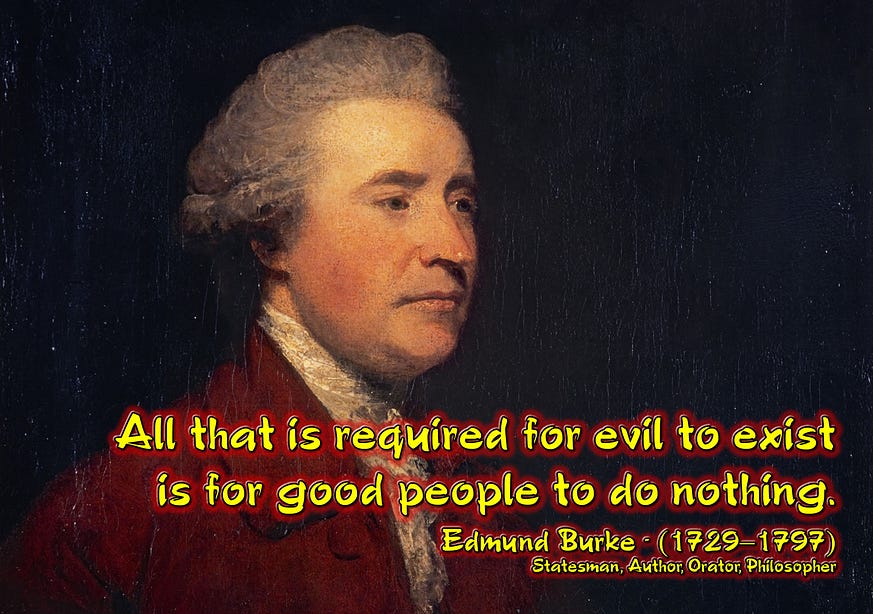
“All that is required for evil to exist is for good people to do nothing.” — Edmund Burke

If you wish to identify yourself as conservative and be treated with respect, then you have a house to clean up.

Standing on the sidelines and complaining about being trashed isn’t defensible. It makes you a coward and a hypocrite.

If you have a problem with liberals trashing conservatives, then you should be going after the people who are giving liberals something to trash.

You should be screaming at the top of your lungs at the treasonous monsters who are making you look bad.

Complaining to liberals about being trashed only makes you look worse.

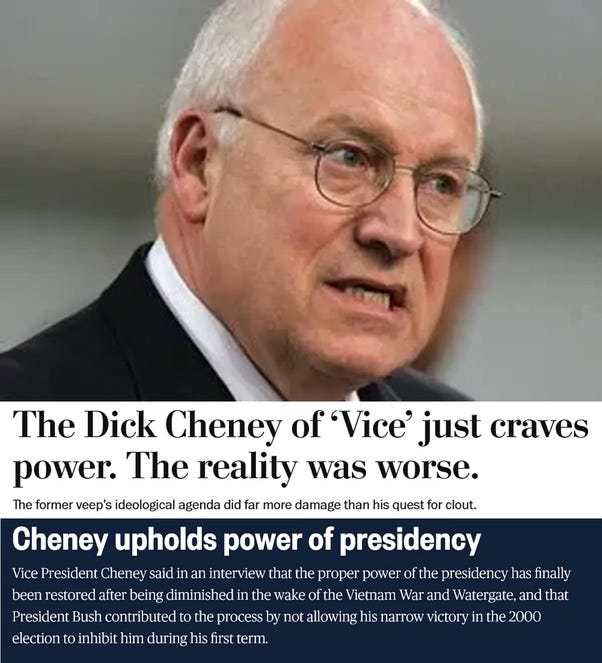
Grow some Liz Cheney-sized cojones and fight to take your party back. Clean out the trash clogging up your house and take the garbage people out with it. You need to stop behaving like a snowflake because you bear responsibility for this happening.

You’re supposed to work with your honourable opposition to create solutions to our common problems, not treat them like enemy combatants while mindlessly cheering for your team and trash-talking the other like politics were a sporting event.

Real lives are at stake, and your nation deserves better. The entire world deserves better. Democracy demands better.


Bonus Question:Why do many democrats oppose ICE deporting illegal immigrants?

Your question needs to be fixed:

“Why do many Democrats oppose ICE deporting people without first identifying and proving that they legitimately are immigrants who are in the country illegally?”

You’re welcome.

A bonus question you could add is, “Why does the Trump administration commit human rights violations against American citizens by ignoring an 800-year-old legal precedent from the Magna Carta that’s more than three times as old as the U.S.?”

Yet another question you might want to ask is, “Why am I not scared of being hauled away in the dead of night and sent to a foreign concentration camp?”

Being placed on an International Human Rights Watch list should deeply disturb you. If it doesn’t, you’re the problem, not the people who fight to protect rights you take for granted. Before rewording their protests to suit your biases, you should try to understand what they are saying.

Why would anyone turn a blind eye to the liberal agenda?

This post is a response to a question posed in its complete format: “Why would anyone be so ignorant as to turn a blind eye to the liberal agenda? It’s very apparent they want to control and not be controlled as they should.” (This answer was originally written about six months before the 2024 election and I’ve updated it but I may have missed a few items that could make it seem somewhat disjointed. I apologize for any confusion I missed clearing up. Thank you for reading.)

You have answered your own question.

You assume the right to control what you demonize as a “liberal agenda” and then hurl a confession of your controlling nature as an accusation.

There is no “liberal agenda,” but CONservatives have been very clear in conveying their agenda of controlling a population. The examples of power-hungry conservatism stretch back to antiquity through a delusional assertion of association with Godhood through the arrogance of a “Divine Right of Kings.”

This delusional presumption forms the basis for driving efforts such as Project 2025 and Trump’s assault on democracy, both inside and outside the borders of his nation. This delusional presumption forms the backbone for the “Dark Enlightenment” proposed by the political influencer, Curtis Yarvin, who imagines restoring a two-class society of rulers and serfs. It is precisely this assumption of power that drives every right-wing organization manipulating a MAGAt army of extremists who are prone to violence and listed as domestic terrorist organizations like the “Proud Boys,” “Oathkeepers,” “Sons of Odin,” and other militia groups.

Right-Wing Extremist Terrorism in the United States

This self-serving and socially destructive delusion sums up the entire character of conservatism. It shows up everywhere in everything you monstrously destructive idiots do.

Every problem you pretend to deal with, you make worse. You create problems with your perpetual violations of the social contract each time you issue an idiotically dictatorial edict to repress people and strip them of their rights on all issues that you pollute with your monstrously vile, misanthropic hatred of your fellow humans.

Name any issue where a conservative barfs up what their perversion of a solution is, and you will see nothing more than a hammer smashing a nail because CONservatives can’t handle complexity or nuance.

Economics? — Tax breaks for the wealthy while claiming the wealthy are altruistic beings and not predatory parasites who were responsible for the Great Depression and World War II, and the rise of the Nazi threat — even though history is repeating itself right from the tax table level to the overt increase of racial hatreds.

Abortion? — Shrink the government to the point of fitting inside every vagina to monitor the state of pregnancy. Force pregnant ten-year-old rape victims to term while endorsing capital punishment for women who abort their development process as per their right to bodily autonomy.

Environment? — Pretend the floating plastic continents don’t exist, and if that doesn’t work, deny they’re a symptom of a much larger problem because the last thing you want to do is hold wealthy monsters who pay for your unearned power in government accountable for their destruction.

Alternative Energy? — Deny the need to transition to an environmentally responsible system of meeting our growing energy needs because that would reduce the grotesque profits of the fossil fuel industry, destroying our planet. Have some idiot monkey perform for optics by bringing a snowball into the chamber to deny the global warming responsible for creating heat bubbles that incinerate towns from the face of the map.

Crime? — Pretend it’s on the increase instead of admitting that crime has become less of a problem because you need to keep your idiot flocks scared of a big, bad world so that you can justify the militarization of a government-sanctioned terrorist organization that kills innocent citizens for sport.

Mass-Murders? — Pretend that children being gunned down in their schools is the price the public must pay to be free, while no other nation on the planet experiences that kind of depravity. It’s more important to you monstrous freaks to defend profits for the weapons industry because weaponizing everything is how you react to being overwhelmed by a world that intimidates stupid people who wallow in fear.

You name it. You pollute EVERY issue with ignorant stupidity and destroy lives.

“Right to Work” Laws — Strip workers of their rights, increasing poverty among the working class. All “Right to Work” states have the highest poverty level in the nation.

The list is endless. CONservative stupidity worsens EVERY issue and creates issues that would not exist without their power-hungry meddling. CONservativism is defined by its bullying antics.

Your president is a 34-time convicted felon who you reinstalled to finish destroying 243 years of democracy. It wasn’t enough, though, that he is responsible for more American lives lost than Osama Bin Laden. You want him to rid you of more Americans you don’t like to help the oligarchs take over the nation and become a mirror image of the corruption that has defined an enemy America has been in a cold war with for over 100 years.

You endlessly complain about the debt when your government isn’t controlled by “your team”, while ballooning it by trillions in giveaways to the wealthy and throwing people into dire straits by stripping them of their lifelines.

Republicans embrace the power-hungry, controlling evil that the founding fathers escaped and warred against for the freedom of the people. Republicans embody that evil and seek to transform the nation into the nightmare that prompted the creation of a nation built on liberty through fraternity and equality.

America was built on the solidarity of the people against the controlling monsters that CONservatives everywhere embody.

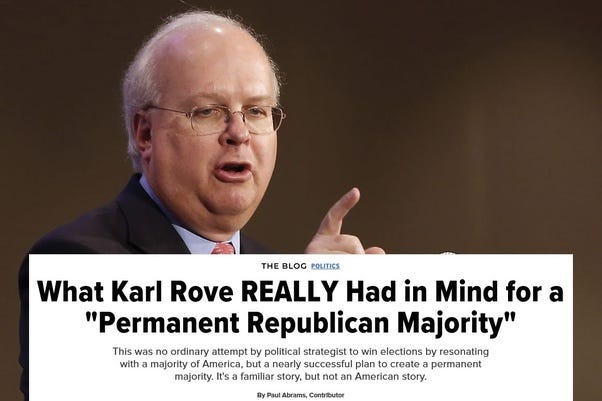
During the horrors of your prior CONservative presidency of war criminals, you had Karl Rove blatantly announcing your treasonous agenda by claiming your goal of a “permanent Republican majority.” You have taken all the steps you can in an overt agenda to ensure that’s the case by denying Obama’s right to appoint a SCOTUS judge and maintain an objective balance in the scales of justice. Now, you have succeeded in corrupting the highest court in the land to make it a mockery of justice.

You spit on democracy when you dedicate your efforts to controlling strategies like gerrymandering districts, purging voter lists, and creating barriers to the electorate to ensure you can win elections. Then, when that corrupt strategy fails, you attempt a coup on the nation and kill people who won’t submit to your abusive horror show. None of you care in the least about solving our common problems because the only problem you care about is how to control everyone and everything permanently.

You are all ruled by fear and ignorance.

You have concocted a plan (Project 2025 / Agenda 47) to send the entire nation back to a medieval state of rulers and serfs and blatantly threaten violence against those who don’t capitulate to your monstrously inhuman betrayal of humanity. Meanwhile, you believe Trump’s denial of knowledge of it as he recruits its authors and begins his assault against the nation with a “flood the zone” strategy to implement it, on day one of his re-election.

You people embody evil and embrace it with every word and deed, including this pretend question.

“Liberty, Fraternity, and Equality” are values that define a liberal sensibility. It’s not an agenda because values transcend agendas. Only stupid monkeys who have nothing of value to offer beyond horror need agendas. The most famous Republican in history was a liberal. He freed slaves because he valued “liberty, fraternity, and equality.”

You should be embarrassed by your incompetence, if not by your evil and controlling natures or your betrayals of your fellow citizens.

Agendas are what monstrous freaks of broken human nature rely on to conspire against their fellow human beings and assert power over them.

Liberals want power to be decentralized and distributed to everyone, while CONservative monsters aggregate power and attempt to centralize it like every dictatorship throughout history. With clear intent, conservatives deliberately try to reset humanity to a medieval state of society with rulers and serfs and deny it in the same breath.

You can see it in their agenda to make the president’s powers absolute. The SCOTUS took another significant step in that direction before the 2024 election, hoping a decent human like Joe Biden would choose the high road of not exercising that power and permanently terminating a threat to democracy.

You stupid freaks have no clue that you have handed him the right to assassinate your beloved saviour, who pretends to be victimized through a fraudulent assassination attempt to gain sympathy because he’s the most unsympathetic character in recent history. Having him assassinated by the legal means you have granted him would bring a sigh of relief heard all around the world. No one but you, bloodthirsty freaks, wants the ideological divide you’ve been stoking to escalate into a bloody nightmare.

Joe Biden has proven that by refusing to follow your frenemy’s method of eliminating political rivals by nuclear mist. Meanwhile, Trump has been doing all he can to eliminate his detractors by having judges and political leaders arrested, while you delusional freaks cry “freedom!”

Only grotesquely inhuman monsters would support a predatory pedophile like that murderous Orange Nazi… but here you are… endorsing a convicted felon on an agenda to destroy democracy and install him as a permanent ruler while he brazenly claims no one will ever need to vote again.

Ignorance is what defines humongous monsters like you. You should be very glad that we still have the pretense of democratic civilization protecting your stupidity because once that veil drops, all bets are off. You are sowing chaos, and with it, you will reap a whirlwind of regret, which will require the rest of this century for the nation to recover.
Your politics of hatred is not infinitely sustainable and will burn itself out along with you, just like it did almost one hundred years ago, and one hundred years before that. The real tragedy, however, is how many innocent lives you will take with you as you destroy 250 years of progress.

We see you for what you are and what you feed on, while the more people who wake up to the truth of you, the more you dig yourselves into a toxic hole that the world will try to bury in the dust of horrified memory from a nightmare of evil.

Why are Tesla cars expensive if they’re cheaper to make?

This post is a response to a question posed in its complete format: “If Tesla automobiles are cheaper to make because of less human labour, why are they so expensive?”

Ah… the CON of capitalism is that the people believe price is a consequence of production costs when nothing could be further from the truth.

The cost of everything you buy is based on what the seller thinks will sell the most products.

Ironically, many people believe the most expensive products are the highest quality, and that misconception drives every vanity purchase.

It’s why capitalists like monopolies in their market. They can fix prices at whatever level they want, and people will gladly pay more for an inferior product. That’s how the health insurance industry works in the U.S. All they have to do is sell the idea that their consumers are getting a superior product at a lower cost because they’re not paying for supporting the poor or the immigrants they hate.

It’s a game of manipulating emotions and dulling logic with massive amounts of cheaply disseminated disinformation.

It is so successful at making billionaires richer that they’re trying to institute it in Canada. A handful of billionaires want to spread this formula worldwide with activist organizations they fund.

It’s why Donald Trump likes tariffs — they make people get used to paying more for their products so that when tariffs are lifted, prices drop by less than the tariffs, so that the products still sell at volumes they did before the tariffs were instituted.

Tariffs are a form of strategic price gouging for a market of Stockholm Syndrome victims.

We saw this strategy in action after the global pandemic lockdowns ended and supply lines returned to normal operations.

A product like the Swastitruck can be utter garbage, but because it’s unique in its design and grossly overpriced, people instinctively believe they are purchasing a superior quality product.

Market pricing is a psychological game that product manufacturers and sellers play with their consumers.

What is the role of contract law in business?

This post is a response to a question posed in its complete format: “What is the role of contract law in regulating business transactions?”

Donald Trump has a reputation for bragging about and laughing about stiffing contractors. He’s been getting away with it because he has had the financial clout to bully his victims out of their earnings.

It may seem such behaviour is anomalous in the business world to someone clueless about its prevalence.

Working as an independent professional puts one in a position of being the lowest-hanging fruit for predators. That often means accepting jobs from people you can’t trust and who are abusive in their treatment.

Anyone starting as an independent contractor learns to navigate this predatory minefield as best they can while developing a professional reputation that allows them to increase the quality of their clientele.

Over time, one is exposed to fewer predators, but the period in which one must survive at the outset is a make-or-break gauntlet of survival because most people will try to stiff you if they think they can get away with it.

The many people I worked with over the decades that I can trust can be counted on one hand.

Many will try to weasel bonuses out of you. Many will try to move the goalposts by having you retouch and redo your work because they’re not quite pleased with the idea they were excited about before. Many will extol the greatness of your work and how their clients love it but then tell you to sod off when you want to collect remaining payments.

I had one client for whom a project that could have been completed in three months extended well past eight months because they kept changing their mind about what they wanted while they tried to figure out what their superior wanted, when that supervisor of theirs had no clue what he wanted. (That business no longer exists. Most of my former clients no longer exist as the entities I did business with.)

Much of the cost of that overrun was borne by me as I worked an inhuman number of hours (two months of overtime within three months) trying to mitigate their incompetence. I was concerned about how long the project was taking to complete.

I lost a lot of money on that project, and as an independent contractor, that means a double-whammy of loss; the loss of compensation for the work done and the loss of work I could have done for another client that (theoretically) would have paid me for other work. I have easily lost more than several hundred thousand in direct losses due to being stiffed by clients (which doesn’t factor in much greater losses from indirect losses).

I have no idea how many people I have encountered who expected my work for free while extolling the benefits of a piece to add to my portfolio.

Contract law is like a rope holding back a tide.

It indicates where the boundaries of responsibility exist between parties, but it is as effective a barrier as one has the resources to defend their entitlements.

If you can afford court costs, winning a case often means simply outspending and outlasting the other party.

This is why, after decades of struggling through that kind of nightmare and encountering abusively parasitic sociopaths after abusively parasitic sociopaths from well more than fifty percent of people one does business with, that burnout becomes a common problem for independent contractors.

This is why I could never be in Donald Trump’s presence as he brags about stiffing people who have worked for him. This is also why the business relationships one develops must be based on trust, because, unless you’re a millionaire with deep pockets, most people can’t afford to bully people into paying them or bully people out of holding them to account in meeting their contractual obligations.

Contract law is a line in the sand that protects the vulnerable from signing their rights away because no contract can contravene established laws. The catch is defending one’s rights and holding the other party accountable for the agreement made within the contract between the parties.

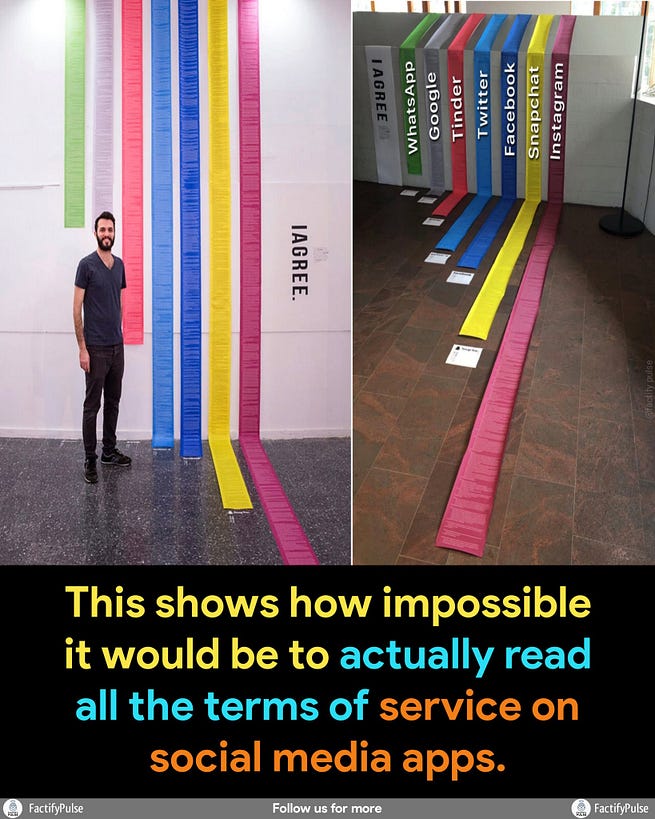
Large organizations, such as software developers who employ onerous contracts that are so overwhelming to average users, who almost uniformly never read them, can entrap people into signing away rights to ownership of their creative content. For this reason, it’s important to post only lower-resolution copies of their work. They can never assume ownership of or resell without your permission while never posting work.

Here’s an example art installation piece by Dima Yarovinsky entitled “I Agree,” which shows how entirely exploitative a contractual agreement can potentially be for creatives who rely on social media to gain exposure to their work.

Would you tell the truth if it meant losing your job?

This post is a response to a question posed in its complete format: “Would you tell the truth about something to help the course of justice if it means you’d lose your job by means of corruption?”

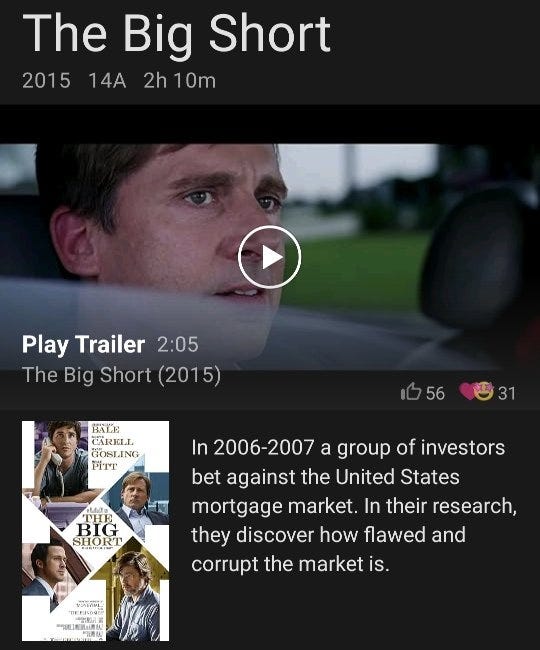
I’ve just rewatched “The Big Short” — a film about the cluster of greed and stupidity that made a few people rich and millions poor and poorer. The housing market grew in a stupidity and greed bubble that collapsed in 2008, and a publicly funded bailout ensued while long-term financial institutions were wiped out of existence.

One quote I caught this time around that I’m stunned I missed it the first time I saw it, or at least don’t remember it:

“For every one percent the unemployment rate goes up, forty thousand people die.”

The nation learned nothing and did nothing to prevent this scenario from repeating. The CDO (Collateralized Debt Obligation) — a corrupt means of bundling bad debts into bad investments to profit from- was not made illegal. However, it has been a rebranded gimmick to create profits for those with resources and market exploitation expertise.

Meanwhile, the U.S. is again heading for a major collapse because the American public seems incapable of learning from its mistakes.

This time around, however, the collapse will not be fixed by stealing from a non-existent middle class after all being robbed by trillions per year for decades.

The “Big Beautiful Bill” that Trump named will add a few trillion more to the national debt and deficit, while twelve countries have already announced they no longer accept the U.S. dollar. The U.S. dollar is losing its status as the world’s currency, making it less secure while the cost of borrowing increases (while investing shrinks).

The next stage is a credit downgrade, and store shelves will be emptier than during the pandemic while product prices go on a gouge fest that will definitely trigger a recession. There is no avoiding it now. How bad it gets is still outside my wheelhouse, but I will not be surprised if it’s deep enough to create a full depression.

The unemployment rate will skyrocket, and the forty thousand casualties of unemployment will break one million.

All of this can be possible only because hundreds of millions are so willing to lie to themselves that they can’t risk facing reality and the prospect of losing the stability they count on to survive in a dystopia.

However, they won’t have any more choices because instability and outright chaos are inevitable.

The arc of history may bend toward justice, but that’s because the trajectory of injustice always bends toward chaos.

There is no way to answer this question honestly because context and circumstances are fluid and unique to each situation. What may be true for a person one day within a given set of parameters may not be true the next day with different variables at stake.

One may hope they will make the moral choice and accept sacrifice, but that’s the kind of self-serving thinking that people often indulge in when thinking they would jump on a grenade to save a crowd.

One’s belief about one’s selfless nature rarely matches reality.

At the end of the day, whatever choice one makes will always be a balancing act between benefits and sacrifices that becomes a lifetime burden to carry.