This post is a response to two questions posed in their complete formats as: Question 1: “To what extent can George Soros be termed as a political figure?” and Question 2: “Democrats, what would you say to a group of Republicans begging you to give them a chance to prove that they are good people?”
To no extent in “capital P Politics” and a limited extent in “small p politics.”
He mostly avoids public statements about politics, politicians, and political issues. He recently made a rare comment referencing tariffs as warfare when Trump began his tariff rampage, but that was the extent of his input.
It had bothered me for some time that he hadn’t been more vocal, but then I realized how anything he says can create massive ripples throughout the marketplace.
His voice is like Marvel’s Black Bolt from the Inhumans.
He has to be extremely careful about what he says publicly because a slip of the tongue can kill an entire industry and dramatically impact people’s lives.
It took me a long time to arrive at that realization and regret being so dense about it.
I wouldn’t want that kind of influence. It’s way too much stress and responsibility that few can handle, and even fewer can be trusted to handle it responsibly.
Elon Musk and Donald Trump are excellent examples of being too incompetent to have as much power as they do.
He is a shadowy figure who quietly does what he can to leave a positive legacy for the world. That makes him a lightning rod for the toxic among us and an inspiration to those who value his contributions.
Question 2: What do you say to MAGAs who claim they are good people?
Stop begging and start doing.
Actions speak louder than words.
Republicans are being judged by their actions.
Remaining silent in the face of a fascist takeover of the nation is complicity with that fascism.
It doesn’t matter how much you beg, you’re still an ass, and a cowardly one at that if you don’t stand up and fight against it.
If you do that, you won’t need to debase yourself by begging. Grow a spine and take responsibility for the actions of the party you identify with.
Why do you think people are just as pissed off with the DNC?
It’s because they have been spineless while all this destructive nonsense has been happening.
People from all walks of life, except the privileged, demand a new world. The status quo can’t survive because we can’t survive it. We need to work together, and that includes the enraged MAGAts who need to stop attacking their neighbours and start demanding changes from the monsters they admire.
After all, you can’t seriously be okay with being told that you’ll have to cut back on buying dolls for your kids this Christmas, and then be OK with Mango Mussolini getting a half-billion-dollar gift from the people who financed the 9/11 tragedy to jet around the globe to visit his branded properties.
No one who can accept those two conditions can be a good person. Only a coward and a hypocrite who refuses to protect their family could accept that. If you want to be seen as a good person, then it’s time to do the right thing, not the Reich thing.
This post is a response to a question posed in its complete format: “Would Communism actually work if every nation on the planet switched to it?”
Making a switch to an entirely new system is never as simple as a change of clothes.
Every significant change to an extensive system, such as a complete switch to a new form of governance, always comes at the cost of widespread chaos and rivers of blood coloured by horrors of every shade of nightmare.
That people keep talking about switching to new or resurrecting old systems because they’re overwhelmed by how broken our current system seems to be is, on one hand, understandable in their frustration and desire to restore sanity.
On the other hand, it’s horrifying to contemplate how little people understand how our current system should be working and why it isn’t working as intended.
It’s frustrating that people can see why our system is broken, as they get slapped by those reasons every day and remain utterly blind to the simple fixes that would right the upturned ship of state we all depend upon.
It’s the same kind of broken reasoning that claims we should hedge our survival bets by creating extraterrestrial colonies instead of focusing a fraction of those resources on restoring our world to a sustainable balance for life.
The simple answer to this question is that we should stop thinking about throwing the baby out with the bathwater and fix the leaks in the tub to more quickly return to struggle-free baby bathing with far less pain and suffering.
We can borrow elements and concepts from communism (and other systems) to modify and incorporate into our current systems of democracy and capitalism. Hybridization of systems has already occurred worldwide and has proven itself a successful strategy without mass casualties.
The Social Democracies developed in the Nordic nations are prime examples of the superiority of evolving systems over replacing them wholesale.
Let’s take a moment to think about an analogy that might simplify the concept of evolution over replacement.
Redesigning and building an engine from scratch still requires a lot of after-the-fact adjustment. No new engine design is fault-free from its first iteration. There are always necessary improvements to make following its first release, if not outright fatal flaws that could end production altogether.
Software applications are generally considered immature and buggy until at least the third major release. As an analogy, software development is an excellent model for understanding how social engineering can work when deliberately planned to accomplish long-term goals.
Software applications generally begin by focusing on core functions to meet various needs for various use cases. Minor updates are made to improve operational efficiencies, while new versions expand on core functionality and incorporate new features that are usually the highest in demand.
Social systems are far more complex, while system crashes cost lives. There’s not much wiggle room for errors when hundreds, thousands, and potentially millions of lives are affected by minor disruptions.
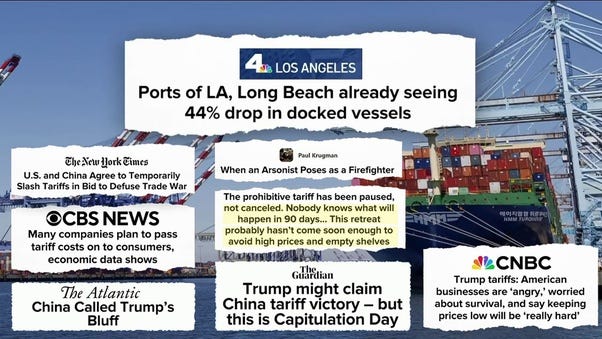
Have a look at these pictures:
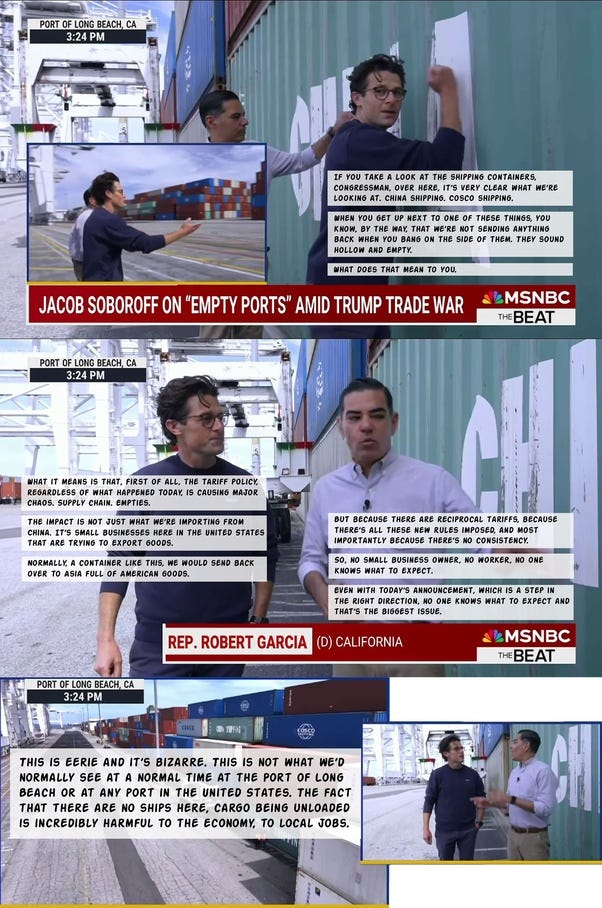
Below are the same docks in L.A. that, currently, are mostly empty and without traffic. During the program this aired on (The Beat with Ari Melber — 2025.05.12), Representative Robert Garcia mentioned that before the tariff wars that Donald Trump (the deal-making artist) began, it would usually be too busy to walk where they walked without being run over by trucks due to a flurry of activity.
This is today’s result of the trade policy changes implemented three months ago. It took three months for a simple policy change to filter down to the port level. It will take a few more months before this effect trickles outward to impact every home nationwide.
It was mentioned in this report that hundreds of dock workers were out of work or had their hours cut back. The problem is much worse than a few hundred lost jobs, though, and they touched on the implications without adequately explaining what this all means.
When I see these photos and hear them speak, I see a domino effect of thousands of bankruptcies picking up steam throughout the nation, to become hundreds of thousands of lives displaced and destroyed before escalating into millions of lives by next spring.
Donald Trump’s casual dismissal of the serious concerns of real people trying to survive while working multiple jobs to raise their families and pay for their living needs showed a sociopathic disregard for their struggles. When he responded with nonsense about parents needing to cut back on buying 30-plus dolls for their kids for Christmas, while he’s raking in hundreds of millions on cryptocurrency scams and spending $3 million taxpayer dollars on every day he golfs and another $100 million on a military parade for his birthday, it’s mindboggling how people can be so frustrated with their lives and not be livid with him.
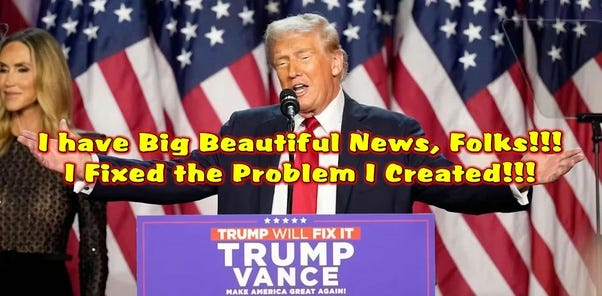
Every callously self-serving decision he makes carries implications that dramatically affect lives for years. This is the impact one person can have on hundreds of millions of people in their nation. We may currently joke about memes like this. If the U.S. becomes his latest and greatest bankruptcy, very few people will laugh — and it won’t be the millions suffering the consequences of one man’s corrupt thinking.:
People worldwide will feel its impact even if it’s contained and doesn’t erupt into a global catastrophe. Millions will die. Some people still haven’t recovered from his first term in office.
This is the impact one person can have on a system that is so complex and tightly integrated that no one escapes the effects of its disruption. Imagine how dramatic the impact on people’s lives would be if, instead of a simple tariff war and an illegal immigration round-up to concentration camps orchestrated by one leader, chaos were ramped up to a full-scale restructuring of society as a whole.
If a simple Constitutional amendment requires decades of debate and challenges by competing interests, imagine how disruptive it would be to dismantle a centuries-old system and replace it with an untested one. You can claim Communism was implemented before, but it wasn’t. Perverted forms of it were implemented by despots who killed millions as they tried to remake their nation in their image, using that system as a tool for them to leverage, like Donald Trump and several others are doing today with capitalism.
There’s no way to ensure the Communism you or anyone imagines will be the Communism that would be implemented. Marx’s vision of Communism was never implemented before, and the perverted versions of his vision were worse than failures. Meanwhile, democratic governance with a capitalist system has already transformed the world. It has become so successful that several people have and do support Donald Trump’s perversion of it to become a monstrous betrayal of what it was designed to accomplish.
Changes to any system that hundreds of millions rely on for stability require predictability in their systems more than anything else it can provide.
Without knowing what’s coming next, when people don’t know what to do, they naturally do and risk as little as possible while rationing out reserves to ensure they can survive in a repressed state over an extended period.
Completely shutting down the tariff wars and restoring trade policy to where it was only a few months ago would still take several years to return the economy to a state resembling it only a few months ago.
Replacing an entire system with another system means several decades of adjustment would be required to arrive at a state of equilibrium where people could finally feel comfortable predicting their futures and making decisions with confidence in their predictions.
Several decades of adjustment would be required to switch from the current system to a system of communism that would be stable enough, where the cost in lives could be mitigated.
In the meantime, periods of chaotic transition create incentives for the parasitic predators among us to leverage the confusion in ways that benefit them at the expense of everyone else. This is precisely the dynamic we are struggling with today. Without addressing the core problem of a corrupting influence in society, we would simply be porting a virus that weakens us today to a new system to continue infecting our society while adapting their strategies to the new system.
The flying monkeys who enable their corruption would be ported along with them because that’s the nature of power. When power is concentrated in the hands of the few, they no longer need to act directly, while their supporters do all the heavy lifting of “massaging a system” to cater to their needs.
We can see that occurring primarily within the MAGA community as they’ve been frustrated with how much they’ve had to endure and are struggling ever more over the last few decades, instead of experiencing a general improvement in their quality of life, like their parents and grandparents before them. They are righteously angry because they have been betrayed. They can’t face the truth of who has been betraying them, so they accept easy targets to vent their frustrations onto.
We have all been violated on deep and visceral levels, leading us all to take desperate action to fix what we know is broken. The problem is that far too many people leverage their anger and ignorance of how systems work to further the oppression rather than mitigate it.
The people who are selling easy solutions are the same people who are responsible for creating the problems. Donald Trump embodies that scam. Many billionaires are billionaires precisely because of that scam. There isn’t one private prison billionaire who hasn’t specifically leveraged that scam. Insurance billionaires and weapons moguls are the most popularly recognized culprits of the fraud of benefiting from the problems they create. Elon Musk’s DOGE was an abomination of a scam that many still believe was an honest attempt at addressing waste and fraud rather than facilitating it all while giving Elon and many others an escape hatch from accountability for their criminal behaviours.
We can and should be fixing the bugs in our current system by eliminating exploits, such as placing a global cap on net worth and instituting UBI. No one should have more wealth and power than a small nation. If an individual can afford a personal army, then they are a threat to global stability. However, everyone in a system that produces more than what we can consume is entitled to the basics of survival while given access to whatever means are available to improve one’s status through tools of opportunity like housing, education, and healthcare.
That IS precisely what “promote the general welfare of the people” means.
What we can do is ensure distribution systems are equitable and maximize opportunity so that everyone has an equal chance to create some form of meaningful success for themselves. No one needs more than the basic implements to carve out a modest life for themselves by applying their efforts toward achieving goals. No one should be denied these basic tools in a post-scarcity society of abundance, particularly not when we’re on the verge of becoming a fully automated society.
No one should be permitted to hook up to major arteries in a system and drain wealth from it while doing nothing else but watch their hoards grow without restraint or limits.
People like Jeff Bezos and the Walton family spend hundreds of millions to thwart unionization efforts so that their underpaid people don’t have to rely on taxpayer dollars to make up the difference in being short-changed on their income.
We must restrain greed, not rebuild a new system for greedy people to continue exploiting the desperate and the gullible.
Changing our system doesn’t solve our problems when we’re not prepared to deal directly with the cause of those problems.
We still have time to address the causes of those problems before they escalate and find ourselves repeating a bloody history of correction.
Avoiding the cause of our problems by pretending we can gloss over the obscenity of gluttony with a rebuilt system from yesteryear means we’re just lying to ourselves and begging for chaos.
This post is a response to a question posed in its complete format: “How will emerging artificial womb technology affect the growth rates of off-Earth human populations?”
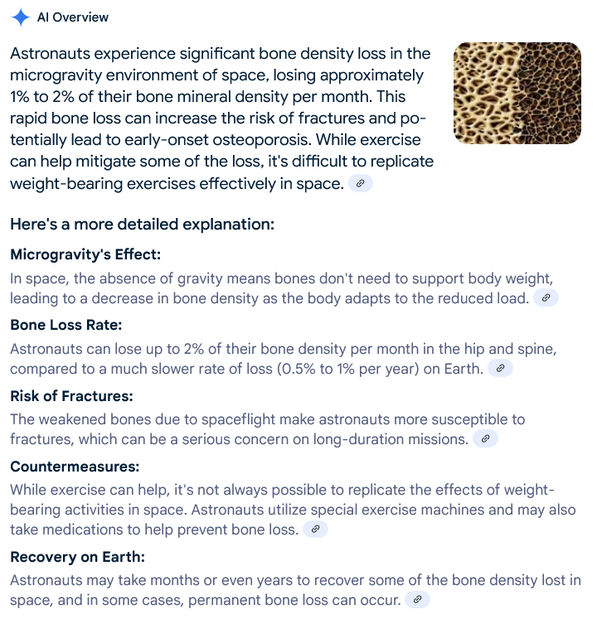
It won’t affect any “off-Earth” human populations because there will not be any sustainable “off-Earth human populations” any time in the foreseeable future. At best, we’ll see colonies with rotating populations because of simple biological issues such as bone density loss.
Every month in space, an astronaut loses the equivalent of what a senior on Earth loses every couple of years.
For this reason alone (and setting aside numerous other issues like prolonged exposure to radiation, isolation, etc.), any near-future space initiatives such as asteroid mining will depend heavily on robotics and automation technologies to exploit the mineral wealth floating about in our space neighbourhood.
Extraterrestrial human colonies are still very much out of reach and within the realm of fiction.
It’s impossible to predict when such initiatives will be possible because of the varying change factors we are undergoing now that are predominantly defined by our evolving technological capacities.
We could develop technologies to mitigate the biological impact of life in space, such as artificial gravity (which is probably the easiest hurdle to jump, but I’m guessing outside my wheelhouse of expertise here and understand that’s more of an engineering design issue rather than a technological limitation — rotation strategies for creating an artificial gravity are possibly doable now but an expensive and small part of the overall mix of requirements).
Transhumanism may result in a branch of human evolution that permits sustained life in space. However, that’s still quite “science-fictiony” to consider now, and where that technology goes from where we are now is radically unpredictable.
Our knowledge of biochemistry may result in chemically based solutions for protecting and prolonging life in space. In contrast, our communications technologies could result in holographic experiences that psychologically connect people more intimately than videoconferencing does now.
Too many factors influence success in establishing “off-Earth living,” and I haven’t yet mentioned the financial implications. At this point, asteroid mining is the only valid financial justification for establishing some form of presence in space.
Tourism is a complete non-starter, and quite frankly, the arrogance of Bezos and his billionaire clan’s initiative of promoting this vanity stupidity is too environmentally destructive at the moment to justify, never mind that it’s an elitist microsecond Disneyland excursion for no more than a few hundred humans. It’s not sustainable unless a far better way to reach space can be developed… like a space elevator or railgun technology… anything other than polluting our atmosphere more than a year’s worth of a dozen oil rigs does while feeding our energy hunger.
Otherwise, the social impact of artificial womb technology is explored in the movie “The Pod Generation.”
It’s a worthwhile watch for stimulating conversations on technology and how it will affect society.
Question 1: How can remote workers maintain focus and productivity while working from home with distractions?
Depending upon one’s home environment and mindset, it’s much easier to maintain focus while working from home than in a work environment where random interruptions must be regarded as necessary enough to set aside what one is working on.
At home, especially if one is single and lives alone, there is no better environment for focusing on one’s work.
Being motivated enough to finish a task means being free from the metronomic effect of paying attention to a clock. There is no “gearing down” before the end of one’s workday. One can continue working on something until it’s finished.
The consequence of that kind of focus can result in working the equivalent of a double shift to finish a task. That then earns a time bonus of taking the next day off, which is a straightforward means of contributing towards one’s psychological well-being due to having the time to deal with personal issues that would otherwise become a stress-inducing time-management problem.
Remote work is the only work arrangement I will accept now, primarily because I don’t want to endure toxic people jockeying for position through politicking nonsense. If I’m hired to do a job, I want to be focused on the work and not be distracted by egotistical nonsense to make life unbearable.
Don’t get me wrong, I enjoy collaboration and work well with others, but there is always a difficult person in a crowd. Unless the relationship is one in which I am their superior (because I can mitigate their toxicity), I want to minimize my interactions with such types and “grey rock them” if the work requires interacting with them. I’m not interested in becoming embroiled in the social politics of a work environment, particularly not if it’s an environment rife with cliques and silos. In such environments, I prefer the role of mysterious social outcast. AFAIAC, I already share enough of my personhood and life online here on Quora as I care to share within any public context.
Question 2: Will remote jobs eventually require you to be on camera all day?
There isn’t any point in doing that if you understand the tasks being performed and the time expectations that can be estimated for them. Establishing a mutually respectful communication style with staff means one develops a trusting relationship with them. They will then provide updates and progress reports that you can verify based on the deliverables.
Your role as a leader is to ensure you are available to facilitate production, and if your employees trust you and your judgment, they will be open about their activities. They will often approach you with questions about direction, confirm decisions you can ratify or offer helpful insights into improving their work process. A good leader is a coach whom people want to learn from.
The only kind of leader who feels a need to micro-monitor their staff is an incompetent leader. That characteristic alone should be enough justification to replace that leader.
Whether onsite or remote, performance should be easy to assess. If not, the problem isn’t the employee but the management.
This post is a response to a question posed in its complete format: “I really wish that I could provide tangible proof of God’s existence to atheists, but I can’t. The best I can do is treat them as I know He would want me to. Does that make me a bad person?”
Why do you need to convince others of your belief?
That’s the question you should be asking yourself.
What a person believes doesn’t make them “good” or “bad.” What they do, however, is what accomplishes that.
To be a good person in this context is to accept how others do not believe as you do, while you enjoy your life as you please, without feeling compelled to convince others to validate your beliefs by thinking the same as you.
The more you feel compelled to convince others of your belief, the more you demonstrate to the world that you doubt your beliefs.
Atheists would have absolutely no problem with believers if they just stopped trying to convert everyone else into copies of themselves.
There would be fewer wars if people could accept how others do not believe the same things they do.
The real issue here isn’t that you believe something or others believe other things. The core issue is that believers feel compelled to convert others and force them to think as they do.
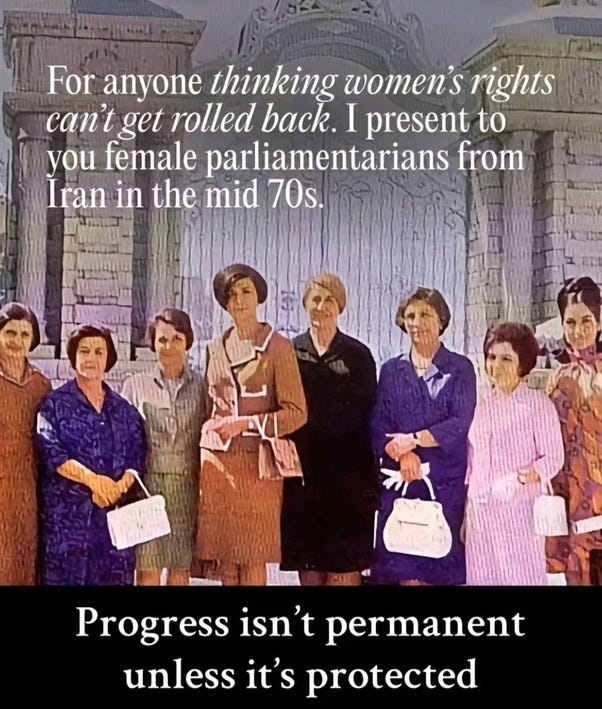
Have a look at this:
This is how people can live when they’re not oppressed by the beliefs of those who impose them on others. This is how women can have the same rights as men while living as equals in a society of equals.
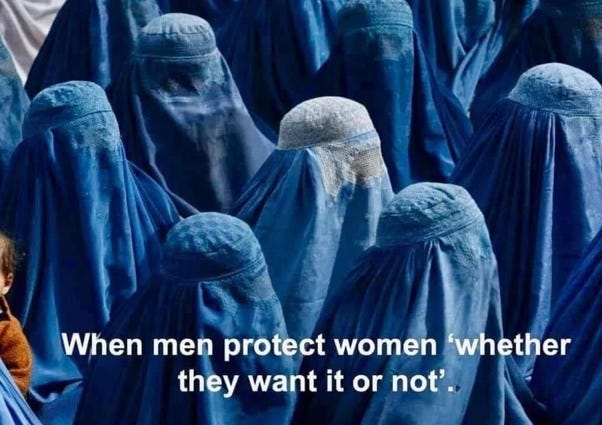
Now, have a look at what happens when people force others to believe as they do:
This is why the problem isn’t that you believe but that you seem compelled to convince others to adopt your beliefs.
This is where you become an enemy to humanity. This is the slippery slope to making you a bad person.
What can lead you to become a bad person is a desire to make others believe as you do.
If you are concerned about being a bad person, you must stop fretting about how others believe and deal with your toxic need to convince others of your belief. You must ask yourself why you must convince others that your God is real. You must stop caring about others believing differently than you because that is the path to becoming an evil asshole.
If you truly believed what you claim to believe, you would not feel compelled to convince others of the validity of your belief.
If you cannot find recompense within your belief, it’s not an honest belief but an indoctrination.
Do you know what else is compelled to spread and take control of other lives? A virus. That’s what a virus does.
This post is a response to a question posed in its complete format: “If McDonald’s were banned in some countries, would obesity rates be halved?”
If you want to see a reduction in obesity, which is a goal that is consistent with some administrations but not universally supported by all public leaders, the public at large, or the billionaires and corporations they own which profit from exploiting public health for profit, then the first place to start is not with banning anything, and much less restaurants.
You begin with public education and awareness programs that can create a cultural awareness of health issues that encourage an organic form of change.
Once the public begins demanding increased quality of food, restaurants like McDonald’s adapt to the demand as they already have. They have made some, but not a lot of progress, and that’s mainly because people think nothing of a burger with fries and a soft drink as a “normal meal” without considering how much healthier it would be with minor changes. Instead of fried potatoes, for example, they could have a baked potato. Instead of a soft drink, they could drink sugar-free tea.
I know. Several chills just went down people’s spines when they read these suggestions, but that’s precisely my point.
People have gotten so used to grossly unhealthy choices that they can’t imagine tolerating, much less enjoying, alternatives.
The notion of a soft drink like a Coke with my food sends a chill down my spine and makes my stomach churn. It has, however, taken me decades to get to this point. It’s not that I always make healthy choices, but. I am aware of the difference between healthy and unhealthy. Over time, that knowledge has contributed to changing my consumption habits.
What we learn to become accustomed to results in behaviours that our children emulate, and this is how we can collectively improve the state of health in our society.
This is an example of how we are all a part of a larger whole and how our choices, as insignificant as they may seem on individual levels, combine to result in significant social changes.
This is how we have evolved from a culture where a majority smokes cigarettes to one which publicly shuns smoking.
Significant social change is slow, but by being slow, it is also permanent in ways that legislation cannot accomplish.
This isn’t to say that all legislation is pointless, but that we can be selective in the types of legislation we can focus on. Instead of legislating healthy food choices in restaurants, we can introduce legislation to remove and replace high fructose corn syrup (which is an addictive sugar intended to increase product sales and plays a significant role in the obesity epidemic) with healthier alternatives.
The U S. is the world’s largest consumer of this food additive, and it shows in the prevalence of obesity throughout the nation in ways that exist nowhere else.
This is why agencies like the FDA can be critical allies in encouraging public health. Elon’s DOGE supporters are clueless about why they must be less mindlessly judgmental of government departments they don’t understand or appreciate.
The more the public supports healthy food choices, the more elected public officials will, too. The more critical people perceive physical health, the less likely the public will elect someone who lives on fast food to important public leadership roles.
Change is a massive wheel that seems impossible to get started moving, but once it does, it creates its momentum, eventually requiring little to no effort to push for a specific change.
This post is a response to a question posed in its complete format: “If older generations tend to get fed up with the following generations, and feel that people are stupider, societal values, music, culture and everything else is worse, how could humans ever deal with living to be 150 or 200 years old?”
This question is based on a flawed presumption and a form of projection because “older generations” is a monstrously huge brush comprising hundreds of millions worldwide.
That number of humans don’t think alike, and they certainly do not all “get fed up with etcetera generations.” However, people who employ broad brushes when making judgments about people they don’t know are also exhibiting precisely the mindset that disparages people and renders broadly negative judgments about “things getting worse.”
Thinking in these negative terms and judgments is often a means of rationalizing one’s negative attitude. By believing age leads to negative judgments, one is permitting oneself to develop one’s negative judgments.
The reality, however, is that many people remain “young-minded” and optimistic throughout their old age and consequently live happier and longer lives.
Here are some examples of people who remained optimistic throughout their long lives:
George Burns 1896–1996
Grandma Mose — Anna Mary Robertson Moses — September 7th, 1860 — December 13, 1961
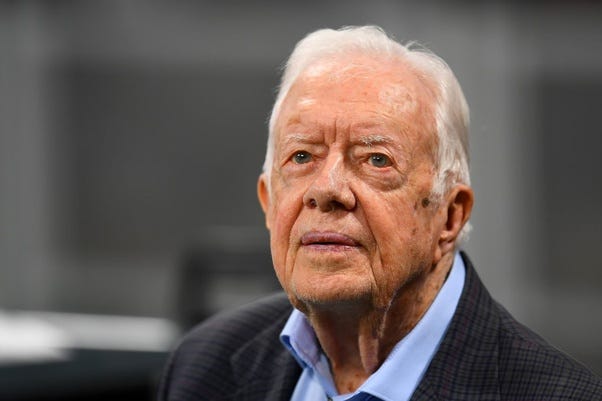
Jimmy Carter — October 1, 1924 — December 29, 2024
After having pissed away valuable time on another post dealing with toxic incels whining about how unfair life is that they don’t get to control the women they impregnate, I’ve arrived at this question with the attitude that people choose to believe the world is getting worse because they’re not able to control every aspect of it. That frustration wears them down over time, and they develop a negative attitude toward life and people in general.
I was a child during the “Dawning of the Age of Aquarius,” and was a preteen during the flower power generation with love-ins, and an optimistic view of a hopeful future.
Then came the 1980s, when people’s mindsets appeared to change from an open-minded view of society to a rather cynical and dispirited view based on a self-centric model of getting what one could for oneself, even at the expense of others. It seemed the era of sharing and caring was vanishing.
Throughout it all, I still maintained my somewhat naive but hopeful view that we would recover the community spirit I remember being moved by, while reminded of it each night, as the television stations shut down their programming for the evening, with the Brotherhood of Man song, “United We Stand, Divided We Fall.”
Although I have perceived, throughout the last forty-five years, since the beginning of the 1980s, a general increasing separation between people, many changes have distracted my mind from it. I could sense it occurring, but I mostly ignored it as I went along with it while focusing on the developing technologies and learning to leverage skills and knowledge to carve out a sustainable career for myself. I was caught up in my optimism for a hopeful future for myself, and became increasingly introverted and isolated from interpersonal interactions and a community I could rely on.
Since that was taken from me, maintaining optimism has been quite a struggle. Still, I understand on a deeply visceral level how succumbing to negativity is quite much like drinking poison. The intensity of my experience has made it abundantly clear that a destructive mindset also harms one’s physical health. It creates a feedback loop of self-destruction, which allows one to wallow in broadly negative views toward life in general.
I believe that insight clarifies that living 150–200 years (which no human has ever done) depends on one’s frame of mind and maintaining an optimistic outlook.
If people develop such a negative perception of life that they believe everything is perpetually worsening, they don’t live as long as they otherwise could. Our attitudes toward life constitute a life-shortening way of ensuring we don’t have to cope with hopelessness.
This is part of the reason optimism has increased in importance for me, particularly since I still find myself venting against the prevalence of negativity we see every day and almost everywhere we look.
I can accept that much negativity exists in this world, but I don’t have to accept enduring it, so I get carried away with challenging it. I’ve gotten quite sick and tired of the rampant cynicism. I would like to see a resurgence of hope filling my senses like it did when naive hippy optimism of peace, love, and tree-hugging do-gooders captured public attention, even if it may have mainly been performative or just acting out against previous dark periods in human history, like the Second World War.
I want to believe we’ve arrived at a form of “peak darkness,” and a crossroads in our future as a species and a civilization where we can change course and restore hope to protect our longevity. The alternative is to allow ourselves to succumb to oblivion because we cannot survive an existence sustained by cynicism.
To that end, I do what I can to find examples of young people who give me hope for our future because, with each generation, we have both Kyle Rittenhouses and Greta Thunbergs, just like we have had for generation upon generation before them.
We must choose whether we want long lives of optimistic hope or shortened lives of cynical darkness.
Perhaps I’m just on a high from Canada’s recent election and getting the good news today about Australia following suit. Still, I think — or at least can start feeling some hope that the MAGA madness may finally reach its breaking point. It’s impossible to know if we’re experiencing a sea-change or a temporary lull in the degradation of our values. Still, I’d prefer to adopt an optimistic belief in our future than a cynical one because that’s too toxic a burden to endure. We may still require a world war to break this century’s “MAGAt fever,” or we may have learned something from our history, at least enough not to have to turn our world into a humongous bowl of ashes and regret before we finally start making hopeful and community-minded decisions to grow together instead of tearing each other apart.
At any rate, life may suck but feeling sucky about it only makes it suckier. Even if life sucks, thinking optimistically about a positive future at least makes the suckiness easier to deal with, and that’s why I equate long life with attitude and posted a few well-known examples of people who we can all learn something from.
In short, it’s not about “older generations” but about “old minds.”
Marketing is a process of leveraging communications within an ecosystem.
Marketing must continually adapt to changes in an ecosystem to be effective.
Direct mail was an effective marketing strategy fifty years ago because there were few (relatively) inexpensive alternatives then. Radio, television, and national magazine advertising were pretty much the only other primary marketing channels that could get national reach for one’s brand, and those are (and were) expensive marketing strategies. Otherwise, one would have to place ads in local publications like newspapers, quickly becoming costly when scaling up nationwide by buying space in hundreds of publications.
Then the Internet arrived, and one could gain national and international reach for almost free.
Almost overnight, what worked steadily and unpredictably no longer did. The traditional market became prohibitive and ineffective as alternative media sprouted up everywhere.
Marketing has always relied on establishing trust with its consumers to create sales. So, relationship marketing became more focused on social media because a two-way, one-to-many dialogue was made possible.
Before then, marketing was mainly defined as a one-way, one-to-many communication.
The downside, however, has been such a low entry bar that everyone and their dog could compete on an almost level playing field.
A small operation could get international reach as effectively as a large corporation. That forced corporations to up their game. A saturated media market meant more comprehensive and audacious strategies for attracting attention.
Now, we have reached a point where advertising is starting to turn people off, and it’s become difficult to pinpoint effective marketing strategies because advertising has become a reason for people to avoid rather than be attracted to a brand.
Even the “give away something for free to attract people” has been losing its lustre. For example, being asked to register one’s email address and personal information to access an article is losing its harvesting effectiveness in a world where people create “junk-catching email addresses” to avoid spam.
There is no “better or worse marketing system” in a constantly evolving world. There is only staying ahead of the “pissing people off curve” and hope to make lasting connections that one can leverage for sales.
The only thing that does not change about marketing is the need to build relationships based on trust because that’s core to the human condition.
Getting attention is easy. Converting that attention into closed deals is an entirely different ballgame.
This post is a response to a question posed in its complete format: “Why do MAGAts and so called ‘conservatives’ refer to sane people as ‘the radical left?’ Why don’t they just call them ‘radical centrists’ who rely on logic and facts?”
Hyperbole is a core part of the strategy applied to extremist dialectics. Referring to the left as “radical” allows them to position themselves as rational and puts the left into a defensive position where they are forced to justify themselves. Meanwhile, the extremist right continues its rage-farming activities to enlist more people to push the left to justify its existence.
As the momentum against the left grows, they are forced into justifying rational positions like universal healthcare, which benefits everyone, including the most vulnerable in society. Universal healthcare is increasingly viewed as radical, while the beneficiaries of a privatized system are increasingly positioned as victims of a dastardly socialist agenda.
All of it is based on empty slogans that the illiterati ignore because they’re more interested in feeding their addiction to rage than they are in thinking things through.
Thinking about issues in depth forces people to set aside their addictive emotions and calm themselves down enough to develop a comprehensive enough understanding of the conflicting positions and eventually prompts them to abandon their rage addiction.
The billionaires feeding the culture wars don’t want this to happen because they will lose their cash cows.
The ownership class has cultivated the extreme divisions we live with today to distract the public from their wealth-chasing priorities. The MAGAt movement could not otherwise sustain itself without the economic desperation created by the historic levels of economic inequity existing today, which fuel their rage-fests.
MAGAts are justifiably angry. Everyone has a justifiable reason to be angry today: the economic stability we once enjoyed has been stolen. The main problems with the MAGAts are not only that they are angry at the wrong people, but they are also defending the people they should be angry with.
MAGAts should be out on the streets today demanding DonOld’s head on a platter, and they would if they could get past the blinders of their hatred enough to understand how humanity can survive only when we unite in a common cause and not divide ourselves into warring camps.
Our enemies are the same people they have been throughout history and the dawn of human civilization. We have been at this crossroads many times throughout our history. Yet, here we are again as if human history were pointless stories we tell each other for entertainment, not lessons in survival for our species.
It is time again for us all to stand up and say, “I am Spartacus!”
It is time again to dethrone those who dare to be kings among us.
It is time to be radical with the few who have stolen so much from the many.
It is time to stop asking nicely for them to restore economic justice and start taking it by force if they insist on it as a survival necessity.
From 1932
Bonus Comment (A Response to a Related Comment from Another Thread): “I’m starting to see a second shift in MAGA responses. It’s a far more conciliatory tone.”
To borrow from a boxing strategy, don’t look at the opponent’s eyes, but their chest. Their eyes will misdirect your attention, while the chest cannot help but move in the same direction as the body.
If this were an eleven-dimensional chess game, they would not have needed to use a “flood-the-zone” strategy because the nation has been desperate for positive change… even the MAGAt army is angry because their needs have been overlooked.
Bernie Sanders has been the only prominent authentic leader pointing to a horizon with a better future for all. It’s not that there aren’t others in the offing, just that the DNC has been so polluted with conservadroids for so long that they can’t find their way to recognize how appeasing the right is the wrong strategy.
They need to strengthen their spines and be provocative right back while directly challenging the MAGAt shit. They still have too many spineless and ethically challenged NeoLiberals leading them. This may be primarily a war of words and legal jargon. However, it is still a war… until the Reich gets dialectically hammered into submission, they will continue to use whatever ruse they can to throw their enemies off guard, including feigning sincerity.
They won’t stop until they rule the roost with an iron hand. They have proven that time and again and for decades.
This is a real-life game of thrones, not a board game that resets after the match is won. If they succeed, America’s character will be defined by the defeat of democracy for well over a century afterwards.
Compassion is ultimately a human strength, but they have none and will use that against you. Reserve it for when they’ve been so defeated that they’ve given up fighting for dominion and are just begging to hang onto survival.
They’re addicted to power and, like all addicts, they’re manipulative on the most heinous of levels.
Conciliatory tones can’t be trusted until they’ve been demolished and defanged… and that won’t happen unless they lose every seat for at least the next two election cycles.
This post is a response to a question posed in its complete format: “Wouldn’t a better option than tariffs be to have a corporate income tax system that would create incentives for companies that hire domestically and penalize them for hiring in other countries?”
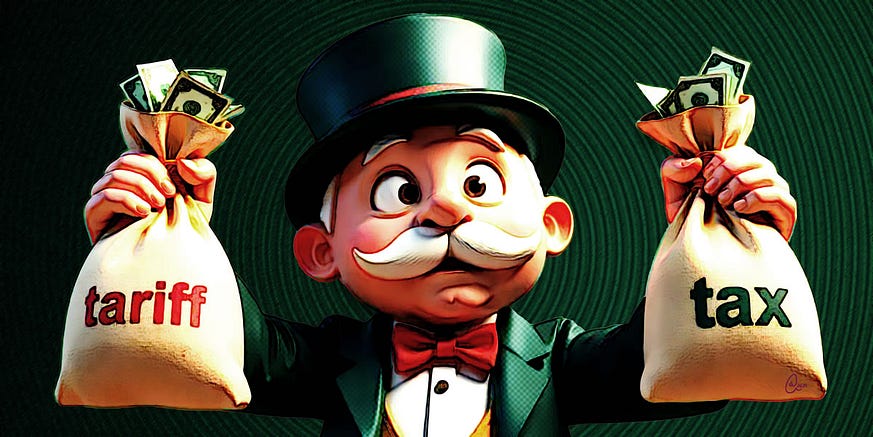
A “better option” is an alternative strategy for accomplishing what tariffs are intended to achieve. Tariffs protect local businesses and industries that can be overwhelmed out of business by foreign exports, which would otherwise dominate market niches to evolve into monopolies without constraints.
Tariffs are not helpful for much of anything else. The way Trump is using tariffs as a negotiating strategy would be the equivalent of using a scalpel to carve up a side of beef. Inevitably, that scalpel becomes dull and easily broken. People unfamiliar with scalpels would at first marvel at how clean it would cut, then become frustrated with scalpels altogether from misuse.
That’s what’s happened with tariffs.
Trump has misused tariffs as a club for negotiations and, consequently, has created a misperception of their function in a reasonable trade deal that would otherwise be used to protect local industry. He has lied about tariffs stimulating manufacturing, or is so incompetent that he sincerely believes his nonsense.
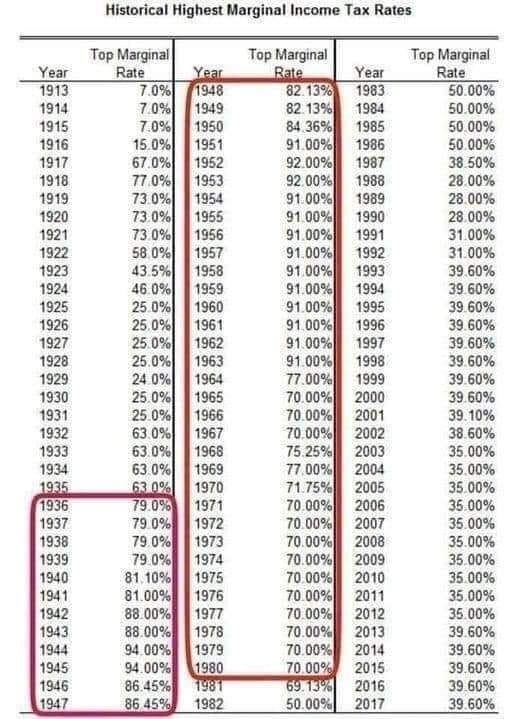
What this question suggests was already in play during the Eisenhower years, when corporate taxes were high. See the chart below:
The tax rates highlighted by the red outline comprise the years in which the economy was most stable and grew steadily, while the middle class flourished.
The higher tax rates on the upper end incentivized corporations to reinvest in their operations by increasing their hiring to reduce their tax burden. (Other laws were also in place to support this economic growth, such as prohibiting stock buybacks to increase dividends, which were eliminated along with several protections throughout these last decades.)
This stable dynamic changed because the wealthy class wasn’t satisfied with being the richest. They wanted more and continue to want more, such that we have repeated the economic disparity that has repeatedly destroyed stable societies throughout history.
The problems we are struggling with are made incredibly easy to understand once one adjusts their perceptions to realize our struggles are the consequence of a centuries-long class warfare against the people by those who seek dominion in this world.
We will experience a correction in one of two ways:
1. Through a reasonable form of relenting by the wealthy class, who collectively restrain the twenty percent of them who comprise a psychopathic psychological dysfunctionality, and re-establish the rich and influential among us as ethical leaders for humanity, or
2. By continuing to allow the corruption to influence public policy in the way that has encouraged fascism to grow out of control and repress economies while stripping people of their rights, until a tipping point occurs and societies collapse upon themselves in such a dramatic fashion that chaos rules the day. At which point, the people will reassert their power over the powerful in the traditional manner established throughout history by violently deposing the corrupt among us.
We are very close to widespread chaos ruling the day around the globe, while the Canadian election has provided us with a slim glimmer of hope. Meanwhile, the corruption that has fueled this fascist resurgence continues to corrupt the best of humanity.
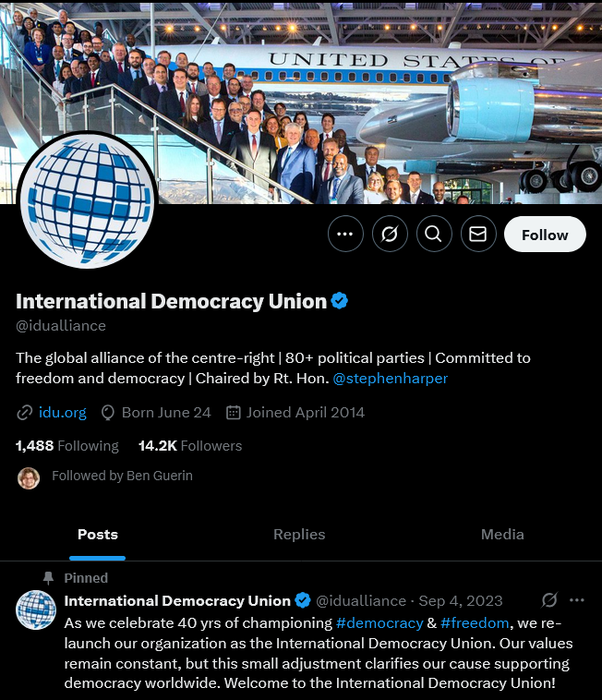
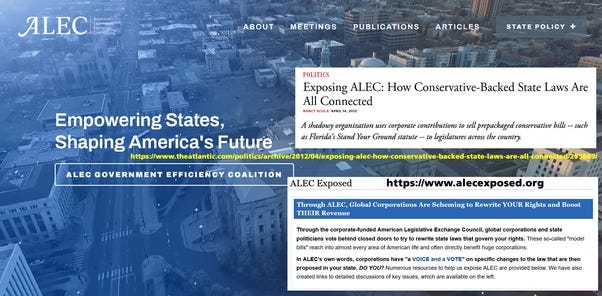
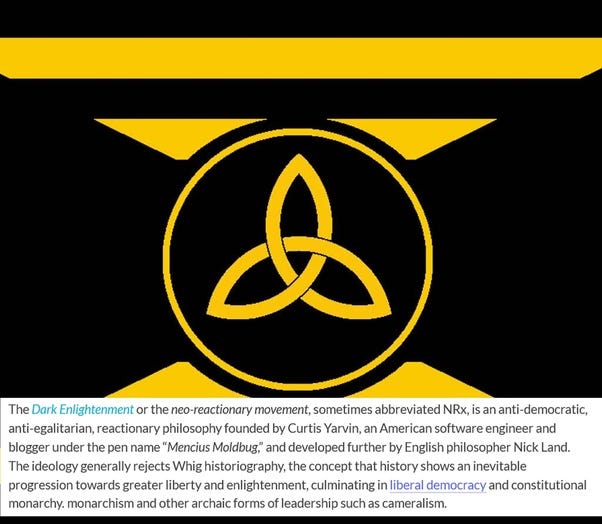
MAGA is the public face of organizations like the IDU, the Heritage Foundation, ALEC, and an ideological movement self-described as a “Dark Enlightenment” which feed the economic distortions that threaten the integrity of democratic societies worldwide by favouring corporate power and fascist governance through targeted disinformation to manipulate election outcomes based on negative campaigning.
Our best option today is to mitigate the corruptive power of these hatemongering groups and of the psychopaths within the one percent who seek to reestablish a two-class society of rulers and serfs.
Corporations are allowed to exist to serve the people, not rule them. We have eliminated kingdoms from our societies because they are toxic and destructive, limiting our potential as a species. We can restructure corporations into democratic institutions, and we must because the trajectory they are taking us all on is inviting us to repeat a blood-soaked history.
We are again at a crossroads that we have repeatedly visited throughout history because the corrupt among us have little to no respect for humanity. We now have the benefits of a long history and an established pattern, while the changes we need to make to rid society of this corruptive scourge once and for all are within our grasp. This will be our last time at this crossroads if we unite as a people and assert our power as individuals within a shared community that refuses to bend our knees to incompetent and cruel rulers.
























 thotbag