Would people continue to work with UBI?

This post is a response to a question posed in its complete format: “Would people continue to work if everyone received a universal basic income ($2,000 per month) for the rest of their lives?”

The numerous tests that have been performed bear out that they would, but that’s overlooking the problem with this question and its mindset.

The people who ask this question never bother to consider the percentage of the population that never has to work for someone else to sustain a living income.

The average net worth of the top 0.1% worldwide is around $62 million.

No one in this wealth category must work for an income at any point throughout their lives. Having their money in a low-interest-bearing account would be enough to live on the interest alone and without touching their capital.

0.1% of the population is 8 million people.

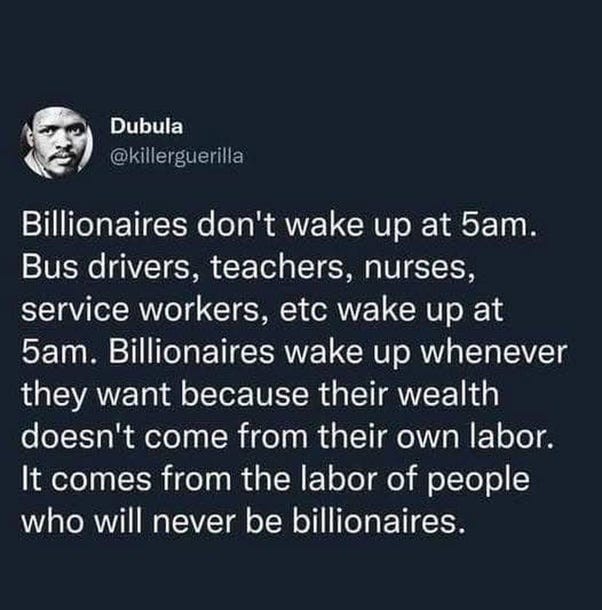
Eighty million people worldwide comprise the top 1% of the population, with an average net worth equivalent to the lifetime earnings of most reasonably upper-middle-class workers. No one in this entire group of 80 million people must be employed to survive comfortably.

Every time the question of how people will live once they are no longer forced into an (often abusive) employment relationship (in which abusive employment conditions comprise the primary reason people leave their jobs), the implication is that they will turn into lazy do-nothing slugs.

Meanwhile, 80 million people somehow find ways to keep themselves occupied daily without anyone wondering if they’re lazy layabouts. Even if they are, no one seems to care.

All of the tests performed to determine the viability of UBI involve people who would otherwise be compelled to work in soul-crushing roles while being subjected to people on power trips who should never have any power over other people.

No one who asks this question seems to consider how those 80 million people manage to make it through their lives doing absolutely nothing. No one assumes they do nothing because we see the results everywhere. In fact, without that group of 1% elites, we’d never know the upward mobility that has led to the creation of a centibillionaire class.

The reality that the misanthropes presuming people need to be herded like animals throughout their lives is that without having to piss away most of their lives on basic survival, people would invest their time in themselves and become involved in activities that bring meaning to their lives.

Whether that constitutes “work” or not is a matter of semantics. Many people who would not be required to commute to a daily dehumanizing ritual of functioning like a disposable cog would perform functions in society that many others would find valuable.

Some would devote their lives to becoming successful caretakers for their families, friends, and neighbours in need while adding positive value to their community with basic tasks such as performing chores others could not. They may choose not to devote their time to salaried activities because they would find more significant meaning in helping their community address some fundamental needs capitalists don’t care about addressing. After all, there’s no profit in providing mental health services to those in need.

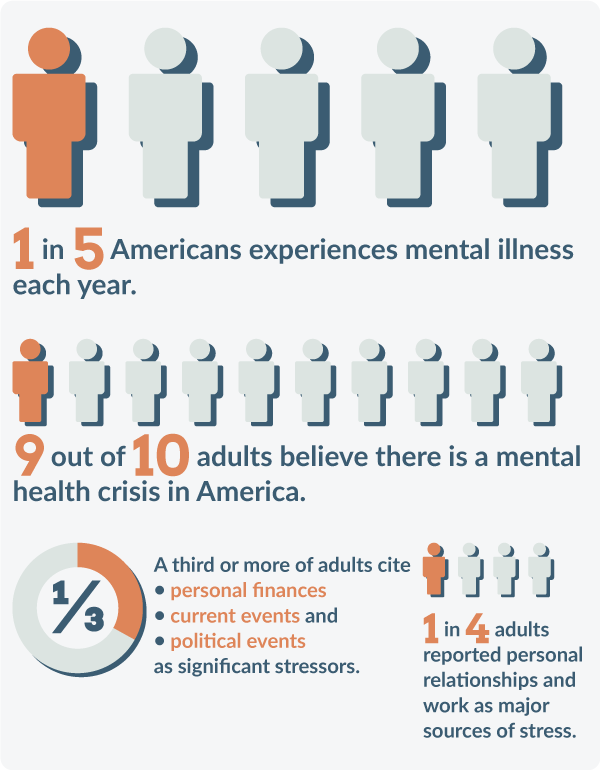
(Meanwhile, we are suffering from a mental health pandemic affecting one in five people. A whopping majority — 70%-80% — of families are dysfunctional. We are a species in desperate need of focusing on our mental health issues.)

People in general would also be much more free to focus on community needs and political dynamics such that when they go to the polls to cast their ballot, they would do so from a perspective of much greater insight into the candidates and the issues than they can currently afford to focus on now while working two jobs to survive at a minimally conscious level.

(How are people supposed to find time to understand the intricacies of nuanced issues if a majority are unclear on how something as simple as how tariffs affect their lives?)

The people who ask this question also seem oblivious to how long and how much effort is required to develop a successful career. Without external resources and funding, creating a successful enterprise takes much more time than it does to create one that’s been heavily capitalized.

Let’s say, for example, you’ve created a special recipe for a unique jam that everyone in your neighbourhood loves. You can get busy and produce perhaps 1000 jars of jam per month, which earns you enough to continue making 1000 jars of product while supporting yourself, and while eventually being able to afford increasing your production slowly over time by being able to expand your operation by reinvesting into it. You can slowly add to equipment and materials and hire assistance on both a production level to increase output volume and a professional level to expand market presence.

Let’s say that your success allows you to create a one-million-dollar per year business after 10 years of effort. If you had the capitalization required to purchase all your equipment, staffing, and professional assistance up front, you could easily achieve that one-million-dollar per year revenue level within half the time.

This is how massive franchises grow from small mom-and-pop operations into national chains within a few years. Capitalization is everything in building a successful enterprise. If one has no capitalization, then time is everything to them. Time is money.

Without the wealth to propel a business into respectable success as defined by a capitalist marketplace, one still has to work hard on one’s dream to achieve it. People are not discouraged from working while collecting enough to live on in a UBI program. The opposite is true. They are free to pursue their dreams and benefit from the sweat of their brow without having to sacrifice their lives feeding a parasite that views them as disposable commodities.

People have a far greater incentive to work for themselves than they ever could working for an abusive employer.

That’s the lesson the one percent teach us about humanity.

Only misanthropic cynics believe human beings become slugs when they’re given enough money to choose not to submit themselves to making other people rich at the cost of their life satisfaction.

People don’t need to be whipped to work. Anyone with experience working with volunteers understands what it means to dedicate time and energy toward causes which matter, and the fact is that not all things which matter involve acquiring vast stores of material wealth.

Life satisfaction is worth far more than money.
The best and only way to achieve life satisfaction is to focus one’s time and energy on doing what they love and applying themselves to produce outcomes they can be proud of. Rarely does that satisfaction get defined by money… and certainly not by those in society whom we recognize as psychologically healthy individuals whom we respect and admire as human beings.

We have learned and continue to realize that those among us who worship wealth acquisition above basic human decency are the most broken and villainous threats to our social stability and progress.

People often blame money as the root of all evil, but that’s not the case; the love of money is above all else.

UBI is the freedom to pursue our higher human aspirations, not an excuse to become lazy.

If having money made people lazy, we would not now have centibillionaires walking among us in a psychotic competition to become the world’s first trillionaire.

Does economic nationalism create global divisiveness?

This post is a response to a question posed in its complete format: “Is economic nationalism the solution to preserving jobs, or will it create deeper global divisions?” Responses to follow-up questions are included along with the answer given to this question.

Economic nationalism is economic isolation in a highly interconnected world.

It means shutting a nation off from the rest of the world.

It means North Korea.

It means a complete restructuring of an economy to adapt to an impoverished and repressive existence without access to a diversity of goods, services, and technologies that permit a nation to evolve and organically create jobs.

In today’s world, it means dropping out of the global trend toward automation for the citizenry. It means the people learn to adapt to functioning as disposable serfs to an elite class that avails itself of all the perks the rest of the world enjoys.

It means a government focuses on conscripting the able-bodied to serve primarily as military drones to eventually become cannon fodder with expansionist strategies to keep their economy from collapsing altogether.

The global divisions are the ones that a nation makes as it shuts itself off from functional relationships with other countries.

The rest of the world will continue to develop and strengthen its international relationships to become a united entity that can push back on expansionist regimes.

For the U.S., it means going from being a global power to being a global radioactive zone until it can be fully isolated.

Follow-up Question #1:

Is there any scenario where a nation can balance economic nationalism with global trade, or is full integration the only path to prosperity?

The term “full integration” implies a loss of identity and sovereignty. Neither of those is true. In Canada, an external threat to national identity immediately rallied the people into a unified front to protect their sovereignty.

Meanwhile, you can drive around Canada and seldom see the performative patriotism you can see everywhere in the (highly divided) U.S.

Follow-up Question #2:

Do you think Canada’s approach is unique, or have other nations successfully balanced global ties with a strong national identity?

I can’t speak for other nations, but I have long recognized the distinction between a melting pot and a multicultural mosaic.

For all the reverential lip service American culture displays toward individuality, its practice of homogeneity runs counter to that professed ideal.

On the other hand, Canadian culture promotes community through a practiced respect for individuality.

This contrast addresses the difference between a genuinely profound love of country organically cultivated versus a performative love of country cultivated through grooming.

It’s the difference between a deeply held but silent personal belief versus the cultivated optics of shallow regard for something that can be leveraged for sociopathic motivations through attention-focusing performances.

What does calling farmers “collateral damage” mean?


This post is a response to a question posed in its complete format: “What does it mean in MAGA when Musk calls US farmers as “collateral damage”?”

The term “collateral damage” was first applied by the military when assessing how many innocent casualties would be created when assaulting an enemy.

It was a way of dehumanizing those who happened to be in the vicinity — in the wrong place at the wrong time — and who may or may not have been guilty of collusion with the target but were considered expendable.

For Elon, it means that he views the farmers whose lives he destroys as enemies whom he dehumanizes while waging a war against American citizens to acquire material wealth.

For someone like Elon to use this expression, he’s letting the little people know that’s how the 1% regards the majority of the people, as acceptable casualties in their power games.

He is confirming that the 1% view us all as less than human and as disposable as they have always considered their slaves to be throughout history.

The 1% have been consistent in choosing profit over lives. Elon has admitted it’s not an either/or situation but a situation of strategic intent to destroy the lives of the many to enrich the few.

Everything about the Trump administration is a blatant act of assault against the majority, while robbing us all and killing us in the process, not out of necessity but expedience.


Bonus Question:
What do you think of Musk’s Tesla losing money and Twitter crashing?

I think it can’t happen fast enough.

The best thing we can do for society and the future of humanity is to make the wealthiest man on the planet homeless and destitute.

Why?

Because it shows two things:

  • The wealthy are not invulnerable and
  • We can defeat their corruption without bloodshed.

How can a society allow everyone to succeed?

This post is a response to a question posed in its complete format: “How would you design a society where everyone has the opportunity to succeed?”

Until Ronald Reagan and Margaret Thatcher, humanity was well on its way to perfecting that democratic society in which everyone had a reasonable opportunity to achieve class mobility and a basic form of success that permitted a life of dignity with what was characterized as the “American Dream.”

A mortgage on a house with a surrounding picket fence, a vehicle, a family with 2.5 kids and an annual vacation wasn’t only possible but virtually guaranteed to anyone who made the effort to earn it.

They betrayed the entire middle class around the world to curry favour from the wealthy who have long desired a return to a barbaric age of kingdoms with rulers and disposable serfs.

We failed to modernize the one institution that has proven itself the greatest threat to the goal of an egalitarian society, industry.

Almost every other entity in society is a democratic body. Corporations, however, are holdovers from a medieval structure of rigid hierarchy fraudulently appointing members to an inner circle of power, allegedly based on merit, while elevating those who support their corrupt application of power.

We can repair this mess of corruption with only a few fixes, but one of the most important and most easily overlooked solutions will be a difficult challenge to implement. It will (and has been) meet(ing) massive resistance by those who most adamantly refuse to give up their power, as it involves restructuring how corporations exist and do business in society.

We can quickly implement numerous initiatives today, such as UBI, Universal Healthcare, and Universal access to education, that will have long-term implications leading toward much more stable societies that can guard against corruption.

Other initiatives, such as a global cap on personal net worth and restructuring industry into democratic institutions, are potentially much more disruptive to society. We are, however, fortunate to find ourselves amidst a radical transformation into full automation throughout every level of society. This transformation will allow us to restructure political systems while increasingly democratizing society and flattening global power structures.

The only way to ensure society can facilitate opportunities for everyone to succeed is to flatten power and spread it across the globe to the people. At this stage in our history, our existence faces an existential threat due to the corruption of disproportionate power running rampant throughout society. It may be the case that we will have to rely on historical inspirations to repair the damage the wealthy class has done to society and make reparations for their betrayal of the social contract.

Where did Pierre Poilievre go wrong?

This post is a response to a question posed in its complete format: “Where did Pierre Poilievre go wrong? How did he blow it?”

Rather than answer this question directly because it’s already been answered well enough, I want to explain why Reich-wing politics has been going wrong for a long time.

In a nutshell, they offer nothing beyond rage bait. They offer no vision, no solutions, no analyses. They offer no ideas for anything not based on imposition and an upward redistribution of wealth.

They have been wallowing in a cynically misanthropic view of their constituents and the system of governance they pretend to represent as wolves in sheep’s clothing for several decades now.

Trudeau may not have been perfect in every respect, but he came through when it counted. His heart and mind were in the right place. He is a man of integrity who realized that the public develops fatigue after a decade.

He chose to do what Joe Biden did by reading the room and putting country over personal aspirations.

He chose to do the honourable thing that a selfless person would do when they love their country. He made way for the next leader, who would be the right person to carry the torch for the next cycle.

Poilievre had a winning hand that he could have used to coast into leadership. All he had to do was offer the people some uplifting and inspirational ideas. Had he been capable of extolling the benefits of a vision that could align a nation in solidarity against a rapidly changing world where a long-standing alliance suddenly threatened our nation’s sovereignty, he could have been viewed as a potential hero for the people.

The trouble is that he’s not a people person. He cannot care about people, and he repeatedly demonstrates his misanthropic disdain for the people through numerous heinous examples, like denying the pain and suffering of families who have endured horrors like the residential school nightmare.

Instead of contrasting against the orange enemy to the south, he echoes him in attitude and virtually guarantees a similar destruction of Canada that Trump has created for our neighbours.

Poilievre, Trump, and CONservative notables worldwide have embraced this same ethos of disdain for the people and the democratic principles they have sworn to uphold.

Instead of presenting solutions to problems, they point fingers of blame at an opponent they treat like a foreign enemy and hurl confessions as accusations to stir up divisive public ire rather than messages of unity or a path to solidarity.

About four or so decades ago, Conservative campaign strategists discovered the effectiveness of negative campaigning and took to it like ducks to water.

Choosing that simplistic and simple-minded but winning strategy allowed them to abdicate their responsibility to devise productive strategies for motivating a nation to grow together.

Over time, they lost their ability to develop sound policy while focusing solely on attacking their opposition with increasing hyperbolic negativity.

Watching how that strategy has played out in the U.S. has made it clear to many Canadians that we don’t want to import that destructive nonsense. We’re better than that.

We’re getting tired of the negativity and want authentic leadership.

When a genuine leader stepped forward to present Canadians with a real vision, real solutions, solid ideas, and the courage to face down a legitimate enemy and tame him, it was immediately apparent to many Canadians that Poilievre wasn’t even in the same league of leadership.

It’s like comparing a junior league hockey player with a Stanley Cup champion.

The entire world has also been running out of tolerance for the childish antics of the narcissistic incel troglodytes and their perpetual nasal drip of toxic spew.

The endless hate-mongering is tiresome and emotionally draining. Living in a fog of pollution reminds me of the wafting odours I grew up with in a town with multiple pulp mills. There were days when the smell caused headaches.

I remember how people who were employed by the pulp mills expected shortened lifespans from their jobs, but extolled the benefits of getting a fresh coat of paint on their vehicles every couple of years because of the damage to the paint by just being parked in the lot while they worked their shift.

CONservatives today remind me of that toxic gas that one learned to endure as it filled the town’s air to overwhelm one’s senses. We learned to carry on with our days despite it. We also knew its long-term effects were destructive. We endured it because those mills were essential to sustaining our town’s economy.

We lived off the gas that poisoned us.

That’s what Conservatives have become for society and the people they revile as “woke” are waking up to how they hate being lied to and played like puppets for the benefit of a few who laugh at our naivety as they rip us off while calling us losers and suckers.

This is who and what they are. Until they can be incentivized to be better humans, they will continue to fill the air with life-threatening toxins.

Pierre didn’t “blow it” because he can’t be anything but a product of his grooming. He’s not a leader and never has been anything but a mouthpiece for those who gave him his marching orders.

The people responsible for blowing the lead they had been given on a silver platter are those who convinced a nation of 350 million people that a 34 times convicted felon would be a saviour of a country.

The toxic people who are motivated by hatred blew it because they presume everyone is as broken and toxic as they are.

It’s like every racist believes everyone else is racist. That’s the only way they can justify their hate-mongering and live with it. If they woke up one day and honestly faced the ugly truth about themselves, many would be so horrified by the ugliness in their nature that they would break into pieces.

We’re done with the negativity and want something to live for, not fight against.

Where is heaven for you?


This post is a question twofer of responses to two questions initially posed on Quora as written here.

It’s in the same general area where “Utopia” exists.

It’s right next to “Avalon,” which isn’t far from Valhalla and just around the bend from Asgard and down the road from Shangri-la, but more than a stone’s throw from Agartha while one can easily get lost on their way if they get distracted by the gold in El Dorado and miss their left turn at Alfheim. Try not to stay too long admiring the great fields of Elysium, or you’ll never leave. Be sure to avoid the talking snakes if you take the shortcut through the Garden of Eden, and carry a flashlight or gas lantern if you cross Thule. Agartha can get a bit warm if you fall into a deep chasm, so be sure to have spare clothing and have a spear or sword on hand to defend yourself against errant knights while crossing the lands of Camelot.

At any rate, if you make it to Cockaigne, you’ll find anything you need, which should help you if you have to climb Mount Olympus and travel through Arcadia.

Otherwise, keep your compass pointing upward toward hope; eventually, you’ll reach heaven.


Question 2: Is it okay to believe in ancient gods?

If you need permission from others to choose your beliefs, then your issues involve your self-image and self-confidence.

If you already believe fantasies can be real and magic is, then you’re not that different from much of the rest of the world, sadly.

That you ask if it’s okay to believe what you want to believe speaks to a lack of confidence in your beliefs, and that means you’re not sure if that’s what you should believe, and you’re hoping some confirmation by others will help you decide what to believe.

That may be a valid strategy for getting confirmation when lost. Still, it also shows you’ve allowed your beliefs to arise from wandering about without paying attention to the path you’ve taken. Your mind has wandered in an aimless direction, and now you’ve arrived at a place of wondering where you are.

You might want to retrace your steps to understand better why and how you arrived at the place of belief preceding what’s popular today. That you’re aware of earlier paradigms shows you’ve done some investigation into your beliefs. You’ve been curious to learn for reasons that have meaning for you.

Choosing to rest on a particular set of beliefs is just that. You may find your curiosity compelling you to investigate further.

In any case, the ability to choose to adopt or discard any belief at any moment is an exceptional reason to pay attention to how and why one chooses either way, because failing to do so leads to the sort of loss of self you’re experiencing now.

Ultimately, your beliefs are yours to do with what you will. They are “tools” — “useful implements” that allow you to maintain a consistent heading of self-discovery. The more authentic they are as an expression of profound insight into oneself, the more genuine they become as beliefs.

Good luck on your journey.

What are the implications of meeting with Kilmar Abrego Garcia in El Salvador?

This post is a response to a question posed in its complete format: “What do you see as the positive and negative of Sen. Chris Van Hollen meeting with “mistakenly” deported Kilmar Abrego Garcia today, 4/17 in El Salvador?”

Both the positive and the negative are that he met with him and provided photographic proof of life.

It’s a positive that he is still alive, and his family, along with the nation, can hang onto some hope that this will be resolved and that he will return home.

For this very same reason, it is a negative because it means Donald Trump’s criminal presidency will have pushed tolerance for the intolerable a little bit more.

Unless he is stopped, he will continue to push boundaries until nothing can stop the floodgates of a citizenry pushed past its breaking point.

He still has almost four years to cause a systemic collapse, enabling him to enact a coup to maintain a permanent lock on power.

Everything he is doing now is the equivalent of a predator (gaslighting), stressing out their prey and pushing them past the point of clarity of reason to manipulate them into a vulnerable enough position to achieve an ineffectually defended subjugation.

He is creating divisions that will oppose one another when it is time to mobilize and strike.

This term in his presidency is dramatically different from his first term because he’s had enough of a break in between to develop a coherent destruction strategy.

Unlike his first term, where he was enamoured by the novelty of power, this time around, he appears very focused on pushing the nation and the globe into an entirely new dynamic.

It’s easy to write him off as being too incompetent to pull off a strategic shift in the global balance of power, but he’s not quite so alone nor quite so surrounded by people who would keep him in line.

This time, the sheer nastiness of his enablers goes well beyond the casual cruelty of his previous support staff.

Comparing Attorney Generals, for example, is the difference between day and night. Bill Barr was a naive loyalist, while Pam Bondi is an incredibly cruel and psychopathic caricature of a human being.

The bull-in-a-china-shop antics of clumsy catering to fleeting whims in his first term have been supplanted by a strategically maximized form of tactical destruction.

After stressing out over whether or not Garcia was still alive and questioning if he was being withheld from public view out of fear that he was no longer among the living, it appears calculated to achieve a maximum stress effect.

The same appears to be the case with the tariffs.

This is what a predator does in an abusive relationship by tweaking emotions to their extremes and burning out their prey by forcing them to exist in a persistent state of fight or flight to normalize an existence of high levels of anxiety.

Can AI surpass human intelligence?


This post is a response to a question posed in its complete format: “Can AI surpass human intelligence? If so, what are the risks and benefits?”

The problem with this question is that it presumes humans possess only one form of intelligence or that intelligence exists in only one form.

That’s not the case at all.

An AI already surpasses the human capacity for numeric intelligence, but emotional intelligence is entirely outside its capacity… for example.

Then there are other forms of intelligence that we still don’t understand and barely recognize. Cultural intelligence and curiosity are also forms of intelligence displayed by humans that we’ve some understanding of, albeit limited, as we’ve only recently (less than 40 years) come to recognize these capacities as forms of intelligence, which are still disputed in some circles.

The forms of intelligence we discover in nature make matters more complicated, such as trees communicating among each other using a limited vocabulary transmitted through their root structures.

The intelligent fungus has gained public recognition as a unique phenomenon, capturing attention and spawning a popular video game, with the second season of its television adaptation set to be released. (After the first powerhouse season, I am looking forward to that one.)

At any rate, what we will likely discover as AI evolves, and whether it presents itself as a self-aware entity, are entirely different forms of intelligence.

We still don’t fully understand intelligence, so it’s rather presumptuous to pit forms of intelligence against each other, like comic book characters, to see who would win.

It’s impossible to predict who would win if we can’t identify all the forms of intelligence available to either party and the context in which their “combat is waged.”


Bonus Question: Is ChatGPT capable of understanding emotions or empathy?

Answer: Sure… in the same way your potato peeler understands potatoes, even though it may sometimes confuse them with carrots.

Why are you a liberal (left-wing)?

This post is a response to a question initially posed on Quora, and can also be accessed via “https://www.quora.com/Why-are-you-a-liberal-left-wing/answer/Antonio-Amaral-1

I’m not. I hate ideologies because they kill brain cells and destroy one’s critical thinking skills.

I prefer focusing on issues, learning about them, determining the best solutions, and then identifying who tries to do the same. I also look for those who have developed agnostic ideas and proposed solutions that work best for everyone, especially the people, because the wealthy often don’t need help. The government has favoured them so much over the last several decades that they’ve become a threat to the rest of the world.

What I identify with in the founding principles of liberalism are the values of “liberty, fraternity, and equality,” which often align me with liberalism, but not always. The only political party I’ve ever been a member of is the now-defunct National Party, also known as the Progressive Conservative Party. That party no longer exists. Their views have been stripped from them to become the Frankenstein’s monsters of humanity called the Maple MAGAts in Canada. They are a “light version” of the American MAGA movement, and mainly because the Koch parasites who have corrupted the American political landscape have been doing the same in Canada while focusing on Alberta and its oil wealth.

The results have led to corruption in that province in ways that run counter to Canadian values. Their current Premiere is an example of toadying for power, and how it perverts community values and cultivates a misanthropic attitude toward the people they’re supposed to serve.

My thoughts align with the direction the Canadian Liberal Party has taken, and I’m pretty excited about a full Prime Ministerial term with Mark Carney at the helm. I was initially hesitant because he was an unknown, but his interview with Jon Stewart quickly won me over. The more I see him in action, the more I like him.

While Jack Layton was the leader of the NDP, I was drawn to his party because his values focused on everyday Canadians. Governments have focused far too much on developing the corporate sector, which has been a detriment to the people and the nation.

No nation can exist without its people. Corporations are supposed to serve the people, not rule them. It severely disturbs me that what should be a community development function for governments has become a sociological corruption, supporting a sociopathic, profit-chasing national development model.

If I were to encapsulate my political views, I would describe them as a community development-oriented vision for politics and social leadership at all levels (and most notably, at this stage in my life because of specific issues that have been draining my attentions in an incredibly destructive way involve “encouraging” the police to review their function in society to align themselves with the ethos of protecting and serving more closely. I’m of the mind that they’ve become so corrupt in a heinous militarization strategy that they’ve become little more than a government-sanctioned domestic terrorist organization.)

When did humans become so judgmental and predatory?

This post is a response to a question posed in its complete format: “What happened to us, where and when did the human race decide to become so judgmental and predatory, what happened to the old fashioned sense of community?”

wut?

Here’s a rule of thumb about reality: Noticing something for the first time doesn’t mean that thing hasn’t been around for a long time.

It only means that your mind has clicked something into focus that had previously been on the periphery of your vision.

You are not unaware that wars have been waged practically everywhere on the planet throughout human history.

You are not unaware that hatred of very many forms, including racism and misogyny, along with sex and gender bigotries, have existed for centuries and have been a part of our story since the dawn of human civilization.

The only thing that has changed is our ability to tune it out because we are now in an information age.

We can no longer retreat into the comfort of ignorance while lying to ourselves that the suffering of those we have been overlooking is not caused by our inability to face the harsh truth about humanity. We are a psychologically damaged species, and the sooner we can face that, the sooner we can learn to heal ourselves and our species.

We haven’t “gone wrong,” because we are awakening to realities we have had the luxury of ignoring. We cannot heal ourselves until we accept the truth about ourselves, and that’s a harsh and bitter pill to swallow.

We are undergoing the first and most necessary step in our healing, awareness of our broken nature. We must first accept that we are suffering as a species, and this time of awakening is a necessary part of the process.

We cannot mature as a species if we cannot accept that we have been struggling, and the only way to end the struggles is not to ignore the suffering but to acknowledge its existence.

One in five people is suffering from a visible form of mental health issue. A whopping majority 70%-80%) of families are dysfunctional.

We cannot ignore these statistics and pretend there is nothing wrong with humanity.

We can only learn to embrace our broken selves and work together to help each other heal.

There is no other path to a better world.

The sooner we accept that, the sooner we can progress toward achieving a better world for everyone.

It is true, however, that our focus on community has taken a beating as our community boundaries have expanded beyond quaint notions of imaginary lines dividing us into becoming a global community.

The challenge is acknowledging that our community is no longer a geographic boundary but a global one in a much larger and inaccessible community among the stars.

Most people embrace the potentiality of exploring beyond our current home and wonder if we can join a broader community of life. We must first unite as a community in our house before the universe can open its arms to accept us as a species among the stars.

Looking past our limitations, we may find the synergy we need within the community to manifest our aspirations to travel the stars.

There is something better ahead to hope for, but we cannot ever reach it without acknowledging what is holding us back, and that begins with the state of our psychological health as a species.

In short, nothing “has happened to us” that has not been happening all along; we are only learning to understand how we must face these issues together as a community.