
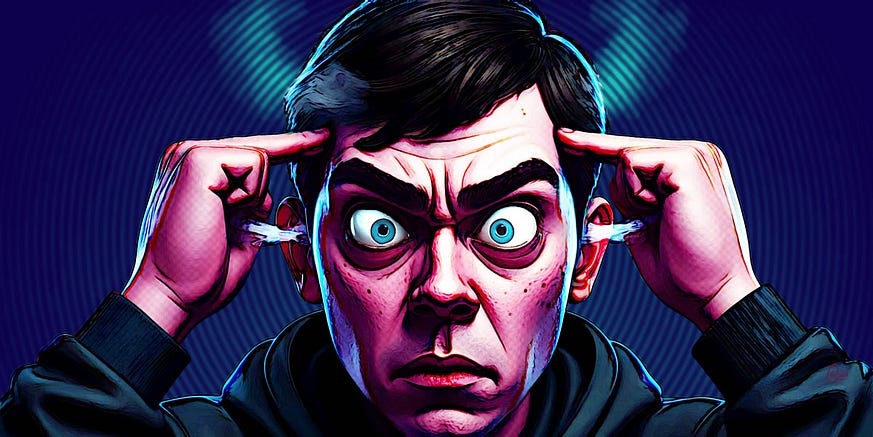
This post is a response to a question posed in its complete format: “If emotions are natural, why do we spend our whole lives trying to control them?”
Well, that’s your mistake right there.
To control your emotions requires letting them flow freely.
“Controlling” your emotions requires you to let go of control over your feelings.
If that sounds counterintuitive to you, it’s because it is.
“Controlling” your emotions requires understanding them. The best way to understand your feelings is to observe them through someone else’s eyes.
Let them flow through you and watch how they affect you. Learn to spot your thoughts as they affect the intensity of your emotions.
A breathing technique you can use to help you disengage from your emotions involves taking a deep breath while drawing your arms inward toward your chest. Curl your hands into a tight fist as you imagine yourself “collecting your emotions into your chest” and then hold your breath momentarily. Then expel your breath as you open your arms and stretch them outward to expel as much air as possible while envisioning those emotions leaving your body.
Generally, when emotionally overwhelmed, they also recall situations that have stimulated those emotions at other times.
So, getting angry to the point of being overwhelmed by one’s anger is a process of recalling and “gathering all of those prior moments of anger” and rolling them up into a ball that can propel one’s anger to its natural conclusion, either by being spent or by allowing oneself to act out in destructive ways.
That emotion demands release; sometimes, the only way to release it is to empower it beyond one’s instincts to restrain it.
In other words, you already have a natural response of restraining your emotions. At the same time, your body fights to expel them, and that creates more anxiety and stress, becoming a feedback loop on your feelings.
If you have noticed how your emotional intensity always resolves itself, you will have also noticed that once it’s spent, you undergo a period of introspection. That’s the process you already naturally undertake to learn how to control your emotions. Sadly, in most cases, it often accompanies regret over allowing one’s emotions to explode out of control.
By training your mind to disengage from your emotions as you experience them, you will find they have less control over your reactions. You can watch them build up and be expended while identifying the triggers that tweak them to their extremes.
By identifying those triggers, you scour your memories for the moments in your life that brought them to the surface, which allows you to develop some objectivity about events that occurred in your past.
The next time you experience an associated emotion, you will find it’s not quite so intense once you’ve worked through previously unresolved issues.
Please keep in mind this is not a magical solution to managing emotions but a path, a skill, and a discipline to master over time so that you have the power you need over your feelings to reign in the destruction they can have on your life.
Good luck.















 thotbag