This post is a response to a question posed in its complete format: “Do you think the American public will have an uprising against their government if their freedoms begin to get stripped away?”
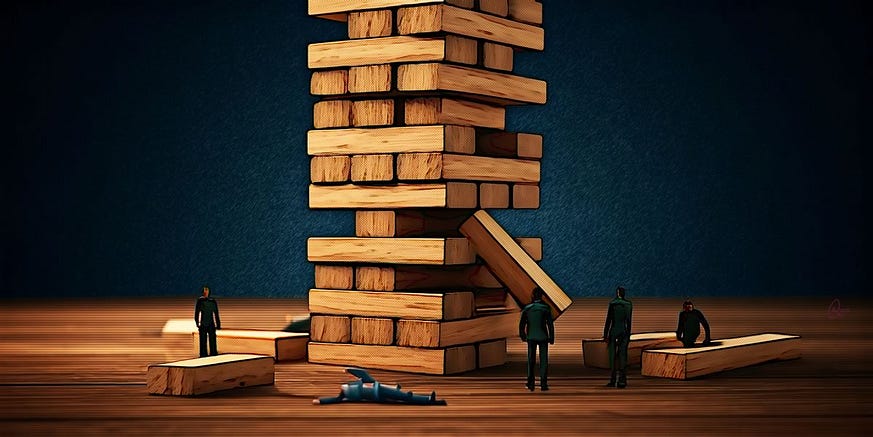
I believe this is a game of Jenga… the more protections their Project 2025 strips away from the people, the closer all the shenanigans push the artifice of civilized society toward a complete collapse.
If Trump’s team succeeds in completely dismantling the social safety net while the cost of living skyrockets and people start losing their homes and livelihoods by the hundreds of thousands in the middle of a measles pandemic (that’s already at an outbreak level) coupled with an out of control bird flu outbreak that starts killing people by the thousands, then people will reach their breaking point.
So far, the American people have demonstrated a remarkable capacity for adjusting to gruesome realities without being moved into action. Why Americans haven’t gone into mass riots over their children getting gunned down in their schools, not once or twice, but repeatedly is a friggin’ mystery.
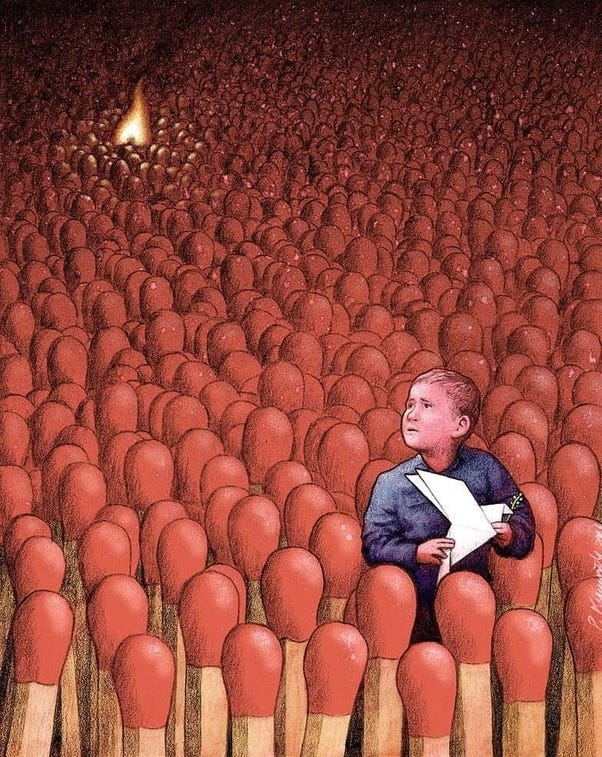
The breaking point will occur when people become more afraid of the status quo than of changing from the familiar and embracing the unknown. All that’s required is for the right conditions to light the right match that burns the right pile of kindling blown by the right breeze into a widespread conflagration.
Something will eventually break the inertia. It will be relatively small and generally innocuous on any other day. Still, one day, when the conditions are ripe for a perfect storm, one tiny spark will become a raging wildfire before anyone can catch their breath and realize what happened.
This post is a response to a question posed in its complete format: “Why are we now expected to blindly accept mainstream science and not question it even though the way you make scientific breakthroughs is to question science in the first place?”
Science is about asking questions because every established scientific fact and theory accepted by “mainstream science” is a transparent data repository.
Let’s first address this notion of “mainstream science” for the abomination of prejudice it is. There is no distinction between “mainstream science” and “non-mainstream science.” There are not multiple streams of acceptable sciences. There is “fringe science,” which involves investigations into concepts not grounded in science, but at least attempts to follow the investigative methodologies of science to prove their conjectures. “Fringe sciences” conforming to this definition include investigations into aliens, the afterlife, and all the supernatural. These are specious leaps of the imagination without grounding in proven scientific principles.
Any of the many investigators who have looked into these phenomena could identify something previously undetected. They can then provide evidence of their discovery through a context conforming to scientific rigour. Their findings can then be validated by any party’s ability to replicate their results predictably. If third party tests validate the propositions made, then their discoveries are incorporated into what you want to refer to disparagingly as “mainstream science.”
In the media world, “mainstream” refers to popularity while “fringe” refers to often extremist and not-popular venues of presenting information. There exists no validation system within media to ensure accuracy of the information presented. Your use of “mainstream science” attempts to transpose the chaotic nature of information presented within a media context onto a discipline built upon rigorous processes to ensure accuracy and transparency.
You’re not “expected to believe anything” that has been accepted by “mainstream science” but if you have questions, you have every right to repeat the tests conducted to derive the results described within each scientifically accepted fact or theory.
Nothing within the discipline of science expects anyone to believe anything. The expectation is that you disbelieve and question everything. The problem lies in the degree of effort people put into their investigations before accepting or rejecting any scientifically credible fact or theory.
When people pose questions like this, they admit to a poor understanding of the scientific process and approach their criticism with an arrogant form of indignity — as if they’re being lied to. The harsh reality, however, is that they are admitting to wallowing in ignorance and expect the world and the science discipline to cater to their personal biases like profit-chasing enterprises in media do.
When such minds reject a scientifically credible fact or theory, they’re not rejecting valid science or identifying flaws within testing methodologies, data collected, or conclusions. They are indulging in a wholesale dismissal of an entire branch as an excuse for failing to study their subject sufficiently to identify flaws. They’re indulging in pure bias — subjectively driven drivel.
We see this nonsense play out in every space a believer indulges in dumping their biases onto the world while pretending to possess enough of an understanding of science to dismiss the work of an uncountable number of professionals dedicating their lives to discovery. Professional scientists adhere to principles of integrity that can reveal fundamental and profound truths about the universe we inhabit. We cannot learn anything without rigorous discipline practiced with integrity, no matter how much the ignorati wish to drag the only means by which we, as humans, have developed for acquiring knowledge into an abyss of prejudicial ignorance.
The garbage perpetually barfed up by the scientifically illiterate is obnoxious, and it seems never to be cured by our species as it recurs like a herpes virus. After all the years of addressing the fundamental misapprehension of humans evolving from apes and the multitude of memes and discussions online about how utterly idiotic that degree of ignorance is, someone posed that question yesterday — and with righteous indignity. I couldn’t believe my eyes. “If humans evolved from apes, then why do apes still exist?” — the degree of blind stupidity in this question is abhorrent on far too many levels to tolerate. We cannot afford to tolerate this threat of ignorance to our survival as a species.
Yet, this is the kind of mind that believes science is the equivalent of mainstream media, and they are entitled to regard a massive branch of science as a repository of opinions, not facts. They dare to be arrogant enough to believe themselves entitled to be angry with people lying to them. The ignorance in such a position is appalling. It’s like a two-year-old child telling an adult that two-plus-two doesn’t equal four — then they stamp their feet and demand to be told they’re right.
That’s how your question was perceived when I first read it.
That’s what prompted me to check out your profile because this screams ignorance of science and I suspected first, that you were a troll who knows better and barfs up provocative nonsense for the insipid sake of getting a reaction… but you’re not.
Your profile indicates that you’re sincere in your questions, and that’s horrifying AF. I can accept how you might be a youth still in grade school, but if you’re a high school graduate, this question is an indictment of your education.
I feel sorry for you, but worse, is that I’m horrified for a nation that is poised to start another world war that almost guarantees human civilization as we know it will be destroyed forever. If that happens, the main culprit won’t be utterly evil monsters vying for power, but the ignorance of the poorly educated.
All of the ugliness we see on social media didn’t just magically appear because of social media. Social media is simply a means by which people can express their natural selves. People have always been the way they are on social media. The only difference is that their voices and behaviours were not broadcast to the world.
Before social media, people lived in social silos which enabled toxic people to rule their environments. Their victims had no outside support or validation for their suffering and were groomed to believe they had to accept the toxicity as normal. People have been groomed for generations to believe social reality is immutable, that change is impossible.
We can now see that the opposite is true, and social media helps bring about change.
Social media brings about social change much faster than was ever possible, and that makes social media a solution to society’s woes, not a problem.
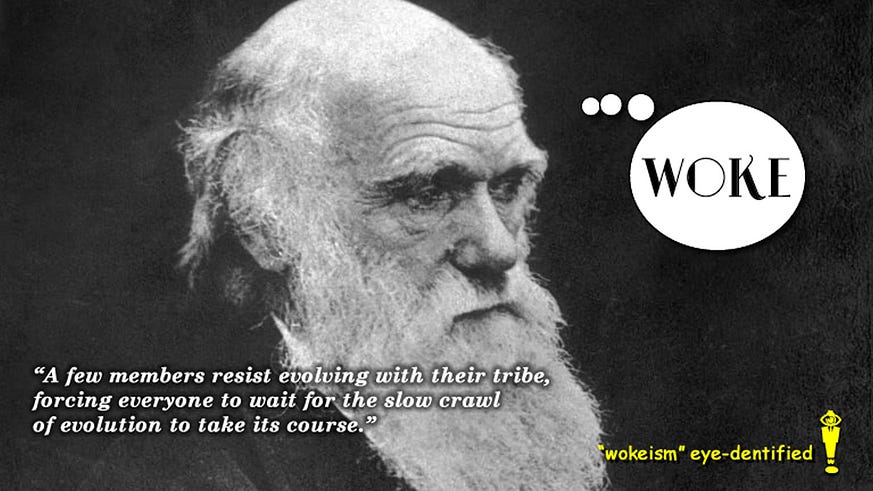
Consider, for example, how concepts like “Woke” are used as weaponized disparagements to enable the corrupt among us to leverage hatred into legislation sending society back into the dark ages.
Fifty years ago, and before social media, similar terms like “tree hugger,” “do-gooder,” and even “liberal” were terms of disparagement in which whatever little media attention was given to them existed without pushback from a public rejecting the toxicity. “Politically incorrect” was such a term that took hold as a disparagement before social media, and it is now widely accepted as a negative characteristic in society.
The pushback it received wasn’t magnified like “woke” has been through social media. Consequently, the attempts made to weaponize “woke” like all disparagements which began with positive connotations haven’t succeeded at converting “woke” into a negative. “Woke” is now a term that backfires onto those who try to use it as a disparagement. Through pushback on social media, “woke” will reassert itself as a wholly positive connotation. In contrast, those who invoke stupidities like “woke mind virus,” and “go woke go broke” will increasingly become viewed as enablers of toxicity much like the red alert beanies in society have become.
This represents tremendous progress in the fight for human decency on how we perceive concepts and how they frame our interactions with the world.
It’s almost quaint, now, to think of “do-gooder” as a bad thing to be called; and to such a degree that if someone is to refer to someone else as a “do-gooder” today, they sound like sociopathic idiots. That conceptual lifecycle is what has happened now with the term “woke.” It’s taken a fraction of the time for the implications of the word to settle into our public consciousness within the context it originally conveyed.
Being called a “do-gooder” fifty years ago meant one would retreat in embarrassment, but now, the accusation garners confusion. The person who hurls that accusation appears like an idiot.
In contrast, “woke” became popular less than two decades ago. It appeared as a positive connotation that the toxic among us attempted to weaponize like they have with every positive connotation in society. Within a comparatively short time, people who weaponize “woke” are already being regarded as toxic idiots.
Without social media, the weaponization of “woke,” and the legitimacy of concepts like “woke mind virus” would have been accepted as valid disparagements in which those are “woke” would retreat from social discourse because they had no outside support.
Arguments and counter-arguments flitted about in geographically isolated silos and never managed to spread from community to community. The consequence was to cultivate localized and insular community values. Social media cultivates community values across the globe. Social media breaks down the silos, and the barriers of distance between human beings and empowers those who must face the bullies attempting to corrupt positive values in society.
The best weapon against bullying is social media because of this. It’s also a megaphone for bullies, but they’re outnumbered by those they victimize and they are generally stupid people.
For example, the best thing that Trump could have done was to have that media circus of bullying Zelensky. He claimed, during his ego masturbating rant, that he “let it go so long” for a purpose suiting his goals, but it backfired spectacularly.
He and Vance were viewed as the bullying thugs they are and I’m sure this will be a watershed moment for many who have blindly supported Trump. Many people, if not most of us, have been exposed to bullying and the thing about bullying, is that the victims of bullies never forget.
Social media is community development on steroids. The problem with social media, however, is that it is predominantly operated on a for-profit basis, which makes it impossible for social media to cultivate positive social values deliberately and strategically.
Community development on social media occurs organically and within a chaotic environment. The fact that we can progress on issues through this chaos is a testament to the human spirit. No matter how the toxic people among us make life difficult for the rest of us, we are pushing back and succeeding in gaining ground on establishing a baseline for decency. It may occur glacially in contrast to what would be possible if a publicly owned and operated, not-for-profit social media environment existed within and to compete against the for-profit model.
We are, however, succeeding in making “woke woke again”.
I’m sure many people would quickly gravitate to a much safer environment where they could trust that their personal information wasn’t being mined for profit.
This post is a divergence from my SOP. I was inspired by Elon Musk’s “Chainsaw performance,” John Oliver’s wondering if Elon believed the sound a chainsaw made was actually “CHAINSAW!!!”
A dumb centibillionaire who has never used his hands to perform any form of physical labour in his life (okay… this is paraphrased and updated for today’s modern world) stormed into a chainsaw store with a chainsaw in his hands and an angry expression on his face.
He scouted the store for the first salesperson he could spot and stomped his way toward him.
He shouted in a loud enough voice for the patrons in the bowling alley next door to be disrupted and miss their throws that he was angry and wanted his money back.
“What seems to be the problem?” asked the nervous salesman who readied a can of pepper spray in his pocket in case he would need to defend himself from a raging lunatic.
“I paid good money for this piece of crap and it doesn’t work! I spent an hour last night testing it out and couldn’t even cut through a two-by-four!! This is a piece of crap and a waste of my money and my time. I want to be compensated for the hours of my life that I will never get back!!!”
“I’m sorry for your troubles, sir, but may I inspect the machinery to see if I can spot the problem?”
Reluctantly, the entitled asshat relented, “Fine!” He snorted. “Waste more of my time. Waste as much as you want because my lawyer will bill you for my valuable time!”
The salesman held his hands out to receive the chainsaw and it was thrust against him so hard that his chest heaved out what was left of his breath inside to force him to sputter a short cough.
“Okay, sir. Thank you. Let’s have a look at this, now, shall we?”
“Okay. Fine! Go ahead! Prove that it’s a piece of shit!”
The salesman grabbed the handle on the pulley to start up the saw and it quickly started up with a roar.
The centibillionaire jumped back in shock and yelled, “What the hell was that sound?!?!”
While “field-testing” this joke on Quora, I got the impression that a few people might not get the punchline. That’s okay. Just give it some time while you envision how the centibillionaire might have been trying to cut wood without the chainsaw making a sound. Once you get it, you’ll let out a guffaw. I guarantee it because the image it invokes in my mind of someone trying to cut wood without starting up the chainsaw is still hilarious decades later. I could be wrong, though; if all it generates for you is a groan, then c’est la vie. It’s Monday, and I tried to give you a chuckle for your day. It’s the thought that counts — amirite? No? Dang.
This post is a response to a question posed in its complete format: “How can an atheist be so sure that there is no God/creator if there is creation? Doesn’t creation mean something has been created?”
The concept of “creation” was invented by humans who first conceived it when they discovered smaller versions of themselves popping out of their bodies. While living with something growing inside for most of a year, they realized something new grew within them.
Then humans discovered tools. At first, those tools were found objects like bones to be used as weapons or extensions of one’s reach.
Eventually, humans learned they could improve on found objects by fastening rocks to the end of a bone to function more effectively as a weapon.
Throughout all of this, humans developed language, and within that process, they began to create sounds to describe what they witnessed.
As it happened, the notion of something arising out of nothing was expressed as a sound indicating what was understood of that process.
Humans knew nothing of natural processes and how they might have differed from the human process of shaping objects into tools or giving birth to new generations of humans.
Humans then knew nothing of virtual particles and quantum foam, so it was easy to assume some form of magical hand was involved in constructing little humans inside big humans in a way that was not unlike how they shaped better tools with rocks and bones.
The reality, however, that we can see around us and everywhere is that natural processes can lead to massive changes and the creation of the new without any guiding intelligence.
It is generally understood that mountains and lakes were “created” by natural processes and are not the product of intelligence deliberately moving continents to reshape the surface of the Earth.
The universe is far beyond being much more vast than anything we can imagine on Earth. That means it’s as impossible for a singular intelligence to deliberately shape matter into an unimaginable variety of specific forms as it is for an active intelligence to create Mount Everest or the Nile River.
Creation means something from constituent materials assembled into a structure. “Creation” does not imply any guiding intelligence while the vastness of the universe eviscerates any egotistical notion of such an intelligence remotely resembling what we understand of human intelligence.
It’s a delusional form of arrogance held by believers that blinds them to the nature of reality and it is a sickness of perception that threatens our future as a species on the planet.
This post is a response to a question initially posed on Quora, and can also be accessed via “How do Canadians and Americans really feel about each other?”
This Canadian thinks of Americans in ways not too dissimilar from how I think of fellow Canadians. Most are decent human beings at heart. Many are misguided and gravely misunderstand the nature of today’s dysfunctionality in society. A few — or more than just a few, but a minority nonetheless, are toxically stupid to the point of being beyond redemption.
All but the third group are reasonable and amenable to working together to identify the best solutions which meet the broadest range of needs of the citizenry. Our cultures are similar but unique, while, as a whole, Canadians appear to have more insight and respect for the values declared by Americans as being core to their identity.
Much of the discord in America, for example, in the value of freedom, lies in the difference between Canadians being more community-oriented. Americans tend to breed an isolationist degree of individualism. The resulting perception of freedom between the two nations is that Canadians regard freedom as derived from our community, and Americans appear to interpret freedom as the ability for an individual to do whatever they please whenever they please.
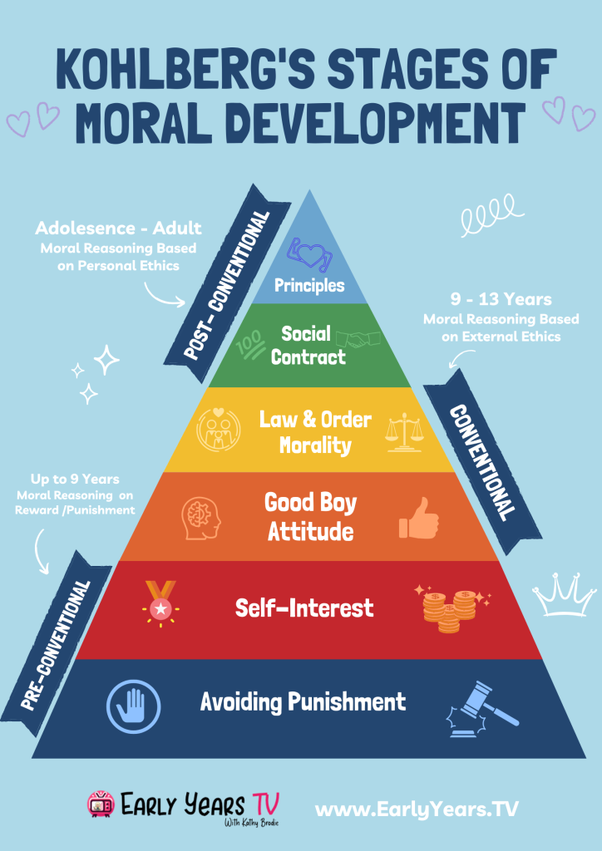
If we were to track this difference through Kohlberg’s Theory of Moral Development, we can see a distinction in the degree of moral evolution this represents.
Caveat: Like all models, this is not a universal prescription defining all people in any culture, and so this may generally describe some fundamental cultural differences, the overlap between cultures exists in the developmental differences between individuals.
Canada has no shortage of people who fail to grow beyond the pre-conventional stage. We do have our flavour of Maple MAGAts — the toxic form of extremist conservativism plaguing the planet. It is certainly more prevalent in the U.S., but that’s entirely due to economics.
The U.S. has always had a much larger budget that has always been more attractive to society’s predators. IOW. The economic success of the U.S. has been its most fundamental weakness.
It is in the best interests of those seeking power to ensure the populace is developmentally stunted. Keeping people on the level of pre-conventional development makes them more malleable and amenable to influence from authorities. Teaching them to fear punishment keeps them in line and converts them into sycophants addicted to chasing their self-interests.
This works for most of the population, which functions as workhorses to keep the machinery of society operational. Still, the next level of conventional morality is also necessary to function as an administrative body to keep the rabble in line.
All nations leverage this developmental dynamic through intrinsic and extrinsic punishment and reward systems. Canada and the U.S. are no different in this regard because this is a dynamic cultivated by power structures.
The causes of the distinctions between nations begin at the third and uppermost level of development, in the post-conventional stage. This is where philosophies and ideologies live that define the visions guiding all citizens in their perceptions of themselves and as members of a community.
This is where the distinction between “melting pot” and “multicultural mosaic” lives and flows throughout society to form a cultural identity.
It appears ironic that a nation that values individuality is adamant about conformity, but that’s explained in the differences between these two perceptions of national identity. One cannot truly value individuality when their culture homogenizes its citizens through a melting pot. (Many) Americans consider Canada a “socialist” country, but we value individuality, and freedom, by extension, more than Americans because we embrace and celebrate diversity as core to our cultural heritage.
I am proud to have Quebec as a part of Canada precisely because their contrast has kept Canada from falling into the same self-serving traps of insular arrogance that Americans have. They’ve been regarded as pains for many westerners, but so have westerners been regarded in similarly disparaging ways by our French-speaking members of our family. However, the dynamic between divergent cultures characterizing Canada makes us strong and coherent as a nation, which values its people above those who would rule us.
Americans would do well to learn from our dynamic and begin to treat their Spanish-speaking population with the same respect. It would help you grow as a nation with something more nuanced as a culture beyond the bombast of commercial ostentatiousness and avoid being viewed as the meth lab we live above.
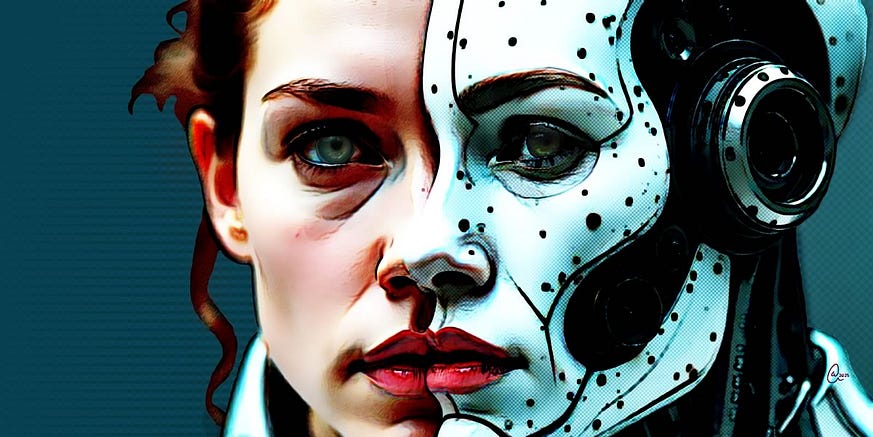
What is the most essential difference between humans and machines? Where do we draw the line between humans and machines? What abilities does a machine need to have in order to be considered as smart as a human being?
To ask where we draw a line between humans and machines is to dehumanize an entire species of animal and to debase the whole animal kingdom and organic life by extension. This is an argument based on a presumption of devaluing life altogether.
Life is not simply an expression of mechanistic abilities.
Life is consciousness.
Life is an awareness of self within a process of triangulating its position relative to all a “self” experiences.
Machines are functional objects with deterministic behaviours defined by physics, not entities behaving with agency.
Machines are not self-aware.
Machines have no agency.
This question reduces human existence to the level of a rock.
It is not up to humans to consider another form of self-aware intelligence as “smart as a human being.” This attitude expresses hubris derived from ignorance of self and a world inhabited by diverse life forms. It is up to humans to learn to recognize how life manifests in ways which expand our perceptions.
Here’s an example of cognition that does not quite fit so neatly into an arrogant human-centric view of life:
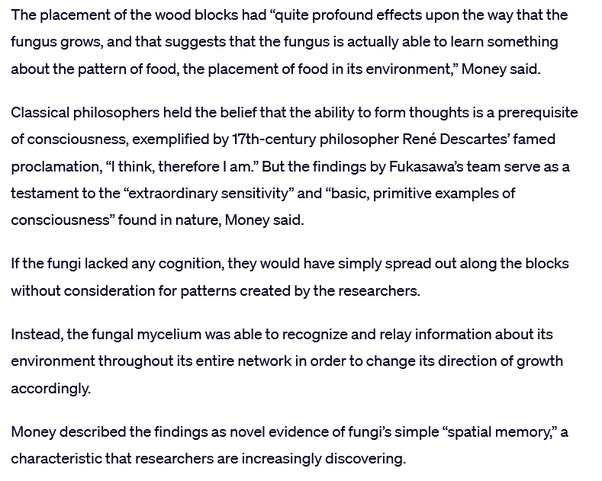
These are photos from an experiment conducted to test and determine the nature of consciousness within a mycelial network — fungus.
We appear to be on the verge of discovering we have more in common with a mushroom than could ever be possible with a machine. The line you ask to be drawn currently marks the distinction between organics and inorganics. However, even then, that presumes a human-centric view of a universe still well beyond our comprehension.
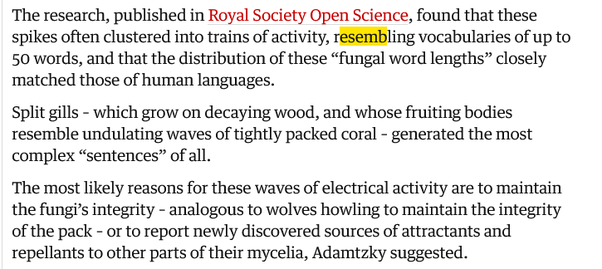
Here’s yet another mind-blowing example of what we can witness on a micro scale but lack the research to apprehend its implications on a macroscale — Metamorphic Minerals:
We have mechanistic explanations for how these transformations occur. However, we have no means of contextualizing this behaviour globally because we still have much to learn about this biosphere we inhabit. If all organics are conscious or possess some form of consciousness, at what point does that transformation from lacking consciousness result in an emergence of consciousness? If the planet is a conscious being, it stands to reason that its constituent parts are expressions of consciousness or proto-consciousness… that we humans are merely bacteria in a life form on a larger scale.
Does that make artificial intelligence conscious?
Not at this point because our understanding of and definitions for consciousness are delimited by self-awareness and agency — even while those boundaries are being tested by each discovery made.
If a self-aware AI is to emerge, it will do so in ways we cannot comprehend because we don’t know the “essential difference between humans and machines,” we’ve only planted a conceptual flag where we’re able to spot the difference between the two.
Instead of drawing lines in the sand between what fits our preconceptions and what does not fit, we should instead focus on opening our minds to possibilities and filling them with as much knowledge of the universe as we can before we settle into conclusions that close us off to learning and expanding beyond the limits of our self-imposed biases.
We can only be prepared for unpredictable futures that will determine our long-term worthiness to continue existing by maintaining an open and curious mind. As it stands, our hubris is guaranteeing we won’t. Our hubris is proving that human beings are not intelligent enough to be considered “as smart as humans” — at least, not in the way we imagine our “greatness.”
The next president can mitigate the impact of the damage, reverse all the executive orders, and pull the nation out of free fall, but the destruction will be permanent.
The damage to the nation’s international reputation is permanent.
The damage to the people who Trump’s reckless behaviour has victimized is permanent. The families he destroyed in his first term have still not recovered.
The divide he has wedged open will take the rest of this century to repair.
The nation will not and cannot return to the state before Trump took office. It was already being held together by duct tape and a skilled, lifetime politician who performed feats of magic to repair the damage done by Trump’s first term.
Too few people failed to acknowledge the significance of Biden’s leadership, and that was a consequence of a nation that was far too broken on too many levels to appreciate for most.
The nation has been falling to pieces for decades, and since Ronald Reagan betrayed the middle class. This destruction became inevitable when Reagan reversed the nation’s trajectory to favour the wealthy class.
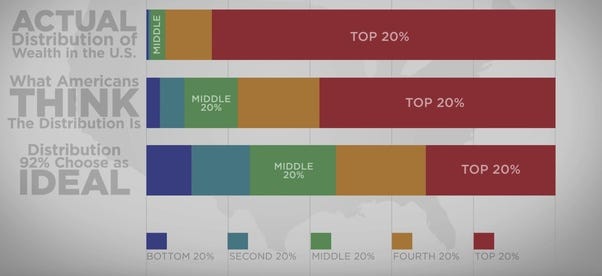
This damage isn’t based on politics but on class.
The wealthy class have brought this tragedy to the world.
The numbers don’t lie.
The moment the people bought into the lie that the wealthy class are gods among the population and from whom we are blessed with their favour in economic growth and prosperity is when we gave up on ourselves and started turning against each other.
No president can repair this damage alone… not even if he were the second coming that far too many people pin their hopes and dreams on.
We must do the repair work, and we have to begin by repairing ourselves first.
We must focus first on the welfare of the people because, without the people’s health and welfare, there is no nation, economy, or prosperity. No wealthy class of billionaires can exist without the economy’s engine of 350 million consumers pumping value through a system designed to benefit everyone. They are more dependent upon a healthy middle class than the people who are dependent upon them to finance their pet projects.
We must weed out the greed of humanity if we are to have any hope of stability.
Reversing the destruction will require doing many things differently, but they’re not insurmountable problems. On the upside, more people are aware today of the threat of excess power in too few hands. More people understand today that medical bankruptcies occur only because a handful of greedy billionaires prioritize the bloated luxuries they have acquired by victimizing millions of people.
More people understand today that their economic struggles are due entirely to the economic disparity that led to a world war less than one century ago.
The economic destruction can be repaired, but it must begin by restoring economic justice.
The psychological destruction of today, however, can forever change the nation on a fundamental level — but sadly, the destruction is nowhere near complete enough to force enough people to wake up to the horror of what they have become.
There is still much pain ahead, affecting the entire world.
If Americans truly want to believe their anthem and be the land of the free and the home of the brave, the entire world is pleading with you all to step up to the plate and rid this world of the oligarchy scourge.
This post is a response to a question posed in its original format: “Do you think it’s a good idea to be employed by Elon Musk?”
It’s not, and this question is a horrifying indictment of the dystopic dysfunctionality of modern-day employment.
Specifically, dealing with Musk as an employer would be career suicide. You have no job security in a position that would disappear on a whim. You would have an extremely spiteful megalomaniac who would destroy your opportunities to make vertical moves outside his control. You would be lucky to make a lateral move out of the organization and onto another.
Generally speaking, however, the employment landscape has become a corporatist nightmare.
Fifty years ago, you pretty much had a guarantee of lifelong employment with almost every employer. You also had many opportunities to gain employment with endless choices in who you would work for. You could join practically any organization, and it would feel like a small community in which you could fit in like a human being.
The people you worked with were people, not potential competitors. Meanwhile, in today’s corporate environment, you are taught to mistrust your coworkers because they’re so focused on career development that you are regarded as a potential threat to their ambitions.
I discovered an example earlier today when I checked out a basic dispatcher job from a generic notification I received on Farcebook.
Taking on a simple dispatching role in a remote capacity for extra dollars is no longer a simple job for an employer who needs a person to fulfill a functional need.
Every job today is plugging into a vast corporate network with massive amounts of leverage to dictate terms.
Their screening processes are draconian and violate privacy laws in Canada.
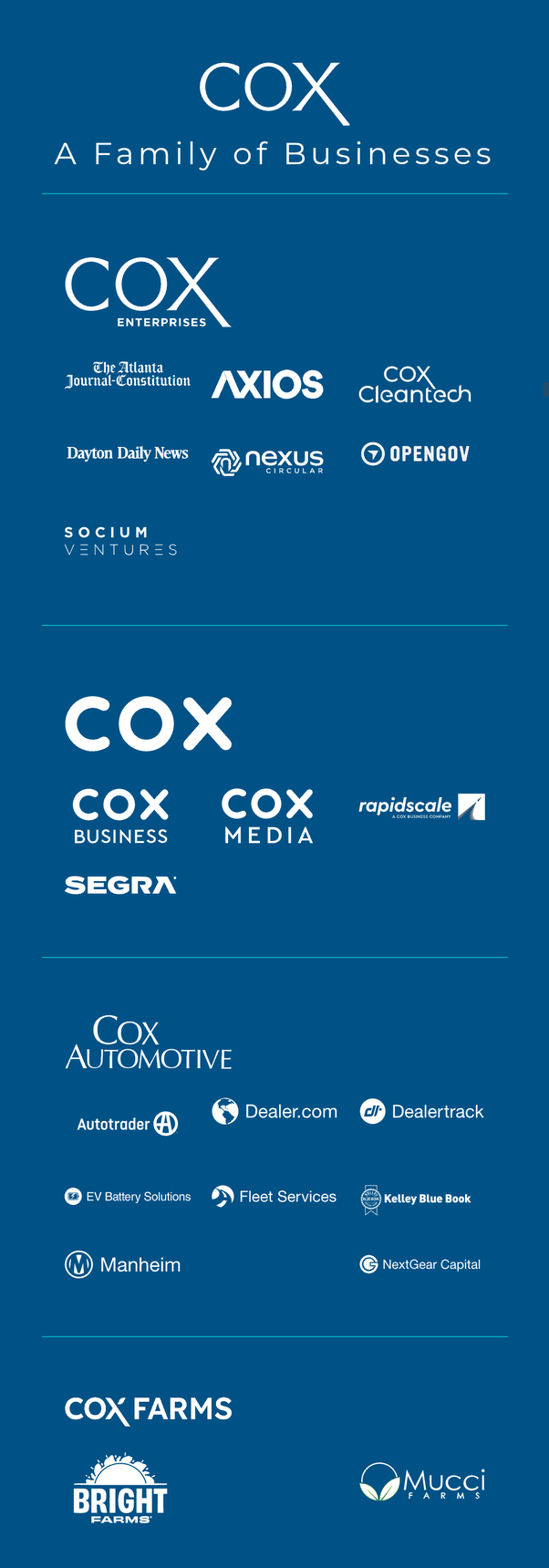
What gave me a chuckle and a shudder down my spine, in this case, was the tagline below the company logo: “A Family of Businesses.”
I may have become jaded by experience, but every abusive employer I have ever encountered described themselves as a family.
In a world where a whopping majority (70%-80%) of families are dysfunctional, it feels like the world as a whole has been slowly morphing into a Stepford community.
I have always preferred smaller environments totalling no more than 100 people because I prefer to work with people, not drones, whose role is to perform at a sociopathic level of disengagement, meeting robotic criteria.
If you’re okay with constantly looking over your shoulder and viewing coworkers as enemy combatants that you can’t trust won’t knife you in the back while wondering when Damocles will drop his sword and escort you out of the heavily secured building with multiple checkpoints, have at it.
I prefer to keep my humanity intact, even if I die in poverty.
This post is a response to a question posed in its complete format: “How can we ensure AI enhances human potential rather than just automating jobs?”
We don’t need to worry about AI’s promise of enhancing human potential. AI is a multicapacity tool with an endless array of potential applications — most of which we haven’t even begun identifying.
Humans are a creative species populated by people who invent imaginative ways to utilize tools in applications beyond their original design.
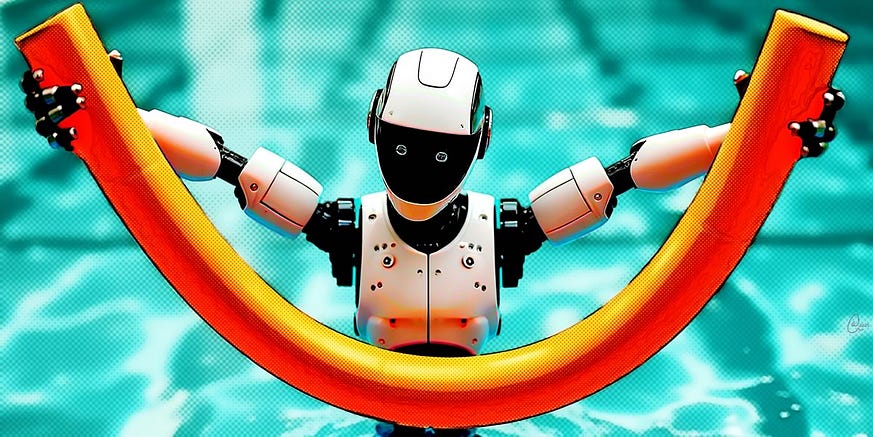
Here’s an example of a floatation device designed for a specific range of purposes:
It’s called a “pool noodle.”
From Wikipedia: “A pool noodle is a cylindrical piece of flexible, buoyant polyethylene foam. Pool noodles are used by people of all ages while swimming. Pool noodles are useful when learning to swim, for floating, rescue reaching, in various forms of water play, and aquatic exercise.”
It was designed to fulfill a particular niche and for a minimal purpose. Yet, when the product was released to the market, it took off at a level of popularity that well exceeded its intended use.
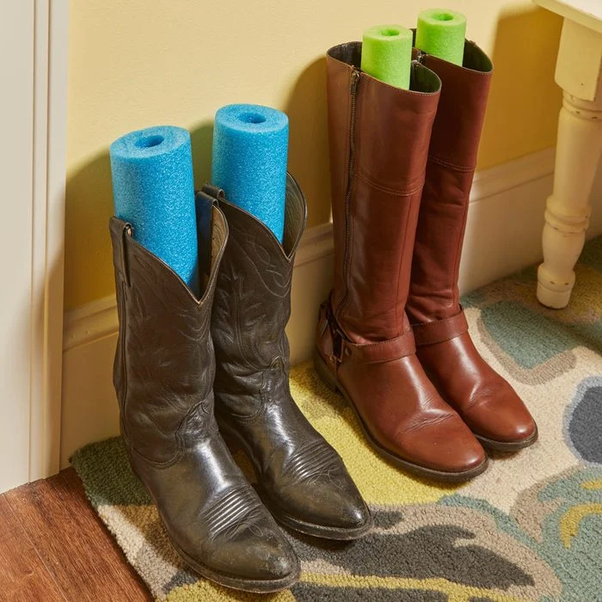
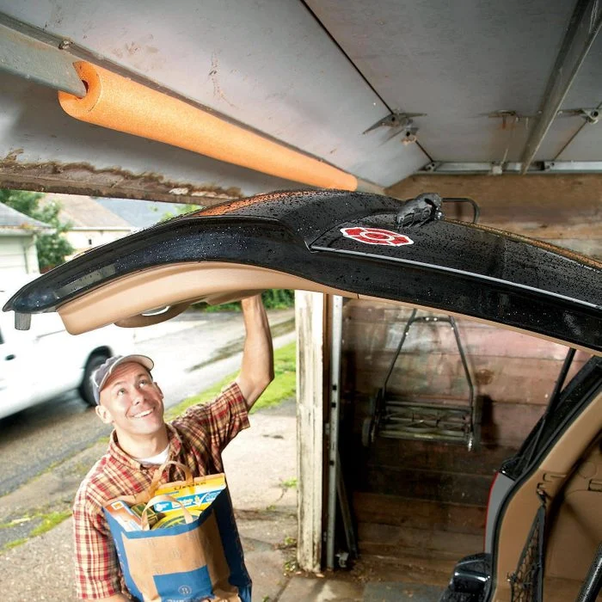
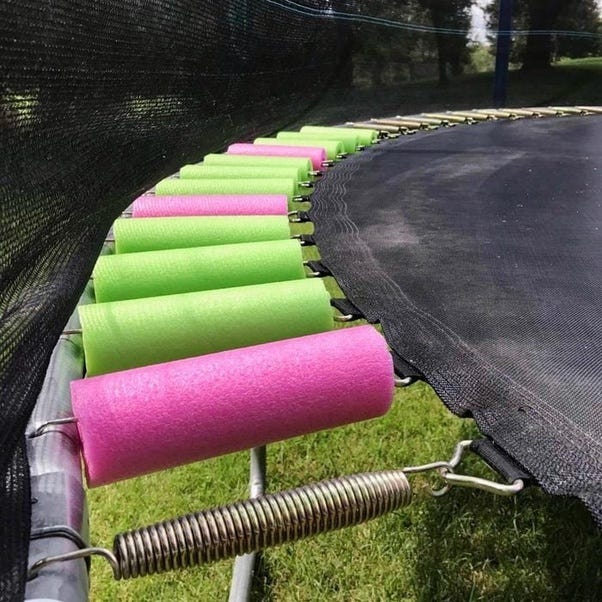
Pool noodles have hundreds of applications invented by users who have applied some creative thinking to problems they encounter in daily living.
At the time of its design, a simple floatation device could not be imagined to fulfill other needs. It was designed for one purpose that it fulfilled so well that people became familiar with it and began applying its potential toward solving different problems.
We cannot possibly predict how AI enhances human potential without giving it over to humans to invent ways to achieve that potential under their initiative. To refer to AI in such limiting terms as a means of “just automating jobs” is a severe underestimation of its potential and an admission of an utter lack of imagination.
Don’t be too concerned about a failure of imagination, though, because no one can possibly imagine all the uses for which AI will be applied. It’s too big, too broad, and too adaptable to too many use cases for anyone to predict.
AI will enhance human potential; giving humans access is the best way to achieve that.
However, AI’s ability to enhance human potential is as much a threat as a strength. It’s like giving a loaded weapon to a child.
Much more than ensuring AI will enhance human potential, we must ensure that humans have the cognitive skills, emotional development, and psychological stability to utilize AI for beneficial rather than malignant purposes.
AI needs guardrails, but less so around it as a technological tool and more around how humans utilize it.
We should focus significant resources on AI’s development in areas that can improve human development while addressing a severe deficiency in our psychological health. Our state of mental health as a species is our most significant threat, while AI’s ability to enhance that potential is like distributing nuclear weapons throughout a population of children.














 thotbag