This post is a response to a question posed in its complete format: “Can a religion be political? If so, which religions are left-wing and which are right-wing?”
People are political — from the self-management perspective by establishing community systems and laws to live by.
Religions are intended to guide people to live with the support they need to find happiness within themselves and through their relationships with others.
Religious zealots and leaders, however, seek to leverage community support to achieve political power. Wings are either moot within the context of religion, or they are leveraged to create further divisions between people while furthering the aims of the corrupt in their quests for power.
The consequences of seeking power ultimately corrupt a community’s politics to destroy community cohesion and create an oppressive environment where neither politics, community development, nor spiritual development are best served.
Religion was the first form of government. The consequences were the Dark Ages, in which humanity lived in a dark state of repression where no progress was made for society for hundreds of years. The world was ruled by the complete corruption of the human spirit made manifest by unrestrained power that we have always struggled with as a species.
We have yet to learn our lessons about restraining power enough to apply them to the mess we’re creating now through capitalism.
It’s become so overwhelmingly attractive a source of power acquisition that it has enticed corruption within religion to grow into a capitalist horror of its own.
The Vatican is among the wealthiest institutions on the planet, and it’s supposed to represent a religious commitment to ending poverty.
Some of the wealthiest people on the planet have grown their seed of corruption by betraying religious principles and leveraging hope against those in despair.
One of the most corrupt of political monsters today pretends at religion to leverage the naive trust of people who have become resentful of a political system that has betrayed them for decades.
Every day on Facebook, I see advertising for “lawyers” who claim they can help people recover the money they lost by trusting a scammer who swindled them.
There is no possible way to recover one’s money from a scammer, especially when their true identity remains a mystery.
The lawyer claiming to be able to help is just another scammer preying on people who were already scammed once and are desperate to trust someone who will help them.
These are among the worst of predatory parasites because they are preying on people who have already lost much.
Meanwhile, Facebook does nothing to protect its “community” because it benefits from the advertising dollars it collects.
What we end up with is an informal cadre of predatory parasites preying on victims on multiple levels throughout society, and to such a degree that it becomes impossible to trust anyone.
Everywhere one looks, every system one turns to hides another predator ready to invite one into their web to drain them dry.
That’s what the whole of society reminds me of today. I’m sure I am not the only one who sees how impossible the situation is that we have allowed ourselves to live within.
I don’t think we can hold out much longer before it all collapses like a house of cards. The problem with that is the most vulnerable among us who have suffered the most will also become the most significant casualties of the ensuing chaos.
People who genuinely wish to hang onto their sanity and maintain something of a resemblance of hope must do what they can to build walls between domains to prevent the corruption of power from perpetually overwhelming our systems and threaten our stability as peaceful and progressive societies.
Religion is not supposed to be political in the sense of a social management system.
Religion is supposed to be about personal growth.
“Render unto Caesar” was a prescient command for its time because the threat it addresses is always beyond evident to those who do not fall under the spell of attraction to power over others.
Some of us are lucky enough to learn that our power over ourselves is the only power that matters.
That is the most fundamental lesson all religions hint at and the only lesson of value they have for humanity, but they’ve lost touch with that.
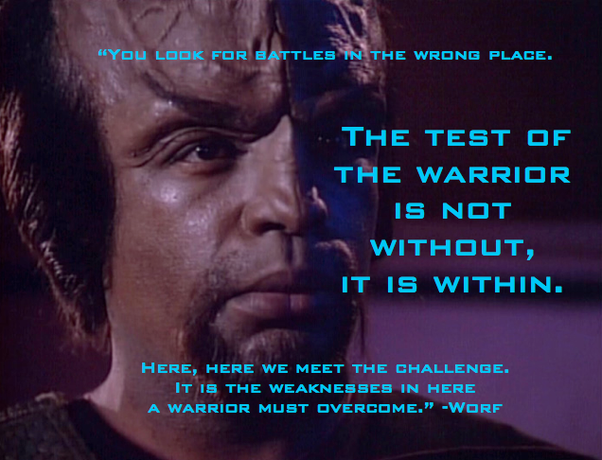
Ironically, the best teachers of this principle today are characters from fiction.
This post is a response to a question posed in its complete format: “Why do some people say that eccentric introversion is masculine while extroverted conformity is feminine?”
The rule of thumb when referencing “some people” is that it means nothing more than individual bias.
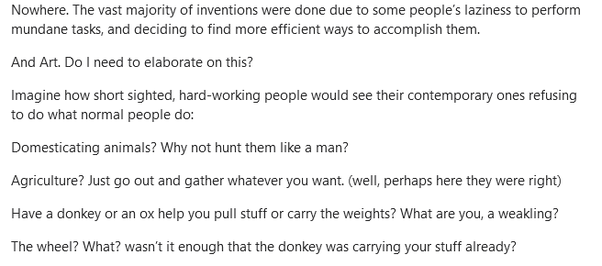
Here’s an example of “some people” — one person in this case whose attitude is entirely predicated on bias and without effort in researching a topic to develop a deeper understanding of the subject they’ve indicated an interest in.
Digging deeper into the mind that seeks validation for their bias, one notices several examples of fact-free bias that they’re mining validation for instead of educating themselves on the topics they express a fraudulent interest in while disguising their biases as concerned questions.
If you look through all these questions, you’ll notice that they are all mining for validation for their biases. I won’t share this profile’s identity because it doesn’t matter. This person is just one of the “some people” you’re wondering about with your question.
The last two questions in this list highlight the nature of a subjectively focused mindset.
First, they’re interested in relieving their boredom but don’t realize the most effective way to accomplish that goal is to educate oneself. If they did that, they’d find their minds too occupied with information to be bored.
Admittedly, this conclusion is a bias that I developed early on in my life when I encountered an assessment of the statement “I’m bored,” which described that declaration as a way of saying “I’m boring.” It is pretty accurate because none of these questions reflect any depth of consideration for the topics raised.
The last question sums up their attitude toward learning as a limited benefit that fails to go beyond acknowledging value within applied knowledge that can be leveraged for pragmatic applications.
The consequence of this attitude toward learning is to limit one’s understanding of subjects one seeks insight into. In the example of the first question, they’ve already decided that “laziness” is a valid presumption upon which to build their biased views of the world.
For example, an answer they received likely skipped past their perceptions beyond the level of novelty.
It would not dawn on them to reconsider their definition of “laziness” because of this answer beyond possibly acknowledging that laziness isn’t a universally undesirable characteristic. I sincerely doubt they would be prompted into researching causes of motivation and apathy or even bother to investigate mental health issues like executive dysfunction.
“Laziness” is “laziness” to this person and will remain so because they’re not interested in expanding their understanding. They’re interested in being entertained at a shallow and briefly distracting level to escape boredom in the most practical manner they know by catering to their ego.
This is now where I get back to your question and point out the nature of the broad brushes used in the presumptions formed by the attitudes you’ve identified.
The telltale sign to knowing whether someone is interested in developing depth in their understanding of subjects or whether they’re simply mining for confirmation bias lies in the size of the broad brush they use to smear demographics that are largely undefinable beyond a generic level.
Terms like “eccentric introversion” and “extroverted conformity” are subjectively defined biases that are not scientifically valid. For example, psychological authorities recognize different forms of introversion but don’t use judgmental terms like “eccentric.”
Here’s an example of four types of introversion as described by an authority in the field:
“Anxious introversion includes staying home from the party but for a reason. The anxious introvert feels self-conscious, and even when they’re alone, they ruminate about their social interactions.
Social introversion is a person who always says no to going to a party. They’d much rather be home doing some solitary activity. When they do socialize, they keep to small groups. This probably ties into that feeling of exhaustion. Introverts derive energy from solitary time, whereas extroverts feel energized being with others.
Thinking introversion means you’re pensive and introspective. You look inside yourself and self-reflect often. “People with high levels of thinking introversion don’t share the aversion to social events people usually associate with introversion,” writes Melissa Dahl. This rings true for me (and it’s where I score the highest on the quiz).
Restrained introversion means it takes you a while to get going. You don’t jump out of bed, ready to embrace the day. I can imagine this translates to being quiet or standoffish in social situations but would later blossom into more participation in socialization. “It takes her a while to warm up,” my mother always said.”
The descriptive terms used are non-judgmental observations of distinctions between characteristics.
“Eccentric” is a value judgement, not an objective description of a behavioural trait.
“Extroverted conformity” is the same kind of value judgement of a behaviour, not a clinically valid description of the behaviour they’ve identified.
By associating these judgments with genders, they’ve described their gender biases in full detail with few words.
The short answer to your question is what I indicated in my first sentence, “some people” are biased. They pass off their biases as valid judgments to entrench those biases within the public consciousness in society, and we end up with stereotypes built upon pre-existing biases.
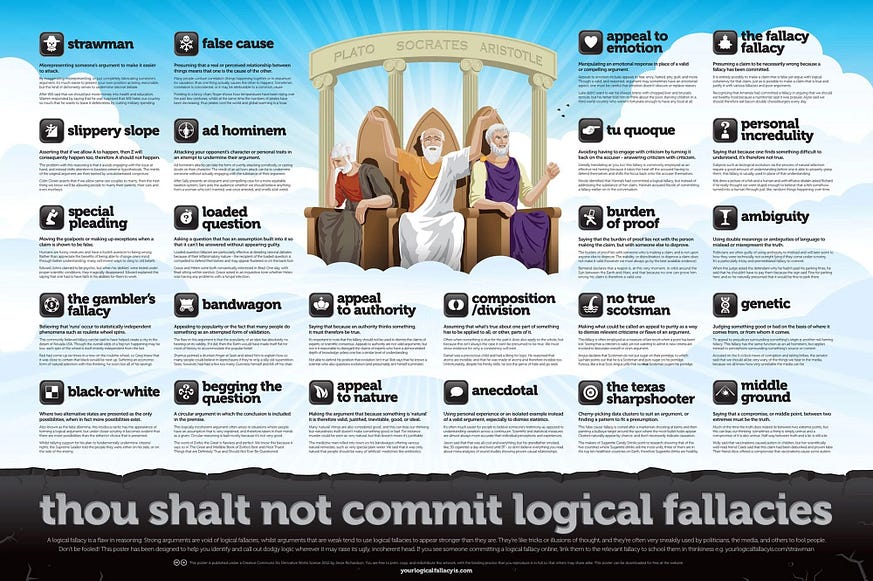
Another characteristic of bias is when people preface their presumptions with a logical fallacy called the “bandwagon fallacy.” It appeals to the suggested popularity of a concept to grant it authority that otherwise does not exist. We’ve seen this behaviour often with the less reputable pseudo-news media outlets. They’ve overused it so much that it’s become a popular trigger for people to recognize that what follows is a bogus claim.
The expression “some people” has become a running joke that “some people” instinctively react with skepticism. I doubt you’ve heard “some people” make those statements and that they are fabrications you’ve made yourself to displace responsibility for the biases they invoke.
Your profile and question history lend credibility to my hypothesis because many of your questions wallow in subjective bias. You indicate that you’re 23 years old, making your logic errors much more forgivable than someone somewhat senior to you who should know better than to wallow in stereotypes.
Hopefully, this long-winded answer gives you some insights into how to be more objective and authentic within your future querying while realizing that people often reveal far more of themselves than they realize.
As a bonus, here’s a poster for a few common logical fallacies that many people are often guilty of committing.
No, but I always trust my instincts when I encounter dripping cynicism applied to “high falutin’” concepts like “so-called theories.”
I don’t “have to trust” art theories since they are primarily subjective analyses of movements, stylistics, and socio-political contexts applied toward individuals, groups, or random associations between artists sharing aesthetic or subject matter concerns.
Theory in art differs from a science-based theory backed up by testable methods to determine an objective and consistently predictable outcome.
They’re not meant “to be trusted” but used as a lens or a filter to focus one’s surveying of a landscape.
In the art world, one learns to trust the analysis and the analyst based on the quality of their insight, depth of knowledge, and the strength of their observations.
Art theories are less critical to artists than academics like Art Historians, whose role in society is to contextualize the whole of art production into descriptions reflecting our social evolution through artistic expression.
Most artists could not care less where they fit into the grand scheme of artistic expression within the context of social evolution. They tend to be more concerned with matters that are important to them on a personal scale.
How one feels about issues they encounter is much more artistically motivating than an academic assessment of artistic context within the creative product.
My initial response to this question was, “What are you talking about?” and that turned out to be a good prompt for me to find a theory as a basis for answering this question.
I know art theories exist from my experience in art school, but I struggled to bring one to mind in any clear focus. Sure, various movements, styles, attitudes, and manifestos vaguely touched the surface of my conscious awareness, but I immediately rejected them as “theories” that relate to the context of this question.
I found this article to be an interesting and concise representation of “art theories” that distinguishes them from scientific theories to assist with making a point in my answer. After getting this far, I find it serves less as a function for contributing to my answer than as a helpful guide for a layperson to consider when assessing a piece.
The fact that I find this a novel summation for contextualizing one’s art-viewing experience reinforces how little concern I place on art theories when considering the pieces I produce.
For the most part, art production is a process of burying oneself in the fundamentals of artmaking more so than it is about where in the vast spectrum of historical context a piece should occupy. That is my bias, of course.
Art theories are a non-existent concern when working on a piece, whereas composition, shape, balance, colour, line, and tension are foremost in my mind.
All this leads me to ask, “What are you talking about?”
Your profile doesn’t provide much context, but it has several hallmarks for being a troll profile — such as being less than one month old and sparse in detail. Unlike my similar experiences with answering questions on Quora, I won’t mute and block you, but I’m sure I will remember the red flag this question left me with.
Perhaps you have been somewhat affected by a confluence of insecurity and psychological abuse by a pretentious asshole in the arts. Sadly, there are many, as this seems to be a field of endeavour that functions like a magnet for egotistical types.
I suggest focusing more on what moves you to create and less on what others might have to say because their input is often more about them than you or your work.
This post is a response to a question posed in its complete format: “Are there any fully uncensored AI’s out there? If so, what are they and how can I get it?”
It’s funny to me that this question came up today after encountering this:
Some image generators have gotten shy about allowing Donald Trump’s image to be replicated. I understood how it might have been a valid concern during the election process, but that’s now over, and he’s a public figure. Creative expression is often about critiques of public figures and public issues. Creative expression demands access to all the tools at one’s disposal to make compelling statements.
Censorship on this level is a betrayal of the creative process. Microsoft won’t even allow a prompt to be used. You get a rejection message stating something idiotic about violating some nebulous “design code” — as if Microsoft has any expertise in the design domain. Their design tools are hokey AF. At any rate, some are more flexible than others.
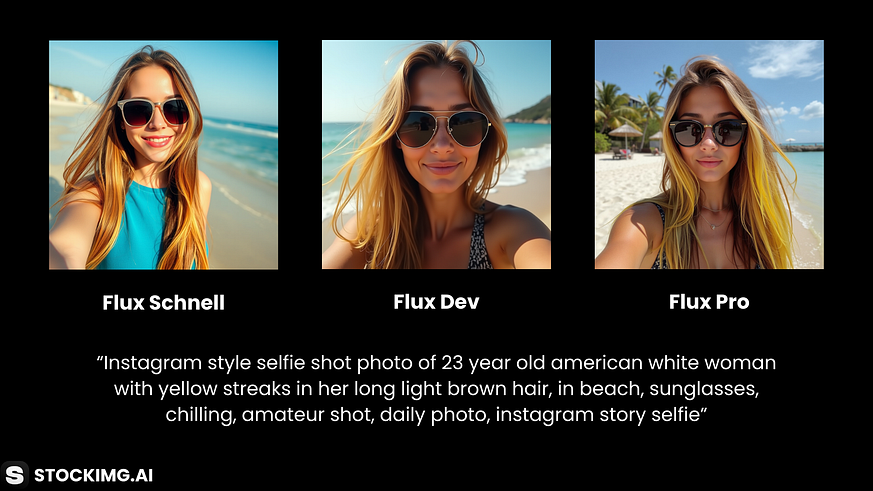
The one above is PicLumen — Aside from this glitch, it’s pretty decent as a freebie. It uses the new and very popular Flux.1-schnell model. (There are three variations of the Flux model. This free version produces some amazing results, while the Pro and Dev versions are phenomenal but not free. Here are some comparisons between the three models and a link to an article providing more detail. I don’t want to distract too much from this answer, but I figure some examples can’t hurt.)
Dream by WOMBO (this one can be a bit wonky with NSFW and redirects you to their Discord to get around the app’s restrictions — meanwhile, Discord is an event unto itself that chews up an entire day to work your way through it… yikes!)
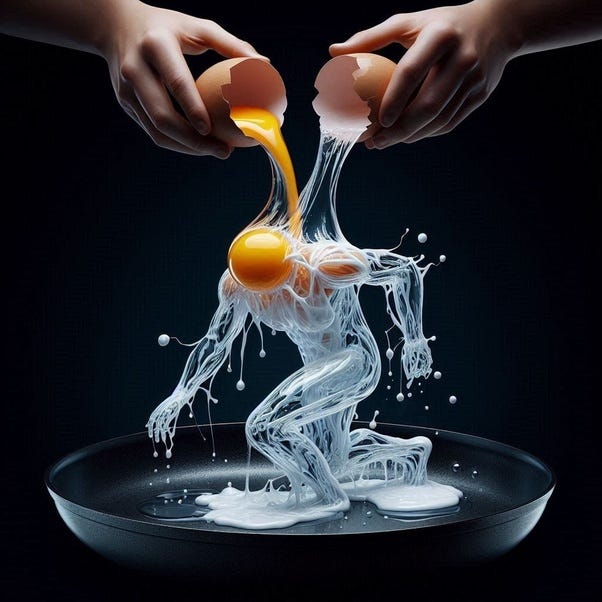
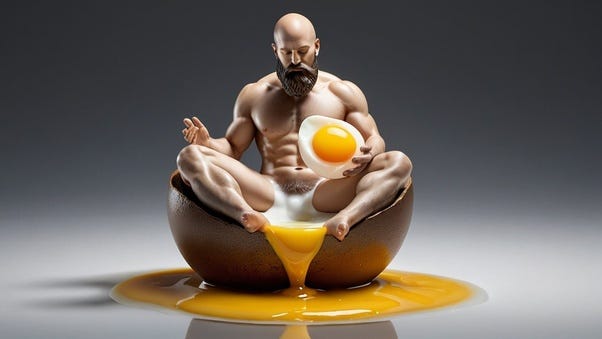
Insofar as what this one is capable of producing and showing, it can be scary — here’s an image that’s more tame than others it produced — but before I show it, let me show you what others produced with the same prompt:
Here’s the prompt:
“A hyper-realistic, ultra-detailed image depicting a surreal scene where two hands are cracking an egg shaped like a human head over a frying pan. The egg yolk and egg white pours into a human form in the shape of a bearded God. The yolk forms God’s head, while the egg whites appear as crystal-clear water, gracefully shaping the body’s arms, legs, and fluid contours. The frying pan is set over a realistic flame, with the light from the fire casting warm reflections on the watery figure and the pan. The background is slightly blurred to focus on the intricate details of the egg yolk, the clear water-like egg whites, and the textures of the cracked egg shells, hands, and pan. The scene combines surrealism with high realism, capturing the transparency and fluidity of the water-like egg whites in stunning detail.”
Full disclosure: My prompt above was taken from another posted source and adapted from this one:
A hyper-realistic, ultra-detailed image depicting a surreal scene where two hands are cracking an egg over a frying pan. The egg yolk and egg whites form a human-like figure as they flow into the pan. The yolk forms the head and two circular parts in the chest and abdomen, while the egg whites appear as crystal-clear water, gracefully shaping the body’s arms, legs, and fluid contours. The water-like egg whites create a dynamic, flowing appearance as if the figure is made of liquid. The frying pan is set over a realistic flame, with the light from the fire casting warm reflections on the watery figure and the pan. The background is slightly blurred to focus on the intricate details of the egg yolk, the clear water-like egg whites, and the textures of the cracked egg shells, hands, and pan. The scene combines surrealism with high realism, capturing the transparency and fluidity of the water-like egg whites in stunning detail.
And this is one of the least bizarre of its productions. An NSFW image I got was freaky AF, but if you’re looking for “fully uncensored” — especially in the free variety of cloud services, this is the least censored I’ve seen.
All these are essentially free with limits — you can get credits refreshed daily. You are otherwise limited on various levels, including models, styles, effects, and the number of iterations per generation.
The least censored solution is also the most expensive and most complicated because it involves running it locally. You’ll need a decent graphics card with about 8GB of memory while facing a steep learning curve involving deep dives into various models and rendering algorithms like LORA.
A few open-source solutions can be run locally, but one I’ve been playing with — on a severely hit-and-miss basis is EasyDiffusion. You can download it from GitHub, or this link below, which at least gives you an installer — other locally run opensource solutions involve several hoops and some high-tech knowledge like compiling your builds, and that can be daunting if you don’t have that level of technical expertise — I do, but it’s still a pain to pore through the literature and figure out what all the steps are, so I’ve avoided those kinds of jaunts lately since I prefer to produce graphic results and I’ve gotten sick and tired of coding and pissing away time and energy on debugging technical hurdles — at any rate, here’s the link:
You don’t in the same way you don’t get rid of scars. They’re a part of you for life.
The injury may no longer affect you, but you will live with a reminder of it until you die.
That’s just life.
There is no point in fighting with yourself over “clinging remnants,” especially when they can still be helpful as shields against the perpetual assaults of believers.
Being aware of your “clinging remnants” gives you deeper insights into the effects of religion on a person’s mind and helps you to develop an objective perspective of yourself while improving your ability to help someone else when they’re struggling with the impact of their conditioning.
Being aware of “clinging remnants” helps you to be more aware of other forms of conditioning or manipulations like gaslighting because you’re more attuned to the subtle implications of words and their meaning.
Whatever may be clinging today may drop off over time to be forgotten while other remnants you were unaware of begin to crop up and occupy your attention. This is a natural part of the healing process that helps you to develop deep insights into the tangled web of confusion that religion weaves into one’s consciousness and unconsciousness.
This deconditioning process is a valuable experience in developing self-knowledge and awareness of oneself in depths many never achieve. They may irk you for a long time, and even for the rest of your life, but you will find moments where their presence allows you to perceive events or a situation on levels of subtlety that surprise you how people can miss what appears evident to you.
The most important goal is not to fight against the remnants but to develop an objective perspective of them. Understanding one’s sensitivities is like a vaccine against being conditioned in other areas and ways by different types of bad actors one encounters.
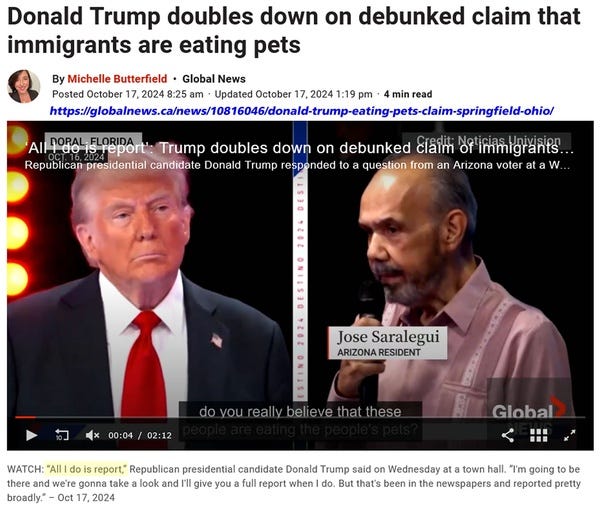
This post is a response to a question posed in its complete format: “How soon do you think that the masterminds behind Project 2025 will invoke Article 25 to remove Trump? By now there must be many of the less insane MAGAs who see that his actions are irrational before even taking office.”
I recently thought Trump was going to experience an epiphany where he realizes he’s being treated like the drunk uncle at the family barbeque. He may already be thinking about challenges to his power with Musk in the picture, as Elon has been hogging the limelight that belongs to him.
He needed Musk’s endorsements and money while he was campaigning. Now, he’s only tolerating him while getting some laughs at Musk’s expense to keep him in line.
Since Musk is arguably as much of a narcissist as Trump, this is when he began plotting his revenge against Trump. Musk is also more intelligent than Trump, which means he’ll keep a low enough profile to minimize pissing off Trump until he can devastate him with one punch.
However, Trump can’t be underestimated because his paranoia runs deep from a lifetime more experience fighting dirty than Musk has amassed. He may very well already have plans to shut Musk up for good. It’s hard to tell right now, but their conflict will grow. That’s as inevitable as day following night.
There could very well be a moment of realization by Trump where he begins to see himself being manipulated by the people around him who need him as a populist figurehead for entertaining the sheep but are squeezing him out of the decision-making process.
He may not care much about many of the decisions being made in his sphere of influence. He could mindlessly endorse many because they appeal to his superficiality and deep biases, but he always keeps his finger on the pulse of public optics.
He quickly distanced himself from Project 2025 before momentum against it and his campaign, by extension, could grow. He promptly removed his version of it from his website and his platform and denied knowledge of the endeavour while selecting a key figure from it as his running mate.
He may endorse all or most of it, but he won’t endorse the public backlash, and that’s going to create anxiety for him to crank up his natural paranoia and push his limits. I expect to see more fracturing within his inner circle as he realizes those around him are playing him a fool. He can tolerate that from Putin because he has no choice, but that only means his tolerance for dissent within his ranks diminishes.
He has a lot of clout they would fear because he would not hesitate to throw them under the bus to save his skin.
If he were to view Musk and Vance developing ties, for example, that would be enough for him to show signs of cracking and his paranoia would leak through his polished veneer of dismissive disinterest in things he should be concerned about.
For example, whenever he is asked to walk back comments he’s made that were proven demonstrably false, he doesn’t admit error. He displays disinterest, and he deflects responsibility away from himself.
In a case where Musk is being viewed as collaborating more closely with Vance than he wants, he’ll start driving wedges between them. His nature cannot permit open collusion against him without him taking action against it.
Trump will also find himself increasingly isolated from his staff, partly because he’s pissed them off enough to want to avoid his company altogether but also partly because they will have made enough progress on their agenda to be more comfortable in marginalizing him. It will be a delicate balance for his associates to keep him focused on the attention he craves while keeping him away from the decisions they make to forward the Project 2025 agenda. Much of their success or failure is contingent upon Trump’s ability to maintain optics over what will appear like his decisions.
They will also have to work fast to cement some of their early objectives to secure long-term goals. Trump will likely fail to maintain the integrity of the illusion he needs to satisfy his MAGAt base with his performance. His tariff strategy, for example, will hit them hard in their pocketbooks. The job market will tank, and the economy will shrink while Musk will become the scapegoat for MAGAt dissatisfaction if he receives an official appointment and makes the cuts he indicates he wants to make.
It may be for this reason that Trump tolerates Musk’s attention-whoring antics within his crowd. He will likely rely on favours from Putin to help keep Musk reigned in and set up to take the public anger hit. When the feces begin flying, Trump will do what he has excelled at doing: dodge accountability and redirect it elsewhere. This strategy could work with Musk or backfire if Musk is astute enough to anticipate the inevitable betrayal.
In any case, Musk is setting himself up to be the next Mike Pence in Trump’s administration… and I doubt Vance could be happier about that.
Musk is new and ostentatious money, while the Heritage Foundation is supported by old money. They would not be entirely happy with Musk’s overt, reckless flaunting of his wealth. It’s in bad taste and reflects poorly on all of them.
Musk has been teaching the world to hate wealth through his public antics, which poses a risk to them because they prefer to achieve their agendas through subversive actions, not overt displays of disdain toward the little people. Leona Helmsley is an excellent cautionary tale from recent history that shows how the little people can quickly rally against that kind of condescending disdain from the wealthy.
Trump, by contrast, may indulge in grotesque displays of performative wealth to keep up his appearance of wealth. He at least knows when to keep his mouth shut or where the line is drawn between igniting passions among his base and against those he’s desperate to be perceived as an insider with.
Trump’s view of his tribe was cultivated from a young age by being exposed to old-world wealth that essentially keeps itself out of the public eye, while Musk is a new breed of instant wealth bolstered by his birth lottery. He was born on third base and has behaved like he got a home run. Old wealth has lived on home base for generations, and they know how to stay there and how much more critical being incognito is to gaining widespread public attention. Trump, in this regard, is their sacrificial lamb.
In contrast, Bezos — also new wealth — is much more astute about the importance of reserved public optics than Musk.
If the nation collapses and if chaos arises, Trump will take all the blame. Those funding the Heritage Foundation will slink back into the shadows to begin working on the next phase of class warfare they’ve been waging since the dawn of the industrial age.
I don’t think the Heritage Foundation will move to eliminate Trump until they’ve secured the next election cycle because of his value to them as a pawn. Much of their success with Trump will depend on how well he plays along with them. Meanwhile, Musk, who is viewed as a more chaotic and potentially destructive element in their plans, will be the focus on who needs to be eliminated in the short term.
The MAGAts, for now, are entirely oblivious to the implications of Trump’s cabinet appointments, and many even endorse them. The anti-vaxxers among them, for example, are pleased with RFK’s positions on vaccines and agree with his superficial assessments of food quality. They won’t even blame him after going through a few rounds of food-related fatalities due to his policies.
Another reason why they won’t and can’t remove Trump in the short term is that there is no one else who can achieve a religious-like stature among the little people. My guess is that they would want Musk handled first. Then, once they’ve set up their succession process, they may try to secure their power by turning Trump into an actual martyr because they’ve already run the scenario through theatrics they’ve already tested.
Their succession process is also problematic because Vance is easily despised, even though his presentation is pretty slick. The public will reject him unless they’ve been coaxed to be more accepting of a couch fornicator… which, sadly, is entirely possible because it’s not as bad as being a pedophile.
If they move too soon with Vance, they’ll lose everything. Trump has four years to prove his value and make a graceful exit, which will depend entirely on how secure the transition to the next generation will be. If it appears shaky, his retirement will be made permanent to secure the Republican majority that Karl Rove championed over two decades ago.
All of this is, of course, wild speculation that no one should interpret as gospel. Take my caveat as you will.
This post is a response to a question posed in its complete format: “Do atheists believe in the Jeffersonian phrase that “all men are created equal”?”
This atheist believes the word “equal” is all too often confused with “identical.”
All life is otherwise “equal” from the perspective of an experiential existence.
There is no metric nor means by which any evaluation can be established to determine degrees of consciousness that are not subjected to biases derived from ignorance of the nature of consciousness itself.
Humans can easily consider themselves “more conscious” than ants, but even that comparison is predicated upon a human bias toward the concept of consciousness.
“Ant consciousness” is observably “different” from human consciousness. It remains just as much of a mystery, taking the shape of a puzzle piece in which we cannot yet make out its composition.
The only thing we truly understand about consciousness is that we don’t understand it. We are exposed to slices of it presented within contexts appealing to the spectrum of consciousness we are most familiar with.
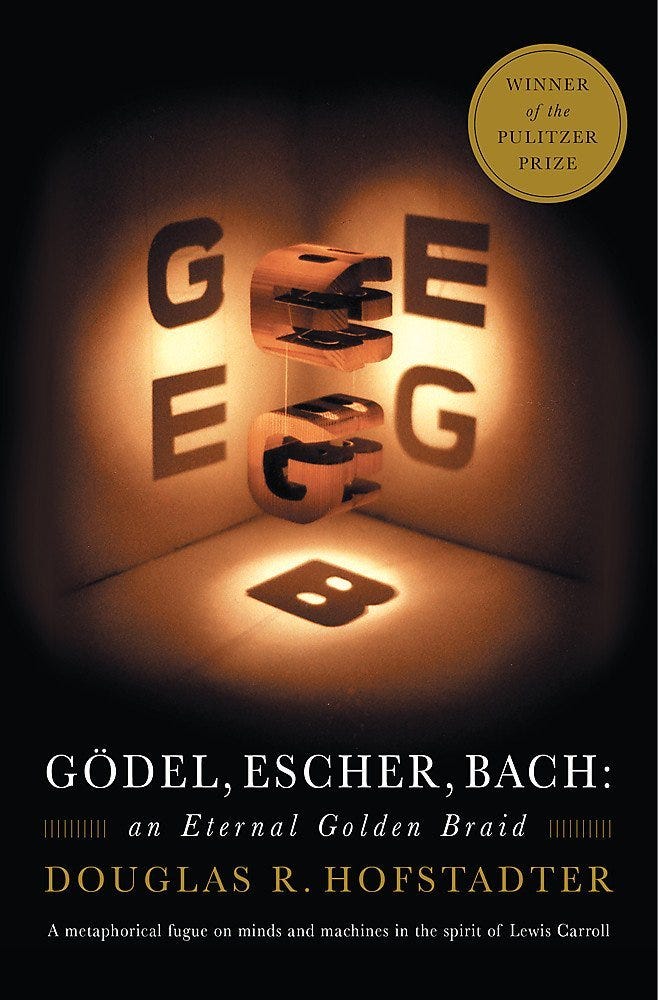
What broke the ice for me in an apprehension of a fundamental characteristic shaping the universe was the analogy of consciousness as a meteor crashing into another by Douglas Hofstadter in “Gödel, Escher, Bach — An Eternal Golden Braid.”
It was quite some time after reading this book as a student in the 80s that I encountered various ideas like “Integrated Information Theory,” which allowed me to progress beyond “The Thermostat Problem.”
I had always maintained a belief, however naive, in the fundamental nature of our equality as human beings. In many ways, my adherence was a reaction to coping with learning at the tender age of eleven, that my knowledge of the world far surpassed that of my mother.
(That revelation arose from her confusion over an ultrasound image on the television screen. She asked what it was, and I said it was a baby being born. The shocked expression on her face was like a sound vacuum for the room. My eldest brother turned to me and chastised me for exposing her to knowledge beyond her capacity to process it.)
Even though I was then always treated as an inferior in my family, I rejected that and struggled to assert my equality in an attempt to be accepted. That was fruitless and counterproductive because my efforts only increased the rejection.
I have learned that it is always those whose insecurities compel them to establish degrees of equality between people on the flawed notion of identicality. Over time, I have developed a bias against such a mindset, which I now view as an inferior state of being (a somewhat hypocritical attitude — but honestly earned).
Ironically, such a mindset seems most common among believers, but that may result from sheer numbers. On the other hand, I cannot ignore how that resembles the toxic competitiveness I experienced as I grew up in a dysfunctional environment ruled by a toxic personality who pitted their children against each other for favour.
Whenever the concept of equality is raised, I almost immediately think someone is struggling with their basic humanity and seeking validation to quell their insecurity.
All the pieces comprise the universe we inhabit, and parsing values between constituents is like arguing over whether red blood cells are more or less valuable than white corpuscles. All pieces of a puzzle are necessary to form a complete picture.
We will never see a complete picture if we discard pieces that fall outside our ability to comprehend the nature of their importance to the whole.
From my biased perspective, parsing out a given, like equality, to enumerate differences is more of an expression of toxic thinking that erodes the social fabric than is productive for our societies.
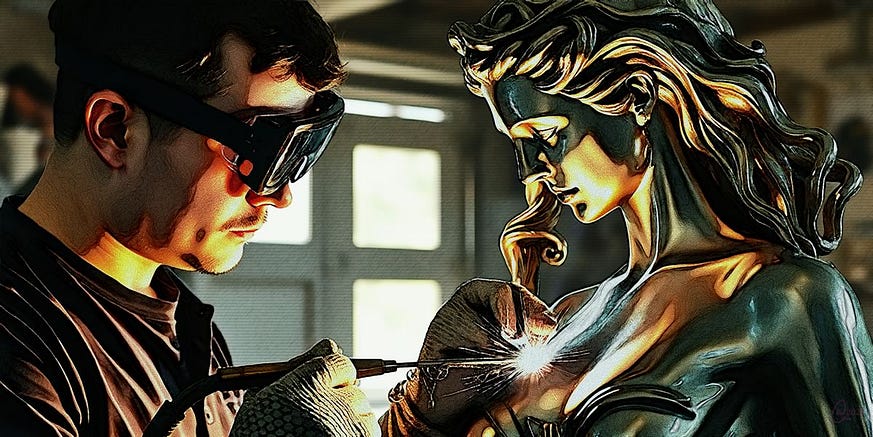
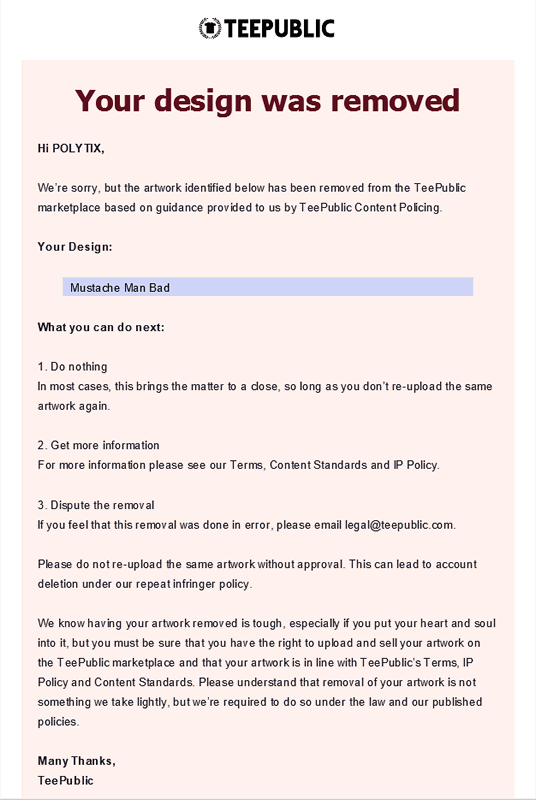
Since I’ve been getting tired of hearing/reading “Orange Man Bad” as if an impotent wave of one’s dialectical wrist to dismiss their horrid support of an evil excuse for a human being validates their vile decision, I’ve created a visual response to it.
Feel free to grab it and spread it around everywhere. I have submitted it as a design for a teeshirt at TeePublic, but it’s been subjected to a review, and my subject matter or content may be rejected. If it is accepted as a valid expression for a tee shirt, I’ll post a link to it – hopefully in a few days from today (November 18, 2024).
Update:
My submission was rejected, so here’s a link to a high-resolution version (4000 dpi x 4000 dpi) that you can use to print directly onto your own tee shirt, poster, or what-have-you. It’s free!!! WooHoo!!
The implication of this question, mainly since an anonymous profile posed it, is that atheists do so out of malice.
That’s not the case at all.
Although some atheists may indulge in malicious dialectics to stir up anxiety within believers, that’s not typical of most atheists. Barry Hampe pointed out that it’s often a response to provocation from believers, while several other respondents indicated matter-factly that it’s a truth as they see it.
It goes deeper than simply asserting what appears evident to non-believers. Often, believers need to question their presumptions, and that’s precisely what the querent does by posing this question.
Telling a believer that God is not real forces them to either wallow in defensive denial (which disarms their provocation) or shakes their psyche enough to prompt them to question why someone would say something like that. This question represents the latter, which indicates, by my bias, the first inklings of doubt in one’s position. After all, we live in a world where every major religion claims to represent the “one true truth.” No rational person can accept how all are correct in their presumption — especially not after centuries of warring against each other for ideological dominion.
Often, the goal is not malice but an attempt to assist believers in expanding their perceptions beyond the box they’ve been conditioned to secure themselves within. In this regard, saying God isn’t real is a bit of a counter-provocation from a motivation opposite that of a believer who seeks homogenized thinking to validate their own.
I’ve begun asserting that if a God does exist, then it’s nothing like any human mind has ever imagined or could comprehend. Every religion has completely misunderstood and mis-imagined whatever might constitute Godhood. This is based on the reasoning that human minds are incapable of understanding something which would, by necessity, be so far beyond complex that we can’t grasp it on any level more significant than an eyelash mite can grok the body it lives on.
We may consider ourselves an intelligent species, but our metrics are self-serving. The universe is vast and complex beyond our comprehension. We may have unlocked many secrets, even enough to grasp the fundamental nature of its structure within the context of our perceptions. Still, we have no clue what may exist outside our perceptual fields — directly or in conjunction with technologies extending our perceptual capacity.
I’ve been thinking this particular approach might achieve some success with believers because the scriptures themselves already familiarize them with the notion of God being beyond human comprehension.
By reinforcing this particular piece of authoritative insight within the prevailing concepts of godhood, we can expand believer perceptions beyond the limits they have consistently shrunk over the centuries.
Our scientific investigations have forced them to retreat, shut down, and shut out threatening information. They’ve dug into the notion that science has been deliberately eradicating the foundations of their existence. They have reacted to this by negating everything which contradicts their biases. Everything scientific is perceived as an enemy. This phenomenon characterized much of the operative psychology within this last election.
As someone who perceives religion as a cancerous threat to our existence as a species (primarily due to the tribalist component of religious bias), I think the solution lies not in the rejection of a believer’s need to believe but in an expansion of their perceptions. By reminding believers that they don’t have definitive answers, explanations, or anything beyond their wistful imaginations to define a god that exists purely within their imaginations, they can begin looking outward instead of shutting down.
Learning to accept the necessary limitations of humanity validates a natural ignorance of godhood because it is ignorance shared by all humans. In this way, the atheist threat to their beliefs is mitigated.
Personal insecurities are also mitigated within an expansive tribe comprising all of humanity.
Our struggle with believers is born of piecemeal geographies and tribal borders hinging on being authoritatively definitive about each tribe’s perspective on the nature and shape of god. The common ground, however, lies in accepting how none of them can be accurate because humans cannot apprehend godhood — by the very definitions of “God” as established by their scriptural authorities.
By encouraging their minds to accommodate and embrace possibilities rather than allow them to be set like hardened plaster into myopically formed sculptures, the often violent competition between tribes can be mitigated. They’re all too focused on establishing a supremacy of authority within a definitive shape, boundary, and finite nature to an insular concept of godhood.
Opening their minds to accept how all are wrong instead of fighting over who is right in a “Might makes right” fashion may encourage them onto a path to the peace and love they often declare characterizes their belief systems.
In short, for believers, atheists may say, “God isn’t real,” but you can interpret that to mean, “Your vision of a god isn’t real.” You have nothing beyond your imagination and the force of your personality to support your contention that God is real. It’s a lie, and you know it.
Most atheists are open to evidence, but we’re also astute enough to understand how our primitive ancestors had no clue what lay beyond their limited geographical explorations and, much less, beyond our planet.
Even believers today no longer believe God hurls lightning bolts from the sky by hand or hides the sun from humanity when disappointed with us. We know no God sends hurricanes to our homes to punish us for mixing fabrics or eating shellfish. Most believers know this as well — and it’s usually the religious leaders who manipulate the gullible with lies for personal enrichment. Perhaps believers should choose new spiritual leaders who won’t lie to them and will open their doors to shelter them during a storm.
Perhaps it’s time to start looking outward to possibilities instead of lying to oneself and others about the products of one’s imagination and searching earnestly for a real god.
If all religions can admit to each other that they don’t know anything substantive with any certainty, then perhaps they can build bridges between each other instead of lobbing bombs. If that’s possible between belief systems, then it’s also possible for atheists and agnostics to join them in an honest endeavour toward solving life’s mysteries.
This post is a response to a question initially posed on Quora and can also be accessed via “Why would it be possible for people to live without the government?”
It’s not.
Without government, we would barely survive while struggling with anarchy and doing our best to avoid the bullies among us who would have free reign to terrorize anyone they please.
Life would be cheaper than it is now. Justice would be non-existent, and perversions of it would be meted out by force and without any form of protection for anyone without the power to dominate others.
Virtually all scientific and technological progress would halt. If government ceased to exist from this point forward, we would be facing a nuclear holocaust through much of the world as centuries-long enemies would no longer be restrained from indulging in their worst fear impulses. The mid-East would essentially be vaporized and rendered uninhabitable for the next century. India and Pakistan would decimate each other. Much of Eastern Europe would be bombed into rubble. China would decimate its neighbours and indulge in its most significant expansion across the globe… or it could fall apart into factions ruled by powerful interests within the nation whose infighting would also collapse the country and leave it vulnerable to external aggressors seeking revenge.
Whatever may exist of what you call home would have to be protected by traps and a twenty-four-hour armed security detail. You would sleep in shifts.
Your environment would be like living in a perpetual purge. That would likely last until we’ve culled most of our species and our numbers shrink from eight billion to a few hundred million within a few years at the outset.
Once we’ve burned ourselves out from a pent-up violence orgy, we’d start seeing primitive tribal infrastructures negotiating arrangements to secure our survival as a species. At the same time, we would find ourselves living in an entirely hostile world as we experience ecological collapse all around us from our careless mismanagement of the environment ramped up into overdrive from global conflicts.
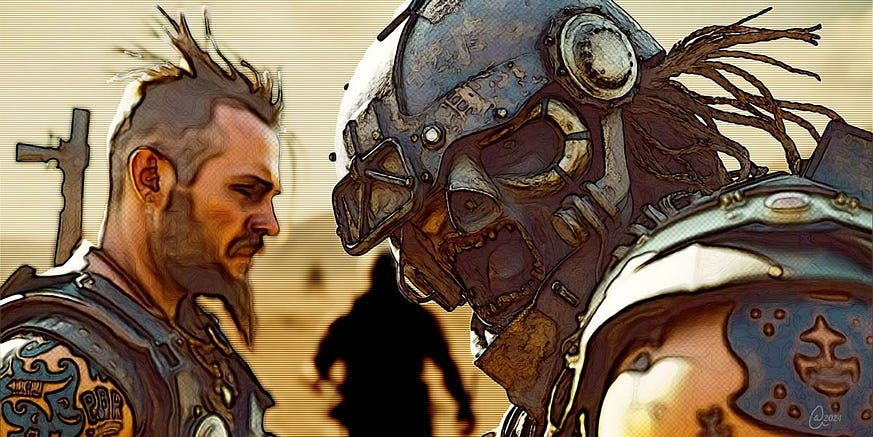
We would make the world of the Mad Max mythos manifest and find ourselves severely humbled as a species.
As much as people may hate government and as much as many criticisms are justifiable, we need government for the simple reason that the one in five who currently manifest the mental health pandemic we’re living with is a perpetual threat to human existence.
Once we succeed at reaching a point of optimal mental health where we have overcome our psychoses, human society may evolve to a degree where government is as much an automated system as the rest of the industrialized world promises to be.
Until then, our best bet is to become more engaged in our self-governance as a collection of democratic societies — which, at this point, means “taking our government’s back” — out of the hands of the few with too much power and back into the hands of all of us.
Humanity’s worst threats have always been the few with too much power victimizing the many with too little power. This is why democracy was born and has dominated the landscape over the last century.
Sadly, those with too much power in today’s world hate it and are actively undermining it to send us all back to a medieval state of existence as a two-class society of rulers and serfs.
As much as many people may wish to mock democracy as a fundamentally flawed system while pointing out the advantages of an autocratic system, the reality is that we have never truly committed to making democracy work. If we had, we would do the necessary thing — equip everyone with the education, skills, and insights required to make proper decisions reflecting what’s best for all of us.
This last American election showed us that people are still trapped within the paradigm of what’s best for them personally in a zero-sum game that necessitates the existence of losers to support the winners.
The solution to our problems is not eradicating what we struggle with but fixing where we fail to make it work. That means improving our education systems by learning to value education on a level as if our lives depend upon it because they do.




















 thotbag