Why does morality exist independently of human opinion?

Why does morality exist independently of human opinion?

This post is a response to the question posted on Quora as written above.

Morality IS “human opinion.”

Many differences exist between opinions on morality and on practically everything else people have opinions on — which makes opinions on morality somewhat unique in how they are perceived.

People generally do not equate a moral opinion on murder, for example, with an opinion on a fashion accessory.

Part of the problem is that it is the cultivated opinions of religious folk to believe morality is an objectively established standard of conduct determined by an invisible authority. If the claim of objective jurisdiction to develop and institute a moral framework existed, morality would essentially be identical and unchanging over time. That’s not the case for anyone who has made even a tiny effort to understand people or human history.

The most significant problem with establishing a universal acceptance of a moral opinion is that no one ever receives direct confirmation from an unassailable authority governing judgment over any specific behaviour. Complicating matters further are the subjectively supported morals of believers who do not share a consistent moral framework — even though religious institutions do their best to homogenize morality among their flocks.

Institutions that once endorsed slavery and have moved on to repudiating it cannot, without justified criticisms, claim to receive their moral framework from an omniscient entity.

This and all the many other changes made to institutional policies regarding morality throughout the centuries have eroded religious claims of authority in moral matters. Making things worse for them has been allowing their credibility to be assaulted by many heinous scandals, such as the institutional endorsements for victimizing countless children through sexual predation and murder and the subsequent protections of institutional leaders guilty of immoral actions.

We, as a species and as a collection of diverse societies, all governed to some degree by the notion of morality, have undergone a tremendous number of and severity of degree in the assaults on our definitions for what constitutes morality that we are struggling to unify a fractured vision of the concept.

We can no longer trust our authorities, be they religious, political, industrial, or familial, which puts us in a quandary for resolving our moral differences as a species.

The upside is that we are turning inward to identify our internal sources of moral development.
Morality is most simply defined as an extension of empathy, but the issues it encompasses make that an oversimplification. At best, empathy is merely a compass guiding actions that many hope serve to achieve moral outcomes. Some will define morality within a self-serving context, while others consider self-sacrifice an embodiment of morality. Neither is necessary to achieve some form of widely acceptable definition of morality.

We can grasp a history of morality from academia, giving us context and perspective on what we have learned about morality. That approach leads us down deep and convoluted rabbit holes of (arguable) “subclassifications” like ethics, conscience, integrity, standards, and principles. At the same time, simple definitions escape a universal simplicity promised by our examples of failing leadership because morality is itself nuanced, multifaceted, and contextual.

We may never transcend subjectivity within the context of our interpretation of morality, but that’s a feature, not a bug.

Morality as an opinion forces us to share the diversity in our views, and that’s a superior form of morality to any authoritatively imposed dogma because we must each learn to develop our apprehensions of morality to learn how to better succeed in living together under a shared social contract to achieve a peaceful and prosperous co-existence.

We’ve seen enough artificially imposed forms of morality claiming objectivity as an unassailable standard for uniting people to know it’s a fraudulent approach to morality that invariably fails us as much as we fail to adhere to universally defined, generic, and external imperatives.

To accept morality as human opinion puts us in a position to define human character along a spectrum of universally acceptable, unacceptable, and inspiring behaviours that can adapt to an ever-changing landscape.

Morality may be more messy to manage as an opinion. Still, like the principle of a democracy, it’s the only form that can maintain coherence within the context of longevity.

Can a Democrat define their go-to mime: “Threat to democracy”?

This post is a response to a question posed in its full format as follows: “We have to be impressed by the Democratic Party’s ability to ‘Fool some of the people ALL of the time.’ Could those in their pocket kindly define their go-to mime: ‘Threat to democracy?’”

After this question, the next question you posted on your profile qualifies as a “threat to democracy,” as does your ideological mindset in which you divide society into an “us versus them” dynamic.

Your understanding of a law intended to protect everyone equally is broken and favours the application of subjective biases that disenfranchise half of the population. Furthermore, you have no respect for that half of the population as you endorse stripping them of rights you take for granted for yourself.

You place all of the onus of responsibility onto that half of the population while perversely ignoring how demeaning the very concept of life is by elevating tissue in development beyond the degree of value you should be placing upon the life and lives affected by that process.

Women are not different in every state, with different needs or rights to protect according to the political whims of zealous religious hypocrites dehumanizing them as incubators for the production of children they can dispose of once they’re produced.

There exists no valid justification for the segregation of fundamental human rights by state because abortion is not a state issue but a human issue.

States’ rights, in this case, erode democracy and reduce critical functions within human lives to commodities serving the vapid whims of political ideologues rather than the universal values of human life in a uniform fashion.

It would be best if you were far more concerned with how “states rights” are intended to address issues affecting localized areas, not universal matters.

It would help if you protected the clear divisions between geographical and universal human concerns.

You don’t do that, though, because you have already indicated your primary concern is to pit citizens and neighbours against each other with your ideological division of society, and that, right there, is the greatest threat to democracy.

It would be best if you fought alongside your neighbours to protect all equally, not against your neighbours, to win an egotistically subjective degree of superiority over them.

While you are busy gloating over what you dismiss as a non-issue, the betrayal of women’s rights and democracy as a whole, you reveal a horrific degree of nation-destroying sociopathy.

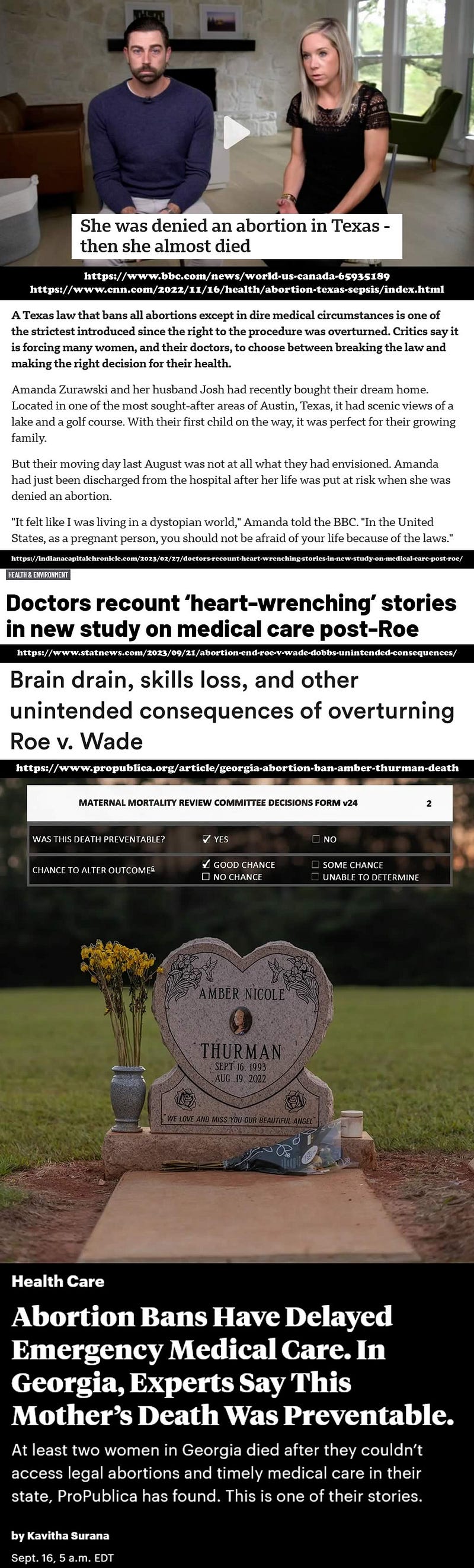
The reality is that reversing Roe v. Wade has already had a devastating impact on the lives of fellow citizens you don’t seem to care in the least about.

This is not “nothing.”

It’s a horror show, and you show yourself to be a horrific monster by pretending this doesn’t matter.

In reality, states should stay out of people’s lives and let them live according to their universal right to self-determination.

It’s not a state’s right to overrule universal rights. It is a divide-and-conquer strategy that undermines an entire nation as a fundamental threat to its stability as a democracy.

The worlds of all these people have fallen apart. You have chosen to overlook the pain and suffering your attitude causes them in favour of banging your ideological drum while disparaging your neighbours in the process.

That makes YOU a threat to democracy. YOU are too full of yourself to realize how badly you betray it. YOU are more interested in achieving ideological dominion over your neighbours than in supporting the social contract and working together to resolve common problems.

What is an example of the barrier of distraction?

This post is a response to a question posed in its full format as follows: “Distraction is a barrier to critical thinking. What is an example of a situation where you have or might in the future encounter the barrier of distractions?”

Referring to distraction as a “barrier” is a misnomer because critical thinking relies on focused effort, while distraction is a dilution in focus.

It would be like describing apathy toward physical exercise as a barrier to physical fitness. The lack of motivation to exercise isn’t a barrier per se, but the reasons for or causes of that apathy are.

It can inhibit effectiveness or prevent resolution not because it prohibits effort but because it drains effort at the moment that would otherwise be required to achieve it.

Distractions occur all the time and every day. This question is an example of a distraction because I’m trying to fall back asleep after waking up at four in the morning and find myself thinking about something I’ve been working on, which has preoccupied my attention to such a degree that I’ve become fully awake.

That’s a problem because it will mean a dramatic loss of energy at about three in the afternoon when I should be working on my project in earnest in front of my computer to record my thoughts and flesh out my ideas more concretely and productively.

To distract myself, I turned to Quora to earmark a few questions I might answer and found this question I am currently answering.

In this case, the distraction has been beneficial because answering this question has drained my focus on strategizing and made it easier to relax enough to feel the stupor return. Hopefully, I’ll be able to fall back asleep soon and get a few more hours to have a productive day when I wake up.

In this case, distraction is a means of helping me reserve energy for tackling a critical thinking activity ahead of me at a time when I will need to focus my thoughts.

In this case, distraction isn’t a barrier but an assistant. (Except for all the typos I’m prone to making with “fumble thumbs” on my phone.)

Distraction can be helpful in many ways, such as when one encounters a mental block and fails to make progress on something. Walking away from the problem can relax the mind and allow solutions to emerge spontaneously.

The word “Eureka” was made famous by the value of distraction in the story of Archimedes when he distracted himself from a problem he was stuck on and decided on a bath to relax.

https://www.livescience.com/58839-archimedes-principle.html

(Dang! One thought leads to another, and a simple answer becomes a long story that wakes me up. Suddenly, distraction has become a problem.)

Suddenly, this question became the example you asked for, which has become a clue for me to end this here.

Hopefully, I’ve given you some food for critical thinking about distractions.

Cheerz

Oh… ya… to summarize, distractions can be helpful, but they can quickly get out of hand if it doesn’t restrain them enough to lose their focus on a problem for so long that it remains unresolved. Short distractions can otherwise clear mental clutter and allow one to refocus their thoughts to make progress on their critical thinking activities.

Damn! Dunno if I’m gonna be able to fall asleep now… Maybe I should have left this question half-answered.

zzzzzzz

What do you think of a person who dismisses what you believe to be true?

I don’t.

I also don’t put much faith in my beliefs. I prefer facts and knowledge. If people dismiss them, they’re more likely to be trapped by their beliefs.

It’s their choice but also my choice to avoid dealing with people who dismiss facts in favour of whatever beliefs they may hold.

I think much more highly of a person who does not adhere to beliefs and of people who process facts in ways that contribute to our shared knowledge of a subject.

I am often happier when someone offers a rational response that increases my knowledge of a subject than if someone responds with beliefs to facts I may have provided. My goal is always to expand my knowledge rather than convince others to believe as I may. I prefer to transcend my beliefs with knowledge because that’s what I value most.

A lot of dialogue between people suffers because people conflate facts and beliefs. I think beliefs create barriers between people and kill one’s learning ability.

I think beliefs are egotistical and responsible for most, if not all, conflicts between people, but I’m willing to think otherwise if people can offer facts to contradict this belief.

I have otherwise lost almost all my tolerance for people who entrench themselves in beliefs they feel compelled to impose upon others.

I feel similarly to people who respond to facts by dismissing them. They’re not worth my time, nor do I care if that’s what they choose for themselves.

I am far more interested in engaging with people who offer facts than I am in engaging with beliefs.

To return to my first sentence, I have no thoughts about my beliefs being dismissed because I don’t value beliefs due to being skeptical of all beliefs. I also know that most people I encounter tend to favour beliefs over facts.

It’s like I don’t pay much heed to religious people or their beliefs until I find myself dealing with any specific one of them. I also don’t use much cognitive energy thinking about them as people when they express their beliefs because that would make me guilty of wallowing in my own beliefs.

People are entitled to their beliefs, and a big part of life is learning how to cope with the beliefs they hold.

There but for the grace of God go I.

I am amused that I can often quote religious references as an atheist, and that tells me how deeply penetrating beliefs can be.

It’s why I don’t trust beliefs.

There may be some wisdom in some beliefs, but they’re just temporary conclusions, while some have more staying power than others.

Once I’m dead, I won’t believe anything.

Why are progressives communist sympathizers?

Upon reading this question, I first thought you had no clue what communism is beyond maybe the bread lines. Even then, I doubt you would know why that happened or how unrelated it was to Marx’s vaguely defined description of communism.

I thought of you as just another Pavlovian dog who’s been programmed to barf up “communism” about everything you hate, like most MAGAts who don’t wash their panties often enough.

As part of my investigation into profiles I block, I often check out their followers because… Why TF do people follow morons? I also frequently get a chuckle over Chucklehead followers while finding many blockworthy candidates. I learned this practice from Billy Flowers because that idiot creates a LOT of profiles that follow each other. I doubt there are ever any real people in their sewing circle.

At any rate, beyond usually finding catfish to block so that I don’t get the typical message on my answers that goes something like this: “Gee. I loooooove your posts but can’t seem to follow you. Pleeeeeze follow meeeee and I promise to like you.”

You didn’t have many of those, but what you have as part of your follower group is quite sad. It makes me think about my latest sub-category of troll:

In this case, however, it’s not quite so funny because it’s a stereotype that’s a huge part of the reason why we have generational trauma running through the whopping majority (70%-80%) of dysfunctional families.

Almost all of your followers have suffered beatings as a child that you interpret in the downplayed term of “corporal punishment.” You seem to be part of that group who interprets the physical abuse you suffered as “normal” and that you “turned out fine” when the reality is that you haven’t.

Your question shows that, but I doubt you would understand why.

The clue is that it’s in the misanthropic nature of your attitude toward “progressives.”

Progressives want to see progress in society because they want a world where kids are disciplined through reason, not violence. There’s no need to be violent with a child. Ever. That’s a lazy parent’s approach to restraining a child’s behaviour when they don’t want to make the time to do it correctly and through words.

They don’t consider how what they’re teaching their children is that violence is acceptable. That’s what you and your followers have learned. That’s why generational trauma exists.

Although I used the term “lazy parent” above, that’s not a correct way to point out the perpetuation of trauma, but it’s a pointed statement done for an emotional effect. It helps to focus attention on a serious issue affecting all of society.

In your case, you’ve been taught that getting what you want through violence is not only acceptable but an effective means of achieving your goal. From the starting point of physical violence in your repertoire of imposing your will onto others, doing that with words becomes second nature.

That’s why you rely on trigger words like “communism” because you’ve been taught to react emotionally to something you don’t understand beyond “It’s bad, m’kay.

Since you can’t go around beating up on people who want to see progress in society, you restrain your angst by using words that can simulate the adrenalin rush you would otherwise get from physicality.

If you succeed in putting your “Idiotological Enemas™” in their place by calling them “commies,” then you’ve achieved your goal of giving them “the ol’ wut fer,” and that’s a win for you… at least an emotional win if they can’t come back with a witty response that shuts you up.

Chances are excellent that more and more of you “anti-commie” types are finding that happen these days. I remember only a few decades ago that it would be an effective conversation terminator that allowed people like you to feel like you’ve “won your debates.” I’ve never understood the value of that no-prize beyond a temporary dopamine high gained through ego-stroking. It was never my drug of choice because I grew up with idiots who couldn’t get enough of it at my expense.

At any rate, that’s the reason why you posted your question.

You have no clue what “communism” is, but you know you can use that word like a hammer.

You have no clue what a “progressive” is or what their goals for society are, nor do you care, even though those goals would benefit you directly and give you a life of dignity. The math is too hard on your hamster to add it up and see a plus to personal benefit on the bottom line. Besides, you’re too busy hating progressives because they drink lattes and eat avocado toast. You’re either jealous of the latte and disgusted by the avocado toast, or you don’t like their fashion sense.

It wouldn’t surprise me that you’ve yelled out, “Get a haircut, you hippy!” at least once in your life, or “Go back to where you came from!” because no one who isn’t a part of the cult you belong to deserves to live in your neighbourhood and get all of the benefits you take for granted.

For the record, “communism” has never really existed in the way that Marx vaguely described it as the next step in an evolution for governance beyond socialism.

Neither has democracy, for that matter.

Both are just concepts that different people define in various ways. While we, the leetul monkeys of society, argue what democracy is in reality among ourselves as we fling bananas and feces around to keep us distracted from the oligarchs pulling all our strings.

They love that you and so many of your tards barf up communism left, right, and centre like it’s your favourite rock song by Dead-Headed Zeppelins.

It’s much easier for them to keep stealing Trillion$ out of our pockets while you’re barking “commie, commie, commie” up and down the streets. That’s why they feed you “Anger Biscuits®” on TV while raking in billions from the morons who glue themselves to their favourite hate-porn channels.

I doubt you have ever watched a documentary in your life, but you think Idiocracy was one without realizing that if it were, you would be the main subject of that flick.

No one “sympathizes with communists” because whatever exists of people who support it are primarily academic in their support. There isn’t any real political movement toward communism, but I think that you would probably disagree while claiming North Korea and China are communist countries — even though they’re not.

As a political system, communism died last century as the authoritarian versions of it that were implemented proved themselves to be utter failures. I know you might think that communism failed, but it didn’t. It was an authoritarian government that failed like every authoritarian government throughout history.

This brings us back full circle to your upbringing because you endorse capital punishment, and that’s precisely the attitude of an authoritarian.

If we are to equate authoritarian governments with communism, then that means YOU have more of an affinity with communism than a progressive.

If anyone were to be described as a “communist sympathizer” based upon the style of communism, you’ve been taught to fear. It would be you and your fellow MAGAtards℠ who rationalize authoritarian approaches to government.

If you have a pipe, now would be the time to pack all of this into that dirty bowl and start smoking.

Cheerioz Numbnutz

Does gossip cause negative group processes, or do negative group processes cause gossip?


Gossip corrodes group cohesion, while negative group processes can feed gossip as people require an outlet for their frustrations.

On a national level, we’re observing a distressing trend. People, disillusioned by ineffective processes, are seeking outlets for their frustrations. This often leads to the scapegoating of marginalized subgroups by influential voices within the group. However, this blame game does nothing to address the root causes of their frustrations, only serving to perpetuate the cycle of negativity.


The consequence of blame-shifting leads to spiralling instability within the group and nation, as is the case with what’s happening worldwide as we experience increasing protests due to historic levels of income injustice.

The solution to this problem is two-fold: address the underlying causes (the elements negatively affecting group processes) and hold leadership accountable for de-escalating rather than escalating group negativity. It’s crucial that we, as a society, hold our leaders responsible for their actions to empower positive change.

On a national scale, we are struggling precisely because of the messaging we are all receiving from all fronts, including political leaders, leaders in our information brokering system (media), and our captains of industry. All forms of leadership in society today are primarily responsible for the increasing destabilization we are experiencing today of what we refer to as a “civilized society.”


We live in a world where those most responsible for ensuring group cohesion act in service to their best interests at the expense of becoming the underlying causes of group destabilization.


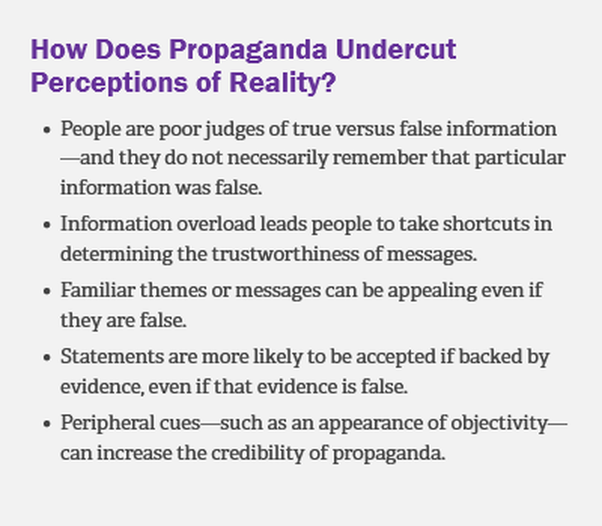
We are deliberately inundated with negative messaging because it serves the shallow interests of the few among us with too much power who view the rest of us as pawns in service to their whims. This is a practice of mollifying a public that has existed since the dawn of human civilization and has been taken to new extremes in today’s interconnected world in our information age.


Messaging has become the modern equivalent of tanks on a battlefield where the prize to be won and the territories to be controlled are the minds of the little people who serve as pawns in their games of power.

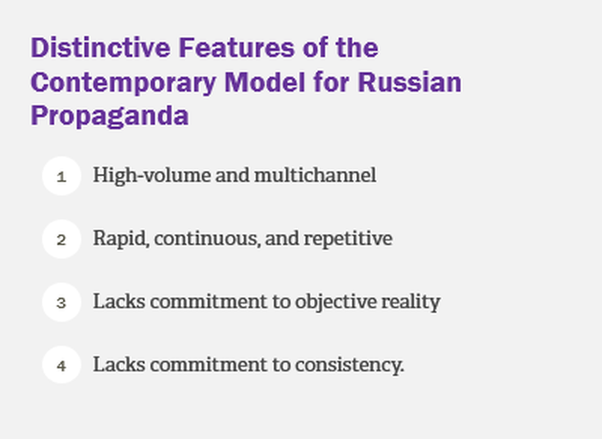
“All other things being equal, messages received in greater volume and from more sources will be more persuasive.”

Russia’s “Firehose of Falsehood” Propaganda Model

Since its 2008 incursion into Georgia, there has been a remarkable evolution in Russia’s approach to propaganda. Effective solutions can be found in the same psychology literature that explains the Russian propaganda model’s surprising success.

https://www.rand.org/pubs/perspectives/PE198.html


Fortunately, we can refuse the negativity directed toward our fellow victims because we outnumber the few who seek control over the many and because we can lose our ability to make our own determinations about the future we want by willingly handing over control of our minds to those who would seek to sublimate all of human society to servants in thrall to their whims.

We can reject gossip and demand adherence to the primacy of facts from all our leaders, politicians, media empires (the Fourth Estate), and plutocrats.

If they don’t obey the wishes of the masses, then we can organize and make them follow the social contract they are beholden to and obey the needs of the societies they benefit from.

What has caused people to lose their common sense (2019-present)?

This post answers a question posed on Quora’s Question and Answer site.

The major problem with the concept of “common sense” is that it’s subjectively defined gibberish.

What may construe “common sense” to one person means something else entirely to another.

For example, here is another question you posted on your profile:

“Why do liberals have a light approach on [sic] immigration policies? (serious answers only!)”

This has meaning to you, but a “light approach” is an entirely personal definition characterized by personal bias without any reference to any authoritative body that can provide a working definition of how that applies in real life.

What that term evokes to understand what you mean requires considering an oppositional view of that expression. The “opposite” of “liberal” is “conservative,” and the opposite of “light approach” is “heavy-handed.” From drawing those oppositional points of reference, one can determine what you imply within your question.

This is a general approach for deriving meaning that most people often (and subconsciously) undergo when responding to subjectively defined terms.

The expression “common sense” is interpreted similarly; “common” to “uncommon” and “sense” (in the context of awareness or knowledge) to “ignorance,” except that in this case, the result is vaguely referential gibberish — “uncommon ignorance.” The consequence of a subjectively defined expression that cannot derive meaning beyond the words themselves leaves people with the only option of accepting those words at face value — “common sense” means “common sense” (“common awareness” or “common knowledge”).

If anyone asks, “What does “common sense” mean?” It means “common sense” — a sense regarded as common — standard, familiar, expected — not specific to anyone or anything we can identify, nor does it reference any specific sense like hearing or seeing, but it does imply cognitive ability.

If you don’t get that, you lack ‘common sense.’”

It’s an expression insulated from criticism because it refers to nothing but one’s subjective interpretation of what that applies to.

If it makes sense to me, then it must be ‘common’ sense.

This is where we run into trouble with that expression. Not everyone has what everyone else would consider “common sense,” and no one can devise a universal definition of what constitutes “common sense.”

That leaves us with a sticky situation in which people will read or hear something like this from a “leader” in society and think this reflects “common sense.”:

Listening to these words is easier than reading them. Listening to their sounds while one’s attention captures key concepts like “tough hurricane” makes it easier to accept the meaning conveyed within the sentence.

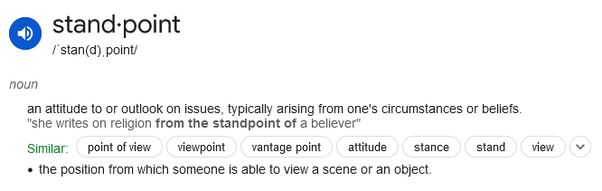
Reading these words, however, makes it tough to ignore all the rest of the words that, together, amount to a string of gibberish. Since when does water have a “standpoint”?

Water has no “outlook on issues,” but the gibberish of this sentence is still interpreted as “common sense” by people whose discernment of meaning is fuzzier than others.

This leads us back to understanding how the perception of having “lost” something for which no universal definition applies is due to personal bias.

Since no objective metric exists for defining “common sense” in the real world, the only explanation is that one’s awareness of something they took for granted as true of most people suddenly seems not to be the case.

It follows that the answer to your question isn’t that “common sense” has been lost but that you have awakened to realities you never before realized existed.

I don’t know why you selected 2019 as the year for which you have noticed a decline in “common sense” and have searched online for significant events that may have contributed to your conclusion. I’m pretty sure you’re not referring to July 10, 2019, when the final Volkswagen Beetle rolled off the line In Puebla, Mexico or that it was the last of 5,961 “Special Edition” cars exhibited in a museum, but I could be wrong.

I suspect that year is also a distinction of an event of personal significance beyond whatever else may have happened worldwide. It would be an explanation that makes more sense than anything listed within this record:

https://www.history.com/topics/21st-century/2019-events

Can Devin AI replace human developers entirely?


This question was originally answered on Quora and written as is.

I’m not familiar with Devin per se, but I don’t see AI “replacing people” in any capacity it is developed to function within — and I use that description with a caveat because AI IS replacing hundreds of thousands of jobs — if not millions worldwide.

https://preview.devin.ai/

AI has the potential to liberate humans from mundane tasks. It can free up time that would otherwise be spent on repetitive, clearly defined functions while still relying on humans to make decisions and set the parameters for these tasks.

Tasks that require creativity, judgment, and understanding of context will continue to be the domain of humans. These include quality control analyses, determining the scope and context of tasks, and designing the application for which a task is intended.

This is where the waters become muddy because most jobs are mostly drudge work.

Millions of labour hours are spent every year on tasks that can be automated.

Capitalists know how much they can save by eliminating humans from repetitive and clearly defined tasks.

Many may be arrogant enough to believe they can supplant human creativity and intuitive judgment with an artificial solution. Companies like Disney, however, are butting up against an immovable wall in this regard and getting their noses bloody because of their sociopathic disregard for the human equation in the capitalist environment.

We will see many psychopathic capitalists decide they can do without the most expensive of their labouring monkeys, and they will fail because of it.

We are likely to witness a significant loss of jobs due to AI. This is a reality that few people doubt, and those who do will be in for a rude awakening when the replacement rate reaches a critical level.

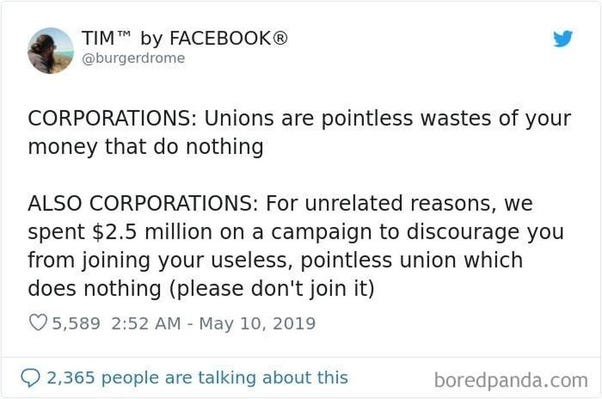
Yes and no, but yes, jobs will be lost. Developers with initiative, resources, and creativity to imagine solutions will also be empowered to create their own software enterprises. New jobs will be created, and we’ll see an explosion of “individual corporations” replacing a landscape of monolithic enterprises that employ hundreds of thousands, which will be much healthier for our economy in the long run. This change in our corporate landscape will reintroduce the stability we once had before the middle class came under assault in the 80s and eviscerated our unions.

Right now, when a monolithic corporation makes a minor cut in its costs, thousands of jobs are lost. The economy is stunted as a result of a minor bookkeeping adjustment or on the whims of a sociopath who decides they no longer need to pay half of the staff of the enterprise they just purchased and sends them off packing.

In an environment populated mainly by independent entrepreneurs and small “mom-and-pop shops,” any single endeavour can fail, and its failure has no discernable impact on the economy or society at large.

The biggest, most disruptive, and potentially destructive challenge is arriving at this newly recovered and economically defined demographic dynamic through a smoothly managed transition.

The most crucial step to reduce the negative impact and the widespread hardship resulting from the transition to an automated society is to build a solid base upon which people are free to live and pursue the motivations arising from their imaginations and inventiveness.

We must improve liquidity throughout our economic systems, which requires a two-fold process. While the first is to ensure everyone’s basic living needs are met through a universal income floor, the second requires freeing up capitalization for entrepreneurial initiatives.

This second step will be the most difficult to implement because it will require the most powerful among us to relinquish their power. That will happen through reasoned measures or due to entrenched and narcissistic arrogance that will lead us all to widespread chaos.

Hopefully, most will be able to identify entirely new vistas of opportunity for themselves in which they can benefit from the changing landscape in ways that are becoming less and less possible by reaching a saturation level where the only room left for growth is a takeover of smaller enterprises.

As individuals, their creative capacities and economic potential are far more reliant on the support and inspiration they receive from the collaboration synergies than on armies of sycophants telling them what they want to hear.

Some will be wise enough to leverage a massive transition in human society in their favour because they understand and value human ingenuity. Others will fail because their misanthropic disdain toward their servants leads their economic inventiveness to an empty silo devoid of value in the marketplace. If we are to go by the statistics which indicate the prevalence of psychopaths at the boardroom level matches the density of a prison population, I would expect about 20 percent of our plutocrat dynasties will not survive the transition and humanity as a whole will be the beneficiaries of such a surgical culling of our economic dynamics.


Cognition Labs — The developers of Devin AI — LinkedIn Profile:
https://www.linkedin.com/company/cognition-ai-labs/

They can be followed on X via @cognition_labs

Below is a screen of current AI initiatives underway for augmenting the software development process — 24 AI projects for software development alone as of September 2024:

Since deciding which option might be best to explore for one’s projects, here is some further reading on AI tools for software development:

Top 10 AI Tools for Developers in 2024
https://code.pieces.app/blog/top-10-ai-tools-for-developers

13 AI Tools for Developers
https://www.wearedevelopers.com/magazine/ai-tools-for-developers

Best AI Tools for Programmers: An In-Depth Analysis
https://medium.com/@kaushikvikas/various-ai-tools-for-programmers-an-in-depth-analysis-e4ddc1cde88d

Top 15 AI software development tools to use in 2024
https://decode.agency/article/ai-software-development-tools/

9 of the Best AI Tools for Software Developers in 2024
https://www.stepsize.com/blog/best-ai-tools-for-software-developers

Are evolutionists telling the truth?

The original and full format of the question this post responds to is as follows: “Are evolutionists telling the truth, they say abiogenesis is not evolution, then they say life evolved from a single cell, isn’t the false abiogenesis life from a single cell, can they make up their minds?”

The first few times I saw this question, I thought it odd, but it could be answered easily and quickly. I noticed it already had several answers, and I didn’t feel I could contribute anything differently to an answer, so I decided not to answer it.

It kept knocking at the back of my mind, so I checked the profile because I expected another MAGA to be behind it. I was wrong. The querent is a self-determined and self-made business owner who’s had some success through honest efforts. He even understands how Donald Trump is an evil person.

This confused me more, but I still decided not to block him and forget about the question. Here I am, though, writing a response to it. Talk about compulsion.

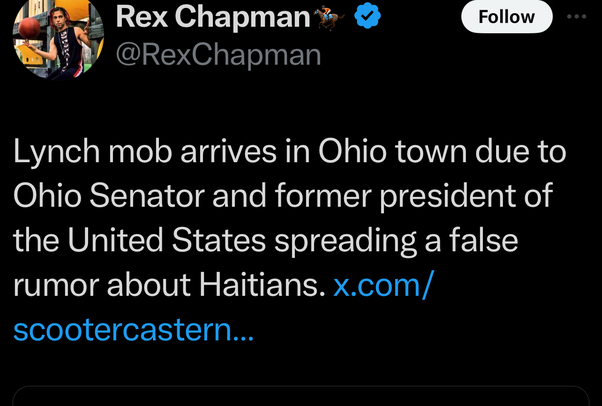
What I don’t get is the question itself. If one were to ask Donald Trump if he was telling the truth, he would most certainly either assert he was telling the truth or dodge responsibility for uttering an untruth as he did with his lie about Haitians eating pets. He didn’t deny lying about it, nor did he address his statement directly, but claimed he saw someone on television. He then quickly claimed he didn’t care about it while ignoring how anyone could say anything on television, particularly when that “someone” isn’t even identified. He didn’t say which program he allegedly witnessed someone making that claim. He merely distanced himself from responsibility for making that claim by claiming he witnessed someone making it on television in such a way as to grant the claim credibility. He made vague and rambling assertions about the claim while dismissing the television news reporter whose research debunked the claim.

This leads me to why I feel compelled to answer this question:

If you didn’t trust atheists to tell you the truth about the difference between “abiogenesis” and “evolution,” then why are you asking atheists if they’re telling you the truth?

That makes absolutely no sense to me.

As a human being who happens to be an atheist, I can’t fathom why someone would lie about this distinction between two words that can easily be verified through so many other sources, including every dictionary of the English language, every encyclopedia, and everywhere these topics are broached.

It’s the kind of question that can easily be verified through countless resources, yet here you are, asking if the people you don’t trust to tell you the truth if they’re telling you the truth.

This reminds me of the aphorism of a broken clock being correct twice daily in the form of a quote by Ronald Reagan, who said, “Trust but verify.”

Suppose you don’t trust your doctor’s diagnosis. In that case, it makes more sense to get a different doctor to examine you to determine their diagnosis to contrast against your first doctor’s diagnosis. It seems highly irrational to ask your first doctor for a different diagnosis.

This is why we have independent watchdogs and fact-checkers in society, to verify independently the information provided by any single source.

Although I practically never watched “The Apprentice,” I did get pieces of episodes early on in its history, and I’m still gob-smacked by an incident in which Omarosa was recorded making a statement while on the telephone that she denied even though the recording of her making that statement was presented to her.

I’ve never understood that.

I could never do that.

If a recording of me saying something were presented, I could not fathom denying my making that statement. That was a feeling I had before the advent of AI fraudulence, so I may respond differently if I were ever in such a situation — which I doubt could or would happen.

I’m here responding to this question because I’m stumbling over how someone could be so confused about the difference between fact and fiction that they don’t know how to approach addressing their confusion beyond going back to the source of their confusion to get more reasons to be more confused.

I’m pretty sure that most answers you’ve gotten from most people will be viewed as dishonest answers by more atheists you don’t trust to tell you the truth about the difference between “abiogenesis” and “evolution.”

I could understand your question more easily if you were deliberately trolling for reactions, and that was my first thought about your question because you used the word “evolutionist.” That’s a word invented by people who deliberately seek provocation or are simply ignorant of language and don’t care about the truth of words as it is presented within the meaning they carry.

In other words, for someone who wants to convey that they care about the truth, the first word in your question is a lie.

You don’t seem malicious, and you don’t seem so utterly under-educated or mentally incapacitated to such a degree as not to be capable of discerning the truth of the matter within such a simple question that is beyond simple to verify.

It’s clear from your question that you don’t grasp basic biology. Still, even so, the rambling rationale offered up to justify your mistrust, including the accusation of being inconsistent, is a wholly fictitious scenario playing out in your mind.

I don’t understand how you could not just type both words into a search box to get your answers independently from those you mistrust.

That makes me wonder about your cognitive health and your need for human interaction. Both explanations seem to fill the gaps in my confusion about this straightforward question.

It feels like this question is less of an example of posing questions one wants answers to and more of an example of why people participate on social media — for social interaction.

We no longer spend as much time in person with each other as we once did before technology became our interpersonal brokerage system. That indicates something of value that we have lost in the process.

It certainly is true that our reach is now global. Those of us stuck in dank environments with toxic people can at least breathe a little bit by encountering other minds that can echo our own to allow us to each find our tribe. Still, we’re missing out on something fundamental to the human condition.

That’s why this question has preoccupied my consciousness, and the process of answering it has been more beneficial to me than it could be for the querent who plays at getting answers to their questions in a public forum.

Answering this question makes it easier to understand trolls like “Billy Flowers.” They are desperately lonely people who have been so used to gaining negative attention that’s all they know. They don’t care how they get their attention because they’re so lonely that any attention they get validates their existence beyond the level of disposable trash that our systems in modern society treat us all like.

This question makes me sad, but at least I now understand why.

Which political system could replace democracy with fewer flaws?

The original format of the question this post answers was written as follows: “Which possible political system could replace modern democracy and have less flaws than democracy and still benefit the many?

This question makes it seem as if how we manage our affairs and have a dialogue over how best to peacefully coexist in productive societies that encourage us all to achieve our best potential as individuals and as a society is just a matter of a change of clothing.

That’s now how this works.

Societies do not succeed or fail based on the system we use to govern ourselves.

Societies fail because we fail to govern ourselves as individuals.

Societies fail because human corruption leads us to failure.

Societies don’t fail because we pick the wrong system.

Systems fail because we fail to raise humanity from the muck of our primitive urges as individuals.

Haitians in Springfield are not living in fear today because democracy has failed them but because corrupt human beings have chosen hatred over understanding.

The only system that will ever work is the system that cures us of horrifying statistics such as one in five of us is a mentally unstable individual or 70%-80% of families are dysfunctional, or the primary cause of people leaving their jobs is because of abusive leadership in their place of work.

The only system that will work is the system of people who refuse to tolerate monsters corrupting human society, and that extends far beyond simple politics and well into every other aspect of human life and what we colloquially refer to as “civilization.”

The only system that can ever have a hope of working is the system that focuses on developing human potential, which means education, healthcare, and the ability to succeed on one’s merits in a system that encourages and develops our ability to achieve success through self-determination.

We don’t need to be ruled. We should know better how horribly wrong every other system has turned out to be. It doesn’t matter how messy democracy is because that’s not a problem with the system of democracy. That’s a problem with human beings.

We need to fix ourselves as humans and as a species sharing this mudball with billions of other species if we want any system to be stable over time.

Democracy as a concept is not “flawed.” It’s the best idea we have ever had. The problem is us. We must focus on being better individuals before we can better organize ourselves within any system.

We need to stop pointing the finger of blame at anything and everything that is not us and start taking some responsibility for who we are and what we are. If we can’t manage to do that, then we deserve to send ourselves over the brink and into oblivion.