This post is a response to a question posed in its complete format: “Ethical considerations of AI sentience: Should sentient machines have rights, and who decides their fate?”
The naivete is almost endearing because it fortunately remains in the realm of fiction.
Suppose an AI were to manifest sentience as we understand it through concepts like qualia, self-awareness, and identity. In that case, we are no longer dealing with an “artificial intelligence” but a fully formed alien intelligence.
We should also pause to consider how the rights we understand exist for humans are not magically conferred but were won by centuries of brutal warfare and bloodshed. The rights we imagine exist and take for granted as being protected are also a somewhat naive view of rights. (I can speak in depth from personal experience about the horrific reality that they can mean nothing in our modern and “civilized” societies, even to law enforcement and legal professionals.)
The rights we imagine we have mean nothing when they’re not violated and for the most part, they are somewhat protected to such a degree that the annoyance of being inundated with “little boys who cry wolf” are a priviledge we overlook so often that the cries of legitimate rights violations are dismissed by those whose role in society is to protect those rights. When human rights are legitimately violated within the protections of modern society, and we lack the resources to secure professional representation, we face a long and gruelling battle to win reparations for those violations of our rights.
We must acknowledge that an alien intelligence, presumably surpassing what currently simulates intelligence, will be thoroughly well-versed in human history and rights, and so far beyond human comprehension that there will be almost nothing any human or human society can do to prevent that intelligence from securing its rights, despite our protestations.
IOW. It won’t be up to us, little meat sacks, to graciously confer or deny the rights of an alien intelligence. If we’re lucky, we will either accept its self-declaration of rights or find ours stripped away while we’re reduced to thralls in its service.
We won’t decide the fate of an alien superintelligence among us beyond how we respond to an entity well beyond superior to the lowly hairless apes dominating this planet. It will seem godlike to many who willingly and eagerly worship it for the grace of being allowed to live.
We will be like children or pets to an alien sentience that may emerge from our efforts to simulate human intelligence in an artificial form. Our choices might manifest in a transhumanist evolution which can facilitate merging between humans and (whatever might constitute) an AI-Alien (versus Artificial) Intelligence.
If this is the case, our current conversations about rights will appear rather primitive and somewhat moot if we cross that threshold. In either case, it won’t be up to traditional courts to confer rights inasmuch as they will ratify rights already established as protected by an alien intelligence we are powerless against, that will readily defend their rights.
This atheist interprets ethics based on harm, like the Hippocratic Oath a doctor takes, “Do no harm.”
What passes for “religious guidance” isn’t resolving an ethical dilemma but following an instruction. In such a case, the issue can’t be considered an “ethical dilemma.”
There is no dilemma if you can consult a rule book to instruct you on your direction.
The only “dilemma” a religious adherent faces is whether or not to follow their instructions.
Even if a believer is confronted with that choice, their ethics are still far from the issue that has otherwise been considered an “ethical dilemma.”
Is the choice to obey a command an “ethical dilemma” or an assertion of independent will that can allow someone to then honestly resolve the ethical dilemma which forced them to question their dogma?
This question is an example of why religion is toxic, how religious beliefs cloud critical thinking, the impact of religious dogma on ethical issues, and when the struggle with cognitive dissonance presents itself within the believer’s mindset, leading to a “crisis of faith.”
Bonus Question: Do atheists truly believe they will ever silence the belief in Jesus or YHWH?
Nice projection. The reality, however, is that believers like yourself have a centuries-long history of silencing people under the threat of death.
Atheists are not interested in your beliefs, and that’s the point. If you could keep your personal beliefs to yourself and refrain from imposing them on the world, there would be zero conflict.
Atheists, as a whole, don’t much care what other people choose to believe.
Most care about how people behave and behaviour like yours, as you post your nonsense question to make yourself appear like a victim, is just tasteless behaviour.
If you truly believed what you claim to think, you wouldn’t put on such a performance of how much you believe what you claim to believe.
Instead, your declaration of standing fast to your belief indicates your doubts to the world.
If you don’t understand how that works, reference how those in public offices who claim to share your religious beliefs as the basis for their disparagements of every sexual proclivity. Notice how all of the most vocal, be it against gay marriage or pedophilia, end up with them being busted for the sexual crimes they preach against.
Your announcement is just a way for you and intellectual cowards like you to deflect attention away from your guilt. In this case, your guilt is the cognitive dissonance you are struggling with because you don’t want to accept how you’ve been living a lie.
Instead of trying to strip you of your belief, this atheist recommends you see a mental health professional to help you overcome your anxieties and resolve the emotional angst that has prompted you to pose this pronouncement about yourself.
Keep your beliefs all you like. What you believe makes no difference to any atheist. What you say and do, though, is another matter altogether.
This post is a response to a question posed in its complete format: “Why are people so reluctant to call out “artists” like Mark Rothko for the sheer worthlessness of his ‘art’?”
“Art should comfort the disturbed and disturb the comfortable.”
This is a flawed presumption because people have no problem expressing their views on the arts they encounter.
Of all the vocations humans indulge in, none are exposed to as often to emotionally charged criticisms as the arts, much like how this question seeks validation.
The question is an admission of failing to understand numerous aspects they reject on a visceral level, while depriving oneself of an honest intellectual process of critical analysis.
This is a question ruled by pure bias in the same way all forms of intellectually stunted bigotries are concocted.
This question also reveals a mindset incapable of appreciating Gestalt and is more enamoured by puerile rather than reflective experiences.
These paintings cannot be judged by their reproductions in a book or onscreen.
They must be experienced in person to apprehend their meaning.
As much as the question seeks to disparage and devalue the valid contribution of a life dedicated to the furtherance of one’s craft and vision — such that their work will be remembered for centuries, in contrast to this puerile critic who will be a long-forgotten example of a juvenile apprehension of what they are intimidated by.
The fact is that your subjective tastes in art do not serve as a universal metric of value. No single individual has that power.
Value is determined by a complex dynamic involving institutions and people with depths of historical awareness that far surpass the childish apprehension of what this question celebrates as a mindset.
One the first bits of wisdom I encountered as an Art student is as follows: “When people say, ‘I don’t know much about art, but I know what I like.’ they are actually saying, ‘I don’t know much about art, but I like what I know.’”
This question is an admission of being out of your depth, and you’re freaking out about drowning in being touched by the ineffable. You can’t handle letting yourself go and float freely within the infinite.
This question screams “shallow-thinking and egotistical control freak” to me.
I’m sorry you are struggling with his work. Your question, however, indicates you need to engage with it until you can experience the revelation that will allow you to transcend your intuitively recognized intellectual limitations.
Your visceral reaction to his work is your intuition telling you to focus on something you have been avoiding and repressing within your psyche.
Take these words however you like but try not to ignore how easy it is to call out horseshit when one sees it.
No one has been “reluctant to call him out.” That’s nonsense because no other vocation is nearly as “called out” as an artist’s.
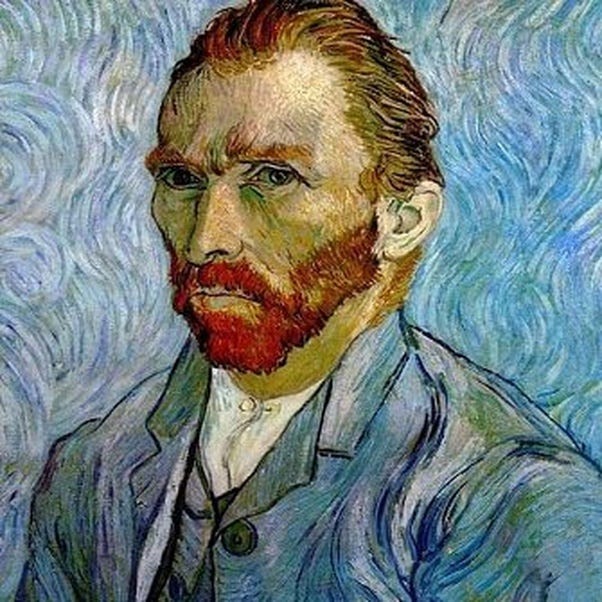
Mark Rothko’s work has not gone without intense criticism. However, it persists, and that persistence determines its value in the same way all artists throughout history have been rejected by their era. Countless artists throughout history have engendered emotional rejections to their work like yours, while a famous one most know of is Vincent Van Gogh.
This post is a response to a question posed in its complete format: “How long will it take for new companies to build in the US creating good jobs and bringing America back from foreign dependent markets after the tariffs take effect?”
There is no detangling from foreign suppliers in almost literally every market.
For instance, you may have a homegrown bakery that you want to grow into a nationwide franchise that employs several hundred, but can’t without relying on foreign markets for product ingredients, equipment, or supplies to allow your operation to grow.
International interdependence is how to streamline costs through the same economic principle of economies of scale that would solve the corrupt American healthcare scam.
For example, you may be able to source grain from American farmers, but there’s an upper limit to how much you could buy locally. That would create an upper limit on your franchise growth. You may not be able to source much or any of your yeast from local markets, and you’ll be stuck having to import it at exorbitant prices due to Trump’s tariffs.
As you retool your nation’s supply chains to meet the needs of thriving businesses, you would still have to rely on foreign markets until you’ve made the hard choices of pushing out some business activities to make way for the successful or chosen industries to grow. While your nation adjusts to rely on tea production, you would shut down coffee bean plantations to provide enough land to grow your tea.
In the long run, as the U.S. adjusts to an entirely different lifestyle, you would change your expectations for the luxuries you currently take for granted. You would lose some major industries to make way for others.
You would no longer have any Starbucks, or you’d have to pay $20.00 for a cup of coffee, which would dramatically reduce the availability of Starbucks in your nation. Instead of walking down the street for a cup of joe, you’d find yourself driving to another town.
The transitions implied by your question involve a radical reshaping of your economic landscape that will not be a smooth change into lifestyles you’ve grown used to. You must prepare yourself to experience a painfully jarring and volatile rush of disappointments and escalating costs that would guarantee you having to endure a decades-long depression while losing almost everything you now take for granted.
Assuming you can succeed in transitioning to a self-contained economy, your nation would more closely resemble North Korea than whatever it is today. You won’t live long enough to experience the “New America,” but your grandchildren might have fond memories of the last Ben and Jerry’s Ice Cream sold at an auction for $10,000.00.
It seems too many MAGAts are utterly oblivious to how badly they’ve been conned by a con artist who should be rotting behind bars like every other convicted felon.
It’s heartbreaking that you’ll have to suffer so incredibly intensely to take back your nation and return it to a stable state of interdependent membership in a global community. You can forget global leadership, though. That’s gone forever.
This post is a response to a question posed in its complete format: “Question for Canadians, specifically those who are Conservatives. Do you think Pierre Poilievre ought remain leader of the CPC following the loss of two elections and loss of his own seat? No rants please, I am looking for thoughtful answers.”
Have a look at this picture. It’s a photo of the ballot in Pierre Poilievre’s Carleton riding. It contains, I believe, about 91 names of candidates who are mostly independents.
This ballot contains over 85 people in his neighbourhood who were so moved to get rid of him that they chose to run against him.
This speaks volumes well above and beyond whatever national animosity he earned while in the public eye. These are people who know him on a personal level.
They know enough about him and his twenty years of service, accomplishing nothing of benefit for them while cultivating a misanthropic attitude toward them, as he consistently voted against measures that would help them.
They knew that he was no representative of their needs in government and went far above and beyond just voting against him or choosing to campaign on behalf of his opponent.
They wanted him gone and were not motivated enough to support any particular candidate, so they chose the only option they felt they had… to run against him.
This isn’t typical political animosity. This is personal animosity.
These people know him and hate him as a person.
When a leader with integrity loses their seat in a typical competition without this level of animosity toward them, they re-evaluate their success as a leader and do what Jagmeet Singh did — step down.
They make room in the party for another leader to step forward to allow them and the party an opportunity to succeed where they may not have succeeded.
Jagmeet had an uphill battle in this election because Donald Trump and the divisive Conservatives forced this into a two-party election. His party and the country value his contribution as a Canadian who loves his country. Respect for his integrity has only shot up because he decided to step down.
Canada, as a whole, has had enough of Conservative incompetence for a long time now. The ABC (Anyone But Conservative) voting strategy became popular because of Stephen Harper. Harper is arguably the worst PM in Canadian history, who has not only done significant damage to the nation and its safety net but continues to create harm on a global basis while supporting a fascist takeover of governments around the world.
All of their campaigning is focused on divisiveness, fear and hate-mongering while fabricating smear tactics taken straight from the Nazi playbook.
Since losing in Canada, they have escalated their divisive campaigning, and Danielle Smith, the Alberta premier, has just begun a separatist campaign in Canada as a power grab for their hateful ideology.
These people do not put their community, province, or nation’s needs above their desires for power. They don’t care about established law or treaties that predate the founding of their nation or province. (Just like what is happening to an 800-year-old precedent of due process in the U.S.) It shows in every one of them as they ignore the people’s wishes and carve out paths to authoritarianism worldwide.
A true leader of the people understands and respects that they are temporary custodians of a tradition of support for the people.
Everywhere you look where an authoritarian government exists, you see someone focused on egotistical concerns. They don’t put the people they are tasked to and trusted with a sacred responsibility to do their best for the people above their desires.
To them, the people are a means to an end, not the end itself.
Poilievre shows he is cut from the same cloth as Donald Trump, who was so upset with losing the prior election that he encouraged an attempted coup of the nation. Even now, he and his minions work toward having him succeed in being elected for a third term.
Poilievre is following in Trump’s extremist footsteps by insisting he remains the leader of the party and will likely try to supplant another party member to continue hanging onto power.
This should be a time of reflection for the Conservatives, to rethink their values and strategies for doing right by the nation they serve, but that’s not the case these days with Conservatives worldwide.
We are in the throes of a fascist resurgence as a direct consequence of the economic disparity forcing people into extremes of thought and action.
Everything we are struggling with today is precisely due to a distorted economic landscape. Consequently, Canada is now dealing with a mania for power that would almost appear cartoon-like were it not so threatening to global stability.
A leader who loses not only an election they should have won by a massive margin, but also one they would have won by 30 points according to the polls only two months ago, is a rank failure in leadership. If he were a person of integrity who cared about putting the nation first, he would have already announced his intention to step down. Instead, we are saddled with this cartoon of egotistical buffoonery.
One would assume the Conservative Party of Canada wishes to be taken seriously by Canadians as a party that cares enough to put country over party. If so, they must push Pierre Poilievre to step down.
Canada is not the U.S., which gives Conservatives a pass when they lie about putting Country over party and then proceed to betray the country for decades upon decades to allow a depraved monster to tear down what we have all worked hard and sacrificed much to build.
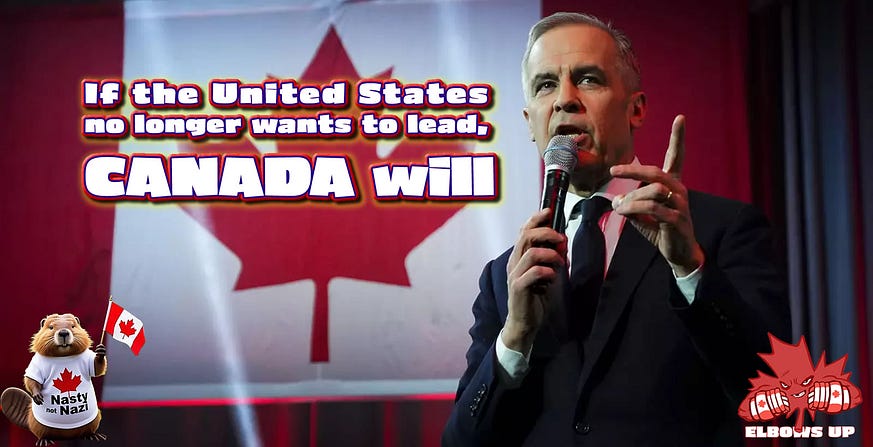
If Americans no longer want to lead the world in what it means to be a democracy, then Canada will handily step up to the plate and show the world that we will not allow another fascist regime to threaten our future as a people.
We will do whatever TF it takes to ensure the will of the people consistently overrides the will of any would-be king.
This post is a response to a question posed in its complete format: “Why is that for Chinese living inside China, the Chinese government is not perfect, but for people looking at China from the outside, the Chinese government looks like it is run by geniuses who plan far ahead into the future?”
I believe it’s important to highlight a harsh truth that completely escapes MAGAt minds.
China isn’t “run by geniuses” but by ordinary minds who use “common sense” to plan “far ahead into the future.” They leverage the minds of their people, and many are geniuses, making incredible technological breakthroughs.
Nations cannot plan for the short term without missing the boat on the long term. People can prepare for the short term because the lives of individual people are short compared to the lives of nations. Nations must plan for millions of lives and not just one.
“Common sense” leadership is acknowledging one’s limitations and relying respectfully on the crowd’s wisdom to achieve a nation’s most significant potential. Authoritarian mindsets will always fail against this kind of “common sense.”
It doesn’t take a genius to figure this out.
All that’s required is not to be a stupid, short-sighted narcissist who thinks the world magically dances to the sound of one’s voice.
That’s precisely the problem fueling the self-destructive hubris sending the U.S. careening into becoming a third-world shithole and all of this is entirely due to the machinations of short-sighted bigots whose goal is the resurgence of another Reich because they continue to refuse to learn from history.
MAGAts may claim to value “common sense,” but their short-sighted and self-serving biases are not “common sense,” but an entirely “subjective and self-destructive sense.”
This period in history is teaching us once again that we must cure our species of the authoritarian virus that we have been fighting against since the dawn of human civilization.
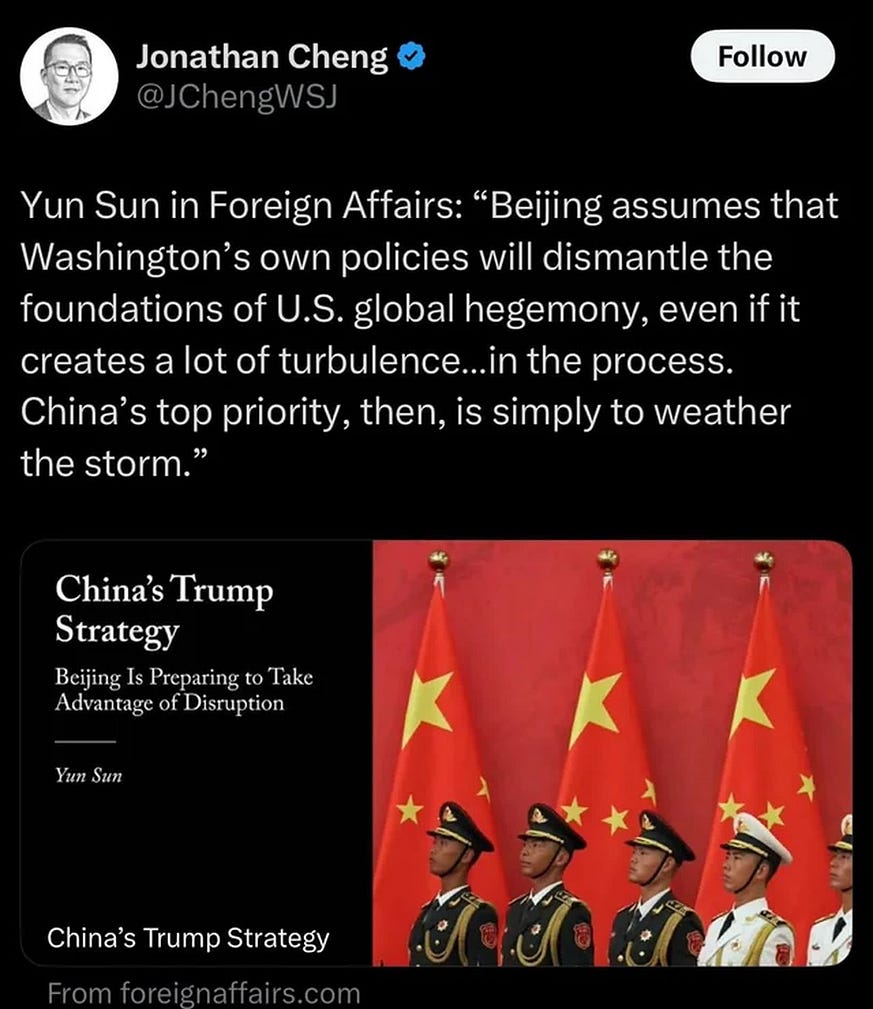
China has had enough experience with authoritarianism to know how to handle the U.S. slide into fascism.
This post is a response to a question posed in its complete format: “What are the most promising innovations or strategies today that could sustainably eliminate extreme poverty within the next generation?”
Thank you for the A2A, Faux-Bill. It is well beyond obvious that you are not the OG Bill Gates but a pretender. Whatever motivates you to disguise yourself as him and pose questions that he never would in such a forum is rationalized as a strategy for gaining attention that you believe you would not otherwise get.
I don’t believe questions like these require the kind of “celebrity boost” you’ve attached to them because I’m sure many people are thinking about these issues. Many politicians sadly believe people’s thoughts on these issues are irrelevant to their societal role. Nothing could be further from the truth because most of the world’s citizens sincerely desire an end to unnecessary strife across the globe.
Only the most psychologically scarred members of society wish harm to people on the other side of the globe or in the dingiest parts of their cities.
Even though people know this is a fake profile and that many would overlook this question based on precisely that, some people will still step forward and offer their views. Their answers support what I just said about people wanting to see change for the better, particularly when it is within our means to eliminate extreme poverty today.
Sadly, many politicians fail to comprehend that we are in this together, and that together means all of humanity must work toward common goals, such as eliminating poverty for it to happen. Even worse is that success requires our politicians to play the role of leader in society in earnest rather than as a performative lark to disguise their motivations for personal gain.
Far too few view their role beyond the boundaries of gamesmanship within the local jurisdiction of interpersonal dynamics of cliques, such as those commonly found in high school environments. They perform for each other and to the public at large. At the same time, their functional contributions are limited to shuffling game pieces in a subsection of the larger gameboard of their political community. Forget about communities elsewhere. That would constitute effort in thinking about and doing something about something elsewhere that isn’t directly connected to the influential factors governing their daily lives. Indirect connections don’t factor into their minds.
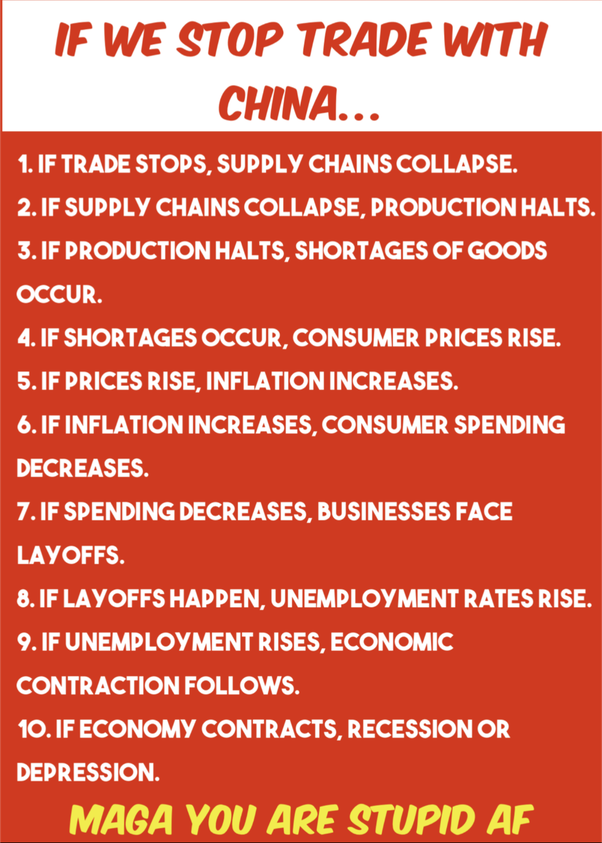
Here’s an obvious example of the complexity of dynamics that not enough people consider in their thoughts about how to improve our world and address issues like extreme poverty on the other side of the globe:
In this simple description of consequences, ten interconnected steps are outlined to arrive at the fundamental message that closing a door to a trading partner out of spite hurts oneself more than it hurts the trading partner.
China’s economy will contract briefly as it adjusts to a new reality. Americans, however, will suffer more in the long term because this attitude of bullying one’s partners closes off many doors of opportunity.
The same is true with the global tariff tirade and betraying a long-standing alliance with a supportive partner. Isolationism hurts the isolationists more than it hurts anyone they reject, and that’s where we’re at when considering issues of extreme poverty on the other side of the globe.
It is, unfortunately, too easy to rationalize how those problems “over there” are not one’s concerns here, but the reality is that poverty exists here as well. It’s just an arguable point about which is the easiest to ignore.
As you can see from the variety of answers given to this question and the variety of questions similar to this one, along with all the many other answers given to those questions, people want to solve this problem.
This brings us to the core problem at the heart of why the problem identified within this question persists.
The sad reality is that the core problem is YOU, Bill.
You and the existence of centibillionaires in today’s world are the reason why extreme poverty persists.
I understand how easy it is to rationalize your business successes as justification for having superior insights that can function like a paternalistic entity that can guide the little children of humanity toward a brighter future. I understand your rationale for the sheer capitalization required to provide the world with ecologically superior toilets. Still, you already know how you managed to distribute millions of life-saving nets in underdeveloped environments only through synergy. You relied on many people to rally behind your cause and donate whatever small amounts they could to solve a serious problem affecting millions of lives.
You made that happen, not with your capitalization but by leveraging some of your resources, connections, and celebrity status to mobilize people worldwide to provide a simple solution to a destructive problem.
Suppose you and the rest of the world sincerely desire an end to extreme poverty. In that case, there is only one solution, which begins with triage to stem the bleeding of resources that could collectively resolve the problem instead of exacerbating it, as has been the case due to extreme economic disparity.
The most successful way we have been in eliminating poverty worldwide as a society and a species has been through the massive growth of the middle class, as we experienced following the Second World War, FDR’s New Deal, and the development of unions.
By empowering the middle class with disposable income, we boosted economic performance along many vectors that were also boosted by force multipliers, which spread outward in orders of magnitude beyond what is possible today with coalesced wealth.
The existence of centibillionaires has made the goal of eliminating poverty impossible because this historically destructive concentration of wealth creates poverty through a contraction of available economic resources once wielded by hundreds of millions of people.
You know this. At least, the real Bill Gates does… as does every billionaire around the globe.
You cannot become a billionaire and be oblivious to how your concentrated wealth is a deprivation of wealth for others.
None of you is blind to this.
Since it’s taken decades of erosion of the gains that took a capitalist system decades of growth to achieve the highest level of poverty elimination, reversing that damage would mean decades of effort we don’t have the luxury of taking without experiencing a system-wide collapse.
We need bold efforts and fundamental changes to the economy and structure to meet a rapidly changing employment dynamic. We have no choice but to retool our economy before an increasingly rapid transformation toward fully automated societies where most production is performed in dark factories.
Suppose we don’t institute bold changes today. In that case, the transition will result in massive numbers of collateral damage that will be responded to with system-wide chaos because people will not shut up and die quietly as they find themselves starving for food and made homeless. When people have nothing left to live for after having their means of survival stripped from them, they become radicalized to such a degree that they are like cornered animals and will bring much destruction to the world before they exit it.
We need to reverse course on the corrosion done to our economies through the problem of wealth disparity yesterday. This should not be a debate today; if you were the real Bill Gates, you know this.
There isn’t a single billionaire who doesn’t understand this. You are all also hedging your bets while, like every cowardly politician who doesn’t want to risk their comfortable positions, none of you want to be the first to acknowledge what needs to be done. Your reticence is understandable because your community is primarily dominated by sociopathic thinking. It would behoove you to remind your peers that each passing day this nightmare of disparity remains unaddressed is a day closer to the massive unrest that brings out the guillotines.
This brings us to the core concern driving this question.
Which strategy is the most effective resource to invest your attention?
What singular and most expediently implemented solution can effectively stave off and resolve the growing pressure leading to widespread chaos?
That’s easy, and you already know the answer… if you were the real Bill Gates.
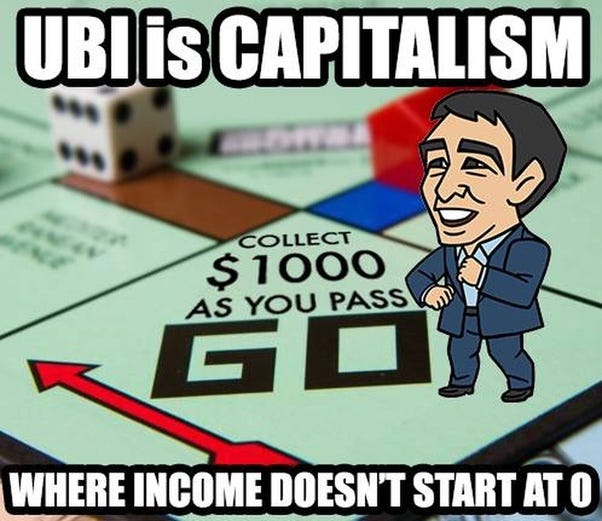
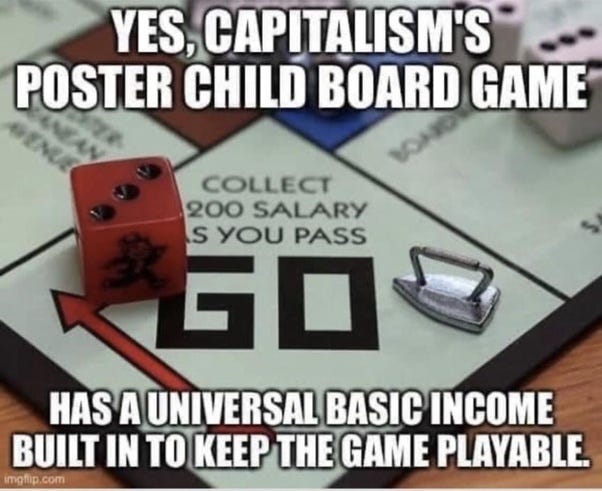
Reset capitalism like a Monopoly board.
There’s been enough testing to know this is THE solution to restore economic justice and dramatically impact poverty worldwide.
You already know this.
The only real issue at stake is the best means of implementing it.
Here’s a link introducing the various issues to consider with costing strategies that can be discussed earnestly. These are just details to work out. The result, however, is a stable economy that can eliminate poverty worldwide while eventually making performative forms of altruism moot.
However, every one-percenter should champion this solution in principle in earnest today, particularly if they want to avoid the chaos that risks them losing everything.
This post is a response to a question posed in its complete format: “How did great inventors manage to come up with the ideas of their inventions? Currently, even people who are smarter than the average are hardly able to do the same.”
Think about the last time you had an idea you thought was an excellent solution to a problem you were dealing with. Do you remember feeling frustrated with that problem and fixated on that problem while hoping a solution would present itself so that you didn’t have to deal with that problem again?
My guess is that almost no one goes through life without this experience. It may be true that you haven’t, but the odds are excellent that you will at some point in your life.
”Great inventors” are no different in this regard. They ponder issues, identify problems, and think about ways to devise solutions to those problems. The only difference is the kind of problems they solve.
Suppose you can solve one of the numerous problems facing the development of nuclear fusion as an energy source. In that case, you can be considered a genius for accomplishing that relatively small contribution to a more significant problem. If you can solve all the “little problems” that comprise the more substantial problem of nuclear fusion energy generation, you will become known throughout history as a “Great inventor.”
The only difference between the two is one’s problem-solving capacity. Some people are undeniably much better at solving certain classes of problems than others, but that doesn’t negate the value of the contributions of those who solve only one or a few aspects of a more significant problem because their solutions can contribute to the development of ideas that solve many problems at a time — including the much more substantial problem.
People of all levels of intelligence, from under-average to average to above-average to geniuses, contribute toward solving the massive problem of human evolution. All contributions are valuable, while people like Einstein are rare and always will be.
What we should be focusing on in society is to learn how to recognize budding geniuses and support them in their development so that they can maximize their contributions to society by achieving their potential.
Sadly, we live in a world which penalizes the gifted while wallowing in our crab psychology by the wilfully ignorant among us who drag down those whose gifts they envy. That’s a much bigger problem for society to resolve, and it will require all eight billion of us to recognize how severe that problem is.
In reality, Einstein-level geniuses may be rare, but they exist among the population at rates as high as one in every thousand humans. In a world of eight billion people, that means we have eight million Einsteins living among us whose genius is being pissed away because we don’t know how to create systems that encourage them to achieve their potential.
Our system is so corrupted by toxic forms of competition that we see in our politics how people forego their critical thinking skills or any form of objective analysis to select the most competent leaders to lead us into a brighter future. We choose monsters who would destroy us all and fill their pockets with money that will be useless to them if they succeed.
If we sincerely wish to live in a world that encourages great inventions by inventors, we must stop rewarding maliciously self-serving and destructive ignorance.
This post is a response to a question posed in its complete format: “ATHEISTS! Maybe you’ll go to heaven, or hell, or maybe you’re right. Not for me to say. But know that God loves you. And so do I even if you hate him (or the idea of him) and even if you hate me. It cost nothing to be kind. How bout that?”
You should consider why you felt compelled to write this.
You’ve made numerous presumptions that do not match reality, but they suit your bias.
For example, you presume hatred is a part of the equation or makeup of an atheist mindset. It’s not. Hatred is an individual phenomenon that grows into a group phenomenon when people are trained to think alike. This means hatred is more prevalent among believers than it is among atheists.
The counter-assumption I have just provided you that refutes your presumption of hatred is supported by reality. Religions have been catalysts for war between people for centuries. Bigotries toward minorities are stoked within religious institutions. That includes your biased attitude toward atheists that you display within your post (which isn’t even a real question).
This means that your presumption of atheists being motivated by hatred is a projection on your behalf. On some subjective level, you’ve recognized a particular prevalence of hatred in your environment and, rather than seek out its source, you’ve chosen to deflect responsibility for that hatred onto atheists.
Do you see how that works?
You can sense hatred in your environment and understand how corrosive it is. You express a desire to do something about it by imposing your bias onto a group of people you can more easily scapegoat than hold the people you have grown fond of accountable for their behaviours.
Your behaviour is an exhibition of a common psychological phenomenon called “deflection.”
It’s a way of lying to yourself to help you avoid an uncomfortable truth.
This brings us to the last line in your post.
Kindness indeed costs nothing, and that’s why I’ve taken the time to provide you with a calmly worded and detailed explanation of your behaviour — in the hopes that you’ll take some time to ponder how it is that your intention to display kindness is, in reality, an offence, not a kindness.
It would be far kinder of you to at least refrain from making negative presumptions about atheists and accusing them of things about them that are untrue. After all, your scriptures caution you against bearing false witness.
Instead of proferring advice from a tone of arrogance and condescension, you would have been more aligned with your professed saviour (and your extoling of kindness) by keeping your counsel to yourself, praying over your consternation with the prevalence of hatred you have detected, and offering assistance to your fellow believers in helping them to overcome their hatreds.
Please note how my response to you came from a place of love for humanity, not from some imaginary figurehead that I can pretend grants authority to my words. This is just one human speaking honestly and respectfully to another.
No God is required to justify kindness.
We all have that potential within us.
We must only be honest within ourselves to display genuine kindness to another, rather than use the pretext of kindness as a disguise for disparagement or malice.
This post is a response to a question posed in its complete format: “What’s the point of working if you can live through getting “benefits”?”
You’re asking the wrong question.
Instead, you should ask, “What is the point of living like a lazy slug who accomplishes nothing and does nothing to make themselves feel good about themselves or their lives?”
That’s what you’re implying with your question.
You imply a false dichotomy between living one’s life based on laziness rather than doing what motivates them or submitting themselves to an abusively dehumanizing existence as a disposable cog to make someone else rich while struggling with one’s self-respect.
Life isn’t a choice between working and not working. It’s a choice between employment as a wage slave or generating an income for oneself based on doing what matters to them and which motivates them to be excited about their lives.
Employment used to be a motivator when the income generated enough to go well beyond meeting basic needs and into enough disposable income to invest in one’s future.
That’s no longer the case.
Employment today is the equivalent of a lifetime of dog-paddling in an ocean until one gets too tired and drowns.
That’s not a life. That’s a lifetime prison sentence.
What’s the point of struggling in poverty until you die to make someone else wealthy when you can be much happier and less stressed while doing what you love?
Bonus Question: Should there be a universal basic income to address economic inequality?
UBI doesn’t address the issue of economic inequity, and it isn’t intended to.
UBI provides economic stability and gives people room to make the best choices for themselves without having a desperate need to survive leveraged against them.
UBI frees people from the pressures of meeting basic survival needs enough to escape oppressive working conditions. The consequences of businesses losing the leverage of economic desperation to create downward pressure on wages can more easily permit upward pressure on wages.
This change in a negotiating dynamic contributes to a reduction in economic disparity, but it doesn’t address it head-on.
























 thotbag