Why do MAGAts refer to people as ‘the radical left’?


This post is a response to a question posed in its complete format: “Why do MAGAts and so called ‘conservatives’ refer to sane people as ‘the radical left?’ Why don’t they just call them ‘radical centrists’ who rely on logic and facts?”

Hyperbole is a core part of the strategy applied to extremist dialectics. Referring to the left as “radical” allows them to position themselves as rational and puts the left into a defensive position where they are forced to justify themselves. Meanwhile, the extremist right continues its rage-farming activities to enlist more people to push the left to justify its existence.

As the momentum against the left grows, they are forced into justifying rational positions like universal healthcare, which benefits everyone, including the most vulnerable in society. Universal healthcare is increasingly viewed as radical, while the beneficiaries of a privatized system are increasingly positioned as victims of a dastardly socialist agenda.

All of it is based on empty slogans that the illiterati ignore because they’re more interested in feeding their addiction to rage than they are in thinking things through.

Thinking about issues in depth forces people to set aside their addictive emotions and calm themselves down enough to develop a comprehensive enough understanding of the conflicting positions and eventually prompts them to abandon their rage addiction.

The billionaires feeding the culture wars don’t want this to happen because they will lose their cash cows.

The ownership class has cultivated the extreme divisions we live with today to distract the public from their wealth-chasing priorities. The MAGAt movement could not otherwise sustain itself without the economic desperation created by the historic levels of economic inequity existing today, which fuel their rage-fests.

MAGAts are justifiably angry. Everyone has a justifiable reason to be angry today: the economic stability we once enjoyed has been stolen. The main problems with the MAGAts are not only that they are angry at the wrong people, but they are also defending the people they should be angry with.

MAGAts should be out on the streets today demanding DonOld’s head on a platter, and they would if they could get past the blinders of their hatred enough to understand how humanity can survive only when we unite in a common cause and not divide ourselves into warring camps.

Our enemies are the same people they have been throughout history and the dawn of human civilization. We have been at this crossroads many times throughout our history. Yet, here we are again as if human history were pointless stories we tell each other for entertainment, not lessons in survival for our species.

It is time again for us all to stand up and say, “I am Spartacus!”

It is time again to dethrone those who dare to be kings among us.

It is time to be radical with the few who have stolen so much from the many.

It is time to stop asking nicely for them to restore economic justice and start taking it by force if they insist on it as a survival necessity.

From 1932

Bonus Comment (A Response to a Related Comment from Another Thread): “I’m starting to see a second shift in MAGA responses. It’s a far more conciliatory tone.

To borrow from a boxing strategy, don’t look at the opponent’s eyes, but their chest. Their eyes will misdirect your attention, while the chest cannot help but move in the same direction as the body.

If this were an eleven-dimensional chess game, they would not have needed to use a “flood-the-zone” strategy because the nation has been desperate for positive change… even the MAGAt army is angry because their needs have been overlooked.

Bernie Sanders has been the only prominent authentic leader pointing to a horizon with a better future for all. It’s not that there aren’t others in the offing, just that the DNC has been so polluted with conservadroids for so long that they can’t find their way to recognize how appeasing the right is the wrong strategy.

They need to strengthen their spines and be provocative right back while directly challenging the MAGAt shit. They still have too many spineless and ethically challenged NeoLiberals leading them. This may be primarily a war of words and legal jargon. However, it is still a war… until the Reich gets dialectically hammered into submission, they will continue to use whatever ruse they can to throw their enemies off guard, including feigning sincerity.

They won’t stop until they rule the roost with an iron hand. They have proven that time and again and for decades.

This is a real-life game of thrones, not a board game that resets after the match is won. If they succeed, America’s character will be defined by the defeat of democracy for well over a century afterwards.

Compassion is ultimately a human strength, but they have none and will use that against you. Reserve it for when they’ve been so defeated that they’ve given up fighting for dominion and are just begging to hang onto survival.

They’re addicted to power and, like all addicts, they’re manipulative on the most heinous of levels.

Conciliatory tones can’t be trusted until they’ve been demolished and defanged… and that won’t happen unless they lose every seat for at least the next two election cycles.
Why are people reluctant to call out worthless art?


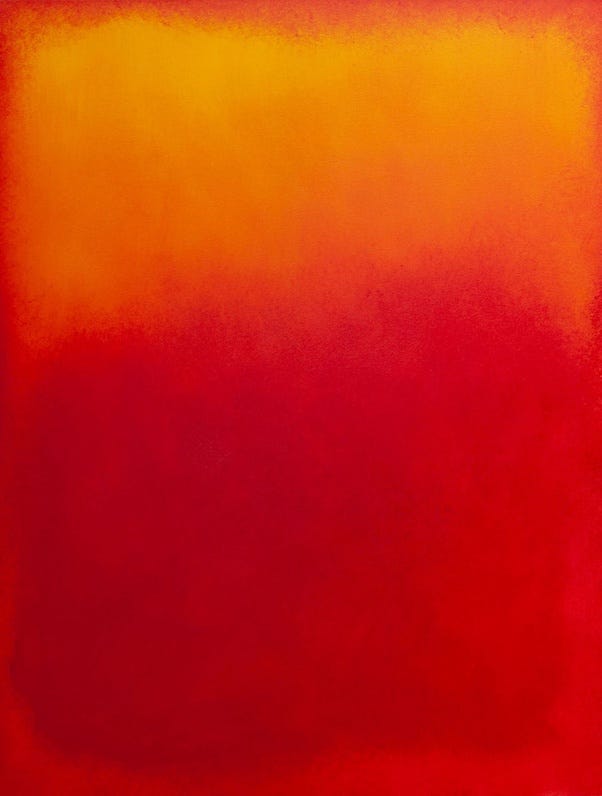
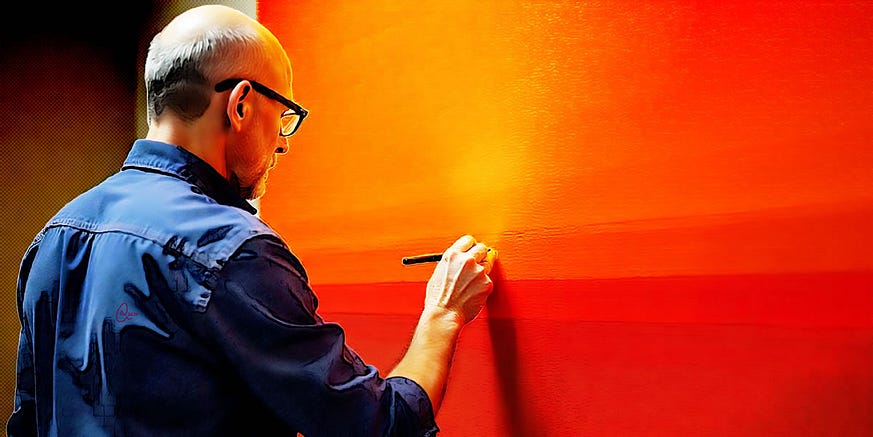
This post is a response to a question posed in its complete format: “Why are people so reluctant to call out “artists” like Mark Rothko for the sheer worthlessness of his ‘art’?”

“Art should comfort the disturbed and disturb the comfortable.”

This is a flawed presumption because people have no problem expressing their views on the arts they encounter.

Of all the vocations humans indulge in, none are exposed to as often to emotionally charged criticisms as the arts, much like how this question seeks validation.

The question is an admission of failing to understand numerous aspects they reject on a visceral level, while depriving oneself of an honest intellectual process of critical analysis.

This is a question ruled by pure bias in the same way all forms of intellectually stunted bigotries are concocted.

This question also reveals a mindset incapable of appreciating Gestalt and is more enamoured by puerile rather than reflective experiences.

These paintings cannot be judged by their reproductions in a book or onscreen.

They must be experienced in person to apprehend their meaning.


As much as the question seeks to disparage and devalue the valid contribution of a life dedicated to the furtherance of one’s craft and vision — such that their work will be remembered for centuries, in contrast to this puerile critic who will be a long-forgotten example of a juvenile apprehension of what they are intimidated by.

The fact is that your subjective tastes in art do not serve as a universal metric of value. No single individual has that power.

Value is determined by a complex dynamic involving institutions and people with depths of historical awareness that far surpass the childish apprehension of what this question celebrates as a mindset.

One the first bits of wisdom I encountered as an Art student is as follows: “When people say, ‘I don’t know much about art, but I know what I like.’ they are actually saying, ‘I don’t know much about art, but I like what I know.’

This question is an admission of being out of your depth, and you’re freaking out about drowning in being touched by the ineffable. You can’t handle letting yourself go and float freely within the infinite.

This question screams “shallow-thinking and egotistical control freak” to me.

I’m sorry you are struggling with his work. Your question, however, indicates you need to engage with it until you can experience the revelation that will allow you to transcend your intuitively recognized intellectual limitations.

Your visceral reaction to his work is your intuition telling you to focus on something you have been avoiding and repressing within your psyche.

Take these words however you like but try not to ignore how easy it is to call out horseshit when one sees it.

No one has been “reluctant to call him out.” That’s nonsense because no other vocation is nearly as “called out” as an artist’s.

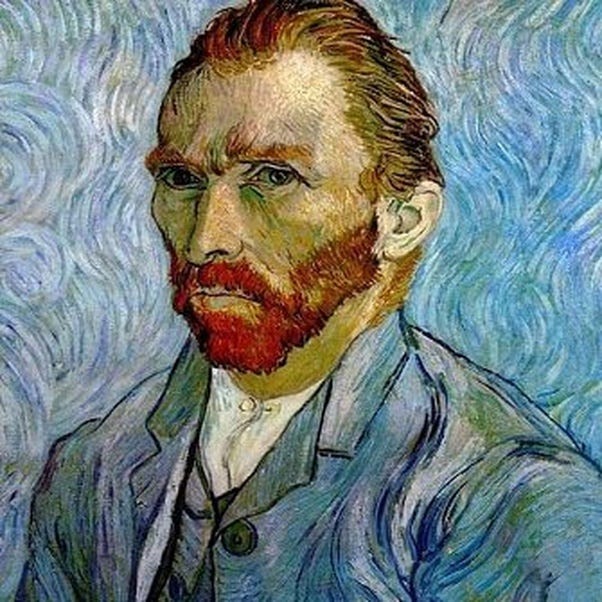
Mark Rothko’s work has not gone without intense criticism. However, it persists, and that persistence determines its value in the same way all artists throughout history have been rejected by their era. Countless artists throughout history have engendered emotional rejections to their work like yours, while a famous one most know of is Vincent Van Gogh.

What is Art for, and Why is it Important?


This post is a combined response to a couple of questions initially posed on Quora and written in their full format as, “As an artist, how would you answer this question? What is art for?” and “What is the importance of art in our society?”

Canadian poet Irving Layton described artists as canaries in coal mines because they are the barometers for society, which compels us to expand our perceptions by confronting often harsh truths.

Art changes how we understand the world by reflecting reality back to us within directed contexts to focus our attention on aspects of life presented in often unfamiliar and/or uncomfortable ways.

Art enriches our lives and reminds us of our humanity while connecting us through the artist’s work.


“What is the importance of art in our society?”

To adequately address this rather direct but general question, some context is needed to frame an answer which fully encompasses its implications.

There are three general perspectives upon which to address this question.

From an individual’s perspective

The importance of art in an individual’s life is a broadening of perspective and a deepening of insight into… well, literally everything about the human condition. From an observer’s perspective, art connects us on a visceral level. Whether it be music that moves us, a few well-chosen words, or an awe-inspiring spectacle, the experience is a validation of belonging to something greater.

From an artist’s perspective, it’s the cheapest therapy form.

Cumulatively, society benefits from the positive contributions resulting from affirmative expressions of community life within larger societies.

From a community’s perspective

Art brings attention to issues often overlooked, misunderstood, misrepresented, or misapprehended in ways which provide unmatched clarity in creating understanding. Art can mobilize a community and motivate social change, contributing to stability within larger societies.

From a society’s perspective

Art reflects the most profound truths about life, the human condition, and society in general.

Art provokes social introspection and defines boundaries while providing clarity on issues.

Art provides the public with psychologically supportive outlets of expression that contribute to overall social stability.

Artistic activity provides a healthy return on investment to every level of an economy.

Artistic history provides us with deep insights into our evolution as a species, and it is an activity that also provides insights into our future, like every other discipline of discovery.

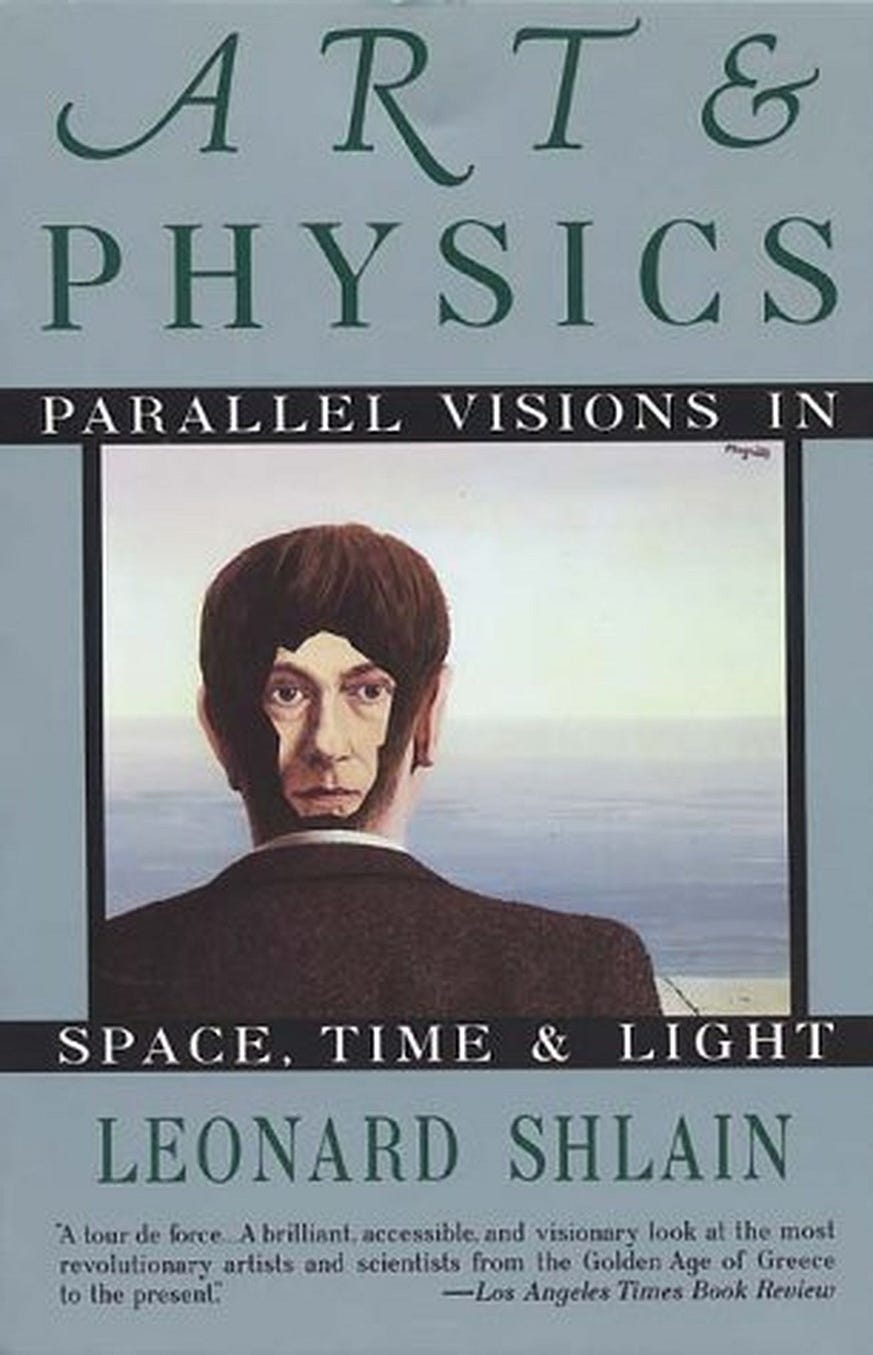
“Art interprets the visible world. Physics charts its unseen workings. The two realms seem completely opposed. But consider that both strive to reveal truths for which there are no words — with physicists using the language of mathematics and artists using visual images.

Art and Physics, Parallel Visions in Space, Time and Light — Leonard Shlain

Art & Physics | by Leonard Shlain

“Leonard Shlain proposes that the visionary artist is the first culture member to see the world in a new way. Then, nearly simultaneously, a revolutionary physicist discovers a new way to think about the world. Escorting the reader through the classical, medieval, Renaissance and modern eras, Shlain shows how the artists’ images create a compelling fit when superimposed on the physicists’ concepts.

How does art as personal expression differ from societal values?

This post is a response to a question posed in its complete format: “How does the function of art as a means of personal expression differ from its role as a reflection of cultural and societal values?”

We are each of us mirrors of our cultural and societal values.

Each of us expresses our values as we have been exposed to and have absorbed them into our makeup as individuals, whether we do so through work defined as “art” by society or by other means of self-expression.

Some common ways we recognize different cultures include dialects, cuisine, wardrobe, rituals, and social activities such as special occasions, holidays, and celebrations of varying kinds.

We typically define “art” as an experience without a pragmatic application beyond conveying an emotional or intellectual concept.

Most forms of expression serve a pragmatic value, such as organizing people, educating people, helping people accomplish goals, or restraining, hurting, preventing, or prohibiting people from engaging in an undesirable action.

The purpose of art is purely to share perspectives while the artist in society focuses their attention and development precisely upon developing one’s perspective through their work.

Most people rely on their expressions as a secondary, supportive, and functional concern as an adjunct to whatever their primary occupation is for their attention.

Everyone expresses their cultural and social values by being unique products of their environment. The artist “enters a meta state” of introspection while analyzing values to convey them through their unique perspectives.

Like physicists who focus on the physical characteristics of the universe, medical professionals who focus on the biological characteristics of humanity, psychologists who focus on the mental states of humanity, and geologists who focus on the mineral characteristics of the planet, artists focus on our cultural expressions of the human condition.

Artists are professional analysts for our societies who reflect the varying states of humanity through their expressions.

Why are no geniuses like Elon Musk, Steve Jobs, or Bill Gates in Europe?

This post is a response to a question initially posed on Quora, and can also be accessed via “https://www.quora.com/Why-are-there-no-geniuses-like-Elon-Musk-Steve-Jobs-or-Bill-Gates-in-Europe/answer/Antonio-Amaral-1

Well, that’s easy… none of them are (or were) “geniuses.”

All have been sharks in a tank filled with small fish they overpowered and incorporated their value into their own.

In Europe, people are — or were still somewhat considered “people” whose lives held something approximating value — at least enough to not worship greed above their welfare.

The U.S. is unique in that it places profit above human life.

The U.S. is this century’s Rome, while the capitalist system is the equivalent of a gladiatorial pen where the biggest and strongest gladiators suited up with armour mow down victims by the thousands and the crowds cheer all the destruction.

Hell, the crowds get pissed when one of the little people manages to strike back and give the mighty gladiators a humiliating bloody nose. That riles them up and incentivizes them to hate the little people even more while they add more armour and weaponry to the gladiator’s outfits so that they can do more damage.

All three, with some slight exception of Gates, were just smart enough to spot people smart enough to make them rich, and they added them to their gladiator arena to dominate the competition. At the same time, they did everything they could through legal manipulations to weaken their competition.

Ask yourself how it is that an alleged “genius” would forego cancer treatment in favour of new age woo to address a medical condition and die from it. That’s not very “genius-like.”

Meanwhile, Musk proves every day how much of an egotistical buffoon he is while spending $44 billion on the world’s most enormous megaphone to devalue it to such a degree that it’s now worth less than a quarter of its purchase price. Meanwhile, the competition is heating up over which alternative will replace his Xitter.

Of the three, at least Gates puts some effort into helping the most disenfranchised in the world, even if he’s mainly motivated by the potential of new technologies that can become ubiquitous. (His toilet redesign initiative, for example, can potentially transform the world if he succeeds. That’s a level of billions in profit to rival what he got through Microsoft, and it’s also an initiative he’s relying on the genius of others to make manifest. He’s just financing their efforts.)

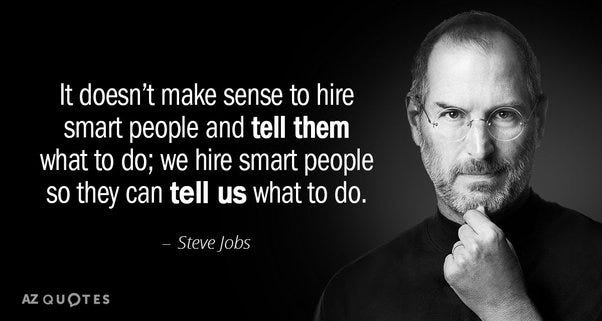
Even Jobs understood how his “genius” was not “being a genius” but was not getting in the way of real geniuses he hired to profit from.

Musk, on the other hand, is an absolute idiot by contrast because his ego has blinded him to his shortcomings, and he believes, because of his wealth, that he truly is a genius. At the same time, gullible people lap that nonsense up like ice cream.

How do I cope with feeling creatively stifled?

This post is a response to a question posed in its complete format: “How do I cope with feeling creatively stifled in art school? At 23, after years of studying and currently master’s, I feel blocked and discouraged. Despite my talent, constant negative feedback has left me stuck & numb. How can I regain my passion?”

Try to think of the constant negative feedback as callous-building. It won’t stop. The more success you find, the more negative feedback you will get.

Your artistic process is your means of enduring and overcoming that feedback. Let it feed your resolve to continue pursuing what matters to you in your artwork.

Allow your process and product to teach you about yourself because that’s the value of creative endeavours.

Learn what you can from the masters who came before you. Let their struggles and discoveries inspire you to explore new realms of creativity.

Let the voices of the living critics wash over you like the daily elements confronting you, whether a cold chill from a frosty wind or a downpour of hail. Your creative process can turn all that effort at weakening you into a strength that helps you push past the boundaries limiting your potential.

Learn to read between the lines of the negativity directed your way because you will discover that most of them are projections driven by fear and envy.

People not intimidated by you have no need or compulsion to be negative. People who are not driven by fear and self-loathing see no point in anything outside objective honesty when expressing their views. People who care and are considerate of your personhood will try to choose words to support you, even if they see a need to correct an error of yours.

Since you are underway in a Masters level program in the Arts, you are well underway in securing yourself a somewhat economically stable future that will permit the continued development of your artwork throughout your life.

Upon completing your graduate degree, you will be eligible for teaching positions that may or may not interest you now but will allow you to remain current within your profession.

I would have jumped at an opportunity to complete my own Masters degree for that very reason, and so this may be a bias of mine. I think there can be no greater pleasure than to share one’s love with those who come after.

They can become sources of inspiration for you that break self-limiting boundaries. I also wanted the opportunity to be the opposite of many of my toxic instructors. They would cut me down in person but always visit my studio when I wasn’t around. I was informed of that oddly conflicting behaviour by studio mates who seemed excited for me.

I didn’t understand that then, but I interpreted that dichotomy in their behaviour as a backhanded form of compliment.

You will discover that your passion is like a barometer keeping you on track and focused in the direction that your art is taking you. It is like a guide for your life to facilitate your growth and achieve your potential.

Your passion will flow in waves that lap the edges of your consciousness amid exciting discoveries and recede when formulaic repetition asserts itself.

Whenever I feel blocked, uninspired, or unmotivated to focus on creating developed pieces, I turn to processes borrowed from the technique of automatic writing. The deliberately unconscious transcription of words and mark-making function like a form of callisthenics to “loosen up the creative muscles.”

I have learned that the thrill of discovery is the key to stoking one’s passions. Nothing is more awe-inspiring than looking at a piece one has finished and wondering how it could have come from within.

If you can keep surprising yourself, you will never lose your passion. You will always be motivated to explore what lies beyond your horizon.

This is a fundamental truth of the human condition. The wonder of discovery makes life worthwhile and raises us all as a species out of the darkness of a primitive existence to touch the stars.

Temet Nosce

Do you trust the so-called “theories” in the arts?

This post is a response to a question posed in its complete format: “https://www.quora.com/Do-you-trust-the-so-called-theories-in-the-arts/answer/Antonio-Amaral-1

No, but I always trust my instincts when I encounter dripping cynicism applied to “high falutin’” concepts like “so-called theories.”

I don’t “have to trust” art theories since they are primarily subjective analyses of movements, stylistics, and socio-political contexts applied toward individuals, groups, or random associations between artists sharing aesthetic or subject matter concerns.

Theory in art differs from a science-based theory backed up by testable methods to determine an objective and consistently predictable outcome.

They’re not meant “to be trusted” but used as a lens or a filter to focus one’s surveying of a landscape.

In the art world, one learns to trust the analysis and the analyst based on the quality of their insight, depth of knowledge, and the strength of their observations.

Art theories are less critical to artists than academics like Art Historians, whose role in society is to contextualize the whole of art production into descriptions reflecting our social evolution through artistic expression.

Most artists could not care less where they fit into the grand scheme of artistic expression within the context of social evolution. They tend to be more concerned with matters that are important to them on a personal scale.

How one feels about issues they encounter is much more artistically motivating than an academic assessment of artistic context within the creative product.

My initial response to this question was, “What are you talking about?” and that turned out to be a good prompt for me to find a theory as a basis for answering this question.

I know art theories exist from my experience in art school, but I struggled to bring one to mind in any clear focus. Sure, various movements, styles, attitudes, and manifestos vaguely touched the surface of my conscious awareness, but I immediately rejected them as “theories” that relate to the context of this question.

I found this article to be an interesting and concise representation of “art theories” that distinguishes them from scientific theories to assist with making a point in my answer. After getting this far, I find it serves less as a function for contributing to my answer than as a helpful guide for a layperson to consider when assessing a piece.

The fact that I find this a novel summation for contextualizing one’s art-viewing experience reinforces how little concern I place on art theories when considering the pieces I produce.

https://might-could.com/essays/what-makes-good-art/#:~:text=There%20are%204%20main%20theories,ve%20never%20heard%20of%20them
Four Theories for Judging Art

https://might-could.com/essays/what-makes-good-art/#:~:text=There%20are%204%20main%20theories,ve%20never%20heard%20of%20them

For the most part, art production is a process of burying oneself in the fundamentals of artmaking more so than it is about where in the vast spectrum of historical context a piece should occupy. That is my bias, of course.

Art theories are a non-existent concern when working on a piece, whereas composition, shape, balance, colour, line, and tension are foremost in my mind.

All this leads me to ask, “What are you talking about?”

Your profile doesn’t provide much context, but it has several hallmarks for being a troll profile — such as being less than one month old and sparse in detail. Unlike my similar experiences with answering questions on Quora, I won’t mute and block you, but I’m sure I will remember the red flag this question left me with.

Perhaps you have been somewhat affected by a confluence of insecurity and psychological abuse by a pretentious asshole in the arts. Sadly, there are many, as this seems to be a field of endeavour that functions like a magnet for egotistical types.

I suggest focusing more on what moves you to create and less on what others might have to say because their input is often more about them than you or your work.

Good luck.

Should an artist have a day job?

This post is a response to a question initially posed on Quora, and can also be accessed via “https://www.quora.com/Should-an-artist-have-a-day-job/answer/Antonio-Amaral-1

An artist has more justification for surviving on their activity in society than most any other vocation.

Setting aside the mechanics of bias and economic pragmatism, the reality is that almost no other general field of employment engages the producers in their field the way art production does.

IOW. Almost no other field, in and of itself, engages people to eat, think, and breathe their work 24/7/365 as the arts do.

Sure, there are individuals within almost every profession who are as dedicated to succeeding in their chosen career. Most, however, are not interested in their activities for the sake of the activity itself.

For example, someone like Elon Musk developed a reputation early for being a workaholic. His motivation, however, was never the work itself but the material benefits he would derive from it. Many, if not most, executive-level people work at least 60 hours per week — which defines the word “work” rather loosely by contrast because “work” essentially involves social interaction. Both worlds of work and socialization are combined into one.

That’s not the case with artists unless one is a musician in a band, dancer, actor, or performer — an artist who produces their product as part of a group or troupe.

Visual artists, writers, and sculptors generally work alone and in isolation from the world — which works for that personality type. There are many more introverts in the world than many extroverts believe is the case. Writing code is another activity that demands solitude to be productive, for example, and this transformation into an information technology economy has been a boon for many.

Since writing code can also be considered an activity that produces creative output — such as designing and developing apps and sites — it can also be a vocation in which one receives their recompense on the result of their efforts within the products they create.

However, this also reinforces my point because many app designers/developers also live in poverty. The corporate machinery employs those who have become disengaged from the creative process in coding to such a degree that their motivation is job security, not creative output.

Artists should be free to create because the value of the arts to society is core to our humanity. One cannot master their artistic skills if they have to work at a job that chews up most of their time. Creativity requires as much dedicated focus as any profession and arguably provides more lasting value to society than most functional robot roles within dehumanizing institutions.

The issue is not “should an artist have a day job?” because most artists do many different things to survive and fit as much time for art as they can in between. The lucky few develop enough of a body of work to create opportunities to survive on their creative output alone but without any accompanying wealth. Most adjust well to poverty if they can concentrate on creative production full-time.

The attitude in this question is troublesome because it represents an unfortunately common toxic attitude of people who disrespect the arts on a fundamental level with an attitude that they should enjoy the arts for free. They want their cake and to eat it, too.

This is the second question I’ve seen posted on Quora within the last couple of weeks, which seeks to disparage the arts with a sociopathic disdain for the vocation. It’s an attitude that every artist endures throughout their life… and struggle with the disgusting mistreatment of people who are okay with benefitting from the artistic product but hate paying for it.

In my case, it’s very personal because I’m in the middle of a lawsuit against my own family for stealing work of mine and benefitting from it for decades while, if they had compensated me fair market value for it ten years ago, I would have recovered from an assault on my life. Instead, they chose to hire a crooked lawyer who has aided and abetted them in their crime while counselling them to commit perjury and deny me my lawful payment.

My attitude towards people who display such disgusting disrespect for the arts has evolved to become very unpleasant to deal with as a consequence of sustained encounters.

In my youth, when I was more able to respond to such sociopathic depravity with some humour, I would say that despite what is said about “that other profession,” the arts are the oldest profession.

After all, without the creative vision inherent within all of us as thinking and emoting human beings, we’d still be hanging out in caves.

Oh… and for the record (I’m not going put any effort into digging up this particular stat, but I will undervalue what I remember about it), for every dollar invested in the arts, society benefits by two dollars. Insofar as government investments go, it’s at the top of the list of best investments. Why do you think the wealthy class begins storing their value in artwork once they’ve reached a threshold of wealth where they need to put their money somewhere? Where better to put one’s money than in a 10 million dollar painting by Robert Rauschenberg that is guaranteed to be worth twenty within a decade?