Do atheists hate believers? And other Myths

To all my millions of readers (lol) chomping at the bit (double lol), wondering what may have happened yesterday when you didn’t receive a daily missive of my preponderant wizdumb, I have an explanation and an announcement below my typical approach to composing my publications by posting answers to questions on Quora.

Today is a departure from my standard fare in three parts: an answer to a typical Sunday question, an explanation for my derelict behaviour, and a summary of my delusion.

Now, on with the question:

Is it possible that some atheists hate believers simply because they believe there’s a God?— posted on Quora at: https://www.quora.com/Is-it-possible-that-some-atheists-hate-believers-simply-because-they-believe-theres-a-God/answer/Antonio-Amaral-1

Hate the sin, and love the sinner.

Do only believers believe this principle?

I don’t think so. I would argue that atheists uphold this principle better than believers.

Atheists don’t care what people believe because they value their right to disbelieve more than many believers value an atheist’s right to think differently than they do.

After all, believers perpetually impose their beliefs onto others and have been waging wars over beliefs in conflict with other believers for centuries.

Atheists, on the other hand, have had to survive in a world where they would be killed for disbelieving the beliefs held by believers.

Atheists generally find believers’ behaviours most intolerable because they are often intolerant of those who don’t share their beliefs.

If believers stopped trying to impose their beliefs on non-believers and those with different beliefs, there would be no reason for atheists to have difficulties with believers.

There is no point in hating people for what they believe. Hating a person for beliefs they hold is a myopic way of avoiding truths about doubts one is haunted by.

Values are another matter altogether, which warrants concern because they form a foundation for one’s beliefs and the actions they inspire.

Among the many reasons I began my daily routine of publishing long-form articles on Medium, Substack, Patreon, and WordPress was a realization I had about myself after reaching a milestone of about 18,000 answers to questions on Quora. There are a lot of words inside me itching to get out, and I can’t keep my mouth shut. I write because I must.

I didn’t think I could sustain a long-term effort, particularly not one that provides no compensation and likely not for a long time. It’s much easier to stick to a discipline when some extrinsic rewards accompany the intrinsic ones. Nonetheless, even though I have written almost daily for most of my life, I began my sustained writing journey for public consumption nearly a year ago because I wanted to establish that I could find enough inspiration to maintain a long-term writing vocation.

I joined Quora in 2014 to leverage the social media site as part of a marketing funnel for myself in a career as an Instructional Designer. Long story short, I couldn’t continue that particular career for reasons I won’t get into now. Still, I did find myself relying heavily on Quora and in answering questions I believed on some level to be helpful to others, while being a form of therapy for coping with a significantly traumatic experience I’ve been struggling through for much longer than I would have believed at the outset.

Ten years later, I realized I could package my writing into publications of sufficient length that might appeal to an audience, and so that became one of my goals. I also decided to commit to an entire year of daily publishing long-form answers. I managed to reach 314 consistent days on Friday. 

I’ve also been relying on Grammarly to save on efforts to clean up my grammatical sloppiness and have been receiving weekly reports of my performance. Since January 13th of 2017, Grammarly reports processing almost 80 million words I’ve written. I’m also less than 3 months away from a 200-week writing streak achievement badge. (woohoo)

Another reason I gained for continuing my daily publications about 50 weeks into my efforts was an article about someone who experienced new professional opportunities opening up for them on LinkedIn after one hundred days of daily publications. Since I was already halfway there, I figured if I held out long enough, I’d receive a touch of magic myself.

No such luck, but realizing I’ve been writing at a consistent volume of more than 9 million words per year, it eventually sunk into my thick skull that I’m producing enough volume to have written several books by now. Not only have I struggled to maintain my publication schedule while working on other writing projects, but I’ve also been somewhat disappointed by an issue of inconsistent quality in maintaining such a frequent publishing schedule.

I can do better by scaling back on publishing frequency, giving myself time to provide background research to support my content, and providing you, as a reader, with a much richer body of copy to engage your mind and stimulate your imagination.

…And since Saturday was my birthday, I used that as my lame excuse for taking a day off.

At any rate, I’m considering a three-day-per-week schedule — possibly Sundays, Tuesdays/Wednesdays, and Fridays from this point onward.

I intend to focus more in-depth on some ongoing topics, including elaborating on my personal experiences in ways that contribute to the public dialogues on issues of governance, UBI, and the “defunding the police” movement, and of course, including religiosity as I have each Sunday for several months and other topics I am moved by.

I hope you enjoy my more focused approach to long-form writing, and if you prefer shorter pieces, I will continue being an uncensored smartass on Quora: https://www.quora.com/profile/Antonio-Amaral-1/

I very much appreciate your support. Thank you.

Now, onto part 3, where I become an obtuse smartass once again with an answer to another question:

What are some common myths social media tells us?
https://www.quora.com/What-are-some-common-myths-social-media-tell-us/answer/Antonio-Amaral-1

Social media is an ecosystem, not an entity.

As such, social media is the chaos of billions of voices shouting at the universe.

If all of that were to consolidate into encapsulated messages or narratives in concise enough forms to be considered myths, then one would be that we are an ocean of rudderless beings all vying for some form of ascendence, whether individualistic or tribalistic.

We fear death as we revel in it through our rampant destruction of life, as we deny the finite nature of our existence and dream of immortality.

Social media reminds us of our insignificance as individuals on this Earth and as a species in this universe, as the cacophony of voices harmonizes into an anthem proclaiming our relevance.

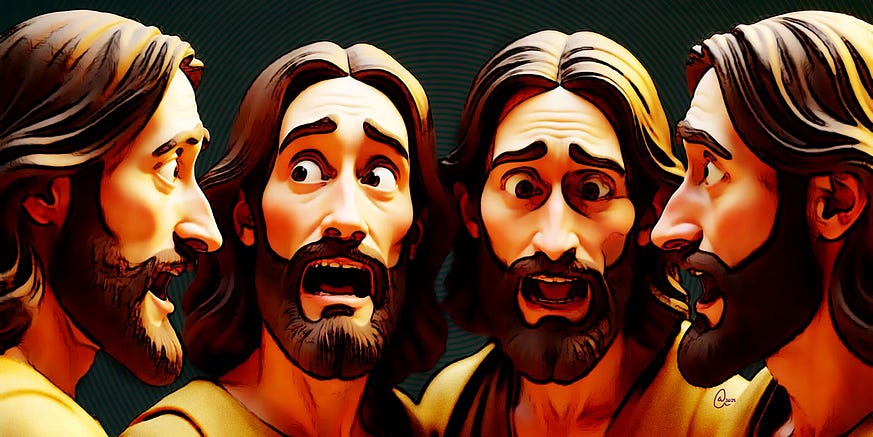
Atheist Four-Play


Today’s Sunday Question (for those who may have noticed a theme to my Sunday posts) is a collection of four questions posed on Quora, which were addressed with short answers. Most of my currently 22 thousand answers to questions there are quite short, and others are streams of images. I respond to questions in various ways, depending on what feels like an appropriate answer.

Most of the questions I’ve been publishing through this publication system are repurposed from long answers I’ve written there. I use Quora much like a sketchbook of ideas. I want to think some of the shorter answers have as much reading value as the longer ones, but feel they are generally inappropriate on their own in this long-format publishing system.

So, rather than letting them slip into the ether, I’ve collected a few that can add up to a cumulative reading time typical of a long answer. I hope you enjoy them.

Question 1: Why is faith not for everyone? Why is it that only some people get it?

The more comfortable people become with facts and acquiring knowledge, the less they rely on purely subjective faith as a crutch to navigate a complex world. The more one learns about their world, the more refined and sophisticated their faith-based choices become.

Everyone holds some faith in some things. The difference between those who rely on subjectively-supported faith to establish their views of the world and those dependent on understanding the world to develop their factually-supported faith boils down to intellectual curiosity and simple maturity.

The more intellectually curious one is, the less reliant they are on magic to explain gaps in their knowledge. The more intellectually curious one is, the more willing they are to explore the world to find more satisfying answers that awaken their mind to a fundamentally more complex reality.

One never loses one’s capacity for faith, even when divesting oneself of religious beliefs over time to discover that they have become an atheist. People become more selective in what they are willing to put their faith into, which correlates with their intellectual and emotional development.

Question 2: Is scientific evidence the only evidence atheists would be willing to accept for the existence of God?

There is no such thing as “scientific evidence.”

There is only “evidence,” and that evidence must be verifiable through some form of empiricism, which can, if necessary, employ scientific methods and discipline for examining it.

The evidence must be verified directly through human senses without equipment or through a technological means of detection.

We must be able to examine and test that evidence to verify any claims about it being a god creature or that it supports the existence of a god creature.

“Evidence doesn’t care” what area of inquiry it serves or what answers or conclusions it supports. “Evidence is evidence,” whether it’s to establish the existence of alleged beings or conclusions drawn in a court of law.

Question 3: Is atheism infallible?

No. Atheism is an illusion to placate believers.
Atheism is a non-existent belief.
Atheism is the absence of a belief.
Atheism is nothing.

Nothing can fail if nothing cannot succeed because nothing does not exist.

Nothing is an imaginary spectre haunting the minds of those who doubt the veracity of claims they have been instructed to believe.

Nothing is a terrifying abyss to those who have been convinced that their lives are sustained only by submitting to an imaginary cosmic nipple. They are made so dependent upon their imaginary nipple that they fear for not just their lives but their imaginary eternal afterlife as well.

They are conditioned to believe nothing is worse than eternal torture. Their indoctrinated belief causes them to be so afraid of nothing that they cannot grasp how nothing is ever alone.

Without that indoctrination, atheism would vanish altogether to become a forgotten nothing.

Question 4: Is it possible that some atheists hate believers simply because they believe there’s a God?

Whatever happened to hate the sin, love the sinner?

Do believers believe only they believe this principle?

They don’t, and I would argue that atheists uphold this principle better than believers.

Atheists don’t care what people believe because they value their right to disbelieve more than believers value their right to believe as they choose.

After all, believers have been waging wars over beliefs in conflict with other believers for centuries.

Atheists, on the other hand, have had to survive in a world where they would be killed for disbelieving the beliefs held by believers.

Atheists generally find believers’ behaviours to be intolerable because they are often intolerant of those who don’t share their beliefs.

If believers stopped trying to impose their beliefs on non-believers and those with different beliefs, there would be no reason for atheists to have difficulties with believers.

There is no point in hating people for what they believe. Hating someone for their beliefs is just a coward’s way of avoiding the truth about themselves and the doubts that haunt them about their beliefs, or lack thereof.


For anyone interested in exploring other answers to these questions by others on Quora, these are links to each:

Question 1: Why is faith not for everyone? Why is it that only some people get it?
https://www.quora.com/Why-is-faith-not-for-everyone-Why-is-it-that-only-some-people-get-it/answer/Antonio-Amaral-1

Question 2: Is scientific evidence the only evidence atheists would be willing to accept for the existence of God?
https://www.quora.com/Is-scientific-evidence-the-only-evidence-atheists-would-be-willing-to-accept-for-the-existence-of-God/answer/Antonio-Amaral-1

Question 3: Is atheism infallible?
https://www.quora.com/Is-atheism-infallible/answer/Antonio-Amaral-1

Question 4: Is it possible that some atheists hate believers simply because they believe there’s a God?
https://www.quora.com/Is-it-possible-that-some-atheists-hate-believers-simply-because-they-believe-theres-a-God/answer/Antonio-Amaral-1

Bonus Question 5 (this one is included as a bonus because the written part of my answer is quite short while a long stream of images would make its inclusion in this post too long to contain within an email — of all the answers I’ve given here, this one has been the most popular and has received the most upvotes):

If they ask me what I love most, I tell them I love God. What about you, an atheist?
https://divineatheists.quora.com/If-they-ask-me-what-I-love-most-I-tell-them-I-love-God-What-about-you-an-atheist-106

Why don’t you believe God exists?

This post is a response to a question initially posed on Quora, and can also be accessed via “https://caseforatheism.quora.com/Why-dont-you-believe-God-exists-16

Your question is entirely backwards.

Atheists don’t need to justify why they don’t believe God exists.

You don’t need to justify why you don’t believe the Sun turns pink at night and shoots golden sprinkles throughout the night to create stars that fairies light up with their magic dust.

Believers do, however, need to justify why anyone should believe their claim that a God exists.

You don’t have to justify anything you do or don’t believe to anyone until you try to convince them to accept your belief.

Atheism is the absence of a belief in the existence of a God. That disbelief technically means atheism is the same as nothing. Atheists have no motivation to share the nothing that comprises disbelief with anyone. Atheists generally don’t care what believers believe or disbelieve until they make it their business to convince atheists to think the same as they do.

Your question is like expecting someone to justify why they don’t believe snakes have wheels hidden in their scales that we can’t see, but they secretly use them to speed their way along the ground when no one is looking.

This atheist could write a novel explaining the journey taken from early indoctrination as a child and the early doubts about that indoctrination, which grew over time as more and more questions remained unanswered while more and more contradictions to the claims of the existence of a God appeared ever more undeniable, but none of that matters.

The only answer to your question that you deserve is that Atheists do not believe in the existence of a God. The only fact relevant to that answer is that atheists paid attention to reality and asked questions about reality in ways that made unjustifiable beliefs unsustainable.

There is no point in adhering to a belief when reality contradicts it.

There is no point in believing that Santa Claus exists as an adult because only children wake up on Christmas day to find a mystery of gifts deposited under a tree awaiting them.

Adults know there is no magical entity depositing gifts, so there’s no point in believing Santa Claus exists. Most adults would consider it quite delusional for an adult to think Santa Claus exists. I’m sure you’re one of them.

Meanwhile, atheists who deal with questions like this are left wondering when believers will wake up and start asking themselves why and how adult believers can still believe in fantasy figures granting magical wishes.

Why do you believe some supernatural Father Cosmos lives in some Quantum realm (instead of the clouds or mountaintop that used to be thought of as God’s home)? Why do you believe your fantasy father figure magically created billions of light years of space and trillions of galaxies, suns and planetary systems to place you at the centre of creation as his special child that he watches over? Do you watch over your eyelash mites? Do you communicate with your gut bacteria? Why do you believe your God looks like you?

If you can stop to think about your question, you’ll realize that it is backwards because it’s not about what atheists don’t believe, but why you do believe a God exists.

You would not otherwise pose your question to atheists if you weren’t already experiencing some shred of doubt in your belief. Instead of exploring that, though, you seek some form of justification from atheists because you’re afraid of losing your faith.

If you think about that for a while, you will realize that your fear was deliberately cultivated within you to keep you in line with your belief system, as it was designed to control your mind.

Instead of wondering why others think differently from you, try to think about why you believe the way you do.

You’ll get better answers that way, and they’ll be answers that get you further in life. The only answers you can get from others on this score are explanations of their personal views. Meanwhile, the entire point of being on Earth and living your personal life while experiencing growth and change as an individual is to learn your answers for yourself.

That’s the essential difference you’re struggling to identify with your question — why atheists are different than you.

The truth is that your beliefs are yours to develop in a personal journey through life. Your religious indoctrination has taught you to think that process is a “personal relationship with God.” The sooner you can rid yourself of an imaginary intermediary in your quest for knowledge, the sooner you will develop a clarity of mind in which you can understand on your terms why atheists don’t believe in the existence of the God you’ve been taught to believe in.

Otherwise, you will never truly understand any answer any atheist will give you to your question.

How did you determine that your nontheistic worldview is true?

This post is a response to a question posed in its complete format: “Nontheists OFTEN ask theists for proof that their particular theistic worldview is true (ie: Christianity, Islam, etc). So surely reversing the question for once is legitimate: How did you determine your particular non-theistic worldview is true?”

Following a simple process of elimination to divest oneself of flawed and blatantly wrong-headed presumptions clears one’s mind of emotionally-based conclusions responsible for blurring the distinction between fact and fiction.

The flawed presumption you base your question on and use to justify avoiding your responsibility to yourself to ensure you are not living a lie is that you have confused absence with presence.

There is no such thing as a “non-theistic worldview,” but it is interesting to see how you feel compelled to replace “atheism” with “non-theistic.” It’s a dialectical choice which serves as evidence of your flawed presumption that a “non-thing” (an absence) is equivalent to a “thing” (a presence), and that you find a lack of a belief system you have been conditioned to adhere to is threatening.

As usual, it is neither legitimate nor rare when believers often attempt to flip the script as you have. Theists employ this most common form of disingenuous dialectical tactic when trying to dodge responsibility for supporting their claim that the product of their imagination is a fact, not a fiction.

The harsh reality you seek to avoid as you hope to mine justification for hanging on to a delusion you doubt, that has made no effort to determine your worldview. You opened your mind like a baby bird opened their mouth and willingly received your worldview like a series of instructions you memorized out of fear of what would happen if you failed to follow them.

Atheists don’t “often ask for proof” because they’re not compelled to proselytize anything. Conversely, believers are conditioned to believe that their recruitment efforts will garner them afterlife rewards. Any successes they may experience in promoting their worldview serve as validation for their beliefs and quell their struggles with cognitive dissonance.

The more you question why you adhere to instructions you’ve been programmed to interpret as beliefs, the more you free yourself from the effects of your brainwashing.

This is why believers are taught to fear non-believers.

You need to keep up with your conditioning to ensure you don’t stray, and that’s why your beliefs have many rituals and icons to reaffirm your commitment to your belief system.

Stop to think about it for a moment. You will eventually realize how none of that addresses how to rationalize your worldview because it is entirely based on submission to ignorance.

So, while you ask atheists how they determine their worldview, you are admitting that you have never made that determination yourself about your worldview.

I wish I could provide tangible proof of God.

This post is a response to a question posed in its complete format: “I really wish that I could provide tangible proof of God’s existence to atheists, but I can’t. The best I can do is treat them as I know He would want me to. Does that make me a bad person?”

Why do you need to convince others of your belief?

That’s the question you should be asking yourself.

What a person believes doesn’t make them “good” or “bad.”
What they do, however, is what accomplishes that.

To be a good person in this context is to accept how others do not believe as you do, while you enjoy your life as you please, without feeling compelled to convince others to validate your beliefs by thinking the same as you.

The more you feel compelled to convince others of your belief, the more you demonstrate to the world that you doubt your beliefs.

Atheists would have absolutely no problem with believers if they just stopped trying to convert everyone else into copies of themselves.

There would be fewer wars if people could accept how others do not believe the same things they do.

The real issue here isn’t that you believe something or others believe other things. The core issue is that believers feel compelled to convert others and force them to think as they do.

Have a look at this:

This is how people can live when they’re not oppressed by the beliefs of those who impose them on others. This is how women can have the same rights as men while living as equals in a society of equals.

Now, have a look at what happens when people force others to believe as they do:

This is why the problem isn’t that you believe but that you seem compelled to convince others to adopt your beliefs.

This is where you become an enemy to humanity. This is the slippery slope to making you a bad person.

What can lead you to become a bad person is a desire to make others believe as you do.

If you are concerned about being a bad person, you must stop fretting about how others believe and deal with your toxic need to convince others of your belief. You must ask yourself why you must convince others that your God is real. You must stop caring about others believing differently than you because that is the path to becoming an evil asshole.

If you truly believed what you claim to believe, you would not feel compelled to convince others of the validity of your belief.

If you cannot find recompense within your belief, it’s not an honest belief but an indoctrination.

Do you know what else is compelled to spread and take control of other lives?
A virus. That’s what a virus does.

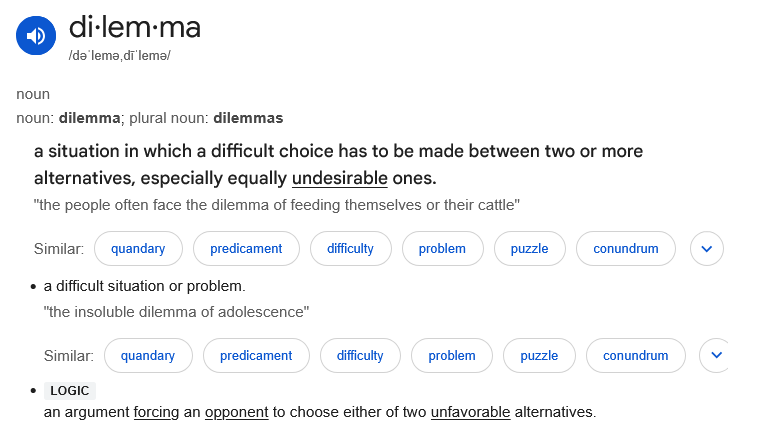
How do atheists approach ethical dilemmas without religious guidance?


This post is a response to a question initially posed on Quora, and can also be accessed along with comments via “https://caseforatheism.quora.com/How-do-atheists-approach-ethical-dilemmas-without-religious-guidance-17

The bonus question can also be accessed: “https://divineatheists.quora.com/Do-atheists-truly-believe-they-will-ever-silence-the-belief-in-Jesus-or-YHWH-49

This atheist interprets ethics based on harm, like the Hippocratic Oath a doctor takes, “Do no harm.

What passes for “religious guidance” isn’t resolving an ethical dilemma but following an instruction. In such a case, the issue can’t be considered an “ethical dilemma.”

There is no dilemma if you can consult a rule book to instruct you on your direction.

The only “dilemma” a religious adherent faces is whether or not to follow their instructions.

Even if a believer is confronted with that choice, their ethics are still far from the issue that has otherwise been considered an “ethical dilemma.”

Is the choice to obey a command an “ethical dilemma” or an assertion of independent will that can allow someone to then honestly resolve the ethical dilemma which forced them to question their dogma?

This question is an example of why religion is toxic, how religious beliefs cloud critical thinking, the impact of religious dogma on ethical issues, and when the struggle with cognitive dissonance presents itself within the believer’s mindset, leading to a “crisis of faith.”


Bonus Question: Do atheists truly believe they will ever silence the belief in Jesus or YHWH?

Nice projection.
The reality, however, is that believers like yourself have a centuries-long history of silencing people under the threat of death.

Atheists are not interested in your beliefs, and that’s the point.
If you could keep your personal beliefs to yourself and refrain from imposing them on the world, there would be zero conflict.

Atheists, as a whole, don’t much care what other people choose to believe.

Most care about how people behave and behaviour like yours, as you post your nonsense question to make yourself appear like a victim, is just tasteless behaviour.

If you truly believed what you claim to think, you wouldn’t put on such a performance of how much you believe what you claim to believe.

Instead, your declaration of standing fast to your belief indicates your doubts to the world.

If you don’t understand how that works, reference how those in public offices who claim to share your religious beliefs as the basis for their disparagements of every sexual proclivity. Notice how all of the most vocal, be it against gay marriage or pedophilia, end up with them being busted for the sexual crimes they preach against.

Your announcement is just a way for you and intellectual cowards like you to deflect attention away from your guilt. In this case, your guilt is the cognitive dissonance you are struggling with because you don’t want to accept how you’ve been living a lie.

Instead of trying to strip you of your belief, this atheist recommends you see a mental health professional to help you overcome your anxieties and resolve the emotional angst that has prompted you to pose this pronouncement about yourself.

Keep your beliefs all you like. What you believe makes no difference to any atheist. What you say and do, though, is another matter altogether.

Good luck with all of that.

Will atheists go to heaven or hell?

This post is a response to a question posed in its complete format: “ATHEISTS! Maybe you’ll go to heaven, or hell, or maybe you’re right. Not for me to say. But know that God loves you. And so do I even if you hate him (or the idea of him) and even if you hate me. It cost nothing to be kind. How bout that?”

You should consider why you felt compelled to write this.

You’ve made numerous presumptions that do not match reality, but they suit your bias.

For example, you presume hatred is a part of the equation or makeup of an atheist mindset. It’s not. Hatred is an individual phenomenon that grows into a group phenomenon when people are trained to think alike. This means hatred is more prevalent among believers than it is among atheists.

The counter-assumption I have just provided you that refutes your presumption of hatred is supported by reality. Religions have been catalysts for war between people for centuries. Bigotries toward minorities are stoked within religious institutions. That includes your biased attitude toward atheists that you display within your post (which isn’t even a real question).

This means that your presumption of atheists being motivated by hatred is a projection on your behalf. On some subjective level, you’ve recognized a particular prevalence of hatred in your environment and, rather than seek out its source, you’ve chosen to deflect responsibility for that hatred onto atheists.

Do you see how that works?

You can sense hatred in your environment and understand how corrosive it is. You express a desire to do something about it by imposing your bias onto a group of people you can more easily scapegoat than hold the people you have grown fond of accountable for their behaviours.

Your behaviour is an exhibition of a common psychological phenomenon called “deflection.”

It’s a way of lying to yourself to help you avoid an uncomfortable truth.

This brings us to the last line in your post.

Kindness indeed costs nothing, and that’s why I’ve taken the time to provide you with a calmly worded and detailed explanation of your behaviour — in the hopes that you’ll take some time to ponder how it is that your intention to display kindness is, in reality, an offence, not a kindness.

It would be far kinder of you to at least refrain from making negative presumptions about atheists and accusing them of things about them that are untrue. After all, your scriptures caution you against bearing false witness.

Instead of proferring advice from a tone of arrogance and condescension, you would have been more aligned with your professed saviour (and your extoling of kindness) by keeping your counsel to yourself, praying over your consternation with the prevalence of hatred you have detected, and offering assistance to your fellow believers in helping them to overcome their hatreds.

Please note how my response to you came from a place of love for humanity, not from some imaginary figurehead that I can pretend grants authority to my words. This is just one human speaking honestly and respectfully to another.

No God is required to justify kindness.

We all have that potential within us.

We must only be honest within ourselves to display genuine kindness to another, rather than use the pretext of kindness as a disguise for disparagement or malice.

Why do atheists make me uncomfortable?

This post is a response to a question posed in its complete format: “It makes me uncomfortable that there are atheists. What should I do?”

You can repent and learn to respect your God’s wishes. Hopefully, you can save your immortal soul from an eternity in Hellfire if you act honestly and sincerely toward your embrace of atheists because they exist to teach you to be a better human capable of appreciating your God’s love for you and all its creations.

You can learn to stop sinning by heaping disdain onto people who want to live peacefully. They are not your enemies. Don’t make them so.

Here is a story to help you return to your God’s favour. Otherwise, you can choose to continue betraying your God’s commands while preparing yourself for an eternity in the lake of fire.

Why did God create atheists?

A Rabbi is teaching his student the Talmud and explains that God created everything in this world to be appreciated since everything is here to teach us a lesson.

The clever student asks, “What lesson can we learn from atheists? Why did God create them?”

The Rabbi responds, “God created atheists to teach us the most important lesson of them all — the lesson of true compassion. You see, when an atheist performs an act of charity, visits someone who is sick, helps someone who is in need, and cares for the world, he is not doing so because of some religious teaching. He does not believe that God commanded him to perform this act. In fact, he does not believe in God at all, so his acts are based on an inner sense of morality. And look at the kindness he can bestow upon others simply because he feels it to be right.”

“This means” the Rabbi continued “that when someone reaches out to you for help, you should never say ‘I pray that God will help you.’ instead for the moment, you should become an atheist, imagine that there is no God who can help, and say ‘I will help you.’”

Perhaps a nightly routine of flagellation might help you restore your spirit to favour in your God’s eyes.

Good luck with your repentance.

Does God Exist?

This post is a response to a question posed in its complete format: “I’m beginning to lose faith. Does God really exist, and if yes does he even listen to our prayers?”

I would say that based on your question history and the way you have been provocative toward atheists for quite some time now, that you have been “losing your faith” for a lot longer than you realize.

The surprisingly positive change I’m registering in your question today is that you finally realize it.

“Losing your faith,” however, is merely a struggle with disappointment in your faith. You’re not losing it since you’re unhappy with the lack of fulfillment you have expected from it. That’s a big part of the reason you have been so provocative with atheists.

You have been taking your frustrations out on people who appear unburdened while you have struggled to carry an impossible weight to bear.

You’re still not quite at the stage where you see contradictions as reasons to question your commitments to your beliefs.

You still value your beliefs more than they are healthy for you, which is causing you confusion. The only way through the cognitive dissonance you are struggling with is to examine your beliefs with a microscope and a willingness to discard overgrown beliefs like the overgrown weeds they have become.

This is a painstakingly long and meticulous process that could last you the rest of your life, but the more progress you make on pruning your beliefs, the more clarity you will find in your thinking.

Congratulations on taking your first steps on the road to your recovery.

It can be painful to make such a breakthrough, but you should be proud of your accomplishment because it will give you strength and hope for a more straightforward path ahead.

Good luck… and do notice how this time, I’m not providing a link to your profile for others to block you because honesty should be recognized and acknowledged as a valuable commodity that should be cherished.

Wherever your path takes you, I wish you the best of luck and will explain why I may sound so pleased in my response; it’s that I anticipate a dramatically reduced degree of misanthropic cynicism from you in future and that’s a much better experience to look forward to as opposed to the toxic cynicism experienced from you to date.

I appreciate your honesty.

Who created consciousness, according to atheists?

This post is a response to a question posed in its complete format: “As there is no evidence that consciousness emerged from unconscious matter, then who created consciousness, according to atheists?”

The people you should be asking this question are not atheists but specialists who have expertise in this subject.

Atheists understand that one of the most glaring fundamental flaws in the believer mentality is that you expect knowledge to be a one-stop shopping process where you don’t consult authorities who specialize in a knowledge domain.

Believers like yourself behave as if your knowledge authorities are shopping centres of expertise.

This is why you look to your priest, minister, or religious leader to answer all the big questions in life, even though they have no clue what the correct answers are. Most of them pull nonsense out of thin air, and you lap it up like it were gospel. This is why so many of you struggle with a simple definition of disbelief for atheism.

That’s why you struggle with mastering simple tasks like knowing how to get real answers to your questions.

It is this kind of intellectual laziness that destroys your critical thinking skills.

For example, you pose questions like these as if they’re effective “gotcha questions” that can score you a win against your theological enemies.

You don’t care to understand the answer because you’re more interested in embarrassing atheists so that you walk around like a cock on a block and brag to your insular friends.

It’s pretty sad because the simplest way to address your nonsense question is to ask how you think any “who” is involved in the answer or even matters in considering an answer.

You presume a “who” is involved without any justification beyond the conditioning you have been subjected to daily since first learning how to say “momma.”

No one but you claims consciousness emerged from unconscious matter because you don’t bother to educate yourself on what humanity has learned about consciousness, what it is or how little we know about it. You don’t have the slightest clue how little you know about consciousness, but you behave as if your pat answer of a “who” is your secret weapon to put atheists in their subordinate place.

That’s just sad.

I doubt you even understand that what you have concocted is a straw argument. You create a fiction in your mind of what you think atheists believe about consciousness. You behave as if being an atheist magically imbues a person with knowledge in the scientific domains of biology, neurology, physics, and psychology — to name only a few that have explored the subject of consciousness.

You make this grotesque mistake in judgment because you have been taught to believe the magic words “God did it” answers every important question in life.

That’s just sad, annoying, and frustrating when believer after believer repeats the same nonsense daily by the dozen on every social media site.

Because of that, we know you don’t care about learning, much less understanding the numerous answers to your oversimplified question. You don’t realize that your simple question hides many questions you have no real answers to beyond “God did it.”

For example, you can’t identify or define what you mean by “unconscious matter,” but it’s clear from your wording that you’re thinking about something as simple as a rock. In your mind, the difference between a rock and a thinking being is magic. Forget about prions or viruses that behave like living creatures but aren’t.

You expect atheists to answer your question with humming and hawing that you can interpret as a win in the same way that MAGAts get off on “stickin’ it to the libs.”

If you cared about the concept you invoked, your question would be more specific and up-to-date with what science has discovered.

You would be asking not atheists but a mycologist about consciousness in mushrooms and fungus. You would be fascinated with how trees can talk to each other, and you would be respectful enough of the people you ask your questions, not assuming every atheist you encounter has knowledge and expertise in these fields.

The simple answer to your simplistic question is that there is no “who” beyond the wishful thinking of a childlike mind.

The existence of consciousness is accepted as a fact, but we don’t know what it is, how it exists, nor even the limits or range of forms in which it exists.