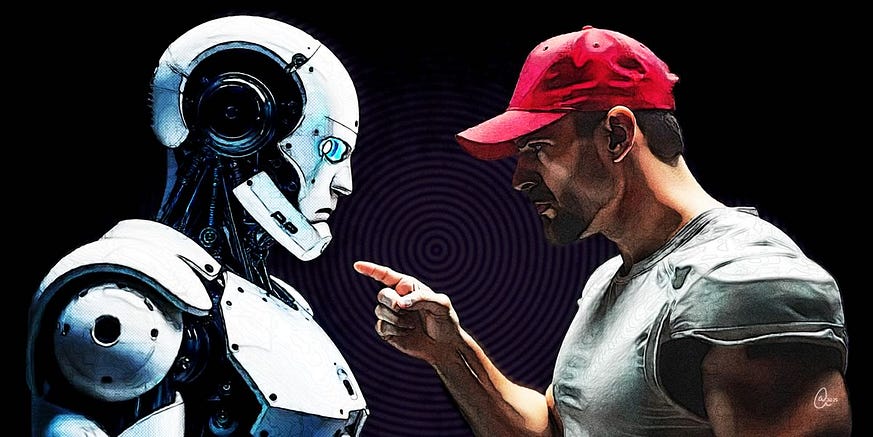
Is there a way for those who have lost their jobs to declare war on AI?

This post is a response to a question posed in its complete format: “Imagine that millions lose their jobs due to AI. Is there a way for those who have lost their jobs to effectively declare war on AI?”

Well, that’s pointless.

People will not lose their jobs because of AI but because corporations save money on labour costs.

AI is a tool, and the argument that ammosexuals love to barf up applies here: “Guns don’t kill people. People kill people.”

AI doesn’t kill jobs. Capitalists kill jobs because they can and are incentivized by it within a system that worships personal wealth above all.

We, as citizens, kill jobs through our apathy and through our empowerment of those who prioritize their material benefits at the expense of the many they can exploit.

We bring this upon ourselves by not having a coherent social development roadmap. We allow our societies to grow by chaos rather than responsible systems management strategies.

We empower our leaders through a reactionary process of social development rather than a strategically reasoned and proactive process.

Sadly, authoritarian regimes are far more successful along this vector than democracies because their decision-making is limited to small, centralized powers.

This is part of the reason that the public has been increasingly questioning the value of democracy while looking toward authoritarian models to solve our problems for us.

Sadly, the solution for democracies to be far more effective in mobilizing social development in a coherent and unified direction is entirely contingent upon the quality of the education the public receives.

For instance, the transition to a fully automated society is an inevitability. There is no point in resisting it. We would all be much better off by leaning into it and demanding we adapt our systems to manage the transition better so that we can mitigate collateral damage.

Instead, we are experiencing a chaotic transition led by random powers following personal visions motivated by personal benefit rather than social good.
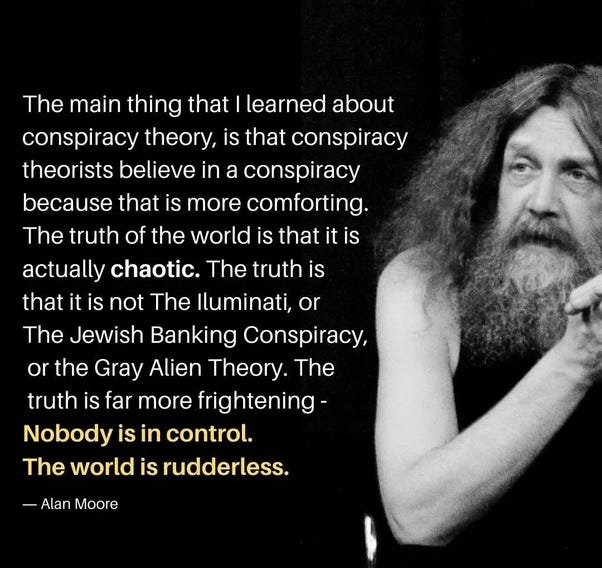
If our education systems provided a more comprehensive insight into social development, much of the public would be engaged in the political process in strategic rather than reactionary ways.

We would be more unified as a people in identifying trends and developing coherent strategies for successfully managing the challenges we face.

Instead, we are burdened by a dearth of education that reduces a population into cheerleading camps driven by emotionality that can be characterized as juvenile reactions against authorities. Considering how democracy means each person is a governing authority member, this is beyond an asinine apprehension of how one’s government works or how it can be made effective.

Democracy demands engagement, yet our apprehension of engagement is limited to how many likes one gets on one’s post. That’s not even remotely resembling engagement.

That’s like claiming every celebrity walking a red carpet and waving at the throngs is socializing with friends.

Sadly, part of the problem has been deliberately cultivated by the capitalists who want us distracted enough from the sausage-making process to allow them to remake human society into their image.

They have been succeeding remarkably within the U.S. as it has become a dystopian corporatocracy that prioritizes gun sales over the lives of children and billionaire profits over the healthcare needs of citizens.

The public has been so conditioned to prioritize profit at all costs that they will fight to preserve a billionaire’s right to kill people for profit.
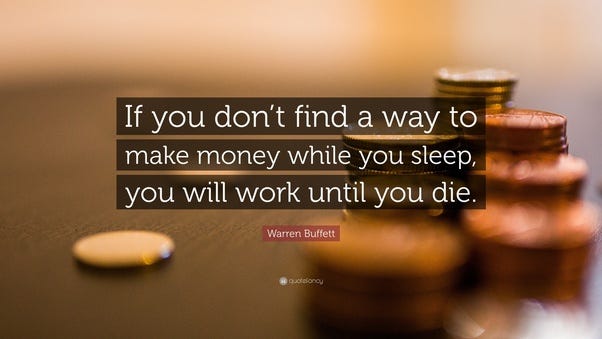
We can’t govern ourselves in a democracy if all of our time is focused on survival and profit-churning. Most of us don’t care to be involved in the decision-making process, which would be okay if we could trust our information systems to prioritize informing people over chasing profits.

Instead, we have media that has become a singular, massive entity of public influence predicated upon churning conflict to maintain attention justified by revenue increases.

Instead of informing the public on issues of criticality to the future of the people, we have this kind of incendiary rhetoric from an attention whore indulging in shock stupidity to justify their salary increases by ginning up the rubes to create conflict.

Less than one hundred years ago, this kind of crap would be shut down immediately because it would be considered a precursor to war.

Instead, the attention-seeking mentality justified by the profit (and power-seeking) motive does not care about the casualties created by irresponsible language.

The value of human life has been downgraded, if it ever mattered to society, to a level that’s no greater than the Roman arenas when people were killed for entertainment.

If we don’t start asserting some standards on coherent behaviour that cultivates the best of us as a species, we will continue careening headlong into chaos.

Humans can take only so much abuse before they break. Everyone can break, and people like Watters are playing with fire. There’s no way he will be safe again crossing the border into Canada because of his disgusting language. Some might argue that any aggressive response against him is unjustifiable, and that may be valid, but it doesn’t change how humans behave when aggrieved. I’m confident few Canadians will give him a warm reception for his remarks if he ever crosses the border. At best, at least from my perspective, he’s earned a bloody nose for his garbage.

This kind of bullying rhetoric is toxic to society and is a betrayal of the social contract.

The acceptability of this nonsense and its prevalence is why we have no coherent strategy for managing our transition into a fully automated society. The acceptability of this kind of incendiary distraction from critical information the public needs to make proper decisions to minimize casualties in our transition will create unnecessary casualties. This kind of thinking is what permits bigotry to determine outcomes that dramatically affect lives.

This kind of nonsense is why this question exists in so many forms everywhere and why I’ve already answered this question in several forms by now.

The issues are not complex, but they are made so because we’re not talking about them where we need to be talking about them. We’re allowing jackasses to troll for reactions in “respectable mainstream media” that we would mute and block online if they were individuals and not expensively dressed and cosmetically pampered media personalities.

We are being betrayed by the Fourth Estate each and every day — and to the degree that a majority of the world now believes the U.S. is a tragic case of end times for a nation that has become so corrupt, it can never be trusted for leadership in the world again. However, anyone may parse the 2024 election, and one cannot ignore the role of the media in installing a monster in the top job for the nation.

If you genuinely want to declare war against the loss of jobs, then you need to take it to those who benefit from displacing jobs. You need to start pressuring the billionaires and the corporations they benefit from while ripping off the public through tax avoidance schemes.

Instead of war, you should demand responsible management for an unavoidably dramatic and traumatic societal transition by insisting on the only sane solution to this period in human history, UBI, as a starting point toward sanity in our social development.

The worst thing about where the world is at in this transition is that the next four years are being defined by a parasitic presence seeking to empower further those who are disempowering the working class while replacing workers with automated solutions to toss millions out onto the streets to fend for themselves.

We must stop blaming AI for job losses because it’s just a gun in the hands of mercenaries.

What effects do you think AI will have on society?

This post is a response to a question posed in its complete format: “What effects do you think AI will have on society? Realistically, are people overreacting who say they’ll take all the jobs and run the world?”

Realistically, machines can’t “take jobs away” from people. Organizations and the capitalists who fund them while demanding optimal revenue generation at the lowest cost possible are choosing automated solutions to the labour cost.

This trend, of course, does displace workers as technologies have always done. Unlike previous generations of technological advancement, however, the displacement is not limited to specialized functions.

For example, armies of people sawing logs by hand were not entirely displaced by the introduction of sawmills. Labour was reallocated and redefined. Instead of pushing a saw back and forth, labour became a process of pushing buttons.

Of course, fewer people needed to produce the same volume of lumber, but there was also enough demand to scale production and create employment opportunities further up the production line.

At the height of the technological transition to a digital age, we saw many jobs displaced, but new categories of employment at much higher levels of complexity emerged. Secretaries who transcribed letters were replaced by administrative assistants who functioned in a data entry capacity. At the same time, executives eventually learned it was more efficient and pleasurable to directly type their thoughts into word processors rather than proofread changes multiple times over in an often frustratingly long process.

Network technicians, web designers, database developers, and an entire class of Information Technology workers sprung up almost overnight — by contrast to how the labour demographic had evolved since the dawn of the Industrial Age.

That’s no longer the case in today’s dynamic.

The AI revolution will not spawn demand for new labour beyond the minimal replacement of armies of people pushing saws with one person pushing buttons.

Before this current stage of technological evolution, it was easily argued that displacement versus the creation of new jobs approximated a one-to-one exchange. The hundreds of thousands of trucking jobs replaced by self-driving vehicles will not result in new jobs created to transport goods globally. Self-navigating cargo vessels will not create 15 to 30 new jobs per ship when intelligent robots replace workers.

Hundreds of millions of jobs worldwide will be transitioned to an automation model.

This brutal inevitability ignores issues used as political footballs and bypasses all the fearmongering over demanding higher wages. Automation will displace jobs, but not because automation “takes those jobs.” Technological innovation has always been and always will be a more efficient way of doing business.

Although the transition to an automated society is often viewed as a technological transformation, it is primarily a social transformation. People are going to have to stop thinking about “getting jobs” and starting about how to generate revenue for themselves by leveraging services as independent entrepreneurs. This view of capitalism has always been at the heart of the capitalist vision, and it was cemented in our psychology when business was granted personhood status.

The primary challenge within this transition is to provide the means to pursue one’s independent revenue-generating efforts with the necessary resources to succeed as an independent business owner.

We are inundated with exposure to the results of resources transforming our world by creating new classes of the wealthy whose net worth far exceeds previous generations — even after accounting for inflation. Henry Ford, for example, was a highly successful industrialist, but his net worth and reach don’t come close to Elon Musk’s status as a centibillionaire. It can be argued, of course, that such a disparity is a consequence of a corrupted tax burden. Still, those factors don’t fully explain the difference in dollar value between Ford’s millions and Musk’s centibillions.

The profit potential has never been more significant simply because the markets that once comprised a few million consumers now stretch across the globe, with a population approaching eight billion potential consumers. This global reach is why it is often argued that it’s easier today to become wealthy than before.

The reality, however, is that just like yesteryear, resources are required as seed funding to support the creation of tomorrow’s industry giants.

We cannot continue to rely on dynasties to dominate the innovation engine because they are not naturally innovative. They are conservative and often repressive by nature because they are risk-avoidant.

The heart of capitalism beats to the tune of innovation. There is no more significant potential for innovation than the eight billion people mostly trying to carve out a living while engaged in activities they value. The handful of billionaires and centibillionaires cannot compete with that innovative potential. By allowing our species to be directed by such a small number of individuals, we are limiting our potential as a species while granting too much power to people who are so grossly corrupted by it that they have become a threat to our future survival.

We must level the playing field and empower the little people who can put to great shame the illusion that the powerful in society are so far above the rest of us that we can’t survive without their direction.

Not only can we survive without them, but we can prosper in ways currently impossible under their thumbs.

We need UBI to release humanity from the yoke of our oppressors and fully embrace our creative potential through the innovative possibilities unlocked to us all through a fully automated society.

Will money and economies still exist if all jobs are automated?

This post is a response to a question posed in its complete format: “Will money and economies still exist, if all jobs get automated? If all jobs are automated, what will people work to earn money? If all jobs are automated, will people receive everything they want and need, for free, without having to work?”

Within a fully automated society, people will have their needs taken care of.

Wants are an entirely different beast.

If you want money to travel around the globe, you’ll still need to earn money to afford that.

If you want to buy a sportscar instead of using public transit, you’ll still need to earn money to afford that.

How you make money will be more a choice for you rather than a necessity made of compromise by a perpetual lowering of your expectations.

You won’t be forced to take a job you hate because you’re afraid of being made homeless. You’ll be able to hold out until you find a vocation you like and that brings meaning to you and your life.

You’ll have many more options for being self-employed than now in ways only emerging today as viable systems to help you bring your imagination to life.

I’ve recently discovered an entirely new concept for doing just that. Check it out:

The site is called “Makeship.” What makes it unique is that you can design your character, and if your design is accepted, it will be made into a plush toy that you can sell for a profit. They handle all the “heavy lifting” from converting your design into a 3D plush toy, its production process, and, to a large extent, a lot of your marketing through crowd-funded campaigns.

Makeship

Many new initiatives are sprouting up everywhere that approach manufacturing, sales, and distribution from a service-oriented perspective.

You’ve probably already heard about dropshipping, where you can essentially choose products from a distribution catalogue and assemble them in a store where you handle all the sales for those products. They handle all the packaging and shipping for you.

This is just the beginning of the new world of automation.

Large entities will capitalize on individual ingenuity, innovation, and effort by empowering the little people to go out and carve their niches in the commercial world.

With the assistance of AI, we’ll be able to produce full-scale movies for distribution simply by the prompts and tweaks we make to flesh out our creative visions in ways that others would want to consume.

Life won’t cater to people without ambition or desire to work, but it will become a panoply of options and opportunities everyone can exploit.

With these tools at our disposal, we’ll finally enter an age where merit is not lip service disguising favouritism. Whatever you imagine will stand or fall on the strength of your effort without being buffeted about by the day’s politics.

Instead of fearing automation, we should be learning to embrace it and leaning into it to begin pushing our governments to adapt to a new world without waiting for widespread suffering through the transition process to compel them to solve problems that can be avoided.

UBI will save millions of lives if we begin implementing it now. If we wait until millions of jobs are lost, then we will lose a lot more than millions of lives, and we’ll end up coping with the daily chaos of ongoing riots and widespread destruction of property.

Is it true that no programmers will be needed within 5 years due to AI?


This post is a response to a question initially posed on Quora, and can also be accessed via “https://www.quora.com/Is-it-true-that-no-programmers-will-be-needed-within-5-years-due-to-AI/answer/Antonio-Amaral-1

Fewer people will indeed be hand-writing tens of thousands of lines of code. However, someone still has to identify use cases for an application, design the application, develop the application, evaluate and tweak the code for the application, test the application, deploy the application, and evaluate the application.

Whoever does that will need to understand code, code architecture, and coding techniques and be able to identify potential exploits within the codebase.

Despite the changes, the role of programmers will remain crucial in the future of coding. Their numbers may even increase. However, they will not be as prone to developing carpal tunnel syndrome or relying on eye-strain remedies as they do now, thanks to the evolving nature of coding.

Coding will become a much more accessible activity, just like creating polished and professional-looking graphics, which are much more accessible today to people without art training.

We will eventually see the end of multi-thousand-employee enterprises and an explosion of small businesses that can match punches with today’s big players.

In another couple of decades, you and half a dozen buddies will get together to operate a business that can serve the globe with a unique product or service that each of you has some expertise in to create a successful enterprise that currently requires employing a few hundred people.

As I’ve pointed out in other answers, this transition period will be excruciating for many people. Lives will be lost, and we can only mitigate the widespread destruction that will eventually be resolved by instituting a universal basic income.

We are already seeing the beginning of a new infrastructure emerging in primitive forms with entrepreneurial solutions such as drop-shipping and outsourced manufacturing to dedicated manufacturers that don’t sell any product they design but rather provide a manufacturing service for designers.

Once it’s completed, the most significant upside of the transition is that we will all have the opportunity to create revenue for ourselves based on our ingenuity. At the same time, all the grunt work that people toil on today while wondering when they can escape their hell will be handled through automation.

People will be ever more reliant on their knowledge and creativity to create success for themselves while being free of toil.

It’s a bloody scary time right now — and primarily because it’s defined by the greed epitomized by eight people owning half of the world, but once we cross that finish line, people will be cheering because we will all finally be free of the treadmill wearing our lives down to dust.

It certainly is scary as hell right now, but if we survive our greed and environmental stupidity, we’ll arrive at the closest we have ever been to a Star Trek utopia.

I highly recommend watching Geordi LaForge or Tom Paris devising engineering solutions or Janeway programming the Holodeck to see how they issue verbal commands and make adjustments.

Watching Tony Stark work on his 3D table is exciting, and it is exciting to imagine what will happen in the real world because we are heading in that direction of usability.

I remember getting a good laugh with a friend when I joked about being in our senior years and reminiscing about how we used to kill ourselves by being on our knees and feeding miles of cable through small tunnels. Now, we’ve got wireless that kicks the old wired solutions’ ass.


Join the Conversation at https://ubinow.quora.com

Anyone wishing to engage in a dialogue on UBI is invited to participate in an open space on Quora dedicated to the issue. You may need to register for a Quora account — It’s free, and I don’t get any kickbacks from it. This space is intended purely for stimulating discussion on the topic — there are no hidden surprises beyond possibly needing to join Quora if you want to post comments. Visitors to the site can read the content without registration hassles.

https://ubinow.quora.com/

What can I do about my job being automated?

This post is a response to a question posed in its complete format: “I don’t want my jobs to be automated. What can I do? Will there be a chance to get it?”

Hi again Furquan. 🙂

You have asked me several questions on automation in the last few months, and I appreciate that you find value in my words. Thank you.

I have to say that it is essential to understand the automation revolution is inevitable and unstoppable.

The decisions for automation are being made not by us lowly citizens but by those who have the power to implement what they view as solutions to their needs — such as cutting back on labour costs.

The career one chooses for oneself does not matter to the ownership class because their perspective is based on what they are willing to pay to produce the revenue they seek for themselves.

This is the fundamental flaw of capitalism.

Capitalism, as it stands, has been permitted to flourish in ways that disregard the needs of the many in favour of the whims of the few. I say “permitted” because we have always had the power, as a people, to restrain corruption, but we have been mollified by messaging and the “luxurious” benefits of modern technologies.

We used to be much better at restraining greed, and our societies flourished. The ownership class, however, has invested hundreds of billions over the last half-century in lobbying the government, installing government puppets, and creating propaganda machines often referred to as “Think Tanks,” like the Heritage Foundation. Their goals are clear: to re-establish dynastic rule over the people. They made that abundantly clear when they released Project 2025 and issued a threat against anyone who resisted.

They have become so comfortable in their misanthropic regard for citizens that they no longer hide their agenda.

As individuals trying to navigate and survive the nightmare of this transformation into fully automated societies, we have two personal mandates to adopt.

The first mandate we have to ourselves is to equip ourselves with as much knowledge of the transformations as we are able. You have shown yourself eager and well underway on your first step by simply asking questions. The only way to anticipate the changes coming and avoid any potential disruptions to your life is by asking questions.

The second mandate we have for ourselves is to accept the fundamental premise of capitalism, which is that every human being is a business entity. We have no choice now because the era of life-long jobs and straight-up career ladders has vanished. That means even a stable job one is employed within today will be temporary, not necessarily by malice, but because the world is changing rapidly. The capitalist owners of that business also have to adapt to the changes or go bankrupt.

We are, in essence, in a surreal state of every person for themselves, and it’s taking a toll on us as individuals and creating cracks in the social contract.

This leads us to a second set of mandates we have to ourselves by serving our fellow citizens.

The first of these “community mandates” is to stand against lies and disinformation. Call out the lies and counter them with facts. Refuse to support individuals and institutions that disseminate lies. Take action, like boycotting Fox, and make your decision public. Let other people know there is a line to be drawn between decency and depravity in society that we must all be in solidarity with if we want to re-establish ourselves as humans worthy of the distinctions we revere when referring to our collective selves as “humanity.”

Greed is not good. Greed hurts us all, and we must support each other, or we will not survive the challenges ahead without great calamity and horrific losses of life that will scar whatever remains of humanity for whatever future may manifest for us as a species.

The second of these “community mandates” is to do what you can to support actions intended to restore decency. For example, I can do little with my resources beyond shooting my mouth off at every opportunity and creating memes to challenge the bullshit. I also actively sign petitions and help out in ways that are available to me.

Register with this organization — Change dot org — get on their list and peruse the many ways in which people are taking action worldwide:

The world’s platform for change

Choose from whatever causes matter to you and support them by signing a petition. If you can afford to donate even small amounts, that helps. Please don’t underestimate the power of a single voice when it comes together in harmony with millions.

Anyone can start up a petition on this site. If you have something that you specifically want people to support, such as protecting jobs in a particular industry or role — something tangible in which people can take action by speaking up, then you can contribute toward the issue of ongoing automation.

The third social mandate may be construed as primarily a personal bias. It is an inevitable necessity precisely because of automation and because capitalism forces us all to be capitalists on some level.

  1. Each of us needs some support to survive the challenges of meeting our basic needs.
  2. Society, as a whole, produces more than our basic needs.
  3. The success of capitalism is predicated upon innovation and productivity.

These three fundamental presumptions are what have led me to understand this fourth premise:

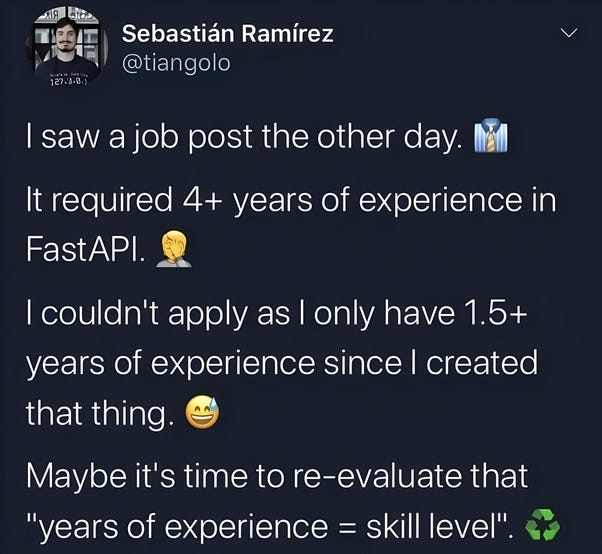
As I look back on my life and consider the thousands of hours spent on resume development and submitting tens of thousands of applications to employers that either mostly ignore and mistreat their applicants or allow the ignorance that defines many of the decision-makers among them to result in abominations like this:

I think that this entire system is broken.

Had I not wasted so much time and energy trying to fit into a system that has largely rejected me, I would have had plenty of time to develop my skills and voice to carve out my unique place of success in this world and the capitalist system we operate within.

For all the benefits that capitalism proffers to society, what it robs from us as we are herded through dehumanizing machinery to be regarded as commodities is a horrendous evil and a blight on humanity.

For this reason, I welcome our transition to a fully automated society because at the end of this painful transition is the freedom to live our lives as we choose.

The only thing that’s missing right now from our global support to a universal basic income is the awareness and acknowledgement we need from the wealthy class that this is THE best solution for almost all of our social ills — and it is much more than simply a solution, it’s an opportunity for them to capitalize on the repressed ingenuity of billions of people worldwide.

Once they realize the amount of untapped potential within the human race, in which they are shortchanging themselves with a master/slave relationship as employers/employees, they will broadly endorse UBI. Sadly, many are too short-term focused to want anything more than the quick buck that Donald Trump and sociopathic exploiters among the ownership class embody.

None of them are capable of innovation. They are capable of parasitic forms of self-enrichment. Elon Musk has clearly shown us that material wealth is not derived from personal innovation but by bleeding the benefits of the innovations of others.

My suggestion for you, Furquan, is to not buy into the myth that you will need a job to ensure long-term security for yourself because that’s a lie. Your long-term security is guaranteed only by your skills, capacity to provide value (mainly through any innovations you can devise), and the community supporting your efforts.

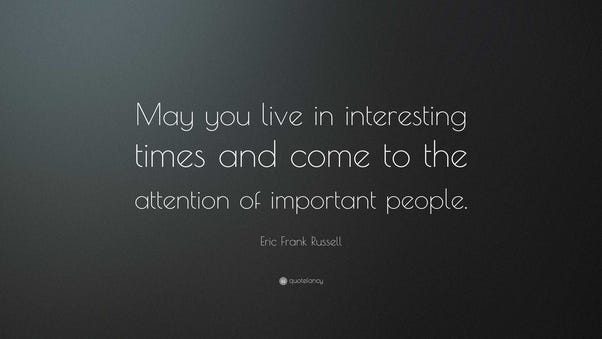
There are many different ways to perceive one’s challenges, and in this case, it appears to me the best way to represent this and the challenges we face today are embodied with an ancient curse:

I wish you all the best of luck in your future during this exceptionally unique period in human history that we have had the “great fortune” of being born into.


Temet Nosce


Join the Conversation at https://ubinow.quora.com

Anyone wishing to engage in a dialogue on UBI is invited to participate in an open space on Quora dedicated to the issue. You may need to register for a Quora account — It’s free, and I don’t get any kickbacks from it. This space is intended purely for stimulating discussion on the topic —  there are no hidden surprises beyond possibly needing to join Quora if you want to post comments. Visitors to the site can read the content without registration hassles.

https://ubinow.quora.com/

Why is being employed not a right?

This post is a response to a question posed in its complete format: “Considering you’ll die without a job, why is being employed not a right? Can society really just ensure someone dies by refusing to hire them anywhere?”

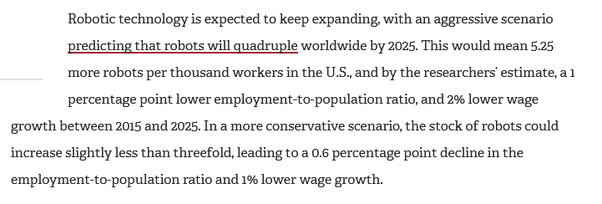
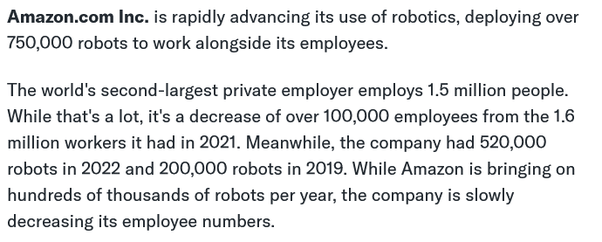
As the world of work becomes increasingly automated, the workplace dehumanization issue rapidly grows into a sociopathic dismissal of our essential qualities as living, breathing, thinking, and evolving beings. This pressing concern will affect more and more people in the future with increasing rapidity as workplace automation continues to adopt and incorporate an increasing rate of technological advancements into their operations.

A new study measures the actual impact of robots on jobs. It’s significant. | MIT Sloan

Amazon Grows To Over 750,000 Robots As World’s Second-Largest Private Employer Replaces Over 100,000 Humans

Meet the Humanoid Robot Working at a Spanx Factory (18 minutes)

To be clear, the dehumanization of the workforce isn’t a consequence of automation but of aggregation into ever larger corporate entities now spanning the globe in their operational reach. Automation is merely a step toward increased efficiency and reduced operating costs. Automation is simply the formalized acknowledgement of transforming labour into a dehumanized function that benefits capital-infused decision-makers chasing profit. What was once an entity supporting community development within the “Mom-and-Pop entrepreneurial environment” has become industrialized economics.

Entrepreneurs of today are the artists of yesteryear who sought out patrons to support their initiatives and receive benefits in return for their support in a parasitic relationship that both drains value from the creative individual and shapes their creative output in their narrowly defined image to fit an increasingly homogenized production system.

The dehumanization of the workforce began when people became deemed commodities, and “Human Resources” departments were created as legal defence linebackers to protect corporations from the consequences of exposed liabilities.

The world of employment has become less about identifying skills and more about choosing appealing aesthetics and fetishes. One is no longer in a position of being hired to function in a role with an expected standard of performance in fulfilling the requirements of that role inasmuch as they’re selected like an attractive product on a shelf that will complement the rest of the pieces on a mantle.

The disconnect between the function one is intended to fulfill, the decision-maker determining the need, the department composing the requirements list, and the agency tasked to identify appropriate candidates has become so much of a production line that they cannot help but to regard all their people as narrowly defined replaceable cogs with limited capacity and range in an expense paradigm rather than as an investment and a partner in the enterprise. The only success an individual can contribute to a dehumanized function is to meet predetermined expectations in a static environment with an expected and finite lifespan.

Corporations may be deemed people, but they’re more machine than human. Unlike humans, they can only change course and be adaptive to evolution when the small number of myopically focused humans operating them can implement global changes that often involve complete retooling and rebranding or being incorporated into another corporate system.

Once that occurs, however, whatever unique nature or personality that may have existed in the original entity is subsumed into the more enormous beast.

The issue of jobs and employment is a critical metric only for those whose role in society is to diagnose the overall health of the “super beast” referred to as “the economy.” Individuals are irrelevant to their equations. Humans are no longer humans but cattle to be herded in a dehumanizing system that renders everyone only as valuable as accords the desirability of their functionality in a narrowly defined capacity within an inhuman entity.

One’s value as a human in society is determined only by the nature of the type of cog they can function as within the parameters of an acknowledged entity that deems them suitable for its overall operation.

Society doesn’t “ensure” anything because society is a collection of humans operating within a cultural framework. The corporate culture we have endorsed for society has, in return for our loyalties, suffused society with an apathetic disinterest in the human condition and the plights of individual humans.

UBI is the only path available to regain our humanity and create an economy that serves humans rather than modern dynasties comprised of a small handful of monarch-like beings. Without it, system-wide collapse is inevitable.

Can Devin AI replace human developers entirely?


This question was originally answered on Quora and written as is.

I’m not familiar with Devin per se, but I don’t see AI “replacing people” in any capacity it is developed to function within — and I use that description with a caveat because AI IS replacing hundreds of thousands of jobs — if not millions worldwide.

https://preview.devin.ai/

AI has the potential to liberate humans from mundane tasks. It can free up time that would otherwise be spent on repetitive, clearly defined functions while still relying on humans to make decisions and set the parameters for these tasks.

Tasks that require creativity, judgment, and understanding of context will continue to be the domain of humans. These include quality control analyses, determining the scope and context of tasks, and designing the application for which a task is intended.

This is where the waters become muddy because most jobs are mostly drudge work.

Millions of labour hours are spent every year on tasks that can be automated.

Capitalists know how much they can save by eliminating humans from repetitive and clearly defined tasks.

Many may be arrogant enough to believe they can supplant human creativity and intuitive judgment with an artificial solution. Companies like Disney, however, are butting up against an immovable wall in this regard and getting their noses bloody because of their sociopathic disregard for the human equation in the capitalist environment.

We will see many psychopathic capitalists decide they can do without the most expensive of their labouring monkeys, and they will fail because of it.

We are likely to witness a significant loss of jobs due to AI. This is a reality that few people doubt, and those who do will be in for a rude awakening when the replacement rate reaches a critical level.

Yes and no, but yes, jobs will be lost. Developers with initiative, resources, and creativity to imagine solutions will also be empowered to create their own software enterprises. New jobs will be created, and we’ll see an explosion of “individual corporations” replacing a landscape of monolithic enterprises that employ hundreds of thousands, which will be much healthier for our economy in the long run. This change in our corporate landscape will reintroduce the stability we once had before the middle class came under assault in the 80s and eviscerated our unions.

Right now, when a monolithic corporation makes a minor cut in its costs, thousands of jobs are lost. The economy is stunted as a result of a minor bookkeeping adjustment or on the whims of a sociopath who decides they no longer need to pay half of the staff of the enterprise they just purchased and sends them off packing.

In an environment populated mainly by independent entrepreneurs and small “mom-and-pop shops,” any single endeavour can fail, and its failure has no discernable impact on the economy or society at large.

The biggest, most disruptive, and potentially destructive challenge is arriving at this newly recovered and economically defined demographic dynamic through a smoothly managed transition.

The most crucial step to reduce the negative impact and the widespread hardship resulting from the transition to an automated society is to build a solid base upon which people are free to live and pursue the motivations arising from their imaginations and inventiveness.

We must improve liquidity throughout our economic systems, which requires a two-fold process. While the first is to ensure everyone’s basic living needs are met through a universal income floor, the second requires freeing up capitalization for entrepreneurial initiatives.

This second step will be the most difficult to implement because it will require the most powerful among us to relinquish their power. That will happen through reasoned measures or due to entrenched and narcissistic arrogance that will lead us all to widespread chaos.

Hopefully, most will be able to identify entirely new vistas of opportunity for themselves in which they can benefit from the changing landscape in ways that are becoming less and less possible by reaching a saturation level where the only room left for growth is a takeover of smaller enterprises.

As individuals, their creative capacities and economic potential are far more reliant on the support and inspiration they receive from the collaboration synergies than on armies of sycophants telling them what they want to hear.

Some will be wise enough to leverage a massive transition in human society in their favour because they understand and value human ingenuity. Others will fail because their misanthropic disdain toward their servants leads their economic inventiveness to an empty silo devoid of value in the marketplace. If we are to go by the statistics which indicate the prevalence of psychopaths at the boardroom level matches the density of a prison population, I would expect about 20 percent of our plutocrat dynasties will not survive the transition and humanity as a whole will be the beneficiaries of such a surgical culling of our economic dynamics.


Cognition Labs — The developers of Devin AI — LinkedIn Profile:
https://www.linkedin.com/company/cognition-ai-labs/

They can be followed on X via @cognition_labs

Below is a screen of current AI initiatives underway for augmenting the software development process — 24 AI projects for software development alone as of September 2024:

Since deciding which option might be best to explore for one’s projects, here is some further reading on AI tools for software development:

Top 10 AI Tools for Developers in 2024
https://code.pieces.app/blog/top-10-ai-tools-for-developers

13 AI Tools for Developers
https://www.wearedevelopers.com/magazine/ai-tools-for-developers

Best AI Tools for Programmers: An In-Depth Analysis
https://medium.com/@kaushikvikas/various-ai-tools-for-programmers-an-in-depth-analysis-e4ddc1cde88d

Top 15 AI software development tools to use in 2024
https://decode.agency/article/ai-software-development-tools/

9 of the Best AI Tools for Software Developers in 2024
https://www.stepsize.com/blog/best-ai-tools-for-software-developers