The further back in time you look, the more racist people were.
You may be lucky enough to realize the difference between what was socially acceptable behaviour in environments that were essentially cultural silos and today’s interconnected world where no social issue is hidden from public dialogue.
You might want to take a moment to consider things you take for granted — that piss off many bigots who don’t realize they’re responsible for making those things happen. For example, gay pride parades would not exist today were it not for rampant bigotries against the gay community that lived in literal fear of their lives by random strangers who would physically assault them — often in groups and just for entertainment.
Black History Month would not exist without the KKK, lynchings, and a host of horrors in which I keep learning every year about tragedies I was never aware of that make me ashamed of humanity.
It’s a never-ending stream of vile hatred that humanity indulges in, and of which racism is only one form of evil among many that we struggle with as a species.
This is why social media is so essential today.
Bigotries are no longer incognito.
Everyone has a video recorder on their person and, within seconds, can subject an abusive monster to public shaming from around the world.
We are no longer able to pretend that racism is just part of life and that it’s okay.
We are no longer able to ignore the vile behaviours of abusive monsters in society that we used to turn our heads away from and pretend it wasn’t our business to do something about it.
We can no longer hide behind the excuses that we can’t do anything about it because all the dirty laundry is flapping about in our faces, and we either clean it up or become soiled by it.
This is a remarkable time we’re living in because we are all learning to wake up, whether we want to or not.
The troglodytes among us who endlessly wine about stupidities like “woke mind virus” or “go woke, go broke” are just verbal versions of the red alert beanies informing the world that such a person is a toxic idiot who needs to grow up and get in touch with their humanity.
They can whine and stamp their feet all they want, but their antics are nothing more than the dying last gasps of an under-evolved creature going extinct.
Because of the internet and because of social media, people are learning to become more educated and aware of the psychological dysfunctionality issues plaguing humanity. We are learning to heal ourselves because of it.
The world is undergoing an upheaval of awareness right now because the sheer volume of hatred is beyond the pale — one in five people visibly exhibit mental health issues — and a whopping majority (70%-80%) of families are dysfunctional.
These are staggering statistics.
We are sick, and we have to face the truth about our species because if we don’t, we will end ourselves.
Social media helps to make that happen. It’s a tool to help us heal that could not have come too soon.
We have desperately needed this dose of cold awareness about ourselves for a long time.
This post is a response to a question posed in its complete format: “Why does the right wing complain about the left wing far more on the internet than the left complains about the right on internet podcasts, etc.?”
I haven’t performed any surveys, nor am I aware of any statistics on the matter. I have, however, noticed a distinct difference between the nature and characteristics of the criticisms levelled.
The “left” generally identifies toxic characteristics from the right that erode or betray the social contract through blatant forms of bigotry, hypocrisy, projections, generic hatred, and unfocused rage.
The “criticisms” from the “right” are generally simplistic accusations one would expect from grade-school children. Very little thought is put into their concerns while choosing to wield broad brushes of hatred that are often confessions disguised as accusations.
I’ve used a broad brush to describe these general differences but am hard-pressed to think of criticisms from the right that are not embarrassments to the concept of critical thinking. It’s not that they don’t exist. They’re so rare that one has to focus on dredging up examples through a mountainous garbage heap of blatantly childish spite that they appear almost entirely non-existent.
Another salient difference between the two polarities is the concern for the victims of horrifically bad policy expressed by the left and a maddening sociopathic disdain and even Machiavellian pleasure taken in the notion of victims of bad policy justified through a lens of righteous indignity.
At almost every step and instance, whenever conservatives talk about the victims of bad policy, they seem to gloat their pleasure over the thought of people suffering needlessly.
Another characteristic that distinguishes political polarities is how willing and eager the right is when defending the 1% responsible for trillions in theft and the destruction of the middle-class quality of life. The right seems entirely oblivious to the causes of their anger and prefers to victimize further the victims of those responsible for their misery. One can only conclude that another characteristic common to conservatives is intellectual cowardice.
They would rather crap on the weakened and easy victims than hold the people responsible for their misery accountable. It’s like watching someone beat up on the victim of a mugging rather than go after the mugger because they’re too afraid of the mugger and would rather cozy up to them while hoping to have a few pennies thrown their way for how well they lubricate their anuses.
The reason why that would be the case is quite simple and referred to as “overcompensating behaviour.” It’s a widespread psychological phenomenon when someone subliminally recognizes the implications of their behaviour and instinctively reacts to mitigate the consequences of their actions.
Identifying a specific group of people to be regarded with respect and care is an approach to an issue akin to “preaching to the choir.” Those who already understand, appreciate, and embrace the concept of positive support toward a marginalized group don’t need to be reminded of their mistreatment and told they should not mistreat them.
Meanwhile, those who already harbour ill will to marginalized groups tend to respond with ill feelings toward the message while citing reasons why such a sentiment is exclusionary to them and their feelings. This is why “All Lives Matter” became a response to the message “Black Lives Matter.”
That black lives are snuffed out at rates which prominently indicate a social bias against them that results in a significant degree of avoidable victimization is irrelevant to them in this issue. Such people already feel victimized themselves, and providing positive attention toward other marginalized groups gives them the excuse to feel even more marginalized than they already do.
It may be true that they are not victimized to any additional degree by statistical contrast. However, a large part of their animosity is derived from feeling marginalized from society in general.
The marginalization they feel is universal. The extremes of income disparity we live with today universally exacerbate anxieties throughout the population. In contrast, only those who do not live with economic insecurity find some insulation from the challenges of daily living.
Encouraging people to develop respect for and care for others requires addressing the barriers preventing them from alienating others from a small and shrinking circle of safety in the face of an increasing array of reasons for insecurity.
Most people are already clear that when life is good for them and without survival issues predominating their concerns, it’s much easier to be open to strangers. Strangers are always viewed as a threat when life itself feels threatened. Accepting strangers without instinctively assuming they’re an additional threat to pile onto their activated fight-or-flight instinct is much easier when life isn’t under an omnipresent threat. Increased anxiety levels are a consequence of our economic disparity. Fixing that makes it easier for people to open themselves up to tribal outsiders naturally.
I remember experiencing directly how familiarity seemed to function like a cure for bigotry through a few simple words, “We don’t think of you as a Paki, Biker.”
Biker was a quiet and unassuming personality who worked hard and performed well within the McDonalds restaurant I worked in during my teenage years from 15 to 16. He was one of the gang who would join us in our “car parties” and was appointed as our designated booze-buyer. I don’t remember how old he was, but he passed inspection well enough to never run into any trouble buying alcohol for the rest of us.
In retrospect, I don’t think we pronounced his name correctly, but he never indicated that he minded it. I think it made him feel part of the crowd. I do remember feeling awkward whenever someone gave him that back-handed compliment with complete sincerity, “I don’t think of you as a Paki.”
I grew up in a predominantly blue-collar town with an economy primarily sustained by several sawmills and pulp mills in the area, situated at a significant crossroad between north and southern highway arteries. The average education of the town at the time was grade nine, and bigotry was so rampant it became invisible, but it was there for those who cared enough to pay attention.
Gay people were tolerated as long as it remained only speculative that a person was gay. The moment they were outed, however, they risked severe injury. No one wanted to think of people they liked as being gay, and so few would overlook the obvious to avoid feeling like they needed to do something about them.
The gay people I knew from school had their friends who accepted them as they were; whether or not they revealed their “status” was not a matter I was privy to, but I could tell and just kept my mouth shut and treated them like anyone else.
About ten years ago, an old high school “friend” looked me up, and we had coffee together while he brought me up to speed with gossip from school. One piece of news he had for me was that Lawrence had come out of the closet. He spoke those words while still expressing surprise, and my nonchalant response confused him. I quickly changed the topic before he could ask why I wasn’t surprised. I asked him about someone who had demonstrated some kindness to me as a bullied fat kid in school, and his response made me feel like we had travelled back in time, “Oh, she’s a slut.”
That meeting made me feel justified in completely cutting myself off from the people I grew up with because they hadn’t changed. I remember being invited to the first ten-year reunion from our high school by telephone. I was informed of someone who had committed suicide, and that made me feel sad for her. In the background, I could hear someone make a joke about swallowing a shotgun and that sent chills down my spine. I asked myself why I would want to travel to the toxic town I grew up wanting to escape it to endure entirely obnoxious people. I remember indicating that I might attend, but I wasn’t sure. I knew then that I didn’t want to go and haven’t been to any they may have held.
I had and still have no desire to surround myself with such a tone-deaf form of sociopathic toxicity. It doesn’t change within the individual once it’s set within their personality, mainly from their upbringing and early socialization experiences.
People don’t grow to respect and care for those groups they’ve spent a lifetime marginalizing. They only become more tolerant and less overtly abusive but can easily get triggered into being abusive if the conditions are ripe for it.
Living in hardship makes it easy for latent bigotries to surface. That’s why MAGAts are so easily riled up. They will never be convinced to respect and care for the people they’ve learned to hate unless they’re exposed to them in person and begin to think of those people they know as different from the bigoted image they have of that group within their mind.
That tone softening happens only when their lives are more manageable, not more complicated.
This is the very crux of our class warfare as people are weaponized against each other by the plutocrats in our midst who have stolen trillions from the working class and exacerbated their struggles. They further weaponize the undereducated by messaging designed to stoke hatred while pointing fingers of blame at the marginalized groups for their struggles.
The ownership class deliberately riles these people up to set them against their neighbours because that distracts us from their efforts to benefit themselves while further impoverishing the rest of us.
We may sincerely want to cultivate respect and care for each other as citizens, but we must approach the issue from a universal perspective. We must address the stressors serving as barriers to caring. Sadly, the solution appears more and more to require chaos to force a return to sanity.
“Those who make peaceful evolution impossible make violent revolution necessary.”
During this time of year and this “sacred” day when we are all called to regard each other as members of a family we call humanity, we can only hope that sanity will return without requiring the ritual blood sacrifices we’ve paid throughout history.
For what it’s worth, I hope your day today is filled with peace and contentment.
This post is a response to a question posed in its complete format: “People tell me I’m being defensive, when I’m really only explaining the literal facts that happened. How do I do that without being called defensive?”
Examine your motives.
Why do you feel a need to explain facts to people?
Has someone asked you for those details?
If they haven’t, they will interpret your input as motivated by a personal agenda, often defensiveness.
Your facts may be necessary to defend an action or correct a misinterpretation, in which case, your perspective may be critical to ensuring that the clarity and accuracy of events are maintained so as not to negatively affect someone unfairly due to a misjudgment or biased conclusion.
What also often happens is that when someone does offer clarifying information that an abuser doesn’t want to be made known, they will attempt to gaslight the messenger with accusations like they’re being defensive.
If you’re constantly explaining facts and that’s causing many people to accuse you of being defensive, then that could be a compulsion you developed from an abusive environment where you were constantly disbelieved and have overcompensated for that accusation by feeling compelled to explain facts, whether they’re relevant or not to resolving whatever dynamic you’ve been caught up in.
What people tell you is a clue either to the behaviour of yours you’re not entirely clear on or a clue to their attitudes. There is no universal answer as to which it would be, but your best bet is to be mindfully clear about your actions and why you chose them.
Other people will always say something; often, that thing they say has less to do with you than it does about them.
Your environment may be one where you feel compelled to offer explanations to defend yourself while being told that you’re being defensive. If that’s the case, then it’s most likely an abusive environment, and some abuser is deliberately gaslighting you to make you feel insecure about yourself.
Only you can know what the truth would be in this case.
This post is a response to a question posed in its complete format: “Why do some people say that eccentric introversion is masculine while extroverted conformity is feminine?”
The rule of thumb when referencing “some people” is that it means nothing more than individual bias.
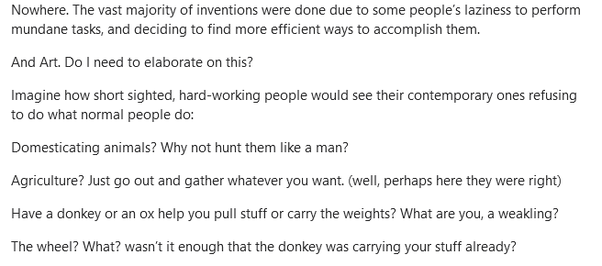
Here’s an example of “some people” — one person in this case whose attitude is entirely predicated on bias and without effort in researching a topic to develop a deeper understanding of the subject they’ve indicated an interest in.
Digging deeper into the mind that seeks validation for their bias, one notices several examples of fact-free bias that they’re mining validation for instead of educating themselves on the topics they express a fraudulent interest in while disguising their biases as concerned questions.
If you look through all these questions, you’ll notice that they are all mining for validation for their biases. I won’t share this profile’s identity because it doesn’t matter. This person is just one of the “some people” you’re wondering about with your question.
The last two questions in this list highlight the nature of a subjectively focused mindset.
First, they’re interested in relieving their boredom but don’t realize the most effective way to accomplish that goal is to educate oneself. If they did that, they’d find their minds too occupied with information to be bored.
Admittedly, this conclusion is a bias that I developed early on in my life when I encountered an assessment of the statement “I’m bored,” which described that declaration as a way of saying “I’m boring.” It is pretty accurate because none of these questions reflect any depth of consideration for the topics raised.
The last question sums up their attitude toward learning as a limited benefit that fails to go beyond acknowledging value within applied knowledge that can be leveraged for pragmatic applications.
The consequence of this attitude toward learning is to limit one’s understanding of subjects one seeks insight into. In the example of the first question, they’ve already decided that “laziness” is a valid presumption upon which to build their biased views of the world.
For example, an answer they received likely skipped past their perceptions beyond the level of novelty.
It would not dawn on them to reconsider their definition of “laziness” because of this answer beyond possibly acknowledging that laziness isn’t a universally undesirable characteristic. I sincerely doubt they would be prompted into researching causes of motivation and apathy or even bother to investigate mental health issues like executive dysfunction.
“Laziness” is “laziness” to this person and will remain so because they’re not interested in expanding their understanding. They’re interested in being entertained at a shallow and briefly distracting level to escape boredom in the most practical manner they know by catering to their ego.
This is now where I get back to your question and point out the nature of the broad brushes used in the presumptions formed by the attitudes you’ve identified.
The telltale sign to knowing whether someone is interested in developing depth in their understanding of subjects or whether they’re simply mining for confirmation bias lies in the size of the broad brush they use to smear demographics that are largely undefinable beyond a generic level.
Terms like “eccentric introversion” and “extroverted conformity” are subjectively defined biases that are not scientifically valid. For example, psychological authorities recognize different forms of introversion but don’t use judgmental terms like “eccentric.”
Here’s an example of four types of introversion as described by an authority in the field:
“Anxious introversion includes staying home from the party but for a reason. The anxious introvert feels self-conscious, and even when they’re alone, they ruminate about their social interactions.
Social introversion is a person who always says no to going to a party. They’d much rather be home doing some solitary activity. When they do socialize, they keep to small groups. This probably ties into that feeling of exhaustion. Introverts derive energy from solitary time, whereas extroverts feel energized being with others.
Thinking introversion means you’re pensive and introspective. You look inside yourself and self-reflect often. “People with high levels of thinking introversion don’t share the aversion to social events people usually associate with introversion,” writes Melissa Dahl. This rings true for me (and it’s where I score the highest on the quiz).
Restrained introversion means it takes you a while to get going. You don’t jump out of bed, ready to embrace the day. I can imagine this translates to being quiet or standoffish in social situations but would later blossom into more participation in socialization. “It takes her a while to warm up,” my mother always said.”
The descriptive terms used are non-judgmental observations of distinctions between characteristics.
“Eccentric” is a value judgement, not an objective description of a behavioural trait.
“Extroverted conformity” is the same kind of value judgement of a behaviour, not a clinically valid description of the behaviour they’ve identified.
By associating these judgments with genders, they’ve described their gender biases in full detail with few words.
The short answer to your question is what I indicated in my first sentence, “some people” are biased. They pass off their biases as valid judgments to entrench those biases within the public consciousness in society, and we end up with stereotypes built upon pre-existing biases.
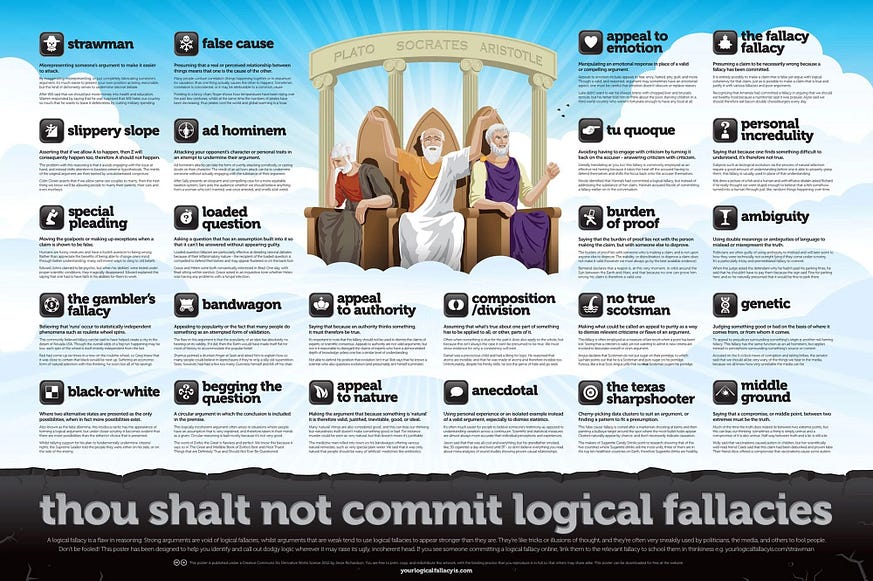
Another characteristic of bias is when people preface their presumptions with a logical fallacy called the “bandwagon fallacy.” It appeals to the suggested popularity of a concept to grant it authority that otherwise does not exist. We’ve seen this behaviour often with the less reputable pseudo-news media outlets. They’ve overused it so much that it’s become a popular trigger for people to recognize that what follows is a bogus claim.
The expression “some people” has become a running joke that “some people” instinctively react with skepticism. I doubt you’ve heard “some people” make those statements and that they are fabrications you’ve made yourself to displace responsibility for the biases they invoke.
Your profile and question history lend credibility to my hypothesis because many of your questions wallow in subjective bias. You indicate that you’re 23 years old, making your logic errors much more forgivable than someone somewhat senior to you who should know better than to wallow in stereotypes.
Hopefully, this long-winded answer gives you some insights into how to be more objective and authentic within your future querying while realizing that people often reveal far more of themselves than they realize.
As a bonus, here’s a poster for a few common logical fallacies that many people are often guilty of committing.









 thotbag