The further back in time you look, the more racist people were.
You may be lucky enough to realize the difference between what was socially acceptable behaviour in environments that were essentially cultural silos and today’s interconnected world where no social issue is hidden from public dialogue.
You might want to take a moment to consider things you take for granted — that piss off many bigots who don’t realize they’re responsible for making those things happen. For example, gay pride parades would not exist today were it not for rampant bigotries against the gay community that lived in literal fear of their lives by random strangers who would physically assault them — often in groups and just for entertainment.
Black History Month would not exist without the KKK, lynchings, and a host of horrors in which I keep learning every year about tragedies I was never aware of that make me ashamed of humanity.
It’s a never-ending stream of vile hatred that humanity indulges in, and of which racism is only one form of evil among many that we struggle with as a species.
This is why social media is so essential today.
Bigotries are no longer incognito.
Everyone has a video recorder on their person and, within seconds, can subject an abusive monster to public shaming from around the world.
We are no longer able to pretend that racism is just part of life and that it’s okay.
We are no longer able to ignore the vile behaviours of abusive monsters in society that we used to turn our heads away from and pretend it wasn’t our business to do something about it.
We can no longer hide behind the excuses that we can’t do anything about it because all the dirty laundry is flapping about in our faces, and we either clean it up or become soiled by it.
This is a remarkable time we’re living in because we are all learning to wake up, whether we want to or not.
The troglodytes among us who endlessly wine about stupidities like “woke mind virus” or “go woke, go broke” are just verbal versions of the red alert beanies informing the world that such a person is a toxic idiot who needs to grow up and get in touch with their humanity.
They can whine and stamp their feet all they want, but their antics are nothing more than the dying last gasps of an under-evolved creature going extinct.
Because of the internet and because of social media, people are learning to become more educated and aware of the psychological dysfunctionality issues plaguing humanity. We are learning to heal ourselves because of it.
The world is undergoing an upheaval of awareness right now because the sheer volume of hatred is beyond the pale — one in five people visibly exhibit mental health issues — and a whopping majority (70%-80%) of families are dysfunctional.
These are staggering statistics.
We are sick, and we have to face the truth about our species because if we don’t, we will end ourselves.
Social media helps to make that happen. It’s a tool to help us heal that could not have come too soon.
We have desperately needed this dose of cold awareness about ourselves for a long time.
Identifying a specific group of people to be regarded with respect and care is an approach to an issue akin to “preaching to the choir.” Those who already understand, appreciate, and embrace the concept of positive support toward a marginalized group don’t need to be reminded of their mistreatment and told they should not mistreat them.
Meanwhile, those who already harbour ill will to marginalized groups tend to respond with ill feelings toward the message while citing reasons why such a sentiment is exclusionary to them and their feelings. This is why “All Lives Matter” became a response to the message “Black Lives Matter.”
That black lives are snuffed out at rates which prominently indicate a social bias against them that results in a significant degree of avoidable victimization is irrelevant to them in this issue. Such people already feel victimized themselves, and providing positive attention toward other marginalized groups gives them the excuse to feel even more marginalized than they already do.
It may be true that they are not victimized to any additional degree by statistical contrast. However, a large part of their animosity is derived from feeling marginalized from society in general.
The marginalization they feel is universal. The extremes of income disparity we live with today universally exacerbate anxieties throughout the population. In contrast, only those who do not live with economic insecurity find some insulation from the challenges of daily living.
Encouraging people to develop respect for and care for others requires addressing the barriers preventing them from alienating others from a small and shrinking circle of safety in the face of an increasing array of reasons for insecurity.
Most people are already clear that when life is good for them and without survival issues predominating their concerns, it’s much easier to be open to strangers. Strangers are always viewed as a threat when life itself feels threatened. Accepting strangers without instinctively assuming they’re an additional threat to pile onto their activated fight-or-flight instinct is much easier when life isn’t under an omnipresent threat. Increased anxiety levels are a consequence of our economic disparity. Fixing that makes it easier for people to open themselves up to tribal outsiders naturally.
I remember experiencing directly how familiarity seemed to function like a cure for bigotry through a few simple words, “We don’t think of you as a Paki, Biker.”
Biker was a quiet and unassuming personality who worked hard and performed well within the McDonalds restaurant I worked in during my teenage years from 15 to 16. He was one of the gang who would join us in our “car parties” and was appointed as our designated booze-buyer. I don’t remember how old he was, but he passed inspection well enough to never run into any trouble buying alcohol for the rest of us.
In retrospect, I don’t think we pronounced his name correctly, but he never indicated that he minded it. I think it made him feel part of the crowd. I do remember feeling awkward whenever someone gave him that back-handed compliment with complete sincerity, “I don’t think of you as a Paki.”
I grew up in a predominantly blue-collar town with an economy primarily sustained by several sawmills and pulp mills in the area, situated at a significant crossroad between north and southern highway arteries. The average education of the town at the time was grade nine, and bigotry was so rampant it became invisible, but it was there for those who cared enough to pay attention.
Gay people were tolerated as long as it remained only speculative that a person was gay. The moment they were outed, however, they risked severe injury. No one wanted to think of people they liked as being gay, and so few would overlook the obvious to avoid feeling like they needed to do something about them.
The gay people I knew from school had their friends who accepted them as they were; whether or not they revealed their “status” was not a matter I was privy to, but I could tell and just kept my mouth shut and treated them like anyone else.
About ten years ago, an old high school “friend” looked me up, and we had coffee together while he brought me up to speed with gossip from school. One piece of news he had for me was that Lawrence had come out of the closet. He spoke those words while still expressing surprise, and my nonchalant response confused him. I quickly changed the topic before he could ask why I wasn’t surprised. I asked him about someone who had demonstrated some kindness to me as a bullied fat kid in school, and his response made me feel like we had travelled back in time, “Oh, she’s a slut.”
That meeting made me feel justified in completely cutting myself off from the people I grew up with because they hadn’t changed. I remember being invited to the first ten-year reunion from our high school by telephone. I was informed of someone who had committed suicide, and that made me feel sad for her. In the background, I could hear someone make a joke about swallowing a shotgun and that sent chills down my spine. I asked myself why I would want to travel to the toxic town I grew up wanting to escape it to endure entirely obnoxious people. I remember indicating that I might attend, but I wasn’t sure. I knew then that I didn’t want to go and haven’t been to any they may have held.
I had and still have no desire to surround myself with such a tone-deaf form of sociopathic toxicity. It doesn’t change within the individual once it’s set within their personality, mainly from their upbringing and early socialization experiences.
People don’t grow to respect and care for those groups they’ve spent a lifetime marginalizing. They only become more tolerant and less overtly abusive but can easily get triggered into being abusive if the conditions are ripe for it.
Living in hardship makes it easy for latent bigotries to surface. That’s why MAGAts are so easily riled up. They will never be convinced to respect and care for the people they’ve learned to hate unless they’re exposed to them in person and begin to think of those people they know as different from the bigoted image they have of that group within their mind.
That tone softening happens only when their lives are more manageable, not more complicated.
This is the very crux of our class warfare as people are weaponized against each other by the plutocrats in our midst who have stolen trillions from the working class and exacerbated their struggles. They further weaponize the undereducated by messaging designed to stoke hatred while pointing fingers of blame at the marginalized groups for their struggles.
The ownership class deliberately riles these people up to set them against their neighbours because that distracts us from their efforts to benefit themselves while further impoverishing the rest of us.
We may sincerely want to cultivate respect and care for each other as citizens, but we must approach the issue from a universal perspective. We must address the stressors serving as barriers to caring. Sadly, the solution appears more and more to require chaos to force a return to sanity.
“Those who make peaceful evolution impossible make violent revolution necessary.”
During this time of year and this “sacred” day when we are all called to regard each other as members of a family we call humanity, we can only hope that sanity will return without requiring the ritual blood sacrifices we’ve paid throughout history.
For what it’s worth, I hope your day today is filled with peace and contentment.
This post is a response to a question posed in its complete format: “Why is there so much misogyny or misandry online? Is it because of the internet being filled with socially outcasted people?”
What you see online doesn’t exist because of the Internet. It has always existed as “normal” and without being challenged throughout society.
Imagine what the Internet would be like if it existed before the Civil Rights movement. There would be “Whites Only” and “ Coloureds Only” websites. Facebook would be racially segregated, and so would genders. Any woman visiting an auto servicing site would be banned. They would be allowed only at sites that promoted the expectation of their role of being barefoot and pregnant in the kitchen. People would be penalized for visiting sites that violated segregation laws, and all those “wonderful sensibilities” from yore would permeate the virtual world in far greater degrees of hatred and bigotry than we see now… because they would be considered acceptable by the majority.
The virtual world has only allowed those “old sentiments” that we have deluded ourselves into believing we have grown past to remind us they still exist. They’re just not considered acceptable by the mainstream.
That’s why those attitudes stand out.
The upside, however, is that we can and do push back on that toxicity while social media enables us to talk about it directly.
We can confront racists and bigots directly now when, in real life, we would bite our tongues and walk away to let them believe there’s nothing wrong with them or their attitudes.
Complaining about the prevalence of such ugliness results from a naive view of the world and a Disneyesque vision of humanity through rose-coloured glasses.
In real life, you can associate with people you agree with and avoid those you find toxic, but it’s not easy to do online.
That’s a good thing because pretending this horror doesn’t exist is how it continues.
Over 5 billion people are online, so you can’t single out portions of the population you don’t like and pretend the Internet is a magnet for a small subsection of humanity. These attitudes are prevalent everywhere.
The online world is the only safe space to resolve them. We would otherwise find ourselves either trying to ignore them to let them metastasize and grow worse or joining along because of being pressured into it, like being pushed into a cult for fear of one’s life.
Use your voice online and speak out against the ugliness. Challenge the bigots you encounter. Make them accountable for their hatreds.
That’s the only way to deal with the horror. That’s the only way to make our species heal.
You have an obligation to yourself, your sanity, and the future of our species now that you have been empowered with a platform to fight back against what’s broken with humanity. If we don’t, we won’t have a human civilization by the end of this century. We’ll have a shattered smattering of primitive tribes struggling to survive a planet that has become hostile to human life.
I’ve never encountered “femsplaining” before this question. It sounds like it was made up for this question to make it appear more egalitarian.
“Mansplaining” became a prominent description of misogynistic behaviours and attitudes in situations where men behaved in condescending ways toward women.
Misogyny is widespread in our patriarchy because men often have no clue how to handle equality. Men have been conditioned from a young age to view themselves as superior to women. Men are also subjected to conditioning, which causes them to interpret life as a power game.
Combining those two characteristics of a typical male upbringing with toxic competitiveness breeding fragile egos results in a prevalence of poisonous masculinity throughout society that we’ve grown to know and love.
The consequence of their conditioning has resulted in a high frequency of example scenarios where men condescend toward women on a wide variety of levels in a diversity of conditions.
One of the most stereotypical examples is an auto repair shop where the statistics show that women are often overcharged for repairs while being condescended to when discussing those repairs.
The standing bias of a significant proportion of men is that they understand automotives better than women and often resort to condescension as a means of gaslighting a victim to get away with taking advantage of their perceived naivety.
This dynamic of condescension isn’t limited to gender interactions and occurs everywhere a power game exists.
Everyone experiences it repeatedly throughout their lives, usually when someone attempts to convince them of nonsense.
At any rate, since men have been conditioned to think of themselves as superior within a gender power dynamic, they more often resort to condescension when manipulating women. It happens so frequently while men victimize women that the term mansplaining was invented to introduce humour into a problematic situation of discrimination as a means of raising awareness of the problem in society.
We employ similar awareness-raising tactics in situations where power dynamics are statistically significant.
I just answered another question before this about the slogan “Black Lives Matter.”
It’s not quite as humorous as “mansplaining,” The goal of the expression is the same: to raise awareness of a severe issue of discrimination in a society that renders an entire demographic as victims so often that it can’t be ignored and must be addressed.
This strategy for raising awareness is why gay pride parades exist.
It’s a way of restoring balance to an unequal power dynamic.
The term “femsplaining” is a reaction to the effectiveness of “mansplaining” and is a defensive reaction to that success. This is how “All Lives Matter” was conceived as well.
Those who are used to being in a dominant position of power begin to feel insecure enough about equality that they interpret it as oppression. Since they struggle with admitting to the abuse they condone, they react defensively by appropriating an effective strategy to convert it into a counter-weapon against the strategy responsible for their disempowerment.
There is no such thing as “femsplaining” for that reason, and misandry may exist but only as a reaction to extensive abuse by men.
Men become misogynistic by conditioning that teaches them to adopt socially acceptable aggression toward women, while women become misandrist by being victimized.
Even though the terms are intended to reflect equal and opposite conditions, they are not the same.
When a woman condescends toward someone, and they happen to be male, that’s a coincidence, not a stereotype.
This post is a response to a question posed in its full format as follows: “Why are there so many degenerates in this world that lack a moral compass, namely in 1st world countries where most learn this by the family that raised them, school, sports, being in public, etc?”
The problem with this question is that it’s impossible to construct an objective answer to address its core concern. This question is more of an emotionally driven complaint than a question.
The reason is that it’s built upon subjectively defined presumptions like “degenerate” and “morality.” Neither of these concepts has any objective metric to identify differing degrees of degeneration or morality between any two random people.
Adding to the subjective complexity, universally accepted standards for the definitions of these terms do not exist.
What can be deemed “degenerate” to one person is celebratory to another. What is viewed as “morality” to one person is heinous to another.
Making matters even more complicated is that a word like “degenerate” constitutes a value judgment. Regarding its use, what that person views as “degenerate” is already a visceral rejection of the object of their judgment. There is no wiggle room for the interpretation of an individual’s value. No description of the specifics of the behaviour in question leads to the value judgment of “degenerate” because “lacking a moral compass” is just as subjective a judgment as “degenerate.”
This question is an example of circular reasoning permitting no room for objective examination nor any means by which one can identify alternative conclusions to the objects of such visceral criticism.
The only way to address this question is to search one’s memories for emotional reactions one may have had that can dredge up conclusions about different experiences one can align with the question based on a similar degree of emotional intensity governing one’s biased findings.
This style of generic language relies upon the subjectively defined feelings of others to function more like a dog whistle than a critical analysis of the issues in question.
This kind of “loose language” is a breeding ground for bigotry to evolve in a landscape characterized by pure emotion and which lacks grounding in any shared physical reality.
For example, if someone were to mug someone else and witnesses talked about the event while sharing similar emotions and a similar view of the event in question, they could quickly dredge up a similar degree of emotional intensity to this question. Their views would be predicated upon a shared experience, while their particular reactions to the event would be grounded in a shared physical reality.
In the case of this question, that shared reality exists only within the realm of individual imagination and dredged-up memories of different events. Here’s a generic dialogue of an imaginary sharing of emotional intensity to highlight this dynamic:
First Person:“I was supremely pissed at this one thing this one person did. Be as angry as I am about this thing you didn’t experience.”
Second Person:“I didn’t experience what you experienced but let me tell you, I also got supremely pissed about this other thing that you didn’t experience, but because we’re both supremely pissed, we share a common ground of agreement.”
First Person:“So, you agree that we both have good reason to be supremely pissed to the point of sharing a mutual hatred for something?”
Second Person:“Yes. We both hate something very much.”
First Person:“What do we hate together?”
Second Person:“How about that thing over there? It’s pissing me off right now that I’m in a sour mood.”
First Person:“I agree. Let’s both hate that thing. That way, we can forget what we hated separately and find camaraderie in a shared hatred for something else.”
This dynamic is how bigotry spreads throughout a population to function like a transmissible disease.
This is why language choices are crucial for objectively apprehending the realities we react to.
Allowing another person’s subjective responses to dictate one’s attitudes toward a subject abdicates their free will and subordinates their opinions to whoever demonstrates the most significant force of personality.
This is the process by which identity politics emerges.
This is precisely the dynamic that Donald Trump has built his political collateral upon.
It is a means by which critical thinking is killed, and people like Rupert Murdoch capitalize on it as a vehicle for personal enrichment at the expense of the social contract.
This is why we have “so many degenerates in this world who lack a moral compass.”
It’s incredible how much of an impact a non-existent thing can have on people.
It’s much like religion and a non-existent paternal figure.
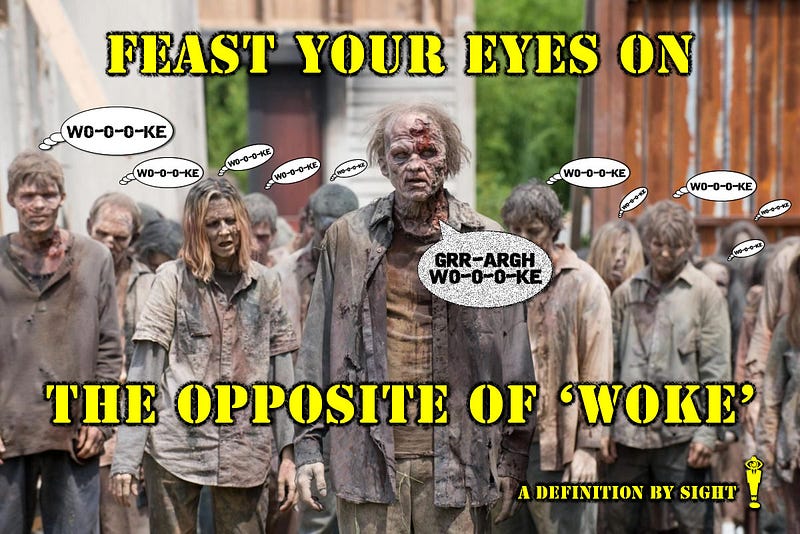
“Woke” is a word that describes an attitude of awareness over systemic injustices that must be corrected in society.
That’s it.
There is no “ideology” exactly like no “woke mind virus” exists.
All of the hysteria surrounding the term “woke” amounts to nothing more than the whining of children who don’t want to be held accountable for their abusive behaviours.
An ideology is, by definition, a collection of beliefs organized under a dogmatic banner, but to be woke isn’t a belief unto itself. It’s an attitude favouring the support of justice in society and equal access to it for all people — not just the privileged few.
“Woke” itself leads to nothing because it’s not an ideology people rally around in protest of making the world “woke.” There is no singular image of “woke.” There are no collections of rules defining “woke.” There is no institution, group or body of people who represent “woke” as any organized movement for change in society.
“Woke” means simply that a person has realized a corrupt status quo is not sustainable.
“Woke” simply means a person understands and accepts how wrong it is for police to barge into a private residence and shoot people to death while they’re sleeping.
A person who is described as “woke” is just someone who is not only capable of empathy and compassion but is also not intimidated into keeping silent when injustices occur.
That’s what pisses off the people who whine about “woke” as an ideology and invent childish slurs like “woke mind virus” to serve as a boogeyman to fear and attack it out of an illusory need to protect oneself from an imaginary threat.
Some people don’t want social justice.
Some people want to hate.
It’s an addiction for those people, and the media feeds it with a steady diet of conflict porn.
Conservative politicians build their careers around hating groups of easily victimized people.
History is filled with the graves of millions sacrificed on the altar of hatred.
To be “woke” is to know this and be horrified by what humanity has done.
To be “woke” is to want better for themselves, their families, friends, and their communities.
To be “woke” is to want a better future for one’s children and all of us as humans striving to reach our potential as a species.
Some, however, are just mentally ill. Unfortunately, that group comprising “some” amounts to one in five people in our dysfunctional society.
In a city of one million residents, that means 200,000 people are suffering from visible mental health issues.
In a nation of 350 million citizens, that means 70 million citizens are in desperate need of professional mental health services.
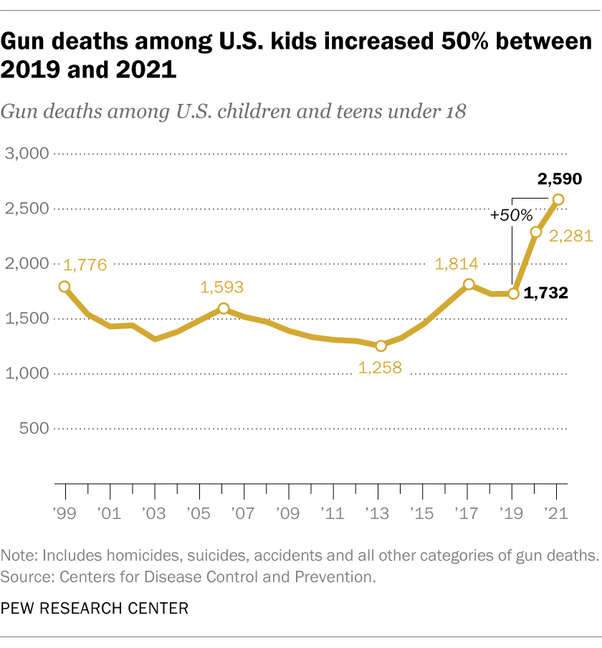
The COVID-19 pandemic shut down the entire world for fewer infectees than that, and we live with it every day in society instead by pretending it doesn’t exist or that it’s just normal — like almost daily mass shootings that extinguish the lives of thousands of children every year.
How do the mentally ill who want this nightmare to continue deal with these horrifying facts?
They invent disparagements like a “woke ideology” or a “woke mind virus” because fixing these problems means they will no longer be able to enjoy watching people suffer. They will no longer be able to feel better about themselves if they can’t see other people suffering more than they do.
They can’t stand the idea that they have to work on themselves because they can’t accept how utterly broken they are as human beings. Some no longer even qualify for that distinction.




 thotbag