This is my first test of the categories feature on WordPress as I organize my thoughts under a common umbrella free from submission to often inconsistently applied rules through the various social media and other platforms I’ve been spreading my content around on like it were runny peanut butter flowing like sludge from too much oil.
At any rate, my intention in this category is to create a repository of memes, from which I’ve already created *many* over the last year and beyond. As of this posting, I’ve been revitalizing my WordPress account with a daily editorial that I’ve culled from my daily contributions to Quora while answering questions as a form of therapy for a long story I’m still trying to determine how best to share it with the world.
If I find the categories feature here on WordPress helpful and flexible enough to address my concerns with sharing that story, then I plan to add a few more categories soon. I may include my story and links to online print-on-demand sites I’ve been testing out as I adapt my content creation efforts to this site.
Here are a few of my most recent meme creations, which I hope you find humorous enough to steal and share.
Cheerios
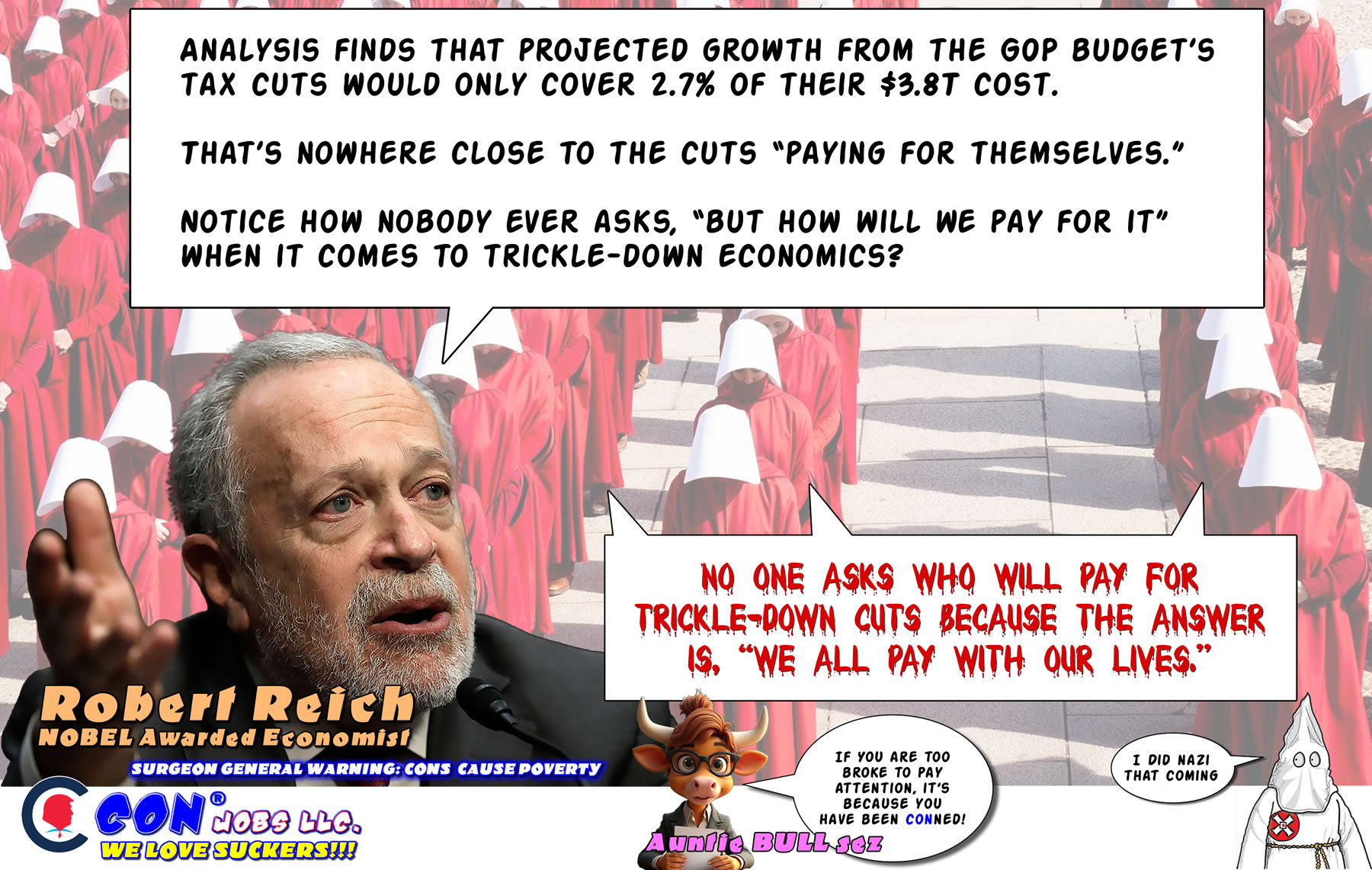
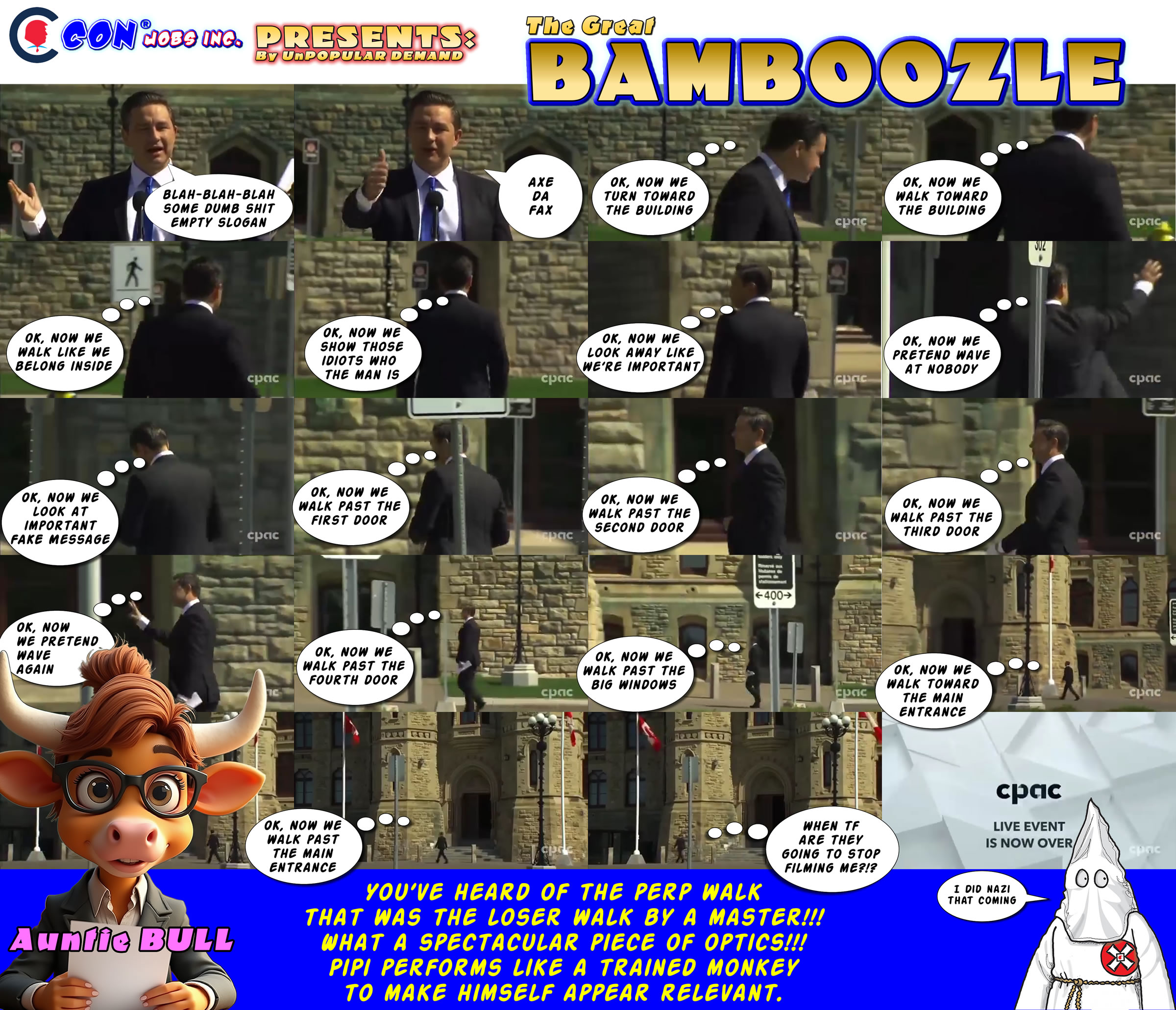
Today’s memes are in the theme of political mockery (as most of my meme creations generally target Canadian and American politics, but can vary).
PS. These are all of a high enough resolution to print at a decent enough quality on letter-sized paper.
Americana Believe their Shite (This first one includes a censored version, which, you guessed it, became my inspiration to explore options while rethinking how to share my memes):
Canuckian Politics:
While posting these, I noticed a slideshow feature I may explore while posting older memes that are outdated for addressing current issues, such as memes I created during the election season.
I hope you enjoy them and can find some value in resharing them.
Thanks for reading and for your support. I hope to grow this into a viable venture that can sustain both body and mind, and I sincerely appreciate your visits, upvotes, and comments.
This post is a response to a question posed in its complete format: “To which extent do novels, or manga, conveying deep idea, or talking about social issues, relate to them given global awards, or high global popularity, to which extent does this depend on how smart the creator is, why only few reach to this level?”
Popularity and recognition are primarily not determined by intelligence, creativity, or any value generally associated with degrees of quality, skill, or craftsmanship but by timing and resonance.
The kind of popularity attributed to intelligence and creativity is recognized only through endurance throughout the ages. It is the rarest form of popularity that remains consistently in the shadow of most other forms of popularity. It does receive the occasional boost because it can garner enough of a niche following to emerge on the populist stage for a time. Still, it then retreats to becoming a niche once again.
A book like “Fifty Shades of Grey” was a literary mess on every level, from the writing to the butchered subject matter to the horrid values it sensationalized.
It was a massive success because it appealed to a repressed and widespread imagination responding to an increasingly darkening reality by retreating into dark fantasies that most would not have the courage to explore in real life.
I’m certainly not claiming that I would or have the courage or the slightest interest in exploring this area of the human condition for myself. Still, I am at least aware enough of the dynamics to understand how the story itself represents more of an expression of a mind suffering from Stockholm Syndrome indulging in titillation rather than providing realistic insights into the dynamic it attempts to portray. It’s more of a study of mental health in society than a literary masterpiece.
This leads me to my point that, as a people, we have been enduring a staggering decrease in the quality of our lives over the last several decades, shocking most of us. A piece of schlock like this validates feelings shared by a large audience and titillates the imagination through sensationalized imagery.
It became popular, not because of any enduring qualities but because it fulfilled a need for an outlet.
“The Secret” is another example of appealing to repressed sentiment, but instead of validating the repressive darkness people have been suffering through, it capitalized on a need to restore hope.
Ultimately, both literary productions created more harm than good in the same way that trolls undermine the social contract.
Once materials like these run their course, they begin to resemble porn in that a temporary titillation is an insufficient mitigation for addressing underlying causes, and like cocaine, once it’s run its course through one’s body, one is left feeling drained and hungry for more of that emotion that gave them a temporary boost in life.
There is, sadly, no real cure to this phenomenon of populism beyond two different strategies. The first strategy is the sanest, but it is also the most long-term and invisible strategy for addressing this need to bottom feed while racing toward an ever-receding bottom. It’s a strategy that will make many eyes roll once I write it as a one-word summary: education.
Education is the “magic pill” that will mitigate most of humanity’s ills — at least, it will once we address the economic roots of humanity’s ills.
It won’t ever be a cure because there is no final state to education. There is no finishing an education. Only lifelong learning exists for our species if we wish to survive anywhere near as long as the dinosaurs did.
The alternative to education is our current self-destructive trajectory, which risks the end of human civilization and, quite possibly, our species if our rock bottom is deep enough.
The alternative track to education we are on is to continue our descent into worshipping the superficially constructed Holy Grail of attention for the sake of attention. We will continue to behave like addicts drawn toward the chaos of feeding an insatiable hunger until we consume all of what we value through superficial titillations that temporarily distract us from an otherwise horrifying existence.
Surviving the nightmare ahead of us means our future progeny will have slim pickings to choose from as representations of the best human potential to pick out from the forgettable detritus of populism. The future will be as we experience it today when looking back on history and forgetting how Leonardo DaVinci had many contemporaries competing for the same artisanal benefits he remains remembered for.
We don’t remember the easily forgotten mass, but we do remember the outliers, and that’s the broad lesson of history.
If we exist as a species and civilization in another two hundred years, no one will know who or what a Kardashian is. They will note, however, how rampant superficiality characterizes this primitive and barbaric state in which we live.
No one will remember any of the Harry Potter books or the trans-hating hypocrite who fraudulently represented hope within her discardable stories. They will, however, continue to be influenced by Tolkien.
No one will remember much of anything notable about the products of this era beyond the horrid worship of excess.
Not one talking head from Fox will be given a nod of acknowledgement for their contributions to society. Rupert Murdoch might earn a passing reference as a key player in corrupting human civilization. Even he will be regarded as a side note contributing to corruption. At the same time, his success at making it so widespread will be considered a global failure in ethics that permitted monstrosities like centibillionaires to exist.
Donald Trump will be remembered as this century’s Hitler, no matter how many may find that offensive today. It’s just where we are as a species, and history has given us enough hindsight information to make such predictions with great confidence.
Those who may be offended by this prediction would do well to consider how that’s an optimistic outcome to the trajectory we are on right now because if he succeeds in achieving the maximum potential of his efforts, then we may not have much left of humanity to be capable of studying the history we make today in any way resembling our current capacity for exploring our history from yesterday.
Suppose we don’t rein in society’s current excesses of distorted power. In that case, we will be lucky to exist in any state resembling anything other than a primitive existence at the mercy of nature.
This post is a response to a question posed in its complete format: “Why is there so much misogyny or misandry online? Is it because of the internet being filled with socially outcasted people?”
What you see online doesn’t exist because of the Internet. It has always existed as “normal” and without being challenged throughout society.
Imagine what the Internet would be like if it existed before the Civil Rights movement. There would be “Whites Only” and “ Coloureds Only” websites. Facebook would be racially segregated, and so would genders. Any woman visiting an auto servicing site would be banned. They would be allowed only at sites that promoted the expectation of their role of being barefoot and pregnant in the kitchen. People would be penalized for visiting sites that violated segregation laws, and all those “wonderful sensibilities” from yore would permeate the virtual world in far greater degrees of hatred and bigotry than we see now… because they would be considered acceptable by the majority.
The virtual world has only allowed those “old sentiments” that we have deluded ourselves into believing we have grown past to remind us they still exist. They’re just not considered acceptable by the mainstream.
That’s why those attitudes stand out.
The upside, however, is that we can and do push back on that toxicity while social media enables us to talk about it directly.
We can confront racists and bigots directly now when, in real life, we would bite our tongues and walk away to let them believe there’s nothing wrong with them or their attitudes.
Complaining about the prevalence of such ugliness results from a naive view of the world and a Disneyesque vision of humanity through rose-coloured glasses.
In real life, you can associate with people you agree with and avoid those you find toxic, but it’s not easy to do online.
That’s a good thing because pretending this horror doesn’t exist is how it continues.
Over 5 billion people are online, so you can’t single out portions of the population you don’t like and pretend the Internet is a magnet for a small subsection of humanity. These attitudes are prevalent everywhere.
The online world is the only safe space to resolve them. We would otherwise find ourselves either trying to ignore them to let them metastasize and grow worse or joining along because of being pressured into it, like being pushed into a cult for fear of one’s life.
Use your voice online and speak out against the ugliness. Challenge the bigots you encounter. Make them accountable for their hatreds.
That’s the only way to deal with the horror. That’s the only way to make our species heal.
You have an obligation to yourself, your sanity, and the future of our species now that you have been empowered with a platform to fight back against what’s broken with humanity. If we don’t, we won’t have a human civilization by the end of this century. We’ll have a shattered smattering of primitive tribes struggling to survive a planet that has become hostile to human life.
I remember someone I once trusted approaching me for relationship advice.
I don’t remember the specific complaints registered against him by his then-recent ex, but I remember how he tried to convince her that he had changed overnight.
The next day after she ended her relationship, he returned to her and claimed he had changed.
After relating that to me, I tried to explain to him that’s not how change works. One doesn’t change oneself like they change their clothes, most certainly not overnight.
That wasn’t my best approach to helping him overcome his anxiety. He outright rejected what I tried to get him to understand. I believe that was the last conversation he and I ever had.
However, His attitude toward change stuck with me as I struggled to understand that thinking. I thought of it as chillingly superficial and worse as it appears to be an attitude which fits within the mindset that justifies telling people what they want to hear.
Everything about how a certain mindset perceives the world around them is based entirely on optics, and their behaviours are mere performances designed to elicit desired responses from their audience.
It left me feeling cold, and I’ve learned to understand how severe a red flag that is. I wish I hadn’t been such a slow learner in this regard because I could have saved myself a world of hurt if I had fully considered the implications of that behaviour then.
At any rate, the notion of undergoing a transformative experience had always intrigued me as I deliberately sought paths and methodologies for transcending limiting ways of being. From a very young age, I was aware that I was conditioned into being what I conceptually rejected but required something tangible to transform my desire for change into actual change.
Symbolically, the notion of being “reborn” is a ritualized performance in which people present themselves as if they had changed from committing to a belief system and being “remade” by that commitment itself.
People who have undergone such a ritual sincerely think they have transformed into a better version of themselves. Their exclamations, however, have more often been expressions of hopeful anticipation rather than observable reality.
Their subsequent behaviours and fundamental attitudes remain the same. From an outsider’s perspective, the only change visible was the compass setting they prioritized.
Although some stick with their new compass setting over the long haul, many returned to being who they always were while dismissing a temporary compass setting as one they outgrew and was no longer relevant to them.
Some remained within their faith but regarded it with their “old eyes” and treated their entire relationship with their beliefs and community as a game of optics. Others moved on as they acknowledged their experience as helpful but not enough to commit to it for a lifetime. I found this latter group more authentic in their journey of discovery. The clarity of direction or need they expressed as they described their choices through fogs of confusion they struggled to dispel always made them feel more human to me. In contrast, I found those who appeared to skim through emotional turmoil somewhat confusing. I didn’t know how to interpret their responses to emotional struggles. I must have envied them as I could never respond to my own in similar ways and often wished I could have. It seemed to make life easier for them.
These “performers at life” always made me feel cold, though, and it’s taken me a long time to understand why.
Understanding how a proportion of our population lives through a shallow lens may be conceptually easy to grasp superficially, but that’s not a satisfying apprehension of the phenomenon. One inevitably finds oneself mystified by its manifestations while wondering why they feel put off in ways they don’t quite understand. It can be a harrowing journey to fully grasp the implications of such a life on a visceral level for those whose feelings run deep.
Another example was an individual who had been married for about six years and who I had gotten to know as a close couple who seemingly shared everything. Conversations with either always involved extolling the virtues of the other and never was an unkind or critical word shared. I thought they were a remarkable example of a successful couple until the husband informed me they were getting divorced.
Their separation appeared as if life sped forward at super-speed for them because it all took place within a couple of weeks — from agreement to the formalized documentation of divorce. There was no emotional turmoil I could detect in the husband, as the ex-wife had already left, and I had no means of gauging her condition. In his case, however, I was more shocked at his ability to move on than I was at their separation.
For him, it was as if nothing of note had happened in his life. I couldn’t fathom that, particularly after having endured my periods of extended angst over far shorter and more superficial commitments. I remember envying his ability to rebound from what would have been at least a year or two of turmoil for me.
I didn’t realize until later that his personality was characterized by subtle paranoia and mistrust toward others on mostly innocuous levels. I first noticed that aspect of his character after he described a business venture I found myself intrigued by and expressed how much I liked it. His response became immediately cold and protective of it. He clarified that I had no place in his venture even though I had not expressed such desire or intent.
I remember switching the conversation at that point and inquiring about his ex-wife, and I was curious to know if she was doing well. His response was mainly dismissive, but he let the cat out of the bag by indicating that the reason for their divorce was his unfaithfulness.
The ability to move on quickly from a profoundly emotional experience had often been a source of admiration for me. That was before I understood the costs of such a state of being — to both themselves and those they inevitably victimize.
I don’t think he was ever capable of connecting deeply with anyone, and I didn’t understand, even then, how profound that was. I knew it was essential for me, and I accepted how that might not be for others. I didn’t think of it as a toxic dysfunctionality — even though I should have known better after having experienced it with many others so often throughout my life.
From a ritualistic perspective, there can be some benefit to undergoing a formalized process that symbolically represents change and, more importantly, a desire for change. However, it’s all done for optics more than acknowledging the necessity of change and its role in one’s personal growth.
I always have felt this way, but I never understood how that attitude itself, on my behalf, was present even as a child when I underwent my first confession. It wasn’t conducted in a booth but in an empty classroom on a chair across from the minister. We were in full view of each other without obstruction, and he asked me to speak.
I struggled to find words while suppressing a broad smile as I found the experience entirely superficial. After all, how could I possibly be exonerated of guilt over actions I may have taken that were considered sinful by simply uttering them to this stranger? At the age of eleven, the most egregious sin I could think of was masturbation, and I suppose that might have been why I struggled to suppress a broad smile.
Within a belief system that purports to provide adherents with pathways for growth, I can understand and support the prescriptive manner of formalizing rituals to celebrate that growth. The shortfall in converting subjective experience into an objectively procedural system is that it fails to account for individual differences. It is a process that cannot account for or mitigate abusive misuse.
Much like the reporting systems across all social media, the symbolic ritual of change is a tool that can be weaponized for personal gain. The emphasis on optics is a form of corrupt thinking which overlooks the critically ineffable in favour of supporting shallow expedience.
The concept of “being born again” is just a formalized process of stripping profundity from life in favour of optics because we do not, as a whole, value depth in a world that has industrialized human existence and reduced the human condition to the level of a disposable commodity.
We have evolved into an increasingly dehumanized existence while being led by institutions that claim to represent higher states of being. Our only hope for reclaiming our existence as human beings capable of achieving our potential is completing our transformation into a fully automated society. It will only be once we cross this threshold that human beings will be free of the superficial trappings of optics made necessary by the industrialized herding of our species. The function of symbolic optics is an inherent limit to our potential as individual beings within what we refer to as “civilized society.”
I believe the concept of “being born again” should be viewed with great suspicion and mistrust because it reflects nothing of an individual’s inner world or the foundation of their character.
It can, however, be a practical means of applying a metric for identifying differences between that standard and one’s words and deeds to triangulate a more accurate picture of one’s internal world.











 thotbag