
This post is a response to a question posed in its complete format: “Question for Canadians, specifically those who are Conservatives. Do you think Pierre Poilievre ought remain leader of the CPC following the loss of two elections and loss of his own seat? No rants please, I am looking for thoughtful answers.”
Have a look at this picture. It’s a photo of the ballot in Pierre Poilievre’s Carleton riding. It contains, I believe, about 91 names of candidates who are mostly independents.

This ballot contains over 85 people in his neighbourhood who were so moved to get rid of him that they chose to run against him.
This speaks volumes well above and beyond whatever national animosity he earned while in the public eye. These are people who know him on a personal level.
They know enough about him and his twenty years of service, accomplishing nothing of benefit for them while cultivating a misanthropic attitude toward them, as he consistently voted against measures that would help them.
They knew that he was no representative of their needs in government and went far above and beyond just voting against him or choosing to campaign on behalf of his opponent.
They wanted him gone and were not motivated enough to support any particular candidate, so they chose the only option they felt they had… to run against him.
This isn’t typical political animosity. This is personal animosity.
These people know him and hate him as a person.
When a leader with integrity loses their seat in a typical competition without this level of animosity toward them, they re-evaluate their success as a leader and do what Jagmeet Singh did — step down.

They make room in the party for another leader to step forward to allow them and the party an opportunity to succeed where they may not have succeeded.
Jagmeet had an uphill battle in this election because Donald Trump and the divisive Conservatives forced this into a two-party election. His party and the country value his contribution as a Canadian who loves his country. Respect for his integrity has only shot up because he decided to step down.
Canada, as a whole, has had enough of Conservative incompetence for a long time now. The ABC (Anyone But Conservative) voting strategy became popular because of Stephen Harper. Harper is arguably the worst PM in Canadian history, who has not only done significant damage to the nation and its safety net but continues to create harm on a global basis while supporting a fascist takeover of governments around the world.
All of their campaigning is focused on divisiveness, fear and hate-mongering while fabricating smear tactics taken straight from the Nazi playbook.

Since losing in Canada, they have escalated their divisive campaigning, and Danielle Smith, the Alberta premier, has just begun a separatist campaign in Canada as a power grab for their hateful ideology.
These people do not put their community, province, or nation’s needs above their desires for power. They don’t care about established law or treaties that predate the founding of their nation or province. (Just like what is happening to an 800-year-old precedent of due process in the U.S.) It shows in every one of them as they ignore the people’s wishes and carve out paths to authoritarianism worldwide.
A true leader of the people understands and respects that they are temporary custodians of a tradition of support for the people.
Everywhere you look where an authoritarian government exists, you see someone focused on egotistical concerns. They don’t put the people they are tasked to and trusted with a sacred responsibility to do their best for the people above their desires.
To them, the people are a means to an end, not the end itself.

Poilievre shows he is cut from the same cloth as Donald Trump, who was so upset with losing the prior election that he encouraged an attempted coup of the nation. Even now, he and his minions work toward having him succeed in being elected for a third term.
Poilievre is following in Trump’s extremist footsteps by insisting he remains the leader of the party and will likely try to supplant another party member to continue hanging onto power.
This should be a time of reflection for the Conservatives, to rethink their values and strategies for doing right by the nation they serve, but that’s not the case these days with Conservatives worldwide.
We are in the throes of a fascist resurgence as a direct consequence of the economic disparity forcing people into extremes of thought and action.

Everything we are struggling with today is precisely due to a distorted economic landscape. Consequently, Canada is now dealing with a mania for power that would almost appear cartoon-like were it not so threatening to global stability.
A leader who loses not only an election they should have won by a massive margin, but also one they would have won by 30 points according to the polls only two months ago, is a rank failure in leadership. If he were a person of integrity who cared about putting the nation first, he would have already announced his intention to step down. Instead, we are saddled with this cartoon of egotistical buffoonery.

One would assume the Conservative Party of Canada wishes to be taken seriously by Canadians as a party that cares enough to put country over party. If so, they must push Pierre Poilievre to step down.
Canada is not the U.S., which gives Conservatives a pass when they lie about putting Country over party and then proceed to betray the country for decades upon decades to allow a depraved monster to tear down what we have all worked hard and sacrificed much to build.
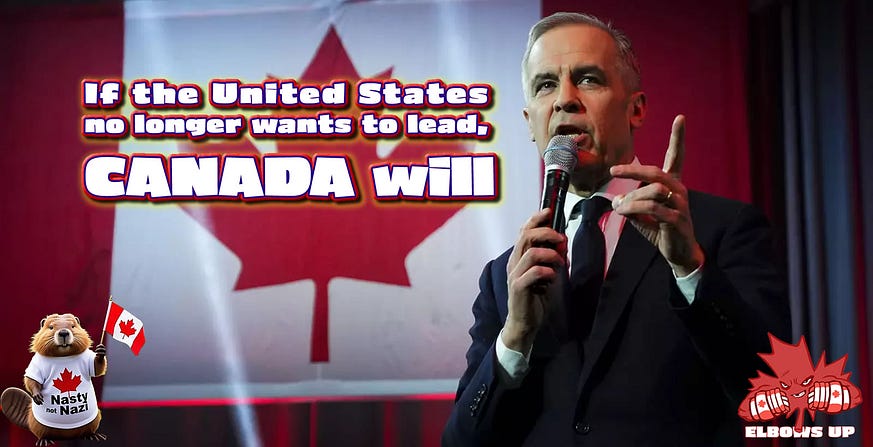
If Americans no longer want to lead the world in what it means to be a democracy, then Canada will handily step up to the plate and show the world that we will not allow another fascist regime to threaten our future as a people.
We will do whatever TF it takes to ensure the will of the people consistently overrides the will of any would-be king.

 thotbag