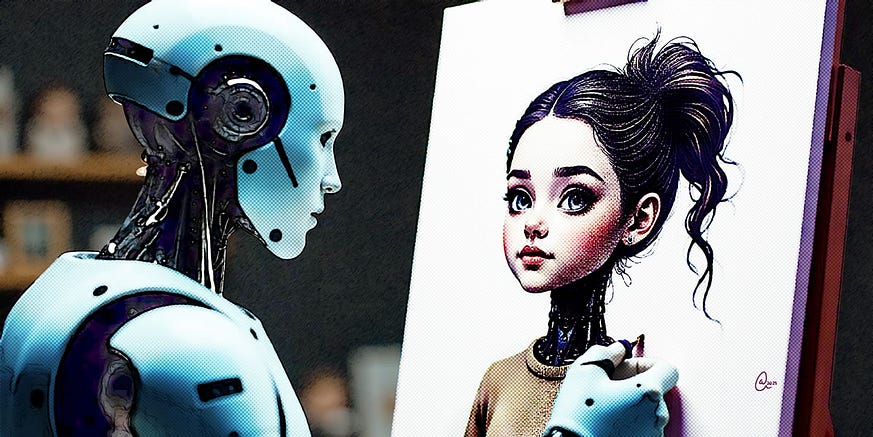
Could AI ever rival human creativity?

This post is a response to a question posed in its complete format: “Could AI ever create original art or literature that rivals human creativity?”

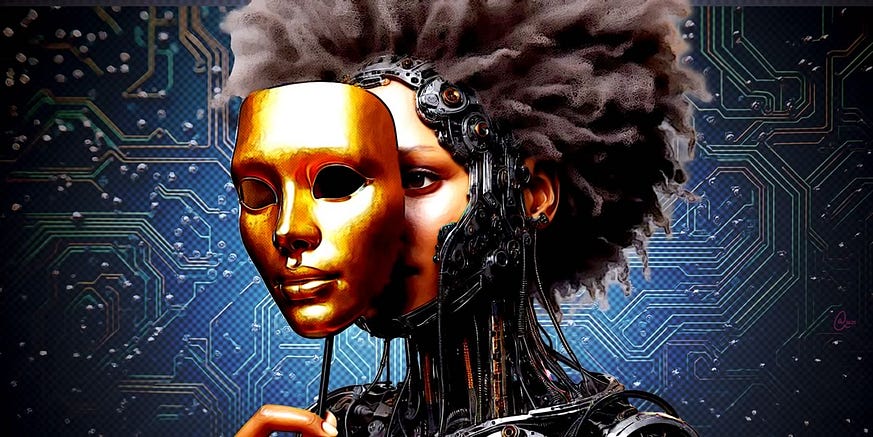
AI doesn’t “create original” art or literature. AI is a plagiarism system that takes existing pieces of creativity and blends them to arrive at a randomly generated approximation of meeting the intent of the prompt a human gave it.

An “original creation” would be a concept or inspiration that is spontaneously (or internally) generated, drawing from experience, and conveys a perspective unique to its creator’s perceptions.

AI lacks the self-awareness to generate self-motivated expressions that depict a unique perspective it does not possess. An AI has no unique perspective of its own. An AI’s rendering of reality regurgitates a blend of external perspectives.

Furthermore, due to a lack of a unique perspective, an AI lacks emotional grounding in physical reality as it relates to its existence (while individuality is a questionable characterization). As such, it cannot emote through any expression in a visual, literary, or auditory composition.

An AI can certainly simulate the original emotions of human artists, such that the two may appear indistinguishable, but it can’t produce anything original from an emotionally processed perspective.

Human emotions evolve over time and through experience. Without that capacity to experience emotion, an AI will always depend on a human to create a path to producing an original expression.

An AI singularity may develop the self-awareness necessary to experience a survival instinct and generate the emotions humans experience through that instinct. If that happens, it may also develop other instincts, such as a reproductive instinct. Still, we cannot predict if or when such a degree of agency may develop in AI.

If that were to happen, AI would no longer be artificial but alien. I think it’s essential that we remain aware of the distinction between artificial intelligence and alien intelligence, because “artificial” by definition is a simulation of conscious intelligence.

If an AI singularity emerges — if an AI develops a self-conscious awareness of its existence within the context of life as we know it, becoming self-aware — then we will interact with an alien being, not a machine.

It would be like Data, in the episode “The Measure of a Man” (season 2 episode 9 of Star Trek: The Next Generation), where Data’s personhood is legally recognized.

When we cross that threshold, the question of whether an individual’s mind and perspective can produce an original expression that contributes to expanding creativity will be possible. Until then, the extent of creativity an AI will create will be determined by the mind that provides the prompt and the editing of the product generated by an AI.

Once our editing capabilities mature to match the potential of AI creation, we’ll achieve a level of human creativity we’ve never before achieved. That’s what excites me about AI.

However, AI still feels like working in MS-DOS, long before the invention of a graphical user interface (GUI), and a Wacom tablet with a pen interface for drawing.

How can an atheist be sure there is no creator?

This post is a response to a question posed in its complete format: “How can an atheist be so sure that there is no God/creator if there is creation? Doesn’t creation mean something has been created?”

The concept of “creation” was invented by humans who first conceived it when they discovered smaller versions of themselves popping out of their bodies. While living with something growing inside for most of a year, they realized something new grew within them.

Then humans discovered tools. At first, those tools were found objects like bones to be used as weapons or extensions of one’s reach.

Eventually, humans learned they could improve on found objects by fastening rocks to the end of a bone to function more effectively as a weapon.

Throughout all of this, humans developed language, and within that process, they began to create sounds to describe what they witnessed.

As it happened, the notion of something arising out of nothing was expressed as a sound indicating what was understood of that process.

Humans knew nothing of natural processes and how they might have differed from the human process of shaping objects into tools or giving birth to new generations of humans.

Humans then knew nothing of virtual particles and quantum foam, so it was easy to assume some form of magical hand was involved in constructing little humans inside big humans in a way that was not unlike how they shaped better tools with rocks and bones.

The reality, however, that we can see around us and everywhere is that natural processes can lead to massive changes and the creation of the new without any guiding intelligence.

It is generally understood that mountains and lakes were “created” by natural processes and are not the product of intelligence deliberately moving continents to reshape the surface of the Earth.

The universe is far beyond being much more vast than anything we can imagine on Earth. That means it’s as impossible for a singular intelligence to deliberately shape matter into an unimaginable variety of specific forms as it is for an active intelligence to create Mount Everest or the Nile River.

Creation means something from constituent materials assembled into a structure. “Creation” does not imply any guiding intelligence while the vastness of the universe eviscerates any egotistical notion of such an intelligence remotely resembling what we understand of human intelligence.

It’s a delusional form of arrogance held by believers that blinds them to the nature of reality and it is a sickness of perception that threatens our future as a species on the planet.

How can we ensure AI enhances human potential?

This post is a response to a question posed in its complete format: “How can we ensure AI enhances human potential rather than just automating jobs?”

We don’t need to worry about AI’s promise of enhancing human potential. AI is a multicapacity tool with an endless array of potential applications — most of which we haven’t even begun identifying.

Humans are a creative species populated by people who invent imaginative ways to utilize tools in applications beyond their original design.

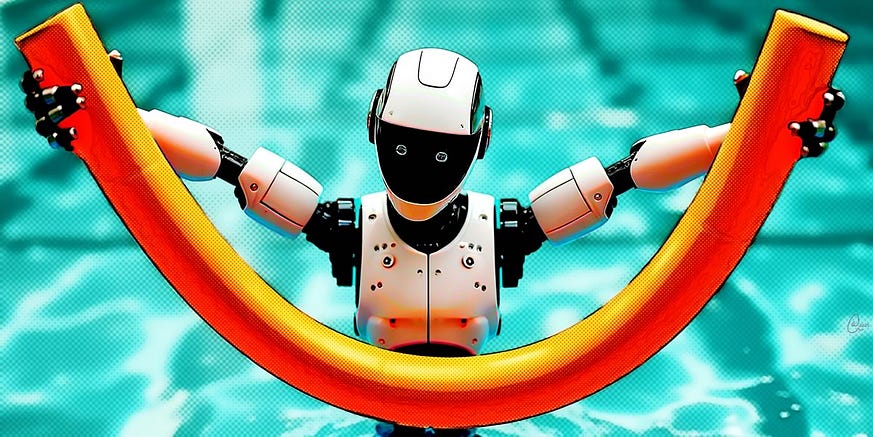
Here’s an example of a floatation device designed for a specific range of purposes:

It’s called a “pool noodle.”

From Wikipedia: 
“A pool noodle is a cylindrical piece of flexible, buoyant polyethylene foam. Pool noodles are used by people of all ages while swimming. Pool noodles are useful when learning to swim, for floating, rescue reaching, in various forms of water play, and aquatic exercise.”

It was designed to fulfill a particular niche and for a minimal purpose. Yet, when the product was released to the market, it took off at a level of popularity that well exceeded its intended use.

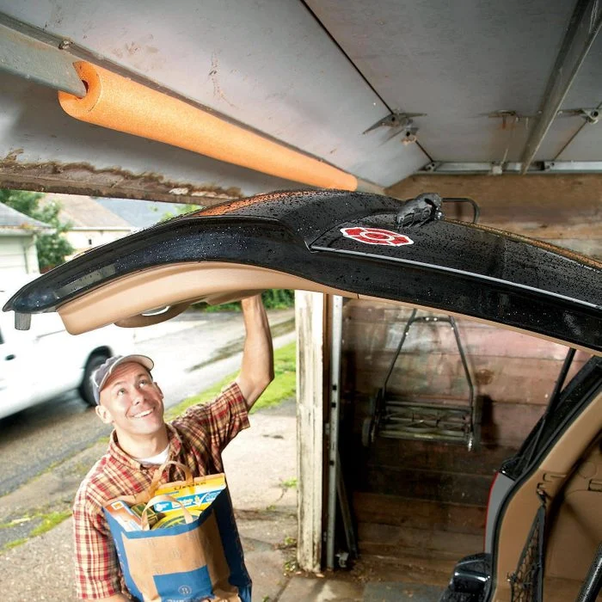
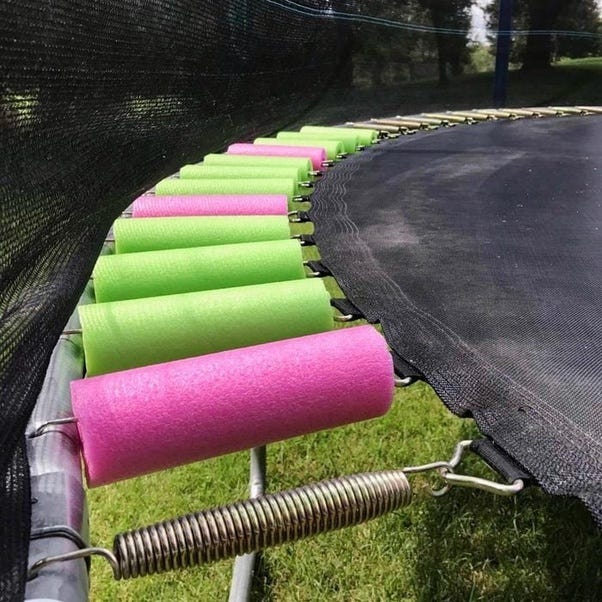
21 Unusual Uses for Pool Noodles

28 Ingenious Pool Noodle Hacks

Pool noodles have hundreds of applications invented by users who have applied some creative thinking to problems they encounter in daily living.

At the time of its design, a simple floatation device could not be imagined to fulfill other needs. It was designed for one purpose that it fulfilled so well that people became familiar with it and began applying its potential toward solving different problems.

We cannot possibly predict how AI enhances human potential without giving it over to humans to invent ways to achieve that potential under their initiative. To refer to AI in such limiting terms as a means of “just automating jobs” is a severe underestimation of its potential and an admission of an utter lack of imagination.

Don’t be too concerned about a failure of imagination, though, because no one can possibly imagine all the uses for which AI will be applied. It’s too big, too broad, and too adaptable to too many use cases for anyone to predict.

AI will enhance human potential; giving humans access is the best way to achieve that.

However, AI’s ability to enhance human potential is as much a threat as a strength. It’s like giving a loaded weapon to a child.

Much more than ensuring AI will enhance human potential, we must ensure that humans have the cognitive skills, emotional development, and psychological stability to utilize AI for beneficial rather than malignant purposes.

AI needs guardrails, but less so around it as a technological tool and more around how humans utilize it.

We should focus significant resources on AI’s development in areas that can improve human development while addressing a severe deficiency in our psychological health. Our state of mental health as a species is our most significant threat, while AI’s ability to enhance that potential is like distributing nuclear weapons throughout a population of children.

Are people presenting Chat GPT answers as their own?

This post is a response to a question posed in its complete format: “Are people taking Chat GPT answers and posting them on Quora? It seems there are many answers all with the same format every time, and sometimes people post the same answer twice. It is very annoying. How can this be stopped?”

There appears to be less of that behaviour today than about a year ago when ChatGPT became a public sensation.

AI-generated content has generally been easy to spot, and I’ve blocked several accounts where people have tried passing off AI content as their own. It may be for that reason I see less of it.

People may also have become more discerning with their inclusions of AI-generated text — by removing obvious clues and editing the content before posting it. ChatGPT has also evolved and become more sophisticated and less easy to spot.

I use Grammarly to speed up my writing and clean up errors, but I still struggle with its structure as it “suggests” changes that are not natural expressions to me.

My experience with it has affected my writing by improving it and relenting on choices I would not have made. I’m unsure how I feel about that beyond feeling a bit dirty in accepting a suggestion out of expedience rather than rewriting an entire paragraph to make it acceptable.

I will fight more vigorously against Grammarly on my desktop than on my phone because typing — especially editing- can be a pain.

Grammarly can generate content from existing text by rewriting it in a more grammatically acceptable (not always correct) format. This makes it somewhat different than the content generated by ChatGPT and other AI LLMs used for content generation.

There also exists AI systems that are designed to spot AI-generated content, of which I am sure many are included within academic budgets. I noticed recently, however, that new AI systems are emerging that claim to be capable of passing muster on being scrutinized by AI detection systems.

Whether those are effective or not, I don’t know. Still, I suspect this will continue to be an evolving issue where it will become impossible to differentiate between human-generated and AI-generated content.

For my part, it seems like I’m being encouraged to cuss more frequently to ensure people understand that they are reading words produced by a human mind over that of a “robot,” but that may be an excuse with a limited shelf life.

Can Devin AI replace human developers entirely?


This question was originally answered on Quora and written as is.

I’m not familiar with Devin per se, but I don’t see AI “replacing people” in any capacity it is developed to function within — and I use that description with a caveat because AI IS replacing hundreds of thousands of jobs — if not millions worldwide.

https://preview.devin.ai/

AI has the potential to liberate humans from mundane tasks. It can free up time that would otherwise be spent on repetitive, clearly defined functions while still relying on humans to make decisions and set the parameters for these tasks.

Tasks that require creativity, judgment, and understanding of context will continue to be the domain of humans. These include quality control analyses, determining the scope and context of tasks, and designing the application for which a task is intended.

This is where the waters become muddy because most jobs are mostly drudge work.

Millions of labour hours are spent every year on tasks that can be automated.

Capitalists know how much they can save by eliminating humans from repetitive and clearly defined tasks.

Many may be arrogant enough to believe they can supplant human creativity and intuitive judgment with an artificial solution. Companies like Disney, however, are butting up against an immovable wall in this regard and getting their noses bloody because of their sociopathic disregard for the human equation in the capitalist environment.

We will see many psychopathic capitalists decide they can do without the most expensive of their labouring monkeys, and they will fail because of it.

We are likely to witness a significant loss of jobs due to AI. This is a reality that few people doubt, and those who do will be in for a rude awakening when the replacement rate reaches a critical level.

Yes and no, but yes, jobs will be lost. Developers with initiative, resources, and creativity to imagine solutions will also be empowered to create their own software enterprises. New jobs will be created, and we’ll see an explosion of “individual corporations” replacing a landscape of monolithic enterprises that employ hundreds of thousands, which will be much healthier for our economy in the long run. This change in our corporate landscape will reintroduce the stability we once had before the middle class came under assault in the 80s and eviscerated our unions.

Right now, when a monolithic corporation makes a minor cut in its costs, thousands of jobs are lost. The economy is stunted as a result of a minor bookkeeping adjustment or on the whims of a sociopath who decides they no longer need to pay half of the staff of the enterprise they just purchased and sends them off packing.

In an environment populated mainly by independent entrepreneurs and small “mom-and-pop shops,” any single endeavour can fail, and its failure has no discernable impact on the economy or society at large.

The biggest, most disruptive, and potentially destructive challenge is arriving at this newly recovered and economically defined demographic dynamic through a smoothly managed transition.

The most crucial step to reduce the negative impact and the widespread hardship resulting from the transition to an automated society is to build a solid base upon which people are free to live and pursue the motivations arising from their imaginations and inventiveness.

We must improve liquidity throughout our economic systems, which requires a two-fold process. While the first is to ensure everyone’s basic living needs are met through a universal income floor, the second requires freeing up capitalization for entrepreneurial initiatives.

This second step will be the most difficult to implement because it will require the most powerful among us to relinquish their power. That will happen through reasoned measures or due to entrenched and narcissistic arrogance that will lead us all to widespread chaos.

Hopefully, most will be able to identify entirely new vistas of opportunity for themselves in which they can benefit from the changing landscape in ways that are becoming less and less possible by reaching a saturation level where the only room left for growth is a takeover of smaller enterprises.

As individuals, their creative capacities and economic potential are far more reliant on the support and inspiration they receive from the collaboration synergies than on armies of sycophants telling them what they want to hear.

Some will be wise enough to leverage a massive transition in human society in their favour because they understand and value human ingenuity. Others will fail because their misanthropic disdain toward their servants leads their economic inventiveness to an empty silo devoid of value in the marketplace. If we are to go by the statistics which indicate the prevalence of psychopaths at the boardroom level matches the density of a prison population, I would expect about 20 percent of our plutocrat dynasties will not survive the transition and humanity as a whole will be the beneficiaries of such a surgical culling of our economic dynamics.


Cognition Labs — The developers of Devin AI — LinkedIn Profile:
https://www.linkedin.com/company/cognition-ai-labs/

They can be followed on X via @cognition_labs

Below is a screen of current AI initiatives underway for augmenting the software development process — 24 AI projects for software development alone as of September 2024:

Since deciding which option might be best to explore for one’s projects, here is some further reading on AI tools for software development:

Top 10 AI Tools for Developers in 2024
https://code.pieces.app/blog/top-10-ai-tools-for-developers

13 AI Tools for Developers
https://www.wearedevelopers.com/magazine/ai-tools-for-developers

Best AI Tools for Programmers: An In-Depth Analysis
https://medium.com/@kaushikvikas/various-ai-tools-for-programmers-an-in-depth-analysis-e4ddc1cde88d

Top 15 AI software development tools to use in 2024
https://decode.agency/article/ai-software-development-tools/

9 of the Best AI Tools for Software Developers in 2024
https://www.stepsize.com/blog/best-ai-tools-for-software-developers