Are America’s promises still trustworthy?

This post is a response to a question initially posed on Quora, and can also be accessed via “https://www.quora.com/Are-America-s-promises-still-trustworthy/answer/Antonio-Amaral-1

America has a humongous chasm dividing the nation. Consequently, their politics and decision-making process are subject to a see-sawing effect.

Whatever decisions a party in power might make, the next election will likely empower the opposition. When that happens within conditions of extreme differences, the next party completely reverses whatever gains one party makes.

America has no consistent long-term development or growth plan.

It is ruled by chaos, making it impossible for any other country to count on stability.

Stability is crucial to any form of success, whether for an individual, a family, a community, an organization, or a nation.

Without stability, there is no predictability, and no way to proceed without constantly reverting to a fight-or-flight disaster planning mode.

It’s impossible to develop, much less maintain confidence in one’s decisions, because circumstances could flip the next day.

It would be like trying to decide which bank would be safest to deal with to protect your savings, and being unsure whether or not they’re going out of business tomorrow.

It would be like going to multiple stores to decide which products you can buy at the best prices while building your list, and then going back to make your purchases, and all the prices doubled between visits.

No one can make any progress in that kind of environment. America has no capacity for long-term planning, while planning for a nation like the U.S. should be at least for 100 years. Meanwhile, Americans can’t even plan every quarter like a business would.

This type of ongoing chaos is the kind of dynamic that is often found in a family that is controlled by a narcissist who constantly keeps people on edge and walking on eggshells to ensure they can be overwhelmed into submission when the head chooses to flex their muscles.

This is precisely the dynamic found within criminal gangs, which are often at odds with each other while engaging in ongoing internal conflicts.

This is precisely the dynamic that Donald Trump has lived with his entire life.

The only way he can find comfort is in the knowledge that he can destroy anyone within his sphere on a whim.

It’s only a matter of time before he begins publicly trash-talking Elon Musk while he secures a relationship with Peter Thiel to pit the two against each other.

His strategy has always been that of a bully. No one wants to deal with a bully unless they can benefit from being subservient to them and are comfortable navigating such chaos while accepting subservience to their abusive mindset.

Such people are all products of a broken home, while we live in a world where one in five people are suffering from a mental health condition, and a whopping majority (70%-80%) of families are dysfunctional.

Anyone with experience in a dysfunctional family understands how the pain that drives all the members apart makes them estranged.

America is the child in the global family who has become an addict, has lost control and threatens international stability.

The world can stay as far away from America’s business as possible while shutting its doors on trade deals until America can come to its senses.

Attempting to work with America today represents a significant risk to the stability of any nation that tries to do business with it.

Donald Trump has a long history of bragging about how he doesn’t keep his promises, so only a gullible fool would trust him with anything of value.

This is why Ukraine shared nothing in advance of their counter-attack on Russian military planes with the U.S., because the nation cannot be trusted.

If that’s happening, you can bet that the rest of the world’s nations have changed their information-sharing policies to regard the U.S. as an enemy, not an ally.

The impact of Trump on America that the MAGA cult cannot see will be felt for at least the rest of this century.

If nothing else, America will emerge from this nightmare, if it survives intact, with a newfound appreciation for the importance of voting in the world’s most extended election cycles.
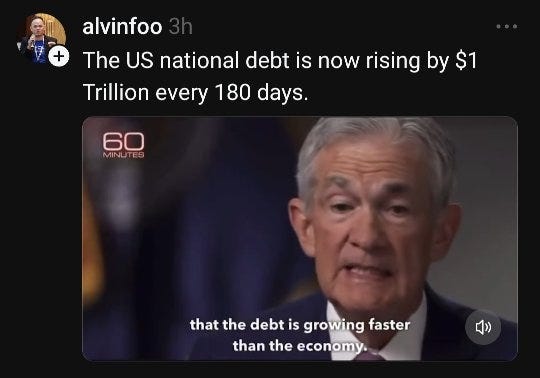
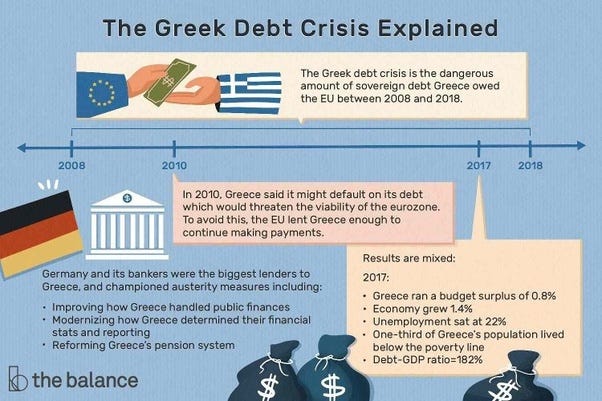
Right now, it’s only a matter of time before America becomes Greece and the U.S. becomes the world’s beggar looking for a handout to keep its economy from collapsing.
Why are Tesla cars expensive if they’re cheaper to make?

This post is a response to a question posed in its complete format: “If Tesla automobiles are cheaper to make because of less human labour, why are they so expensive?”

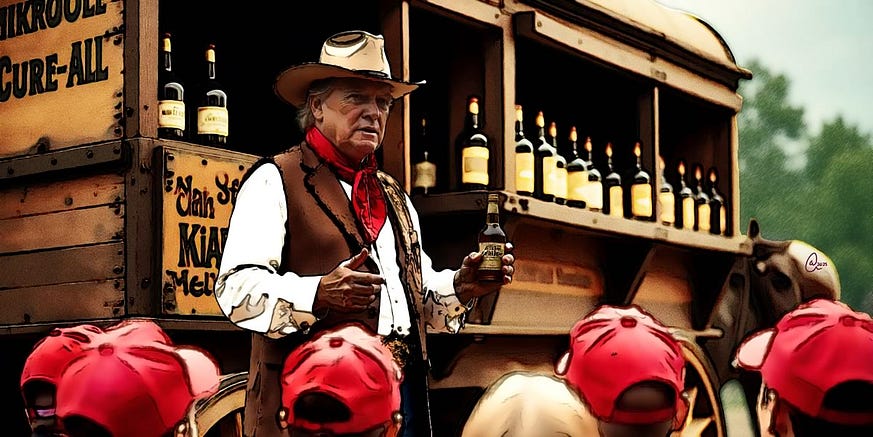
Ah… the CON of capitalism is that the people believe price is a consequence of production costs when nothing could be further from the truth.

The cost of everything you buy is based on what the seller thinks will sell the most products.

Ironically, many people believe the most expensive products are the highest quality, and that misconception drives every vanity purchase.

It’s why capitalists like monopolies in their market. They can fix prices at whatever level they want, and people will gladly pay more for an inferior product. That’s how the health insurance industry works in the U.S. All they have to do is sell the idea that their consumers are getting a superior product at a lower cost because they’re not paying for supporting the poor or the immigrants they hate.

It’s a game of manipulating emotions and dulling logic with massive amounts of cheaply disseminated disinformation.

It is so successful at making billionaires richer that they’re trying to institute it in Canada. A handful of billionaires want to spread this formula worldwide with activist organizations they fund.

It’s why Donald Trump likes tariffs — they make people get used to paying more for their products so that when tariffs are lifted, prices drop by less than the tariffs, so that the products still sell at volumes they did before the tariffs were instituted.

Tariffs are a form of strategic price gouging for a market of Stockholm Syndrome victims.

We saw this strategy in action after the global pandemic lockdowns ended and supply lines returned to normal operations.

A product like the Swastitruck can be utter garbage, but because it’s unique in its design and grossly overpriced, people instinctively believe they are purchasing a superior quality product.

Market pricing is a psychological game that product manufacturers and sellers play with their consumers.

Why does the Chinese government look like geniuses run it?

This post is a response to a question posed in its complete format: “Why is that for Chinese living inside China, the Chinese government is not perfect, but for people looking at China from the outside, the Chinese government looks like it is run by geniuses who plan far ahead into the future?”

I believe it’s important to highlight a harsh truth that completely escapes MAGAt minds.

China isn’t “run by geniuses” but by ordinary minds who use “common sense” to plan “far ahead into the future.” They leverage the minds of their people, and many are geniuses, making incredible technological breakthroughs.

Nations cannot plan for the short term without missing the boat on the long term. People can prepare for the short term because the lives of individual people are short compared to the lives of nations. Nations must plan for millions of lives and not just one.

“Common sense” leadership is acknowledging one’s limitations and relying respectfully on the crowd’s wisdom to achieve a nation’s most significant potential. Authoritarian mindsets will always fail against this kind of “common sense.”

It doesn’t take a genius to figure this out.

All that’s required is not to be a stupid, short-sighted narcissist who thinks the world magically dances to the sound of one’s voice.

That’s precisely the problem fueling the self-destructive hubris sending the U.S. careening into becoming a third-world shithole and all of this is entirely due to the machinations of short-sighted bigots whose goal is the resurgence of another Reich because they continue to refuse to learn from history.

MAGAts may claim to value “common sense,” but their short-sighted and self-serving biases are not “common sense,” but an entirely “subjective and self-destructive sense.”

This period in history is teaching us once again that we must cure our species of the authoritarian virus that we have been fighting against since the dawn of human civilization.

China has had enough experience with authoritarianism to know how to handle the U.S. slide into fascism.

Does economic nationalism create global divisiveness?

This post is a response to a question posed in its complete format: “Is economic nationalism the solution to preserving jobs, or will it create deeper global divisions?” Responses to follow-up questions are included along with the answer given to this question.

Economic nationalism is economic isolation in a highly interconnected world.

It means shutting a nation off from the rest of the world.

It means North Korea.

It means a complete restructuring of an economy to adapt to an impoverished and repressive existence without access to a diversity of goods, services, and technologies that permit a nation to evolve and organically create jobs.

In today’s world, it means dropping out of the global trend toward automation for the citizenry. It means the people learn to adapt to functioning as disposable serfs to an elite class that avails itself of all the perks the rest of the world enjoys.

It means a government focuses on conscripting the able-bodied to serve primarily as military drones to eventually become cannon fodder with expansionist strategies to keep their economy from collapsing altogether.

The global divisions are the ones that a nation makes as it shuts itself off from functional relationships with other countries.

The rest of the world will continue to develop and strengthen its international relationships to become a united entity that can push back on expansionist regimes.

For the U.S., it means going from being a global power to being a global radioactive zone until it can be fully isolated.

Follow-up Question #1:

Is there any scenario where a nation can balance economic nationalism with global trade, or is full integration the only path to prosperity?

The term “full integration” implies a loss of identity and sovereignty. Neither of those is true. In Canada, an external threat to national identity immediately rallied the people into a unified front to protect their sovereignty.

Meanwhile, you can drive around Canada and seldom see the performative patriotism you can see everywhere in the (highly divided) U.S.

Follow-up Question #2:

Do you think Canada’s approach is unique, or have other nations successfully balanced global ties with a strong national identity?

I can’t speak for other nations, but I have long recognized the distinction between a melting pot and a multicultural mosaic.

For all the reverential lip service American culture displays toward individuality, its practice of homogeneity runs counter to that professed ideal.

On the other hand, Canadian culture promotes community through a practiced respect for individuality.

This contrast addresses the difference between a genuinely profound love of country organically cultivated versus a performative love of country cultivated through grooming.

It’s the difference between a deeply held but silent personal belief versus the cultivated optics of shallow regard for something that can be leveraged for sociopathic motivations through attention-focusing performances.

Will Trump’s tariffs bring new jobs?

This post is a response to a question posed in its complete format: “Is there any way that these new tariffs by Trump will bring any new jobs in the next 5 years or will they just add more inflation and costs to the US families?”

Let’s assume the plan is to increase jobs in the U.S., such as with increasing aluminum production. That would mean Trump would now be in the middle of discussions on that issue, if not initiating plans for increased energy production through hydroelectricity. Plans would be on the table for the development of dams that can serve to replace Canada’s aluminum production.

Why has there been no discussion?

Are there even any sites in the U.S that can compete with Canadian dams?

Why have there been no feasibility studies?

Why has there been no discussion about addressing the increased costs of tariffed products?

Everything about Trump can be described as a knee-jerk response from a bully. He consistently behaves like a childish bully who is used to people capitulating to his demands.

When Canada and the European Union discuss developing their trade relationships, he threatens to escalate his tariffs.

That doesn’t sound very forward-thinking to me. Does that sound like strategic thinking to you?

How does he intend to compensate for the burdens he’s been placing on the working class?

Oh… that’s right, he and Musk have been talking about how an allegedly short restraint would benefit the American people because they’ve become too complacent in their luxuries as their quality of life tanks and life expectancy shrinks.

The harsh reality is that the American people are being played for suckers by the wealthy class for who a bit of belt tightening isn’t a threat to their lives. Belt-tightening for them barely registers as cutting back on options for the new nested doll yacht purchase and cutting back on staff to maintain it on their behalf.

They won’t feel the pain of the inevitable recession he’s causing. Many are likely looking forward to it as an opportunity to invest in business purchases for fire sale prices.

How anyone may parse his decisions, they can’t avoid concluding that he intends to benefit the wealthy at the expense of the working class.

That’s the core goal of Project 2025 and the Dark Enlightenment group as they reduce the nation to a two-class system of rulers and serfs.

He doesn’t care about your jobs.

He already knows his buddy Elon will replace many jobs with intelligent robots. The little people will become even less substantial and be viewed as more of an unwanted burden.

The more he can eliminate from the bottom of the economic hierarchy, the more he can upgrade his toilets from gold to platinum.

Has China become more democratic?


This post is a response to a question posed in its complete format: “Has China become more democratic as its economy grew in the 1st quarter of the 21st century?”

China has become more accommodating of the needs of the people while maintaining a paternalistic attitude toward the masses — which has been effective, to a degree, in maintaining order while educating and empowering the people as they work toward common goals benefiting their society.

As a system of governance, Xi has been moving toward increased consolidation of presidential power while questions about how much control he has over the levers of power have arisen. In essence, however, China remains a single-party system that they sometimes call a “People’s Democratic Dictatorship,” and in other cases a “Socialist Consultative Democracy.”

The magical ingredient of their community-based social evolution has been lost within the hyper-independence cultivated in the West. China has avoided the manifestation of extreme sociopathic disregard for one’s fellow citizens from a philosophical perspective. However, they have profited from the paternalistic exploitation of workers to enrich the community and the rich in more of a partnership than as disposable commodities in the West.

In contrast to the planned societies in China, today’s “Western-based” corporatocracy has resulted in a legalized re-institution of a medieval social structure built upon publicly denied but implied class divisions as the plutocrat class feigns partnerships with the working class through empty slogans like “essential workers.” Ironically, China’s single-party rule of the people has been transforming from an iron-handed autocracy into a kindly old grandfather who watches and guides the product of their efforts to discipline their offspring and bear fruit.

China was rightly criticized for its suicide nets, and I’m not sure how prevalent those are these days, nor how gruelling their factory work remains, but the sacrifices of those who gave their lives in service to a horrid existence appear to be making way toward the emergence of superior societies built around advanced technological progress. Planned cities like Zhenzhen and Chengdu have become global technology hubs, making breakthroughs that rival American developmental efforts.

At this rate, American dominance in technological breakthroughs will become a memory within the next few decades.

As more technologically sophisticated societies emerge, the less reliant the public will be on autocratic structures to maintain order because they will become capable of the self-regulation that accompanies higher technological and psychological development levels.

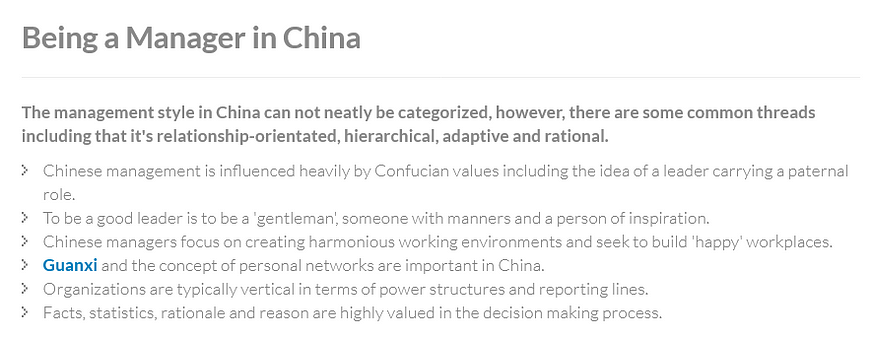
Knowledge work has been woefully misunderstood by Western thinking. Capitalists like Musk, who consider highly educated people disposable assets rather than allies, rely on controlling talent they treat in abusively disposable ways instead of leveraging them as partners who could help him overcome his limitations. As we see with Chinese corporate structures, the way of the future is a more nurturing management style in their operations, favouring mentorship and career development support, than Western corporate autocracies favouring cultures with toxic cutthroat competition.

The Chinese Management Style
A free guide to being a manager in China. Learn about Chinese Management styles, Business Management, Project…www.commisceo-global.com

For the last few decades, workers in Western high-tech environments have been far more competent than leadership incapable of comprehending, much less appreciating how much more skilled their employees are than they are in their knowledge domains. Companies in the West hire down to the level of incompetence of the management rather than hire up to empower their organizations with capabilities that can empower their growth. They are still stuck in the dark ages of employment, which is why most people still don’t understand how disastrous DOGE’s cuts will be for the functional needs of the nation.

Far too many believe the laid-off labourers can be replaced like obedient cogs to continue functioning as before. They fail to realize they’re impacting human lives and professionals who once cared about their roles and their impact on their operations. They fail to recognize the cost of replacing professionals is not as simple as identifying another body to fill a space. Workers are now being incentivized to disengage and stop caring because they’ve been consistently confronted with proof that their contributions bear no value to any psychopath with power.

If the public was ever upset when dealing with dispassionate bureaucrats who did the least they could get away with in their jobs, welcome to “I don’t give a shit version 2.”

The deterioration of the human spirit currently prevalent within the Western sensibility merely gives China the impetus to continue empowering its people because global leadership is just around the corner for them.


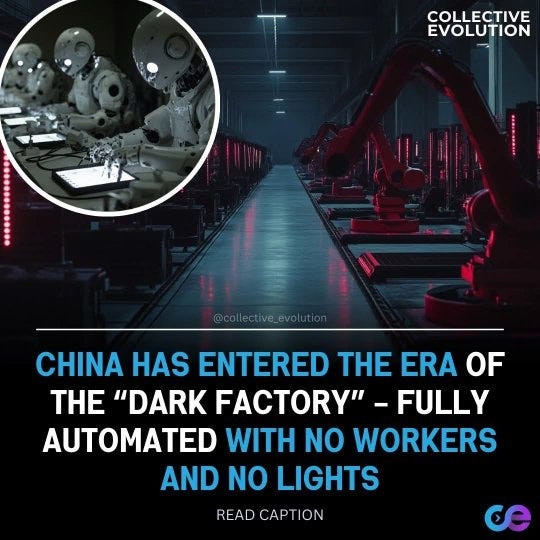
With the advent of “Dark Factories” — fully automated factories, the Chinese people are ahead of Western Industries and their government is likely better equipped psychologically to transition their support systems for the people than what we’re seeing now in the reckless Chainsaw antics of cutting necessary systems indulged in by American plutocrats.

How this translates into a better-equipped governance system to represent the people makes American-style pseudo-democracies appear less capable of being the governments of the people and for the people than the Chinese government of a paternalistic entity ruling the people. It’s no wonder people had become more amenable to a fascist style of government before Trump’s bull-in-a-chinashop rampage began.

Fortunately, the world has better models for democracy in the Nordic styles of social democracies, which borrow concepts from both governance styles to create an effective balance between necessary support infrastructures and free market capitalist principles with realistic restraints on power.

In short, China hasn’t “become more democratic,” but it has become more efficient at meeting the needs of the people. Their system will continue to evolve as their industrial sector evolves and drives social change as it has since the beginning of the Industrial Age.