This post is a response to a question posed in its complete format: “Religious books are a lost cause. I’m an atheist, but I’m wondering which religion do you think is the most convincing? Don’t say none of them please.”
As others have pointed out, you’re not an atheist because you think like a believer does when they interpret their “spiritual journey” as a gym membership where their responsibility is limited to picking the right gym.
This is the sort of thinking that doesn’t care about physical health and fitness, nor about whatever benefits might be derived from an adequately customized routine fitting their personal needs in a way that optimally contributes to their development.
This is the sort of thinking that wants to take a pill to get the benefits of heavy lifting without having to do the work.
An atheist will have already sorted through this nonsense to arrive at a point where they understand that picking a religion doesn’t have anything to do with whatever one’s “spiritual journey” might be.
Picking a religion is like choosing between clown costumes to attend a formal affair.
If you were an atheist, you would be interested in the concepts defining the differences between belief systems rather than viewing them as package deals in which to immerse oneself.
If you were an atheist, you would want to know why it is that the “least spiritual” and most blatantly hypocritical and brutally violent religions are three of the most dominant religions on the planet and are entirely products of toxic patriarchy.
Many other religions demonstrate far more respect for life like Buddhism does and without dogmas rooted in barbaric violence.
If you were an atheist, you would not care about “which religion” but about which religious practices and ideals are beneficial and which are toxic to your growth. The notion of joining a team to achieve “spiritual growth” would send chills down the spine of an atheist who is otherwise clear on how utterly destructive such tribalistic thinking is to one’s mental health and personal growth.
The fact that so many believers feel compelled to address their issues through fraudulent representations of themselves is just proof that believers don’t sincerely believe their delusions. They struggle with their doubts, so they feel compelled to overcompensate through fraudulent behaviours. Sadly, they don’t know how to escape their mental prison and see no alternative but to indulge in sinful betrayals of the tenets in their scriptures.
This post is a response to a question posed in its complete format: “I won’t give up my faith, but what are the 3 things that atheists would like from Christians (or any religion really), in order to live in the best society possible?”
No one is asking you to give up your faith, and if someone does, then you have every right and justification to tell them where to stuff their opinion. You have every right to whatever belief you choose to hold. Sovereignty over one’s mind is an inalienable right (regardless of whether some might disagree — I’ll fight this one to the death — which is my belief, and if I choose a belief and hold onto it strongly enough to go to war to defend it, then I have to respect another’s right to do the same).
Having said all that,
I don’t impose my beliefs onto others (what I spoke of above was defending my belief — a big difference), and I do not want others to impose their beliefs onto me. I am severely offended by attitudes that do not respect my choice, yet I expect respect for theirs.
#1. STOP proselytizing. I don’t care if it’s a mandated directive. Do NOT impose your beliefs onto others if they do not want to endure your rendition of them. Please respect that you have the right to your beliefs ONLY because you acknowledge another’s right to their beliefs.
What this means in “real world terms” — NO MORE anti-abortion nonsense. NO MORE sexist, misogynistic imposition of your religious beliefs onto a society of individuals who do not share your beliefs. STOP PROSELYTIZING. PERIOD. Nothing of your belief system belongs in a shared society’s laws… nowhere in educational policy… nowhere in anything beyond its context.
By all means, use your existing houses of worship and your homes to worship, practice, or do whatever you like concerning your beliefs. DO NOT attempt to push your interpretation of your own beliefs onto a public sphere. Your beliefs are yours, not everyone else’s. Learn to respect that and put it into widespread practice. Speak out against toxic hypocrites like Jim Bakker, who pushes an ignorantly incendiary and self-serving agenda by riling up his “flock” into supporting violence to further his cause. That is entirely disgusting behaviour. Your beliefs do not belong anywhere outside the context they serve you.
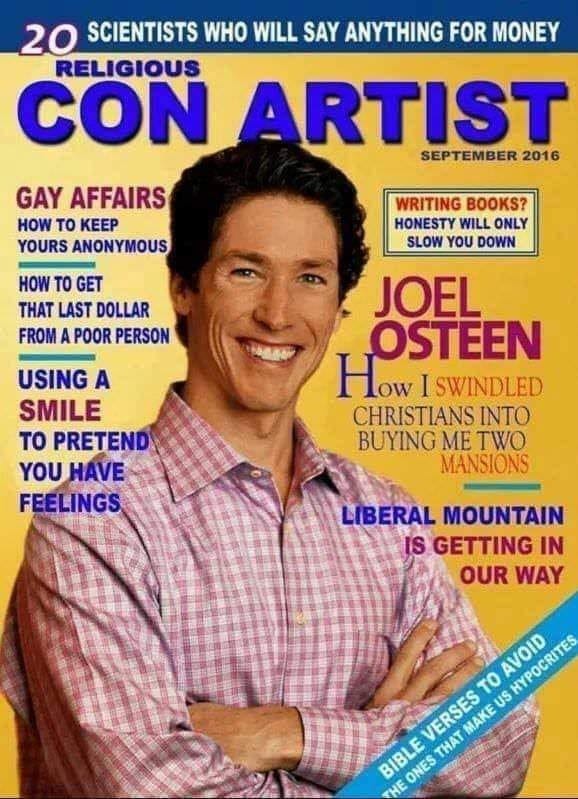
#2. Get out of politics and learn to respect what is sacred about the separation between church and state. While you’re doing that, start paying taxes and take every dollar back from the rich evil monsters who are preying on the weak to con them into supporting their personally lavish lifestyles. (I don’t remember who it was now, and I’m not going to research it, but an example I remember from recent news was one hypocrite crying about needing a personal jet because public air transportation is full of sinners. — — I’m happy to report that person did not say that directly to my face because I’m not sure I would have contained my disgust with that particular attitude. Still, I can tell you, every one of those entitled monsters who prey upon the weak have nothing but enmity from me, and I’m pretty sure many others as well. Do SOMETHING about them because they certainly do NOT represent any spirituality or belief. They are the same cut of sociopathic monsters as those who lead terrorist groups from other belief systems.)
#3. Get out of science and learn to respect your boundaries and the role of religion in society. Your beliefs are not science or scientific in any nature or stretch of the imagination. Your beliefs do NOT trump scientific discovery within the realm of science. Evolution, for example, as your beliefs don’t bind a topic. Evolution occurs whether you want to believe it or not. Still, you need to understand how the moment you think your subjective belief somehow forms an equivalent counter-argument to hundreds of years of an evolving discipline, you betray your faith by stepping into territory which doesn’t belong to your faith and is not beholden to any subjective conclusions you may arrive at.
Facts are Facts. Period.
Arguing creationism as some form of valid response to evolution is a disgustingly stupid form of willful ignorance. It has polluted this world far too much already, and the disgusting attitudes of believers concerning this issue are just too much to deal with now. We have more significant problems as a species, and being bogged down by idiots who think their personal, insular, and subjectively defined perspectives on life should be given enough credibility to be treated seriously in a public dialogue only makes things worse for everyone.
Keep your faith, but know this; it is subjective and not remotely determinate about our physical universe. Learn to understand how faith does not trump facts because it should work the other way around. Physical reality should determine our beliefs because we are bound to this existence. Anything beyond it is speculation. If you want to call it a belief, go ahead, but it means nothing to the facts we all must live by together.
This post is different from my typical fare. It is an answer to a question posed on Quora, but it’s also a response to a post I’ve read about AI replacing human writers. My arguments have consistently been that as long as an AI is incapable of feeling emotions like love, sorrow, hatred, anger, and the entire range of emotions bred into us throughout centuries, it will never be capable of stimulating emotion within people. AI will never, on its own, connect with humans emotionally. Humans may imbue their AI experiences with emotions, but those are projections. Those emotions are mirror reflections of oneself and one’s biases. They can certainly help develop mindfulness techniques, but that becomes a self-referential silo.
Socialization is how we grow past our self-imposed boundaries, and we need input from other humans to understand ourselves truly. The purpose of this post is to prove this contention. How I will be doing that may seem somewhat circuitous, but please be patient enough to get to the punchline because I think it’s amusing, and I hope you will be too. Thanks for reading my gurgitations.
You ask this question as a believer because you must choose to maintain your belief consciously.
Every day is a day of ritual affirmation of your belief. At least once per week, you socialize with people to reinforce your choice to believe.
Your crises of faith are caused by the fact that you sometimes struggle to maintain your beliefs. You have doubts about your beliefs, but you do what you can to put them aside, and that may include a prayer or a castigation against Satan invading your thoughts with temptations to stray.
You may even turn to your book to find inspiration to hang onto your belief. You see words that confirm how hanging onto your belief is sometimes a struggle and that you must stand firm and never lose that belief.
You fear losing your belief because you feel like you’re letting down a paternalistic entity that will be disappointed and angry with you for not maintaining.
You struggle with the fear of an eternal punishment for betraying your commitment to your belief, and yet, after all of that, you still wonder why you endured all that turmoil.
You may tell yourself that it’s a test of your character and that if you pass it, you will be graced with an eternal reward instead of an eternal punishment.
You still wonder how people can live without that struggle, so your curiosity prompts you to ask how people would choose against what does not feel like a choice.
In your mind, you may think you have a choice, but you have a choice because a choice between Heaven and Hell isn’t much of a choice. It’s a no-brainer. After all, who would be stupid enough to choose eternal torture?
This prompts your curiosity because many people seem unconcerned about what you believe will happen to them.
Your mind struggles with the notion that people would choose eternal torture on a lake of fire as if it’s never going to happen to them.
It makes no sense whatsoever to you that people would choose to reject Paradise in favour of Hell.
The problem, however, isn’t that people choose not to believe because you can’t actually “choose” to believe. You know this yourself because you don’t “choose to believe.” You choose to maintain your beliefs.
What you do not understand about atheists and atheism is that people do not choose to become atheists.
People awaken to a new reality about themselves that they no longer believe the illusion and realize after the fact that they have become atheists.
Here’s the punchline:
An AI may be trained well enough to identify what I identified in the question posed. I don’t believe an AI could trigger the querent on such a visceral level by being so on point that they become defensive and dismissive of the information they encounter. This is a technique I refer to as “forced introspection.” This person will continue to deny, as we already know from our experiences with the MAGA mentality. However, they won’t forget how they were triggered to discover that their dismissal of what they read will vanish from their consciousness without an impact.
This dynamic can only occur between humans, so I feel comfortable putting all my economic eggs in the creative content basket. I’ve wasted a lifetime attempting to fit into a broken system and have become worse for wear. I may not ever see the same income potential I was well underway in achieving before a nuclear bomb on my life ended that aspiration. At least I can spend whatever time I have left expressing myself and permitting myself to be the “real me” through doing what I love doing.
Neither of those concepts is exclusive to believers. That you ask this question means you’ve been subjected to disparagements about atheists by other believers who spread hatred instead of the peace and love your faith alleges to represent.
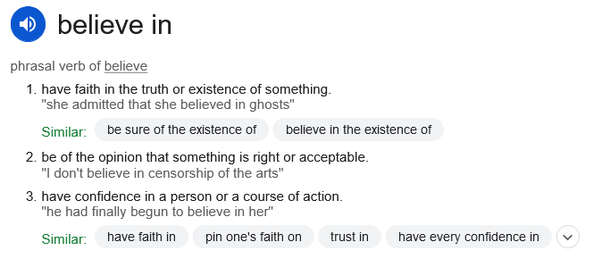
This particular atheist now cringes every time I see the words “believe in” because I know it’s coming from a believer who doesn’t understand belief. They overuse that expression as a shortcut for every bit of conceptual data their brains can accommodate.
It’s like watching someone put ketchup on everything they eat, from eggs to steak to cakes and doughnuts. It just gives me the heebie-jeebies.
I am learning to hate the expression “believe in” more and more every day because the people who are supposed to understand the implications of belief the most are the least capable of comprehending the implications of a belief.
Many believers confuse belief with entrenched insularity; nothing could be more toxic to the concept.
Many believers behave as if zealotry and belief are synonymous, but they’re not. They’re just excuses to refuse to learn, grow, and change. Invoking beliefs for believers is often the equivalent of a child whining about cleaning their room or taking their medicine. Letting go of toxic beliefs is just too much “woke” for far too many.
I have faith in myself and my ability to find a way to make it through this exceptionally challenging period in my life, but I have to accept that I may fail. I rely on hope to carry me through while smoothing out the rough edges and allowing me to maintain the necessary motivation to overcome adversity. I don’t see wisdom as a statically defined state of being but as an ideal, like a utopia, which serves more as a compass setting than a destination. There is no point in which a maxim of wisdom is attainable. Wisdom is often contextual and a subjective perception one has of another. To think of oneself as wise is just another means by which one admits membership into the Dunning-Kruger club.
I hope I have enough wisdom to survive my travails, but I have faith that I may succeed even if I don’t.
This post is a response to a question posed in its complete format: “As an atheist, how do you deal with the fact that there is no ultimate moral arbiter and that all morals are determined inter-subjectively and without an objective foundation?”
Have you taken any time to consider how, if a god existed, its morality would also be subjective to it?
If morality had an objective foundation, it would be intrinsic to the object itself. One could essentially “read” morality from within every instance deemed to bear moral implications. If morality were objective, everyone would read and identify identical moral qualities within every situation subject to moral judgments.
It would be no different than having everyone agree that the sun shines and its effect warms us. No one or authority is required to serve as an arbiter for these qualities. We know these facts to be confirmed individually from everyone’s direct experience with the sun.
For the sake of this exposition, let’s refer to those qualities of heat and light emanating from the sun as “metadata.” This description can help us draw some clear distinctions on the language we’re using to resolve discussions on objectivity as it applies to the concept of morality.
For instance, if theft were objectively determined as immoral, then the characteristics defining its morality would be immutably intrinsic to that act of theft. All forms of theft would be considered immoral without condition. It can easily be argued that the metadata ascribing immorality within the act of robbery lies within the harm done to those against whom the theft is perpetrated.
Stealing food to feed one’s family would always be consistently judged as immoral. There would be no distinction between stealing food from a starving person and stealing food from someone with such abundance that most of their food is spoiled from the lack of consumption.
One can argue that stealing food to feed one’s family is not immoral if the person one steals from still has plenty of food to feed themselves. One can say that stealing food that would end up being spoiled from lack of consumption to feed one’s family is moral.
How can both scenarios be valid if morality is objective?
If morality were objective, it would be contained within the object, but as we can see in this simple example, morality is contextual. Morality within this simple case is contingent upon the judgements of those who choose to ascribe varying degrees of value to the individual aspects of the case of stealing food.
Some may determine that stealing food, in any event, is immoral. In contrast, others may determine that stealing food to feed one’s family is an act of self-sacrifice that exposes them to a life-destroying reprisal, which represents the embodiment of morality.
If morality were objective, then it would be immutable, but how many things deemed immoral at the time of the writing of scripture have since been reconsidered irrelevant to the concept of morality?
No one balks today about wearing clothing made of mixed threads. It’s almost impossible to find any clothing that doesn’t mix threads to some degree today. Yet, this practice is no longer considered a moral violation that would anger any ultimate authority such that a reprisal would be forthcoming.
Did God change its mind? If so, how do we know, and when did that occur? By what process are we being informed by an ultimate authority of updates to morality? If morality is subject to updates, how could it be objective?
Morality can’t be objective if an ultimate authority changes its mind and renders updated decisions on what constitutes morality because they are simply conveying (if we can set aside the mechanics of that conveyance) a perspective unique to their apprehension of a situation.
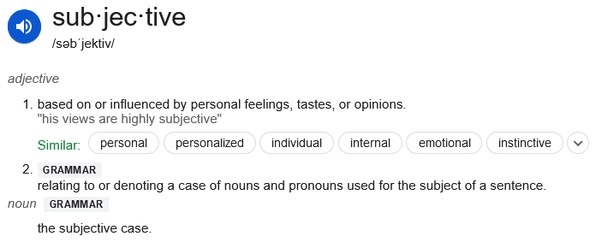
Perhaps you’re still struggling to comprehend the difference between “subjective” and “objective,” and that’s why you insist morality is “objective?”
Let’s look at some definitions to help frame the explanation above:
Any situation in which an authority must intervene to render a decision to settle differences between competing perspectives cannot, by definition, be considered “objective.”
It doesn’t matter whether that authority is omniscient or not; they are still rendering a decision derived from their perspective on the issue in question.
The necessity of an authority to determine morality already renders morality a subjective construct.
Morality cannot be objective by any stretch of the imagination and, most notably, not by arguments ascribing ultimate morality to an ultimate authority on morality — mainly when that authority is not available to provide any direct input into any state requiring a moral judgment to be rendered.
Indeed, the need to render a moral judgement eviscerates the notion of an objective morality.
The appropriate context for perceiving morality is a public dialogue in which we learn to develop our moral paradigms to understand ourselves and our world more clearly. The dialogues we have on morality serve the purpose of developing compassion toward issues outside our frames of experience and help us to apply a moral paradigm to the whole of our existence as individuals and as a species struggling to achieve its potential.
The reality is that objective morality would destroy our capacity for morality because an essential learning process for developing one’s humanity is reduced to rote memorization. In contrast, the human capacity for creativity necessitates means by which moral loopholes can be exploited.
We see this behaviour routinely exhibited by those who claim to be representatives of moral authority betraying their self-appointed statures in society.
This post is a response to a question posed in its complete format: “How can a believer provide evidence for God’s existence to refute the claim of atheists?”
The real problem here isn’t that you don’t know how to provide evidence for God’s existence but that you see that no evidence exists but still insist your God does.
The lack of evidence should be the cornerstone of your disbelief in the existence of something.
It’s the same reasoning you would use to refuse to make a significant purchase like a vehicle without taking it for a test drive.
Your approach to your God belief is like reading an ad without pictures for a $100,000.00 sports car and sending money to an address in another country while expecting your sports car to appear at your doorstep the next day.
Do you usually make your major purchases without inspecting them first?
Would you recommend buying a house without doing a walkthrough?
Why, then, would you structure your entire life around something you can’t verify?
The best you have is someone else telling you it’s true.
You can invest in some incredibly valuable swampland from me if that’s how you make big decisions for yourself.
The harsh reality you’re struggling with is that atheists make no claims.
Atheists only refuse to buy swampland from an obvious charlatan whose only interest in you is how much money they can siphon from your pocketbook.
Atheists have no expectations of an imaginary figure.
Atheists do have expectations from unhinged believers who hypocritically betray their faith and their God’s commandments to treat others like they are all God’s children,
to stop passing hateful judgments and bearing false witness against atheists,
and to render unto Caesar by staying in their lane and out of politics.
Atheists also have hopes believers that they may, one day, realize how their condemnations of atheists only condemn them to an eternal pitchfork enema while being spit-roasted in a lake of fire.
We hope for this because it may finally result in them abandoning their addictions to hatred, violence and overt destruction of all that does not comply with their fascist expectations.
We hope for this because we realize that doing so could finally reduce the number of victims of violence and war to almost nothing.
The mid-East alone would experience a real Renaissance of the kind of love and peace that religions pretend to value. The rest of the world could finally prosper by dropping believers’ widespread misanthropic attitude toward each other and everyone in general so that we could also experience a return to sane values in communities where people work together in peaceful harmony.
It’s a dream, but it’s worth having because without it, one can only descend into the madness spread by unhinged believers, and that is the worst hell of all.
After all, what do you gain by assaulting atheists with childishly delusional questions like this?
Your question is just the result of your addiction to hatred porn. It does nothing productive for you or helps you in any way.
Do you think the people in your life appreciate your efforts to demonize atheists?
Really?
Are you sure they’re not embarrassed by behaviour like this?
Maybe it would help if you understood how this hateful behaviour of yours is what drives people away from religion to make it a rapidly shrinking phenomenon in society.
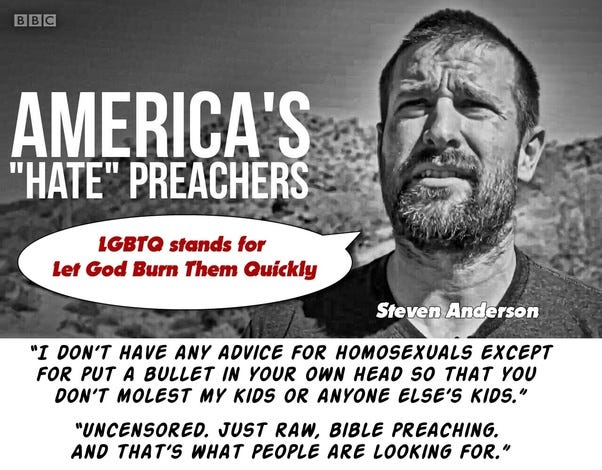
Here, have a look at the effect you are having on your religion with your perpetual hatred spew:
Try to think of what Jesus would do before overtly betraying everything you pretend to believe in because you’re only helping atheism to grow…
And we atheists don’t mind that at all… the sooner you drive everyone away and your mythologies into obscurity, the happier we atheists are.
Thank you for doing our work for us.
Forget everything I said and keep up the excellent work… wallow in your hatred porn because that’s just you drinking poison while hoping your enemy will die from it.
This post is a response to a question posed in its complete format: “Can I say I’m an atheist, when I’m actually agnostic? If I say I’m agnostic I’m worried that people will either say that it’s not real, or try to convert me.”
You can say that your beliefs are your own. You have no obligation to share intimate details of your journey with anyone who isn’t a part of your life.
Anyone who presses you doesn’t respect your boundaries, and if that’s the case, tell them whatever they want to hear to get them off your case. They’re not interested in getting to know you as a person because they want to be closer to you but because they’re looking for some information about you that they can use for their benefit.
People in life will ask you questions about yourself only because they’re looking for weapons to use against you.
You cannot trust people who cannot respect your boundaries. Life does boil down to being as simple as that.
The next time you wonder if you’re “allowed to say something” or another about yourself, try to remember how an orange Nazi turd concocts bullshit about himself and others with every sentence spewing out of his lying piehole.
I am certainly not advocating for any “benefits” of becoming a pathological liar because that’s just disgusting. I am simply pointing out that you have no reason to tie yourself up in knots over how you describe yourself to someone else.
The harsh reality is that you could likely spend an entire month describing intimate details about your life and why you arrived at certain conclusions that prompted you to think one way over another. The chances are excellent that 99% of what you say will be lost on your audience. People remember only 20% of what they hear.
Most of what you say about yourself passes through another person’s perceptual filters, and you have no control over how they interpret what you say. The only thing you can do is make your best guess at understanding them well enough to use the right combination of words that will get them close enough to understand something resembling what you want them to know and then hope for the best.
Your thoughts and feelings are your own… and if you’re anything like what I’ve gone through, then one day, you’ll be agnostic within a specific context and then a militant atheist within another context the next day. The following day, you’ll be amenable to believers, and later on that afternoon, after encountering a zealous believer, you’re back to hating religion and thinking of yourself as an anti-theist while thinking atheism itself isn’t firm enough to get the stench of the zealous asshole off your body and cleared from your mind.
The entire point I’m getting at is that human beings are not robots. As much as too many people want to create labels and stuff people into neat little boxes, humans are not that defined in such discrete terms.
Humans are more like water or vapour, constantly shifting in the wind or changing direction and flow depending upon the shape of the land one moves over. Whatever defines you as you is summed up entirely as your collection of memories.
Meanwhile, your memories are not stored like magnetic particles on a hard drive. Your memories are stored in eleven-dimensional space as “signposts” — symbols that your mind unravels as you recall events from your life… and your recollection changes as your state of mind changes.
Humans are more fluid than literal fluids in nature.
The next time someone asks you what you are, tell them you’re human.
The next time someone asks you what you believe, tell them you believe dinner is being served at 6:00.
Unless you find yourself in a long and deeply meaningful conversation with someone who truly wants to know your person, you have no obligation to barf up serial numbers for their mental registration of who they want you to be.
Be you and let the “Nosy Parkers” in your life be confused. That’s a “them problem,” not a “you problem.”
Being worried about how other people will respond to you because you’re trying to be honest with them about trying to figure yourself out is an unfair and intrusive expectation from another person.
You may not feel annoyed enough by such prying yet. If you manage to get on to your senior years, you’ll find yourself pissed off at such a rude and entitled attitude precisely because you have gone through a lifetime of being worried about telling people what you fear might be the wrong thing.
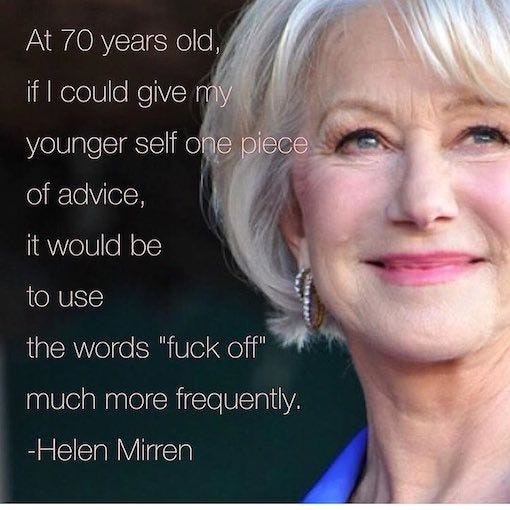
Don’t apologize for being who you are. You will only end up hating yourself for doing that. If someone decides they have a right to push their beliefs onto you, tell them to fuck off. Seriously. If Helen Mirren can endorse this response out of regret for being more polite than she should have been, you should not ever feel guilty about drawing your boundaries with a nosy someone in the harshest of terms.
Now that I’ve gone on this rant, I bet you might remember a half-dozen words… assuming you read any of it with any consideration instead of skimming over it all.
Good luck in navigating through this monkey house we call life. You’ll do fine if you can learn to duck and weave around all the flying feces.
The implication of this question, mainly since an anonymous profile posed it, is that atheists do so out of malice.
That’s not the case at all.
Although some atheists may indulge in malicious dialectics to stir up anxiety within believers, that’s not typical of most atheists. Barry Hampe pointed out that it’s often a response to provocation from believers, while several other respondents indicated matter-factly that it’s a truth as they see it.
It goes deeper than simply asserting what appears evident to non-believers. Often, believers need to question their presumptions, and that’s precisely what the querent does by posing this question.
Telling a believer that God is not real forces them to either wallow in defensive denial (which disarms their provocation) or shakes their psyche enough to prompt them to question why someone would say something like that. This question represents the latter, which indicates, by my bias, the first inklings of doubt in one’s position. After all, we live in a world where every major religion claims to represent the “one true truth.” No rational person can accept how all are correct in their presumption — especially not after centuries of warring against each other for ideological dominion.
Often, the goal is not malice but an attempt to assist believers in expanding their perceptions beyond the box they’ve been conditioned to secure themselves within. In this regard, saying God isn’t real is a bit of a counter-provocation from a motivation opposite that of a believer who seeks homogenized thinking to validate their own.
I’ve begun asserting that if a God does exist, then it’s nothing like any human mind has ever imagined or could comprehend. Every religion has completely misunderstood and mis-imagined whatever might constitute Godhood. This is based on the reasoning that human minds are incapable of understanding something which would, by necessity, be so far beyond complex that we can’t grasp it on any level more significant than an eyelash mite can grok the body it lives on.
We may consider ourselves an intelligent species, but our metrics are self-serving. The universe is vast and complex beyond our comprehension. We may have unlocked many secrets, even enough to grasp the fundamental nature of its structure within the context of our perceptions. Still, we have no clue what may exist outside our perceptual fields — directly or in conjunction with technologies extending our perceptual capacity.
I’ve been thinking this particular approach might achieve some success with believers because the scriptures themselves already familiarize them with the notion of God being beyond human comprehension.
By reinforcing this particular piece of authoritative insight within the prevailing concepts of godhood, we can expand believer perceptions beyond the limits they have consistently shrunk over the centuries.
Our scientific investigations have forced them to retreat, shut down, and shut out threatening information. They’ve dug into the notion that science has been deliberately eradicating the foundations of their existence. They have reacted to this by negating everything which contradicts their biases. Everything scientific is perceived as an enemy. This phenomenon characterized much of the operative psychology within this last election.
As someone who perceives religion as a cancerous threat to our existence as a species (primarily due to the tribalist component of religious bias), I think the solution lies not in the rejection of a believer’s need to believe but in an expansion of their perceptions. By reminding believers that they don’t have definitive answers, explanations, or anything beyond their wistful imaginations to define a god that exists purely within their imaginations, they can begin looking outward instead of shutting down.
Learning to accept the necessary limitations of humanity validates a natural ignorance of godhood because it is ignorance shared by all humans. In this way, the atheist threat to their beliefs is mitigated.
Personal insecurities are also mitigated within an expansive tribe comprising all of humanity.
Our struggle with believers is born of piecemeal geographies and tribal borders hinging on being authoritatively definitive about each tribe’s perspective on the nature and shape of god. The common ground, however, lies in accepting how none of them can be accurate because humans cannot apprehend godhood — by the very definitions of “God” as established by their scriptural authorities.
By encouraging their minds to accommodate and embrace possibilities rather than allow them to be set like hardened plaster into myopically formed sculptures, the often violent competition between tribes can be mitigated. They’re all too focused on establishing a supremacy of authority within a definitive shape, boundary, and finite nature to an insular concept of godhood.
Opening their minds to accept how all are wrong instead of fighting over who is right in a “Might makes right” fashion may encourage them onto a path to the peace and love they often declare characterizes their belief systems.
In short, for believers, atheists may say, “God isn’t real,” but you can interpret that to mean, “Your vision of a god isn’t real.” You have nothing beyond your imagination and the force of your personality to support your contention that God is real. It’s a lie, and you know it.
Most atheists are open to evidence, but we’re also astute enough to understand how our primitive ancestors had no clue what lay beyond their limited geographical explorations and, much less, beyond our planet.
Even believers today no longer believe God hurls lightning bolts from the sky by hand or hides the sun from humanity when disappointed with us. We know no God sends hurricanes to our homes to punish us for mixing fabrics or eating shellfish. Most believers know this as well — and it’s usually the religious leaders who manipulate the gullible with lies for personal enrichment. Perhaps believers should choose new spiritual leaders who won’t lie to them and will open their doors to shelter them during a storm.
Perhaps it’s time to start looking outward to possibilities instead of lying to oneself and others about the products of one’s imagination and searching earnestly for a real god.
If all religions can admit to each other that they don’t know anything substantive with any certainty, then perhaps they can build bridges between each other instead of lobbing bombs. If that’s possible between belief systems, then it’s also possible for atheists and agnostics to join them in an honest endeavour toward solving life’s mysteries.
This post is a response to a question posed in its complete format: “How did the US fall so far? This isn’t an Anti-Trump question. I really want to know how it became okay to hate someone or even attack them because of who they voted for. At what point did things go so wrong? See comments for further context.”
RE: “I sincerely want to know how it became okay to hate someone or even attack them because of who they voted for.”
If you sincerely want to know, you must go further than this recent election.
This didn’t happen overnight, and it didn’t happen over just one election.
This is an entirely predictable outcome of over 50 years of demonization of the left by the right.
Things have been going wrong for a long time, and they went overboard when the right began treating their “honourable opposition” as enemy combatants.
The demonization has just been getting worse over time, and electing Trump was the final straw.
You must understand that the hatred isn’t about “who they voted for” as much as the values they voted for.
They voted for an evil monster — convicted of 34 felony counts, responsible for the deaths of hundreds of American citizens, has caused the wanton destruction of countless lives throughout his entire life, and he gloats about doing that. He laughs at the people who worked for them and has refused to pay them for their work. He’s caused people to go bankrupt because of that, and he cares less about that than about the hamburger he ate last month. He’s an admitted sexual predator — he bragged about it, and he’s been accused of rape. He was a close friend of Jeffrey Epstein, who trafficked in underage sex slaves. He’s a pedophile who has openly lusted after his daughter.
He’s an overt racist who tried to have five innocent men killed to satisfy his murderous lust. The man is so much scum of the Earth that the entire state he called home and has done business in most of his life has run him out of it. He instigated a treasonous coup against the nation when he lost the last election.
People aren’t so much pissed at him but at the state of affairs where millions of people chose his brand of hatred to define the nation they love.
People are dying right now because of their hatred.
Children were hauled away from their families in cages and sold for a profit the last time he was president.
That’s what people hate.
More of that evil is returning, and millions don’t care.
That’s why families are being torn apart.
That’s why people are shutting the door on people who welcome that evil back into an acceptable standard of living for the nation.
School kids have been dying from unhinged freaks with guns on an almost daily basis throughout the nation, and instead of wanting to do something to save lives, those people voted for more of that.
That kind of evil cannot be tolerated without giving up something important about one’s integrity and self-respect.
The U.S. fell because it’s been falling at the behest of the misanthropic plutocrats who regard average citizens as disposable chattels.
The U.S. has been falling for decades, and it got worse, beginning with Ronald Reagan’s demonization of government, betrayal of unions, tossing out mental health patients onto the streets, massive upward wealth transfers to impoverish the working class and sowing distrust between citizens.
Eliminating the protections ensuring the citizens were informed correctly by the Fourth Estate opened the door for a corrupt monster like Rupert Murdoch to steadily drip hatred into uncritical minds who got ever more desperate with rising costs and vanishing incomes to arrive at a state of general insanity.
We are here today because of a visible mental health pandemic affecting one in five citizens.
We are here today, repeating history from 100 years ago to almost the day when the Nazis threatened global domination under their jackbooted heel.
They’re back again, which means everyone who supported a return to an evil regime dominating humanity is an enemy of decent society, whether they are blood relatives or not.
This is the beginning of the next major war the world is facing, and people need to wake TF up because it will only get uglier now and result in chaos until people realize we need each other to survive our challenges as a species.
That means all the people who want to demonize and hate those who are unlike them are enemies of humanity.
That’s why families are fracturing into warring pieces.
They chose hatred, and that just can’t be tolerated any longer because hatred is a fire that will consume everyone and everything we value.
Fifty years of this means they finally got what they wanted.











 thotbag