This post is a response to a question posed in its complete format: “What happened to us, where and when did the human race decide to become so judgmental and predatory, what happened to the old fashioned sense of community?”
wut?
Here’s a rule of thumb about reality: Noticing something for the first time doesn’t mean that thing hasn’t been around for a long time.
It only means that your mind has clicked something into focus that had previously been on the periphery of your vision.
You are not unaware that wars have been waged practically everywhere on the planet throughout human history.
You are not unaware that hatred of very many forms, including racism and misogyny, along with sex and gender bigotries, have existed for centuries and have been a part of our story since the dawn of human civilization.
The only thing that has changed is our ability to tune it out because we are now in an information age.
We can no longer retreat into the comfort of ignorance while lying to ourselves that the suffering of those we have been overlooking is not caused by our inability to face the harsh truth about humanity. We are a psychologically damaged species, and the sooner we can face that, the sooner we can learn to heal ourselves and our species.
We haven’t “gone wrong,” because we are awakening to realities we have had the luxury of ignoring. We cannot heal ourselves until we accept the truth about ourselves, and that’s a harsh and bitter pill to swallow.
We are undergoing the first and most necessary step in our healing, awareness of our broken nature. We must first accept that we are suffering as a species, and this time of awakening is a necessary part of the process.
We cannot mature as a species if we cannot accept that we have been struggling, and the only way to end the struggles is not to ignore the suffering but to acknowledge its existence.
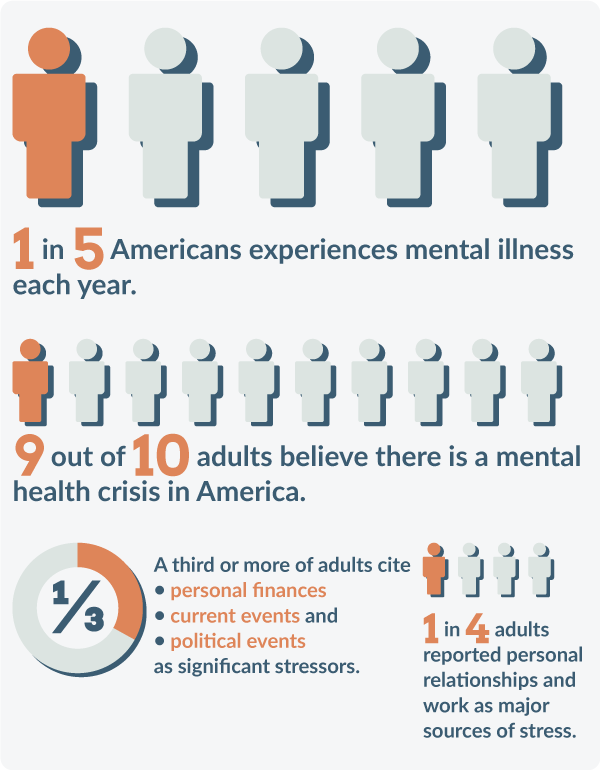
One in five people is suffering from a visible form of mental health issue. A whopping majority 70%-80%) of families are dysfunctional.
We cannot ignore these statistics and pretend there is nothing wrong with humanity.
We can only learn to embrace our broken selves and work together to help each other heal.
There is no other path to a better world.
The sooner we accept that, the sooner we can progress toward achieving a better world for everyone.
It is true, however, that our focus on community has taken a beating as our community boundaries have expanded beyond quaint notions of imaginary lines dividing us into becoming a global community.
The challenge is acknowledging that our community is no longer a geographic boundary but a global one in a much larger and inaccessible community among the stars.
Most people embrace the potentiality of exploring beyond our current home and wonder if we can join a broader community of life. We must first unite as a community in our house before the universe can open its arms to accept us as a species among the stars.
Looking past our limitations, we may find the synergy we need within the community to manifest our aspirations to travel the stars.
There is something better ahead to hope for, but we cannot ever reach it without acknowledging what is holding us back, and that begins with the state of our psychological health as a species.
In short, nothing “has happened to us” that has not been happening all along; we are only learning to understand how we must face these issues together as a community.
This post is a response to a question posed in its complete format: “Can a person be highly empathetic and think empathy can be overdone and in many cases detrimental to better outcomes? Can being conscious of empathy and in control of your emotions be called for to create more realistic circumstances?”
No. You’re conflating empathy with other unrelated characteristics such as sympathy or pity.
Empathy is a complex phenomenon, more adequately described as an additional sense, not entirely unlike intuition or your other five senses. It’s a blend of cognitive parsing, information gathering, and processing, adding a layer of intellectual stimulation to our understanding.
There are three types of empathy: “affective empathy” (or “emotional” — feeling what someone else feels), “compassionate empathy” (recalling one’s feelings from similar situations and re-experiencing the emotion), and “cognitive empathy,” (intellectually identifying the emotions and connecting them to stimuli to comprehend the context in which the feelings are expressed).
The people most prone to being overwhelmed by an empathetic response to stimuli, often referred to as “hyper-sensitive,” struggle to discern between original feelings generated within and feelings they pick up from external stimuli. Their empathetic natures are primarily derived from the emotional form of empathy, akin to a radio tuned into a station while the volume is set to maximum. It can be overwhelming to find oneself tuned into powerful signals.
It can take a lifetime to cope with one’s sensitivity, primarily because of a lack of social support for such sensitivity. More often than not, highly sensitive types tend to be targeted by bullies because they are perceived as easy victims who are also usually shunned by their peers. This lack of support can lead to feelings of isolation and exacerbate the challenges that sensitive individuals face in society.
These have been socially acceptable attitudes toward highly sensitive people, while many still doubt that empathy is genuine and is not a personality dysfunction. The first of these two questions is an example of misunderstanding empathy on that disparagement vector.
The second question, however, points toward a somewhat effective solution or means of coping with one’s sensitivity. Learning to discern between one’s natural feeling and those one receives from others on a subliminal level is crucial to maintaining one’s composure, if not sanity.
On the upside, once one learns to master the all-too-rare skill of self-awareness, they discover they possess a “superpower” and become “human lie detectors.” It can be frightening to learn that they are talking to a stranger who almost instantly knows their deepest secrets and more about them than they know about themselves.
Empaths who have mastered their emotional regulation and awareness skills also learn to conceal their awareness of others, as they generally don’t want to create enemies who are intimidated by them. Making matters more complicated is that one’s empathetic sensitivities are not infallible and can often be mistaken about other people. Much of this judgment error is due to unresolved personal growth issues. In essence, what I referred to as a “superpower” is more about “power over oneself” rather than over others.
Highly empathetic people tend to be the most honest because they must learn to be honest with themselves to maintain their internal equanimity. Living with the lies one tells oneself is much harder to do when one’s cognitive dissonance escalates rapidly, much more so than for those with diminished sensitivities to empathy.
The two other forms of empathy, “cognitive” and “compassionate,” generally complement affective empathy, but there may be cases where they don’t. I don’t know of such cases, nor see how that’s possible. Still, I’m not a professional who has spent a lifetime studying the manifestations of empathy in thousands of patients and volunteers.
Emotional regulation is otherwise a skill that anyone can benefit from, regardless of their sensitivities or empathetic capabilities.
This post is a response to a question posed in its complete format: “Elon Musk apparently didn’t dismiss empathy entirely, but thought that we have a problem with empathy for the wrong people. How do you judge?”
I partly disbelieve this moronic assertion but won’t deny it’s possible he would say something so stupid.
I wouldn’t put it past him because he disowned a daughter that he paid to ensure she was born physically as a male.
He got pissed that he didn’t get what he paid for and punished his child for daring to assert her identity.
Suppose he lacks empathy, which he seems to demonstrate while bemoaning his inability to experience empathy proudly. In that case, he’s a walking-talking case for how badly screwed up some kids can be when their sociopathic parents severely screw them over.
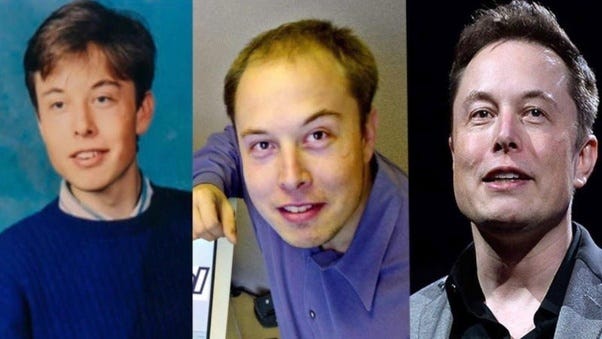
It still amazes me when I look at photos of him as a kid because he appears as a somewhat sensitive type of nerd who tried being himself but was abused for it.
That’s the only explanation I can devise that makes sense of his severe state of dysphoria (minus the drug addiction of both the chemical kind and the egotistical drug of power through his wealth).
He appears as a youth to be a typical “sensitive” who would likely have been highly empathetic. Still, it’s been beaten out of him through likely mostly verbal abuse (because he doesn’t appear to show typical traits of physical abuse — such as scars or even an emotional coldness in his demeanour). (Unlike DonOld Trump, whose physical abuse is written all over his demeanour. You can almost read the number of times his father physically beat him like counting rings on a tree trunk.)
Statements like the one attributed to him show the child attempting to speak through the cracks of a semi-polished exterior.
Empathy is like any other characteristic, which presents itself in varying degrees throughout the population. Empathy is like muscle mass; it has a developmental potential but must be cultivated to show itself in its most developed form.
In his case, his capacity for empathy was stripped from him and has been starved to (near?) non-existence.
I suspect some vestiges of empathy remain alive within him but that he’s trapped in a world where he cannot trust, allowing himself to experience it because the fear of permitting himself to experience it openly has been beaten out of him by his parents.
It’s not that the “wrong people have empathy” but that people have had their empathy wrongly denied their right to experience it without adverse repercussions.
“Humanity” is from the late 14th century and derived from the Latin word “humanitatem” or “humanitas” for “human nature, humankind, life on Earth, the human race, mankind,” and Old French “humanité, umanité.” “Humanity” includes all humans but can also refer to the feelings of “kindness, graciousness, politeness, consideration for others,” which humans often have for each other.
Variations of the term, such as the adjective “humane,” which arose in the mid-15th century, refer to the ineffable qualities of being human rather than the physical characteristics of human existence. By the early 18th century, it evolved from meaning “courteous, friendly, civil, and obliging” into “tenderness, compassion, and a disposition to treat others kindly” and evoke “kindness” within the sphere of the human condition.
By the 1700s, the plural of humanity — “humanities” was adopted as a description of the study of “human culture” through the literature branches of rhetoric and poetry and from a secular perspective rather than religious via “literae divinae.”
“Humanism” emerged from that evolution in meaning from the Latin “humanitas” or “education benefitting a cultivated man” while supporting the notion of humanity as symbolic of the best qualities of our species.
Much of this evolution in meaning is derived from a history stretching long before prehistory to a time when our survival as a species was contingent upon working together to feed and clothe ourselves as we hunted in packs.
Successful interdependence requires supporting one another; thus, empathy was given rich soil to grow.
I suspect, however, that none of this constitutes new information for you even though your question misses the point altogether — and to such a degree it screams severe psychopathy, even as an entertainment-seeking provocation.
From initially reading it in my notifications for questions I’ve been asked to answer, my first thought was that it’s an apparent provocation from a misanthrope and most likely a troll. What I discovered upon encountering your profile is something far more insidious.
Let’s begin with the presumption in this question, “Why should I feel it?” etcetera.
There is no “should” in that you are not “obligated to feel” anything. That’s not how emotions work. You appear somewhat educated — or at least literate — based on the number of publications you’ve written and have posted on Amazon.
Somehow, though, a fundamental comprehension of oneself as an “intelligent” member of an interdependent species escapes your notice. You rely on others to feed, clothe, and house yourself through literary endeavours and can’t acknowledge how you already “feel it, need it, and want it.”
Even this provocation attempts to cater to those basic needs by identifying people who can respond in ways that support egotistically defined goals.
Most literate people develop a basic comprehension of emotions and the atavistic precursors making them manifest. On my behalf, this could be a flawed presumption, but I’m pretty sure you’re no stranger to “darker” emotions such as fear and anger, and you have no misapprehension about their manifestations within you. The sarcasm in your writing indicates your preference for wallowing in those emotions and is consistent with the attitude displayed within your provocation disguised as a question.
The problem you struggle with is that you hate your interdependence and deny that it exists within you — most likely due to having found yourself disappointed and hurt repeatedly by people who failed to live up to your expectations from a very young age.
Sadly, in a world where a whopping majority 70%-80% of the population is raised within a dysfunctional family unit, your experience is far from being a minority. Unlike some lucky few who can cope with their pain to the degree that can transcend it on levels that allow them to minimize the transmission of a toxic mentality characterized by misanthropy, you have chosen to embrace the cynical view that humanity is beyond hope.
Whether or not that’s true is irrelevant to me because my biased perspective shudders at the prospect of living in a world where one broadly hates all of humanity to such a degree they fail to see or experience the gestalt of existence within each of us.
To live a life without comprehending the value of joy is the equivalent of living a life deprived of meaning. It’s like a walking death. Even if one’s life circumstances necessitate a deprivation of joy, knowing it exists can often be enough to overcome the most painful hurdles.
Even the briefest taste of love in a fleeting life characterized by its absence or a prevalence of fraudulent forms of love is enough to sustain one’s spirit for a lifetime.
That’s the power of living on the side of light those who wallow in the dark fail to comprehend.
Once one understands that power, one no longer feels pushed into seeking something out of conceptual reasons but from an atavistic need to partake in as much as one can, like struggling for breath while deprived of oxygen because of a plastic bag covering one’s head.
Sadly, you’ve never tasted it, or you would know why you are drawn to it while feigning a disinterested rejection. As much as your ploy may feel like a shield protecting you from further disappointment, it’s a cry for help heard echoing its way around the world, crying out in pain.
If nothing else, in your case, it merely reveals you as a product of a wholly dysfunctional era in which we exist today as a species suffering from generation upon generation of transmissible trauma.
In other words, you asked this question because, on some level, you realize your struggle. Although it may be easy to peg you as a statistic identified as part of “the one in five” visible sufferers of a mental health condition in society, you’re not. Instead, the psychopathic dysphoria you struggle with is made invisible by its type of dysfunctionality and how it fits within the accepted definition of a psychologically well-adjusted individual within a maladaptive system (by which I mean our environment and economies are not suitable for cultivating the best of humanity).
As unhealthy as your expressions are, their implications exist outside the boundaries of what the psychological sciences deem unhealthy because you seem capable of functioning at a high enough level to adapt to the rigours of your day. In my view and statistically speaking, of the remaining four in five who do not display visible signs of an inability to adapt, three of those four are still victims suffering from degrees of stress that remain invisible to a triage mentality characterizing the state of our species today.
Your wallowing in cynicism is not your fault. You’re a victim of an entirely dysfunctional world. You happen to be smarter than the average bear, making a positive adaptation to a broken world much harder.
If you’re lucky and can make yourself willing and available to receive the cream of humanity, you’ll feel the answer you seek that words alone cannot give you.





 thotbag