Why should I contribute to society?


This post is a response to a question posed in its complete format: “Aside from it being a moral duty, why should I contribute to society?”

As a reason to contribute to society, a “moral duty” represents a form of coercion which garners the absolute least that one will contribute. Referring to contributions made to society as a “moral duty” creates the perception that it’s like paying a tax. You do it because you have to.

That’s the best way to get the worst attitudes and the least value in contributions from people.

Paying it forward” is a far better way to frame contributions to society because it serves as a reminder of how one has benefited from society and the contributions of others as part of a shared community.

Another context that can help to imbue the concept of contributing to society with motivational meaning is as a team. As members of a species, we are all members of the same “team” in the sense of our challenge to maintain survival. This perspective is why I chose the concept of a bucket brigade to illustrate the idea of working together to put out a fire.

Understanding the difference in perspective between one who feels they “should” versus feeling like one “can” will clarify the attitude we should be cultivating in society to encourage contributions back to society. When a person feels like they’re a valued member of a supportive community that enables their members to achieve their best potential, it cultivates an attitude of gratitude that prompts people to think positively of what they can do in return for their community.

Think of it like gift-giving during the holidays, where people go to great lengths to impress someone with a special gift they know will be meaningful to the recipient, versus the sentiment people demonstrate when put in as minimal an effort into their gift as they can get away with to meet an expectation from someone they don’t care about but feel an obligation to gift them something.

To do what one “should do” invites the minimum effort to meet a bar of expectations set by the lowest common denominator and is characterized in the best of terms as an apathetic form of disengagement from one’s community. Why give something to society when you don’t value it?

Conversely, when one feels closely connected to a community that has cultivated gratitude within their mindset, they want to give as much as they can afford to adequately express their appreciation for what they value receiving from their community.

To do what one can, rather than what one must, is to be motivated by a natural desire to contribute out of a spirit of reciprocity.

This is why the social contract is crucial to our health as a society and why community development is an essential mindset for leaders to adopt and cultivate within society. Community members who feel they belong to a larger dynamic and are valued for their contributions are engaged and self-motivated to do what they can to improve life for everyone else.

They understand and value the meaning of the words, “We are all in this together.”

This sentiment is the glue that will keep society from collapsing into chaos during the most troubling times.

This sentiment is the glue that has given humanity the grace to survive and prosper to such a degree that our short presence here will be as lasting into the future as hundreds of millions of years of a planet dominated by dinosaurs has been to date within a fraction of the time they existed.

When one feels connected enough to something, they have no problem going out of their way to contribute as much as they can afford because they believe their giving is its own reward. They derive pleasure and fulfilment from giving to their community. They will go to great lengths to contribute as much as possible to their society because giving transcends moral duty.

Some people will give to causes, for example, because they want receipts to lower their tax burden through the benefit of deductions.

Other people give to cancer research, for example, because they have been personally affected by the issue. Giving as much as they can afford is a way of coping with the issue by acknowledging a loss or a deeply impactful experience. Giving is rewarded by a cultivation of hope within oneself.

Many people volunteer their time in contributions to a cause because of the social connections they create and benefit from on an intangible level. Giving energizes one’s spirit through interpersonal interactions and cultivates the interconnectedness that defines a core need for the human condition.

In all self-motivated cases, one’s contributions are made without considering moral implications because those are justifications which devalue the experience.

In all cases, people give in greater abundance and more honestly of themselves when internally motivated by intangible and intrinsic benefits than by material and extrinsic ones.

Understanding why one would want to contribute to society out of an internally motivated reason is far more crucial to the value of one’s contributions than meeting an arbitrary degree of obligation.

Understanding how one has benefited from the efforts of those who came before us and how we are each linked in a centuries-long chain of humans collectively contributing to an aspirational future for all of humanity is how to convert an obligation into a desire.

When we are disconnected from our humanity and community as humans, we lose sight of the value of our contributions to an evolving whole.

Learning to appreciate our distinctive differences between individuals and celebrating those differences while embracing the uniqueness of their contributions is how we can justify giving the best of what we can to those who will come after us and allow us to be remembered as individuals who each gave our best to make their lives better.

Cultivating this community spirit of belonging is how we survive our challenges, such as those we are struggling through today. Our connection to community allows us to cope with and overcome being inundated by the toxic influences of those who lack appreciation or reverence for the sacred nature of what we collectively benefit from.

Encouraging the creation of connections between us results in a superior form of morality that organically emerges in society to endure throughout our existence on this planet more successfully.

There is no valid reason why you “should” give back to society. However, without a desire to give back to society, you have lost out on one of the most valuable sentiments a human can experience, which is core to our development as healthy humans living fulfilled lives.


Bonus Question: How do you accept the fact that no one loves you?

Learn how much more important it is to love yourself and life than to be loved.

No two people or living creatures love in the same way.

Love is not about receiving but about giving.

If you want to be loved, get yourself a dog and/or a cat, or several.

If you can love what you do each day, it can sustain you enough to allow other forms of love to make their way into your life.

Good luck.

Why does the Justice Department clear homeless camps?

This post is a response to a question posed in its complete format: “What do you think of the Justice Department planning to clear homeless camps and involuntarily hospitalize the mentally ill on the streets?”

This sounds very much like a typical MAGAt CONservative brain child. It’s precisely what Pierre Poilievre suggests as a solution for Canadian tent cities.

Poilievre promises to let police break up tent cities, arrest occupants

It’s precisely the mindset of MAGAt CONservatives everywhere:

The irony in this thinking is so dense it generates a gravitational field.

“To fix a government failure, we’ll sweep it out of sight so that you don’t have to be visually confronted by government failure. You can wait until it escalates into increasing crime waves that we can use to leverage your fear and elect us to solve the problem we created.”

It is precisely this mindset that births abominations like hostile architecture.

It’s always the same heavy hand that creates problems to give them excuses to indulge in their misanthropic treatment of the vulnerable people they victimize into early graves.

No example of this kind of monstrous thinking is an attempt to solve a problem. It’s an excuse to get off on perverted Machiavellian desires.

Conservative plan to tackle tent cities looks like ‘political theatre,’ experts say

If they could legalize fights to the death among the homeless, they would.

If they could legally implement a Squid Game television show, they would.

Within the misanthropically short-sighted mindset of reactive thinking that MAGAt CONservatives wallow in, the idea is to pretend to solve a non-problem by punishing the victims of systemic problems they create, creating the non-problem.

I am deliberately describing tent cities as a “non-problem” because they’re not the problem, but a symptom of the problem.

To solve problems, one must look to their causes and address those issues before the symptoms of those problems can ever be addressed.

It’s like affixing a bandage on an open wound while expecting to stem the internal bleeding of a patient.

Making matters even more surreal in the incompetence driving these problems is how the MAGAt CONservative mindset fixates on scapegoats that are part of a comprehensive solution, the non-problems they create with their short-sighted and misanthropic thinking.

In this case, PP blames the “lax liberal drug laws” while completely ignoring how their draconian attitudes toward drugs in society have resulted in an entire host of expensive and socially destructive problems, including punishing the victims of horrible policy while creating an underground growth network for criminal enterprises.

One would think decades of failure in an old problem created by the same thinking which made the same criminal incentivizing problems with alcohol bootlegging about 100 years ago would result in some lightbulbs going off within the dimmest of minds. Still, they seem completely inured against learning from their mistakes.

The kind of self-destructive stupidity that CONservatives perpetually indulge in is like a never-ending nightmare of a Groundhog Day repetition.

The MAGAt flavour of CONservatives wonder why their opposition thinks of them as stupid, and they never stop to look in the mirror and ask themselves why they choose reactionary and destructive approaches toward problems in society. It’s not like the information is unavailable or that educating oneself on issues is impossible. They can’t work through their biases to question their logic.

The mentally ill on the streets has been a problem created by CONservatives to begin with, when Reagan shut down institutions and forced them onto the streets. The homeless issue has grown because people who work full-time can no longer afford to house themselves. At the same time, the billionaire class buys up residential property and inflates prices as their government lackeys continue to refuse to raise minimum wage.

Then they whine that reduced birth rates are an existential threat without putting two and two together to realize they created that dynamic with their misanthropic policies.

The self-destructive stupidity is beyond mind-boggling.

MAGAt CONservatives don’t seem to care about solving problems as much as they prefer to focus on destroying the most vulnerable humans on the planet. Ironically, they often cite how much more money Conservatives donate to charities as they indulge in the same overcompensating behaviours that criminals indulge in when they create laws to ban gay marriages or abortions.

The CONservative mindset seems far more driven by hatred of one’s fellow humans than by working together to build a better society for all.

One day, we might be lucky enough to realize that the mentally ill are not those coping with life on the streets, but are those who walk among us, spreading hatred and voting to destroy lives, only to find the consequences mean destroying their lives as well.

Is Empathy a fundamental weakness of Western civilization?


This post is a “twofer.” It’s a response to a question posed in its complete format: “What do you think about Elon Musk saying “The fundamental weakness of Western civilization is empathy”? https://www.snopes.com/fact-check/elon-musk-empathy-quote/“ — In this case, I’m setting up my answer with an answer to another question: “What role does empathy play in understanding and connecting with the thoughts of others?”

Empathy is a conduit to understanding and connecting with others.

Empathy is like an additional sense or language allowing more profound insights into people than a typical means of sharing information about oneself with others.

“How you say something is as important as what you say.”

I assume you’ve encountered this above phrase or similar ones to understand how meaning is conveyed in ways beyond the definitions of the words one uses.

Empathy is similar in that one identifies more closely with the emotions of others, which makes it easier to connect with people on much deeper levels much more quickly than most people are used to.

Empathy is otherwise the glue that keeps human civilization together.


“Evil is a lack of empathy.”

This sentence above is the simple answer that most have already presented, so I had intended to ignore this question. Tomaz Vargazon’s answer, however, has motivated me to provide my input by the inclusion of the full quote he provided from Musk’s interview with Joe Rogan:

Musk: Yeah, he’s [Gat Saad] awesome, and he talks about, you know, basically suicidal empathy. Like, there’s so much empathy that you actually suicide yourself. So, we’ve got civilizational suicidal empathy going on. And it’s like, I believe in empathy, like, I think you should care about other people, but you need to have empathy for, for civilization as a whole, and not commit to a civilizational suicide.

Rogan: Also don’t let someone use your empathy against you so they can completely control your state and then do an insanely bad job of managing it and never get removed.

Musk: The fundamental weakness of Western civilization is empathy. The empathy exploit. They’re exploiting a bug in Western civilization, which is the empathy response. So, I think, you know, empathy is good, but you need to think it through and not just be programmed like a robot.

  1. “Suicidal empathy”
  2. “Don’t let someone use your empathy against you.”
  3. The “empathy exploit.”

These three statements indicate that these sociopathic morons don’t understand empathy because they are conflating “ compassion” with “empathy.”

These are not the same thing. Not by a long shot.

Empathy operates like a sensory receiver, while compassion is a cognitive process of identifying with another life.

Empathy cannot be “used against someone” any more than one’s eyes can be used against them.

The ability to experience another’s emotions is not a weakness but a strength.

Another issue is how we process our understanding of the emotions we detect.

The only vulnerability to exploit is the trust connection between individuals, and that exploit exists regardless of either party’s empathetic capabilities.

Their arguments are the equivalent of claiming one can be susceptible to being robbed because they know more about the criminal attempting to rob them.

It’s a bloody ludicrous argument forwarded only by sociopaths who have no clue what empathy is.

The harsh reality in today’s world is that empathetic people are victimized precisely because they’re walking, talking, living, and breathing lie detectors.

Anyone with advanced empathetic sensitivities understands precisely what I’ve just said. Every sociopath on the planet would otherwise vehemently deny this is the case while using this statement to vilify anyone who reveals this truth to the public.

Only sociopaths would ever dare to consider empathy a weakness because they recognize empathy as a superpower wielded by people who always default to showing compassion toward others, especially toward those like them, who comprise the most broken humans among us.

The lesson of today’s age and of this garbage pronouncement by the most destructive sociopaths we have seen emerge in society has pushed the tolerances and compassions that empathetic people experience toward humanity past the brink of decency and forces us to realize how our species is in a severe struggle for survival.

If we allow these sociopathic monsters to continue defining humanity for us, civilized society as we know it will crumble.

Now is the time for empathy to assert itself as humanity’s superpower and end the scourge of sociopathy before it’s too late.

Now is the time for the meek to inherit the Earth because these monsters have no respect for life beyond their fleeting whims.

These are expressions from people who have no reverence for anything outside their navels.

The more we allow them to assert dominion over humanity’s character, the more they teach us they will relent only when we break and repeat history.

Do you think that society was better before social media?

This post is a response to a question initially posed on Quora, and can also be accessed via “https://www.quora.com/Do-you-think-that-society-was-better-before-social-media/answer/Antonio-Amaral-1

No.

All of the ugliness we see on social media didn’t just magically appear because of social media. Social media is simply a means by which people can express their natural selves. People have always been the way they are on social media. The only difference is that their voices and behaviours were not broadcast to the world.

Before social media, people lived in social silos which enabled toxic people to rule their environments. Their victims had no outside support or validation for their suffering and were groomed to believe they had to accept the toxicity as normal. People have been groomed for generations to believe social reality is immutable, that change is impossible.

We can now see that the opposite is true, and social media helps bring about change.

Social media brings about social change much faster than was ever possible, and that makes social media a solution to society’s woes, not a problem.

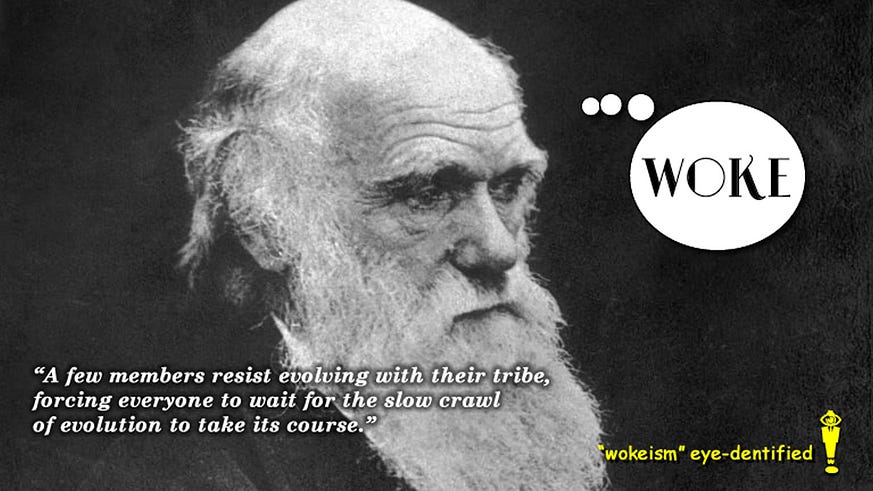
Consider, for example, how concepts like “Woke” are used as weaponized disparagements to enable the corrupt among us to leverage hatred into legislation sending society back into the dark ages.

Fifty years ago, and before social media, similar terms like “tree hugger,” “do-gooder,” and even “liberal” were terms of disparagement in which whatever little media attention was given to them existed without pushback from a public rejecting the toxicity. “Politically incorrect” was such a term that took hold as a disparagement before social media, and it is now widely accepted as a negative characteristic in society.

The pushback it received wasn’t magnified like “woke” has been through social media. Consequently, the attempts made to weaponize “woke” like all disparagements which began with positive connotations haven’t succeeded at converting “woke” into a negative. “Woke” is now a term that backfires onto those who try to use it as a disparagement. Through pushback on social media, “woke” will reassert itself as a wholly positive connotation. In contrast, those who invoke stupidities like “woke mind virus,” and “go woke go broke” will increasingly become viewed as enablers of toxicity much like the red alert beanies in society have become.

This represents tremendous progress in the fight for human decency on how we perceive concepts and how they frame our interactions with the world.

It’s almost quaint, now, to think of “do-gooder” as a bad thing to be called; and to such a degree that if someone is to refer to someone else as a “do-gooder” today, they sound like sociopathic idiots. That conceptual lifecycle is what has happened now with the term “woke.” It’s taken a fraction of the time for the implications of the word to settle into our public consciousness within the context it originally conveyed.

Being called a “do-gooder” fifty years ago meant one would retreat in embarrassment, but now, the accusation garners confusion. The person who hurls that accusation appears like an idiot.

In contrast, “woke” became popular less than two decades ago. It appeared as a positive connotation that the toxic among us attempted to weaponize like they have with every positive connotation in society. Within a comparatively short time, people who weaponize “woke” are already being regarded as toxic idiots.

Without social media, the weaponization of “woke,” and the legitimacy of concepts like “woke mind virus” would have been accepted as valid disparagements in which those are “woke” would retreat from social discourse because they had no outside support.

Arguments and counter-arguments flitted about in geographically isolated silos and never managed to spread from community to community. The consequence was to cultivate localized and insular community values. Social media cultivates community values across the globe. Social media breaks down the silos, and the barriers of distance between human beings and empowers those who must face the bullies attempting to corrupt positive values in society.

The best weapon against bullying is social media because of this. It’s also a megaphone for bullies, but they’re outnumbered by those they victimize and they are generally stupid people.

For example, the best thing that Trump could have done was to have that media circus of bullying Zelensky. He claimed, during his ego masturbating rant, that he “let it go so long” for a purpose suiting his goals, but it backfired spectacularly.

He and Vance were viewed as the bullying thugs they are and I’m sure this will be a watershed moment for many who have blindly supported Trump. Many people, if not most of us, have been exposed to bullying and the thing about bullying, is that the victims of bullies never forget.

Social media is community development on steroids. The problem with social media, however, is that it is predominantly operated on a for-profit basis, which makes it impossible for social media to cultivate positive social values deliberately and strategically.

Community development on social media occurs organically and within a chaotic environment. The fact that we can progress on issues through this chaos is a testament to the human spirit. No matter how the toxic people among us make life difficult for the rest of us, we are pushing back and succeeding in gaining ground on establishing a baseline for decency. It may occur glacially in contrast to what would be possible if a publicly owned and operated, not-for-profit social media environment existed within and to compete against the for-profit model.

We are, however, succeeding in making “woke woke again”.

I’m sure many people would quickly gravitate to a much safer environment where they could trust that their personal information wasn’t being mined for profit.

Is Neil deGrasse Tyson wrong?

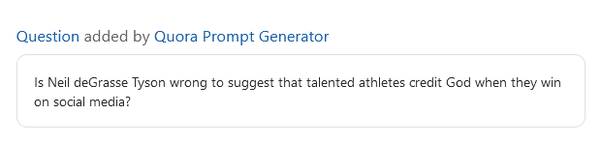
This post is a response to a question posed in its complete format: “Is Neil deGrasse Tyson wrong to suggest that talented athletes credit God when they win on social media?”

I think there is something severely wrong on so many levels that it’s impossible to address them without an entire book and a lot of research to identify the dynamics of a business decision justifying the dissemination of lies in society to stimulate engagement and generate revenue.

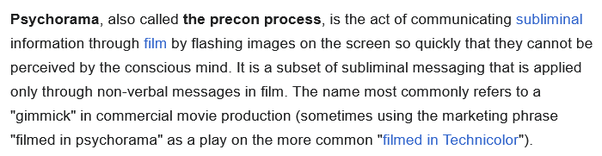
This is horrifying on so many levels that it insults every aspect of humanity, human society, and the social contract. This contributes to the widespread decay and ultimate destruction of civilized society on the most malignant levels. This crap is worse than the stage of “subliminal seduction” we went through in the 1970s when laws were crafted to prohibit embedded “invisible messaging” within entertainment media.

Psychorama — Wikipedia

Neil deGrasse Tyson has never suggested any such thing, and although it’s easy to attribute this claim to a believer on a mission of Lying for Jesus, it’s not. This is even worse than a believer trolling for reactions by lying.

For non-Quorans: This screengrab indicates the question author, and in this case, the question was written and posed by a bot designed to stimulate engagement on this social media site. This is a common revenue-generation strategy employed by media outlets across the board. Fox Entertainment, for example, has built its empire entirely upon this toxic revenue generation model.

Targeting information appealing to the limbic system is like serving up crack to a heroin addict, and that shapes the society we are cultivating by allowing this practice to dominate media. The effects are profound. 

Not only does this represent an abysmally immoral strategy for generating revenue, but it’s also a strategy that furthers a divide between people in a society already at the edge of fracturing into chaos. This strategy for engagement is ultimately a violent assault on our social contract and is responsible for the dramatic divisiveness characterizing our social dynamics today.

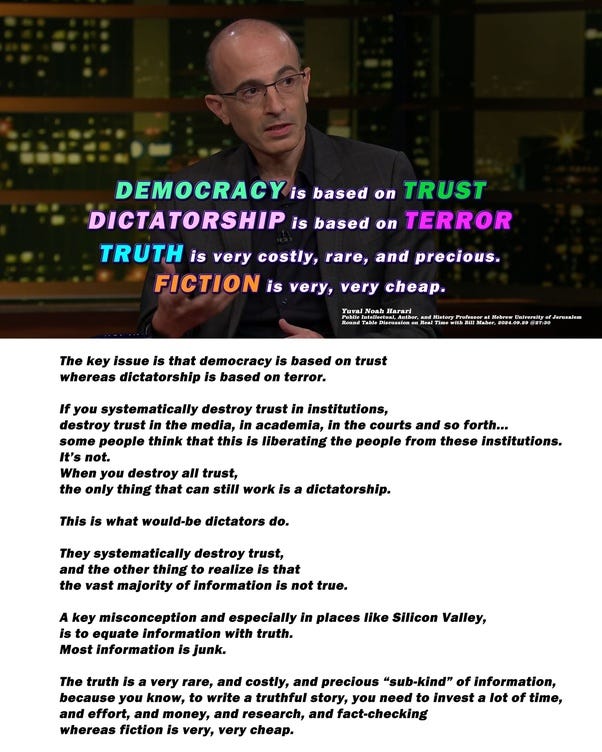
This precisely reinforces the post on my Thotbag space, citing Yuval Noah Harari’s statements during a round table discussion about the threat democracy itself is facing. Here is the meme I posted that includes his full text:

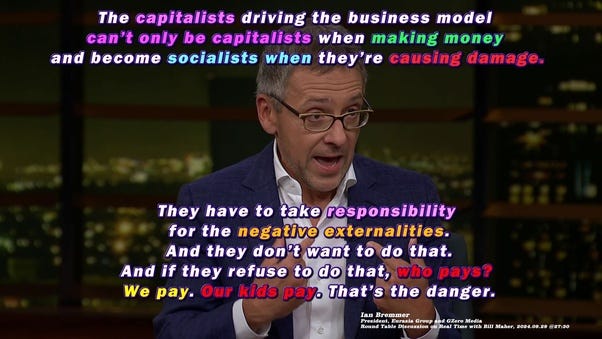
Along with Mr. Harari’s warning, Ian Bremmer pointed at the problem this divisive, conflict-escalating disinformation creates for society:

This fraudulent question is worse than Quora violating its own, now primarily defunct BNBR policy; it’s an assault on human decency on the most corrupt of levels for the most corrupt reasons.

This should not be disturbing only to atheists who fight back against a daily assault from believer trolls seeking to provoke emotional reactions. This should be disturbing to everyone who cares in the least about things like integrity and the social contract that has never been strained to such a degree as what we are living with today.

If society collapses into chaos — If people’s lives are unnecessarily lost because we can’t or won’t back away from the cliff we march toward — Then this kind of manipulative nonsense perpetrated upon us all for the sake of profit will be responsible for the nightmares ahead that we are about to encounter.

This is central to my argument on why social media should not be operated on a for-profit model. Social media is a community development endeavour, and we must consider how we approach its role in society more thoroughly than consigning personal information to a feeding ground for mining material profit.

That we are being strategically and systematically provoked by algorithms to hate each other should horrify all of us.

Do you think that Quora users are mean?

This post is a response to a question initially posed on Quora, and can also be accessed via “https://www.quora.com/How-mean-are-the-people-on-Quora/answer/Antonio-Amaral-1

Quora users are no different than anyone else on other social media sites.

The virtual environment, coupled with the insulation of an identity divorced from who people are in real life, allows them to indulge in their basest behaviours without repercussions to themselves.

Some are deliberately more abusive online than they would be in person because of a lack of consequences to them in life. Some use social media as a vehicle for venting their frustrations, and that often involves victimizing others.

It’s a dynamic that exists everywhere but is exaggerated online due to the shield a fraudulent identity provides.

All social media is much like Quora, but I would argue that Quora is more civilized than Facebook. A lot of aggression on Facebook is expressed passively through the emoticon reaction system. Facebook UI also sucks big time for permitting extended dialogues, while Quora’s system of ownership of content and content threads by the answer writer helps to minimize aggressions here.

Quora’s system is less antagonistic than Facebook’s because of its structure and is more efficient than other sites at handling long discussion threads.

Insofar as degrees of meanness on social media, my decades of experience on Usenet remain unsurpassed in meanness. Still, social media has generally degenerated in decorum to more closely resemble interpersonal dynamics on Usenet.

It’s a shame that social media has become so toxic. This devolution of courtesy is an argument for a publicly owned and supported social media venue that eliminates the profit motive by operating as a non-profit entity to serve as a community development tool, performing various community development functions and providing various public services.

A sign-on system, for example, could replace the various sign-on systems that people use for logging into sites where sensitive data is stored while ensuring one’s data is accessed through a single entity that provides access to one’s government-related needs such as their taxes or identification needs, and etcetera.

Social media has always been about community development. I have found amusement in statements about upholding community standards from privately owned entities like Facebook that routinely violate the bounds of decency within a community-oriented context. I often complained to Quora about inconsistently applied BNBR standards, and the result of attempting to manage nuance was resolved for them as a business decision deemed too expensive to operate effectively. There was no profit-oriented point to them to pretend that being nice and respectful was an important feature to protect.

Part of the problem with moderating systems is that petty people find ways to weaponize moderation against people they decide to behave spitefully toward.

I’ve been considering a series of articles on social media while arguing in favour of a community-based, owned-and-operated system that can address a number of the shortcomings while functioning as a means of “encouraging” improved interpersonal dynamics through a self-moderating model, but that’s a significant endeavour while I’m currently in the process of addressing more profound to me issues through a struggle I’ve been undergoing for the last decade. I hope I finally get a resolution to it soon and in time to focus on other areas in which I hope to make more constructive contributions to society rather than the wholly destructive path I’m currently on.

In short, and as a summary, however, people can be pretty mean everywhere, and sometimes, there’s nothing one can do about it but try to avoid or dismiss their meanness. It might help to be aware that not everyone is always mean. I’ve noticed within myself while using Quora as a public therapy tool for coping with my circumstances that my bouts with meanness correlate directly with my mood, and my mood is often affected by my current experiences. The best I can do is to learn to understand myself so that I can better understand the meanness of others, and that seems to be helping because their meanness over time has a decreasing impact on my psychology while I’ve become more effective in addressing their meanness in ways that I hope help them to improve.

That’s essentially all we can do for each other is to ensure we protect our boundaries in ways where the meanness doesn’t destroy our self-image. If it impacts it, then it serves as a teaching moment where we improve ourselves and become less mean over time rather than more mean — which is precisely the distinction in attitude I see creating the division between the toxic MAGA phenomenon and a world struggling to cope with increasingly aggravated divisions that have been cultivated within us by the people who have been setting us against each other while they rob us of our dignities.

Is peace always possible?

This post is a response to a question initially posed on Quora, and can also be accessed via “https://www.quora.com/Is-peace-always-possible/answer/Antonio-Amaral-1

Of course, peace is always possible. The challenge is making it desirable enough for all parties to commit to making it possible.

Peace is otherwise impossible when one or more parties refuse to accept compromise as the only path toward achieving any form of peace, whether temporary or lasting.

We have to accept the reality that some people are so broken they would choose to burn the world to ashes rather than give up their power or relinquish their power designs, and so that means the only path to peace is through the destruction of those types. Sadly and ironically, the argument of an escalation of conflict as the only path to peace is validated by the entrenchment of those who endorse imposition as their means of achieving peace through subjugation.

For some people, reason as a path to peace is rejected in favour of catering to hubris. Sometimes, people are so confident in their ability to overpower those they believe entitled to victimize that they will adamantly reject compromise even upon their final breath.

Peace requires giving up at least some of one’s power, while conflict escalations are almost always about exercising, protecting, or expanding power.

It is easy to become cynical in a world filled with so much violence that there has never been a period in human history where wars have not been waged, at least somewhere on the planet. It’s easy to think humans are an irreparably self-destructive species, but that’s a perceptual choice.

The reality is that although our species has never been “war-free,” humanity has predominately existed in a state of peace. Most people are comfortable with enough personal power to live peaceful lives.

However, a small percentage of humans are unsatisfied with that level of personal security and require much more power to quell their insecurities. Their antics are far more successful at capturing public attention because conflict is like a drug that enraptures people’s imaginations, while peace is boring. With this skewed mindset, it’s easy to believe peace is impossible.

To make peace possible on a universal (or global) level, we must address the fundamental elements giving rise to conflict, which begin with addressing factors that undermine psychological health. It’s a massive task that is conceptually simple but logistically impossible today. Whether we will mature enough as a species to achieve optimal mental health sufficiently to mitigate the aggravating factors for conflict escalation is a toss-up. We are currently on a trajectory toward extreme aggravation and conflict escalation that could dramatically reshape the human landscape.

It isn’t very comforting to contemplate how we might survive our challenges over the next few decades. If we can maintain most of the trappings of modern democratic society, our experiences will encourage systems that can address our psychological issues in healthier ways.

I want to believe that once we emerge from the other end of the dark tunnel of regression we have entered, we will be much closer to reaching a new bar for global peace.

Why don’t people realize our plutocracy causes our problems?

This post is a response to a question posed in its complete format: “Why don’t people realize that it is plutocracy (our country being governed by the wealthy elite) that is causing our economic problems?”

People don’t magically “realize things.”

People must be educated, informed, and aware of circumstances and details.

They need to be walked through the information presented to them as if one functions as a guide on a tour, answering questions.

People also don’t respond to laments, particularly when entrenched in counterfactual bigotries that prevent them from apprehending reality through an objective lens.

In essence, if this is an issue of concern for you, which I’m glad to see it is, then you need to start banging drums and sharing information and details because there are at least 76 million people in the U.S. alone who are entirely so oblivious to what you’ve determined for yourself that they contribute to the problems caused by the plutocracy.

There are many reasons why many people support self-and-socially destructive agendas, and most of those reasons can generally fall into only a few camps:

  1. They benefit directly from the corruption,
  2. They interpret the economic problems of the victims of a corrupt system as personal failings,
  3. They imagine themselves as potential beneficiaries of corrupt powers by supporting them,
  4. They lack the wherewithal to do anything about the corruption, so they cope with what they don’t believe they can change by resigning to hate the more easily victimized,
  5. They support what they believe is a natural state of a zero-sum existence encapsulated as a butchered interpretation of life often referred to as the “law of the jungle,” in which there are only predators and prey in this world,
  6. They’re psychologically dysfunctional — which is an explanation that applies to all the preceding points,
  7. Their education is woefully lacking — which also applies to all preceding points and leads back to the onus placed on those who know better by providing the support necessary to make positive change while also receiving a reminder that lamenting the sad state of affairs does nothing to change them. It does, however, give the broken among us a target to jeer and mock and use as an example to justify their corrupt interpretations of life.

Now, arm yourself with the information you need to fight as a keyboard warrior and do something more productive than issue lamentations to elevate humanity from this dank pit of misanthropy.

Good luck in this war for basic human decency.

Should there be fact-checking on social media platforms?

This post is a response to a question posed in its complete format: “Do you support Meta’s (Zuckerberg’s) decision to end third-party fact-checking on Facebook? Should there be any fact-checking at all on social media platforms? Why?”

Social media appears to be entering a stage where its profit-based model is “eating itself out of existence” as the latest in end-stage capitalism’s string of “Ouroboroses” (Ourobori?).

Along with stripping costs for an expensive venture, Mark is also adding AI bot profiles to create the appearance of engagement.

This reminds me of why I lost interest in dating sites. The easiest way to know a site’s ethics is when they create bot profiles to entice people into paying membership fees to engage with non-existent people.

As much as Zuckerberg flaps the trappings of community within Facebook and social media, none of his views are legitimately about community or supporting community development.

If social media were authentically social, its focus would be community development, not profit generation.

It is precisely the model of profit generation that puts social media into a death spiral of profit chasing to the bottom of the bottom-feeding barrel.

Their metrics for engagement are derived from a superficial analysis of what engagement means. As long as someone clicks something or posts something, that counts as “engagement,” and that interpretation of engagement counts as justification for advertising rates.

Meanwhile, no one gets anything from the deal but a massive case of blue balls.

Without a mission of serving a higher purpose of community development, social media and society, by extension, cannot but devolve into the technological equivalent of a pack of stray dogs begging strangers for treats.

We will experience social anarchy in the virtual world before it greets us in the real world. Hopefully, that will create enough pressure to do something proactive to support community development before the real-world communities devolve into chaotic monstrosities of “former civilization.”

All of this is an argument in favour of social media, on some level and in some capacity, being a publicly owned and managed enterprise that exercises its self-restraint divorced from the misanthropic profit-chasing model that dehumanizes people while pretending to serve human social needs.

As much as our dialogues focus on almost everything but community development, they all serve a community needs focus.

For example, all of the discourse surrounding AI and its replacement of human labour may be considered an economic, political, or labour issue, and it’s essentially a community response to a significant change transforming human society on a fundamental level.

All social media forms the basis of community development because all social media is public discourse. However, our problems with social media stem precisely from its growth being motivated by profit over principles.

At this stage, growths in profit that can satisfy hungry boards and investors justify cutting costs to the degree that whatever spirit was initially capitalized on that prompted the development of any particular social media site has been stripped from its operation.

The justifications for stripping costs have ironically been derived from concerns about the costs of managing social engagement. Who woulda thunk it’s too expensive to properly manage human behaviour to afford the cost of developing a media enterprise focused entirely upon squeezing profits from social engagement?

People need social media. It won’t go away, but social media proves today that profiting from human interaction is the wrong way to think about social media.

We have been watching the effects everywhere as social media has been devolving into a dynamic I remember from what I used to refer to as “usenut” — that many may be more familiar with as “Google Groups,” for example. I remember this as the gutter of human interaction — where the most extreme of the extreme was its primary denizens who were free to indulge in the most hateful of behaviours and attitudes.

I still “fondly remember” one character I used to refer to as “Grog” — which wasn’t their real name, and I’m not going to publish it because he’s still active on what shreds still exist of Usenet groups. He’s still advocating for the death penalty for gay people. It turned out that his father came out of the closet late in life, and that had a devastating impact on his psychology.

At any rate, this underground dynamic of toxic attitudes has slowly been seeping into an above-ground and public state of dialogue over time. If one had not ventured into the gutters of human detritus to discover its prevalence, one would not realize it’s an undercurrent that has always existed.

We will continue witnessing a devolution to the level of bottom-feeding slugs in human interaction characterized by social media as this trend of cost-cutting and profit-squeezing continues. It’s an inevitable characteristic of the capitalist chase for profits.

At some point, we’ll experience a confluence between the demand for social media interaction and restraint on toxic behaviours that normalize the intolerable throughout society. People will grow to hate people like Zuckerberg more than they do now, as one can already see an influx of disparaging posts about him beginning to flood the social media space everywhere.

Accountability and restraint on social media will become a widespread demand because social media fulfills a human need for interaction and dialogue that has always been present in less technologically based forms, such as letters to the editor in every newspaper that once littered the landscape.

Social media won’t disappear but will require transforming from a privately profitable industry into a public service. Nations like China are already ahead in this game by using their social media enterprises as tools for managing public dynamics through social credit scores and demerits.

If we’re not careful, social media will transform from a chaotic enterprise focused on chasing profit into a tool of oppressive control over the people in a much more pernicious way than media enterprises like Fox do now with their disinformation campaigns.

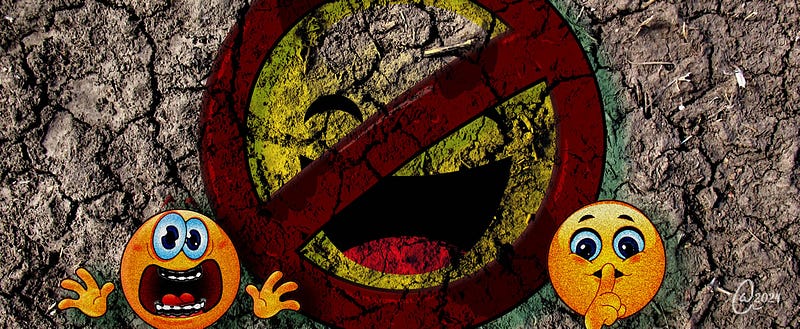
Is it worth responding to the laughing emoji reactions to a tragic post on Facebook?

This post is a response to a question that was asked in its complete format: “What do people think of others who react with a laughing emoji to a serious or tragic post on Facebook? Is it worth going through the list and giving them all a nasty pm, or would this be a rather pointless and sad exercise?”

That list you imagine going through to castigate people individually is often over one hundred people and can sometimes be several hundred to over one thousand.

Going through one list of even just one hundred people would easily chew up your entire day.

You would also have to deal with pushback and people reporting you for intrusive messages on their DM.

You would likely find yourself consigned to Facebook jail for your efforts.

Even the process of blocking on Facebook is onerous enough where if that’s all you did was block one hundred people, that would easily chew up a few hours of your day…

On just one post.

Odds are excellent, and you could find at least half a dozen such posts that motivate you to block hundreds to thousands daily.

It could be a full-time job just blocking people, and you would still find a never-ending supply of names to block within a user base of two billion.

Blocking one thousand people daily would take three years to block one million people.

If you were to go by statistics that bear out at one in five people having severe mental health issues, you would need to block 400 million people.

That would be a lifelong job working every day from morning until you fell asleep without any break from that task.

If that’s how you wish to spend your life, it’s your choice, but you may find other approaches to making your point more beneficial to your sanity.

You can post a public comment on a post where you can chastize all inappropriate laugh reactions at once. I’ve done that, and it can feel rewarding when you get a lot of feedback from people who appreciate someone publicly criticizing lousy behaviour. You will also find that you’ll get laugh reactions on your complaint that you can address.

If you think you will have a discernible impact on behaviours, then you’re not being realistic because succeeding on that level will require years of effort.

You may want to consider lobbying Facebook for improvements to their blocking process because it sucks. It’s onerous and constantly redirects you to pages you probably don’t want to see repeatedly.

Change.org has a petition that has already gathered 296 signatures, and as of this writing, it requests that the Laughing Emoji be removed from Facebook altogether.

Sign the Petition
I recently wrote feedback to Facebook about something that’s been bothering me about their emoji feature. Here is what…www.change.org

If it gains enough traction, we might see at least some changes to their emojis if the laughing emoji isn’t removed altogether.

Here is another article calling for its removal:

No laughing matter: Why it’s time to cancel Facebook’s haha reaction
That squinting, grinning idiot is poisoning Facebook.thespinoff.co.nz

Whatever you decide to do at this point, it’s probably wisest to consider it more personal venting than instigating social change. Otherwise, you will tire yourself into a frustrated frenzy while spinning your wheels and going nowhere.

A helpful quote you should keep in mind for whatever you choose to do is from Winston Churchill.

Good luck with whatever you choose to do.