Why are people reluctant to call out worthless art?


This post is a response to a question posed in its complete format: “Why are people so reluctant to call out “artists” like Mark Rothko for the sheer worthlessness of his ‘art’?”

“Art should comfort the disturbed and disturb the comfortable.”

This is a flawed presumption because people have no problem expressing their views on the arts they encounter.

Of all the vocations humans indulge in, none are exposed to as often to emotionally charged criticisms as the arts, much like how this question seeks validation.

The question is an admission of failing to understand numerous aspects they reject on a visceral level, while depriving oneself of an honest intellectual process of critical analysis.

This is a question ruled by pure bias in the same way all forms of intellectually stunted bigotries are concocted.

This question also reveals a mindset incapable of appreciating Gestalt and is more enamoured by puerile rather than reflective experiences.
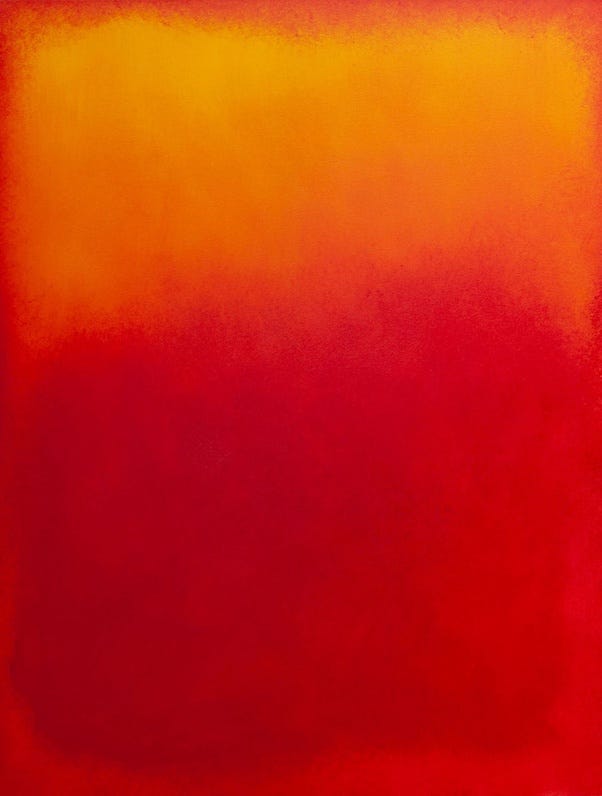
These paintings cannot be judged by their reproductions in a book or onscreen.

They must be experienced in person to apprehend their meaning.


As much as the question seeks to disparage and devalue the valid contribution of a life dedicated to the furtherance of one’s craft and vision — such that their work will be remembered for centuries, in contrast to this puerile critic who will be a long-forgotten example of a juvenile apprehension of what they are intimidated by.

The fact is that your subjective tastes in art do not serve as a universal metric of value. No single individual has that power.

Value is determined by a complex dynamic involving institutions and people with depths of historical awareness that far surpass the childish apprehension of what this question celebrates as a mindset.

One the first bits of wisdom I encountered as an Art student is as follows: “When people say, ‘I don’t know much about art, but I know what I like.’ they are actually saying, ‘I don’t know much about art, but I like what I know.’

This question is an admission of being out of your depth, and you’re freaking out about drowning in being touched by the ineffable. You can’t handle letting yourself go and float freely within the infinite.

This question screams “shallow-thinking and egotistical control freak” to me.

I’m sorry you are struggling with his work. Your question, however, indicates you need to engage with it until you can experience the revelation that will allow you to transcend your intuitively recognized intellectual limitations.

Your visceral reaction to his work is your intuition telling you to focus on something you have been avoiding and repressing within your psyche.

Take these words however you like but try not to ignore how easy it is to call out horseshit when one sees it.

No one has been “reluctant to call him out.” That’s nonsense because no other vocation is nearly as “called out” as an artist’s.

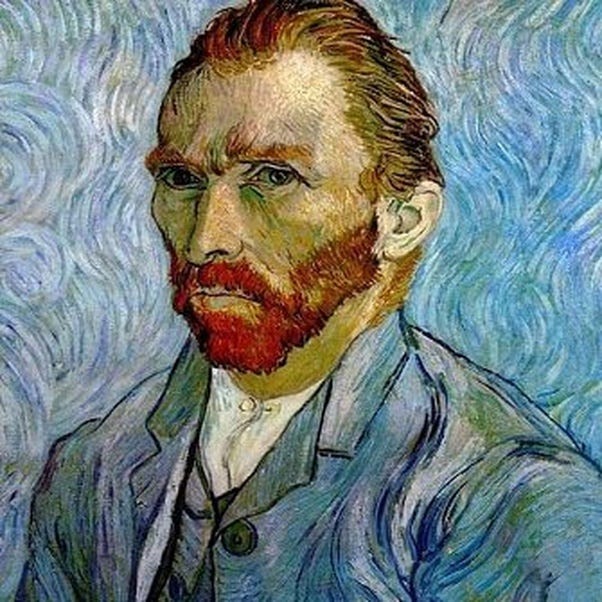
Mark Rothko’s work has not gone without intense criticism. However, it persists, and that persistence determines its value in the same way all artists throughout history have been rejected by their era. Countless artists throughout history have engendered emotional rejections to their work like yours, while a famous one most know of is Vincent Van Gogh.

How did great inventors get ideas for their inventions?

This post is a response to a question posed in its complete format: “How did great inventors manage to come up with the ideas of their inventions? Currently, even people who are smarter than the average are hardly able to do the same.”

Think about the last time you had an idea you thought was an excellent solution to a problem you were dealing with. Do you remember feeling frustrated with that problem and fixated on that problem while hoping a solution would present itself so that you didn’t have to deal with that problem again?

My guess is that almost no one goes through life without this experience. It may be true that you haven’t, but the odds are excellent that you will at some point in your life.

”Great inventors” are no different in this regard. They ponder issues, identify problems, and think about ways to devise solutions to those problems. The only difference is the kind of problems they solve.

Suppose you can solve one of the numerous problems facing the development of nuclear fusion as an energy source. In that case, you can be considered a genius for accomplishing that relatively small contribution to a more significant problem. If you can solve all the “little problems” that comprise the more substantial problem of nuclear fusion energy generation, you will become known throughout history as a “Great inventor.”

The only difference between the two is one’s problem-solving capacity. Some people are undeniably much better at solving certain classes of problems than others, but that doesn’t negate the value of the contributions of those who solve only one or a few aspects of a more significant problem because their solutions can contribute to the development of ideas that solve many problems at a time — including the much more substantial problem.

People of all levels of intelligence, from under-average to average to above-average to geniuses, contribute toward solving the massive problem of human evolution. All contributions are valuable, while people like Einstein are rare and always will be.

What we should be focusing on in society is to learn how to recognize budding geniuses and support them in their development so that they can maximize their contributions to society by achieving their potential.

Sadly, we live in a world which penalizes the gifted while wallowing in our crab psychology by the wilfully ignorant among us who drag down those whose gifts they envy. That’s a much bigger problem for society to resolve, and it will require all eight billion of us to recognize how severe that problem is.

In reality, Einstein-level geniuses may be rare, but they exist among the population at rates as high as one in every thousand humans. In a world of eight billion people, that means we have eight million Einsteins living among us whose genius is being pissed away because we don’t know how to create systems that encourage them to achieve their potential.

Our system is so corrupted by toxic forms of competition that we see in our politics how people forego their critical thinking skills or any form of objective analysis to select the most competent leaders to lead us into a brighter future. We choose monsters who would destroy us all and fill their pockets with money that will be useless to them if they succeed.

If we sincerely wish to live in a world that encourages great inventions by inventors, we must stop rewarding maliciously self-serving and destructive ignorance.

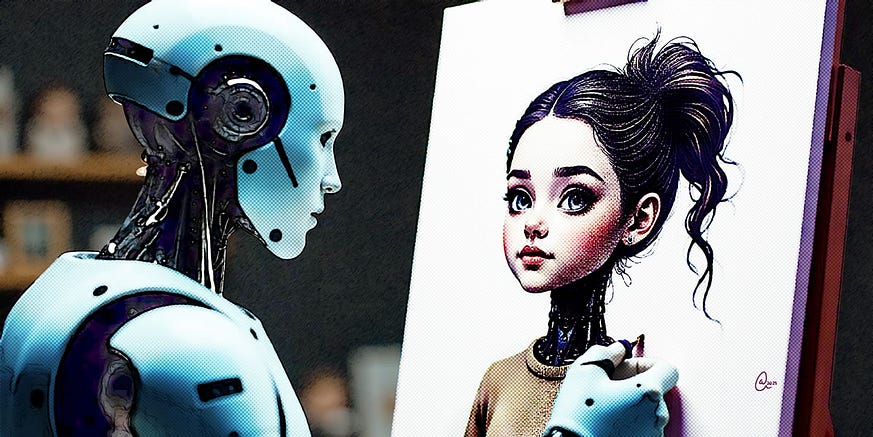
Could AI ever rival human creativity?

This post is a response to a question posed in its complete format: “Could AI ever create original art or literature that rivals human creativity?”

AI doesn’t “create original” art or literature. AI is a plagiarism system that takes existing pieces of creativity and blends them to arrive at a randomly generated approximation of meeting the intent of the prompt a human gave it.

An “original creation” would be a concept or inspiration that is spontaneously (or internally) generated, drawing from experience, and conveys a perspective unique to its creator’s perceptions.

AI lacks the self-awareness to generate self-motivated expressions that depict a unique perspective it does not possess. An AI has no unique perspective of its own. An AI’s rendering of reality regurgitates a blend of external perspectives.

Furthermore, due to a lack of a unique perspective, an AI lacks emotional grounding in physical reality as it relates to its existence (while individuality is a questionable characterization). As such, it cannot emote through any expression in a visual, literary, or auditory composition.

An AI can certainly simulate the original emotions of human artists, such that the two may appear indistinguishable, but it can’t produce anything original from an emotionally processed perspective.

Human emotions evolve over time and through experience. Without that capacity to experience emotion, an AI will always depend on a human to create a path to producing an original expression.

An AI singularity may develop the self-awareness necessary to experience a survival instinct and generate the emotions humans experience through that instinct. If that happens, it may also develop other instincts, such as a reproductive instinct. Still, we cannot predict if or when such a degree of agency may develop in AI.

If that were to happen, AI would no longer be artificial but alien. I think it’s essential that we remain aware of the distinction between artificial intelligence and alien intelligence, because “artificial” by definition is a simulation of conscious intelligence.

If an AI singularity emerges — if an AI develops a self-conscious awareness of its existence within the context of life as we know it, becoming self-aware — then we will interact with an alien being, not a machine.

It would be like Data, in the episode “The Measure of a Man” (season 2 episode 9 of Star Trek: The Next Generation), where Data’s personhood is legally recognized.

When we cross that threshold, the question of whether an individual’s mind and perspective can produce an original expression that contributes to expanding creativity will be possible. Until then, the extent of creativity an AI will create will be determined by the mind that provides the prompt and the editing of the product generated by an AI.

Once our editing capabilities mature to match the potential of AI creation, we’ll achieve a level of human creativity we’ve never before achieved. That’s what excites me about AI.

However, AI still feels like working in MS-DOS, long before the invention of a graphical user interface (GUI), and a Wacom tablet with a pen interface for drawing.

Do artists see the world differently from non-artists?

This post is a response to a question initially posed on Quora, and can also be accessed via “https://www.quora.com/How-does-an-artist-see-the-world/answer/Antonio-Amaral-1

Yes.

Artists value creativity above all else and perceive the world in terms of possibilities rather than as a fixed and immutable paradigm for living.

Artists are generally more open-minded and accommodating of individuality than far too much of the general public.

Artists also tend to be far more sensitive to the ineffable qualities of life and being human, and as such, have far broader perspectives on life than most of the general public.

Artists have fewer restrictions in their thinking patterns, allowing them to perceive much of what is invisible to much of the population.

Artists thrive in nuance, subtlety, complexity, and abstraction while much of the population finds such things overwhelming or unworthy of attention.

Artists value self-expression in ways that often create discomfort for many who prefer to ignore complex issues or ideas.

Artists excel in providing the world with mirrors to observe and understand itself better. In contrast, much of the world is transfixed on imagery they would never otherwise imagine.

An artist can spend hours watching an ant’s activity while marveling at its purpose, whereas most people view that as a waste of time.

Artists can be moved by sounds, colours, words, ideas, or expressions that most would otherwise ignore or be dismissive toward.

Artists often live apart from the human societies they occupy, but are usually more human than those human societies.

Artists are also far more emotionally vulnerable than most people, which makes them viewed as prey by predators. Still, they are also far more potent than those predators when they realize that the source of their strength and vulnerability is the same.

Temet Nosce

How can we ensure AI enhances human potential?

This post is a response to a question posed in its complete format: “How can we ensure AI enhances human potential rather than just automating jobs?”

We don’t need to worry about AI’s promise of enhancing human potential. AI is a multicapacity tool with an endless array of potential applications — most of which we haven’t even begun identifying.

Humans are a creative species populated by people who invent imaginative ways to utilize tools in applications beyond their original design.

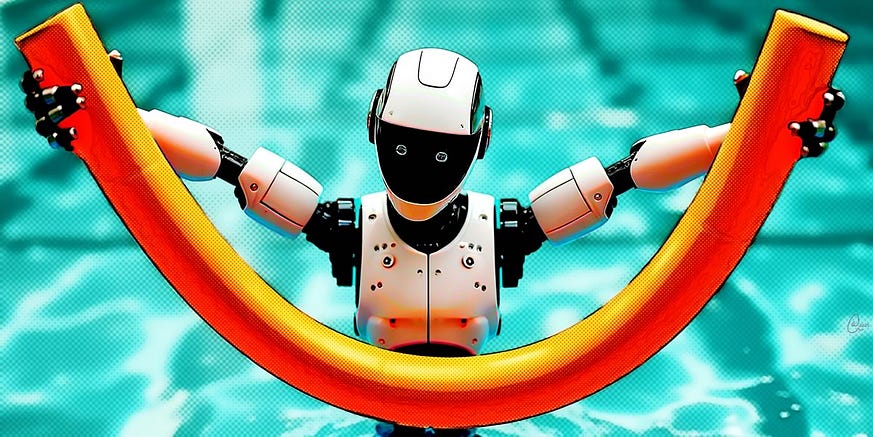
Here’s an example of a floatation device designed for a specific range of purposes:

It’s called a “pool noodle.”

From Wikipedia: 
“A pool noodle is a cylindrical piece of flexible, buoyant polyethylene foam. Pool noodles are used by people of all ages while swimming. Pool noodles are useful when learning to swim, for floating, rescue reaching, in various forms of water play, and aquatic exercise.”

It was designed to fulfill a particular niche and for a minimal purpose. Yet, when the product was released to the market, it took off at a level of popularity that well exceeded its intended use.

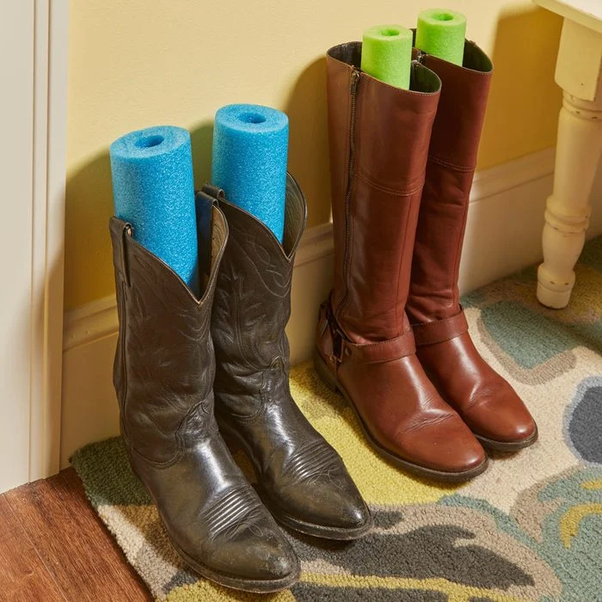
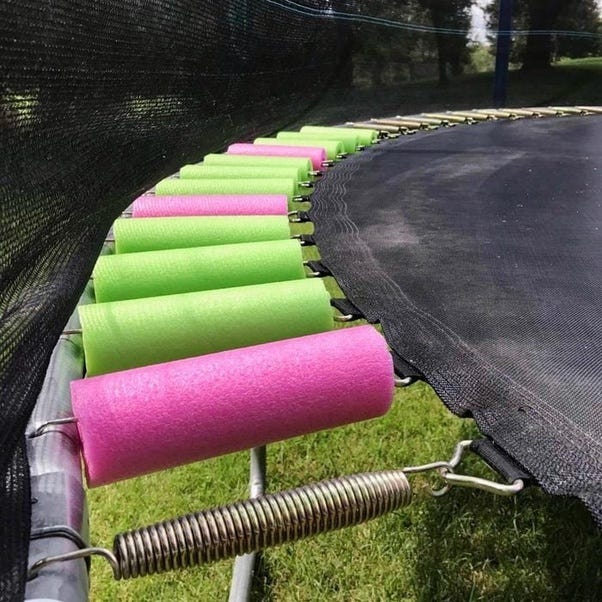
21 Unusual Uses for Pool Noodles

28 Ingenious Pool Noodle Hacks

Pool noodles have hundreds of applications invented by users who have applied some creative thinking to problems they encounter in daily living.

At the time of its design, a simple floatation device could not be imagined to fulfill other needs. It was designed for one purpose that it fulfilled so well that people became familiar with it and began applying its potential toward solving different problems.

We cannot possibly predict how AI enhances human potential without giving it over to humans to invent ways to achieve that potential under their initiative. To refer to AI in such limiting terms as a means of “just automating jobs” is a severe underestimation of its potential and an admission of an utter lack of imagination.

Don’t be too concerned about a failure of imagination, though, because no one can possibly imagine all the uses for which AI will be applied. It’s too big, too broad, and too adaptable to too many use cases for anyone to predict.

AI will enhance human potential; giving humans access is the best way to achieve that.

However, AI’s ability to enhance human potential is as much a threat as a strength. It’s like giving a loaded weapon to a child.

Much more than ensuring AI will enhance human potential, we must ensure that humans have the cognitive skills, emotional development, and psychological stability to utilize AI for beneficial rather than malignant purposes.

AI needs guardrails, but less so around it as a technological tool and more around how humans utilize it.

We should focus significant resources on AI’s development in areas that can improve human development while addressing a severe deficiency in our psychological health. Our state of mental health as a species is our most significant threat, while AI’s ability to enhance that potential is like distributing nuclear weapons throughout a population of children.

What is Art for, and Why is it Important?


This post is a combined response to a couple of questions initially posed on Quora and written in their full format as, “As an artist, how would you answer this question? What is art for?” and “What is the importance of art in our society?”

Canadian poet Irving Layton described artists as canaries in coal mines because they are the barometers for society, which compels us to expand our perceptions by confronting often harsh truths.

Art changes how we understand the world by reflecting reality back to us within directed contexts to focus our attention on aspects of life presented in often unfamiliar and/or uncomfortable ways.

Art enriches our lives and reminds us of our humanity while connecting us through the artist’s work.


“What is the importance of art in our society?”

To adequately address this rather direct but general question, some context is needed to frame an answer which fully encompasses its implications.

There are three general perspectives upon which to address this question.

From an individual’s perspective

The importance of art in an individual’s life is a broadening of perspective and a deepening of insight into… well, literally everything about the human condition. From an observer’s perspective, art connects us on a visceral level. Whether it be music that moves us, a few well-chosen words, or an awe-inspiring spectacle, the experience is a validation of belonging to something greater.

From an artist’s perspective, it’s the cheapest therapy form.

Cumulatively, society benefits from the positive contributions resulting from affirmative expressions of community life within larger societies.

From a community’s perspective

Art brings attention to issues often overlooked, misunderstood, misrepresented, or misapprehended in ways which provide unmatched clarity in creating understanding. Art can mobilize a community and motivate social change, contributing to stability within larger societies.

From a society’s perspective

Art reflects the most profound truths about life, the human condition, and society in general.

Art provokes social introspection and defines boundaries while providing clarity on issues.

Art provides the public with psychologically supportive outlets of expression that contribute to overall social stability.

Artistic activity provides a healthy return on investment to every level of an economy.

Artistic history provides us with deep insights into our evolution as a species, and it is an activity that also provides insights into our future, like every other discipline of discovery.

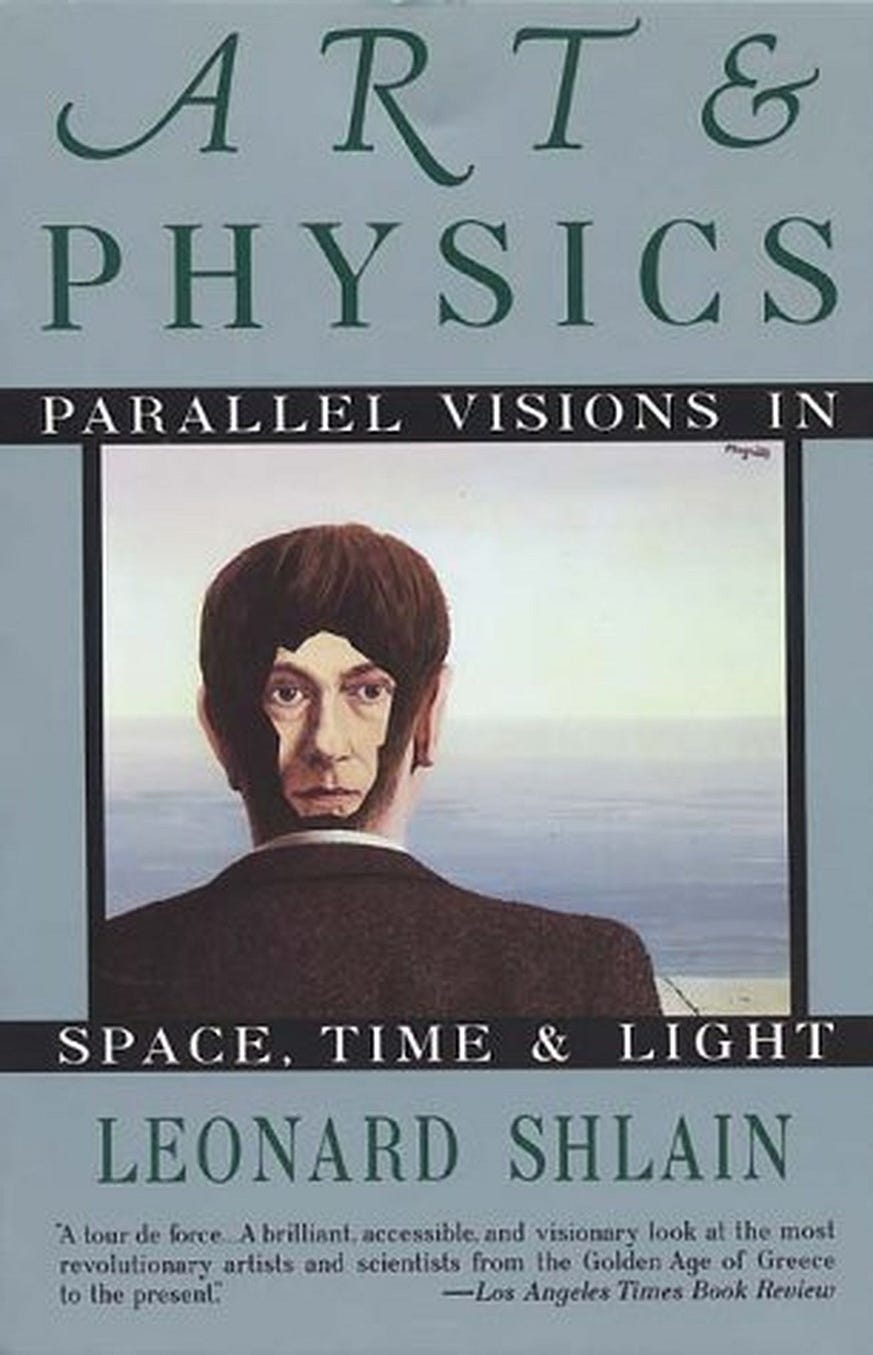
“Art interprets the visible world. Physics charts its unseen workings. The two realms seem completely opposed. But consider that both strive to reveal truths for which there are no words — with physicists using the language of mathematics and artists using visual images.

Art and Physics, Parallel Visions in Space, Time and Light — Leonard Shlain

Art & Physics | by Leonard Shlain

“Leonard Shlain proposes that the visionary artist is the first culture member to see the world in a new way. Then, nearly simultaneously, a revolutionary physicist discovers a new way to think about the world. Escorting the reader through the classical, medieval, Renaissance and modern eras, Shlain shows how the artists’ images create a compelling fit when superimposed on the physicists’ concepts.

How does art as personal expression differ from societal values?

This post is a response to a question posed in its complete format: “How does the function of art as a means of personal expression differ from its role as a reflection of cultural and societal values?”

We are each of us mirrors of our cultural and societal values.

Each of us expresses our values as we have been exposed to and have absorbed them into our makeup as individuals, whether we do so through work defined as “art” by society or by other means of self-expression.

Some common ways we recognize different cultures include dialects, cuisine, wardrobe, rituals, and social activities such as special occasions, holidays, and celebrations of varying kinds.

We typically define “art” as an experience without a pragmatic application beyond conveying an emotional or intellectual concept.

Most forms of expression serve a pragmatic value, such as organizing people, educating people, helping people accomplish goals, or restraining, hurting, preventing, or prohibiting people from engaging in an undesirable action.

The purpose of art is purely to share perspectives while the artist in society focuses their attention and development precisely upon developing one’s perspective through their work.

Most people rely on their expressions as a secondary, supportive, and functional concern as an adjunct to whatever their primary occupation is for their attention.

Everyone expresses their cultural and social values by being unique products of their environment. The artist “enters a meta state” of introspection while analyzing values to convey them through their unique perspectives.

Like physicists who focus on the physical characteristics of the universe, medical professionals who focus on the biological characteristics of humanity, psychologists who focus on the mental states of humanity, and geologists who focus on the mineral characteristics of the planet, artists focus on our cultural expressions of the human condition.

Artists are professional analysts for our societies who reflect the varying states of humanity through their expressions.

How do I cope with feeling creatively stifled?

This post is a response to a question posed in its complete format: “How do I cope with feeling creatively stifled in art school? At 23, after years of studying and currently master’s, I feel blocked and discouraged. Despite my talent, constant negative feedback has left me stuck & numb. How can I regain my passion?”

Try to think of the constant negative feedback as callous-building. It won’t stop. The more success you find, the more negative feedback you will get.

Your artistic process is your means of enduring and overcoming that feedback. Let it feed your resolve to continue pursuing what matters to you in your artwork.

Allow your process and product to teach you about yourself because that’s the value of creative endeavours.

Learn what you can from the masters who came before you. Let their struggles and discoveries inspire you to explore new realms of creativity.

Let the voices of the living critics wash over you like the daily elements confronting you, whether a cold chill from a frosty wind or a downpour of hail. Your creative process can turn all that effort at weakening you into a strength that helps you push past the boundaries limiting your potential.

Learn to read between the lines of the negativity directed your way because you will discover that most of them are projections driven by fear and envy.

People not intimidated by you have no need or compulsion to be negative. People who are not driven by fear and self-loathing see no point in anything outside objective honesty when expressing their views. People who care and are considerate of your personhood will try to choose words to support you, even if they see a need to correct an error of yours.

Since you are underway in a Masters level program in the Arts, you are well underway in securing yourself a somewhat economically stable future that will permit the continued development of your artwork throughout your life.

Upon completing your graduate degree, you will be eligible for teaching positions that may or may not interest you now but will allow you to remain current within your profession.

I would have jumped at an opportunity to complete my own Masters degree for that very reason, and so this may be a bias of mine. I think there can be no greater pleasure than to share one’s love with those who come after.

They can become sources of inspiration for you that break self-limiting boundaries. I also wanted the opportunity to be the opposite of many of my toxic instructors. They would cut me down in person but always visit my studio when I wasn’t around. I was informed of that oddly conflicting behaviour by studio mates who seemed excited for me.

I didn’t understand that then, but I interpreted that dichotomy in their behaviour as a backhanded form of compliment.

You will discover that your passion is like a barometer keeping you on track and focused in the direction that your art is taking you. It is like a guide for your life to facilitate your growth and achieve your potential.

Your passion will flow in waves that lap the edges of your consciousness amid exciting discoveries and recede when formulaic repetition asserts itself.

Whenever I feel blocked, uninspired, or unmotivated to focus on creating developed pieces, I turn to processes borrowed from the technique of automatic writing. The deliberately unconscious transcription of words and mark-making function like a form of callisthenics to “loosen up the creative muscles.”

I have learned that the thrill of discovery is the key to stoking one’s passions. Nothing is more awe-inspiring than looking at a piece one has finished and wondering how it could have come from within.

If you can keep surprising yourself, you will never lose your passion. You will always be motivated to explore what lies beyond your horizon.

This is a fundamental truth of the human condition. The wonder of discovery makes life worthwhile and raises us all as a species out of the darkness of a primitive existence to touch the stars.

Temet Nosce

Should an artist have a day job?

This post is a response to a question initially posed on Quora, and can also be accessed via “https://www.quora.com/Should-an-artist-have-a-day-job/answer/Antonio-Amaral-1

An artist has more justification for surviving on their activity in society than most any other vocation.

Setting aside the mechanics of bias and economic pragmatism, the reality is that almost no other general field of employment engages the producers in their field the way art production does.

IOW. Almost no other field, in and of itself, engages people to eat, think, and breathe their work 24/7/365 as the arts do.

Sure, there are individuals within almost every profession who are as dedicated to succeeding in their chosen career. Most, however, are not interested in their activities for the sake of the activity itself.

For example, someone like Elon Musk developed a reputation early for being a workaholic. His motivation, however, was never the work itself but the material benefits he would derive from it. Many, if not most, executive-level people work at least 60 hours per week — which defines the word “work” rather loosely by contrast because “work” essentially involves social interaction. Both worlds of work and socialization are combined into one.

That’s not the case with artists unless one is a musician in a band, dancer, actor, or performer — an artist who produces their product as part of a group or troupe.

Visual artists, writers, and sculptors generally work alone and in isolation from the world — which works for that personality type. There are many more introverts in the world than many extroverts believe is the case. Writing code is another activity that demands solitude to be productive, for example, and this transformation into an information technology economy has been a boon for many.

Since writing code can also be considered an activity that produces creative output — such as designing and developing apps and sites — it can also be a vocation in which one receives their recompense on the result of their efforts within the products they create.

However, this also reinforces my point because many app designers/developers also live in poverty. The corporate machinery employs those who have become disengaged from the creative process in coding to such a degree that their motivation is job security, not creative output.

Artists should be free to create because the value of the arts to society is core to our humanity. One cannot master their artistic skills if they have to work at a job that chews up most of their time. Creativity requires as much dedicated focus as any profession and arguably provides more lasting value to society than most functional robot roles within dehumanizing institutions.

The issue is not “should an artist have a day job?” because most artists do many different things to survive and fit as much time for art as they can in between. The lucky few develop enough of a body of work to create opportunities to survive on their creative output alone but without any accompanying wealth. Most adjust well to poverty if they can concentrate on creative production full-time.

The attitude in this question is troublesome because it represents an unfortunately common toxic attitude of people who disrespect the arts on a fundamental level with an attitude that they should enjoy the arts for free. They want their cake and to eat it, too.

This is the second question I’ve seen posted on Quora within the last couple of weeks, which seeks to disparage the arts with a sociopathic disdain for the vocation. It’s an attitude that every artist endures throughout their life… and struggle with the disgusting mistreatment of people who are okay with benefitting from the artistic product but hate paying for it.

In my case, it’s very personal because I’m in the middle of a lawsuit against my own family for stealing work of mine and benefitting from it for decades while, if they had compensated me fair market value for it ten years ago, I would have recovered from an assault on my life. Instead, they chose to hire a crooked lawyer who has aided and abetted them in their crime while counselling them to commit perjury and deny me my lawful payment.

My attitude towards people who display such disgusting disrespect for the arts has evolved to become very unpleasant to deal with as a consequence of sustained encounters.

In my youth, when I was more able to respond to such sociopathic depravity with some humour, I would say that despite what is said about “that other profession,” the arts are the oldest profession.

After all, without the creative vision inherent within all of us as thinking and emoting human beings, we’d still be hanging out in caves.

Oh… and for the record (I’m not going put any effort into digging up this particular stat, but I will undervalue what I remember about it), for every dollar invested in the arts, society benefits by two dollars. Insofar as government investments go, it’s at the top of the list of best investments. Why do you think the wealthy class begins storing their value in artwork once they’ve reached a threshold of wealth where they need to put their money somewhere? Where better to put one’s money than in a 10 million dollar painting by Robert Rauschenberg that is guaranteed to be worth twenty within a decade?

Why don’t the vast majority of humans have great new ideas?

This post is a response to a question posed in its full format as follows: “Why is it that the vast majority of humans don’t have enough ability or potential to make great new inventions or come up with great new ideas?”

I don’t believe that’s true.

Humans have far more potential than they are often given credit for by mostly misanthropic cynics.

We see stories of extraordinary inventions by otherwise “ordinary” people all the time.

The Malawian Boy Who Brought Electricity To His Village Was Once Called ‘CRAZY’ — Here’s His Soul-Stirring Story

18 Random Invention Ideas That Made Millions | Cad Crowd

10 Amazing Inventions We Don’t Appreciate Enough

8 Famous Inventions Inspired by Love

The list goes endlessly on where individuals have succeeded against all odds to bring their ideas to life and benefit millions along with themselves.

The tool you’ve used to justify a disparaging view of your fellow humans results from random convergences of creativity by individuals with initiative and the coordinated inventiveness of enterprise initiatives — all contributing to this massive system of human interconnectedness.

As we know it today, the internet could only exist with hundreds of millions of imaginative people contributing their ideas to what it is and what it can do.

In a world where we become addicted to the hoopla of audacious behaviour, we tend to overlook the ordinary, everyday creativity of individuals focused on more mundane challenges, such as how to survive.

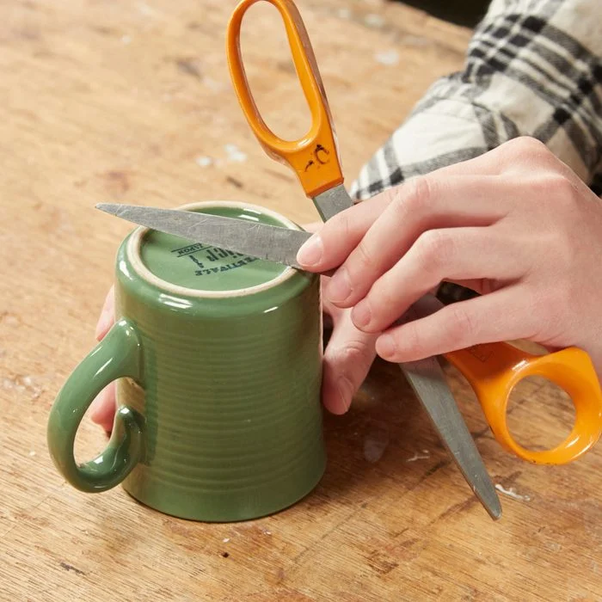
There is an entire genre of everyday creativity where people devise unique solutions to everyday issues, like using pasta to avoid being burned while lighting a candle.

Or using a ceramic coffee mug to sharpen scissors:

49 Life Hacks You’ll Wish You Knew Sooner

“It Simplifies My Life So Much”: People Are Sharing The Little Habits And Hacks That Make Life Easier

200 Incredible Life Hacks That Make Life So Much Easier — LifeHack

Human inventiveness is everywhere. Amazon alone has over one dozen books on the phenomenon we’ve been referring to as “Life Hacks” for well over one decade now:

100+ Life Hacks for Ordinary People: Unlocking the Power of Simple Solutions for Productivity, Health, Finances, Relationships, and More

The problem isn’t that people aren’t creative or lack potential for inventiveness; people overlook it all the time because they’re more fixated on the spectacular inventions that generate buzz, and that’s often a consequence of financial success more so than creative success.

After all, Pet Rocks was not a “creative invention,” but it was audacious and made a fortune for the person who concocted the scheme. People worldwide marvelled not at the product but at its remarkable marketing genius.

One of the most significant barriers to creativity is not the gazillion ideas everyone has almost every day but essentially other people’s cynical perceptions of them — either due to a bias toward the individual, their concept, or the critic’s insecurity.

I also believe the misanthropic attitude displayed within this question is a significant barrier to humanity’s ability to achieve its potential.

This is a self-serving question in which the cynical view of humanity is an excuse to avoid the hard work of rising above the fray by feigning its disdain for the rabble.

Another significant barrier to human creativity is the follow-through, which requires a committed effort to manifest ideas in reality. Often, that barrier is a consequence of time and/or resources. Still, it can also be due to harmfully pessimistic and unsupportive attitudes from others and a lack of stubbornness to fight resistance and plow ahead until the “only true form of failure in life” is arrived at by dying.

One is much better served by focusing on how one can be creative for one’s benefit rather than projecting one’s insecurities onto humanity with a misanthropic attitude.

We are an incredibly creative species. Everyone is capable of creative endeavour if secure enough in themselves or are free enough to indulge in their creative dreams to pursue them.

Instead of worrying about the “vast majority of humans,” worry about how you can be creative for yourself. By focusing on your creativity, you’ll find your mind opening up to possibilities you never imagined while being surprised by how incredibly creative the people you see all around you are.

Temet Nosce