If aging feels like things get worse, how can we deal with living 200 years?


This post is a response to a question posed in its complete format: “If older generations tend to get fed up with the following generations, and feel that people are stupider, societal values, music, culture and everything else is worse, how could humans ever deal with living to be 150 or 200 years old?”

This question is based on a flawed presumption and a form of projection because “older generations” is a monstrously huge brush comprising hundreds of millions worldwide.

That number of humans don’t think alike, and they certainly do not all “get fed up with etcetera generations.” However, people who employ broad brushes when making judgments about people they don’t know are also exhibiting precisely the mindset that disparages people and renders broadly negative judgments about “things getting worse.”

Thinking in these negative terms and judgments is often a means of rationalizing one’s negative attitude. By believing age leads to negative judgments, one is permitting oneself to develop one’s negative judgments.

The reality, however, is that many people remain “young-minded” and optimistic throughout their old age and consequently live happier and longer lives.

Here are some examples of people who remained optimistic throughout their long lives:

George Burns 1896–1996


Grandma Mose — Anna Mary Robertson Moses — September 7th, 1860 — December 13, 1961

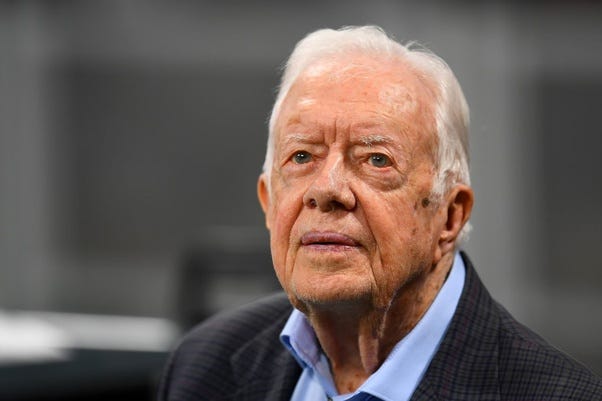
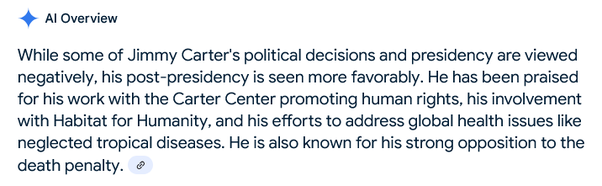
Jimmy Carter — October 1, 1924 — December 29, 2024

After having pissed away valuable time on another post dealing with toxic incels whining about how unfair life is that they don’t get to control the women they impregnate, I’ve arrived at this question with the attitude that people choose to believe the world is getting worse because they’re not able to control every aspect of it. That frustration wears them down over time, and they develop a negative attitude toward life and people in general.

I was a child during the “Dawning of the Age of Aquarius,” and was a preteen during the flower power generation with love-ins, and an optimistic view of a hopeful future.

Then came the 1980s, when people’s mindsets appeared to change from an open-minded view of society to a rather cynical and dispirited view based on a self-centric model of getting what one could for oneself, even at the expense of others. It seemed the era of sharing and caring was vanishing.

Throughout it all, I still maintained my somewhat naive but hopeful view that we would recover the community spirit I remember being moved by, while reminded of it each night, as the television stations shut down their programming for the evening, with the Brotherhood of Man song, “United We Stand, Divided We Fall.”

Although I have perceived, throughout the last forty-five years, since the beginning of the 1980s, a general increasing separation between people, many changes have distracted my mind from it. I could sense it occurring, but I mostly ignored it as I went along with it while focusing on the developing technologies and learning to leverage skills and knowledge to carve out a sustainable career for myself. I was caught up in my optimism for a hopeful future for myself, and became increasingly introverted and isolated from interpersonal interactions and a community I could rely on.

Since that was taken from me, maintaining optimism has been quite a struggle. Still, I understand on a deeply visceral level how succumbing to negativity is quite much like drinking poison. The intensity of my experience has made it abundantly clear that a destructive mindset also harms one’s physical health. It creates a feedback loop of self-destruction, which allows one to wallow in broadly negative views toward life in general.

I believe that insight clarifies that living 150–200 years (which no human has ever done) depends on one’s frame of mind and maintaining an optimistic outlook.

If people develop such a negative perception of life that they believe everything is perpetually worsening, they don’t live as long as they otherwise could. Our attitudes toward life constitute a life-shortening way of ensuring we don’t have to cope with hopelessness.

This is part of the reason optimism has increased in importance for me, particularly since I still find myself venting against the prevalence of negativity we see every day and almost everywhere we look.

I can accept that much negativity exists in this world, but I don’t have to accept enduring it, so I get carried away with challenging it. I’ve gotten quite sick and tired of the rampant cynicism. I would like to see a resurgence of hope filling my senses like it did when naive hippy optimism of peace, love, and tree-hugging do-gooders captured public attention, even if it may have mainly been performative or just acting out against previous dark periods in human history, like the Second World War.

I want to believe we’ve arrived at a form of “peak darkness,” and a crossroads in our future as a species and a civilization where we can change course and restore hope to protect our longevity. The alternative is to allow ourselves to succumb to oblivion because we cannot survive an existence sustained by cynicism.

To that end, I do what I can to find examples of young people who give me hope for our future because, with each generation, we have both Kyle Rittenhouses and Greta Thunbergs, just like we have had for generation upon generation before them.

We must choose whether we want long lives of optimistic hope or shortened lives of cynical darkness.

Perhaps I’m just on a high from Canada’s recent election and getting the good news today about Australia following suit. Still, I think — or at least can start feeling some hope that the MAGA madness may finally reach its breaking point. It’s impossible to know if we’re experiencing a sea-change or a temporary lull in the degradation of our values. Still, I’d prefer to adopt an optimistic belief in our future than a cynical one because that’s too toxic a burden to endure. We may still require a world war to break this century’s “MAGAt fever,” or we may have learned something from our history, at least enough not to have to turn our world into a humongous bowl of ashes and regret before we finally start making hopeful and community-minded decisions to grow together instead of tearing each other apart.

At any rate, life may suck but feeling sucky about it only makes it suckier. Even if life sucks, thinking optimistically about a positive future at least makes the suckiness easier to deal with, and that’s why I equate long life with attitude and posted a few well-known examples of people who we can all learn something from.

In short, it’s not about “older generations” but about “old minds.”

Temet Nosce

Why does the Chinese government look like geniuses run it?

This post is a response to a question posed in its complete format: “Why is that for Chinese living inside China, the Chinese government is not perfect, but for people looking at China from the outside, the Chinese government looks like it is run by geniuses who plan far ahead into the future?”

I believe it’s important to highlight a harsh truth that completely escapes MAGAt minds.

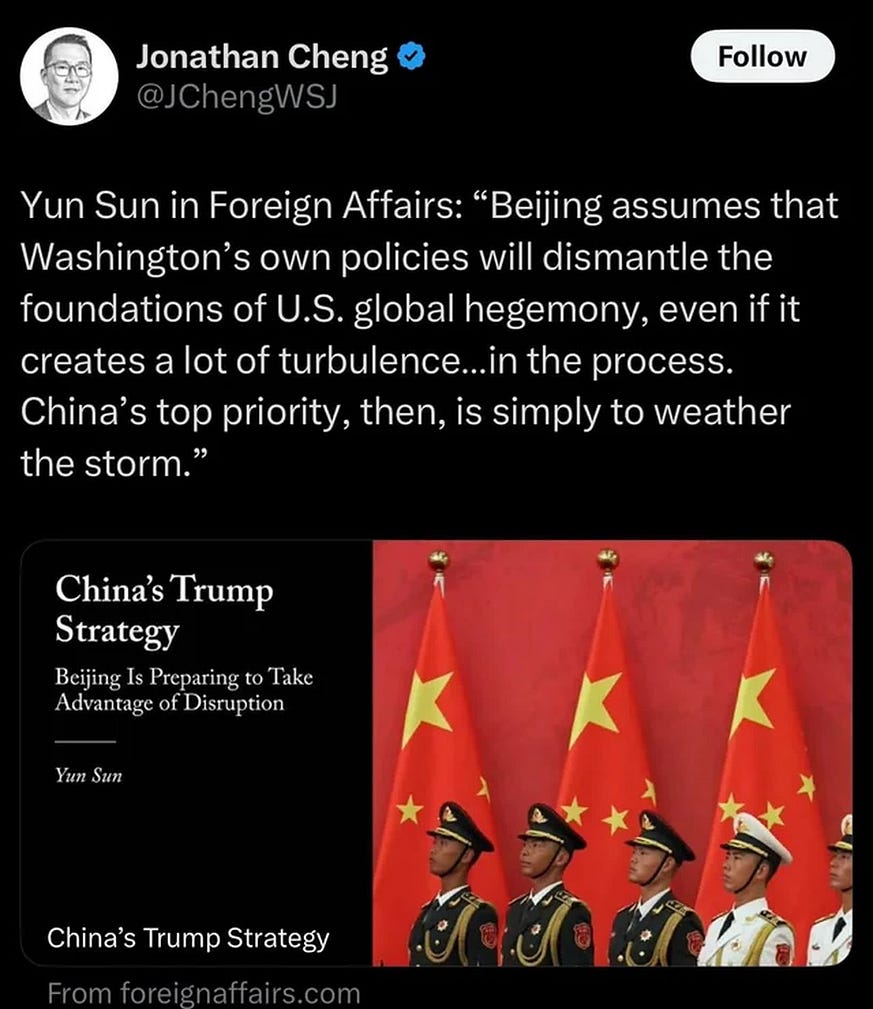
China isn’t “run by geniuses” but by ordinary minds who use “common sense” to plan “far ahead into the future.” They leverage the minds of their people, and many are geniuses, making incredible technological breakthroughs.

Nations cannot plan for the short term without missing the boat on the long term. People can prepare for the short term because the lives of individual people are short compared to the lives of nations. Nations must plan for millions of lives and not just one.

“Common sense” leadership is acknowledging one’s limitations and relying respectfully on the crowd’s wisdom to achieve a nation’s most significant potential. Authoritarian mindsets will always fail against this kind of “common sense.”

It doesn’t take a genius to figure this out.

All that’s required is not to be a stupid, short-sighted narcissist who thinks the world magically dances to the sound of one’s voice.

That’s precisely the problem fueling the self-destructive hubris sending the U.S. careening into becoming a third-world shithole and all of this is entirely due to the machinations of short-sighted bigots whose goal is the resurgence of another Reich because they continue to refuse to learn from history.

MAGAts may claim to value “common sense,” but their short-sighted and self-serving biases are not “common sense,” but an entirely “subjective and self-destructive sense.”

This period in history is teaching us once again that we must cure our species of the authoritarian virus that we have been fighting against since the dawn of human civilization.

China has had enough experience with authoritarianism to know how to handle the U.S. slide into fascism.

Would people continue to work with UBI?

This post is a response to a question posed in its complete format: “Would people continue to work if everyone received a universal basic income ($2,000 per month) for the rest of their lives?”

The numerous tests that have been performed bear out that they would, but that’s overlooking the problem with this question and its mindset.

The people who ask this question never bother to consider the percentage of the population that never has to work for someone else to sustain a living income.

The average net worth of the top 0.1% worldwide is around $62 million.

No one in this wealth category must work for an income at any point throughout their lives. Having their money in a low-interest-bearing account would be enough to live on the interest alone and without touching their capital.

0.1% of the population is 8 million people.

Eighty million people worldwide comprise the top 1% of the population, with an average net worth equivalent to the lifetime earnings of most reasonably upper-middle-class workers. No one in this entire group of 80 million people must be employed to survive comfortably.

Every time the question of how people will live once they are no longer forced into an (often abusive) employment relationship (in which abusive employment conditions comprise the primary reason people leave their jobs), the implication is that they will turn into lazy do-nothing slugs.

Meanwhile, 80 million people somehow find ways to keep themselves occupied daily without anyone wondering if they’re lazy layabouts. Even if they are, no one seems to care.

All of the tests performed to determine the viability of UBI involve people who would otherwise be compelled to work in soul-crushing roles while being subjected to people on power trips who should never have any power over other people.

No one who asks this question seems to consider how those 80 million people manage to make it through their lives doing absolutely nothing. No one assumes they do nothing because we see the results everywhere. In fact, without that group of 1% elites, we’d never know the upward mobility that has led to the creation of a centibillionaire class.

The reality that the misanthropes presuming people need to be herded like animals throughout their lives is that without having to piss away most of their lives on basic survival, people would invest their time in themselves and become involved in activities that bring meaning to their lives.

Whether that constitutes “work” or not is a matter of semantics. Many people who would not be required to commute to a daily dehumanizing ritual of functioning like a disposable cog would perform functions in society that many others would find valuable.

Some would devote their lives to becoming successful caretakers for their families, friends, and neighbours in need while adding positive value to their community with basic tasks such as performing chores others could not. They may choose not to devote their time to salaried activities because they would find more significant meaning in helping their community address some fundamental needs capitalists don’t care about addressing. After all, there’s no profit in providing mental health services to those in need.

(Meanwhile, we are suffering from a mental health pandemic affecting one in five people. A whopping majority — 70%-80% — of families are dysfunctional. We are a species in desperate need of focusing on our mental health issues.)

People in general would also be much more free to focus on community needs and political dynamics such that when they go to the polls to cast their ballot, they would do so from a perspective of much greater insight into the candidates and the issues than they can currently afford to focus on now while working two jobs to survive at a minimally conscious level.

(How are people supposed to find time to understand the intricacies of nuanced issues if a majority are unclear on how something as simple as how tariffs affect their lives?)

The people who ask this question also seem oblivious to how long and how much effort is required to develop a successful career. Without external resources and funding, creating a successful enterprise takes much more time than it does to create one that’s been heavily capitalized.

Let’s say, for example, you’ve created a special recipe for a unique jam that everyone in your neighbourhood loves. You can get busy and produce perhaps 1000 jars of jam per month, which earns you enough to continue making 1000 jars of product while supporting yourself, and while eventually being able to afford increasing your production slowly over time by being able to expand your operation by reinvesting into it. You can slowly add to equipment and materials and hire assistance on both a production level to increase output volume and a professional level to expand market presence.

Let’s say that your success allows you to create a one-million-dollar per year business after 10 years of effort. If you had the capitalization required to purchase all your equipment, staffing, and professional assistance up front, you could easily achieve that one-million-dollar per year revenue level within half the time.

This is how massive franchises grow from small mom-and-pop operations into national chains within a few years. Capitalization is everything in building a successful enterprise. If one has no capitalization, then time is everything to them. Time is money.

Without the wealth to propel a business into respectable success as defined by a capitalist marketplace, one still has to work hard on one’s dream to achieve it. People are not discouraged from working while collecting enough to live on in a UBI program. The opposite is true. They are free to pursue their dreams and benefit from the sweat of their brow without having to sacrifice their lives feeding a parasite that views them as disposable commodities.

People have a far greater incentive to work for themselves than they ever could working for an abusive employer.

That’s the lesson the one percent teach us about humanity.

Only misanthropic cynics believe human beings become slugs when they’re given enough money to choose not to submit themselves to making other people rich at the cost of their life satisfaction.

People don’t need to be whipped to work. Anyone with experience working with volunteers understands what it means to dedicate time and energy toward causes which matter, and the fact is that not all things which matter involve acquiring vast stores of material wealth.

Life satisfaction is worth far more than money.

The best and only way to achieve life satisfaction is to focus one’s time and energy on doing what they love and applying themselves to produce outcomes they can be proud of. Rarely does that satisfaction get defined by money… and certainly not by those in society whom we recognize as psychologically healthy individuals whom we respect and admire as human beings.

We have learned and continue to realize that those among us who worship wealth acquisition above basic human decency are the most broken and villainous threats to our social stability and progress.

People often blame money as the root of all evil, but that’s not the case; the love of money is above all else.

UBI is the freedom to pursue our higher human aspirations, not an excuse to become lazy.

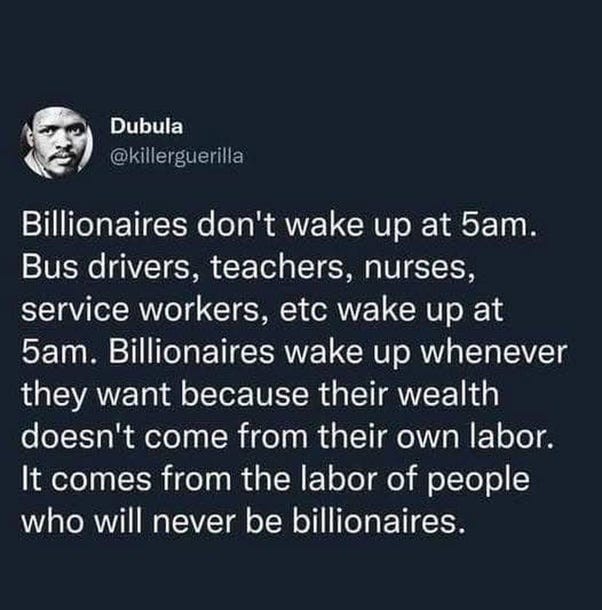
If having money made people lazy, we would not now have centibillionaires walking among us in a psychotic competition to become the world’s first trillionaire.

What does calling farmers “collateral damage” mean?


This post is a response to a question posed in its complete format: “What does it mean in MAGA when Musk calls US farmers as “collateral damage”?”

The term “collateral damage” was first applied by the military when assessing how many innocent casualties would be created when assaulting an enemy.

It was a way of dehumanizing those who happened to be in the vicinity — in the wrong place at the wrong time — and who may or may not have been guilty of collusion with the target but were considered expendable.

For Elon, it means that he views the farmers whose lives he destroys as enemies whom he dehumanizes while waging a war against American citizens to acquire material wealth.

For someone like Elon to use this expression, he’s letting the little people know that’s how the 1% regards the majority of the people, as acceptable casualties in their power games.

He is confirming that the 1% view us all as less than human and as disposable as they have always considered their slaves to be throughout history.

The 1% have been consistent in choosing profit over lives. Elon has admitted it’s not an either/or situation but a situation of strategic intent to destroy the lives of the many to enrich the few.

Everything about the Trump administration is a blatant act of assault against the majority, while robbing us all and killing us in the process, not out of necessity but expedience.


Bonus Question:
What do you think of Musk’s Tesla losing money and Twitter crashing?

I think it can’t happen fast enough.

The best thing we can do for society and the future of humanity is to make the wealthiest man on the planet homeless and destitute.

Why?

Because it shows two things:

  • The wealthy are not invulnerable and
  • We can defeat their corruption without bloodshed.

How can a society allow everyone to succeed?

This post is a response to a question posed in its complete format: “How would you design a society where everyone has the opportunity to succeed?”

Until Ronald Reagan and Margaret Thatcher, humanity was well on its way to perfecting that democratic society in which everyone had a reasonable opportunity to achieve class mobility and a basic form of success that permitted a life of dignity with what was characterized as the “American Dream.”

A mortgage on a house with a surrounding picket fence, a vehicle, a family with 2.5 kids and an annual vacation wasn’t only possible but virtually guaranteed to anyone who made the effort to earn it.

They betrayed the entire middle class around the world to curry favour from the wealthy who have long desired a return to a barbaric age of kingdoms with rulers and disposable serfs.

We failed to modernize the one institution that has proven itself the greatest threat to the goal of an egalitarian society, industry.

Almost every other entity in society is a democratic body. Corporations, however, are holdovers from a medieval structure of rigid hierarchy fraudulently appointing members to an inner circle of power, allegedly based on merit, while elevating those who support their corrupt application of power.

We can repair this mess of corruption with only a few fixes, but one of the most important and most easily overlooked solutions will be a difficult challenge to implement. It will (and has been) meet(ing) massive resistance by those who most adamantly refuse to give up their power, as it involves restructuring how corporations exist and do business in society.

We can quickly implement numerous initiatives today, such as UBI, Universal Healthcare, and Universal access to education, that will have long-term implications leading toward much more stable societies that can guard against corruption.

Other initiatives, such as a global cap on personal net worth and restructuring industry into democratic institutions, are potentially much more disruptive to society. We are, however, fortunate to find ourselves amidst a radical transformation into full automation throughout every level of society. This transformation will allow us to restructure political systems while increasingly democratizing society and flattening global power structures.

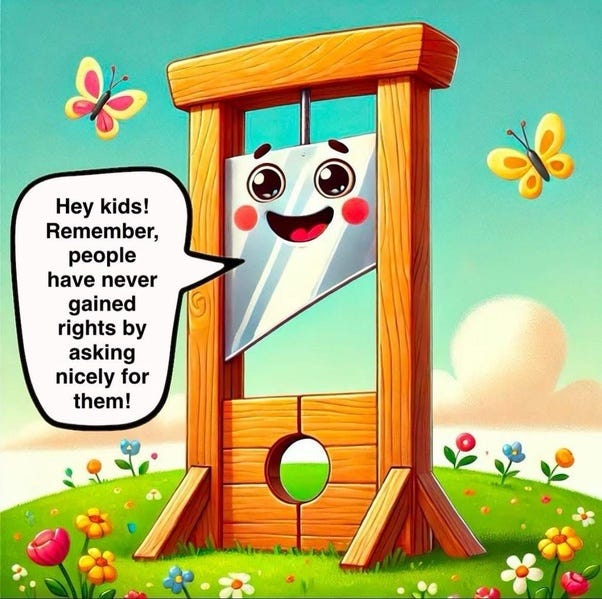
The only way to ensure society can facilitate opportunities for everyone to succeed is to flatten power and spread it across the globe to the people. At this stage in our history, our existence faces an existential threat due to the corruption of disproportionate power running rampant throughout society. It may be the case that we will have to rely on historical inspirations to repair the damage the wealthy class has done to society and make reparations for their betrayal of the social contract.