Is it time for the equality of wealth in America?

This post is a response to a question posed in its complete format: “After the rich gets richer and poor gets poorer, it’s telling us that capitalism is failing. Is it time for communism for equality of wealth in America?”

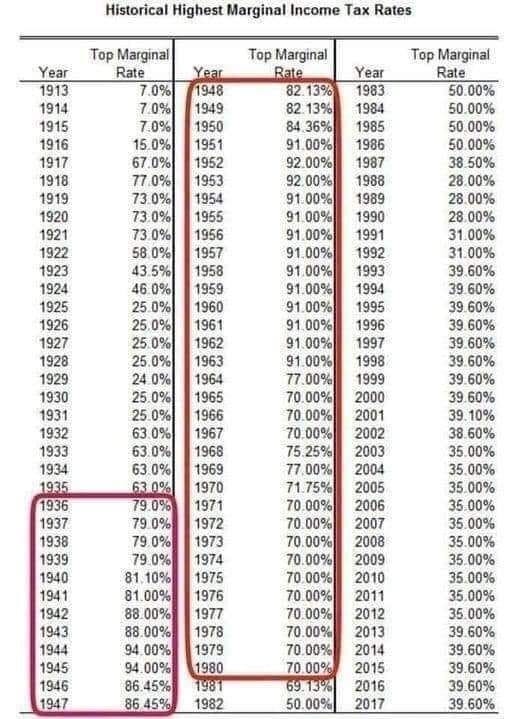
The period between FDR’s New Deal and Ronald Reagan proves that capitalism is an effective system for creating a thriving middle class, maximizing opportunities for upward mobility, and providing a clear path to raising people out of poverty.

That was a period in which the now-myth of the “American Dream” was real and attainable. Everyone can attain a modest life of comfortable dignity, achieve beyond minimal existence, and grow their material success solely through disciplined effort.

What happened was what always happens when public memory is short, and the hardships of previous generations are forgotten.

People forgot what life was like when employment was insecure, rife with abuses, insufficient to survive on, and barely above an enslaved existence. Weekends off did not exist. Overtime pay did not exist. Statutory holidays did not exist. Job security did not exist.

For a brief time of almost one-half of an entire century, a working life was a life of dignity.

Then, we forgot and got complacent.

We grew frustrated with union strikes when they disrupted our otherwise predictable lives.

We saw corruption within unions and began forgetting their origins as a defence mechanism protecting the working class from capitalist corruption.

We began trusting the capitalist class had our best interests at heart and cheered when Ronald Reagan betrayed the once-thriving middle class by launching the beginning of a sustained assault against our only protection against capitalist corruption and abuse.

As a result, the poor are no longer becoming richer but poorer, as we have lost out on the basic dream of home ownership and a piece of the dream we were all promised.

We have lost our ability to succeed on effort alone.

Now, we are searching for solutions to our suffering outside the solution we once had that we let slip through our fingers through apathy and disinterest.

We lost our ability to live lives of dignity in the same way we have allowed a Nazi resurgence — through disengagement, apathy, and indifference.

The rich are becoming richer, and the poor are becoming ever poorer because we have allowed this to happen.

We don’t need to adopt a new system to fix what’s broken.

We don’t need to throw out the baby with the bathwater.

We must fix ourselves first and then reassert the mechanisms of control that prevent corrupt powers from further corrupting a balanced system.

We can learn from other systems, borrow ideas from them and adapt them to our needs, but we don’t need to make radical changes — at least, not radical on the level of tearing everything down and rebuilding from scratch.

We have a solid frame for a still functional society that needs only some essential architectural revisions to restore economic justice and make life prosperous for everyone again.

Perhaps the most important lesson we can extract from this historical period is the importance of restraining power. We cannot live in a stable world that permits individuals to possess more power than nations.

In a world of equals, no human is above another, regardless of one’s skills, talents, or capabilities. We are all one as a community, and we must protect the integrity of the community if we wish to ensure individuals can achieve their potential in life. A balance between community and individuality is crucial to achieving our potential because individuals pave the way for communities to follow. In contrast, communities support and enable individuals to leap safely into the unknowns that lead us all to undiscovered territories and achieve greater heights.

Why do the rich spend so lavishly instead of helping those in need?


This post is a response to a question initially posed on Quora, and can also be accessed via “https://www.quora.com/Why-do-the-rich-spend-so-lavishly-instead-of-helping-out-those-in-need/answer/Antonio-Amaral-1

…because they can, and because they’re being rewarded for their success in accruing large sums of money with more money by the puppets they pay to play the role of a government representative of the people.

Why should they care about helping those in need if that fundamentally changes nothing about the existence of those in need?

Why should they cut back on their trips across the globe for their favourite ice cream to ease someone’s suffering for only a few moments while they continue to suffer throughout their lives?

Isn’t it just easier to let the suffering die so that they can be done with their misery once and for all?

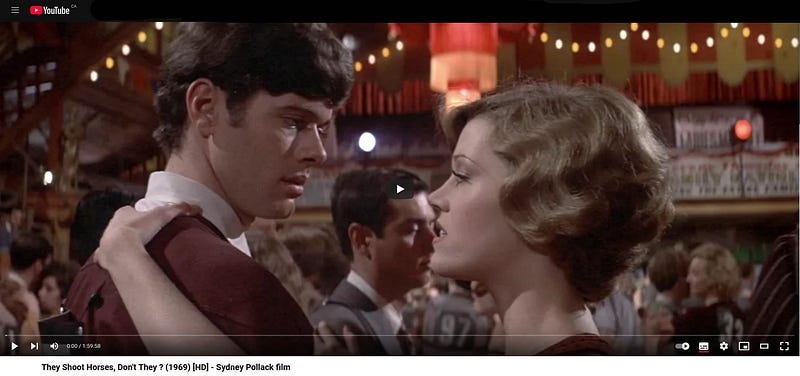
Don’t we shoot horses when they break their legs?

https://youtu.be/qsKQiVJkEvI?si=gfT7KT5PNSX-G4rJ

They Shoot Horses, Don’t They? (1969) ⭐ 7.8 | Drama

The real problem here is the concept of altruism. In an economically just world, altruism would be moot.

We already know that the executive boardroom is populated with the same density of psychopaths as a prison. Yet, we somehow expect they will be charitable enough with their money to sacrifice their luxuries to temporarily ease the pain of those suffering from unmet basic needs.

As individuals, they can only accomplish a little of anything.

As a group, however, we can ensure our system holds them accountable for their fair share of contributions to the world in which they disproportionately benefit from its bounties.

If they were held accountable for how they were at our height of middle-class growth, they would be more successful at helping all in need in proportion to their contributions as a whole because no one would benefit more or less from an act of altruism.

By returning tax rates on the wealthy to an Eisenhower level of progressive taxation, replete with the rules restricting corporations from benefitting from loopholes that permit them to escape a tax burden, we would resolve the needs of those in need on a systemic level.

We would not need to rely on a delusional expectation of the mega-wealthy to voluntarily practice austerity as has often been imposed upon the little people.

Have a close look at what happened to tax rates in the 1920s. That era was called the “Roaring 20s” because it had a booming economy due to the wealthy having much more disposable income. The same thing happened in the 1980s when Reagan dropped tax rates. The economy boomed briefly, and everyone loved Reagan because of it.

In both cases, those boom periods were finite and led, in the first case, to a worldwide war, while in the second case of Reagan’s tax cuts, it led to the “Great Recession.”

That’s what happens when large sums of money are released “out to the wild” for the peasants to get their trickle-down benefits. In the first case, that form of “voodoo economics” was called “Horse and Sparrow” economics because the Sparrow would benefit from all the food the horse hogged and shat out the other end.

That’s what trickle-down has always been. The little people get what the wealthy shit out as waste for them, and we’re supposed to find ways to live in dignity with that disgusting degree of indignity mounted onto our lives while we labour to make the rich wealthy.

It is precisely this dynamic that has been responsible for every social meltdown in history.

Meanwhile, if you look at that tax table, you’ll see the higher taxes resulted in the most tremendous growth ever for the middle class while the most significant number of people were lifted out of poverty.

None of it occurred because we relied on the generosity of greedy people but because we had our system tuned to maximize the benefits of a capitalist system.

“Trickle-down economies” are also called “boom and bust economies” because they go through cycles of recession and growth. The wealthy class loves this dynamic as the little people must suffer through periods of belt-tightening austerity. For the little people, austerity means having to go without essential needs being met, while for the wealthy class, austerity means excellent deals on going out of business sales. This is where they make their most significant cash grabs.

When small businesses thrive in a booming economy, they grow in value and expand while taking on more debt. That debt eventually crushes them when the cycle of a bear economy rears its ugly head. Many are forced to sell or go personally bankrupt and become devastated entirely for life. Many accept giving up the business that they grew out of love for what they were doing and allowed “an Elon Musk” to step in and claim credit for all their years of hard work while benefitting from that work to win humungous profits when the economy turned back into a bull.

It’s a class warfare game they have been playing with us as they corrupt the capitalist economy like it were a casino, and they’re the house that always wins, no matter how lucky any of the little people are.

This is why the guillotines come out whenever the little people figure out how badly rigged the game is against them.

The rich spend lavishly because they can and because they have rigged the game in their favour to specifically allow them to spend our money while programming the gullible among us to run interference for them as they victim-shame their fellow little people and accuse them of all the disgusting behaviours exhibited by the wealthy class, such as accusing the working class of wanting to steal the “hard-earned money of the rich” instead of demanding the money they stole returned to their victims.

The Disturbing Link Between Psychopathy And Leadership

Why are there more psychopaths in boardrooms?

Some care about those in need, but about 20% don’t, and they make it impossible to change the system because they invest billions in making it unfair while the rest reap the benefits of their corrupt activities. As a whole, they intentionally aim to strip the little people of our value precisely so they can spend gobs of money feeding their egos.

Due to their unrestrained behaviour, our species is on a trajectory toward extinction. Should we not push back on their greed and restore economic sanity, we won’t be able to continue at this pace, and we’ll be so severely humbled as a species that we may never recover, even if we survive the naive stupidity of our time.


Join the Conversation at https://ubinow.quora.com

Anyone wishing to engage in a dialogue on UBI is invited to participate in an open space on Quora dedicated to the issue. You may need to register for a Quora account — It’s free, and I don’t get any kickbacks from it. This space is intended purely for stimulating discussion on the topic — there are no hidden surprises beyond possibly needing to join Quora if you want to post comments. Visitors to the site can read the content without registration hassles.

https://ubinow.quora.com/

Why shouldn’t the factory of money just make money to stop poverty?


This post is a response to a question posed in its complete format: “Why shouldn’t the factory of money just make money and deposit a fixed amount into everyone’s account around the world to stop poverty and see what’s going to happen on this Earth?”

There is no “factory of money.”

There is a means of adding value to a raw state measured by money.

Even though we have money printing systems, money doesn’t magically appear from nowhere.

Money isn’t a magical piece of paper without any connection to the reality in which it operates.

Money is a token representing effort.

At its most basic level, money is a metric that determines labour volume, quality, and output.

Each person’s labour adds value to society and is supposed to be reflected in the amount of money each person has.

Money as a concept works exceptionally well as a store of value and a medium of value exchange.

What is screwed up in our economies is that we determine the value of each person’s contributions on largely subjective bases.

For example, there is no way that any executive on the planet works one thousand times harder than their front-line staff. It can be argued that the value of an executive’s labour is higher than that of the janitor, but it is also not one thousand times more valuable per hour.

That’s where the disconnect occurs in society and why poverty is not being solved as a problem even though we produce more than we can consume.

The problem we have been suffering from is due to a deliberate strategy for upward wealth redistribution. We have been lied to when told that the billionaires among us are the job creators. We have been lied to when our economies are structured around a “trickle-down” (and parasitic) economy that shuts down economic growth in favour of growing hoards by the few.

The problem, if the economy were a human circulatory system, is that we have allowed massive deposits of plaque to gum up the works, and it’s now threatening the entire body with systemic shutdown.

We need to clear up the plaque buildup and restore our circulatory system to full functionality — and that’s referred to as “speed of money” in economic terms.

The best way to accomplish that is to provide for the basic needs of all members of a society so that each is empowered to negotiate fair treatment in an environment characterized by abusive mistreatment by employers.

We can’t end poverty by printing magic money. If we try that, we ensure a global collapse due to the stable value of money becoming entirely destabilized. Doing that would send the world’s economies into a tailspin.

We need to reverse the effects of the upward wealth redistribution schemes we’ve allowed ourselves to be conned into adopting, as we have proved we learned nothing from history.

We’ve been here before, and our naivety cost us a world war to learn why making the rich richer at the expense of the poor was terrible.

The best way to make the rich richer is to concentrate on helping the poor become rich through their efforts to better themselves and their lives as they are so motivated. The rich will always benefit, but their benefits are long-term and stable if they invest in the people who make them rich instead of scheming to rip off the little people and pit us all against each other.

This is not rocket science. None of this is a mystery. We have had over a century of direct experience creating the economic problems we are dealing with today and solving these problems.

We could take the long-term route of making unions mandatory. We could restore economic equity in a few decades and start seeing the middle class grow again.

Or, we can institute UBI and dramatically change the dynamics of abuse between those with power and those without almost literally overnight. The additional bonus is that we save a lot of money when dealing with social issues by providing a comprehensive social safety net. We become far more successful in enriching the rich because hundreds of millions of people worldwide can pursue their initiatives and supercharge the capitalist economy with unprecedented levels of innovation, adding an immeasurable amount of value to the economy that would wipe out poverty across the globe much faster than re-empowering unions alone could accomplish.

Temet Nosce


Join the Conversation at https://ubinow.quora.com

Anyone wishing to engage in a dialogue on UBI is invited to participate in an open space on Quora dedicated to the issue. You may need to register for a Quora account — It’s free, and I don’t get any kickbacks from it. This space is intended purely for stimulating discussion on the topic — there are no hidden surprises beyond possibly needing to join Quora if you want to post comments. Visitors to the site can read the content without registration hassles.

https://ubinow.quora.com/