This post is a response to a question posed in its complete format: “If Tesla automobiles are cheaper to make because of less human labour, why are they so expensive?”
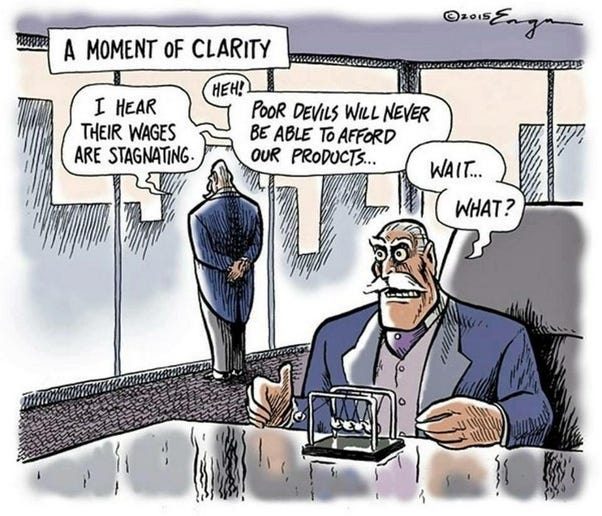
Ah… the CON of capitalism is that the people believe price is a consequence of production costs when nothing could be further from the truth.
The cost of everything you buy is based on what the seller thinks will sell the most products.
Ironically, many people believe the most expensive products are the highest quality, and that misconception drives every vanity purchase.
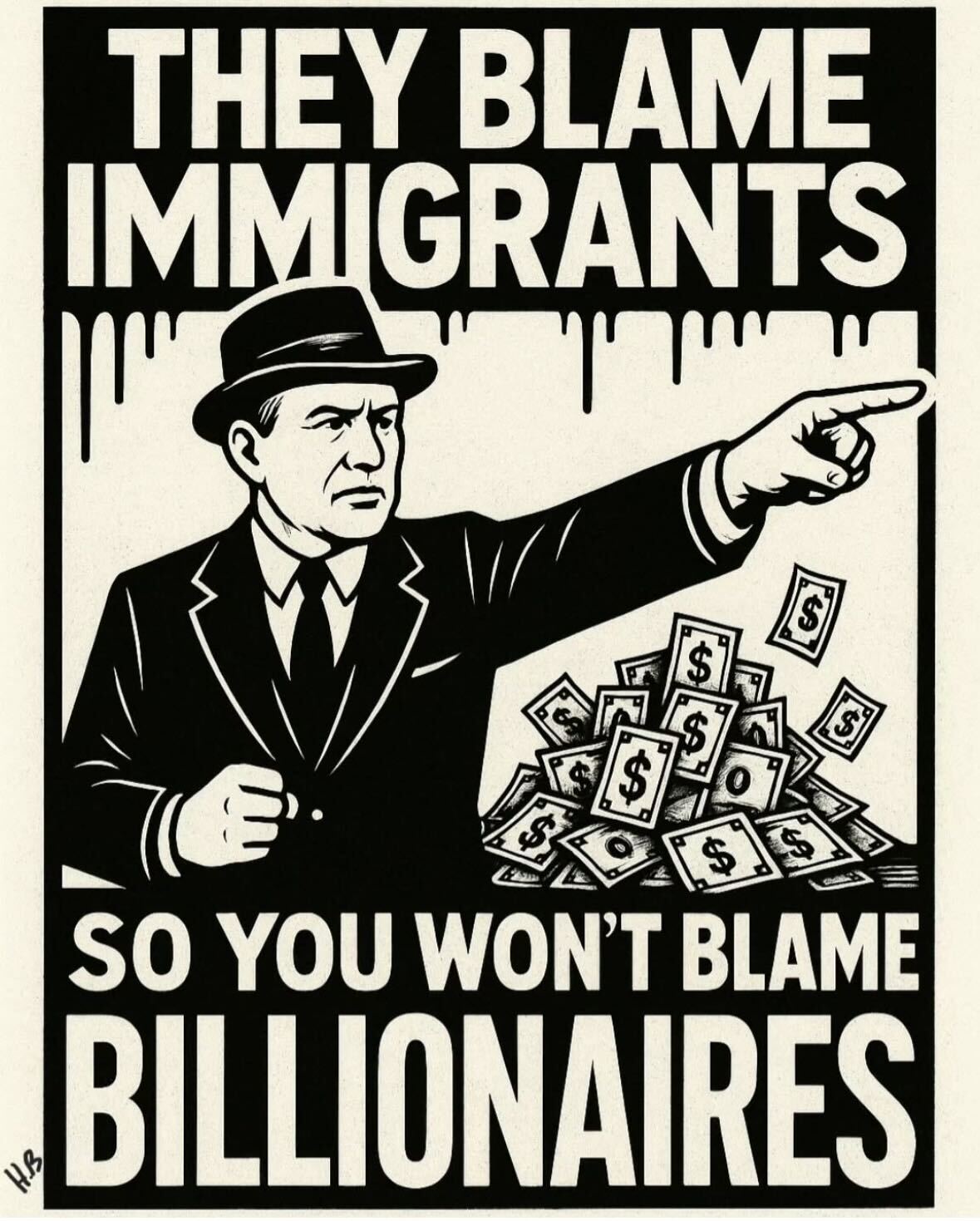
It’s why capitalists like monopolies in their market. They can fix prices at whatever level they want, and people will gladly pay more for an inferior product. That’s how the health insurance industry works in the U.S. All they have to do is sell the idea that their consumers are getting a superior product at a lower cost because they’re not paying for supporting the poor or the immigrants they hate.
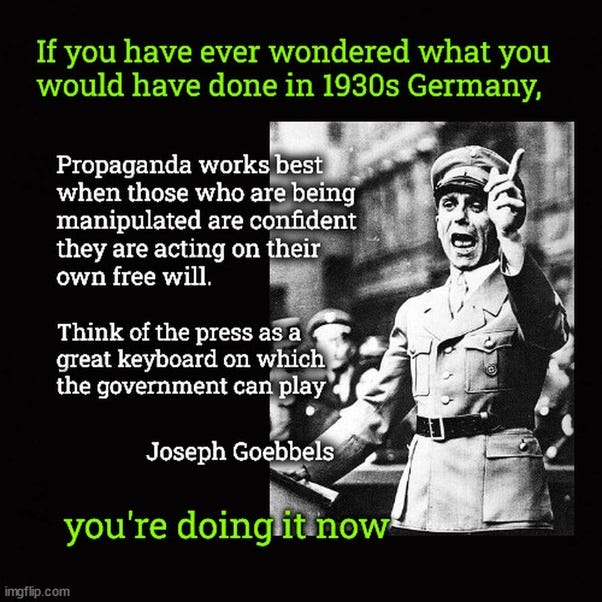
It’s a game of manipulating emotions and dulling logic with massive amounts of cheaply disseminated disinformation.
It is so successful at making billionaires richer that they’re trying to institute it in Canada. A handful of billionaires want to spread this formula worldwide with activist organizations they fund.
It’s why Donald Trump likes tariffs — they make people get used to paying more for their products so that when tariffs are lifted, prices drop by less than the tariffs, so that the products still sell at volumes they did before the tariffs were instituted.
Tariffs are a form of strategic price gouging for a market of Stockholm Syndrome victims.
We saw this strategy in action after the global pandemic lockdowns ended and supply lines returned to normal operations.
A product like the Swastitruck can be utter garbage, but because it’s unique in its design and grossly overpriced, people instinctively believe they are purchasing a superior quality product.
Market pricing is a psychological game that product manufacturers and sellers play with their consumers.
This post is a response to a question posed in its complete format: “Would you tell the truth about something to help the course of justice if it means you’d lose your job by means of corruption?”
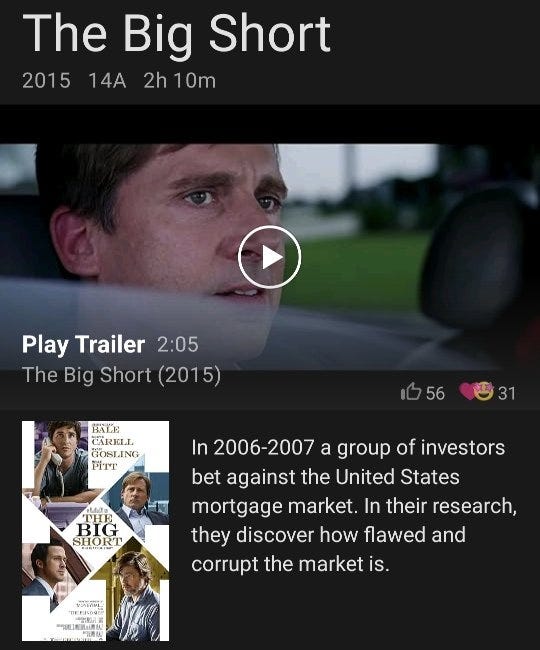
I’ve just rewatched “The Big Short” — a film about the cluster of greed and stupidity that made a few people rich and millions poor and poorer. The housing market grew in a stupidity and greed bubble that collapsed in 2008, and a publicly funded bailout ensued while long-term financial institutions were wiped out of existence.
One quote I caught this time around that I’m stunned I missed it the first time I saw it, or at least don’t remember it:
“For every one percent the unemployment rate goes up, forty thousand people die.”
The nation learned nothing and did nothing to prevent this scenario from repeating. The CDO (Collateralized Debt Obligation) — a corrupt means of bundling bad debts into bad investments to profit from- was not made illegal. However, it has been a rebranded gimmick to create profits for those with resources and market exploitation expertise.
Meanwhile, the U.S. is again heading for a major collapse because the American public seems incapable of learning from its mistakes.
This time around, however, the collapse will not be fixed by stealing from a non-existent middle class after all being robbed by trillions per year for decades.
The “Big Beautiful Bill” that Trump named will add a few trillion more to the national debt and deficit, while twelve countries have already announced they no longer accept the U.S. dollar. The U.S. dollar is losing its status as the world’s currency, making it less secure while the cost of borrowing increases (while investing shrinks).
The next stage is a credit downgrade, and store shelves will be emptier than during the pandemic while product prices go on a gouge fest that will definitely trigger a recession. There is no avoiding it now. How bad it gets is still outside my wheelhouse, but I will not be surprised if it’s deep enough to create a full depression.
The unemployment rate will skyrocket, and the forty thousand casualties of unemployment will break one million.
All of this can be possible only because hundreds of millions are so willing to lie to themselves that they can’t risk facing reality and the prospect of losing the stability they count on to survive in a dystopia.
However, they won’t have any more choices because instability and outright chaos are inevitable.
The arc of history may bend toward justice, but that’s because the trajectory of injustice always bends toward chaos.
There is no way to answer this question honestly because context and circumstances are fluid and unique to each situation. What may be true for a person one day within a given set of parameters may not be true the next day with different variables at stake.
One may hope they will make the moral choice and accept sacrifice, but that’s the kind of self-serving thinking that people often indulge in when thinking they would jump on a grenade to save a crowd.
One’s belief about one’s selfless nature rarely matches reality.
At the end of the day, whatever choice one makes will always be a balancing act between benefits and sacrifices that becomes a lifetime burden to carry.
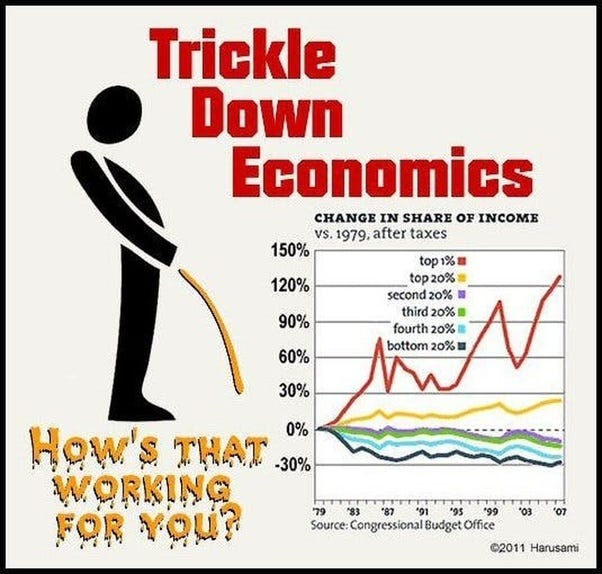
This post is a response to a question posed in its complete format: “If the top one percent create jobs aka businesses, then without the everyday worker it would only be pipe dream right? Does money drip down not bottom up?”
That certainly is the myth perpetrated by the one percenters, but that’s just a narrative they have invested millions in convincing the gullible to support their hoard-growing efforts.
Anyone who spends even just minutes thinking about how the working class is the engine of the economy knows that’s just bunk — simply due to numbers and how no business can survive without market demand, because you can’t force people to buy your product, no matter how much Elon Musk wishes it were the case.
The job creators in society are the mass of consumers who create enough demand within any market niche, which justifies hiring staff to meet demand.
Making matters worse has been how the one percent have perverted the capitalist system to reduce their tax burden and eliminate laws that would prevent them from indulging in job-killing initiatives like stock-buybacks that they then distribute to shareholders, board members, and executives.
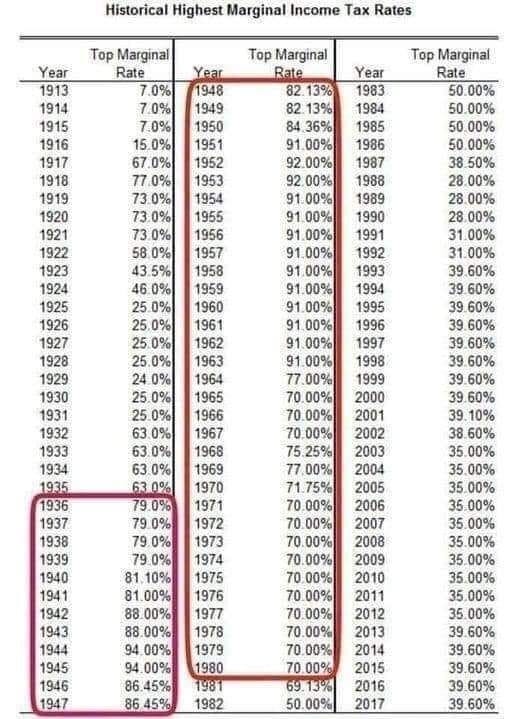
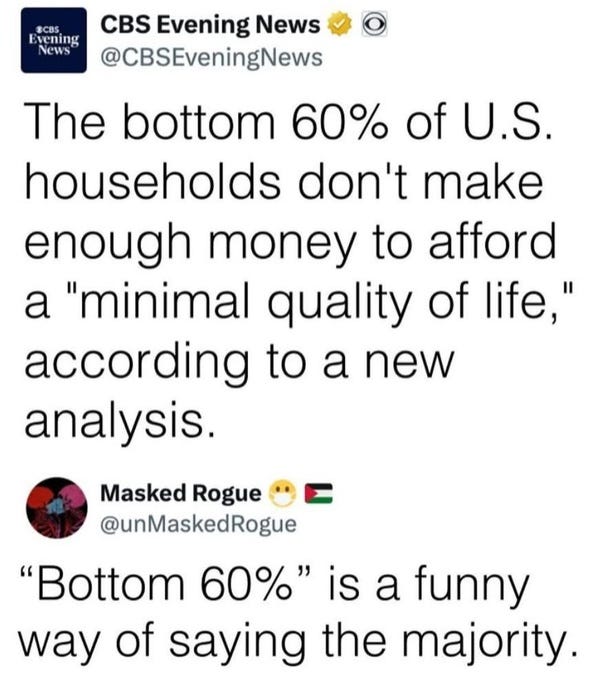
Fifty years ago, under a system of higher taxes and greater regulations limiting corruption, the one percent were incentivized to hire more people to reduce their tax burden. Further to all of that, and before the one percent went on massive “union-killing sprees” with corrupt “Right to Work” laws, the middle class had disposable incomes that they then reinvested back into the economy at greater proportions of their total wealth than the one percent ever have to create the most significant economic growth this world has ever seen.
When the middle class had disposable income, they would also have resources to create businesses and employ more people than is possible today. In today’s corporatist world, the only real employers of note are corporate employers who, when they have a bad quarter, make minor budget cuts that force hundreds to thousands at a time onto the unemployment line.
Fifty years ago, a business could fail, and fewer than one hundred people would be unemployed, with the economy easily absorbing that without a downturn. There was also enough diversity and opportunity for the recently unemployed to find new employment within one or two weeks.
In today’s world, corrupted by the one percent’s greed, people going years without finding suitable employment is not unheard of.
Money in the hands of the gluttonous never drips down. It collects in hoards to cater to sociopathic egos who regard those less fortunate with the same disdain many today consider the poor and homeless.
An economy is like a garden that relies on a strong root structure before flowering.
Economies grow from the bottom up.
Supply-side economics is a wealth redistribution scam responsible for putting the middle class on life support and making home ownership an unattainable dream, fifty years after Reagan betrayed the working class and changed the direction of the ship of state to become a tool of the oppressive class of one percenters.
Economies grow from demand.
No flower can survive without roots, just like no economy can be sustained without demand.
This post is a response to a question posed in its complete format: “Would Communism actually work if every nation on the planet switched to it?”
Making a switch to an entirely new system is never as simple as a change of clothes.
Every significant change to an extensive system, such as a complete switch to a new form of governance, always comes at the cost of widespread chaos and rivers of blood coloured by horrors of every shade of nightmare.
That people keep talking about switching to new or resurrecting old systems because they’re overwhelmed by how broken our current system seems to be is, on one hand, understandable in their frustration and desire to restore sanity.
On the other hand, it’s horrifying to contemplate how little people understand how our current system should be working and why it isn’t working as intended.
It’s frustrating that people can see why our system is broken, as they get slapped by those reasons every day and remain utterly blind to the simple fixes that would right the upturned ship of state we all depend upon.
It’s the same kind of broken reasoning that claims we should hedge our survival bets by creating extraterrestrial colonies instead of focusing a fraction of those resources on restoring our world to a sustainable balance for life.
The simple answer to this question is that we should stop thinking about throwing the baby out with the bathwater and fix the leaks in the tub to more quickly return to struggle-free baby bathing with far less pain and suffering.
We can borrow elements and concepts from communism (and other systems) to modify and incorporate into our current systems of democracy and capitalism. Hybridization of systems has already occurred worldwide and has proven itself a successful strategy without mass casualties.
The Social Democracies developed in the Nordic nations are prime examples of the superiority of evolving systems over replacing them wholesale.
Let’s take a moment to think about an analogy that might simplify the concept of evolution over replacement.
Redesigning and building an engine from scratch still requires a lot of after-the-fact adjustment. No new engine design is fault-free from its first iteration. There are always necessary improvements to make following its first release, if not outright fatal flaws that could end production altogether.
Software applications are generally considered immature and buggy until at least the third major release. As an analogy, software development is an excellent model for understanding how social engineering can work when deliberately planned to accomplish long-term goals.
Software applications generally begin by focusing on core functions to meet various needs for various use cases. Minor updates are made to improve operational efficiencies, while new versions expand on core functionality and incorporate new features that are usually the highest in demand.
Social systems are far more complex, while system crashes cost lives. There’s not much wiggle room for errors when hundreds, thousands, and potentially millions of lives are affected by minor disruptions.
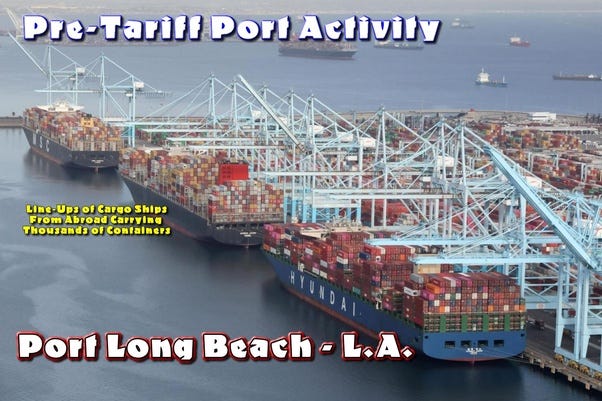
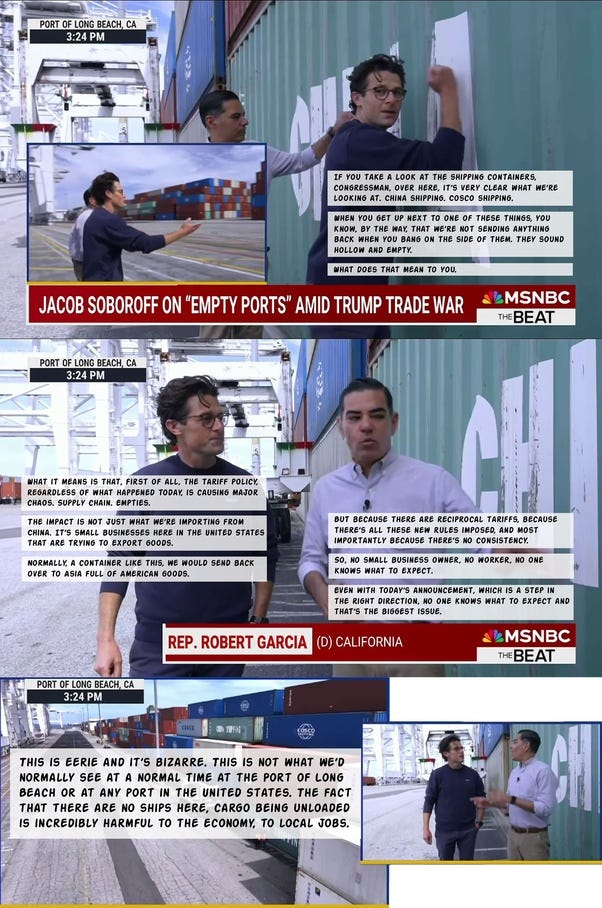
Have a look at these pictures:
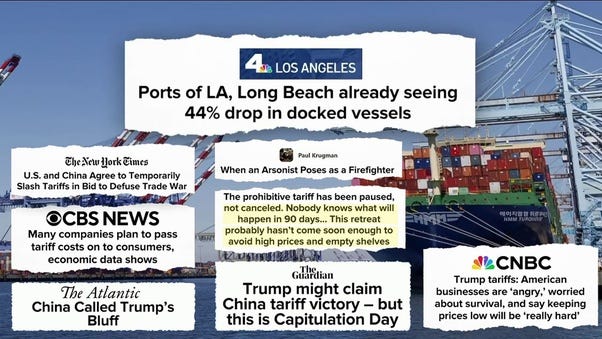
Below are the same docks in L.A. that, currently, are mostly empty and without traffic. During the program this aired on (The Beat with Ari Melber — 2025.05.12), Representative Robert Garcia mentioned that before the tariff wars that Donald Trump (the deal-making artist) began, it would usually be too busy to walk where they walked without being run over by trucks due to a flurry of activity.
This is today’s result of the trade policy changes implemented three months ago. It took three months for a simple policy change to filter down to the port level. It will take a few more months before this effect trickles outward to impact every home nationwide.
It was mentioned in this report that hundreds of dock workers were out of work or had their hours cut back. The problem is much worse than a few hundred lost jobs, though, and they touched on the implications without adequately explaining what this all means.
When I see these photos and hear them speak, I see a domino effect of thousands of bankruptcies picking up steam throughout the nation, to become hundreds of thousands of lives displaced and destroyed before escalating into millions of lives by next spring.
Donald Trump’s casual dismissal of the serious concerns of real people trying to survive while working multiple jobs to raise their families and pay for their living needs showed a sociopathic disregard for their struggles. When he responded with nonsense about parents needing to cut back on buying 30-plus dolls for their kids for Christmas, while he’s raking in hundreds of millions on cryptocurrency scams and spending $3 million taxpayer dollars on every day he golfs and another $100 million on a military parade for his birthday, it’s mindboggling how people can be so frustrated with their lives and not be livid with him.
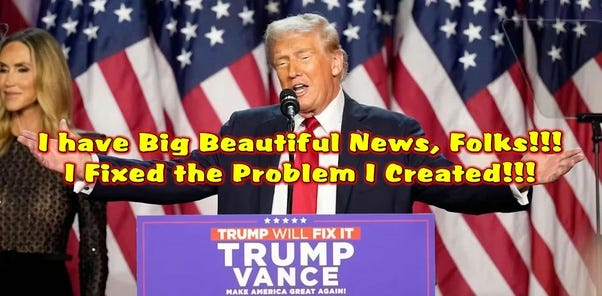
Every callously self-serving decision he makes carries implications that dramatically affect lives for years. This is the impact one person can have on hundreds of millions of people in their nation. We may currently joke about memes like this. If the U.S. becomes his latest and greatest bankruptcy, very few people will laugh — and it won’t be the millions suffering the consequences of one man’s corrupt thinking.:
People worldwide will feel its impact even if it’s contained and doesn’t erupt into a global catastrophe. Millions will die. Some people still haven’t recovered from his first term in office.
This is the impact one person can have on a system that is so complex and tightly integrated that no one escapes the effects of its disruption. Imagine how dramatic the impact on people’s lives would be if, instead of a simple tariff war and an illegal immigration round-up to concentration camps orchestrated by one leader, chaos were ramped up to a full-scale restructuring of society as a whole.
If a simple Constitutional amendment requires decades of debate and challenges by competing interests, imagine how disruptive it would be to dismantle a centuries-old system and replace it with an untested one. You can claim Communism was implemented before, but it wasn’t. Perverted forms of it were implemented by despots who killed millions as they tried to remake their nation in their image, using that system as a tool for them to leverage, like Donald Trump and several others are doing today with capitalism.
There’s no way to ensure the Communism you or anyone imagines will be the Communism that would be implemented. Marx’s vision of Communism was never implemented before, and the perverted versions of his vision were worse than failures. Meanwhile, democratic governance with a capitalist system has already transformed the world. It has become so successful that several people have and do support Donald Trump’s perversion of it to become a monstrous betrayal of what it was designed to accomplish.
Changes to any system that hundreds of millions rely on for stability require predictability in their systems more than anything else it can provide.
Without knowing what’s coming next, when people don’t know what to do, they naturally do and risk as little as possible while rationing out reserves to ensure they can survive in a repressed state over an extended period.
Completely shutting down the tariff wars and restoring trade policy to where it was only a few months ago would still take several years to return the economy to a state resembling it only a few months ago.
Replacing an entire system with another system means several decades of adjustment would be required to arrive at a state of equilibrium where people could finally feel comfortable predicting their futures and making decisions with confidence in their predictions.
Several decades of adjustment would be required to switch from the current system to a system of communism that would be stable enough, where the cost in lives could be mitigated.
In the meantime, periods of chaotic transition create incentives for the parasitic predators among us to leverage the confusion in ways that benefit them at the expense of everyone else. This is precisely the dynamic we are struggling with today. Without addressing the core problem of a corrupting influence in society, we would simply be porting a virus that weakens us today to a new system to continue infecting our society while adapting their strategies to the new system.
The flying monkeys who enable their corruption would be ported along with them because that’s the nature of power. When power is concentrated in the hands of the few, they no longer need to act directly, while their supporters do all the heavy lifting of “massaging a system” to cater to their needs.
We can see that occurring primarily within the MAGA community as they’ve been frustrated with how much they’ve had to endure and are struggling ever more over the last few decades, instead of experiencing a general improvement in their quality of life, like their parents and grandparents before them. They are righteously angry because they have been betrayed. They can’t face the truth of who has been betraying them, so they accept easy targets to vent their frustrations onto.
We have all been violated on deep and visceral levels, leading us all to take desperate action to fix what we know is broken. The problem is that far too many people leverage their anger and ignorance of how systems work to further the oppression rather than mitigate it.
The people who are selling easy solutions are the same people who are responsible for creating the problems. Donald Trump embodies that scam. Many billionaires are billionaires precisely because of that scam. There isn’t one private prison billionaire who hasn’t specifically leveraged that scam. Insurance billionaires and weapons moguls are the most popularly recognized culprits of the fraud of benefiting from the problems they create. Elon Musk’s DOGE was an abomination of a scam that many still believe was an honest attempt at addressing waste and fraud rather than facilitating it all while giving Elon and many others an escape hatch from accountability for their criminal behaviours.
We can and should be fixing the bugs in our current system by eliminating exploits, such as placing a global cap on net worth and instituting UBI. No one should have more wealth and power than a small nation. If an individual can afford a personal army, then they are a threat to global stability. However, everyone in a system that produces more than what we can consume is entitled to the basics of survival while given access to whatever means are available to improve one’s status through tools of opportunity like housing, education, and healthcare.
That IS precisely what “promote the general welfare of the people” means.
What we can do is ensure distribution systems are equitable and maximize opportunity so that everyone has an equal chance to create some form of meaningful success for themselves. No one needs more than the basic implements to carve out a modest life for themselves by applying their efforts toward achieving goals. No one should be denied these basic tools in a post-scarcity society of abundance, particularly not when we’re on the verge of becoming a fully automated society.
No one should be permitted to hook up to major arteries in a system and drain wealth from it while doing nothing else but watch their hoards grow without restraint or limits.
People like Jeff Bezos and the Walton family spend hundreds of millions to thwart unionization efforts so that their underpaid people don’t have to rely on taxpayer dollars to make up the difference in being short-changed on their income.
We must restrain greed, not rebuild a new system for greedy people to continue exploiting the desperate and the gullible.
Changing our system doesn’t solve our problems when we’re not prepared to deal directly with the cause of those problems.
We still have time to address the causes of those problems before they escalate and find ourselves repeating a bloody history of correction.
Avoiding the cause of our problems by pretending we can gloss over the obscenity of gluttony with a rebuilt system from yesteryear means we’re just lying to ourselves and begging for chaos.
Marketing is a process of leveraging communications within an ecosystem.
Marketing must continually adapt to changes in an ecosystem to be effective.
Direct mail was an effective marketing strategy fifty years ago because there were few (relatively) inexpensive alternatives then. Radio, television, and national magazine advertising were pretty much the only other primary marketing channels that could get national reach for one’s brand, and those are (and were) expensive marketing strategies. Otherwise, one would have to place ads in local publications like newspapers, quickly becoming costly when scaling up nationwide by buying space in hundreds of publications.
Then the Internet arrived, and one could gain national and international reach for almost free.
Almost overnight, what worked steadily and unpredictably no longer did. The traditional market became prohibitive and ineffective as alternative media sprouted up everywhere.
Marketing has always relied on establishing trust with its consumers to create sales. So, relationship marketing became more focused on social media because a two-way, one-to-many dialogue was made possible.
Before then, marketing was mainly defined as a one-way, one-to-many communication.
The downside, however, has been such a low entry bar that everyone and their dog could compete on an almost level playing field.
A small operation could get international reach as effectively as a large corporation. That forced corporations to up their game. A saturated media market meant more comprehensive and audacious strategies for attracting attention.
Now, we have reached a point where advertising is starting to turn people off, and it’s become difficult to pinpoint effective marketing strategies because advertising has become a reason for people to avoid rather than be attracted to a brand.
Even the “give away something for free to attract people” has been losing its lustre. For example, being asked to register one’s email address and personal information to access an article is losing its harvesting effectiveness in a world where people create “junk-catching email addresses” to avoid spam.
There is no “better or worse marketing system” in a constantly evolving world. There is only staying ahead of the “pissing people off curve” and hope to make lasting connections that one can leverage for sales.
The only thing that does not change about marketing is the need to build relationships based on trust because that’s core to the human condition.
Getting attention is easy. Converting that attention into closed deals is an entirely different ballgame.
This post is a response to a question posed in its complete format: “How long will it take for new companies to build in the US creating good jobs and bringing America back from foreign dependent markets after the tariffs take effect?”
There is no detangling from foreign suppliers in almost literally every market.
For instance, you may have a homegrown bakery that you want to grow into a nationwide franchise that employs several hundred, but can’t without relying on foreign markets for product ingredients, equipment, or supplies to allow your operation to grow.
International interdependence is how to streamline costs through the same economic principle of economies of scale that would solve the corrupt American healthcare scam.
For example, you may be able to source grain from American farmers, but there’s an upper limit to how much you could buy locally. That would create an upper limit on your franchise growth. You may not be able to source much or any of your yeast from local markets, and you’ll be stuck having to import it at exorbitant prices due to Trump’s tariffs.
As you retool your nation’s supply chains to meet the needs of thriving businesses, you would still have to rely on foreign markets until you’ve made the hard choices of pushing out some business activities to make way for the successful or chosen industries to grow. While your nation adjusts to rely on tea production, you would shut down coffee bean plantations to provide enough land to grow your tea.
In the long run, as the U.S. adjusts to an entirely different lifestyle, you would change your expectations for the luxuries you currently take for granted. You would lose some major industries to make way for others.
You would no longer have any Starbucks, or you’d have to pay $20.00 for a cup of coffee, which would dramatically reduce the availability of Starbucks in your nation. Instead of walking down the street for a cup of joe, you’d find yourself driving to another town.
The transitions implied by your question involve a radical reshaping of your economic landscape that will not be a smooth change into lifestyles you’ve grown used to. You must prepare yourself to experience a painfully jarring and volatile rush of disappointments and escalating costs that would guarantee you having to endure a decades-long depression while losing almost everything you now take for granted.
Assuming you can succeed in transitioning to a self-contained economy, your nation would more closely resemble North Korea than whatever it is today. You won’t live long enough to experience the “New America,” but your grandchildren might have fond memories of the last Ben and Jerry’s Ice Cream sold at an auction for $10,000.00.
It seems too many MAGAts are utterly oblivious to how badly they’ve been conned by a con artist who should be rotting behind bars like every other convicted felon.
It’s heartbreaking that you’ll have to suffer so incredibly intensely to take back your nation and return it to a stable state of interdependent membership in a global community. You can forget global leadership, though. That’s gone forever.
This post is a response to a question posed in its complete format: “What’s the point of working if you can live through getting “benefits”?”
You’re asking the wrong question.
Instead, you should ask, “What is the point of living like a lazy slug who accomplishes nothing and does nothing to make themselves feel good about themselves or their lives?”
That’s what you’re implying with your question.
You imply a false dichotomy between living one’s life based on laziness rather than doing what motivates them or submitting themselves to an abusively dehumanizing existence as a disposable cog to make someone else rich while struggling with one’s self-respect.
Life isn’t a choice between working and not working. It’s a choice between employment as a wage slave or generating an income for oneself based on doing what matters to them and which motivates them to be excited about their lives.
Employment used to be a motivator when the income generated enough to go well beyond meeting basic needs and into enough disposable income to invest in one’s future.
That’s no longer the case.
Employment today is the equivalent of a lifetime of dog-paddling in an ocean until one gets too tired and drowns.
That’s not a life. That’s a lifetime prison sentence.
What’s the point of struggling in poverty until you die to make someone else wealthy when you can be much happier and less stressed while doing what you love?
Bonus Question: Should there be a universal basic income to address economic inequality?
UBI doesn’t address the issue of economic inequity, and it isn’t intended to.
UBI provides economic stability and gives people room to make the best choices for themselves without having a desperate need to survive leveraged against them.
UBI frees people from the pressures of meeting basic survival needs enough to escape oppressive working conditions. The consequences of businesses losing the leverage of economic desperation to create downward pressure on wages can more easily permit upward pressure on wages.
This change in a negotiating dynamic contributes to a reduction in economic disparity, but it doesn’t address it head-on.
This post is a response to a question posed in its complete format: “Is economic nationalism the solution to preserving jobs, or will it create deeper global divisions?” Responses to follow-up questions are included along with the answer given to this question.
Economic nationalism is economic isolation in a highly interconnected world.
It means shutting a nation off from the rest of the world.
It means North Korea.
It means a complete restructuring of an economy to adapt to an impoverished and repressive existence without access to a diversity of goods, services, and technologies that permit a nation to evolve and organically create jobs.
In today’s world, it means dropping out of the global trend toward automation for the citizenry. It means the people learn to adapt to functioning as disposable serfs to an elite class that avails itself of all the perks the rest of the world enjoys.
It means a government focuses on conscripting the able-bodied to serve primarily as military drones to eventually become cannon fodder with expansionist strategies to keep their economy from collapsing altogether.
The global divisions are the ones that a nation makes as it shuts itself off from functional relationships with other countries.
The rest of the world will continue to develop and strengthen its international relationships to become a united entity that can push back on expansionist regimes.
For the U.S., it means going from being a global power to being a global radioactive zone until it can be fully isolated.
Follow-up Question #1:
Is there any scenario where a nation can balance economic nationalism with global trade, or is full integration the only path to prosperity?
The term “full integration” implies a loss of identity and sovereignty. Neither of those is true. In Canada, an external threat to national identity immediately rallied the people into a unified front to protect their sovereignty.
Meanwhile, you can drive around Canada and seldom see the performative patriotism you can see everywhere in the (highly divided) U.S.
Follow-up Question #2:
Do you think Canada’s approach is unique, or have other nations successfully balanced global ties with a strong national identity?
I can’t speak for other nations, but I have long recognized the distinction between a melting pot and a multicultural mosaic.
For all the reverential lip service American culture displays toward individuality, its practice of homogeneity runs counter to that professed ideal.
On the other hand, Canadian culture promotes community through a practiced respect for individuality.
This contrast addresses the difference between a genuinely profound love of country organically cultivated versus a performative love of country cultivated through grooming.
It’s the difference between a deeply held but silent personal belief versus the cultivated optics of shallow regard for something that can be leveraged for sociopathic motivations through attention-focusing performances.
This post is a response to a question posed in its complete format: “Is there any way that these new tariffs by Trump will bring any new jobs in the next 5 years or will they just add more inflation and costs to the US families?”
Let’s assume the plan is to increase jobs in the U.S., such as with increasing aluminum production. That would mean Trump would now be in the middle of discussions on that issue, if not initiating plans for increased energy production through hydroelectricity. Plans would be on the table for the development of dams that can serve to replace Canada’s aluminum production.
Why has there been no discussion?
Are there even any sites in the U.S that can compete with Canadian dams?
Why have there been no feasibility studies?
Why has there been no discussion about addressing the increased costs of tariffed products?
Everything about Trump can be described as a knee-jerk response from a bully. He consistently behaves like a childish bully who is used to people capitulating to his demands.
When Canada and the European Union discuss developing their trade relationships, he threatens to escalate his tariffs.
That doesn’t sound very forward-thinking to me. Does that sound like strategic thinking to you?
How does he intend to compensate for the burdens he’s been placing on the working class?
Oh… that’s right, he and Musk have been talking about how an allegedly short restraint would benefit the American people because they’ve become too complacent in their luxuries as their quality of life tanks and life expectancy shrinks.
The harsh reality is that the American people are being played for suckers by the wealthy class for who a bit of belt tightening isn’t a threat to their lives. Belt-tightening for them barely registers as cutting back on options for the new nested doll yacht purchase and cutting back on staff to maintain it on their behalf.
They won’t feel the pain of the inevitable recession he’s causing. Many are likely looking forward to it as an opportunity to invest in business purchases for fire sale prices.
How anyone may parse his decisions, they can’t avoid concluding that he intends to benefit the wealthy at the expense of the working class.
That’s the core goal of Project 2025 and the Dark Enlightenment group as they reduce the nation to a two-class system of rulers and serfs.
He doesn’t care about your jobs.
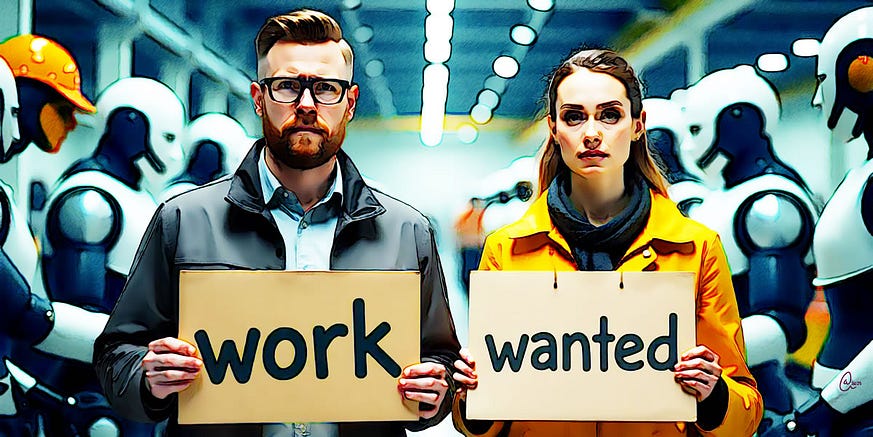
He already knows his buddy Elon will replace many jobs with intelligent robots. The little people will become even less substantial and be viewed as more of an unwanted burden.
The more he can eliminate from the bottom of the economic hierarchy, the more he can upgrade his toilets from gold to platinum.
We have two options for maintaining growth, and one isn’t so much about preserving growth as it is about shifting to new growth areas through a lifecycle management strategy.
The (conceptually) simple model (but prohibitively expensive strategy) for unlimited growth is expanding to an extraterrestrial existence where we can justify an ever-expanding population and theoretical market.
This strategy, however, is not as linear as some may want to make it out to be. Sure, movies filmed on Earth will be consumed by lunar, asteroidal, and Martian colonies, theoretically supporting unlimited growth in those niches. Entirely different markets, however, will need to be created to meet the needs of off-planet living.
Massive resources will have to be shifted toward small markets, making products prohibitively expensive in ways that restrict extraterrestrial expansion.
For example, bone density loss is a dramatic medical issue for an off-planet existence. About one to two percent of bone loss occurs monthly in space, whereas that figure applies to an annual bone density loss for people of advanced age on Earth.
That’s a dramatic biological hurdle to overcome and represents a tiny issue in the vast array of issues humans would have to overcome to sustain off-planet colonies. Making matters more complicated is that colonists face different biological challenges in each environment, from asteroids to lunar to Martian to Venusian cloud colonies.
Adaptation to each environment represents significant investments in biological issues, while the simplest solution is to transition humans from biological to mechanical forms. Convert humans into cyborgs.
Suppose people struggle with tattoos and body modifications today. In that case, one can imagine the sociological implications of leaving our humanity behind to live in a desolate environment without a healing embrace of nature.
So much for option one of unlimited growth.
Option two is riding the wave of technological change and managing technology lifecycles. Unlimited market growth would be achieved by pivoting from end-of-cycle industries to emerging industries that supplant them.
It would be like planning an economy around growing an industry that creates old-style typewriters with an expected lifecycle while anticipating the advent of electronic typewriters with a finite lifecycle that anticipates computers, etc., while hopping from one end-of-cycle industry to another emerging sector.
This is problematic for two reasons, one is that it would be impossible to anticipate computers while still at the stage of an Underwood Typewriter. At that stage, anticipating IBM Selectrics might be possible because that’s a linear progression of technology.
The advent of computers, however, was an unpredictable and utterly disruptive technology.
That’s where we’re at with AI. We have no idea where it will take us, nor how its integration into other technologies like robotics will transform the marketplace.
Unpredictability is also a significant issue in the energy sector because we have many options. Many are in the early stages of implementation with evolutionary hurdles to overcome. Many are in a nascent development stage that shows promise but are still not ready for commercial applications at any scale. We also have high hopes for transformative breakthroughs like fusion energy, for which we don’t know when we will achieve viability.
All this makes planning a perpetually growing economy much like lassoing and riding a tornado like a bucking bronco.
The second and more challenging reason this is problematic is that it doesn’t involve logistics but politics. We can see how that dysfunctionality fails to work in today’s world. The fossil fuel industry is well aware of the environmental damage it does, and how much of a threat it is to biological life on this planet. Yet, no significant energy organizations are spearheading incubation efforts to fund alternative energy initiatives.
They all maximize profits with existing (and predictable) methods while offloading risk to smaller operations they can assess for leveraging a predatory appropriation strategy.
They won’t invest in breakthrough technologies until someone else can achieve market success on their initiative.
Taking this risk put Elon Musk on the global radar of being perceived as a real-life Tony Stark with Tesla Motors.
The reality of today’s world is somewhat predictable on a macro scale in that society is undergoing a massive transformation on fundamental levels.
Dark factories are already springing up where all the production work is automated. On-site work like construction is well on its way to being performed by humanoid and other specialized function robots.
Transportation and delivery industries will also be shedding human labour. Stores and shopping malls may continue existing, but fewer humans will be available for assistance while technological solutions replace humans, even at the cashier level. Shoppers will be able to walk into a store because they’re bored and feel like going for a walk to pick up some coffee and snacks from shelves and walk straight out the door with their products in hand as the store sensors record product information and deduct the cost of the products automatically from one’s account.
All necessary physical services will be performed through automation solutions.
This will radically transform the economy in ways where people will create trade relationships for customized products and services on a more minor scale that focus on developing interpersonal relationships rather than supplying generic consumables.
This will become an era of transformative creativity. People will choose to purchase highly unique rather than mass-produced products for market niches that can be addressed through small-scale production processes.
We will transform from a market economy relying on endless growth into one that balances high-volume generic production and customized artisanal products.
We will have more time to focus on social interaction and community development initiatives (which will positively affect our self-governance efforts). Because survival will no longer depend on a servant relationship with an employer, we will see a more egalitarian society based on a much more valid basis of merit than the subjective favouritism characterizing today’s corrupt autocratic corporate culture.
The notion of infinite growth will naturally recede from priority status to an antiquated model of unsustainable development corroding our social fabric.
Infinite growth will eventually become irrelevant, while sustainability and balance will become priority values.
















 thotbag