This post is a response to a question posed in its complete format: “Are there any political parties in this world, who not only defend their country, work to improve social and material wellbeing of citizens, but also aim to improve spiritual wellbeing of citizens?”
Any political party that focuses on the material well-being of the citizens while acknowledging how industry is intended to serve, not rule them, is a party that defends their country and works to improve their overall well-being.
No political party can “improve the spiritual well-being of citizens” because that’s a responsibility each citizen holds for themselves. Governments are administrative bodies that regulate the pragmatic activities of a society.
“Spiritual matters” are neither pragmatic nor quantifiable in any way that any administrative body can directly address. However, by facilitating the development of a socially and economically stable and harmonious environment, a government frees the people up to address their personal “spiritual” issues.
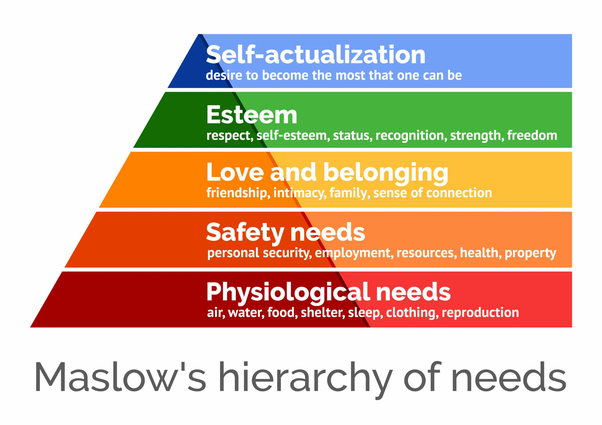
In this case, Maslow’s Hierarchy of Needs can illustrate these parameters for a government’s responsibility to its citizens.
Governments are responsible for ensuring the first two tiers of needs are accessible to all citizens. By addressing these basic needs, the community can adequately address the following two tiers of needs. When a government provides the stability of the two bottom tiers, then a community can become stable and supportive of its members, which then encourages each member of that community to pursue matters at the top of their hierarchy of needs.,
When the bottom of the pyramid begins crumbling, like it is now with extreme income inequity, the entire edifice of meeting needs crumbles and civilized society is then lost. We are seeing the cracks throughout governments worldwide as widespread disinformation by toxic parties disrupts our systems around the globe while they vie for power.
If we want to avoid system-wide collapse, then we must each reaffirm our commitment to the social contract while recognizing we are all in this together, and only by working together within the context of mutual respect, can we resolve the problems arising from the chasms we have been creating between us to sow division around the globe.
Either we learn to “voluntarily see the light” and choose better for ourselves, or we continue to allow the toxic members of society to direct our species toward a systemic collapse. If we fail to resolve our political issues, future existence on this planet will be threatened by our ecologically destructive activities. Our environmental irresponsibility will catch up to us and cull our species at rates exceeding hundreds of millions per year until the Earth can reestablish a new “normal” for itself.
Governments worldwide must reassert their commitment to ensuring the bottom two tiers of Maslow’s Hierarchy of Needs are adequately addressed if we are to restore global stability and secure our future. Individuals’ “spiritual needs” will naturally be addressed if we can accomplish that.
This post is a response to a question posed in its complete format: “Why are we now expected to blindly accept mainstream science and not question it even though the way you make scientific breakthroughs is to question science in the first place?”
Science is about asking questions because every established scientific fact and theory accepted by “mainstream science” is a transparent data repository.
Let’s first address this notion of “mainstream science” for the abomination of prejudice it is. There is no distinction between “mainstream science” and “non-mainstream science.” There are not multiple streams of acceptable sciences. There is “fringe science,” which involves investigations into concepts not grounded in science, but at least attempts to follow the investigative methodologies of science to prove their conjectures. “Fringe sciences” conforming to this definition include investigations into aliens, the afterlife, and all the supernatural. These are specious leaps of the imagination without grounding in proven scientific principles.
Any of the many investigators who have looked into these phenomena could identify something previously undetected. They can then provide evidence of their discovery through a context conforming to scientific rigour. Their findings can then be validated by any party’s ability to replicate their results predictably. If third party tests validate the propositions made, then their discoveries are incorporated into what you want to refer to disparagingly as “mainstream science.”
In the media world, “mainstream” refers to popularity while “fringe” refers to often extremist and not-popular venues of presenting information. There exists no validation system within media to ensure accuracy of the information presented. Your use of “mainstream science” attempts to transpose the chaotic nature of information presented within a media context onto a discipline built upon rigorous processes to ensure accuracy and transparency.
You’re not “expected to believe anything” that has been accepted by “mainstream science” but if you have questions, you have every right to repeat the tests conducted to derive the results described within each scientifically accepted fact or theory.
Nothing within the discipline of science expects anyone to believe anything. The expectation is that you disbelieve and question everything. The problem lies in the degree of effort people put into their investigations before accepting or rejecting any scientifically credible fact or theory.
When people pose questions like this, they admit to a poor understanding of the scientific process and approach their criticism with an arrogant form of indignity — as if they’re being lied to. The harsh reality, however, is that they are admitting to wallowing in ignorance and expect the world and the science discipline to cater to their personal biases like profit-chasing enterprises in media do.
When such minds reject a scientifically credible fact or theory, they’re not rejecting valid science or identifying flaws within testing methodologies, data collected, or conclusions. They are indulging in a wholesale dismissal of an entire branch as an excuse for failing to study their subject sufficiently to identify flaws. They’re indulging in pure bias — subjectively driven drivel.
We see this nonsense play out in every space a believer indulges in dumping their biases onto the world while pretending to possess enough of an understanding of science to dismiss the work of an uncountable number of professionals dedicating their lives to discovery. Professional scientists adhere to principles of integrity that can reveal fundamental and profound truths about the universe we inhabit. We cannot learn anything without rigorous discipline practiced with integrity, no matter how much the ignorati wish to drag the only means by which we, as humans, have developed for acquiring knowledge into an abyss of prejudicial ignorance.
The garbage perpetually barfed up by the scientifically illiterate is obnoxious, and it seems never to be cured by our species as it recurs like a herpes virus. After all the years of addressing the fundamental misapprehension of humans evolving from apes and the multitude of memes and discussions online about how utterly idiotic that degree of ignorance is, someone posed that question yesterday — and with righteous indignity. I couldn’t believe my eyes. “If humans evolved from apes, then why do apes still exist?” — the degree of blind stupidity in this question is abhorrent on far too many levels to tolerate. We cannot afford to tolerate this threat of ignorance to our survival as a species.
Yet, this is the kind of mind that believes science is the equivalent of mainstream media, and they are entitled to regard a massive branch of science as a repository of opinions, not facts. They dare to be arrogant enough to believe themselves entitled to be angry with people lying to them. The ignorance in such a position is appalling. It’s like a two-year-old child telling an adult that two-plus-two doesn’t equal four — then they stamp their feet and demand to be told they’re right.
That’s how your question was perceived when I first read it.
That’s what prompted me to check out your profile because this screams ignorance of science and I suspected first, that you were a troll who knows better and barfs up provocative nonsense for the insipid sake of getting a reaction… but you’re not.
Your profile indicates that you’re sincere in your questions, and that’s horrifying AF. I can accept how you might be a youth still in grade school, but if you’re a high school graduate, this question is an indictment of your education.
I feel sorry for you, but worse, is that I’m horrified for a nation that is poised to start another world war that almost guarantees human civilization as we know it will be destroyed forever. If that happens, the main culprit won’t be utterly evil monsters vying for power, but the ignorance of the poorly educated.
This post is a response to a question posed in its complete format: “To which extent do novels, or manga, conveying deep idea, or talking about social issues, relate to them given global awards, or high global popularity, to which extent does this depend on how smart the creator is, why only few reach to this level?”
Popularity and recognition are primarily not determined by intelligence, creativity, or any value generally associated with degrees of quality, skill, or craftsmanship but by timing and resonance.
The kind of popularity attributed to intelligence and creativity is recognized only through endurance throughout the ages. It is the rarest form of popularity that remains consistently in the shadow of most other forms of popularity. It does receive the occasional boost because it can garner enough of a niche following to emerge on the populist stage for a time. Still, it then retreats to becoming a niche once again.
A book like “Fifty Shades of Grey” was a literary mess on every level, from the writing to the butchered subject matter to the horrid values it sensationalized.
It was a massive success because it appealed to a repressed and widespread imagination responding to an increasingly darkening reality by retreating into dark fantasies that most would not have the courage to explore in real life.
I’m certainly not claiming that I would or have the courage or the slightest interest in exploring this area of the human condition for myself. Still, I am at least aware enough of the dynamics to understand how the story itself represents more of an expression of a mind suffering from Stockholm Syndrome indulging in titillation rather than providing realistic insights into the dynamic it attempts to portray. It’s more of a study of mental health in society than a literary masterpiece.
This leads me to my point that, as a people, we have been enduring a staggering decrease in the quality of our lives over the last several decades, shocking most of us. A piece of schlock like this validates feelings shared by a large audience and titillates the imagination through sensationalized imagery.
It became popular, not because of any enduring qualities but because it fulfilled a need for an outlet.
“The Secret” is another example of appealing to repressed sentiment, but instead of validating the repressive darkness people have been suffering through, it capitalized on a need to restore hope.
Ultimately, both literary productions created more harm than good in the same way that trolls undermine the social contract.
Once materials like these run their course, they begin to resemble porn in that a temporary titillation is an insufficient mitigation for addressing underlying causes, and like cocaine, once it’s run its course through one’s body, one is left feeling drained and hungry for more of that emotion that gave them a temporary boost in life.
There is, sadly, no real cure to this phenomenon of populism beyond two different strategies. The first strategy is the sanest, but it is also the most long-term and invisible strategy for addressing this need to bottom feed while racing toward an ever-receding bottom. It’s a strategy that will make many eyes roll once I write it as a one-word summary: education.
Education is the “magic pill” that will mitigate most of humanity’s ills — at least, it will once we address the economic roots of humanity’s ills.
It won’t ever be a cure because there is no final state to education. There is no finishing an education. Only lifelong learning exists for our species if we wish to survive anywhere near as long as the dinosaurs did.
The alternative to education is our current self-destructive trajectory, which risks the end of human civilization and, quite possibly, our species if our rock bottom is deep enough.
The alternative track to education we are on is to continue our descent into worshipping the superficially constructed Holy Grail of attention for the sake of attention. We will continue to behave like addicts drawn toward the chaos of feeding an insatiable hunger until we consume all of what we value through superficial titillations that temporarily distract us from an otherwise horrifying existence.
Surviving the nightmare ahead of us means our future progeny will have slim pickings to choose from as representations of the best human potential to pick out from the forgettable detritus of populism. The future will be as we experience it today when looking back on history and forgetting how Leonardo DaVinci had many contemporaries competing for the same artisanal benefits he remains remembered for.
We don’t remember the easily forgotten mass, but we do remember the outliers, and that’s the broad lesson of history.
If we exist as a species and civilization in another two hundred years, no one will know who or what a Kardashian is. They will note, however, how rampant superficiality characterizes this primitive and barbaric state in which we live.
No one will remember any of the Harry Potter books or the trans-hating hypocrite who fraudulently represented hope within her discardable stories. They will, however, continue to be influenced by Tolkien.
No one will remember much of anything notable about the products of this era beyond the horrid worship of excess.
Not one talking head from Fox will be given a nod of acknowledgement for their contributions to society. Rupert Murdoch might earn a passing reference as a key player in corrupting human civilization. Even he will be regarded as a side note contributing to corruption. At the same time, his success at making it so widespread will be considered a global failure in ethics that permitted monstrosities like centibillionaires to exist.
Donald Trump will be remembered as this century’s Hitler, no matter how many may find that offensive today. It’s just where we are as a species, and history has given us enough hindsight information to make such predictions with great confidence.
Those who may be offended by this prediction would do well to consider how that’s an optimistic outcome to the trajectory we are on right now because if he succeeds in achieving the maximum potential of his efforts, then we may not have much left of humanity to be capable of studying the history we make today in any way resembling our current capacity for exploring our history from yesterday.
Suppose we don’t rein in society’s current excesses of distorted power. In that case, we will be lucky to exist in any state resembling anything other than a primitive existence at the mercy of nature.
That’s an utterly ridiculous idea for many reasons. Probably the best example for showing how utterly absurd this idea is is not the devastating impact it would have on the economy.
The best example of why this idea represents a monolithic level of naivety is what happens when people win lotteries.
Massive lifelong windfalls are often mismanaged because people have no experience managing large sums and overestimate how far that will take them.
It’s much better to adopt the approach the wealthy class adopted with their children.
Providing people with enough to meet their needs until they can manage their affairs intelligently.
If they are responsible and resourceful, they will find they won’t need to rely on their entire inheritance to survive when it becomes available.
We are all part of a system into which we were born and collectively form a social contract by which our cumulative efforts guarantee the health of the whole.
Since we produce more than we consume, society is accountable to all its members to ensure everyone benefits enough to meet their basic needs.
The government should not participate in and create upward wealth redistribution schemes but spread the cumulative wealth to ensure people can survive with dignity.
We are at a point where it is not only feasible but inherently a superior form of economic management than we have in place now.
It will become ever more clear to ever more people as we march headlong in our transition to a fully automated society and entire classes of jobs vanish to be replaced by robots and AI.
Creating a sustainable lifeline gives people the space to be innovative because people are naturally creative problem solvers. Allowing people to determine their life course based on their interests is the quickest and most effective way to motivate them to invent new solutions to innumerable problems we all collectively face daily.
The solution is not a windfall because that is entirely counterproductive and a short-lived benefit with dramatically adverse effects on our economy that would radically increase poverty.
The solution to our economic and social issues is to provide for the basic survival needs determined by Maslow’s Hierarchy of Needs.
Food, shelter, clothing, security, and the ability to invest in oneself to build a future with dignity for oneself and one’s family.
Most people’s needs are modest and don’t require a radical sum of money to transform their lives without effort magically.
Most people rise to the challenge of building a better life if they can access systems instead of being barred from access because of prohibitive costs.
For example, instead of giving away money to drain into a sinkhole, provide free access to education, and people will take advantage of that to create better opportunities for themselves on their own and without any prodding.
The difference between thinking of supportive solutions and cynical solutions like this question is between a disparagingly misanthropic view of humanity and one’s neighbours and a caring and supportive view of one’s fellow citizens as human beings simply trying to live their best lives.
The sooner we can cure ourselves of this wholly destructive attitude toward each other that we have allowed to fester and grow in society, the sooner we can progress in making this a better world for everyone.
This wholly cynical view of humanity is cultivated mainly within the MAGAt crowd. It is deliberately cultivated by a small percentage of sociopathic billionaires who routinely dehumanize people and pit us all against each other so they can continue stripping us all of our dignity while ripping us off by the tens of trillions of dollars to send us into poverty and destitution while they laugh at our misery.
They use slogans and soporifics to reinforce tribal associations and loyalties while motivating them to unite in solidarity over perceived common causes.
“Low taxes” “Small government” “Fiscally conservative” “Save the unborn babies”
They use slogans to ignite passions driven by anger, envy, fear, and hatred to motivate them to act in solidarity against perceived enemies.
As long as they can convey their ideas within a few syllables and tweak people’s emotions while doing so, they never have to bother with nuance, insight, context, complexity within grey areas, or even hypocrisy, for that matter.
None of their positions are consistent in any way. They can’t be, but it doesn’t matter to the uneducated because they don’t want to parse their slogans for meaning. They want to remember them well enough to hurl them as weapons, while the extent of their political arguments amounts to the level of a cheerleader for a sports team.
They hate the “nanny state” but demand draconian government measures to rule their lives.
They want a government that’s so small it fits inside every woman’s vagina and monitors everyone’s lives with Big Brother oversight without realizing how that bloats the government. They demand government expansion to incorporate unnecessary and paranoia-quelling functions that increase the problems that would otherwise not exist without their efforts to make issues manifest as problems.
Trans people pose no problem to society, but because they don’t fit preconceived notions of what is an acceptable definition of a human, they’re rendered as threats without any justification for the unimagined threat they allegedly are. Ask them how another’s marriage impacts them, and they immediately resort to abstractions rather than concrete reasons why their personal lives are threatened. Wisps of the imagination threaten them because that’s the natural consequence of ignorance.
They want low taxes and think it’s only fair to lower taxes on the wealthy. They believe the rich people they envy will trickle down their wealth to them and improve their lives because they both hate intelligence and revere what they interpret as intelligence in the accrual of riches. They can’t discern between the two because they can see wealthy people all around them who are just as intelligent and under-educated as they are. That prompts them to believe they’re smart enough to become just as successful. In this case, they’re not far from the truth but overlook variables like privilege, luck, and association as primary influences of wealth acquisition.
Fortunately, the primary solution to the problems they cause in society is already presented within the question. Education.
We can improve our education systems so that people are not intimidated by education simply by teaching them to love education.
It’s not that daunting a challenge.
Much of education is a process of rote remembering rather than teaching critical thinking skills.
Education should equip all learners with the appropriate attitude of education as a lifelong process. Once people understand and embrace the value of an education-oriented mind, they become less prone to being led around like lost sheep and begin to parse information in greater depth. Once one learns to love education, they also learn to love nuance because they appreciate the subtle shifts in perspective the mostly invisible aspects of communication convey.
For example, people are fascinated by and love learning how scams are set up to exploit the naive because the insights they get improve their sense of security. Once one knows how a grift works, one feels less intimidated and more secure when encountering a grifter.
Most people no longer fear Three-card Monty because they know how the game works and often partake for the sole pleasure of spotting the trick moment that swaps out the card to fool people.
The problems in today’s world are far more daunting than a simple game, and the complexities we have to deal with in modern living are overwhelming to the undereducated. Without bringing them up to speed, we’ll see an increasing division between those who are privileged enough to gain a proper education and those who resent them for being deprived of life skills they’re daunted by but innately understand are necessary advantages in today’s world.
They will often mistrust the educated because they can’t figure out the game being played, and the paranoia of being manipulated by someone whose education intimidates them drives them away from the potential assistance they can gain from them. It’s much easier for the under-educated to affiliate themselves with others who echo their struggles. It’s much easier for the under-educated to trust someone who speaks in the same simple language they do because it makes them feel like life hasn’t left them behind.
Until we improve our education systems such that education is universally viewed as a fundamental support for a stable nation and make it universally accessible at all levels, we will continue to struggle with the impact of our failure to equip our citizens with the skills necessary to develop a fully manifested democracy. As long as we continue to abandon the under-educated to the wolves, there will always be a political party seeking power through the exploitation of their ignorance.
Thank you for the a2a, Jozefina. I have to say, however, that I’m a little confused, not because Jenn wrote an excellent answer complete with all the steps to take in a strategic, deliberate, and rational process, but when I dug a little deeper beyond that, I found your answer to the question on the parent level.
“Cut all ties with her. Silence is the best revenge. Distance is the answer to disrespect.”
I have to say that’s a strategy that has worked but not worked for me. Creating distance between myself and those who cause me unnecessary or unwarranted stress has been my primary strategy in dealing with them.
I suspect the results of that strategy have been why you sought more answers from more people — to find some balance between the extreme of cutting contact and the often frustrating process endorsed by professionals who frequently fail to account for real-world dynamics.
Jenn’s answer is excellent from a strategic perspective. However, it’s a textbook approach that doesn’t adequately account for the extremes in behaviours that bullies can indulge in.
One of my complaints and why my strategy has echoed yours is due to my experience; not once has a bully made any effort to consider the impact of their toxic behaviours.
I have never asked anyone for anything beyond being treated fairly. I have used the following words verbatim, “Please just try to be a decent human being.” — “I’m just asking for fair treatment.” — “I just want the same thing everyone else gets and is entitled to.”
Whenever I appealed to a bully for fair treatment, it was interpreted as a challenge, followed by escalation. Not a single bully in my life has ever behaved in the manner that a counsellor anticipates in the scenarios they recommend.
I suspect you may have discovered something similar in your experience, and that’s why you answered this question the way you did. After reading some of the other responses and thinking about your experience, you may wonder if a different perspective can shed some light on this issue.
I don’t know if I can give you one that addresses your specific situation because I know nothing about it, but there certainly is a wide range of approaches that people can take. Some may work for them but not others because their dynamic is different. Their personalities are different. Their bullies are different.
There is no universal solution to addressing the issue of bullies, and I suspect that’s why it remains unresolved in society.
There are some common traits that bullies display, and it may be helpful to view one’s issue from the perspective of understanding bullies rather than from the perspective of a generic approach one should take.
For example, all bullies are cowards at heart. If one can strike fear into them, they will back off. Self-preservation is, ironically, one of the reasons they are bullies in the first place. They’re cowards because they’re afraid of everything. Finding someone they can intimidate helps them cope with their natural fears of everything.
The challenge, however, is to instil a genuine fear of repercussions they shudder to contemplate. It can’t be a temporary fear they experience that may or may not manifest but a guaranteed consequence that instills an intense fear that gives them chills.
That’s not always possible for some to accomplish and will never be feasible for many because they’re not built in a way or possess the character or leverage to do that. In many cases, the only real solution is distance. Use the grey rock method if one can’t avoid their bully. — (Essentially, this means avoiding conversations with them and giving them one-word answers while concocting an excuse for why you have to leave. Display no emotion whatsoever because bullies like to trigger emotions in their victims. Be utterly disinterested in what they have to say. If they’re upset by that, apologize for being distracted. You’ve got a lot on your mind. If they ask what it is, answer them that it’s private. Shut down any attempt at a conversation and try to display being bored rather than anxious.)
Distance is the best solution in many cases — emotional distance if you can’t succeed at maintaining physical distance.
That may not work in some situations, especially if it’s a work situation and the bully is the boss. The grey rock method, in that case, will work.
You may now see a pattern in that negotiation is only possible with some leverage in your favour.
If your situation is precisely like the question, then it is incumbent upon your husband to “run interference” with his sister. He needs to keep her away from you, put his foot down, and inform her that he doesn’t appreciate having his wife intimidated. Doing that is an implied marital obligation. He married you, and if his sister makes it a choice between you or her, then he had better choose you, or you know what your choices are then because he’s not much of a partner if he won’t defend you to his sister and shut her down.
She must treat you with respect if she has any respect for her brother, your husband.
This dynamic may not work if your husband is desperate to keep the peace in a dysfunctional family or is the family scapegoat. You may find yourself having to draw firm boundaries with your husband and put him in a position to choose between you, his sister, and his entire family.
It won’t feel fair to him if he’s pushed into doing that, and giving him an ultimatum could very well backfire, making you look like the bully in the dynamic.
The challenging part of this situation is that you will find it increasingly difficult to maintain respect for your husband, and your relationship will fracture over time.
Perhaps you’ve discovered this and are seeking more input on this issue.
It will be vital for him to understand that you will feel undervalued if he doesn’t intervene in addressing his sister’s behaviour. That may or may not be sufficient to motivate him, but it might open his mind to the possibility that you two can work together to devise a solution that works for both of you.
The most crucial goal within such a dynamic is to have a partner you can work with and rely on for supportive advice and assistance without being dismissive or critical of you or your feelings. Your relationship with your husband matters, and by working together against “a common enemy,” you may strengthen your relationship. You will undoubtedly have a better chance of dealing with his toxic sister.
It may be necessary to work through your issues with the assistance of a counsellor, and it will be essential for him to understand if you offer to go to one as a suggestion, that it’s not to be critical of him but to find a way to work together to resolve the issues his sister creates.
This post is a response to a question posed in its full format as follows: “66% of teen pregnancies are fathered by men over 21. Do you have a policy proposal for how to combat this?”
When I worked in community development as an “Educational Counsellor” (Residence Life Coordinator), part of my role involved developing programs to address common issues affecting college-age students. Since many were away from their rural homes for the first time in their young adult lives and often were from strict homes, they spread their wings and acted out in sometimes unhealthy ways.
The overconsumption of alcohol was one of the most common unhealthy coping mechanisms many adopted. This necessitated various strategies for mitigating the effects of over-consumption, which would develop into habits over time and become addictions if one was unable to free oneself from such a toxic dependency.
This role was how I encountered a drinking cessation strategy by Homewood Health Services in Canada that used a series of posters in one of their awareness campaigns.
All the posters were designed to provide uplifting and inspirational messaging with colourful imagery and a touch of humour to appeal to that demographic’s sensibilities. One specific poster prompted me to reply to this question. I looked for it briefly online, but it was a poster from about 40 years ago, so I unfortunately cannot see it.
A brief description in which you will have to imagine a brightly coloured illustration with a chalk pastel texture. It was an image of the back of a person’s head while propped over a toilet bowl. The image was intended to convey how unpleasant over-consumption can be. I don’t remember the caption, but I remember how popular it was.
Of the various posters available for students to pick from and post on their walls, this particular poster was far and away the most popular.
I didn’t realize at first why beyond the mockery it would generate because no one likes the experience of “driving the porcelain bus,” and everyone laughs at the people who over-indulge to such a degree.
As it turned out, the poster became a type of “scorecard” in the party apartments within the residence complex. Each time someone “chatted on the porcelain phone,” they signed the poster.
It was disheartening at first because the poster was having the opposite effect it was intended for. It’s not like it encouraged people to over-consume alcohol, but it was like a ledger keeping track of the number of times one went too far.
At the end of the academic year, as students packed up their belongings, I encountered a few as they packed up and took their posters. In each case, the expressions they conveyed were that it had been quite a year and that they had enjoyed a lot of memories from their parties, except for the experience they had with a night’s discussion with “Raaalf.” The number of times they had signed the poster was like a demerit to remind them of the unpleasant experience.
They expressed regret over how much they had over-imbibed, and when they returned for their next academic year, they were far more reserved in their behaviours. Those students went from high levels of over-consumption in their first year to being much more academically committed students in their second year who had learned to drink moderately. They still socialized in their second year but were far more responsible.
The poster had worked.
It took one full academic year, but signing the poster after a night of “hurling chunks” left an indelible impression in their minds.
That’s how an education program works, slowly and with far more spectacular results than the heavy hand of imposition. When people learn to choose a healthier alternative because they want it, the results impressively outperform any authoritarian strategy.
This is what anti-abortion people don’t understand and why they’re so disgusting when they barf up ignorantly abusive disparagements such as characterizing an oppositional view as “pro-abortion.”
No one is “pro” a bad situation.
No matter how one characterizes an abortion. Nothing about it can be considered desirable, mainly by those who feel that’s their last hope. This is also why anti-abortion people are so inhumanly disgusting. They’re stealing a final lifeline of hope for someone in desperate straights… even worse is that they force medical emergencies into becoming incidents of premeditated murder by their depraved indifference.
This is why the SCOTUS rejection of Biden’s attempt to compel the state of Texas to perform emergency abortions based on a life-saving medical procedure makes them entirely unfit to lead the nation in its laws. Their responsibility to society is to establish a higher morality that respects and preserves life.
Nothing about the alleged “pro-life” is anything but “anti-life,” and nothing can make that more accurate than the numerous horrors that have already presented themselves since they betrayed women across the country and the world by extension with their reversal of Roe v. Wade.
The only policy that will effectively address the issue of teen pregnancies by young adults above the age of 21 is the policy that creates the peer pressure necessary to make those young adults who have not managed to mature beyond an abysmal level of under-developed morals afraid of being ostracized by their peers.
Nothing works more effectively than peer pressure. Education and awareness programs are the only way to achieve that kind of pressure. The more people realize the consequences of destructive behaviour, the greater the likelihood of it being mitigated “on its own” over time.
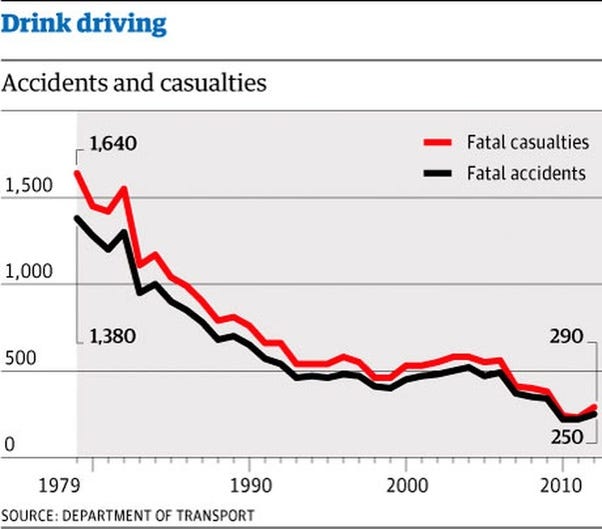
Time and patience are required to realize the benefits, but they are permanent fixtures in an evolving society. Peer pressure is how we have managed to reduce incidents of drinking and driving.
The heavy hand of an authoritarian never works. If anything, the consequence of imposition is always to make the problem worse.
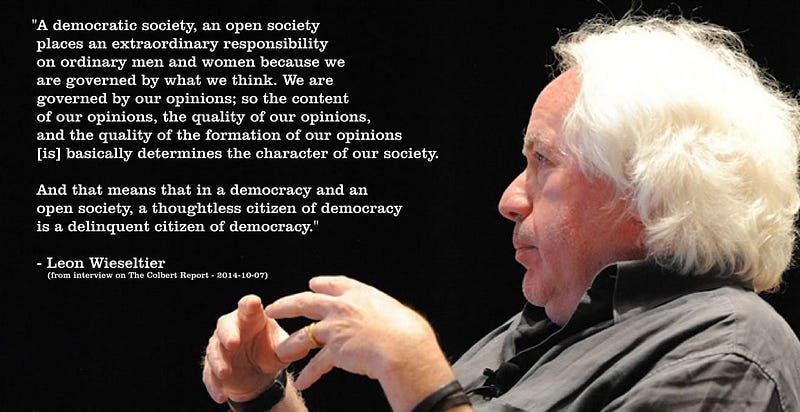
Democracies are strengthened by the degree of engagement by the people. The more people become informed, engaged with, and involved with their government and its activities, the more secure the democracy.
A disengaged and apathetic citizenry makes a government susceptible to corruption.
Restoring and reinforcing the stability of democracy begins in the classroom with a comprehensive civics-oriented strategy for equipping students with the skills and insights to achieve success in effective governance and their personal lives.
As it turns out, the overlap in skills for effective governance and success in one’s personal life are represented as an almost clean circle in a Venn diagram.
The range of interpersonal skills one can and should develop are core competencies for life. Communication skills, negotiation skills, and conflict resolution skills are all universally valuable skills. Developing competencies in areas like Robert’s Rules of Order and understanding the nature and process of effective legislation (rules to live by) may be more niche but are transferable skills that can be applied in other areas of life, particularly when they’re not considered obscure skills by a majority like they are now.
The more people who know how to declare a point of order, the fewer conflicts could escalate into violence.
Of course, the development of logic and critical thinking skills should be included in the curriculum, if not as courses but as strategies for delivering an existing course load.
Applying critical thinking skills development within a history class, for example, would increase student engagement simply by structuring the information delivery process through a means that challenges one’s thinking skills.
On an entirely different and equally crucial level is the reinforcement of a commitment to the role of the Fourth Estate in society. The profit motive must be removed to protect objectivity in the information delivery process, ensuring the public is adequately informed of relevant news in the most agnostic way possible.
Breaking corporate media into community-based employee co-ops will create a culture of checks and balances that approach the self-regulating effectiveness of the peer review process within the scientific community.
The election process is another area that must be made as agnostic as possible. Removing the undue influence of money in elections and reducing the tribalism of the currently corrosive culture in politics is critical to mitigating ideological bias. First-past-the-post elections should be replaced with proportional representation and ranked-choice voting.
With these measures, an exceptionally stable democracy can emerge on level ground with inbuilt resistance to corruption.
Let’s distill this issue into its simplest perspective.
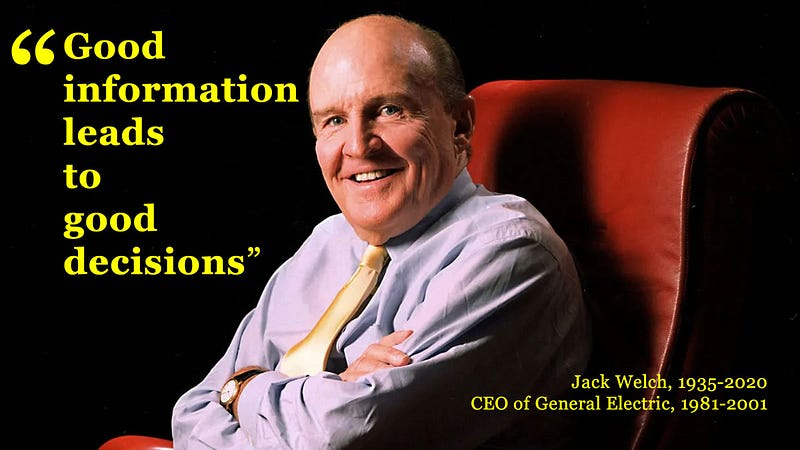
Knowledge is Power
The most effective approach is also the approach that focuses on the most crucial responsibility for a democracy to fulfill if the people truly want to create a stable society capable of achieving its potential as a peaceful and prosperous community.
Education is the most effective way to empower people. It’s the only way to empower people.
Every other method involves coercion, imposition, and, ultimately, the subjugation and deterioration of a people.
Nothing empowers an individual more than learning to accomplish goals in ways they never thought possible before. Nothing brings society together in a common cause more than the information all members need to make good decisions for themselves.
Everything we see today recognized as toxic and destructive to democracy is directly due to an abysmal level of education. From the cheerleading to the taunts, to the entrenchments, to the emotionally unhinged betrayals of the social contract, can be traced back to a paucity of education.
Racism, misogyny, and all the bigotries eroding relationships and community cohesion to contribute to escalations in conflict to feed criminal behaviours can be cured with appropriate levels and forms of education and public awareness campaigns.
People can learn to protect themselves without relying on a nanny state if the nanny state could stop infantilizing its public.
Democracy has been perpetually criticized for its chaotic nature by people who judge democracy by its lowest common denominator, but that destroys every form of governance.
Democracy is an inspirational form of governance because it is built upon the initiative and ingenuity derived from the fruits of individual potential all benefit from.
Leaders and caretakers of the public good must serve as teachers and coaches for those who struggle to cope with challenges.
We should not strive to impose, direct, herd, or subdue people but show them the paths they can take to achieve their best selves and our best communities.
We have no problem taking this approach within our learning institutions because we have learned from experience how to motivate students to achieve their best.
Somehow, though, we reverse course once the educational curriculum is completed, and that’s to the detriment of everything we hold dear in society.
It’s because we do not extend a supportive, proactive, and growth-oriented approach to cultivating our societies that we have an escalating force of militarized subjugation of the people. Those tasked with the responsibility of protecting and serving the public have metastasized into a destructive force of militarized imposition on the people to become state-sanctioned terrorist operations.
It’s because we have not learned to appreciate what we learned from our institutions of learning that the state empowers its protectors with an attitude of entitlement to brutally abuse its people and be responsible for committing homicides of the people and being protected by the state for their betrayals of justice.
We have allowed ourselves to develop an entirely destructive approach to reactionary mismanagement of society and the issues we all struggle to live with.
It is because we abandon the lessons taught to society by its leaders in education — of all forms, that innocent citizens can be murdered in their beds while sleeping by those who are supposed to protect them.
The lowest common denominator that critics love to cite when bashing democracies is not the least educated among us but those who are educated and who abandon their lessons to wallow in their basest instincts.
The lowest common denominators among us are the leaders who fail to lead us.
The lowest common denominators among us are those who are allegedly trained in conflict de-escalation while adopting conflict escalation techniques to murder innocent citizens.
We need to change that dynamic and fire every leader who does not inspire better behaviours from the rest of us. Leaders in society must be aspirational, not deaden, depress, or dishearten us all to disengage from our responsibilities to self-govern.
We cannot create a thriving democracy by tearing each other down and shutting people out of our roles and responsibilities to ourselves and our self-governance.
We cannot tolerate those who fail to lead us to a better world because we can see the trajectory of self-destruction occurring everywhere corrupt leadership exists.
If we want human civilization to survive, our leaders must do more than provide lip service to hope. Our leaders must empower the people to cultivate hope on an individual basis. This is the only way for us to come together to solve our common problems and preserve our present to protect a future for our children.
We cannot accept less than those who can lead by example because the examples we live with now demand violence to eject them from our midst lest we lose everything we hold dear.











 thotbag