This post is a response to a question posed in its complete format: “How common is it to be bullied at work, especially for new staff by pre -existing staff? Which work environments are the most typical where this happens?”
Bullying is so prevalent within society that most of it goes unnoticed.
Much of it is supported by society at large. For example, it is a common refrain for the older generations to complain about the younger generations. It is so common that it’s almost like a tradition passed on from generation to generation.
Few stop to think of that behaviour as a form of bullying, but that is the context in which it should be widely viewed.
The most cited reason for leaving a place of employment is “bad management,” which is often a euphemism for a bullying environment.
I was once exposed to an office culture where the fear that permeated the environment was so thick I could almost taste it in the air. I hated that place and was extremely relieved when I finished it.
Bullying happens everywhere and in every form of work environment. It’s not a “class thing” but an education thing we don’t have a good handle on dealing with in society.
I think the reason why we can’t get a handle on bullying is because it is so prevalent and so unique in the many forms it’s expressed.
For example, in a “low-education environment,” bullying can quickly escalate into physical violence. In contrast, in “high-education environments,” bullying occurs most often through dialectics and political maneuvering, like getting people fired or punished in varying ways.
Bullying is the primary reason why I support a universal basic income.
Bullying is an employer who leverages the duress of basic survival against a defenceless candidate whose choice is reduced to being between a handful of peanuts or a cold night outside.
The inability to walk away from an abusive employer is already a form of bullying that this society, in which we have no choice but to participate within its dysfunctional parameters, imposes upon the majority to produce value for the minority to engorge themselves on.
Bullying is a dysfunctional family, and since that comprises a whopping majority (70%-80%) in society, that further adds to the complications bullying creates because we are conditioning our children, each succeeding generation, that we do and will tolerate bullying in society. We only give lip service to wanting to deal with a problem we try to write off as an unalterable reality and a fundamental characteristic of humanity… or so the bullies among us would have us all believe.
A universal income floor empowers every human being to walk away from the bullies in their lives. We have worked for centuries to build that kind of freedom for humanity.
It’s right here and ready for us to grab it.
We’ve earned it while humanity desperately needs it to face many problems we’ve been struggling with for a long time.
This post is a response to a question posed in its original format: “Do you think it’s a good idea to be employed by Elon Musk?”
It’s not, and this question is a horrifying indictment of the dystopic dysfunctionality of modern-day employment.
Specifically, dealing with Musk as an employer would be career suicide. You have no job security in a position that would disappear on a whim. You would have an extremely spiteful megalomaniac who would destroy your opportunities to make vertical moves outside his control. You would be lucky to make a lateral move out of the organization and onto another.
Generally speaking, however, the employment landscape has become a corporatist nightmare.
Fifty years ago, you pretty much had a guarantee of lifelong employment with almost every employer. You also had many opportunities to gain employment with endless choices in who you would work for. You could join practically any organization, and it would feel like a small community in which you could fit in like a human being.
The people you worked with were people, not potential competitors. Meanwhile, in today’s corporate environment, you are taught to mistrust your coworkers because they’re so focused on career development that you are regarded as a potential threat to their ambitions.
I discovered an example earlier today when I checked out a basic dispatcher job from a generic notification I received on Farcebook.
Taking on a simple dispatching role in a remote capacity for extra dollars is no longer a simple job for an employer who needs a person to fulfill a functional need.
Every job today is plugging into a vast corporate network with massive amounts of leverage to dictate terms.
Their screening processes are draconian and violate privacy laws in Canada.
What gave me a chuckle and a shudder down my spine, in this case, was the tagline below the company logo: “A Family of Businesses.”
I may have become jaded by experience, but every abusive employer I have ever encountered described themselves as a family.
In a world where a whopping majority (70%-80%) of families are dysfunctional, it feels like the world as a whole has been slowly morphing into a Stepford community.
I have always preferred smaller environments totalling no more than 100 people because I prefer to work with people, not drones, whose role is to perform at a sociopathic level of disengagement, meeting robotic criteria.
If you’re okay with constantly looking over your shoulder and viewing coworkers as enemy combatants that you can’t trust won’t knife you in the back while wondering when Damocles will drop his sword and escort you out of the heavily secured building with multiple checkpoints, have at it.
I prefer to keep my humanity intact, even if I die in poverty.
This post is a response to a question posed in its complete format: “Why did people work for demanding leaders such as Steve Elon Musk? If they do not like them, why couldn’t they change their job?”
Jobs are not items in a grocery store that one can pick and choose at leisure.
Each job is a springboard to a better job or a deep dive into an abyss.
It cannot be stressed enough how critical it is to career success that one always has an exit strategy and a place to go if one’s job turns sour.
Jobs often go sour for reasons unrelated to performance and often due to abusive behaviours by management.
A personal case is one in which I was often extolled for my leadership skills while my supervisor would say to me, “You run a tight ship.” He would say these words to me while appreciating how much easier his life was due to my contributions. When I asked him for a reference letter, he wrote me a generic description of my length of employment as an act of spite to limit my options. He deliberately wanted to make it harder for me to make a vertical or even a lateral move away from an abusive environment in which he fraudulently presented himself as an ally who empathized with the abusive treatment I received from his supervisor.
Making matters more challenging is that jobs often go sour to such a degree that they are worse than not having a reference to support one’s candidacy for the next job. In my case, the Senior VP decided it would be fun to play a game of pretend I don’t know you each time we encountered each other. This went on for five years while I struggled with a salary 40 percent below market for my role on paper as I performed at levels higher than the manager and director above my role. They were happy to have me around, while I often saved their bacon and changed their tunes quickly when I chose not to go above my role and intervene to fix their mistakes.
A job relationship gone sour can become a barrier to continuing one’s career. More people than one would like to believe will easily choose spite to justify sabotaging a person’s career development efforts.
Someone as petty as Elon Musk could easily justify going to cartoonish lengths to destroy a person’s career on a whim. In his case, his reasoning is a consequence of the corruptive effects of too much power for anyone to possess.
Changing one’s job was much easier when we had a thriving middle class and various job options outside the structured and incestuous corporate world. Job options have become severely limited throughout the last several decades, in which one’s only choice for a stable career has mostly become a choice of serving as a cog in a multinational organization while hoping restructuring efforts don’t result in it vanishing overnight — like what happened with Twitter when Musk fired most of his staff on a whim.
Musk’s latest attempts at accessing the personal data of three hundred and fifty million Americans are precisely for controlling their lives by leveraging their histories against them. Our choices in working for leaders we don’t like are becoming increasingly restricted to either that or homelessness and destitution. That’s not much of a choice.
If this nonsense continues, no one will be free to do anything without his oversight and the oversight of a fascist oligarchy.
An 11-year-old trying to generate $100 daily is a travesty of epically dysfunctional proportions for society.
That’s a friggin horror show straight out of a Dickens novel.
An 11-year-old should be playing dress-up and letting their imaginations soar, not concocting survival schemes.
As much as I can feel compassion towards whatever circumstances motivate you in this direction, I’m also highly disgusted by them.
This question makes me want to pull out guillotines and give billionaires free haircuts below the neck.
The problem you face is that you have no leverage to make that amount of money daily.
That means you will have to spend every waking moment focused on generating that amount of money by performing services for people who will treat you like dirt. Many won’t even pay you for a day’s work because you cannot force them to pay you.
You will become an embittered sociopath by the time you hit twenty. That will make you able to justify ripping off everyone you encounter as you learn to treat people like marks and evolve as a predator in society.
I don’t know what solutions might be available, but selling lemonade won’t work. Door-to-door sales of products might work, but that exposes you to predators.
I’m not even sure it’s legal for you to earn money in an employment capacity. Laws in your area may be different, and if you’re American, child labour is just around the corner with a Trump presidency.
Even worse is that making yourself available to generate revenue exposes you to the ugliest of predators who would choose to use you as a playtoy for inhumanly sick and twisted people.
Damn, but this question severely bothers me.
You’re a frigging child.
You should have a childhood with friends, playing ball outside in the sun at the park with other kids, not trying to make money.
Please try talking to a counsellor at your school because the way you’re thinking right now means you’re giving up your childhood and almost literally guaranteeing you’ll be chewed up and spit out by your early twenties. You’re nearly guaranteeing you won’t make it to your thirties.
Please talk to someone who cares and can help you because there’s nothing anyone online can do for you — and if anyone offers, you can’t be sure they’re not a wolf sizing you up as a tasty meal.
Within a capitalist system, one sells either one’s body or mind, which is called employment.
The only alternative to that is to pay people to use their minds and their bodies to create products that other people buy to generate revenue for them.
That’s right… either you’re a plutocrat with wealth galore and never have to sell yourself to anyone, or you’re a servant for someone else.
Women selling their bodies in today’s society is a very smart economic move because a great deal of money can be made in a very short time that can propel one from being a seller of their body to being a capitalist paying others to make money for them.
Women selling their bodies in today’s society are very pragmatic and have a clear advantage over men in generating revenue.
If you can earn upwards of six figures for a couple of hours per day of on-camera nudity, the problem isn’t women selling their bodies but your disconnect with the capitalist system you’re living within.
IOW, you may want to shame women for making that choice, but it is a choice because men have made it one. It’s not a bad choice because of women. Women choose to benefit financially in ways no longer available to most working-class people.
Perhaps if we paid school teachers more than hedge fund managers, we’d find people aligning their economic decisions more closely with moral values. In a society that steadily strips away economic choice, you can’t complain about the people who choose options you find uncomfortable. After all, they’re chosen as options because living wages no longer are.
What’s truly sad about all of this is how little people comprehend implications that stretch far past the ones that immediately impact them… and that’s not a phenomenon limited to the little people; the captains of industry we rely on for leadership in society are just as bad at failing to see past their navel… possibly even worse than the majority, although, from my biased perspective, they have a greater responsibility to rise to their status.
“To whom much is given, much is asked of in return.”
Stop crapping on the women getting rich from their birth lottery winning because benefitting from birth lotteries is the world we have created.
If you need to crap on something, crap on that.
The women getting rich by making horny incels happy are not the problem in society.
This post is a response to a question posed in its complete format: “I don’t want my jobs to be automated. What can I do? Will there be a chance to get it?”
Hi again Furquan. 🙂
You have asked me several questions on automation in the last few months, and I appreciate that you find value in my words. Thank you.
I have to say that it is essential to understand the automation revolution is inevitable and unstoppable.
The decisions for automation are being made not by us lowly citizens but by those who have the power to implement what they view as solutions to their needs — such as cutting back on labour costs.
The career one chooses for oneself does not matter to the ownership class because their perspective is based on what they are willing to pay to produce the revenue they seek for themselves.
This is the fundamental flaw of capitalism.
Capitalism, as it stands, has been permitted to flourish in ways that disregard the needs of the many in favour of the whims of the few. I say “permitted” because we have always had the power, as a people, to restrain corruption, but we have been mollified by messaging and the “luxurious” benefits of modern technologies.
We used to be much better at restraining greed, and our societies flourished. The ownership class, however, has invested hundreds of billions over the last half-century in lobbying the government, installing government puppets, and creating propaganda machines often referred to as “Think Tanks,” like the Heritage Foundation. Their goals are clear: to re-establish dynastic rule over the people. They made that abundantly clear when they released Project 2025 and issued a threat against anyone who resisted.
They have become so comfortable in their misanthropic regard for citizens that they no longer hide their agenda.
As individuals trying to navigate and survive the nightmare of this transformation into fully automated societies, we have two personal mandates to adopt.
The first mandate we have to ourselves is to equip ourselves with as much knowledge of the transformations as we are able. You have shown yourself eager and well underway on your first step by simply asking questions. The only way to anticipate the changes coming and avoid any potential disruptions to your life is by asking questions.
The second mandate we have for ourselves is to accept the fundamental premise of capitalism, which is that every human being is a business entity. We have no choice now because the era of life-long jobs and straight-up career ladders has vanished. That means even a stable job one is employed within today will be temporary, not necessarily by malice, but because the world is changing rapidly. The capitalist owners of that business also have to adapt to the changes or go bankrupt.
We are, in essence, in a surreal state of every person for themselves, and it’s taking a toll on us as individuals and creating cracks in the social contract.
This leads us to a second set of mandates we have to ourselves by serving our fellow citizens.
The first of these “community mandates” is to stand against lies and disinformation. Call out the lies and counter them with facts. Refuse to support individuals and institutions that disseminate lies. Take action, like boycotting Fox, and make your decision public. Let other people know there is a line to be drawn between decency and depravity in society that we must all be in solidarity with if we want to re-establish ourselves as humans worthy of the distinctions we revere when referring to our collective selves as “humanity.”
Greed is not good. Greed hurts us all, and we must support each other, or we will not survive the challenges ahead without great calamity and horrific losses of life that will scar whatever remains of humanity for whatever future may manifest for us as a species.
The second of these “community mandates” is to do what you can to support actions intended to restore decency. For example, I can do little with my resources beyond shooting my mouth off at every opportunity and creating memes to challenge the bullshit. I also actively sign petitions and help out in ways that are available to me.
Register with this organization — Change dot org — get on their list and peruse the many ways in which people are taking action worldwide:
Choose from whatever causes matter to you and support them by signing a petition. If you can afford to donate even small amounts, that helps. Please don’t underestimate the power of a single voice when it comes together in harmony with millions.
Anyone can start up a petition on this site. If you have something that you specifically want people to support, such as protecting jobs in a particular industry or role — something tangible in which people can take action by speaking up, then you can contribute toward the issue of ongoing automation.
The third social mandate may be construed as primarily a personal bias. It is an inevitable necessity precisely because of automation and because capitalism forces us all to be capitalists on some level.
Each of us needs some support to survive the challenges of meeting our basic needs.
Society, as a whole, produces more than our basic needs.
The success of capitalism is predicated upon innovation and productivity.
These three fundamental presumptions are what have led me to understand this fourth premise:
As I look back on my life and consider the thousands of hours spent on resume development and submitting tens of thousands of applications to employers that either mostly ignore and mistreat their applicants or allow the ignorance that defines many of the decision-makers among them to result in abominations like this:
I think that this entire system is broken.
Had I not wasted so much time and energy trying to fit into a system that has largely rejected me, I would have had plenty of time to develop my skills and voice to carve out my unique place of success in this world and the capitalist system we operate within.
For all the benefits that capitalism proffers to society, what it robs from us as we are herded through dehumanizing machinery to be regarded as commodities is a horrendous evil and a blight on humanity.
For this reason, I welcome our transition to a fully automated society because at the end of this painful transition is the freedom to live our lives as we choose.
The only thing that’s missing right now from our global support to a universal basic income is the awareness and acknowledgement we need from the wealthy class that this is THE best solution for almost all of our social ills — and it is much more than simply a solution, it’s an opportunity for them to capitalize on the repressed ingenuity of billions of people worldwide.
Once they realize the amount of untapped potential within the human race, in which they are shortchanging themselves with a master/slave relationship as employers/employees, they will broadly endorse UBI. Sadly, many are too short-term focused to want anything more than the quick buck that Donald Trump and sociopathic exploiters among the ownership class embody.
None of them are capable of innovation. They are capable of parasitic forms of self-enrichment. Elon Musk has clearly shown us that material wealth is not derived from personal innovation but by bleeding the benefits of the innovations of others.
My suggestion for you, Furquan, is to not buy into the myth that you will need a job to ensure long-term security for yourself because that’s a lie. Your long-term security is guaranteed only by your skills, capacity to provide value (mainly through any innovations you can devise), and the community supporting your efforts.
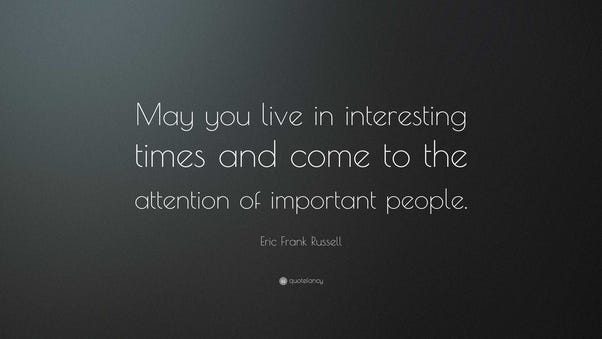
There are many different ways to perceive one’s challenges, and in this case, it appears to me the best way to represent this and the challenges we face today are embodied with an ancient curse:
I wish you all the best of luck in your future during this exceptionally unique period in human history that we have had the “great fortune” of being born into.
Anyone wishing to engage in a dialogue on UBI is invited to participate in an open space on Quora dedicated to the issue. You may need to register for a Quora account — It’s free, and I don’t get any kickbacks from it. This space is intended purely for stimulating discussion on the topic — there are no hidden surprises beyond possibly needing to join Quora if you want to post comments. Visitors to the site can read the content without registration hassles.
Yes, because the entire market and the processes for hiring have been dumbed down to a series of checkboxes applied to humans in ways that devalue their experience and expertise to meet psychopathic parameters, allowing hiring personnel to envision unicorns while fixated on checkboxes and ignoring the human beings they’re evaluating for roles they don’t understand or care about.
No one seems willing or capable of hiring humans since they prefer hiring aesthetic packages they expect will meet the minimum requirements to function like a robot without agency or capacity for judgments outside parameters established by misanthropes with money who have no clue what they’re looking for and have no respect for what individuals are capable of offering.
Fewer and fewer people are willing to tolerate life as a robot, even if it means food insecurity, because at the end of one’s life, existence is not enough, and to destroy the ineffable character of one’s life to submit to a role to discover at the end of all that effort that rewards are less than meagre is just not worth perpetuating a parasitic system.
This is why “quiet quitting” has become a thing. This is why people are complaining that no one wants to work.
Of course, no one wants to “work” — sublimate themselves to a robotic existence that dehumanizes everything about them to maintain an unfulfilling and crushing existence.
People would otherwise throw themselves into their work if it brought them the value it promises.
Decades of these bait-and-switch manipulations of people can only naturally result in the wholesale rejection of a corrupt paradigm.
Capitalists should have taken more time to consider the benefits of destroying a working class that worked to elevate their lifestyles into the stratosphere before cutting them down to find themselves plummeting to their doom. They’re just getting what they wanted without realizing they didn’t want what they thought they wanted.
This post is a response to a question posed in its complete format: “Is it ethical for employers to pay workers at the market rate even if it constitutes wage slavery and lets them barely survive?”
If you’re getting paid the market rate for a position you’re filling, that’s the highest level of ethics you should expect from an employer.
I worked for a government-related agency (part of the government Stewardship program of pseudo-outsourcing) for almost five years and was paid 40% below the market rate. I was stuck with that for reasons that will take this answer in an entirely different and unrelated direction. Suffice it to say that my options were radically reduced due to another arm of government choosing malfeasance to manipulate politically based optics in their favour at my expense.
At any rate, I found myself in this environment in a less-than-challenging role, which worked for me for a time as I had suffered a severe degree of trauma and needed mental space to learn how to cope with a new reality.
When I began working in this operation, management was so pleased with my performance and capability that they wrote an entirely new job description and offered me a full-time position within my first three weeks as a temp. Since my engagement before this one involved physically hauling 16 metric tons daily (at 52 years old) at an hourly rate less than one-quarter of what I had been used to as a professional, I jumped at an opportunity to function in a leadership capacity.
As much as I was surprised to enjoy the role and the people I worked alongside, I was shocked to discover that my rate was below the least-paid staff who reported to me. I was told I had to prove myself when I expressed my dissatisfaction. I responded that I already had, or they would not have created a new position for me. That changed nothing for the better for me, and I continued working there because I was more concerned with struggling through an ugly state of mind at the time and in no shape to be successful in professional interviews. I had already been bombing the ones I managed to get during that period.
During the first company Christmas event hosted by that employer, I had an opportunity to meet the Finance VP. I first witnessed him in his speech, declaring everyone was family. I was later introduced to him by an exceptionally proud supervisor and manager. The VP’s initially positive reaction indicated he had heard abundant good news about my performance.
He smiled and asked me a question. I managed six words before he turned around like I didn’t exist and walked away in another direction. I thought his behaviour was rude, which ended my thoughts on the matter as I continued to enjoy the event. As it turned out, that was my first indication of a sustained round of abuse I was to endure from him.
For the next five years, he played a game of “You look familiar, but I don’t know your name” with me. He enlisted his HR executive in his game as they behaved like they didn’t know me each time they visited the facility, averaging about twice yearly. His HR sidekick seemed to enjoy the game as she furrowed her brow each time she was introduced to the staff when she showed up on average once per year.
Throughout that period, I found myself constantly mitigating the incompetence of the leadership in the facility and saving thousands of dollars in lost productivity per week. I remember being given a production design assignment the manager couldn’t resolve, causing him great stress. The number of errors generated by his inability to deploy an effective production system seemed to stress him to the breaking point, and he thought I would make an appropriate scapegoat.
He offloaded responsibility for his job onto me under threat of losing my job if I couldn’t resolve his problem for him. It was pretty laughable in retrospect because I already had plenty of experience designing more complex production flows within a technical environment, so the system I devised resulted in a complete turnaround and a successful production flow that everyone appreciated, as stress levels among production staff also significantly dropped.
The short of this is that although I routinely exceeded expectations far beyond the role I was paid to fulfill, beyond management-level functions, and well into director-level functions, I could not find myself being paid the market rate for the job I had on paper. I was being paid 40% less than the market rate. I remember quoting that figure to a different HR personnel, and her response was an expression of surprise: “How did you know that?” I was more shocked by her question than I think she was about my knowledge of the market. It’s pretty easy to find out what the market pays for roles. However, the standing directive from company leadership was that discussing salaries was strongly frowned upon.
This environment had all the hallmarks of a highly incompetent and corrupt environment, and I’ve barely scratched the surface of examples I can provide. Do keep in mind, after all of this, that this environment represents government by proxy and the degree of corruption displayed was criminal. My constitutional rights were violated, and I had no recourse beyond the court system in which I could not afford to participate. I did, however, file a suit against them, so that’s on record if I can finally afford to take them to court.
After eventually receiving an agreement that I would have my income adjusted to near market rates, I experienced a gradual moving of the goalposts where my expectations degraded from an agreement they made to a realization they had negotiated in bad faith. My attitude degraded over time, and I stopped offering extra-curricular solutions to issues I had worked on during my off-work hours. I stopped stepping forward to volunteer for tasks above the role I was hired for, and the response was an attitude that I was being derelict in my job.
They eventually decided to terminate my position by claiming they were going in a different direction. This is an “at will” environment, and they were within their legal rights to terminate me at their discretion. I was entitled to six months of severance and received only four.
Workers have no protections in the modern workplace without the strength of union membership and the resources it provides.
Ethics is a matter of individual character; the shame is that ethics are not a universally held standard of conduct. The primary reason for people quitting their jobs is due to abusive environments. That means that most work environments are unethical, which aligns with my experience as an independent professional who has been stiffed by many people who hired my services to extoll their satisfaction with what they received and then denied me my compensation.
A LOT of employers and people who hire other people to work for them are entitled assholes who will screw over anyone they can get away with. It might be the case that I just had shitty luck, but it was far and above more than half of the people I encountered who lacked ethics.
This is only one reason that when people like Donald Trump or Elon Musk brag about stiffing their contractors, I see red. None of those people would want to brag about such horrid behaviour around me because, after a lifetime of enduring it, I doubt I could restrain myself. I would rather avoid a prison sentence for losing my shit over some psychopath’s gloating over how they screwed someone over.
If you’re looking for ethical behaviour from your employers, good luck because if you do find an ethical employer, hang onto them like they’re a prized treasure. They’re just as rare.
Getting paid at a market rate is at least better than getting paid less than the market rate and being expected to perform at higher levels of responsibility than those who get paid more to supervise your work. They don’t set the market rate, while most employers deliberately seek young and inexperienced people because they don’t want to pay the market rate.
A LOT of jobs I see posted indicate an upper limit of experience precisely because older workers know when they’re being ripped off or manipulated by an unethical employer.
This post is a response to a question posed in its complete format: “Considering you’ll die without a job, why is being employed not a right? Can society really just ensure someone dies by refusing to hire them anywhere?”
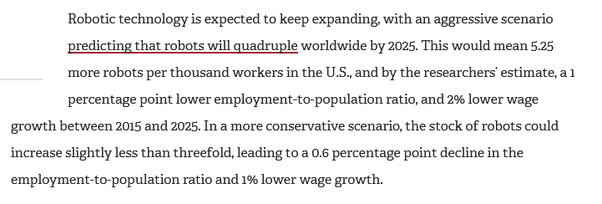
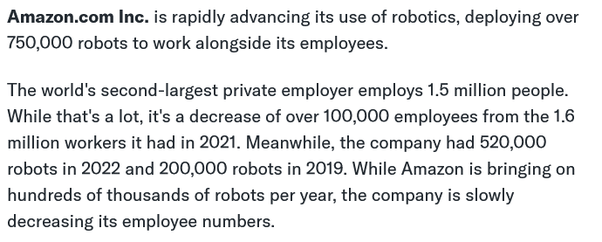
As the world of work becomes increasingly automated, the workplace dehumanization issue rapidly grows into a sociopathic dismissal of our essential qualities as living, breathing, thinking, and evolving beings. This pressing concern will affect more and more people in the future with increasing rapidity as workplace automation continues to adopt and incorporate an increasing rate of technological advancements into their operations.
Meet the Humanoid Robot Working at a Spanx Factory (18 minutes)
To be clear, the dehumanization of the workforce isn’t a consequence of automation but of aggregation into ever larger corporate entities now spanning the globe in their operational reach. Automation is merely a step toward increased efficiency and reduced operating costs. Automation is simply the formalized acknowledgement of transforming labour into a dehumanized function that benefits capital-infused decision-makers chasing profit. What was once an entity supporting community development within the “Mom-and-Pop entrepreneurial environment” has become industrialized economics.
Entrepreneurs of today are the artists of yesteryear who sought out patrons to support their initiatives and receive benefits in return for their support in a parasitic relationship that both drains value from the creative individual and shapes their creative output in their narrowly defined image to fit an increasingly homogenized production system.
The dehumanization of the workforce began when people became deemed commodities, and “Human Resources” departments were created as legal defence linebackers to protect corporations from the consequences of exposed liabilities.
The world of employment has become less about identifying skills and more about choosing appealing aesthetics and fetishes. One is no longer in a position of being hired to function in a role with an expected standard of performance in fulfilling the requirements of that role inasmuch as they’re selected like an attractive product on a shelf that will complement the rest of the pieces on a mantle.
The disconnect between the function one is intended to fulfill, the decision-maker determining the need, the department composing the requirements list, and the agency tasked to identify appropriate candidates has become so much of a production line that they cannot help but to regard all their people as narrowly defined replaceable cogs with limited capacity and range in an expense paradigm rather than as an investment and a partner in the enterprise. The only success an individual can contribute to a dehumanized function is to meet predetermined expectations in a static environment with an expected and finite lifespan.
Corporations may be deemed people, but they’re more machine than human. Unlike humans, they can only change course and be adaptive to evolution when the small number of myopically focused humans operating them can implement global changes that often involve complete retooling and rebranding or being incorporated into another corporate system.
Once that occurs, however, whatever unique nature or personality that may have existed in the original entity is subsumed into the more enormous beast.
The issue of jobs and employment is a critical metric only for those whose role in society is to diagnose the overall health of the “super beast” referred to as “the economy.” Individuals are irrelevant to their equations. Humans are no longer humans but cattle to be herded in a dehumanizing system that renders everyone only as valuable as accords the desirability of their functionality in a narrowly defined capacity within an inhuman entity.
One’s value as a human in society is determined only by the nature of the type of cog they can function as within the parameters of an acknowledged entity that deems them suitable for its overall operation.
Society doesn’t “ensure” anything because society is a collection of humans operating within a cultural framework. The corporate culture we have endorsed for society has, in return for our loyalties, suffused society with an apathetic disinterest in the human condition and the plights of individual humans.
UBI is the only path available to regain our humanity and create an economy that serves humans rather than modern dynasties comprised of a small handful of monarch-like beings. Without it, system-wide collapse is inevitable.
Many places advertising for employees aren’t actually looking to hire people inasmuch as conducting market surveys.
Many employers are so used to seeing hundreds of applications today that they narrow their vision for what they’re looking for on such strict parameters that they forget they are hiring people and not selecting machines.
Employers often over-rely on agencies who aren’t in the least interested in team building or cultural fits but in spotting skill sets to narrow their candidate lists by algorithms rather than people exercising their judgements.
Most applications are ruled out before any human sees them and are ruled out by humans if their applications aren’t formatted in the manner they expect.
Companies will often advertise for people “who think outside the box” but are so intimidated by outside-the-box thinkers when they interview them that they immediately reject that candidate.
Making matters worse for people in technical professions is having their skills evaluated by people without technical expertise, who judge the candidate based on the limits of their ignorance. They’re incapable of comprehending what skills are transferable and how they contribute toward success in a different area.
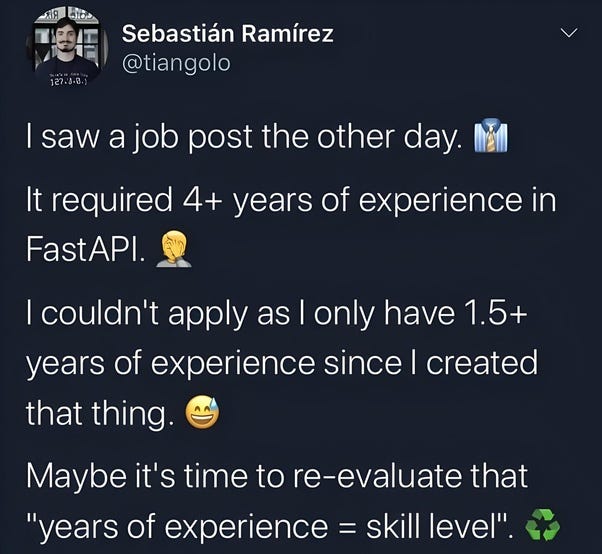
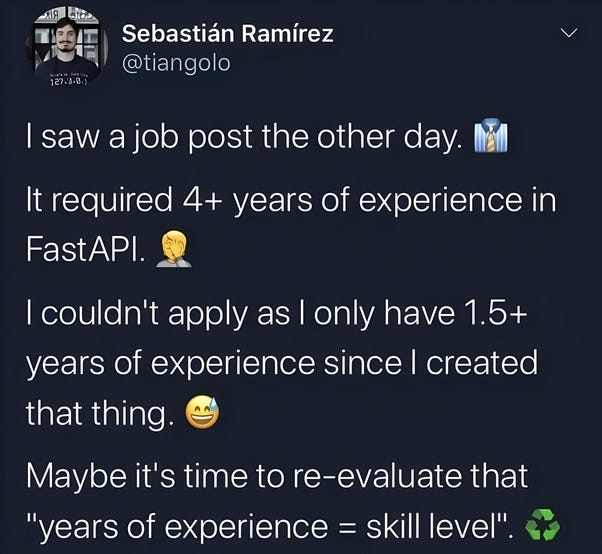
Even worse are companies that place upper limits on the experience they’re willing to accept, which rules out highly experienced candidates. Meanwhile, they also often advertise a requirement of years of experience in a technology that’s only been on the market for a few months.
Then they complain, after ruling out qualified candidates, that they can’t find anyone to hire because no one wants to work anymore.
Many unemployed people struggle to find work while being rejected outright because they don’t fit neatly into narrow boxes of expectations defined by ignorance and bias rather than insight.
GenZ may be experiencing struggles unique to their stage in the employment mill, but the overall employment system has massively degraded over the last several decades.
I’ve been struggling for ten years now to land a simple junior-level job in graphic production work to regain balance after having a thirty-year career as an independent professional destroyed by people who are supposed to protect and serve, not scapegoat for political gain.


















 thotbag