
This post is a response to a question initially posed on Quora, and can also be accessed via “https://www.quora.com/How-can-the-concept-of-authority-be-explained/answer/Antonio-Amaral-1“
There appear to be two distinct perceptions that dominate public responses to authority.
On the one hand, an authority is an entity with the power to issue demands, impose edicts, and enforce compliance. On the other hand, an authority is a trusted entity that serves as a resource for empowering people and enabling their ambitions.
Our good friend and authoritative source of plagiarized information, AI Bot (Ayebot? iBot? EyeBot? — It needs a name so that it can be further anthropomorphized. “Gemini” seems a bit too much like impersonal woo.), provides a bit more detail:
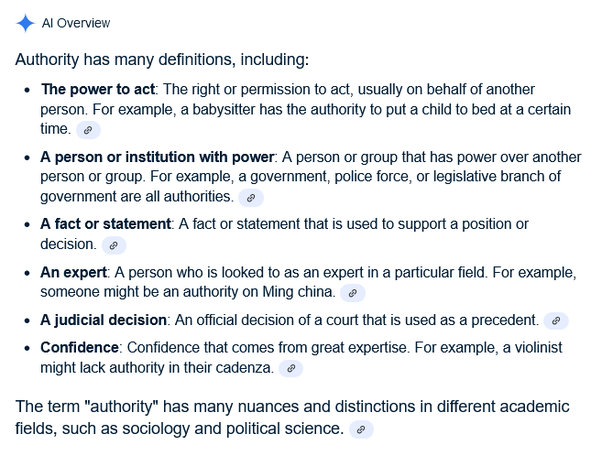
Wikipedia has this definition, which appears to favour an interpretation based on an exercise of power:
“Authority is commonly understood as the legitimate power of a person or group over other people.[1][dead link][2] In a civil state, an authority may be practiced by legislative, executive, and judicial branches of government,[3][need quotation to verify] each of which has authority and is an authority.[4] The term “authority” has many nuances and distinctions within various academic fields, from sociology to political science. ”
Let’s comb the world of language authorities to see how they interpret authority:
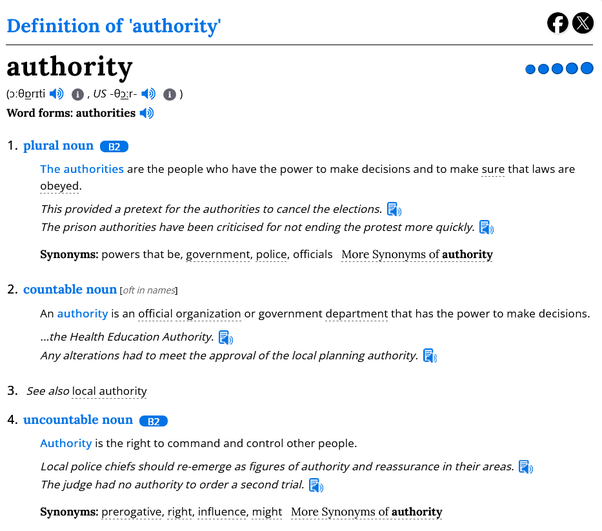
Collins has this to say about authority:
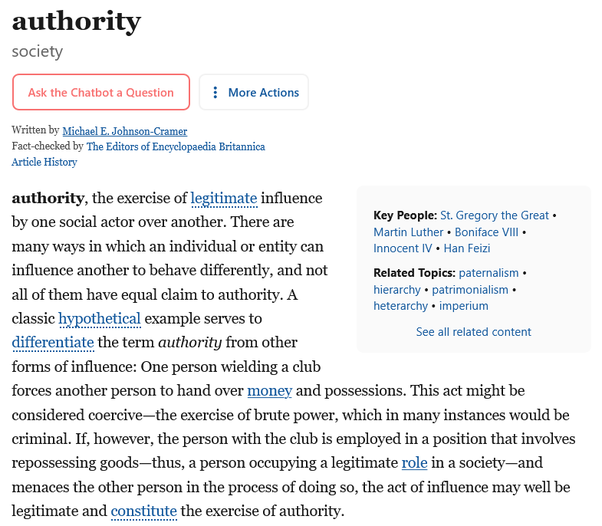
Britannica attempts a more concise definition favouring “influence” over “imposition” like Collins.
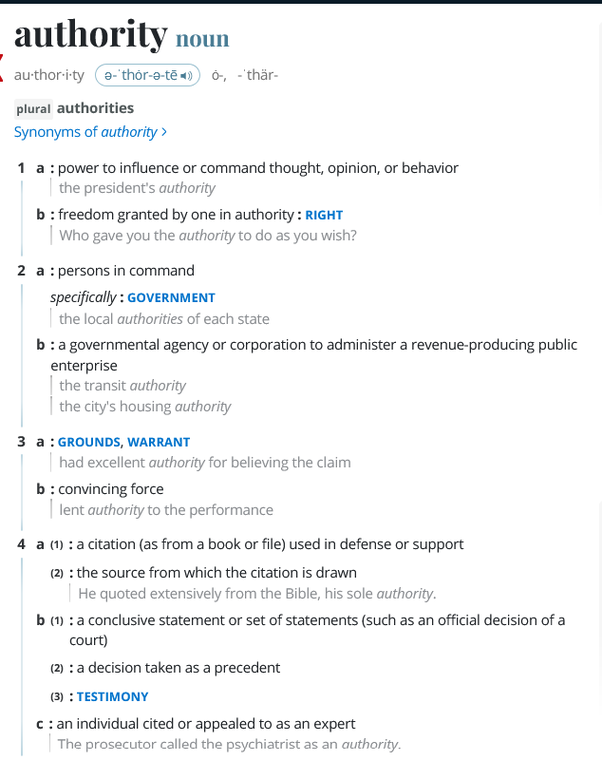
Merriam-Webster provides a more comprehensive overview of how “authority” is apprehended and implemented in society — although imposition precedes influence in its hierarchy of interpretations.
Interestingly, two of the world’s premiere language authorities place a profit premium on sharing basic definitions for words… which begs the question of the value of definitions versus profit and whether these institutions actually are authorities in realms beyond basic definitions.

Oxford at least asks for personal information to be granted access to elementary information, while Cambridge’s efforts are laughable.

These last two efforts suggest to me that their authority is entirely contingent upon reputation — part of the “old boy’s club” of authoritative prestige in the world, which essentially shuts out the plebians among us who must wrestle with “inferior language authorities.”
Meanwhile, freebie entity Dictionary dot com presents itself as a superior authority in marketing and business development to the two staid elements of anachronistic society above and provides an even more comprehensive set of definitions than Merriam-Webster.
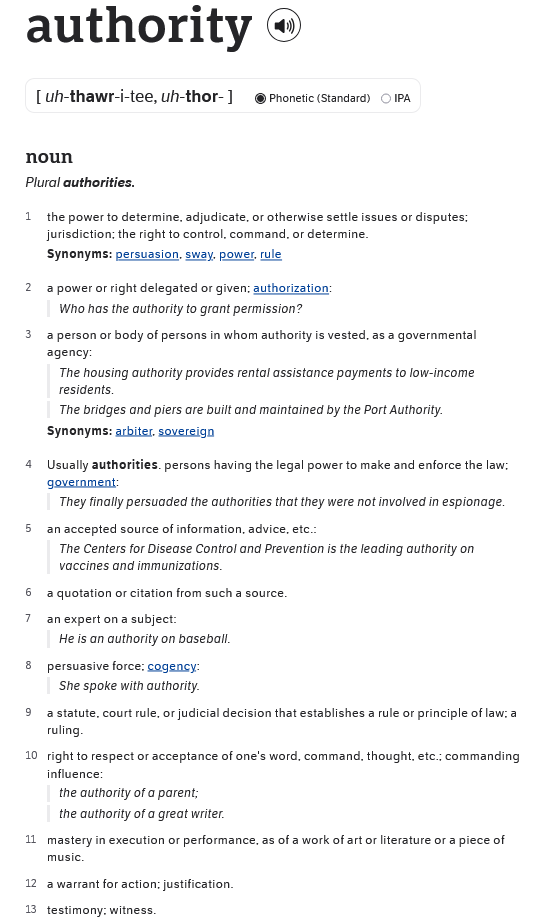
This tells us that authority is actively cultivated by those who desire it and then, once achieved, is actively protected and zealously guarded beyond levels resembling reason. At the same time, newcomers overturn established authorities who fade into oblivion as the barbarians at the gates no longer storm them out of existence but supplant them through more effective forms of adapting to an ever-changing world.
In short, “authority” can be explained entirely by the dynamics of ego, power, and how much one is addicted to asserting their prominence in a chaotic world.
Interestingly, the most respected authorities throughout history have rejected the impositional form of authority flowing from within in favour of empowering the people at large by serving as a resource for enabling their assertions of personal authority within their relative spheres of influence.
For example, people still recognize the names of rare individuals who embodied humility, such as Gautama Buddha — or even a more modern instance like Nelson Mandela. Still, few outside dedicated historians can remember the many “authorities” throughout history who imposed their will upon the public. Those remembered are often anomalies serving as massive engines of destruction whose names are whispered rather than revered. Few among those whose authority was impositional in nature are remembered for their introspective wisdom, like Marcus Aurelius and Sun Tzu, but are revered for their insights in contrast to those of the conquerors like Alexander the Great or Genghis Khan, who are studied for their strategies (and often critiqued for their human failings).
For example, I predict that if humanity survives in some form resembling the humanity we know today, Jimmy Carter will be remembered with deep reverence and respect one thousand years from now. In contrast, Donald Trump will be remembered as the cautionary tale of a bull in a china shop whose lesson for humanity is the necessity of restraint and accountability.
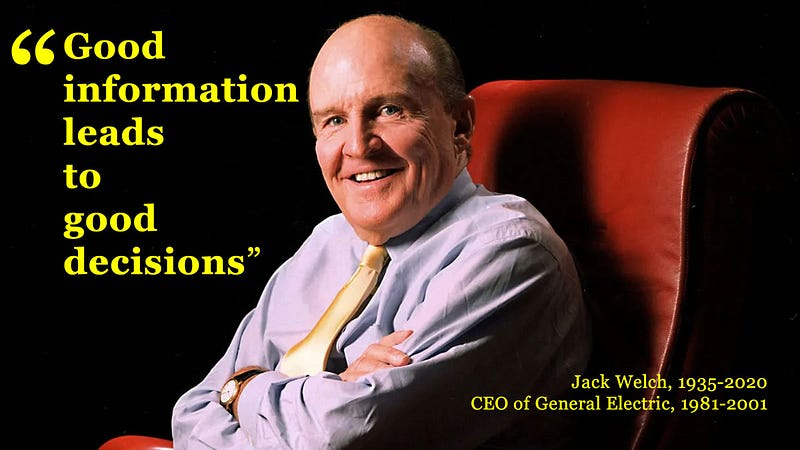
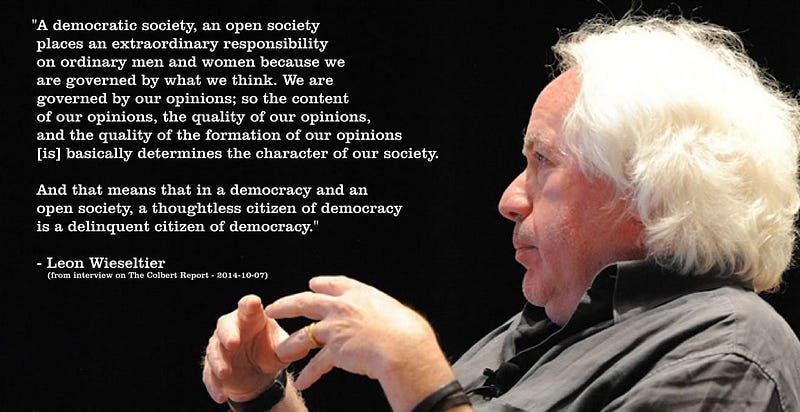
 thotbag