To all my millions of readers (lol) chomping at the bit (double lol), wondering what may have happened yesterday when you didn’t receive a daily missive of my preponderant wizdumb, I have an explanation and an announcement below my typical approach to composing my publications by posting answers to questions on Quora.
Today is a departure from my standard fare in three parts: an answer to a typical Sunday question, an explanation for my derelict behaviour, and a summary of my delusion.
Now, on with the question:
Is it possible that some atheists hate believers simply because they believe there’s a God? — posted on Quora at: https://www.quora.com/Is-it-possible-that-some-atheists-hate-believers-simply-because-they-believe-theres-a-God/answer/Antonio-Amaral-1
Hate the sin, and love the sinner.
Do only believers believe this principle?
I don’t think so. I would argue that atheists uphold this principle better than believers.
Atheists don’t care what people believe because they value their right to disbelieve more than many believers value an atheist’s right to think differently than they do.
After all, believers perpetually impose their beliefs onto others and have been waging wars over beliefs in conflict with other believers for centuries.
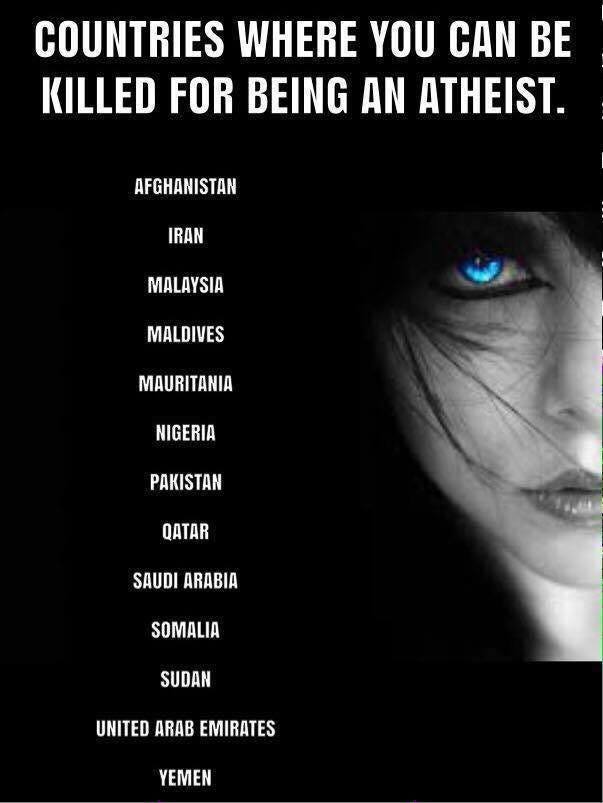
Atheists, on the other hand, have had to survive in a world where they would be killed for disbelieving the beliefs held by believers.
Atheists generally find believers’ behaviours most intolerable because they are often intolerant of those who don’t share their beliefs.
If believers stopped trying to impose their beliefs on non-believers and those with different beliefs, there would be no reason for atheists to have difficulties with believers.
There is no point in hating people for what they believe. Hating a person for beliefs they hold is a myopic way of avoiding truths about doubts one is haunted by.
Values are another matter altogether, which warrants concern because they form a foundation for one’s beliefs and the actions they inspire.

Among the many reasons I began my daily routine of publishing long-form articles on Medium, Substack, Patreon, and WordPress was a realization I had about myself after reaching a milestone of about 18,000 answers to questions on Quora. There are a lot of words inside me itching to get out, and I can’t keep my mouth shut. I write because I must.
I didn’t think I could sustain a long-term effort, particularly not one that provides no compensation and likely not for a long time. It’s much easier to stick to a discipline when some extrinsic rewards accompany the intrinsic ones. Nonetheless, even though I have written almost daily for most of my life, I began my sustained writing journey for public consumption nearly a year ago because I wanted to establish that I could find enough inspiration to maintain a long-term writing vocation.
I joined Quora in 2014 to leverage the social media site as part of a marketing funnel for myself in a career as an Instructional Designer. Long story short, I couldn’t continue that particular career for reasons I won’t get into now. Still, I did find myself relying heavily on Quora and in answering questions I believed on some level to be helpful to others, while being a form of therapy for coping with a significantly traumatic experience I’ve been struggling through for much longer than I would have believed at the outset.
Ten years later, I realized I could package my writing into publications of sufficient length that might appeal to an audience, and so that became one of my goals. I also decided to commit to an entire year of daily publishing long-form answers. I managed to reach 314 consistent days on Friday.
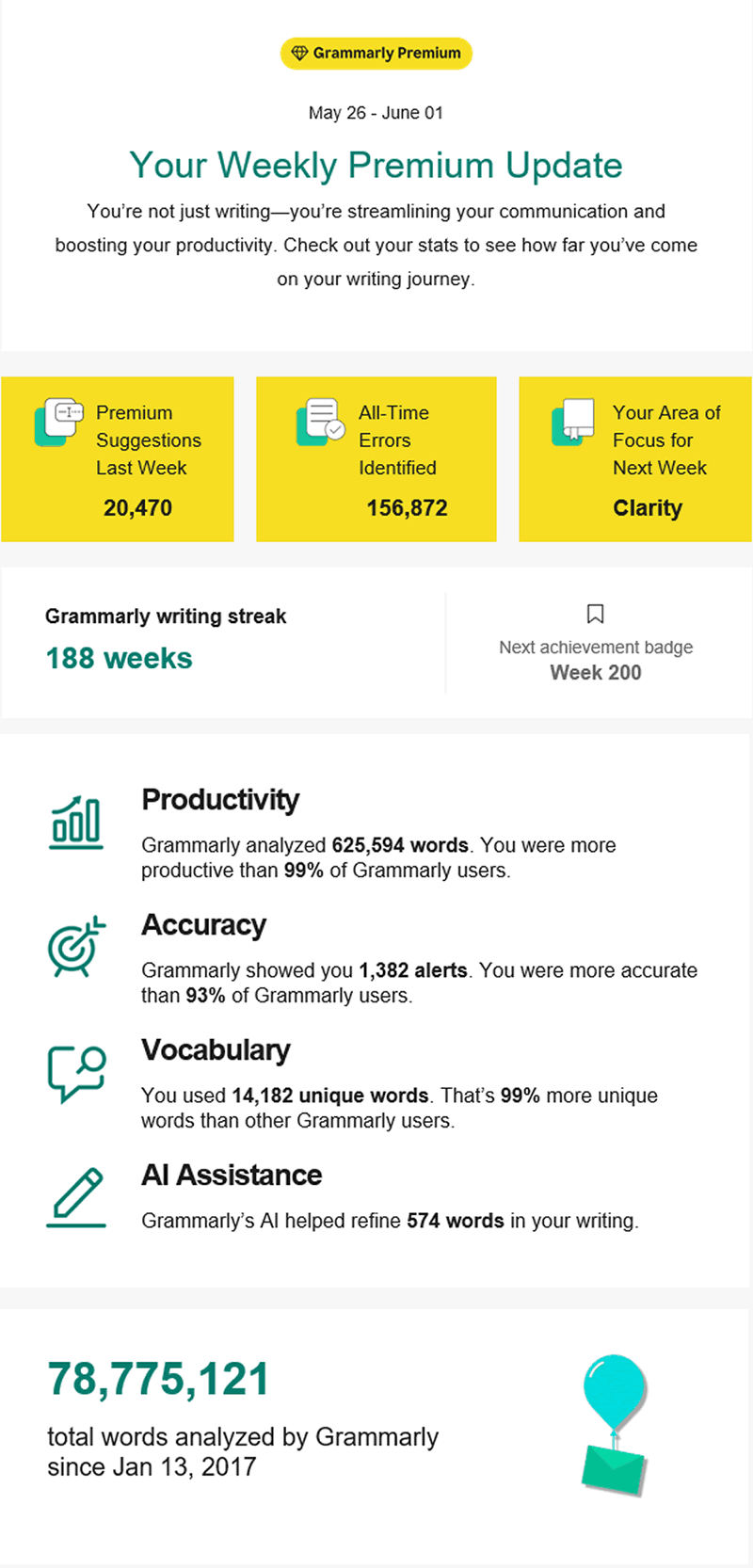
I’ve also been relying on Grammarly to save on efforts to clean up my grammatical sloppiness and have been receiving weekly reports of my performance. Since January 13th of 2017, Grammarly reports processing almost 80 million words I’ve written. I’m also less than 3 months away from a 200-week writing streak achievement badge. (woohoo)
Another reason I gained for continuing my daily publications about 50 weeks into my efforts was an article about someone who experienced new professional opportunities opening up for them on LinkedIn after one hundred days of daily publications. Since I was already halfway there, I figured if I held out long enough, I’d receive a touch of magic myself.
No such luck, but realizing I’ve been writing at a consistent volume of more than 9 million words per year, it eventually sunk into my thick skull that I’m producing enough volume to have written several books by now. Not only have I struggled to maintain my publication schedule while working on other writing projects, but I’ve also been somewhat disappointed by an issue of inconsistent quality in maintaining such a frequent publishing schedule.
I can do better by scaling back on publishing frequency, giving myself time to provide background research to support my content, and providing you, as a reader, with a much richer body of copy to engage your mind and stimulate your imagination.
…And since Saturday was my birthday, I used that as my lame excuse for taking a day off.
At any rate, I’m considering a three-day-per-week schedule — possibly Sundays, Tuesdays/Wednesdays, and Fridays from this point onward.
I intend to focus more in-depth on some ongoing topics, including elaborating on my personal experiences in ways that contribute to the public dialogues on issues of governance, UBI, and the “defunding the police” movement, and of course, including religiosity as I have each Sunday for several months and other topics I am moved by.
I hope you enjoy my more focused approach to long-form writing, and if you prefer shorter pieces, I will continue being an uncensored smartass on Quora: https://www.quora.com/profile/Antonio-Amaral-1/
I very much appreciate your support. Thank you.
Now, onto part 3, where I become an obtuse smartass once again with an answer to another question:
What are some common myths social media tells us?
https://www.quora.com/What-are-some-common-myths-social-media-tell-us/answer/Antonio-Amaral-1
Social media is an ecosystem, not an entity.
As such, social media is the chaos of billions of voices shouting at the universe.
If all of that were to consolidate into encapsulated messages or narratives in concise enough forms to be considered myths, then one would be that we are an ocean of rudderless beings all vying for some form of ascendence, whether individualistic or tribalistic.
We fear death as we revel in it through our rampant destruction of life, as we deny the finite nature of our existence and dream of immortality.
Social media reminds us of our insignificance as individuals on this Earth and as a species in this universe, as the cacophony of voices harmonizes into an anthem proclaiming our relevance.


 thotbag