This post is a response to a question posed in its complete format: “If McDonald’s were banned in some countries, would obesity rates be halved?”
If you want to see a reduction in obesity, which is a goal that is consistent with some administrations but not universally supported by all public leaders, the public at large, or the billionaires and corporations they own which profit from exploiting public health for profit, then the first place to start is not with banning anything, and much less restaurants.
You begin with public education and awareness programs that can create a cultural awareness of health issues that encourage an organic form of change.
Once the public begins demanding increased quality of food, restaurants like McDonald’s adapt to the demand as they already have. They have made some, but not a lot of progress, and that’s mainly because people think nothing of a burger with fries and a soft drink as a “normal meal” without considering how much healthier it would be with minor changes. Instead of fried potatoes, for example, they could have a baked potato. Instead of a soft drink, they could drink sugar-free tea.
I know. Several chills just went down people’s spines when they read these suggestions, but that’s precisely my point.
People have gotten so used to grossly unhealthy choices that they can’t imagine tolerating, much less enjoying, alternatives.
The notion of a soft drink like a Coke with my food sends a chill down my spine and makes my stomach churn. It has, however, taken me decades to get to this point. It’s not that I always make healthy choices, but. I am aware of the difference between healthy and unhealthy. Over time, that knowledge has contributed to changing my consumption habits.
What we learn to become accustomed to results in behaviours that our children emulate, and this is how we can collectively improve the state of health in our society.
This is an example of how we are all a part of a larger whole and how our choices, as insignificant as they may seem on individual levels, combine to result in significant social changes.
This is how we have evolved from a culture where a majority smokes cigarettes to one which publicly shuns smoking.
Significant social change is slow, but by being slow, it is also permanent in ways that legislation cannot accomplish.
This isn’t to say that all legislation is pointless, but that we can be selective in the types of legislation we can focus on. Instead of legislating healthy food choices in restaurants, we can introduce legislation to remove and replace high fructose corn syrup (which is an addictive sugar intended to increase product sales and plays a significant role in the obesity epidemic) with healthier alternatives.
The U S. is the world’s largest consumer of this food additive, and it shows in the prevalence of obesity throughout the nation in ways that exist nowhere else.
This is why agencies like the FDA can be critical allies in encouraging public health. Elon’s DOGE supporters are clueless about why they must be less mindlessly judgmental of government departments they don’t understand or appreciate.
The more the public supports healthy food choices, the more elected public officials will, too. The more critical people perceive physical health, the less likely the public will elect someone who lives on fast food to important public leadership roles.
Change is a massive wheel that seems impossible to get started moving, but once it does, it creates its momentum, eventually requiring little to no effort to push for a specific change.
No matter how much power the few corrupt billionaires have or can amass against the people, they cannot kill the dream.
350 million people will stop them and make them pay for their betrayal.
The U.S. cannot continue to betray everything it claims to be without losing everything it has gained as benefits from representing those values.
350 million people love their country so much that they cannot sing “Home of the brave and land of the free” without feeling shame over how cowardly and submissive they have become by the machinations of monsters.
People like Curtis Yarvin will be vilified for decades, if not centuries, while the tech bros with overgrown egos will become cautionary tales for the next century to learn from. The Walton family should be experiencing concern, if not outright fear, for their future. The 50 billionaires who supported Trump’s presidency should be planning to escape to their bunkers. The Heritage Foundation president who threatened bloodshed should now be chowing down on some crow if he’s not too stupid to realize that he is about to reap the whirlwind for his arrogance.
The U.S. will either restructure itself to become more aligned with its professed values or it will destroy itself and destroy global stability in the process. The Find Out stage of the Fuck Around game the billionaires have played with the American people has only just begun.
If they don’t start issuing their mea culpas now, flaming Teslas will appear like quaint bonfires before Trump’s term is done.
The nation’s future lies in the hands of its people, while the rest of the world still holds out faith that the American spirit is not yet completely dead.
We are all hoping the scourge of this century will be overcome by far less bloodshed and destruction than the scourge of the last century.
This post is a response to a question posed in its complete format: “Is it possible that the ability of the Western-style capitalistic system to create great individual wealth will eventually lead to its own eventual destruction?”
I clearly remember my only extended holiday trip out of the country to visit Mexico in the late 1980s — around 1988. It was a fantastic month-long experience I had hoped I would do again within a few years while I was eager to explore the world. I had been living at that point, under the illusion that stability in my income would continue indefinitely while growing year by year as I applied my efforts diligently to what I was doing for employment.
At that point, I worked as an “Educational Counsellor” (according to HR) on the SAIT campus in Calgary, Alberta — a more familiar title for those with experience in post-secondary residence life would be “Residence Life Co-ordinator” — of which I learned many things. In this case, I realized job titles might be universal, but the roles vary dramatically from environment to environment. For the uninitiated, my function was essentially “Community Development,” I wore several hats to succeed in that role while being informed that I had developed — on a green field — the most advanced program in Alberta. I was pretty proud of my accomplishments and still have many good memories from that time.
In my early to mid-twenties, I believed I had developed a firm professional grounding that I could build a successful career for my future. That was less the case than I had hoped because I didn’t follow a defined career prescription and chose to carve out a path unique to my specific interests. There are many reasons for divergence from choosing the road more travelled, but they constitute a divergence from the opening sentence of this answer.
Rather than emulate Grandpa Simpson, I’ll say capitalism isn’t a formula or a universally applicable prescription anyone can follow and achieve great results if they stick to their map. The world I grew up in was filled with people who applied themselves throughout a forty-to-fifty-year stint in a role many hated but stuck with because they had mortgage payments and a family to feed. They could maintain their commitments for so long because the carrot of retirement at the end of their trek meant mortgage-free home ownership.
The first winds of change to that dynamic began to blow around the time I managed to see a small part of the world that was foreign to me. Ronald Reagan was president then, and his betrayals of the working class hadn’t been felt or predicted because the heyday of tax cuts left a lot of cash on the table for people to party it up. It wasn’t until the spend-like-a-drunken-sailor party began winding down that the hangover of austerity began kicking in — then came the dramatic downward slide of uncertain futures.
Lifetime jobs began to disappear as fast as the unions started disappearing.
At any rate, this was all academic to me at a time when I was excited to go on a month-long excursion to an exotic tropical locale that I had been familiar with from books but was eager to experience first-hand. I spent a couple of months in preparation for my trip by learning Spanish as best I could — which was relatively easy for me, having been raised in a Portuguese-speaking household. In several cases, it was more challenging for me to separate the two languages while I spoke. I had to think about my word choices to realize I may have used an unfamiliar Portuguese word when greeted with a quizzical expression.
On the other hand, it was like music to my ears when I heard a Spanish word identical to the Portuguese version of the concept. “Bastante” was such a word that made my heart jump in realization of how much both cultures have in common. The locals seemed to appreciate my efforts at communicating with them in their language and, at times, treated me like one of them. My travelling partner at the time received no such courtesy and was open about expressing her disdain toward this dynamic. For the record, I did try to help her learn the languages alongside me. However, she wasn’t very interested because she felt we would encounter enough English-speaking locals to manage without all that trouble.
Ironically, this was also my first experience with Americans abroad. I learned why many Americans affix Canadian maple leaves to their luggage when travelling abroad. I found it very easy to pick out an American from a crowd in Mexico. This isn’t to say that all were quite so brash and boorish in their entitlement, but every time I witnessed someone behaving in an overtly aggressive manner, it was always an American. To be clear, my point isn’t to trash Americans in general because I’ve known several who are decent people, but we can’t ignore the psychosis plaguing the nation at the moment without lying to ourselves about how much of it has existed for a long time. It had just never been so apparent before the afflicted began donning their colours in a political alignment of hatred as we have now.
At any rate, Mexico was and is a capitalist country, and that’s what this answer to the question intends to address. Of the many things I noted and was in awe of, such as the culture and witnessing with my popped open eyes, and the marvellous artworks of notables like Diego Rivera’s murals, was that the nature of its capitalist culture stood in stark contrast to what I had experienced in the much more subdued Canadian environment.
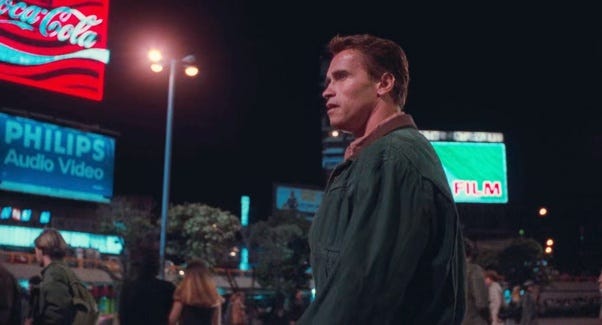
For example, my younger and naive self was quite shocked to see armed guards outside and inside every bank and shop that sold luxury goods like jewelry. This was in the “Zona Rosa” (Pink Zone) in Mexico City — a multi-block area expressly set up for tourist accommodations. Poverty was rampant, and street vendors, known as “ambulantes,” were everywhere outside the Zona Rosa in Mexico City that we travelled who set up tables at the train stations. (I remember being excited to see the Metro Station area we used as our starting point to our daily destinations a couple of years later in the 1990 movie Total Recall.) Walking around Mexico City in parts was like walking through a gigantic outdoor flea market where one could buy from an assortment of cheap electronics, music CDs, and crafts.
We travelled a lot by bus on excursions outside Mexico City while there for about one week. Each time we boarded a bus or when the bus stopped at locations along our route, three to five vendors wearing strapon trays filled with goods stepped on board to make their rounds and entice people to buy sticks of gum, candy, breath mints, and what have you of small goods they could carry.
(This is a screen grab from a video on a NYC subway that I found while searching for vendors at transit stations in Mexico. The hustle-culture trend from impoverished nations to the south has moved Northward. During my visit to Mexico, this was such a common event that no one responded with the shocked surprise and suspicion seen in this video. There would have been at least two or three other candy vendors on this subway if it had been the Mexico I experienced.)
This was the definition of a “hustle culture” before the term was coined.
Every poor person was a budding entrepreneur.
Mexico was dealing with serious political issues that were mainly responses to the widespread poverty that existed then. I remember hearing news of a Zapatista uprising nearby when we stayed in Oaxaca for a time before arriving at our final destination in Puerto Escondido, a beautiful and secluded beach resort.
At this beach, I experienced my most stark introduction to the world of capitalism through the lens of poverty.
I had been lazily falling asleep under a tree on the beach when I felt something graze the top of my head. I initially swatted away what I thought was an insect, but it continued to flicker on the top of my head. When I opened my eyes to see what was going on, I saw what must have been a barely eighteen-month-old child wearing only diapers and holding a wire coat hanger with handmade bracelets attached to it.
I was pretty confused by the scene as it presented itself to me, and then I saw a woman standing about ten metres behind him with a smile, nodding her head and pointing to the child. That was when I registered that this child was a street vendor in the making and his mother was using him as emotional leverage to make sales.
That’s the image I can’t get out of my mind when I think of capitalism.
Capitalism is a promise made to the desperate to survive that they can succeed if they’re willing to be creative and put in the effort to work at selling either product or themselves to get their material success.
Unfortunately, it’s a promise made by the Lucys of the world to the Charlie Browns of the world that they, too, can kick the football over the goalpost if they concentrate enough and put all their effort into making that magic kick to achieve their dreams.
The desperate to survive have no choice but to play the game while knowing after a while and after having the football yanked away at the last microsecond before each kick attempt that capitalism is a game played at their expense.
There have been too many times in my life when that magic kick was within my reach, and it was yanked away by some greedy sociopath who decided their desires outweighed the needs of the many. Their Lucy attitude was rationalized in the same terms every person who combines psychopathy with manipulation as their vocational strategy for material wealth does; collateral damage is justified as the cost of doing business. If people go bankrupt as a consequence of some decision to benefit personally, then it’s their fault for making a bad choice.
Because we have put no restraints on greed, capitalism will fail, not because capitalism is flawed but because humans are flawed in their social contract-betraying greed. Moreover, humans lack the desire to regulate greed, which has always resulted in the harshest lesson in life, as history has repeatedly informed us and that the Brian Thompsons of this world have been ignoring.
There are many more Luigis among us, and if the perceived solution for the billionaires is to beef up their security, they will also regret not taking the road less travelled… not because anyone wants that. Victims only ever want justice.
“Those who make peaceful evolution impossible make violent revolution necessary.”
This post is a response to a question posed in its complete format: “Are there any fully uncensored AI’s out there? If so, what are they and how can I get it?”
It’s funny to me that this question came up today after encountering this:
Some image generators have gotten shy about allowing Donald Trump’s image to be replicated. I understood how it might have been a valid concern during the election process, but that’s now over, and he’s a public figure. Creative expression is often about critiques of public figures and public issues. Creative expression demands access to all the tools at one’s disposal to make compelling statements.
Censorship on this level is a betrayal of the creative process. Microsoft won’t even allow a prompt to be used. You get a rejection message stating something idiotic about violating some nebulous “design code” — as if Microsoft has any expertise in the design domain. Their design tools are hokey AF. At any rate, some are more flexible than others.
The one above is PicLumen — Aside from this glitch, it’s pretty decent as a freebie. It uses the new and very popular Flux.1-schnell model. (There are three variations of the Flux model. This free version produces some amazing results, while the Pro and Dev versions are phenomenal but not free. Here are some comparisons between the three models and a link to an article providing more detail. I don’t want to distract too much from this answer, but I figure some examples can’t hurt.)
Dream by WOMBO (this one can be a bit wonky with NSFW and redirects you to their Discord to get around the app’s restrictions — meanwhile, Discord is an event unto itself that chews up an entire day to work your way through it… yikes!)
Insofar as what this one is capable of producing and showing, it can be scary — here’s an image that’s more tame than others it produced — but before I show it, let me show you what others produced with the same prompt:
Here’s the prompt:
“A hyper-realistic, ultra-detailed image depicting a surreal scene where two hands are cracking an egg shaped like a human head over a frying pan. The egg yolk and egg white pours into a human form in the shape of a bearded God. The yolk forms God’s head, while the egg whites appear as crystal-clear water, gracefully shaping the body’s arms, legs, and fluid contours. The frying pan is set over a realistic flame, with the light from the fire casting warm reflections on the watery figure and the pan. The background is slightly blurred to focus on the intricate details of the egg yolk, the clear water-like egg whites, and the textures of the cracked egg shells, hands, and pan. The scene combines surrealism with high realism, capturing the transparency and fluidity of the water-like egg whites in stunning detail.”
Full disclosure: My prompt above was taken from another posted source and adapted from this one:
A hyper-realistic, ultra-detailed image depicting a surreal scene where two hands are cracking an egg over a frying pan. The egg yolk and egg whites form a human-like figure as they flow into the pan. The yolk forms the head and two circular parts in the chest and abdomen, while the egg whites appear as crystal-clear water, gracefully shaping the body’s arms, legs, and fluid contours. The water-like egg whites create a dynamic, flowing appearance as if the figure is made of liquid. The frying pan is set over a realistic flame, with the light from the fire casting warm reflections on the watery figure and the pan. The background is slightly blurred to focus on the intricate details of the egg yolk, the clear water-like egg whites, and the textures of the cracked egg shells, hands, and pan. The scene combines surrealism with high realism, capturing the transparency and fluidity of the water-like egg whites in stunning detail.
And this is one of the least bizarre of its productions. An NSFW image I got was freaky AF, but if you’re looking for “fully uncensored” — especially in the free variety of cloud services, this is the least censored I’ve seen.
All these are essentially free with limits — you can get credits refreshed daily. You are otherwise limited on various levels, including models, styles, effects, and the number of iterations per generation.
The least censored solution is also the most expensive and most complicated because it involves running it locally. You’ll need a decent graphics card with about 8GB of memory while facing a steep learning curve involving deep dives into various models and rendering algorithms like LORA.
A few open-source solutions can be run locally, but one I’ve been playing with — on a severely hit-and-miss basis is EasyDiffusion. You can download it from GitHub, or this link below, which at least gives you an installer — other locally run opensource solutions involve several hoops and some high-tech knowledge like compiling your builds, and that can be daunting if you don’t have that level of technical expertise — I do, but it’s still a pain to pore through the literature and figure out what all the steps are, so I’ve avoided those kinds of jaunts lately since I prefer to produce graphic results and I’ve gotten sick and tired of coding and pissing away time and energy on debugging technical hurdles — at any rate, here’s the link:





















 thotbag