What would be some hallmarks of a Utopian civilization?


This post is a response to a question posed in its complete format: “If you lived in an advanced-utopian civilization, what would likely be some of the hallmarks of said thriving and freedom loving society?”

On my way to where I am now to undergo a first-time experience that I’m not looking forward to, I had the opportunity to observe a passenger on the bus who prompted me to think about the environment I grew up in.

This person, who appeared somewhat masculine in his maleness, was adorned with a few piercings that were never seen in the backwoods troglodyte village of toxic masculinity I grew up in, but that was not what caught my eye. I’ve seen enough piercings, tattoos and a variety of body decorations now that most of it goes unnoticed.

In this case, his nails first caught my attention, and the colour he had painted on them appeared an aesthetically pleasing burgundy. That’s what prompted me to notice the rest of his presentation.

My cultivated biases assumed unimportant superficial characteristics about this person. Still, upon further glances, I felt them melt away because, beyond the decorations, he appeared like a typical CIS male to me.

I wondered how much of that approach to aesthetics I would have adopted had I been raised in a “more modern” setting.

I never experienced more than passing thoughts about getting an ear pierced or getting some tattoos that I never found the courage to do. Still, I would have if it were not for the rather conservative upbringing I experienced in a low education and highly biased environment that has left me with a lingering self-consciousness of doing so.

Then I arrived at my destination, and while patiently waiting for an appointment (that would consume most of my day but won’t begin for another hour, even though I was expected to arrive two hours before admission), I encountered this question on my notifications feed.

My first thought went to the person I observed and how social expectations would be far less regimented and myopic in a Utopian environment.

Another characteristic I would expect is that my waiting experience to perform a standard procedure would be done at home with far less discomforting advanced prep and greater expediency.

I also read, on my bus trip here, that the UK has been making “anti-cancer injections” available to the public for addressing about fifteen common varieties of cancer. It’s a treatment that appears to function like a vaccine by boosting a body’s immune system and training it to recognize cancer cells, to remove them naturally in their early stages. The article was, however, rather skimpy on detail, so I will research it further in depth when I get home.


(Here we go — my appointment was far shorter than I feared.):
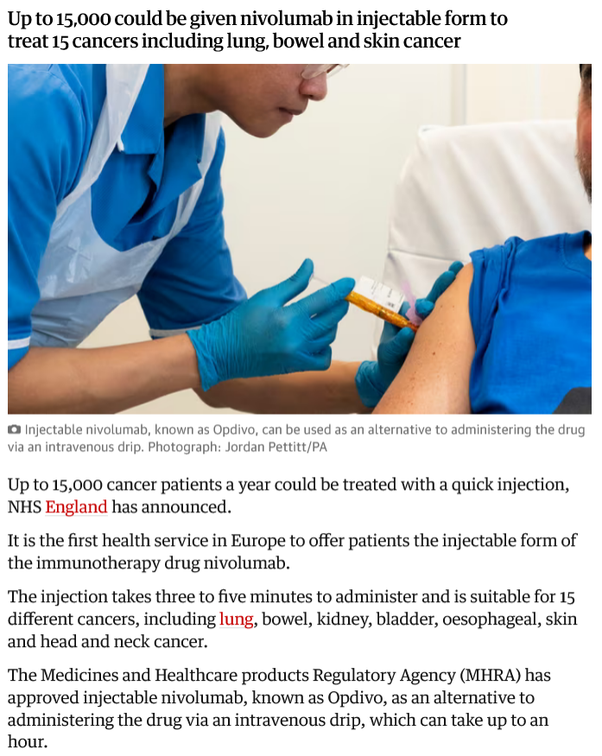
Cancer patients in England to be first in Europe to be offered immunotherapy jab

NHS England » NHS Cancer Vaccine Launch Pad


I think simple remedies for complex medical challenges that we struggle with today would also be another feature of a utopian environment.

Other features of an advanced society to me would include, along with many technological advances for assisting with biological issues, transportation, and the provisioning of various resources like education and access to community administration processes for public engagement, would include access to resources permitting one’s development of a meaningful vocation without being distracted by meeting basic survival challenges.

Whatever interests a person might have would be easy for them to explore without encountering numerous barriers preventing them from developing their interests in ways that engage and benefit the public.

For example, I read about an eleven-year-old girl developing a means of testing for lead contamination in water.

While we can celebrate the innovation and ingenuity demonstrated by a remarkable youngster, we often overlook how such a child would have required access to supports not common to most to have been privileged enough to pursue an interest to such a degree that their idea can save lives.

One of the most destructive limitations we place on human potential is the misanthropic attitude many people display, cultivated by an economic system distorted by toxic competitiveness.

A utopic society would have cleansed our collective psychologies of the many mental health maladies that we’ve inherited from centuries of generational CPTSD. The most potent form of utopic boost to our potential as a species is our ability to support one another while possessing the courage to address the psychological dysfunctionalities that hamper our development.

A utopia would be a humanity free from the burden of many of the toxic aspects of human psychology that are the cause of so much pain and suffering on levels that would be considered outlandish in fiction and a bloody horror show of sociopathic stupidity in real life.

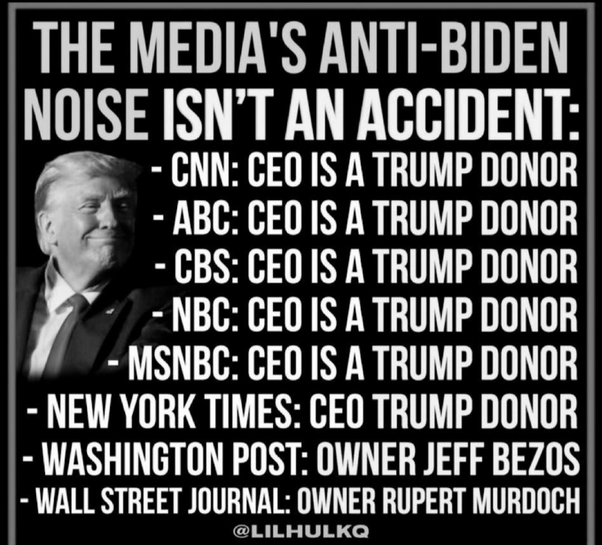
This kind of shit, for example, would not exist in a Utopia because we would have matured enough to acknowledge, first and foremost that this is a treatable medical condition that should disqualify these people from operating in any position of authority. This kind of broken mentality should be considered a socially destructive mental health issue in which the effects are severe enough to warrant mandates for compulsory treatment before being allowed to participate in activities that could be harmful to others.

A Utopia would not be suffering from a mental health pandemic affecting one in five people and resulting in a whopping majority (70%-80%) of families being dysfunctional.

Until we can deal with our mental health issues, however, any form of utopia will remain a pipe dream as we allow our species to be consumed by the chaos created by our psychological dysfunctionalities.

When I witness casual examples of people breaking stereotypes, however, such as a male with burgundy nails, I think that although we may be dragging our asses into maturity as a species, at least we can see some subtle signs of progress.

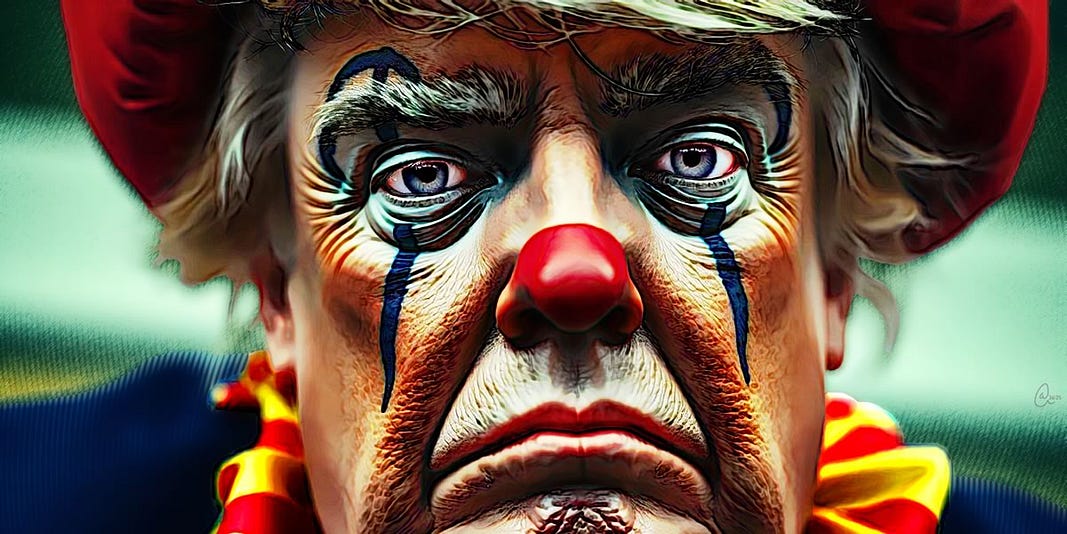
Is there such a thing as Trump Derangement Syndrome?

This post is a response to a question posed in its complete format: “Generally, do anti-Trumpers think there is such a thing as Trump derangement syndrome, or do they see it as merely a criticism of them?”

Generally, people who refer to other people as “anti-Trumpers” while behaving as if “TDS” is a legitimate diagnosis are struggling to compensate for their slipping grasp on reality.

“TDS,” for example, is a dialectical device for dismissing uncomfortable information about someone’s object of unconditional worship.

It is “BDS” for a new president. It was first concocted as a way to ignore arguments against the Bush administration and their lies to initiate two wars with two different countries under the auspices of getting revenge on a terrorist attack.

None of the people who hurled the nonsense accusation of “BDS” wanted to believe the Bush administration had lied to them. None of them wanted to acknowledge the family feud origins driving two illegal wars while conducting war crimes when confronted by the facts of the Bin Laden and Bush histories.

None of them wanted to acknowledge the hypocrisy of a president who gave up looking for the terrorist responsible for the attack on 9/11.

At every step of the way and with every criticism of a grossly incompetent and abysmally amoral leadership that treated the soldiers who spilled blood on their behalf like disposable garbage, they cried out, “BDS! You’ve got BDS!” Hoping that would be the end of the resistance to their corruption.

They’re doing the same thing again with “TDS” by repurposing a conversation terminator that can allow them to wriggle away from the consequences of their corrupt behaviours.

They’ve also concocted another means by which they can achieve their divisive betrayal of the nation by reducing the conflict to a team sport where the opposing sides are merely cheerleaders for equal and opposite ideologies.

That’s already a betrayal of the social contract and everything decent about a nation that claims to value freedom and democracy.

These people never shut up about freedoms like freedom of speech, yet every one of their behaviours is the antithesis of what they claim to value.

They are worse than traitors to the nation. They are a toxic disease that represents a threat to human civilization.

They are worse than intransigent children because they cannot reason, will not reason, and will lie and accuse their way out of responsibility for the consequences of their destructive actions.

They are worse than cult members because they are not content with remaining in their space and living their lives in peace while allowing the rest of the world to enjoy the same courtesy.

They are a disease, a scourge that will not stop until they rule the whole of humanity.

They have existed for centuries, and now, they are impossible to ignore. They have become impossible to compartmentalize within geographical boundaries. They have become impossible to allow us to lie to ourselves that we are not all touched on some level by centuries of generational CPTSD.

We cannot ignore that these are not people “over there” but are our families, neighbours, and fellow country people. These are people who represent the one-in-five among us who suffer from severe psychological dysfunctionalities.

We cannot ignore how we cannot win this war through aggression but by changing how we live and how we structure our societies.

We can only survive this war by addressing all the elements contributing to this evil’s metastasis.

We can learn from history, pay attention to the same signs screaming for our attention, and stop creating excuses for why some things we value cannot be questioned.

We must be open-minded enough to acknowledge how much of what we take for granted as acceptable should no longer be tolerated.

We can no longer allow unchecked power to corrupt our systems and destroy their fundamental characteristics, ensuring their survival and capacity to meet our needs.

We must restore trust in ourselves as people living together in a civilized society and the systems we live by. However, we can’t do that by allowing the enemies of society to smear everything with a misanthropic haze of false equivalences.

We must draw lines in the sand when determining what is and isn’t acceptable and hold everyone accountable on an equal footing. We can no longer permit two sets of laws and rules for two classes of people.

Liberty, equality, and fraternity must be true for everyone, or we may as well allow ourselves to descend into the grave of barbarism as we write our final writ to the stars that care not whether we live or die.

How is dissent the foundation of democracy?

This post is a response to a question initially posed on Quora, and can also be accessed via “https://www.quora.com/How-is-dissent-the-foundation-of-democracy/answer/Antonio-Amaral-1

  1. The opposite of dissent is subordination.
  2. Subordination is the foundation for authoritarian regimes.
  3. Authoritarian regimes are rigidly hierarchical.
  4. Rigid hierarchies are inflexible and abusive toward all people downward in the power hierarchy.
  5. Authoritarian regimes eventually break because humans have limits on the abuses they can tolerate.
  6. Democracies survive because they are fundamentally adaptable to change.
  7. Democracies are fundamentally adaptable to change because they accommodate individuality.
  8. Individuality empowers self-determination to maximize flexibility and adaptability.
  9. Flexibility and adaptability are contingent upon responsiveness to succeed.
  10. Responsiveness demands input and engagement from diverse perspectives to be effective.
  11. Dissent filters out ineffective processes that inhibit adaptability.
  12. Navigating change requires dissent to ensure that adaptation initiatives succeed.
  13. Without dissent, changes are made blindly to make adaptability impossible and guarantee failure.

Hence, dissent is the foundation of a democracy.

Furthermore, embracing dissent improves all of us, particularly in the essential skills area of critical thinking.

The greater our embrace of dissent, the better our thinking skills become.

The better our thinking skills become, the more robust our democracy.

Democracies are being threatened worldwide because we have been failing to equip citizens with the skills they need to build a better world together.

We have been failing to equip our citizens because arrogant assholes with too much of a desire for power wish to reduce citizen efficacy in self-governance systems because they deem themselves superior humans entitled to their power and to lord over the little people.

It’s past time they begin to relearn their lessons in humility.

What does the left mean by freedom?

This post is a response to a question posed in its complete format: “What does the left mean by freedom? When ever I see lefties passing around rankings of the “freeist” countries, inevitably the countries at the top are the type with heavy regulation, heavy taxation, low economic freedom.”

One of the hallmarks of a lack of freedom is ideological thinking that colours one’s perceptions in ways that interfere with one’s apprehension of reality to impede one’s critical thinking skills.

For example, the flawed presumption in this question presumes higher taxation equals less economic freedom when the obvious comparison between the U.S.’s health exploitation system is far more destructive to one’s financial freedom than the taxed version of universal health care offered by every other nation that has succeeded in providing higher quality care at a lower price.

There is no economic freedom when medical bankruptcies destroy lives.

There is no economic freedom for people who pay over one thousand dollars per month for insulin when the rest of the world pays only tens of dollars.

There is no freedom when one is murdered for profit.

There is no cognitive freedom for anyone who divides the world into ideological camps, just as there is no freedom from the mind-destroying forms of bigotry polluting this world.

Within the context of this question, the definition of freedom that addresses it is clarity of thinking, in which the querent proves their mind is so trapped within a toxic paradigm they can’t understand freedom when it’s presented to them in the most unambiguous of terms.

I fully expect this answer to whoosh past the querent’s mind and trigger them into an ideological quandary where they will dismiss these words as an ideological irrelevancy in much the same way that the people who think Donald Trump is an intelligent man are utter idiots.

Do laws, traditions, and social edicts introduce/produce more or less freedom?


This post is a response to a question initially posed on Quora, and can also be accessed via “https://www.quora.com/Do-laws-traditions-social-edicts-introduce-produce-more-or-less-freedom/answer/Antonio-Amaral-1

This is a leading question. Lumping all “social expectations” into a “freedom bag” produces only “freedumb” — the inability to distinguish between regulating destructive behaviour and encouraging positive behaviour to support the social contract.

Laws against murder can conceivably be considered restrictions on freedom, but they’re also a means of protecting freedom for the victims of predators in society.

There is no universal single-size-fits-all means of parsing this question. It’s just a nonsense question designed to appeal to those who already perceive society as children complaining about having to clean their rooms.

Here’s a counter-intuitive example for people who don’t quite understand the nuances of laws and social expectations.

It can be argued that in a Mad Max dystopia, one has the greatest “amount of freedom” possible because there are no such “restrictions” (parameters) as those in a world where anything goes. The harsh reality in such a case is that what constitutes freedom for some (the powerful) constitutes enslavement for the rest of “society” to a persistent fear of having one’s life snuffed out on a whim.

Sometimes, restrictions produce greater freedoms than would otherwise be the case.

In the art world, for example, the greatest creativity can be produced simply by putting parameters on one’s work and approach to doing one’s work. In a personal case, I restricted my palette to black and white for about half of a semester after being told by an instructor that my colours looked like Disney had barfed them up and onto my canvas.

I struggled with colour and all the many nuances of colour, so I had not developed the nuance of understanding how colours work in balance, just as shapes do in a composition. Removing colour from my palette allowed me to focus on developing harmonies between shapes and finding ways to establish compositional balance without the added complexity of colour as a dimension to throw me off.

That restriction allowed me to understand my work from an entirely different and much more free perspective. I discovered freedoms I did not know existed before my self-imposed colour restrictions.

Society is much like that because it has become so complex it’s difficult to parse which aspect is beneficial and which is toxic. We can no longer live with the simplistic view of the world we once nurtured through symbologies like a difference between white hats and black hats. We live in a world of anti-heroes, and that makes demands on our ability to apprehend nuance through developing critical thinking skills. We must learn to be capable of adequately parsing subtle distinctions that can threaten to transform freedom into subjugation within the slimmest of margins.

People find the freedom to be themselves within their tribal associations but can also find their freedoms stripped by the dogmatic application of tribal expectations.

Another example I’ll take from Isaac Asimov’s Foundation series (which I applied — or interpreted as Japan in the 1980s) was the planet Terminus. Hari Seldon’s group was consigned to a planet that was slim on resources to mitigate the potentiality of becoming a threat. Instead, what happened was that scarcity of resources encouraged their creativity such that over time, they produced faster and more powerful ships that were smaller than the Empire’s massive vehicles.

This means that freedom cannot be measured by its constraints but by the results of the limitations (or parameters) placed upon a society. Those constraints can facilitate freedom when they are balanced between the needs of the many and the individual’s desires.

The mythological free society in a harmonious state of anarchy is a pipe dream founded upon a delusional presumption that all humans value the social good above one’s benefit.

The U.S. is a case study for the ages over just how toxic extreme individualism is. For a nation that pretends to value freedom, its privatized prison population screams to the world how subjugated and servile its society is. The U.S. is so “free” that they allow children to be gunned down in schools, not just once but repeatedly. The U.S. is so “free” that people are killed for profit.

A football game with rules is a dynamic tension that draws engagement from an audience, while football without rules, for example, becomes a chaotic bloodbath that disperses an audience.

This question is a testament to how badly butchered the concept of freedom has become within this modern dystopia.

Perhaps this question should be reworded as “What is freedom?”


Bonus Question and Answer: To regulate and control human behaviour, what do you understand by that?

I understand that too many people think a valid strategy for accomplishing this is imposition and subordination to power under the threat of subjugation.

The positive, proactive, and ultimately democratic means of accomplishing the goals of regulation and control are through the development of a human capacity for self-regulation by encouraging the improvement of emotional management skills bolstered by critical thinking skills while addressing fundamental threats to personhood such as living insecurities and forms of persecution through the repression of rights and freedoms.

Showing people how to achieve their potential is a far more effective means of proactive regulation than the barbarism of reactionary punitive measures. This approach also leads to far more long-term stability in society and a much more engaged citizenry actively working toward supporting the social contract by choice.

We can achieve our potential as a species only by helping all of us to be better rather than forcing conformity to myopic structures made vulnerable by their inflexibility and inability to adapt to an ever-changing universe.


Happy New Year! — Here’s hoping your 2025 is a good one. Thanks for reading.

Why would it be possible to live without the government?

This post is a response to a question initially posed on Quora and can also be accessed via “Why would it be possible for people to live without the government?”

It’s not.

Without government, we would barely survive while struggling with anarchy and doing our best to avoid the bullies among us who would have free reign to terrorize anyone they please.

Life would be cheaper than it is now. Justice would be non-existent, and perversions of it would be meted out by force and without any form of protection for anyone without the power to dominate others.

Virtually all scientific and technological progress would halt. If government ceased to exist from this point forward, we would be facing a nuclear holocaust through much of the world as centuries-long enemies would no longer be restrained from indulging in their worst fear impulses. The mid-East would essentially be vaporized and rendered uninhabitable for the next century. India and Pakistan would decimate each other. Much of Eastern Europe would be bombed into rubble. China would decimate its neighbours and indulge in its most significant expansion across the globe… or it could fall apart into factions ruled by powerful interests within the nation whose infighting would also collapse the country and leave it vulnerable to external aggressors seeking revenge.

Whatever may exist of what you call home would have to be protected by traps and a twenty-four-hour armed security detail. You would sleep in shifts.

Your environment would be like living in a perpetual purge. That would likely last until we’ve culled most of our species and our numbers shrink from eight billion to a few hundred million within a few years at the outset.

Once we’ve burned ourselves out from a pent-up violence orgy, we’d start seeing primitive tribal infrastructures negotiating arrangements to secure our survival as a species. At the same time, we would find ourselves living in an entirely hostile world as we experience ecological collapse all around us from our careless mismanagement of the environment ramped up into overdrive from global conflicts.

We would make the world of the Mad Max mythos manifest and find ourselves severely humbled as a species.

As much as people may hate government and as much as many criticisms are justifiable, we need government for the simple reason that the one in five who currently manifest the mental health pandemic we’re living with is a perpetual threat to human existence.

Once we succeed at reaching a point of optimal mental health where we have overcome our psychoses, human society may evolve to a degree where government is as much an automated system as the rest of the industrialized world promises to be.

Until then, our best bet is to become more engaged in our self-governance as a collection of democratic societies — which, at this point, means “taking our government’s back” — out of the hands of the few with too much power and back into the hands of all of us.

Humanity’s worst threats have always been the few with too much power victimizing the many with too little power. This is why democracy was born and has dominated the landscape over the last century.

Sadly, those with too much power in today’s world hate it and are actively undermining it to send us all back to a medieval state of existence as a two-class society of rulers and serfs.

As much as many people may wish to mock democracy as a fundamentally flawed system while pointing out the advantages of an autocratic system, the reality is that we have never truly committed to making democracy work. If we had, we would do the necessary thing — equip everyone with the education, skills, and insights required to make proper decisions reflecting what’s best for all of us.

This last American election showed us that people are still trapped within the paradigm of what’s best for them personally in a zero-sum game that necessitates the existence of losers to support the winners.

The solution to our problems is not eradicating what we struggle with but fixing where we fail to make it work. That means improving our education systems by learning to value education on a level as if our lives depend upon it because they do.

Is the defeat of the Democrats a spectacular failure of the left?

This post is a response to a question posed in its complete format: “Is the defeat of the democrats an example of what Stephen Fry call the spectacular failure of the left?”

No. It’s a stark warning to the people of how utterly corrupt the corporatocracy is.

Fifty years ago, a menace like Trump would have been laughed off the stage long ago. He would not have made it past the primaries in his first election.

Grab ’em by the pussy.” would have been the end of his political career precisely because the Fourth Estate took their responsibility to inform the people seriously enough to challenge him on his policies, his character, and his platform.

They gave him a pass on every ugly thing he said and did while demonstrating double standards applied to every candidate he ran against in all three elections he campaigned for.

They complained about Harris’ complete platform and well-thought-out policy initiatives as being too vague while Donald Trump talked about another man’s penis.

They overlooked Project 2025 and let Trump run roughshod over everyone and everything without so much as a peep. A few talking heads indulged in performative outrage at most, but all those people were marginal media entities. No one who was a significant personality challenged Trump’s horrendous behaviour in any substantive way.

This election and every election that Trump participated in is a scathing indictment of the corporate-owned media and a solid argument to break up the media monopoly that’s responsible for massaging the citizenry’s perceptions into a stupor that will set the world on fire.

He’s not fit to be president, but the people who refuse to see are incapable of exercising their judgment with any form of objective clarity because they’re all members of a cult that has been conditioned to perceive this atrocity as a win. They will need to experience the shocking effect of hitting rock bottom, like every addict, before they can awaken to the horror of their blind choices.

Every Republican woman who gets raped will learn to understand hatred on levels far beyond their current imagination.

Every Republican voter who finds themselves facing medical bankruptcy or the loss of a family member due to being denied healthcare will now have reason to regret their choice on a supremely visceral level.

Every single one of these people will become a ticking time bomb.

School shootings will continue and likely escalate.

Violence will escalate, and the media will benefit from it.

People will turn to the government for support, and they’ll find it’s been wholly repopulated with Trump sycophants, and they’ll get the bird they flipped against the “librulz” they’ve been taught to hate so much.

This era will become even more significant to American history than the McCarthy era in terms of a nationwide fervour that tears it apart.

… and the media will benefit from it.

What are the most concerning threats to free speech today?

This post is a response to a question posed in its full format as follows: “What are the most concerning threats to free speech and open discourse in Western democracies today?”

The people currently scaremongering that free speech is under threat are the most concerning threats to free speech and open discourse in democracies today.

People like Elon Musk, who declare themselves “free speech absolutists” and then ban them from posting on a public forum because they’ve either personally offended him with their speech or they’ve raised too much money to support a candidate he doesn’t support.

People like Donald Trump are also a threat to free speech while claiming to be a champion as he issues threats to media empires like ABC for not kowtowing to his abusive behaviour during a debate or his vow to shut down late-night comedians who mock him and his cartoonish stupidity.

Freedom of speech is healthy and under no threat by any operating democracy in the world, not even in a corporatocracy like the U.S. is freedom of speech under any imminent threat — beyond that posed by the aforementioned predators.

The people who whine the loudest about threats to their freedom of speech are mostly the cancel culture crowd who interpret freedom of speech as a right to be listened to.

You can say whatever you want, but no one is obligated to listen. That’s the fundamental reality of speech in society in general. The freedom part applies only to a government’s ability to not threaten people for saying stuff that gets under the skin of some power-hungry official — like Trump. If he’s elected, then freedom of speech will most definitely be under a severe assault — although no MAGA believes that. They will if he wins. Then they’ll complain like the regretful Brexiteers in England.

“But… But… But… he’s not hurting the people we want him to hurt. He’s hurting us, too!!! He didn’t tell us he was going to make our lives miserable. He only promised we wouldn’t have to vote any longer. We thought that meant freedom!!!”

Nope… that’s “freedumb,” and say goodbye to your right to speak your mind.

In short, the people who claim to be the most fervent defenders of “free speech” are the people who pose the greatest threat to “free speech.”

I know… that’s effed up, ain’t it… but that’s the Bizarro world we live in… ours happens to be round… or possibly flat.

Explaining “My Freedom Ends When the Freedom of Others Begins”

It means everyone is free to be who they are and to do what they choose as long as they do not infringe on the freedoms of others.

It means “freedom” is not a licence to abuse others or violate the freedoms of others.

It means religious people do not get to dictate how other people choose to live their lives, and that includes the freedom to seek a remedy to a medical condition without suffering from subjectively applied restraints or conditions by others.

It means freedom from religious persecution and the freedom to practice one’s religion without persecution for one’s personal choices.

It means the right to self-determination and bodily autonomy without restriction.

It does not mean the freedom to impose one’s views onto others because that violates their freedoms.

It does not mean the freedom to abuse others because that violates their freedoms.

It does not mean the institution of laws to dictate the personal choices of others because that violates their freedoms.

It means do whatever you want to do, think whatever you want, and believe whatever you want, but don’t be an asshole to others about it.

It means “The Golden Rule” — “Do unto others as you would have them do unto you.”

It means reciprocity — treat others as you want to be treated, but if you’re a masochist who wants to suffer, it does not mean that you have an excuse to indulge in sadistic behaviours toward others.

It means trying to be a decent human being toward other people. It means trying to respect their identical right to be who they are and to do what they want to do, think, and believe without having to endure your assaults.

It means learning to respect other people’s boundaries.

Freedom means developing empathy, compassion, and sensitivity toward others.

It means freedom isn’t free. Freedom comes with boundaries and at the cost of eternal vigilance.