Are human rights natural rights endowed simply by the virtue of being human?


This post is a response to a question initially posed on Quora.

Human rights are essentially an agreement between humans to protect a characteristic or behaviour of all humans within their community.

Human rights exist only by virtue of the agreement itself and the degree of commitment by other humans to protect those rights.

This is a global issue, with human rights being violated all the time and everywhere on the planet. It’s a problem that demands our immediate attention and action. This is why human rights are violated all the time and everywhere on the earth.

We have far too many humans who view rights as scalable according to their essentially misanthropic perceptions of humanity — because we are suffering from a mental health pandemic affecting at least one in five among us. We are only now beginning to realize that we are a species that has been suffering for centuries from generational trauma from our barbaric origins.

The fight for universal human rights is a fundamental building block in a healing process that will require centuries to emerge from.

We are far better off today than we were one century ago simply because of our increased awareness of the issues we are dealing with and an emerging appropriate context from which we interpret our experiences.

Human rights are crucial to preserving the social contract and ensuring systemic stability.

Without human rights as a concept enshrined into law, we descend into barbarism.


After writing this answer and posting it, I realize I’m doing a disservice to the concept by providing such little context.

Human rights have a long and bloody history of development in which their inklings as concepts we should value as a species were responses to centuries of brutal violence characterizing human life.

The earliest examples of human rights enshrined in local laws date back to circa 2350 BC in Asia as the reforms of “Urukagina of Lagash,” which evolved into more well-known examples of legal documentation such as “The Code of Hammurabi” from circa 1780 BC.

Ancient Egypt also supported fundamental human rights through documents such as “The Edicts of Ashoka” (c. 268–232 BC). Other principles of human behaviour emerged during this period, while one such principle has been incorporated throughout most living religions today and is popularly known as “The Golden Rule.”

Fast forward to 622, and “The Constitution of Medina” functioned as a formal agreement between Muhammad and the tribes and families of Yathribe, which included Muslims, Jews, and pagans. This agreement was an early means of uniting all peoples of the land under a common identity referred to as “Ummah” and incorporated several changes to how slavery was defined and limited.

Early Islamic laws from this period incorporated principles of military conduct and the treatment of prisoners of war that became precursors to international humanitarian law.

Moving forward into the Middle Ages, the most influential document establishing the modern basis for human rights was the creation of the “Magna Carta,” itself heavily influenced by early Christian thinkers such as St Hilary of Poitiers, St Ambrose, and St Augustine.

The Magna Carta of 1215 influenced the development of “common law” and several constitutional documents following, all related to human rights, including the (1689) “English Bill of Rights” and the (1789) United States Constitution.

Some may remember from the Iraq War and the establishment of Guantanamo that the Bush administration suspended the writ of “Habeas Corpus” — the right to know what one has been accused of — was a right established in the Magna Carta. This was a fundamental violation of a basic right that set the nation back in time to an era of barbarism — and they hypocritically leveraged that violation to commit war crimes for waterboarding that the U.S. itself forced Japan to face an international tribunal for war crimes over the same behaviour decades earlier.

This is a stain on the American people that will not wash off their conscience while they do nothing to own responsibility for their grotesque violation. This dark moral failing of the nation has become a slippery slope of moral failures permitting the monstrosity of immoral behaviour. We — as in the world- are now on the verge of potentially falling entirely into a pit of immorality because of their “leadership” in this area.

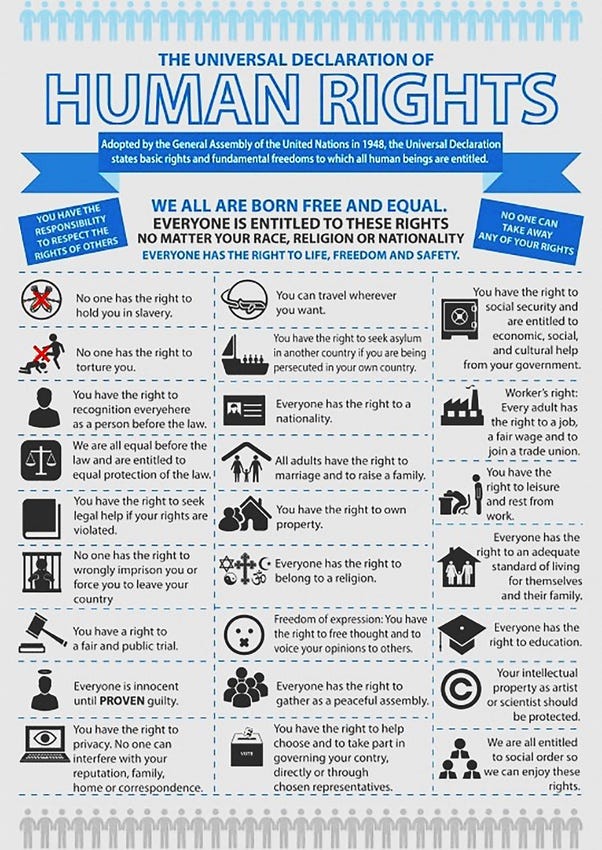
At any rate, I’ll avoid proselytizing further and get to the goods of reading material and a “pretty picture” at the end with a chart of the Universal Declaration of Human Rights:

Human rights — Wikipedia

History of human rights — Wikipedia

A Short History of Human Rights

A brief history of human rights — Amnesty International

Universal Declaration of Human Rights | United Nations
How to Restore, Strengthen and Preserve a Democracy

Democracies are strengthened by the degree of engagement by the people. The more people become informed, engaged with, and involved with their government and its activities, the more secure the democracy.

A disengaged and apathetic citizenry makes a government susceptible to corruption.

Restoring and reinforcing the stability of democracy begins in the classroom with a comprehensive civics-oriented strategy for equipping students with the skills and insights to achieve success in effective governance and their personal lives.

As it turns out, the overlap in skills for effective governance and success in one’s personal life are represented as an almost clean circle in a Venn diagram.

The range of interpersonal skills one can and should develop are core competencies for life. Communication skills, negotiation skills, and conflict resolution skills are all universally valuable skills. Developing competencies in areas like Robert’s Rules of Order and understanding the nature and process of effective legislation (rules to live by) may be more niche but are transferable skills that can be applied in other areas of life, particularly when they’re not considered obscure skills by a majority like they are now.

The more people who know how to declare a point of order, the fewer conflicts could escalate into violence.

Of course, the development of logic and critical thinking skills should be included in the curriculum, if not as courses but as strategies for delivering an existing course load.

Applying critical thinking skills development within a history class, for example, would increase student engagement simply by structuring the information delivery process through a means that challenges one’s thinking skills.

On an entirely different and equally crucial level is the reinforcement of a commitment to the role of the Fourth Estate in society. The profit motive must be removed to protect objectivity in the information delivery process, ensuring the public is adequately informed of relevant news in the most agnostic way possible.

Breaking corporate media into community-based employee co-ops will create a culture of checks and balances that approach the self-regulating effectiveness of the peer review process within the scientific community.

The election process is another area that must be made as agnostic as possible. Removing the undue influence of money in elections and reducing the tribalism of the currently corrosive culture in politics is critical to mitigating ideological bias. First-past-the-post elections should be replaced with proportional representation and ranked-choice voting.

With these measures, an exceptionally stable democracy can emerge on level ground with inbuilt resistance to corruption.

Leon Wieseltier — Quote on Democracy

Why is there so much civil unrest and more expected in the UK?


Civil Unrest and Its Expected Growth

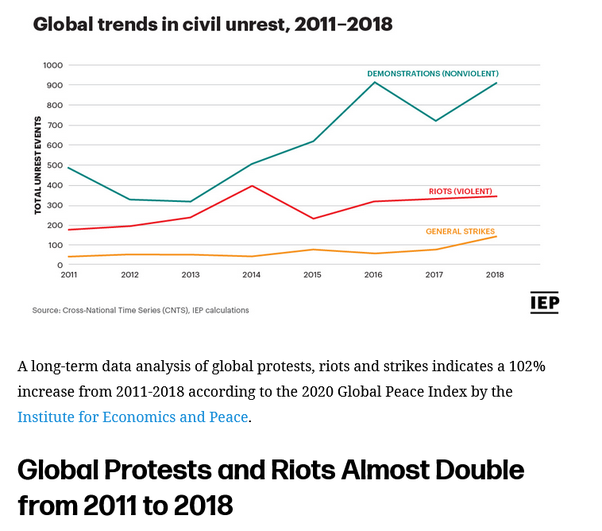
It’s not just the UK. There has been a trend toward increasing civil unrest around the world.

Global Growth Trends in Civil Unrest

Global Protests and Riots Almost Double from 2011 to 2018

Institute for Economics & Peace | Experts in Peace, Conflict and Risk

The Institute for Economics and Peace provides an in-depth analysis of civil unrest in the UK specifically through the .pdf available from the link below:

Note from this quote a clue as to the causes of civil unrest:

The UK has become less peaceful in the last decade. Peacefulness in the UK deteriorated by almost 11 percent in 2022, the most recent year of measurement. This is the eighth deterioration in peacefulness in the last decade and the first since 2020. Fifty-eight Police Force Areas (PFA) deteriorated, while eight improved. This is the largest number of PFAs to deteriorate since 2018.

Of the five UKPI indicators, homicide was the only one to improve, while the remaining four — violent crime, weapons crime, police officers, public disorder — deteriorated

This suggests the aggravating factors for civil unrest do not lie within social dynamics among the population but an overall level of dissatisfaction with systems failing to meet the needs of the people.

Sadly, the propensity for ignoring causes and treating symptoms has exacerbated the problems as police have increasingly adopted militaristic policies for “serving and protecting” the public.

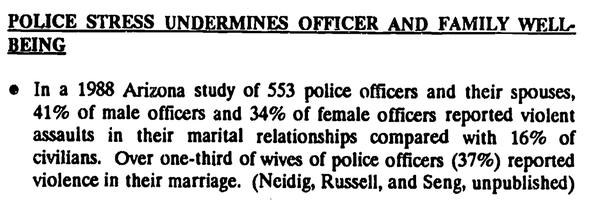
The militarization of the police has made this phenomenon worse, not better and they’ve been allowed to evolve in a counter-productive strategy that fails on every front from inciting civil unrest to increasing incidents of their wrongdoing as police are responsible for up to 40% of all domestic violence incidents.

Police Stress Results in 40% Involved in Personal Domestic Violence Incidents
Police Stress Results in Alcohol Dependency Issues

The strategy of militarization of the police has turned them into a terrorist organization for many citizens. This is a consequence of conservative politics because imposition is the only language they understand.


Here is a summary provided by Chat GPT on social events in which Police catalyzed riots as a consequence of their inept approach to conflict de-escalation (from a U.S. perspective):

Numerous social events throughout history have seen police actions catalyzing riots. Here are some notable instances:

1. 1965 Watts Riots (Los Angeles, California):

Trigger: The arrest of Marquette Frye, a black motorist, by a white California Highway Patrol officer.

Outcome: Six days of rioting, resulting in 34 deaths, over 1,000 injuries, and extensive property damage.

2. 1967 Newark Riots (Newark, New Jersey):

Trigger: The arrest and beating of John Smith, a black cab driver, by white police officers.

Outcome: Six days of rioting, 26 deaths, hundreds of injuries, and widespread destruction.

3. 1967 Detroit Riots (Detroit, Michigan):

Trigger: A police raid on an unlicensed bar, or “blind pig,” in a predominantly black neighbourhood.

Outcome: Five days of rioting, 43 deaths, over 1,000 injuries, and significant property damage.

4. 1968 Chicago Riots (Chicago, Illinois):

Trigger: The assassination of Dr. Martin Luther King Jr., followed by police actions during protests.

Outcome: Several days of rioting, 11 deaths, numerous injuries, and extensive property damage.

5. 1980 Miami Riots (Miami, Florida):

Trigger: The acquittal of four white police officers in the beating death of Arthur McDuffie, a black motorcyclist.

Outcome: Several days of rioting, 18 deaths, numerous injuries, and extensive property damage.

6. 1992 Los Angeles Riots (Los Angeles, California):

Trigger: The acquittal of four LAPD officers in the videotaped beating of Rodney King, a black motorist.

Outcome: Six days of rioting, 63 deaths, over 2,000 injuries, and widespread destruction.

7. 2001 Cincinnati Riots (Cincinnati, Ohio):

Trigger: The police shooting of Timothy Thomas, an unarmed black teenager.

Outcome: Several days of rioting, resulted in injuries and significant property damage.

8. 2014 Ferguson Unrest (Ferguson, Missouri):

Trigger: The police shooting of Michael Brown, an unarmed black teenager, by a white police officer.

Outcome: Weeks of protests and riots, resulting in injuries, arrests, and property damage.

9. 2015 Baltimore Protests (Baltimore, Maryland):

Trigger: The death of Freddie Gray in police custody.

Outcome: Several days of protests and rioting, resulted in injuries, arrests, and property damage.

10. 2020 George Floyd Protests (Nationwide, USA):

Trigger: The police killing of George Floyd, an unarmed black man, by a white police officer in Minneapolis.

Outcome: Protests and riots across numerous cities in the U.S., resulting in deaths, injuries, and significant property damage.

These events highlight the recurring issue of police actions triggering significant social unrest, often reflecting deeper systemic issues within society.


Imposition is conflict escalation NOT conflict resolution.

Although the militarization of the police is entirely the wrong way to go in addressing social unrest, they are a symptom of resolvable political problems beginning with the short-sighted views of conservative politicians who interpret every problem as a nail because they have learned only how to wield a hammer.

Nuance escapes them.

The patience required to facilitate peaceful resolutions runs contrary to a profit-oriented mindset that equates time spent with lost dollars.

The core problem is also exacerbated by their sycophantic support of the conditions that led to last century’s Great Depression and were responsible for triggering the Second World War. We are watching those conditions and their consequences replaying themselves right now in real-time with the horrifying implications inherent within the corrupt American system.
No nation is immune to the impact of economic distortions feeding despair among the public.
The core problem catalyzing the increase in civil unrest is economic by nature.

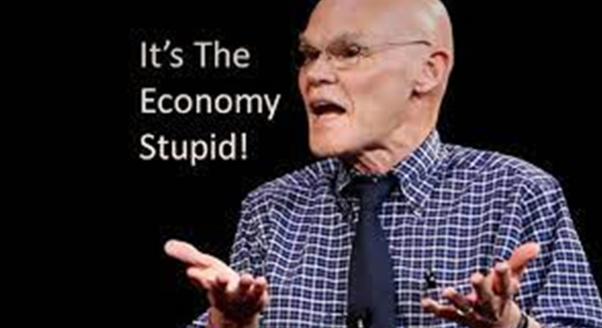
It’s the Economy, Stupid!

The core problem feeding the despair driving otherwise peaceful citizens into extreme action is the economic distortion corroding the basic patience, tolerance, and decency of otherwise peaceful people who want only to live modestly dignified lives but cannot because we have all been robbed of trillions in a class warfare that seeks to resurrect a facsimile of governance resembling a medieval caste system of two classes of people; rulers and serfs.
Middle Class Wealth Vanishing

This trajectory is unsustainable and will continue to feed unrest.

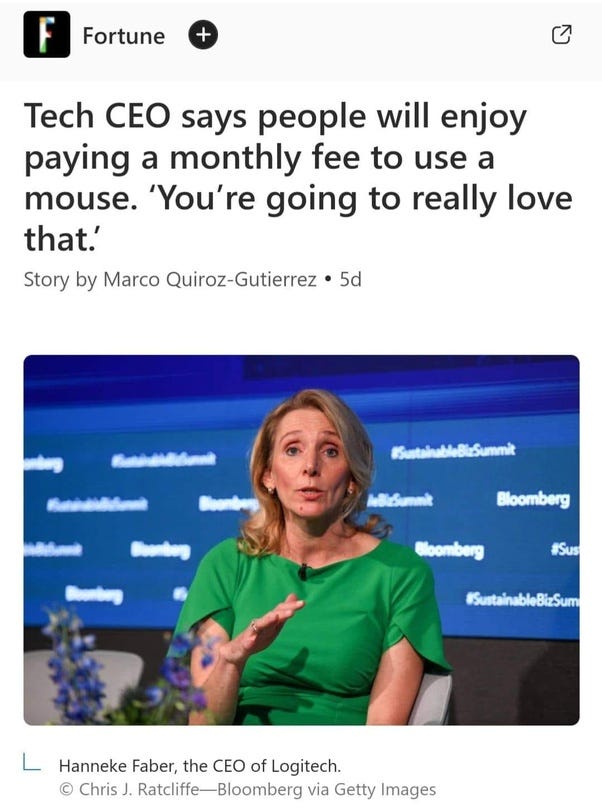
Profit-Driven Corporate Sociopathy

This sociopathic profit motive cannot but lead to chaos.

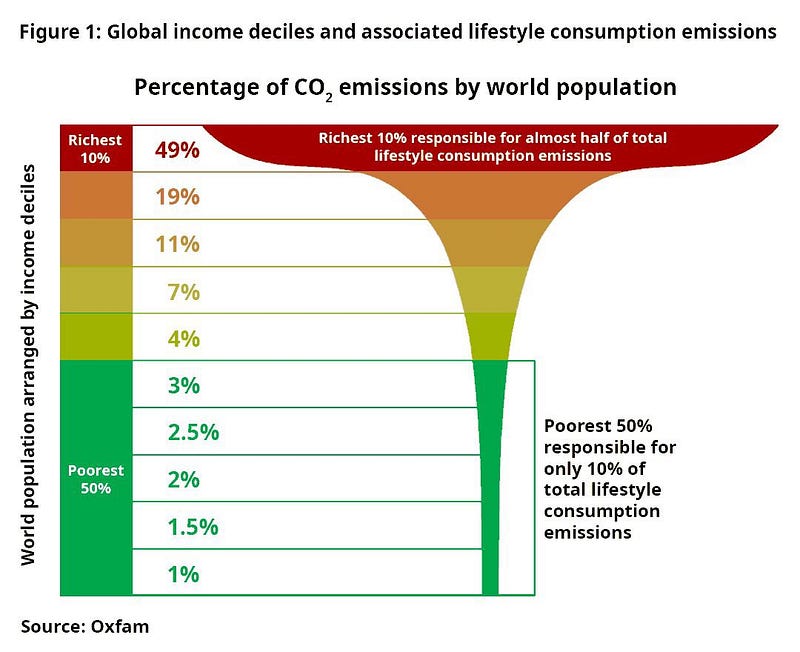
Global CO2 Emissions by Lifestyle

Making matters worse is that the lifestyles of the wealthy class have put humanity on a trajectory toward its extinction.

No one should be surprised by an increase in public unrest.

Things are going to get MUCH uglier before they get better.

The questions we need to address are:
  1. “How many casualties can we tolerate before we come to our senses?”
  2. How much pain and suffering can we stomach before we lose our shit?
  3. How many millions must die due to preventable causes and the behaviours of sociopaths hellbent on destroying this planet will it take before civilization is a chaotic mess of violent insurrections all around the world?
  4. What will it take for the wealthiest among us to show some leadership and help set this ship of humanity onto a path toward a sustainable future?
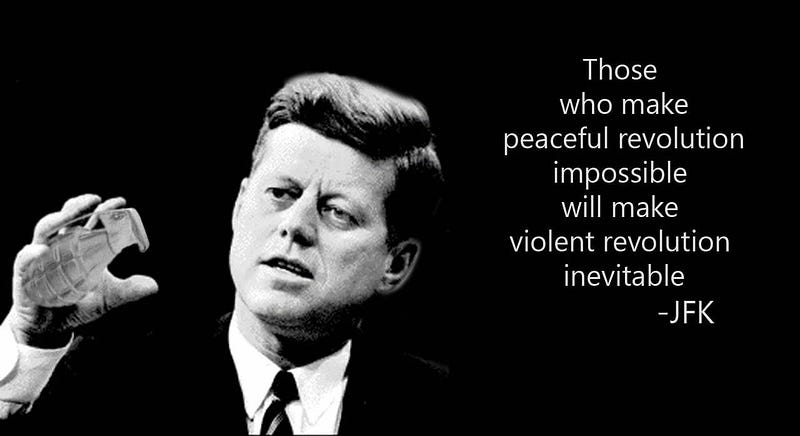
JFK — Those who make peaceful revolution impossible will make violent revolution inevitable.

(This post was an answer to a Question posed on Quora — where all my posts on Medium have originated; hence the personal response indicated within this article. — https://www.quora.com/profile/Antonio-Amaral-1/ )

Should wealth be more evenly distributed?


Robin Hood Statue

No, but yes but no… but yes.

To “distribute wealth more evenly” implies a dictatorial imposition of a narrowly and politically defined sum of what constitutes “evenly.”

There are numerous problems with that strategy that go well beyond not fixing the underlying issues contributing to the corruption of what should be an agnostic system but isn’t due to how it has been corrupted.

This approach not only accomplishes nothing in the way of fixing the underlying issues, which, on that level alone, would create a “rubberband effect” of “snapping economics back to their originally corrupt state,” it would also justify an exacerbation of a centuries-long class warfare that has allowed the corruption of an economic system to take root. IOW. The degree of corruption existing today that has led to historic levels of income injustice would escalate from a cold war into a blazing furnace of vengeance against the little people by the wealthy. Their loss of wealth would be temporary, and they would be motivated by more than greed to rebuild their hoards; they would also be motivated by a desire for retribution.

We should focus instead on adjusting the parameters of a wealth redistribution system like capitalism to ensure wealth flows freely throughout the system rather than collect like plaque in arteries to clog up the entire system with private hoards held by a few whose obscene accruals threaten a system-wide collapse.

We need to establish rules to ensure equitability from a system-wide perspective to make fairness an inherent characteristic of the capitalist system. We need the system to rein in corruption at the top while empowering the middle and enabling the bottom.

If our economic systems were to operate on a holistic and agnostic basis, then success would not be a measure of how much wealth the wealthiest are collecting but how stable the economy is and the degree of economic mobility the system facilitates. We should measure economic success based on how people move out of poverty and into wealth. We should measure economic success on the stability and growth of the middle class. The middle class has always been the engine of the economy, and we must prioritize its health and efficiency to ensure that the entire system is stable.

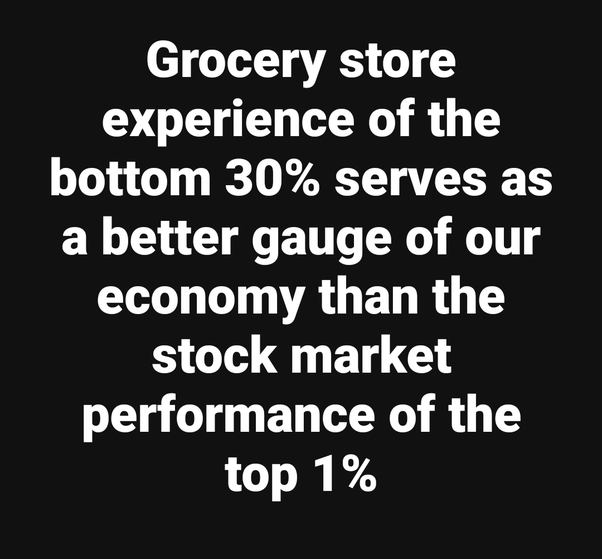
Grocery store experience of bottom 30% serves as a better gauge of our economy than the stock market performance of the top 1%.

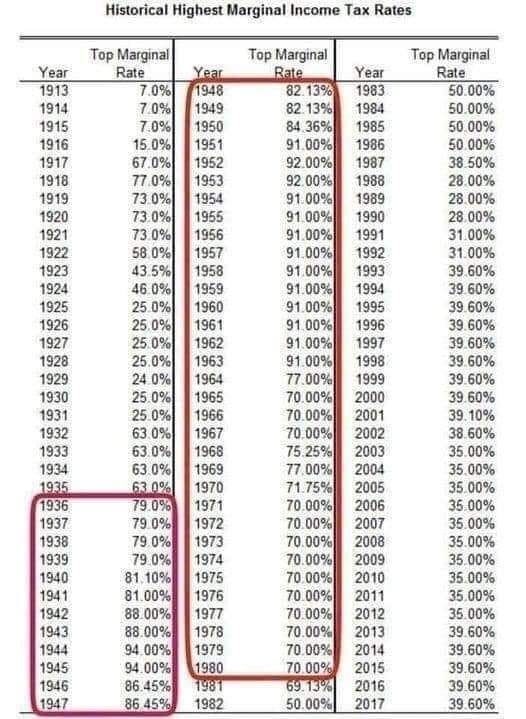
This can be “easily” accomplished (once the political will is established) through a few simple measures. We can begin with the adjustment of tax rates to levels historically proven to spur the greatest economic growth and the greatest growth of a thriving middle class.

Historic Highest Marginal Income Tax Rates

Restoring tax rates to Eisenhower levels incentivizes investments back into companies to hire more staff to minimize a tax burden. It means capital investments into the operation instead of stock buy-backs to boost share value and billionaire hoards.

Restoring tax rates to Eisenhower levels gives the economy a boost of liquidity flowing through the entire system to boost everyone’s well-being while restraining the excesses of greed, which contributes to creating a ruling class through a dynastic acquisition of wealth and political power.

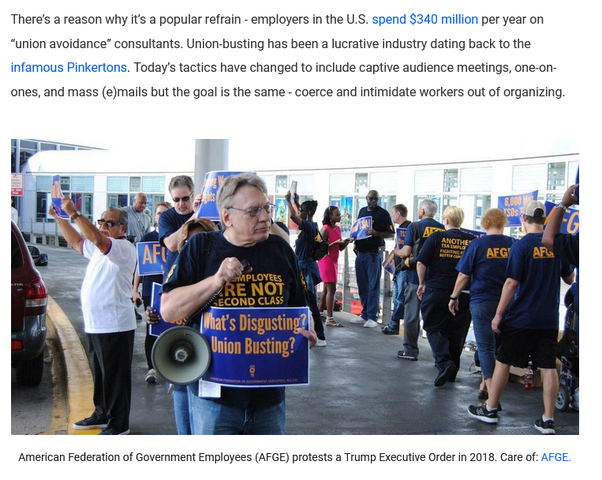
Restoring taxes to sane levels permits the implementation of a universal basic income that mitigates the leverage of wealth in labour negotiations. People will no longer be forced to choose between a depressed wage and basic survival. Since unions are an easy target to attack and disempower, as occurred following Reagan’s example, which led to a strategic initiative by employers to eradicate unions, UBI eliminates that weakness.

Employers in the U.S. spend $340 million per year on “union avoidance” consultants.
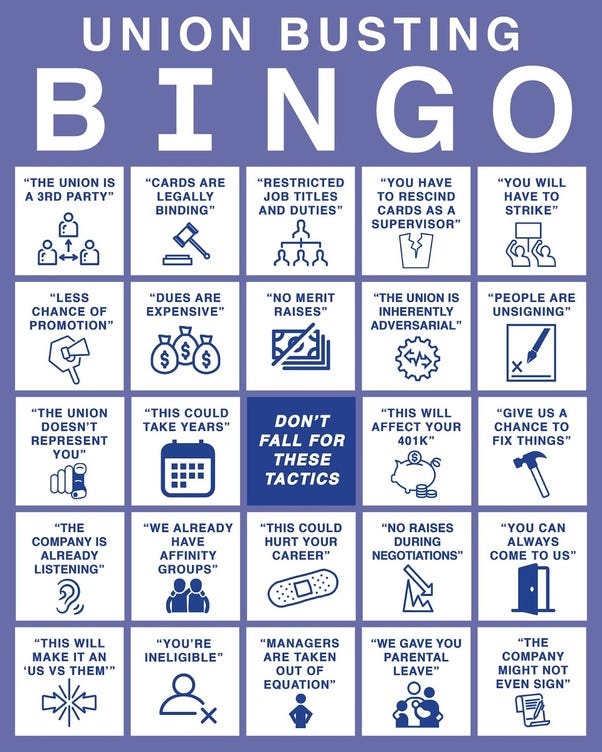
Union Busting Bingo

Union-busting: what to expect and how to respond

A Universal Basic Income provides economic stability for a nation because when a corporation contracts, thousands of jobs are lost, not just a few or dozens. The entire economy is impacted by an exaggerated shrinkage that benefits the wealthy at the expense of the working class.

The boom and bust outcome of a trickle-down economy is intentional because it is during a bust that the wealthiest make their greatest gains by leveraging desperation against people to buy out smaller businesses at fire sale prices.

Restoring tax rates to Eisenhower levels eliminates the boom and bust advantage while UBI insulates the vulnerable from the predatory practices of the wealthy.


The above represents two primary initiatives that would restore equity throughout the economy. These alone are temporary measures subject to reversals, putting us back on this same destructive track we are on.

We must cement fairness into our systems on levels greater than the simple vectors of corporate taxes and employee protections.

We must make fundamental changes to a vulnerable political system which allows the worst of our impulses to dominate political discourse while being manipulated through corrupt media enterprises owned by powerful stakeholders.

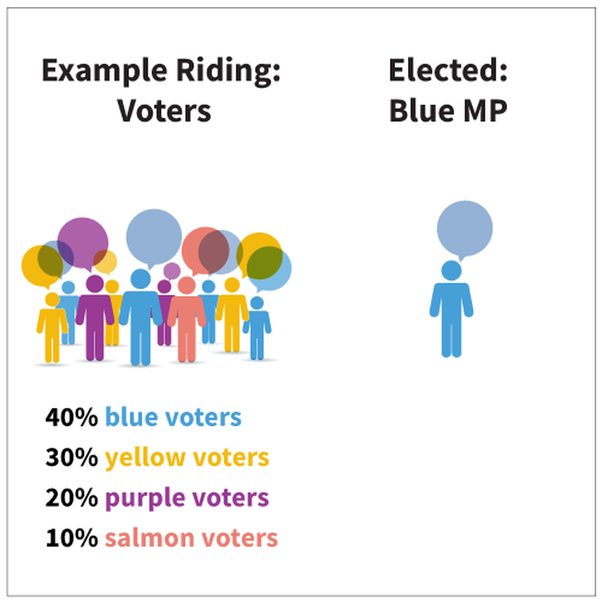
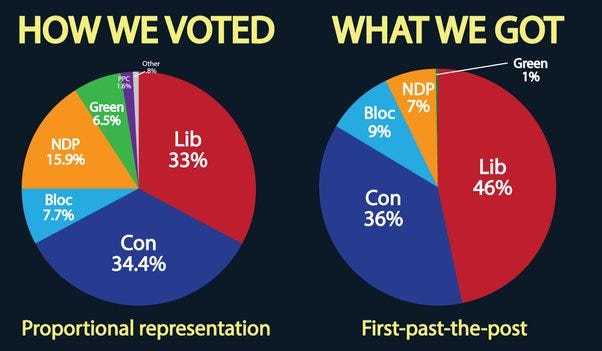
Electoral reform initiatives to eliminate the toxically competitive first-past-the-post elections and replace them with proportional representation and a ranked-choice voting process will eliminate the hegemony of party politics and allow a public to engage on an issue-resolution basis rather than be reduced to a gaggle of high school cheerleaders caught up in tribalist fervour.

This initiative also mitigates the impact of wealth on the election process because it’s much harder to “create a team of tax and revenue manipulators” when “multiple teams” exist in a multiparty system that more accurately reflects the different views and positions of a diverse voting public.

Eliminating private funding from the election process would also protect the political system from corruption. Both initiatives above would transform the entire political process into an agnostic system of representatives who fully represent the diversity of the people’s will.

First-Past-the-Post-Elections shut out most voices from representation to favour the horse race winner.

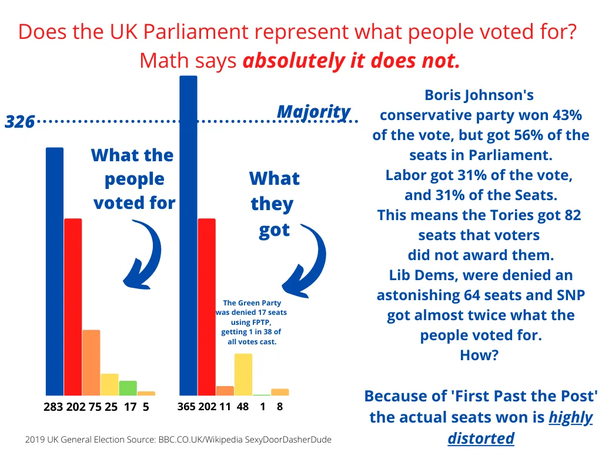
First Past the Post Elections do not represent the public.

Democracy is a government that is supposed to represent the will of ALL the people, not just the horse race-winning team.

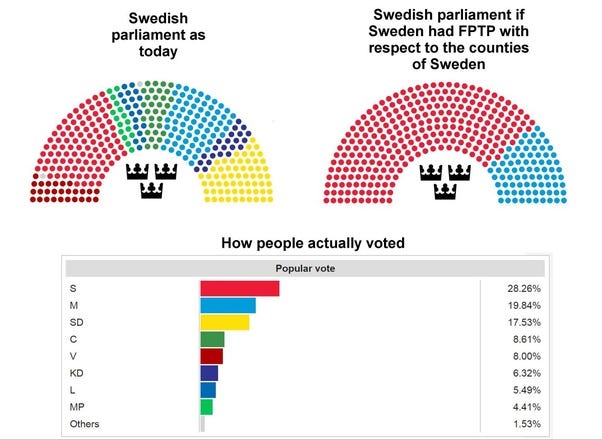
Proportional Representation versus First-past-the-post
U.K. Election First-Past-the-Post versus Proportional Representation
Sweden use Proportional Representation
Swedish Parliament with Proportional Representation

Finally, the most difficult challenge to implement and arguably the most important initiative to protect our world’s democracies from the greatest villains we have ever fought throughout history is to rein in excesses at the top around the globe.

No one needs one billion dollars.

We should not keep breeding generation after generation of entitled people who assume their wealth equates to superior humanity and the right to shape the world in their image. The wealthy class is not comprised of superior beings but flawed humans. They possess too much power at such a degree of disproportion that they can individually tip the scales of humanity’s future toward extinction or utopia.

Guess where they are collectively leading us all today:

Oxfam — Percentage of Global CO2 Emissions by Lifestyle

Why Conservatives Conserve Old American Values

The world is changing ever faster by the year. The natural reaction many people have toward circumstances changing in ways they haven’t been able to process is to resist that change. A large part of the problem contributing toward resistance to change is the perception that things were okay before the proposed changes had been introduced and “pushed onto them”. (People in general, regardless of their political ideology, don’t appreciate feeling like they’ve had their lives dictated to them.)

In the case of gay marriage, for example, many people seemed quite comfortable with their many generations of heterosexual marriage. They didn’t want to see their status quo change because that represents a change to something everyone believes is fundamental to society — family. The notion that a family is not a genetically controlled environment just doesn’t factor into sensibilities which still believe in the “Ozzie and Harriet illusion of family” (even though that symbol hasn’t existed for decades — if ever it did beyond a small segment of society). Changing that image is difficult for some people on a fundamental level because it means changing much about how they perceive the world around them.

Conservatives have the greatest difficulties with such changes because they are naturally predisposed toward conservation — (hence their designation as conservatives). There is certainly some value in preserving aspects of tradition and ideology to facilitate the cultivation of a consistent set of values to strengthen a community. We are at a point in our history where diverse communities across the globe that have been evolving for centuries are now transforming into a singular and global community. Many traditional values are forced into being discarded quickly without permitting conservatives their luxuries of taking the natural amount of time they would otherwise take toward adjusting to change.

Some conservatives can still support notions of slavery and misogyny. It seems clear that some of these views have been entrenched so deeply within the human psyche that we have many centuries of effort ahead of us to cure our society of such destructive attitudes… and because the changes which are occurring across this globe involve cultures which are still currently living in what the developed world regards as barbaric conditions; we have an enormous amount of work to do to resolve the conflicts arising out of the differences in perspectives as expressed by groups whose affiliations range the gamut of the spectrum of ideological concerns.

I don’t believe conservative values are fundamentally any different than liberal values; only the comprehension each group has on how to achieve those values differs between them. For example, both dislike the fact that unwanted children are forced into this world, and both would like to see the elimination of abortions as a means of preventing those children from being born into deplorable conditions. The conservative mind rationalizes that the best way to eliminate abortions is by imposing conditions and laws which govern behaviour. The liberal mind rationalizes education and support as the best solution toward reducing abortions to their minimal requirement. In the case of this issue, it seems clear to me in my biased mind that the liberal mindset is more capable of acknowledging the reality that people will respond far better toward receiving support than they would in being dictated to. This introduces an aspect of conservative thinking, highlighting a degree of hypocrisy in their efforts. No one likes to be dictated to, and it seems conservatives are the most vocal complainants of appearances of being dictated to. They seem incapable, however, of recognizing how their solutions are often impositions of their will upon others. They want their cake and to eat it, too. (This is speaking in generalities, of course, but that’s the nature of this topic.)

I think conservatives do sincerely believe they are helping our society to preserve values, but that often, they don’t seem altogether self-aware enough to recognize how many of their “proposed solutions” are not only not solutions but are often approaches which exacerbate the problems they claim to want to solve; but even worse is that they are approaches which contradict their values.

(A case in point would be the sheer number of laws they have introduced for controlling a woman’s reproductive rights while completely dismissing how those laws contradict their desire for a small government and greater freedoms as individuals… and under the auspices that they are protecting an unborn life while demonstrating no capacity for supporting initiatives to help already born and suffering children. They claim to possess superior morality arising from their religious beliefs, yet also complain about supporting those with the greatest need in society while lavishing riches upon those already wealthy.)

A conservative ideology and mindset may contribute some value toward establishing some framework for consistency within the development of a stable social structure, but it seems clear that the conservative mindset has lost all touch with what it means to be conservative in the first place and that it now is merely a caricature of an obstinate child who simply wants the world to capitulate to its own selfishly myopic views without having to give anything back in return for the luxuries they enjoy because of the sacrifices of those who came before us.

Are people poor because they were born to be poor?


This post is a response to a question posed in its full format as follows: “What can we say for those people that worked hard but are still poor? Is it because they were born to be poor?”

The first place to begin one’s assessment of another’s fortune is with an honest apprehension of the environment affecting all fortunes by all people who inhabit a (somewhat) closed ecosystem.

To suggest some external source of magical influence like fate to factor in any of this merely distracts from an objective apprehension of the dynamics leading to disparity.

It is precisely this kind of magical thinking that every “Confidence Artist” (“conman,” “swindler,” “scammer,” fraud) throughout human history has relied upon to enrich themselves at the expense of their victims.

Making matters worse for the victims is the belief that they’re responsible for the actions of others who impoverish them.

This thinking epitomizes victim-shaming.

It’s no different than blaming one’s attire for “causing” a rape.

It’s precisely the thinking a homicidal monster utilizes when they claim someone else’s actions forced them to commit murder. They twist the notion of self-defence into a justifiable weapon to dismiss responsibility for their actions.

This perverse thinking permits people like Derek Chauvin to suffocate George Floyd until they stop breathing. It empowers all the evil monsters in our midst to invoke sociopathic rationalizations unrelated to the incident in question to justify the commission of murder.

Inmate who stabbed Derek Chauvin 22 times is charged with attempted murder, prosecutors say

It ignores the causal nature of reality. Even the Bible’s Genesis chapter and “list of begats” acknowledge causality.

Bible, King James Version

People are not poor because of some cosmic assignment handed down to them by an authority, as if it were a justifiable assessment of their character at birth. People are poor because humanity has not learned the lessons of our primitive existence — namely, that we managed to survive our cave-dwelling origins only because we worked together as we hunted in groups. Each contributed to the welfare of the whole in ways that allowed everyone to benefit equally from the collective labours of synergy.

Margaret Mead has most succinctly identified the dawn of human civilization in her example of a knit bone discovered during her anthropological studies.


The worst aspect of all of this is that the evidence is abundant. There is no mystery as to why so many people struggle with poverty today.

In our early history, widespread poverty primarily resulted from natural scarcity due to environmental conditions such as an early frost wiping out an entire harvest or poor land management practices such as those that led to “The Dust Bowl” and the “Dirty Thirties.” Ironically, the magical thinking of “Manifest Destiny” driving an initial bump in prosperity contributed to the impoverished conditions that contributed to “The Great Depression,” which contributed to the stressors driving global aggressions leading to a Second World War only decades after the first global aggression.

Dust Bowl: Causes, Definition & Years | HISTORY

The fuel behind all of the poverty and aggression is the same fuel contributing to an increasing number and degree of violent protests occurring worldwide today — income disparity. We have surpassed the stage of income disparity that triggered our first global aggressions due to the stresses of exacerbated conditions of poverty.

This cycle of class disparity has triggered aggressions throughout human history, and many of our popular stories are based on them.

We should know better by now, but we seem incapable of learning this crucial lesson from history.

What makes matters worse is that in today’s “post-scarcity world,” we produce more than we can consume. We have no excuse for poverty today beyond human failings, as expressed through our politics.

Can we feed the world and ensure no one goes hungry?


None of this is a mystery — or should be a mystery to anyone today. Yet, here we are looking for excuses to victim-shame the vulnerable in society who struggle to feed themselves every day.

The information providing clarity exists in abundance. Few people are ignorant of the fact that eight people have as much wealth as the bottom half of the whole of humanity. No one is oblivious to the magical sound of the designation we venerate of a “centibillionaire.” It’s like a status of godhood on Earth that people seriously believe is a consequence of effort and ingenuity and not a dysfunctional system that impoverishes the vulnerable.

Few people perceive that obscenity in terms of the threat to global stability that it is. Few people perceive that amount of power within the hands of an egotist as a direct threat to their livelihoods — unless, of course, they’re one of the thousands who have been displaced on a whim by a megalomaniac who spent $44 billion to own the world’s most enormous megaphone so that they can capture global attention every day.

Few people look at graphs like these two and become horrified by their implications.

Yet… here we are, sending ourselves on a path in which the logical conclusion of the trajectory summed up by these two graphs is the end of human civilization as we know it. Instead of focusing on how to correct our course, we’re looking for reasons to victim-shame the most vulnerable among us.

It’s entirely disgusting that so many people are so willing to demonize the victims in society that it is mind-boggling how such utterly primitive thinking can exist in modern society.

Centuries from now, if we survive this insanity, this mindset will be viewed as the horrific equivalent of witch trials from our history.

Are evolutionists telling the truth?

The original and full format of the question this post responds to is as follows: “Are evolutionists telling the truth, they say abiogenesis is not evolution, then they say life evolved from a single cell, isn’t the false abiogenesis life from a single cell, can they make up their minds?”

The first few times I saw this question, I thought it odd, but it could be answered easily and quickly. I noticed it already had several answers, and I didn’t feel I could contribute anything differently to an answer, so I decided not to answer it.

It kept knocking at the back of my mind, so I checked the profile because I expected another MAGA to be behind it. I was wrong. The querent is a self-determined and self-made business owner who’s had some success through honest efforts. He even understands how Donald Trump is an evil person.

This confused me more, but I still decided not to block him and forget about the question. Here I am, though, writing a response to it. Talk about compulsion.

What I don’t get is the question itself. If one were to ask Donald Trump if he was telling the truth, he would most certainly either assert he was telling the truth or dodge responsibility for uttering an untruth as he did with his lie about Haitians eating pets. He didn’t deny lying about it, nor did he address his statement directly, but claimed he saw someone on television. He then quickly claimed he didn’t care about it while ignoring how anyone could say anything on television, particularly when that “someone” isn’t even identified. He didn’t say which program he allegedly witnessed someone making that claim. He merely distanced himself from responsibility for making that claim by claiming he witnessed someone making it on television in such a way as to grant the claim credibility. He made vague and rambling assertions about the claim while dismissing the television news reporter whose research debunked the claim.

This leads me to why I feel compelled to answer this question:

If you didn’t trust atheists to tell you the truth about the difference between “abiogenesis” and “evolution,” then why are you asking atheists if they’re telling you the truth?

That makes absolutely no sense to me.

As a human being who happens to be an atheist, I can’t fathom why someone would lie about this distinction between two words that can easily be verified through so many other sources, including every dictionary of the English language, every encyclopedia, and everywhere these topics are broached.

It’s the kind of question that can easily be verified through countless resources, yet here you are, asking if the people you don’t trust to tell you the truth if they’re telling you the truth.

This reminds me of the aphorism of a broken clock being correct twice daily in the form of a quote by Ronald Reagan, who said, “Trust but verify.”

Suppose you don’t trust your doctor’s diagnosis. In that case, it makes more sense to get a different doctor to examine you to determine their diagnosis to contrast against your first doctor’s diagnosis. It seems highly irrational to ask your first doctor for a different diagnosis.

This is why we have independent watchdogs and fact-checkers in society, to verify independently the information provided by any single source.

Although I practically never watched “The Apprentice,” I did get pieces of episodes early on in its history, and I’m still gob-smacked by an incident in which Omarosa was recorded making a statement while on the telephone that she denied even though the recording of her making that statement was presented to her.

I’ve never understood that.

I could never do that.

If a recording of me saying something were presented, I could not fathom denying my making that statement. That was a feeling I had before the advent of AI fraudulence, so I may respond differently if I were ever in such a situation — which I doubt could or would happen.

I’m here responding to this question because I’m stumbling over how someone could be so confused about the difference between fact and fiction that they don’t know how to approach addressing their confusion beyond going back to the source of their confusion to get more reasons to be more confused.

I’m pretty sure that most answers you’ve gotten from most people will be viewed as dishonest answers by more atheists you don’t trust to tell you the truth about the difference between “abiogenesis” and “evolution.”

I could understand your question more easily if you were deliberately trolling for reactions, and that was my first thought about your question because you used the word “evolutionist.” That’s a word invented by people who deliberately seek provocation or are simply ignorant of language and don’t care about the truth of words as it is presented within the meaning they carry.

In other words, for someone who wants to convey that they care about the truth, the first word in your question is a lie.

You don’t seem malicious, and you don’t seem so utterly under-educated or mentally incapacitated to such a degree as not to be capable of discerning the truth of the matter within such a simple question that is beyond simple to verify.

It’s clear from your question that you don’t grasp basic biology. Still, even so, the rambling rationale offered up to justify your mistrust, including the accusation of being inconsistent, is a wholly fictitious scenario playing out in your mind.

I don’t understand how you could not just type both words into a search box to get your answers independently from those you mistrust.

That makes me wonder about your cognitive health and your need for human interaction. Both explanations seem to fill the gaps in my confusion about this straightforward question.

It feels like this question is less of an example of posing questions one wants answers to and more of an example of why people participate on social media — for social interaction.

We no longer spend as much time in person with each other as we once did before technology became our interpersonal brokerage system. That indicates something of value that we have lost in the process.

It certainly is true that our reach is now global. Those of us stuck in dank environments with toxic people can at least breathe a little bit by encountering other minds that can echo our own to allow us to each find our tribe. Still, we’re missing out on something fundamental to the human condition.

That’s why this question has preoccupied my consciousness, and the process of answering it has been more beneficial to me than it could be for the querent who plays at getting answers to their questions in a public forum.

Answering this question makes it easier to understand trolls like “Billy Flowers.” They are desperately lonely people who have been so used to gaining negative attention that’s all they know. They don’t care how they get their attention because they’re so lonely that any attention they get validates their existence beyond the level of disposable trash that our systems in modern society treat us all like.

This question makes me sad, but at least I now understand why.

How to Effectively Empower Individuals in Society

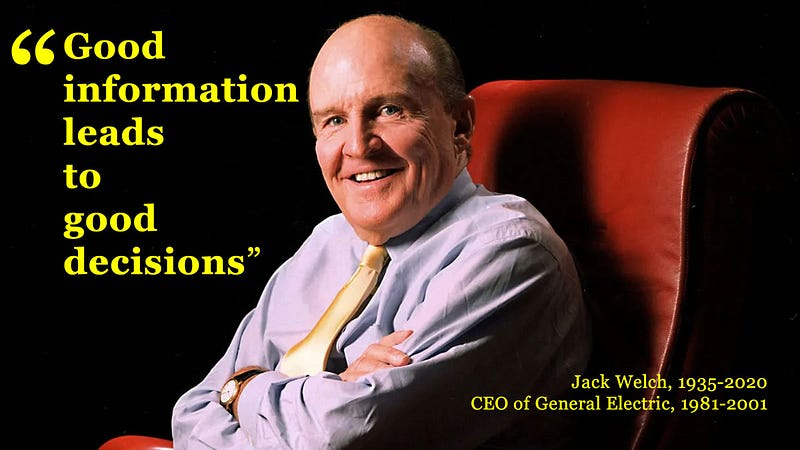
Good Information Leads to Good Decisions — Jack Welch

Let’s distill this issue into its simplest perspective.

Knowledge is Power

The most effective approach is also the approach that focuses on the most crucial responsibility for a democracy to fulfill if the people truly want to create a stable society capable of achieving its potential as a peaceful and prosperous community.

Education is the most effective way to empower people. It’s the only way to empower people.

Every other method involves coercion, imposition, and, ultimately, the subjugation and deterioration of a people.

Nothing empowers an individual more than learning to accomplish goals in ways they never thought possible before. Nothing brings society together in a common cause more than the information all members need to make good decisions for themselves.

Everything we see today recognized as toxic and destructive to democracy is directly due to an abysmal level of education. From the cheerleading to the taunts, to the entrenchments, to the emotionally unhinged betrayals of the social contract, can be traced back to a paucity of education.

Racism, misogyny, and all the bigotries eroding relationships and community cohesion to contribute to escalations in conflict to feed criminal behaviours can be cured with appropriate levels and forms of education and public awareness campaigns.

People can learn to protect themselves without relying on a nanny state if the nanny state could stop infantilizing its public.

Democracy has been perpetually criticized for its chaotic nature by people who judge democracy by its lowest common denominator, but that destroys every form of governance.

Democracy is an inspirational form of governance because it is built upon the initiative and ingenuity derived from the fruits of individual potential all benefit from.

Leaders and caretakers of the public good must serve as teachers and coaches for those who struggle to cope with challenges.

We should not strive to impose, direct, herd, or subdue people but show them the paths they can take to achieve their best selves and our best communities.

We have no problem taking this approach within our learning institutions because we have learned from experience how to motivate students to achieve their best.

Somehow, though, we reverse course once the educational curriculum is completed, and that’s to the detriment of everything we hold dear in society.

It’s because we do not extend a supportive, proactive, and growth-oriented approach to cultivating our societies that we have an escalating force of militarized subjugation of the people. Those tasked with the responsibility of protecting and serving the public have metastasized into a destructive force of militarized imposition on the people to become state-sanctioned terrorist operations.

It’s because we have not learned to appreciate what we learned from our institutions of learning that the state empowers its protectors with an attitude of entitlement to brutally abuse its people and be responsible for committing homicides of the people and being protected by the state for their betrayals of justice.

We have allowed ourselves to develop an entirely destructive approach to reactionary mismanagement of society and the issues we all struggle to live with.

It is because we abandon the lessons taught to society by its leaders in education — of all forms, that innocent citizens can be murdered in their beds while sleeping by those who are supposed to protect them.

The lowest common denominator that critics love to cite when bashing democracies is not the least educated among us but those who are educated and who abandon their lessons to wallow in their basest instincts.

The lowest common denominators among us are the leaders who fail to lead us.

The lowest common denominators among us are those who are allegedly trained in conflict de-escalation while adopting conflict escalation techniques to murder innocent citizens.

We need to change that dynamic and fire every leader who does not inspire better behaviours from the rest of us. Leaders in society must be aspirational, not deaden, depress, or dishearten us all to disengage from our responsibilities to self-govern.

We cannot create a thriving democracy by tearing each other down and shutting people out of our roles and responsibilities to ourselves and our self-governance.

We cannot tolerate those who fail to lead us to a better world because we can see the trajectory of self-destruction occurring everywhere corrupt leadership exists.

If we want human civilization to survive, our leaders must do more than provide lip service to hope. Our leaders must empower the people to cultivate hope on an individual basis. This is the only way for us to come together to solve our common problems and preserve our present to protect a future for our children.

We cannot accept less than those who can lead by example because the examples we live with now demand violence to eject them from our midst lest we lose everything we hold dear.

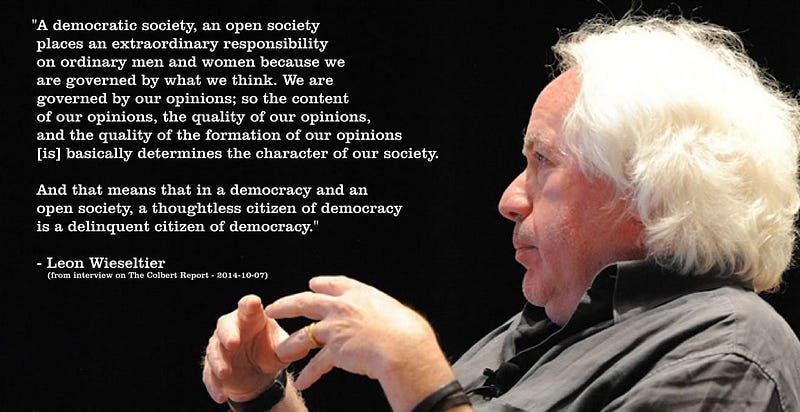
Leon Wieseltier — Democracy

How do people feel about this whole ‘woke and extreme leftist’ ideology?

The question this article is a response to was originally posted in its full length as, “What are people feelings regarding this whole ‘woke and extreme leftist’ ideology that seems to be so prevalent nowadays? Is the push back that I’m feeling actually gathering pace, with ever more people speaking up against it, actually happening?”

Describing a capacity for empathy as “extreme” is evidence of an extreme disparity on behalf of people who justify abusive behaviours toward others.

People who describe “woke” as extreme are the people responsible for the widespread character of casual cruelty permeating our societies.

Such people are bullies in society who cannot seem to exist without demeaning and disparaging vulnerable others.

These people make the most significant contributions to the most embarrassing statistics we face as a species and as societies attempting to live up to our self-declared state of “advanced civilization.”

These people are not the civilized citizens among us but the barbarian holdouts who refuse to evolve within the protections of civilized society that they mock and undermine at every turn with their atavistic predilections.

These people are the uncivilized extremes who threaten social stability while routinely betraying the social contract as they function in the limited capacities of predators and parasites, draining the best from among us while disparaging it as they gorge themselves on their benefits.

People are getting so sick and tired of their disgusting behaviours that we are seeing pushback in many different ways.

We can tell that progress is being made by the increasing extremes in their behaviours as they ramp up their disparagements to be perceived as the crazy relatives in everyone’s family.

In his debate with Kamala Harris on September 9th, Donald Trump’s performance has shown how people are tired of a steady diet of manufactured moral outrage.

How people responded to Tim Walz’s son, who openly displayed his emotionally charged pride for his father, is a distinctly different attitude of intolerance for abusive behaviour than was the case when Trump openly mocked a disabled person like the extremely psychopathic monster he is.

The hatred porn peddled by those who perpetually disparage the “bleeding hearts” in society is running its course.

The meek are well on their way now to inherit the Earth, as those who hypocritically pretend to worship a god of love and peace have known for ages. They don’t want to relinquish their power and privilege now that their end is nigh.

It is time for the barbarians to rest into eternity as the disturbing nightmares of primitive existence they embody.

We are all in this mess together, and we’re sick and tired of the crabs dragging us down to face oblivion together. Such is their fate, not the rest of humanity.

We are destined to explore the stars, and we will never make it there while burdened by the toxicity of hate-mongers among us.

They can grow up or crawl into their dank holes and wallow for all the benefits they offer with their whining negativity.

It’s time for the haters to wake up and rejoin the human race.

It’s hard work. We know.

Stop being so lazy about it, get off your rocking horse, and get to work.

Why fascism always appears in economically struggling countries.

Freikorps members flying the flag of the German Empire during the Kapp Putsch, Munich, 1920.

When people suffer from economic struggles, particularly over a prolonged period, they become desperate for someone to step up to the plate and offer solutions they cannot devise for themselves. People become conditioned through desperation for a strong leader to take charge and “lead the way to prosperity.”

Desperation causes people to lose perspective, while critical thinking skills suffer from a need to quell the pain. Anyone who can convincingly present themselves as a saviour will be welcomed with open arms.

Even though the solutions to economic problems may be obvious, they’re also too far out of reach of hope to implement them.

In today’s world, we are dominated by a handful of wealthy people who control all our systems with deaf ears to the cries of the suffering. Most of their focus is on their well-being, fortunes, and plans for their futures and legacies. The rest of us matter only insofar as we can be useful to them.

As our economies have become global and our economic infrastructures have become multinational entities, we have lost our communities.

Only a few decades ago, our communities thrived by our connectedness to each other.

We have lost that, while those who have been the greatest beneficiaries of a global economy have lost their sense of community attachment because the entire globe is their playground.

The plutocrats among us who are most responsible for the economic hardships suffered by millions are entirely due to their wins at the expense of the millions suffering today. Their goal has never been to raise humanity out of poverty, even though that has been the promise of capitalism.

They have their armies of servants at their disposal to secure themselves against resistance and to continue reshaping the world into their image. They are perceived as being too far beyond the reach of laws to allow the little people any sense of hope for justice.

Anyone who can present themselves as a leader capable of alleviating their suffering is welcomed with a total investment of all their hopes and dreams, while a widespread perception of one capable of rising to that need is one from among the untouchable class. That’s why someone like Donald Trump can succeed in assuming control of an entire party through a cult level of worship.

The trouble is that leaders who claim to be their solution also demand their unquestioning loyalty and obedience. That’s the key which opens the door to fascism because the only way for a single leader to wield enough power is to align themselves with the existing status quo of power.

Donald Trump — “Nobody know the system better than me, which is why I alone can fix it.”