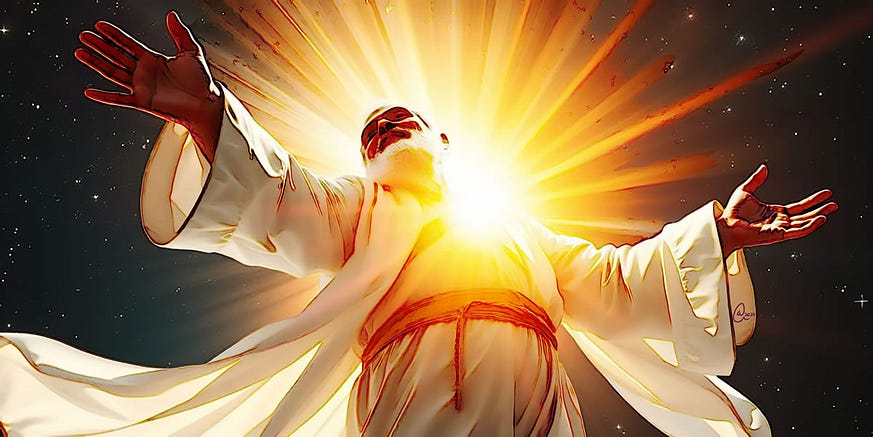
Why don’t you believe God exists?

This post is a response to a question initially posed on Quora, and can also be accessed via “https://caseforatheism.quora.com/Why-dont-you-believe-God-exists-16

Your question is entirely backwards.

Atheists don’t need to justify why they don’t believe God exists.

You don’t need to justify why you don’t believe the Sun turns pink at night and shoots golden sprinkles throughout the night to create stars that fairies light up with their magic dust.

Believers do, however, need to justify why anyone should believe their claim that a God exists.

You don’t have to justify anything you do or don’t believe to anyone until you try to convince them to accept your belief.

Atheism is the absence of a belief in the existence of a God. That disbelief technically means atheism is the same as nothing. Atheists have no motivation to share the nothing that comprises disbelief with anyone. Atheists generally don’t care what believers believe or disbelieve until they make it their business to convince atheists to think the same as they do.

Your question is like expecting someone to justify why they don’t believe snakes have wheels hidden in their scales that we can’t see, but they secretly use them to speed their way along the ground when no one is looking.

This atheist could write a novel explaining the journey taken from early indoctrination as a child and the early doubts about that indoctrination, which grew over time as more and more questions remained unanswered while more and more contradictions to the claims of the existence of a God appeared ever more undeniable, but none of that matters.

The only answer to your question that you deserve is that Atheists do not believe in the existence of a God. The only fact relevant to that answer is that atheists paid attention to reality and asked questions about reality in ways that made unjustifiable beliefs unsustainable.

There is no point in adhering to a belief when reality contradicts it.

There is no point in believing that Santa Claus exists as an adult because only children wake up on Christmas day to find a mystery of gifts deposited under a tree awaiting them.

Adults know there is no magical entity depositing gifts, so there’s no point in believing Santa Claus exists. Most adults would consider it quite delusional for an adult to think Santa Claus exists. I’m sure you’re one of them.

Meanwhile, atheists who deal with questions like this are left wondering when believers will wake up and start asking themselves why and how adult believers can still believe in fantasy figures granting magical wishes.

Why do you believe some supernatural Father Cosmos lives in some Quantum realm (instead of the clouds or mountaintop that used to be thought of as God’s home)? Why do you believe your fantasy father figure magically created billions of light years of space and trillions of galaxies, suns and planetary systems to place you at the centre of creation as his special child that he watches over? Do you watch over your eyelash mites? Do you communicate with your gut bacteria? Why do you believe your God looks like you?

If you can stop to think about your question, you’ll realize that it is backwards because it’s not about what atheists don’t believe, but why you do believe a God exists.

You would not otherwise pose your question to atheists if you weren’t already experiencing some shred of doubt in your belief. Instead of exploring that, though, you seek some form of justification from atheists because you’re afraid of losing your faith.

If you think about that for a while, you will realize that your fear was deliberately cultivated within you to keep you in line with your belief system, as it was designed to control your mind.

Instead of wondering why others think differently from you, try to think about why you believe the way you do.

You’ll get better answers that way, and they’ll be answers that get you further in life. The only answers you can get from others on this score are explanations of their personal views. Meanwhile, the entire point of being on Earth and living your personal life while experiencing growth and change as an individual is to learn your answers for yourself.

That’s the essential difference you’re struggling to identify with your question — why atheists are different than you.

The truth is that your beliefs are yours to develop in a personal journey through life. Your religious indoctrination has taught you to think that process is a “personal relationship with God.” The sooner you can rid yourself of an imaginary intermediary in your quest for knowledge, the sooner you will develop a clarity of mind in which you can understand on your terms why atheists don’t believe in the existence of the God you’ve been taught to believe in.

Otherwise, you will never truly understand any answer any atheist will give you to your question.
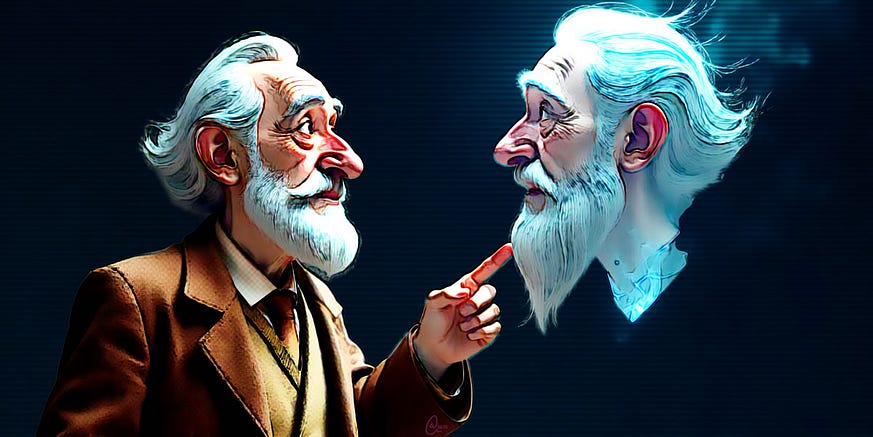

I wish I could provide tangible proof of God.

This post is a response to a question posed in its complete format: “I really wish that I could provide tangible proof of God’s existence to atheists, but I can’t. The best I can do is treat them as I know He would want me to. Does that make me a bad person?”

Why do you need to convince others of your belief?

That’s the question you should be asking yourself.

What a person believes doesn’t make them “good” or “bad.”
What they do, however, is what accomplishes that.

To be a good person in this context is to accept how others do not believe as you do, while you enjoy your life as you please, without feeling compelled to convince others to validate your beliefs by thinking the same as you.

The more you feel compelled to convince others of your belief, the more you demonstrate to the world that you doubt your beliefs.

Atheists would have absolutely no problem with believers if they just stopped trying to convert everyone else into copies of themselves.

There would be fewer wars if people could accept how others do not believe the same things they do.

The real issue here isn’t that you believe something or others believe other things. The core issue is that believers feel compelled to convert others and force them to think as they do.

Have a look at this:

This is how people can live when they’re not oppressed by the beliefs of those who impose them on others. This is how women can have the same rights as men while living as equals in a society of equals.

Now, have a look at what happens when people force others to believe as they do:

This is why the problem isn’t that you believe but that you seem compelled to convince others to adopt your beliefs.

This is where you become an enemy to humanity. This is the slippery slope to making you a bad person.

What can lead you to become a bad person is a desire to make others believe as you do.

If you are concerned about being a bad person, you must stop fretting about how others believe and deal with your toxic need to convince others of your belief. You must ask yourself why you must convince others that your God is real. You must stop caring about others believing differently than you because that is the path to becoming an evil asshole.

If you truly believed what you claim to believe, you would not feel compelled to convince others of the validity of your belief.

If you cannot find recompense within your belief, it’s not an honest belief but an indoctrination.

Do you know what else is compelled to spread and take control of other lives?
A virus. That’s what a virus does.

How do atheists approach ethical dilemmas without religious guidance?


This post is a response to a question initially posed on Quora, and can also be accessed along with comments via “https://caseforatheism.quora.com/How-do-atheists-approach-ethical-dilemmas-without-religious-guidance-17

The bonus question can also be accessed: “https://divineatheists.quora.com/Do-atheists-truly-believe-they-will-ever-silence-the-belief-in-Jesus-or-YHWH-49

This atheist interprets ethics based on harm, like the Hippocratic Oath a doctor takes, “Do no harm.

What passes for “religious guidance” isn’t resolving an ethical dilemma but following an instruction. In such a case, the issue can’t be considered an “ethical dilemma.”

There is no dilemma if you can consult a rule book to instruct you on your direction.

The only “dilemma” a religious adherent faces is whether or not to follow their instructions.

Even if a believer is confronted with that choice, their ethics are still far from the issue that has otherwise been considered an “ethical dilemma.”

Is the choice to obey a command an “ethical dilemma” or an assertion of independent will that can allow someone to then honestly resolve the ethical dilemma which forced them to question their dogma?

This question is an example of why religion is toxic, how religious beliefs cloud critical thinking, the impact of religious dogma on ethical issues, and when the struggle with cognitive dissonance presents itself within the believer’s mindset, leading to a “crisis of faith.”


Bonus Question: Do atheists truly believe they will ever silence the belief in Jesus or YHWH?

Nice projection.
The reality, however, is that believers like yourself have a centuries-long history of silencing people under the threat of death.

Atheists are not interested in your beliefs, and that’s the point.
If you could keep your personal beliefs to yourself and refrain from imposing them on the world, there would be zero conflict.

Atheists, as a whole, don’t much care what other people choose to believe.

Most care about how people behave and behaviour like yours, as you post your nonsense question to make yourself appear like a victim, is just tasteless behaviour.

If you truly believed what you claim to think, you wouldn’t put on such a performance of how much you believe what you claim to believe.

Instead, your declaration of standing fast to your belief indicates your doubts to the world.

If you don’t understand how that works, reference how those in public offices who claim to share your religious beliefs as the basis for their disparagements of every sexual proclivity. Notice how all of the most vocal, be it against gay marriage or pedophilia, end up with them being busted for the sexual crimes they preach against.

Your announcement is just a way for you and intellectual cowards like you to deflect attention away from your guilt. In this case, your guilt is the cognitive dissonance you are struggling with because you don’t want to accept how you’ve been living a lie.

Instead of trying to strip you of your belief, this atheist recommends you see a mental health professional to help you overcome your anxieties and resolve the emotional angst that has prompted you to pose this pronouncement about yourself.

Keep your beliefs all you like. What you believe makes no difference to any atheist. What you say and do, though, is another matter altogether.

Good luck with all of that.

Where is heaven for you?


This post is a question twofer of responses to two questions initially posed on Quora as written here.

It’s in the same general area where “Utopia” exists.

It’s right next to “Avalon,” which isn’t far from Valhalla and just around the bend from Asgard and down the road from Shangri-la, but more than a stone’s throw from Agartha while one can easily get lost on their way if they get distracted by the gold in El Dorado and miss their left turn at Alfheim. Try not to stay too long admiring the great fields of Elysium, or you’ll never leave. Be sure to avoid the talking snakes if you take the shortcut through the Garden of Eden, and carry a flashlight or gas lantern if you cross Thule. Agartha can get a bit warm if you fall into a deep chasm, so be sure to have spare clothing and have a spear or sword on hand to defend yourself against errant knights while crossing the lands of Camelot.

At any rate, if you make it to Cockaigne, you’ll find anything you need, which should help you if you have to climb Mount Olympus and travel through Arcadia.

Otherwise, keep your compass pointing upward toward hope; eventually, you’ll reach heaven.


Question 2: Is it okay to believe in ancient gods?

If you need permission from others to choose your beliefs, then your issues involve your self-image and self-confidence.

If you already believe fantasies can be real and magic is, then you’re not that different from much of the rest of the world, sadly.

That you ask if it’s okay to believe what you want to believe speaks to a lack of confidence in your beliefs, and that means you’re not sure if that’s what you should believe, and you’re hoping some confirmation by others will help you decide what to believe.

That may be a valid strategy for getting confirmation when lost. Still, it also shows you’ve allowed your beliefs to arise from wandering about without paying attention to the path you’ve taken. Your mind has wandered in an aimless direction, and now you’ve arrived at a place of wondering where you are.

You might want to retrace your steps to understand better why and how you arrived at the place of belief preceding what’s popular today. That you’re aware of earlier paradigms shows you’ve done some investigation into your beliefs. You’ve been curious to learn for reasons that have meaning for you.

Choosing to rest on a particular set of beliefs is just that. You may find your curiosity compelling you to investigate further.

In any case, the ability to choose to adopt or discard any belief at any moment is an exceptional reason to pay attention to how and why one chooses either way, because failing to do so leads to the sort of loss of self you’re experiencing now.

Ultimately, your beliefs are yours to do with what you will. They are “tools” — “useful implements” that allow you to maintain a consistent heading of self-discovery. The more authentic they are as an expression of profound insight into oneself, the more genuine they become as beliefs.

Good luck on your journey.

Why do atheists make me uncomfortable?

This post is a response to a question posed in its complete format: “It makes me uncomfortable that there are atheists. What should I do?”

You can repent and learn to respect your God’s wishes. Hopefully, you can save your immortal soul from an eternity in Hellfire if you act honestly and sincerely toward your embrace of atheists because they exist to teach you to be a better human capable of appreciating your God’s love for you and all its creations.

You can learn to stop sinning by heaping disdain onto people who want to live peacefully. They are not your enemies. Don’t make them so.

Here is a story to help you return to your God’s favour. Otherwise, you can choose to continue betraying your God’s commands while preparing yourself for an eternity in the lake of fire.

Why did God create atheists?

A Rabbi is teaching his student the Talmud and explains that God created everything in this world to be appreciated since everything is here to teach us a lesson.

The clever student asks, “What lesson can we learn from atheists? Why did God create them?”

The Rabbi responds, “God created atheists to teach us the most important lesson of them all — the lesson of true compassion. You see, when an atheist performs an act of charity, visits someone who is sick, helps someone who is in need, and cares for the world, he is not doing so because of some religious teaching. He does not believe that God commanded him to perform this act. In fact, he does not believe in God at all, so his acts are based on an inner sense of morality. And look at the kindness he can bestow upon others simply because he feels it to be right.”

“This means” the Rabbi continued “that when someone reaches out to you for help, you should never say ‘I pray that God will help you.’ instead for the moment, you should become an atheist, imagine that there is no God who can help, and say ‘I will help you.’”

Perhaps a nightly routine of flagellation might help you restore your spirit to favour in your God’s eyes.

Good luck with your repentance.

Does God Exist?

This post is a response to a question posed in its complete format: “I’m beginning to lose faith. Does God really exist, and if yes does he even listen to our prayers?”

I would say that based on your question history and the way you have been provocative toward atheists for quite some time now, that you have been “losing your faith” for a lot longer than you realize.

The surprisingly positive change I’m registering in your question today is that you finally realize it.

“Losing your faith,” however, is merely a struggle with disappointment in your faith. You’re not losing it since you’re unhappy with the lack of fulfillment you have expected from it. That’s a big part of the reason you have been so provocative with atheists.

You have been taking your frustrations out on people who appear unburdened while you have struggled to carry an impossible weight to bear.

You’re still not quite at the stage where you see contradictions as reasons to question your commitments to your beliefs.

You still value your beliefs more than they are healthy for you, which is causing you confusion. The only way through the cognitive dissonance you are struggling with is to examine your beliefs with a microscope and a willingness to discard overgrown beliefs like the overgrown weeds they have become.

This is a painstakingly long and meticulous process that could last you the rest of your life, but the more progress you make on pruning your beliefs, the more clarity you will find in your thinking.

Congratulations on taking your first steps on the road to your recovery.

It can be painful to make such a breakthrough, but you should be proud of your accomplishment because it will give you strength and hope for a more straightforward path ahead.

Good luck… and do notice how this time, I’m not providing a link to your profile for others to block you because honesty should be recognized and acknowledged as a valuable commodity that should be cherished.

Wherever your path takes you, I wish you the best of luck and will explain why I may sound so pleased in my response; it’s that I anticipate a dramatically reduced degree of misanthropic cynicism from you in future and that’s a much better experience to look forward to as opposed to the toxic cynicism experienced from you to date.

I appreciate your honesty.

What makes the Bible not believable for an atheist?

This post is a response to a question initially posed on Quora, and can also be accessed via “https://caseforatheism.quora.com/What-makes-the-Bible-not-believable-for-an-atheist-14

Sadly, the real question is the one you’re avoiding.

The real question is the question you have flipped around because you’re too afraid to face it.

The real question is a reversal of the deflection you have concocted to protect the lie you live by.

The real question is: What makes the bible believable for you?

The talking snake or the talking donkey?
How is love expressed through mass murder?
How can one’s female children be chattel to be sold?
Talking bushes?
Magic?

What in any of that is believable or moral to you?

Do you sincerely believe that animals from around the world travelled thousands of kilometres to sit peacefully, predators and prey alike, in a small boat for months while the entire globe was flooded and most of life was wiped out?

Do you believe an entire species born of two people who bear male children can magically fill the Earth with enough children to fill the globe?

Can an entire sea be temporarily parted to make way for peasants to cross on foot? Perhaps you’re one of those who think the moon can be chopped in half and reconstituted? (No? Different book, eh?)

Can a person be swallowed by a massive fish and live inside its belly with all the abdominal acids for three days without any ill effects?

Can people indeed be brought back from the dead?
Can water truly be converted into wine?
Can rocks be transformed into bread?
Did people live for almost one thousand years?
Was an entire river converted into blood?
Do cherubs and demons genuinely exist?
Can people be transformed into pillars of salt?

What exactly do you find believable within the bible?

What is believing in a higher power you don’t know?

This post is a response to a question posed in its complete format: “What is it called when you believe in a higher power but don’t know what it is?”

It is a paternalistic instinct we are born with and inculcated during childhood socialization, and is called “wishful thinking” for adults.

There are many “higher powers,” at least when contrasted against whatever “powers” a human being has.

None of those higher powers are a replacement for one’s parents, no matter how much one wishes theirs were not so toxic. The sad reality is that such wishful thinking is a byproduct of centuries of generational trauma.

If you’ve ever noticed how well-adjusted people are from loving families, you’d have realized how much natural self-confidence tempered by humility they exude. All that is required to develop that maturity is a parent who understands love and expresses it honestly, even when it’s most arduous and demands the most brutal honesty with oneself by admitting one’s shortcomings to one’s children.

This attitude and desire are biologically driven instincts with the essential elements guiding them. These are built into the brain’s hardwiring in the prefrontal cortex, from which a sense of justice and balance within the universe is derived.

“What is particularly interesting about these findings is that they suggest that the sense of justice is not something learned through experience or socialization but rather something built into the brain. This is consistent with the idea that certain moral principles are universal across different cultures and societies, such as the idea that it is wrong to harm others or that honesty is a virtue. These moral principles may be rooted in how the brain processes information about social interactions and relationships.”

Sense of justice discovered in the brain

Why do scientists believe the universe comes from nothing?

This post is a response to a question posed in its complete format: “Why do scientists believe that the universe and the Big Bang can come from absolutely nothing but find it so hard to believe in the Holy Spirit?”

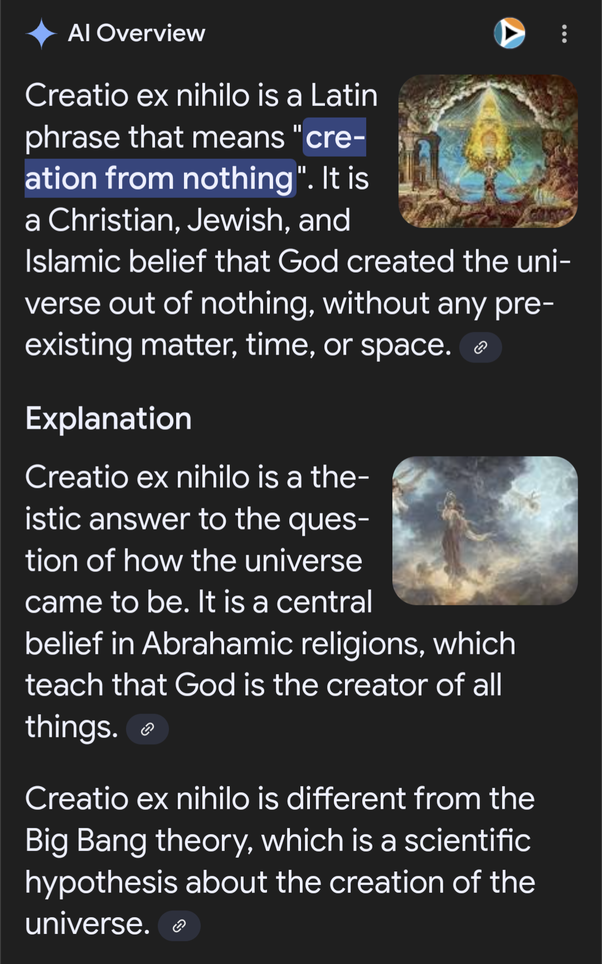
Creatio ex nihilo

This is a Latin phrase which means “creation from nothing.”

It is a phrase used in all three Abrahamic religions. The idea of something from nothing comes from the Jewish, Christian, and Islamic religions, not from science.

Scientists don’t claim something came from nothing. Your religion makes that claim.

Instead of learning about your religion, you invent nonsense derived from your religion and concoct fiction about a discipline you choose to remain ignorant of while using your fiction as justification for smearing what you have made no effort to learn anything about.

Don’t you think that’s a bit convoluted?

It’s referred to as a straw argument.

Your straw is a religious phrase you attribute to science, and then you use that false attribution as justification for fraudulent criticism. You imply hypocrisy in science while embodying hypocrisy in your question.

If this were a behaviour that rarely occurred, it would be easy to overlook. Instead, the hypocrisy you have demonstrated occurs so often that it’s almost a surprise when a question by a believer to atheists isn’t hypocritical.

Where does one find a “Holy Spirit” buried under so much hypocrisy from religious folks?

My memories of church doctrine don’t seem to include hypocrisy as an attribute of the Holy Ghost. Perhaps I missed that while my eyes rolled back up into their sockets as my head began thumping from all the mind-numbing nonsense I was being exposed to.

It could be my knees getting sore from the padded board while I wondered when I could sit back in my seat.

At any rate, I always found myself more interested in learning about scientific concepts because they made sense. I felt like my imagination was lit up when learning something tangible, while my mind felt dulled into a stupor every time I felt forced to endure the mind-numbing religious patter.

I never understood why people would prefer being lulled into a stupor to stimulating their imagination. I used to chalk that up as a subjective preference indicating benign differences between people.

I have come to realize, however, that the incuriosity of people who prefer to wallow in fiction rather than choose to stimulate their imaginations with knowledge indicates a tremendous gulf which creates problems in society.

Dialogues online with religious people rather than in person seem to provide greater freedom in exploring those differences in thinking, so perhaps you can address in more personal terms why it is that you don’t know your doctrine and believe the doctrine you don’t know but have heard it somewhere is a product of science.

Aren’t you in the least embarrassed to realize you have admitted to being ignorant of both science and the religion you seem to want to be associated with?

How does one go through life pretending they are devoted to this thing called religion but remain so ignorant of it at the same time?

I’m sure your first instinct is to dismiss these words as “fake news,” so I’ve included an AI summary to help you cope with how you have just humiliated yourself in a way not unlike peeing in your pants in public.

Good luck with all of that.

How can an atheist be sure there is no creator?

This post is a response to a question posed in its complete format: “How can an atheist be so sure that there is no God/creator if there is creation? Doesn’t creation mean something has been created?”

The concept of “creation” was invented by humans who first conceived it when they discovered smaller versions of themselves popping out of their bodies. While living with something growing inside for most of a year, they realized something new grew within them.

Then humans discovered tools. At first, those tools were found objects like bones to be used as weapons or extensions of one’s reach.

Eventually, humans learned they could improve on found objects by fastening rocks to the end of a bone to function more effectively as a weapon.

Throughout all of this, humans developed language, and within that process, they began to create sounds to describe what they witnessed.

As it happened, the notion of something arising out of nothing was expressed as a sound indicating what was understood of that process.

Humans knew nothing of natural processes and how they might have differed from the human process of shaping objects into tools or giving birth to new generations of humans.

Humans then knew nothing of virtual particles and quantum foam, so it was easy to assume some form of magical hand was involved in constructing little humans inside big humans in a way that was not unlike how they shaped better tools with rocks and bones.

The reality, however, that we can see around us and everywhere is that natural processes can lead to massive changes and the creation of the new without any guiding intelligence.

It is generally understood that mountains and lakes were “created” by natural processes and are not the product of intelligence deliberately moving continents to reshape the surface of the Earth.

The universe is far beyond being much more vast than anything we can imagine on Earth. That means it’s as impossible for a singular intelligence to deliberately shape matter into an unimaginable variety of specific forms as it is for an active intelligence to create Mount Everest or the Nile River.

Creation means something from constituent materials assembled into a structure. “Creation” does not imply any guiding intelligence while the vastness of the universe eviscerates any egotistical notion of such an intelligence remotely resembling what we understand of human intelligence.

It’s a delusional form of arrogance held by believers that blinds them to the nature of reality and it is a sickness of perception that threatens our future as a species on the planet.