This post is a response to a question posed in its complete format: “How can a believer provide evidence for God’s existence to refute the claim of atheists?”
The real problem here isn’t that you don’t know how to provide evidence for God’s existence but that you see that no evidence exists but still insist your God does.
The lack of evidence should be the cornerstone of your disbelief in the existence of something.
It’s the same reasoning you would use to refuse to make a significant purchase like a vehicle without taking it for a test drive.
Your approach to your God belief is like reading an ad without pictures for a $100,000.00 sports car and sending money to an address in another country while expecting your sports car to appear at your doorstep the next day.
Do you usually make your major purchases without inspecting them first?
Would you recommend buying a house without doing a walkthrough?
Why, then, would you structure your entire life around something you can’t verify?
The best you have is someone else telling you it’s true.
You can invest in some incredibly valuable swampland from me if that’s how you make big decisions for yourself.
The harsh reality you’re struggling with is that atheists make no claims.
Atheists only refuse to buy swampland from an obvious charlatan whose only interest in you is how much money they can siphon from your pocketbook.
Atheists have no expectations of an imaginary figure.
Atheists do have expectations from unhinged believers who hypocritically betray their faith and their God’s commandments to treat others like they are all God’s children,
to stop passing hateful judgments and bearing false witness against atheists,
and to render unto Caesar by staying in their lane and out of politics.
Atheists also have hopes believers that they may, one day, realize how their condemnations of atheists only condemn them to an eternal pitchfork enema while being spit-roasted in a lake of fire.
We hope for this because it may finally result in them abandoning their addictions to hatred, violence and overt destruction of all that does not comply with their fascist expectations.
We hope for this because we realize that doing so could finally reduce the number of victims of violence and war to almost nothing.
The mid-East alone would experience a real Renaissance of the kind of love and peace that religions pretend to value. The rest of the world could finally prosper by dropping believers’ widespread misanthropic attitude toward each other and everyone in general so that we could also experience a return to sane values in communities where people work together in peaceful harmony.
It’s a dream, but it’s worth having because without it, one can only descend into the madness spread by unhinged believers, and that is the worst hell of all.
After all, what do you gain by assaulting atheists with childishly delusional questions like this?
Your question is just the result of your addiction to hatred porn. It does nothing productive for you or helps you in any way.
Do you think the people in your life appreciate your efforts to demonize atheists?
Really?
Are you sure they’re not embarrassed by behaviour like this?
Maybe it would help if you understood how this hateful behaviour of yours is what drives people away from religion to make it a rapidly shrinking phenomenon in society.
Here, have a look at the effect you are having on your religion with your perpetual hatred spew:
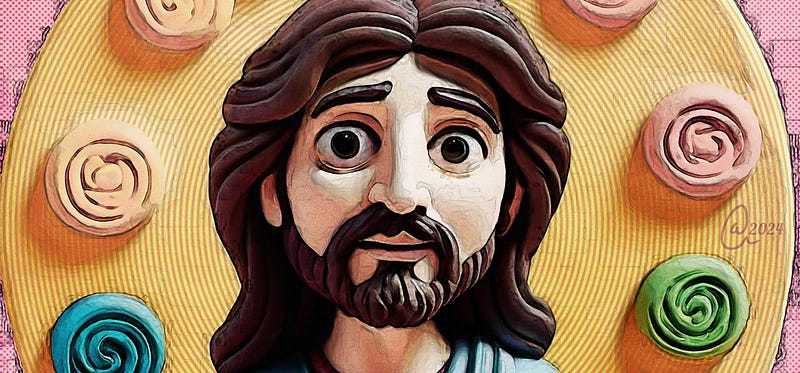
Try to think of what Jesus would do before overtly betraying everything you pretend to believe in because you’re only helping atheism to grow…
And we atheists don’t mind that at all… the sooner you drive everyone away and your mythologies into obscurity, the happier we atheists are.
Thank you for doing our work for us.
Forget everything I said and keep up the excellent work… wallow in your hatred porn because that’s just you drinking poison while hoping your enemy will die from it.
This post is a response to a question posed in its complete format: “Can I say I’m an atheist, when I’m actually agnostic? If I say I’m agnostic I’m worried that people will either say that it’s not real, or try to convert me.”
You can say that your beliefs are your own. You have no obligation to share intimate details of your journey with anyone who isn’t a part of your life.
Anyone who presses you doesn’t respect your boundaries, and if that’s the case, tell them whatever they want to hear to get them off your case. They’re not interested in getting to know you as a person because they want to be closer to you but because they’re looking for some information about you that they can use for their benefit.
People in life will ask you questions about yourself only because they’re looking for weapons to use against you.
You cannot trust people who cannot respect your boundaries. Life does boil down to being as simple as that.
The next time you wonder if you’re “allowed to say something” or another about yourself, try to remember how an orange Nazi turd concocts bullshit about himself and others with every sentence spewing out of his lying piehole.
I am certainly not advocating for any “benefits” of becoming a pathological liar because that’s just disgusting. I am simply pointing out that you have no reason to tie yourself up in knots over how you describe yourself to someone else.
The harsh reality is that you could likely spend an entire month describing intimate details about your life and why you arrived at certain conclusions that prompted you to think one way over another. The chances are excellent that 99% of what you say will be lost on your audience. People remember only 20% of what they hear.
Most of what you say about yourself passes through another person’s perceptual filters, and you have no control over how they interpret what you say. The only thing you can do is make your best guess at understanding them well enough to use the right combination of words that will get them close enough to understand something resembling what you want them to know and then hope for the best.
Your thoughts and feelings are your own… and if you’re anything like what I’ve gone through, then one day, you’ll be agnostic within a specific context and then a militant atheist within another context the next day. The following day, you’ll be amenable to believers, and later on that afternoon, after encountering a zealous believer, you’re back to hating religion and thinking of yourself as an anti-theist while thinking atheism itself isn’t firm enough to get the stench of the zealous asshole off your body and cleared from your mind.
The entire point I’m getting at is that human beings are not robots. As much as too many people want to create labels and stuff people into neat little boxes, humans are not that defined in such discrete terms.
Humans are more like water or vapour, constantly shifting in the wind or changing direction and flow depending upon the shape of the land one moves over. Whatever defines you as you is summed up entirely as your collection of memories.
Meanwhile, your memories are not stored like magnetic particles on a hard drive. Your memories are stored in eleven-dimensional space as “signposts” — symbols that your mind unravels as you recall events from your life… and your recollection changes as your state of mind changes.
Humans are more fluid than literal fluids in nature.
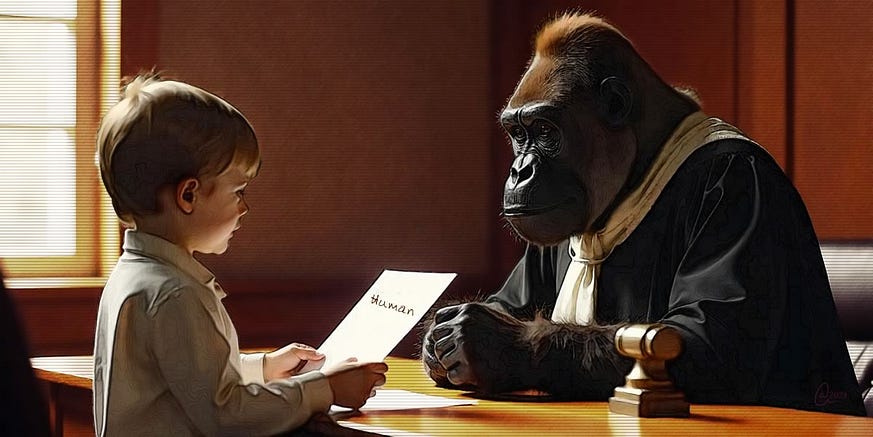
The next time someone asks you what you are, tell them you’re human.
The next time someone asks you what you believe, tell them you believe dinner is being served at 6:00.
Unless you find yourself in a long and deeply meaningful conversation with someone who truly wants to know your person, you have no obligation to barf up serial numbers for their mental registration of who they want you to be.
Be you and let the “Nosy Parkers” in your life be confused. That’s a “them problem,” not a “you problem.”
Being worried about how other people will respond to you because you’re trying to be honest with them about trying to figure yourself out is an unfair and intrusive expectation from another person.
You may not feel annoyed enough by such prying yet. If you manage to get on to your senior years, you’ll find yourself pissed off at such a rude and entitled attitude precisely because you have gone through a lifetime of being worried about telling people what you fear might be the wrong thing.
Don’t apologize for being who you are. You will only end up hating yourself for doing that. If someone decides they have a right to push their beliefs onto you, tell them to fuck off. Seriously. If Helen Mirren can endorse this response out of regret for being more polite than she should have been, you should not ever feel guilty about drawing your boundaries with a nosy someone in the harshest of terms.
Now that I’ve gone on this rant, I bet you might remember a half-dozen words… assuming you read any of it with any consideration instead of skimming over it all.
Good luck in navigating through this monkey house we call life. You’ll do fine if you can learn to duck and weave around all the flying feces.
The implication of this question, mainly since an anonymous profile posed it, is that atheists do so out of malice.
That’s not the case at all.
Although some atheists may indulge in malicious dialectics to stir up anxiety within believers, that’s not typical of most atheists. Barry Hampe pointed out that it’s often a response to provocation from believers, while several other respondents indicated matter-factly that it’s a truth as they see it.
It goes deeper than simply asserting what appears evident to non-believers. Often, believers need to question their presumptions, and that’s precisely what the querent does by posing this question.
Telling a believer that God is not real forces them to either wallow in defensive denial (which disarms their provocation) or shakes their psyche enough to prompt them to question why someone would say something like that. This question represents the latter, which indicates, by my bias, the first inklings of doubt in one’s position. After all, we live in a world where every major religion claims to represent the “one true truth.” No rational person can accept how all are correct in their presumption — especially not after centuries of warring against each other for ideological dominion.
Often, the goal is not malice but an attempt to assist believers in expanding their perceptions beyond the box they’ve been conditioned to secure themselves within. In this regard, saying God isn’t real is a bit of a counter-provocation from a motivation opposite that of a believer who seeks homogenized thinking to validate their own.
I’ve begun asserting that if a God does exist, then it’s nothing like any human mind has ever imagined or could comprehend. Every religion has completely misunderstood and mis-imagined whatever might constitute Godhood. This is based on the reasoning that human minds are incapable of understanding something which would, by necessity, be so far beyond complex that we can’t grasp it on any level more significant than an eyelash mite can grok the body it lives on.
We may consider ourselves an intelligent species, but our metrics are self-serving. The universe is vast and complex beyond our comprehension. We may have unlocked many secrets, even enough to grasp the fundamental nature of its structure within the context of our perceptions. Still, we have no clue what may exist outside our perceptual fields — directly or in conjunction with technologies extending our perceptual capacity.
I’ve been thinking this particular approach might achieve some success with believers because the scriptures themselves already familiarize them with the notion of God being beyond human comprehension.
By reinforcing this particular piece of authoritative insight within the prevailing concepts of godhood, we can expand believer perceptions beyond the limits they have consistently shrunk over the centuries.
Our scientific investigations have forced them to retreat, shut down, and shut out threatening information. They’ve dug into the notion that science has been deliberately eradicating the foundations of their existence. They have reacted to this by negating everything which contradicts their biases. Everything scientific is perceived as an enemy. This phenomenon characterized much of the operative psychology within this last election.
As someone who perceives religion as a cancerous threat to our existence as a species (primarily due to the tribalist component of religious bias), I think the solution lies not in the rejection of a believer’s need to believe but in an expansion of their perceptions. By reminding believers that they don’t have definitive answers, explanations, or anything beyond their wistful imaginations to define a god that exists purely within their imaginations, they can begin looking outward instead of shutting down.
Learning to accept the necessary limitations of humanity validates a natural ignorance of godhood because it is ignorance shared by all humans. In this way, the atheist threat to their beliefs is mitigated.
Personal insecurities are also mitigated within an expansive tribe comprising all of humanity.
Our struggle with believers is born of piecemeal geographies and tribal borders hinging on being authoritatively definitive about each tribe’s perspective on the nature and shape of god. The common ground, however, lies in accepting how none of them can be accurate because humans cannot apprehend godhood — by the very definitions of “God” as established by their scriptural authorities.
By encouraging their minds to accommodate and embrace possibilities rather than allow them to be set like hardened plaster into myopically formed sculptures, the often violent competition between tribes can be mitigated. They’re all too focused on establishing a supremacy of authority within a definitive shape, boundary, and finite nature to an insular concept of godhood.
Opening their minds to accept how all are wrong instead of fighting over who is right in a “Might makes right” fashion may encourage them onto a path to the peace and love they often declare characterizes their belief systems.
In short, for believers, atheists may say, “God isn’t real,” but you can interpret that to mean, “Your vision of a god isn’t real.” You have nothing beyond your imagination and the force of your personality to support your contention that God is real. It’s a lie, and you know it.
Most atheists are open to evidence, but we’re also astute enough to understand how our primitive ancestors had no clue what lay beyond their limited geographical explorations and, much less, beyond our planet.
Even believers today no longer believe God hurls lightning bolts from the sky by hand or hides the sun from humanity when disappointed with us. We know no God sends hurricanes to our homes to punish us for mixing fabrics or eating shellfish. Most believers know this as well — and it’s usually the religious leaders who manipulate the gullible with lies for personal enrichment. Perhaps believers should choose new spiritual leaders who won’t lie to them and will open their doors to shelter them during a storm.
Perhaps it’s time to start looking outward to possibilities instead of lying to oneself and others about the products of one’s imagination and searching earnestly for a real god.
If all religions can admit to each other that they don’t know anything substantive with any certainty, then perhaps they can build bridges between each other instead of lobbing bombs. If that’s possible between belief systems, then it’s also possible for atheists and agnostics to join them in an honest endeavour toward solving life’s mysteries.
This post is a response to a question posed in its complete format: “How did the US fall so far? This isn’t an Anti-Trump question. I really want to know how it became okay to hate someone or even attack them because of who they voted for. At what point did things go so wrong? See comments for further context.”
RE: “I sincerely want to know how it became okay to hate someone or even attack them because of who they voted for.”
If you sincerely want to know, you must go further than this recent election.
This didn’t happen overnight, and it didn’t happen over just one election.
This is an entirely predictable outcome of over 50 years of demonization of the left by the right.
Things have been going wrong for a long time, and they went overboard when the right began treating their “honourable opposition” as enemy combatants.
The demonization has just been getting worse over time, and electing Trump was the final straw.
You must understand that the hatred isn’t about “who they voted for” as much as the values they voted for.
They voted for an evil monster — convicted of 34 felony counts, responsible for the deaths of hundreds of American citizens, has caused the wanton destruction of countless lives throughout his entire life, and he gloats about doing that. He laughs at the people who worked for them and has refused to pay them for their work. He’s caused people to go bankrupt because of that, and he cares less about that than about the hamburger he ate last month. He’s an admitted sexual predator — he bragged about it, and he’s been accused of rape. He was a close friend of Jeffrey Epstein, who trafficked in underage sex slaves. He’s a pedophile who has openly lusted after his daughter.
He’s an overt racist who tried to have five innocent men killed to satisfy his murderous lust. The man is so much scum of the Earth that the entire state he called home and has done business in most of his life has run him out of it. He instigated a treasonous coup against the nation when he lost the last election.
People aren’t so much pissed at him but at the state of affairs where millions of people chose his brand of hatred to define the nation they love.
People are dying right now because of their hatred.
Children were hauled away from their families in cages and sold for a profit the last time he was president.
That’s what people hate.
More of that evil is returning, and millions don’t care.
That’s why families are being torn apart.
That’s why people are shutting the door on people who welcome that evil back into an acceptable standard of living for the nation.
School kids have been dying from unhinged freaks with guns on an almost daily basis throughout the nation, and instead of wanting to do something to save lives, those people voted for more of that.
That kind of evil cannot be tolerated without giving up something important about one’s integrity and self-respect.
The U.S. fell because it’s been falling at the behest of the misanthropic plutocrats who regard average citizens as disposable chattels.
The U.S. has been falling for decades, and it got worse, beginning with Ronald Reagan’s demonization of government, betrayal of unions, tossing out mental health patients onto the streets, massive upward wealth transfers to impoverish the working class and sowing distrust between citizens.
Eliminating the protections ensuring the citizens were informed correctly by the Fourth Estate opened the door for a corrupt monster like Rupert Murdoch to steadily drip hatred into uncritical minds who got ever more desperate with rising costs and vanishing incomes to arrive at a state of general insanity.
We are here today because of a visible mental health pandemic affecting one in five citizens.
We are here today, repeating history from 100 years ago to almost the day when the Nazis threatened global domination under their jackbooted heel.
They’re back again, which means everyone who supported a return to an evil regime dominating humanity is an enemy of decent society, whether they are blood relatives or not.
This is the beginning of the next major war the world is facing, and people need to wake TF up because it will only get uglier now and result in chaos until people realize we need each other to survive our challenges as a species.
That means all the people who want to demonize and hate those who are unlike them are enemies of humanity.
That’s why families are fracturing into warring pieces.
They chose hatred, and that just can’t be tolerated any longer because hatred is a fire that will consume everyone and everything we value.
Fifty years of this means they finally got what they wanted.
The concept of truth spans both the objective and the subjective.
“Truth” is “the sun will rise tomorrow.”
“Truth” is also “I am the master of my destiny.”
The former version of truth can be objectively measured and experienced in equal terms of empiricism by all.
The latter is a subjective determination of one’s capacity and is essentially different for everyone.
What this means is that this question requires context for precision and clarity, but it can also be answered by simply saying, “Nothing is the same for all people, not even the colours we see.”
Perception can be considered a form of experiencing “truth,” but no two people share an identical experience of a perception of an event that both will have simultaneously experienced.
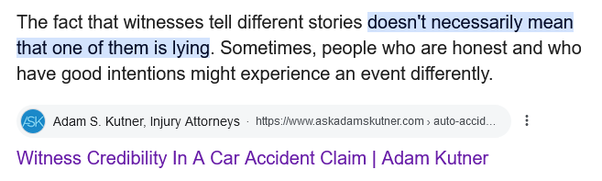
Witnesses to an accident, for example, will often recount vastly different descriptions of the event.
This leads us to another answer, “Truth is what we can agree on. The greater the agreement between the greatest number of parties is most likely the closest form of truth we can attain.”
This is also problematic, however, because this entails the evocation of a logical fallacy of populism — or the “Bandwagon Fallacy” — “Ad Populum Fallacy” — and is precisely what we are struggling with in society today with the consequences of having our perceptions deliberately massaged to create an interpretation of a truth which abandons objective clarity and retreats into subjective bias to affect the world.
This is problematic because popularity is a metric for bias, not truth, and it can be highly destructive to society — as we’re about to learn in a very uncompromising fashion.
This leads us to a third answer, “Truth is a combination of an agreement upon perceptions as supported by empirically tested and proven realities.”
In short, the scientific method is the most accurate means for deriving an objective “truth” for our species — because it requires testability and predictability to determine its degree of accuracy in a rendition of reality.
At this point, we arrive at a final answer: “Truth is an accurate depiction of reality which exists independently from people.”
The same “truth” is available to all people, but all people must make the same trek to arrive at an objectively supportable perception of truth — otherwise, their “truth” is a self-serving delusion.
Another way to word this question would be, “Why do people not share the nothing they have to share?”
How does that work out for you?
It sounds kind of silly, doesn’t it?
It probably makes no sense to you that it’s your question in different words. That would be because you don’t understand how atheism is literally nothing.
Atheism is the disbelief of the claim that “God exists” or “God is real.”
This atheist is perfectly happy if you’re happy believing whatever it is that you believe — anything which helps you live your life peacefully and productively is positive.
There is no need to hear how or why that belief works for you because it’s your belief, and no one would truly understand how or why that belief works for you. Even other believers who hold beliefs similar to yours would have their reasons and find unique benefits to their beliefs that will differ on some levels, even if they appear the same on others.
Humans are all unique, no matter how alike they may be. That’s the function of individual perception and cognitive features of life, such as an ego.
Good for you. You’re happy.
That’s all this atheist cares about.
The details you may want to share are generally too alien for me to appreciate, so your efforts merely contribute to a divide between us rather than building a bridge.
The reason for that is when people share their beliefs, they’re also sharing their insecurities with those beliefs, and sharing is a way of harvesting validation.
By sharing your beliefs, you are merely showing this atheist that you don’t really believe what you claimed to believe while demonstrating an expectation of me adopting a paternalistic response, patting you on the head, and telling you what a good person you are.
I would have already assumed that about you before you began speaking. This atheist prefers to think of people as good by default until they prove otherwise.
Starting with a cynical form of misanthropy is just an unhealthy way to live.
At any rate, if you were to ask me what I believe, I would have to choose from among a gazillion slides running through my mind to pick one and talk about that one microscopic portion of what comprises things I believe and why I believe what I believe. I would have to do that because most such questions don’t seek in-depth insight but a soundbite answer like, “Yep. It sure is a nice day today.”
That’s not a discussion about beliefs. That’s just chit-chat — small talk.
Serious discussions about beliefs should last hours at minimum, or they’re not serious discussions about beliefs. They’re idle chatter and empty noise to fill silent moments that often make many uncomfortable.
Silence can be far more golden when simply sharing space with someone without requiring temperature checks to ensure no overheating is occurring underneath one’s notice.
At any rate, disbelief in a god creature is nothing by contrast to something that comprises an affirmative belief in the existence of a god creature.
That’s what makes your question appear silly.
What is the point of telling people one lacks belief in a god creature, particularly when so many believers find that so offensive they spend all of their free time demonizing non-believers?
This atheist sees no value in telling people things in person that would add stress to their day.
I’m okay with openly expressing my views online because no one’s day is interrupted by my words. People choose to read them.
Topping matters off to make your question appear even more silly is that a government employee is responsible for serving all citizens, regardless of their faith or beliefs. If they were to share their personal beliefs openly, they would inevitably offend someone.
I am sure you are well aware of the bloody conflicts that have been occurring non-stop around the world for centuries between people of different belief systems. For a government employee to openly share their beliefs with the random people they serve would be doing a disservice in general to the public they are supposed to be serving as a representative of a nation with a secular umbrella welcoming all faiths.
This all boils down to the fact that no one is trying to keep anything away from anyone as a government employee. They are performing their duties as expected by not imposing their views on others.
Government employees who step outside their role as representatives of a government that welcomes and protects all beliefs are being derelict in their duties and should get fired for doing so.
Some even face legal battles for insisting their beliefs dictate how they are to perform their duties, and that is how it all should be for people who want to live free.
This post is a response to a question posed in its full format as follows: “Do atheists believe in fate, good and evil, or some other supernatural beliefs? Like do some atheist believe in alien life?”
This question embodies the problem with the notion of belief among believers.
Believers often need help understanding the difference between knowledge and belief. Blurring the distinction between two different but similar concepts makes it challenging for them to adopt a third option between their binary perspective on life.
To a believer, one either believes or does not believe.
Knowledge isn’t even a factor in their perceptions because knowing, to them, is just another form of belief. Belief supersedes knowing because one cannot know if their prayers are being heard by a “Father Cosmos,” so they must have faith that he is listening. This places an undue burden on the concept of belief that breaks its meaning in their minds.
They have no choice but to relegate knowledge to a subordinate relationship with belief because belief is everything to a believer.
Ironically, they have no problem with aspects of belief that require little to no consideration, such as “suspension of disbelief” because that occurs autonomically while engrossed in an entertaining fiction, as does “disbelief” when it applies to every belief system that isn’t theirs.
The notion of belief being subordinate to knowledge is like heresy, which induces a fear of straying, resulting in an eternal punishment for failing to adhere to their faith. This is why they often suffer crises of faith due to excessive cognitive dissonance.
The seemingly fearless attitude of atheists placing knowledge above belief attracts believers’ attention to notions of non-belief, like a moth to a flame. Since they fear eternal retribution for disbelief, they view atheists roaming around free to live their lives in terms not too dissimilar from how many people view a convicted felon roaming about freely to campaign for one of the most influential roles on the planet. It’s like witnessing a horrible accident. One would prefer to avert their gaze but cannot as they stand transfixed over the intense drama playing out for their unwilling minds to process.
The cognitive dissonance this generates explains the obsessions believers demonstrate over atheism every day on social media.
We see in this question how they fabricate presumptions about atheists that fit within their cognitive boxes of belief determination.
They cannot think beyond their belief paradigm to interpret reality beyond a binary state. One must either believe something or reject believing something. The meaning behind the concept of disbelief itself is lost on them. It’s like interpreting absence as a form of invisible presence.
To address the presumptions of belief in this question and many like it, one either presents a dismissive response like they would with a persistent child that fails to comprehend nuance but requires something of an answer to quell their curiosity or one burns through several boxes of crayons to bring them up to speed on basic concepts that will fly past their perceptions to leave them even more confused than before answering their questions.
This is the rub with knowledge.
Every question answered that contributes to our overall understanding of ourselves, others, and the universe we inhabit generates dozens of additional questions we never realized were questions before getting that answer we thought we wanted but sometimes regret getting.
To address the basic but flawed presumptions within the questions above, one must judiciously parse the information in ways that ignore large parts of what is implied within the question and attempt to focus on constructing a simplified answer they will understand, just like one does with a child.
For example, “Atheists don’t “believe in” alien life. Atheists know the universe is vast beyond belief, and the existence of life on this planet within a Brobdingnagian (I love this word) ocean of countless planets means the odds are beyond simply excellent that life has emerged elsewhere. We have been getting new evidence supporting that conclusion, such as the discovery of RNA embedded in spacefaring meteorites we’ve examined.”
This answer won’t be interpreted as stated, though. It will be construed as “Atheists believe in alien life.”
The same applies to concepts like “good” and “evil”. We can explain and re-explain repeatedly until the proverbial cows come home that “good” and “evil” are subjective concepts requiring context for meaning. However, their interpretations of these concepts are apprehended as objectively as one would a physical cow within their field of vision.
“Supernatural beliefs” are also subjective constructs that we can explain “exist outside of nature” because that’s what “supernatural” literally means — “beyond nature.” To accept subjectively defined notions as true, one requires belief, and that’s why one interprets these concepts in terms equivalent to knowledge.
To “believe in fate” is to subordinate one’s knowledge derived from empirical experience through an objective lens to a subjective interpretation functioning like a soothing narrative rather than a concrete mystery to resolve. This dilution of one’s senses is essentially the core of the threat to human thinking that religion poses to humanity and that limits our potential as a species.
The original and full format of the question this post responds to is as follows: “Are evolutionists telling the truth, they say abiogenesis is not evolution, then they say life evolved from a single cell, isn’t the false abiogenesis life from a single cell, can they make up their minds?”
The first few times I saw this question, I thought it odd, but it could be answered easily and quickly. I noticed it already had several answers, and I didn’t feel I could contribute anything differently to an answer, so I decided not to answer it.
It kept knocking at the back of my mind, so I checked the profile because I expected another MAGA to be behind it. I was wrong. The querent is a self-determined and self-made business owner who’s had some success through honest efforts. He even understands how Donald Trump is an evil person.
This confused me more, but I still decided not to block him and forget about the question. Here I am, though, writing a response to it. Talk about compulsion.
What I don’t get is the question itself. If one were to ask Donald Trump if he was telling the truth, he would most certainly either assert he was telling the truth or dodge responsibility for uttering an untruth as he did with his lie about Haitians eating pets. He didn’t deny lying about it, nor did he address his statement directly, but claimed he saw someone on television. He then quickly claimed he didn’t care about it while ignoring how anyone could say anything on television, particularly when that “someone” isn’t even identified. He didn’t say which program he allegedly witnessed someone making that claim. He merely distanced himself from responsibility for making that claim by claiming he witnessed someone making it on television in such a way as to grant the claim credibility. He made vague and rambling assertions about the claim while dismissing the television news reporter whose research debunked the claim.
This leads me to why I feel compelled to answer this question:
If you didn’t trust atheists to tell you the truth about the difference between “abiogenesis” and “evolution,” then why are you asking atheists if they’re telling you the truth?
That makes absolutely no sense to me.
As a human being who happens to be an atheist, I can’t fathom why someone would lie about this distinction between two words that can easily be verified through so many other sources, including every dictionary of the English language, every encyclopedia, and everywhere these topics are broached.
It’s the kind of question that can easily be verified through countless resources, yet here you are, asking if the people you don’t trust to tell you the truth if they’re telling you the truth.
This reminds me of the aphorism of a broken clock being correct twice daily in the form of a quote by Ronald Reagan, who said, “Trust but verify.”
Suppose you don’t trust your doctor’s diagnosis. In that case, it makes more sense to get a different doctor to examine you to determine their diagnosis to contrast against your first doctor’s diagnosis. It seems highly irrational to ask your first doctor for a different diagnosis.
This is why we have independent watchdogs and fact-checkers in society, to verify independently the information provided by any single source.
Although I practically never watched “The Apprentice,” I did get pieces of episodes early on in its history, and I’m still gob-smacked by an incident in which Omarosa was recorded making a statement while on the telephone that she denied even though the recording of her making that statement was presented to her.
I’ve never understood that.
I could never do that.
If a recording of me saying something were presented, I could not fathom denying my making that statement. That was a feeling I had before the advent of AI fraudulence, so I may respond differently if I were ever in such a situation — which I doubt could or would happen.
I’m here responding to this question because I’m stumbling over how someone could be so confused about the difference between fact and fiction that they don’t know how to approach addressing their confusion beyond going back to the source of their confusion to get more reasons to be more confused.
I’m pretty sure that most answers you’ve gotten from most people will be viewed as dishonest answers by more atheists you don’t trust to tell you the truth about the difference between “abiogenesis” and “evolution.”
I could understand your question more easily if you were deliberately trolling for reactions, and that was my first thought about your question because you used the word “evolutionist.” That’s a word invented by people who deliberately seek provocation or are simply ignorant of language and don’t care about the truth of words as it is presented within the meaning they carry.
In other words, for someone who wants to convey that they care about the truth, the first word in your question is a lie.
You don’t seem malicious, and you don’t seem so utterly under-educated or mentally incapacitated to such a degree as not to be capable of discerning the truth of the matter within such a simple question that is beyond simple to verify.
It’s clear from your question that you don’t grasp basic biology. Still, even so, the rambling rationale offered up to justify your mistrust, including the accusation of being inconsistent, is a wholly fictitious scenario playing out in your mind.
I don’t understand how you could not just type both words into a search box to get your answers independently from those you mistrust.
That makes me wonder about your cognitive health and your need for human interaction. Both explanations seem to fill the gaps in my confusion about this straightforward question.
It feels like this question is less of an example of posing questions one wants answers to and more of an example of why people participate on social media — for social interaction.
We no longer spend as much time in person with each other as we once did before technology became our interpersonal brokerage system. That indicates something of value that we have lost in the process.
It certainly is true that our reach is now global. Those of us stuck in dank environments with toxic people can at least breathe a little bit by encountering other minds that can echo our own to allow us to each find our tribe. Still, we’re missing out on something fundamental to the human condition.
That’s why this question has preoccupied my consciousness, and the process of answering it has been more beneficial to me than it could be for the querent who plays at getting answers to their questions in a public forum.
Answering this question makes it easier to understand trolls like “Billy Flowers.” They are desperately lonely people who have been so used to gaining negative attention that’s all they know. They don’t care how they get their attention because they’re so lonely that any attention they get validates their existence beyond the level of disposable trash that our systems in modern society treat us all like.
This question makes me sad, but at least I now understand why.















 thotbag