Should the Earth get a break from humans?

This post is a response to a question posed in its complete format: “Do you ever get the feeling that we should just give up and let the bombs start flying? I think it’s time that the Earth gets a break from humans. Can you think of anything better than A nuclear or holocaust to do this?”

While cleaning up my Quora content, including A2As like this one. I sometimes make what I’m unsure of is a mistake or not to check out a profile. My first inclination is to pass on the question, but I’m sometimes more curious than I should be about the profile behind the question. When checking out this profile, I thought this would be another troll to mute and block. Then I started scanning the rest of the content, expecting more unhinged lunacy.

I spotted content from someone who appeared somewhat sane, non-trollish, and aware enough to grant the benefit of the doubt about this question by interpreting it as an extreme expression of frustration. We all have moments when we realize afterwards that we could have gone a different route in our expressions.

This may be one of them, so I decided to answer it instead of passing on it and blocking the querent.

I’ve never felt that destroying all life on the planet was a solution to anything. I view it as a kind of MAGAt “burn it all down” attitude that I immediately dismiss as unhinged emotionality.

Although I have encountered this sentiment occasionally, I generally scroll past or get triggered into lambasting it.

This time, however, I will respond with a simple question:

Why should all the rest of the animal and plant life be extinguished to quell the frustrations of a few humans who have lost tolerance for bullshit?

It seems rather like the kind of narcissistic attitude that’s gotten us into this mess in the first place.

Why not just pull a Frank Herbert and create a virus to eliminate humans, allowing the rest of life on Earth to continue? (Okay… Frank’s virus in “The White Plague” didn’t extinguish all life, but you get the picture.)

That seems much more representative of justice to me and perhaps even a better step in owning up to our shit as humans. By allowing all other species to learn from our stupidity (at some point in an imaginary evolutionary future) instead of turning the traces of our existence into glass that can never serve any potential life that may or may not follow, we can at least make up in part for our destructive behaviours.

There’s no upside to this kind of genocidal cleansing of life. Getting rid of humans is one thing, but taking away the opportunity to live away from all other forms of life beyond bacteria and cockroaches seems like adding insult to injury.

This reasoning reminds me of someone considering infanticide. Just because one’s life sucks, it doesn’t mean their families need to be extinguished as well. Eat a bullet or play hopscotch on a freeway to get your misery over with. If the lives you want to extinguish along with yours are innocent of causing harm, and of harming you in particular, how do you factor in punishing them? That makes absolutely no sense to me.

One should at least pick targets directly responsible for their misery, and let everyone else live, so they can learn something of value going forward.

Luigi Mangione chose this route, and he’s now viewed as a hero by many. I’ve even read claims (however trustworthy they may have been) from people about how insurance companies briefly relaxed their policies after Brian Thompson’s exit from this plane. People who would otherwise have been denied coverage and died were accepted for treatment and cured. They are still among the living when they would have died otherwise. One cannot but consider some nobility within an ignoble act.

The entire point of violence as a last resort is that it’s supposed to address the causes of unendurable misery, not eliminate all life. The Bush Doctrine’s advocacy of preemptive action seems to have proven that leading with violence is always the worst strategy to take. It’s supposed to instill hope in the lives of those left behind to continue struggling through difficult situations. That’s what Luigi accomplished.

Turning the planet into a giant glass ball accomplishes nothing more than turning the Earth into a giant glass ball. Nothing is left to praise the heroes who sacrificed their treasure for the sake of protecting the treasures of others.

Sure… I can understand wiping out mosquitoes, but what has any rabbit ever done to you to deserve wiping them all out?

Were you somehow hurt by a carrot or traumatized by tomatoes? Perhaps apples give you gas?

I’ve never met a squirrel that hasn’t made my heart flip.

I don’t see how anyone who isn’t indulging in extremely narcissistic thinking could imagine a nuclear holocaust as a solution to anything.

Please do try to think about how it is precisely that kind of self-serving thinking driving the Orange Nazi freak who likely contributes to your extreme attitude.

It’s a strategy that gives the bastards their coveted win.

What makes you think Trump isn’t trying to get revenge on all of life in precisely that way, because he’s reaching the end of his? Right now, he seems like the guy who got into office to party like there’s no tomorrow because he knows there isn’t much longer for him. In a 1992 interview, he spent an hour talking to Charlie Rose, bragging about how much he loves revenge on people he feels have betrayed him.

1992 Charlie Rose Interview with Donald Trump

Why do you think Republicans are making such a fuss about Biden’s decline and faking outrage about it “being hidden” in the dastardly, devious way Democrats always do? My guess is that’s just another projection on their behalf.

I will predict that we’ll discover insiders within the Republican party are acting precisely in ways that run interference on TACOman to hide his decline. He may not even make it to the end of his term.

It would not surprise me to discover Jake Tapper’s got another book in progress to mirror the one he’s hawking right now.

In short… No, I can’t think of anything worse, not better than a nuclear holocaust. Feeling as if cats, dogs, or even leopards can evolve enough to rule the world comforts me.

Mondays may suck, but they don’t suck that badly.

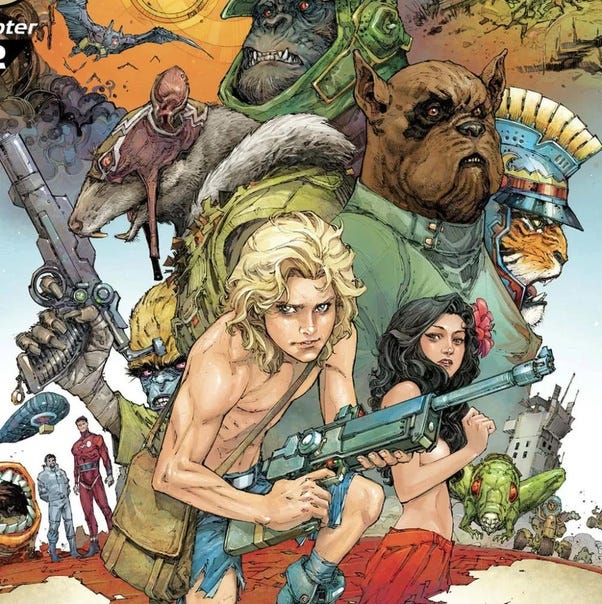
Kamandi — Last Boy on Earth – DC Comics — by Jack Kirby
Kamandi — Last Boy on Earth — DC Comics

What would be some hallmarks of a Utopian civilization?


This post is a response to a question posed in its complete format: “If you lived in an advanced-utopian civilization, what would likely be some of the hallmarks of said thriving and freedom loving society?”

On my way to where I am now to undergo a first-time experience that I’m not looking forward to, I had the opportunity to observe a passenger on the bus who prompted me to think about the environment I grew up in.

This person, who appeared somewhat masculine in his maleness, was adorned with a few piercings that were never seen in the backwoods troglodyte village of toxic masculinity I grew up in, but that was not what caught my eye. I’ve seen enough piercings, tattoos and a variety of body decorations now that most of it goes unnoticed.

In this case, his nails first caught my attention, and the colour he had painted on them appeared an aesthetically pleasing burgundy. That’s what prompted me to notice the rest of his presentation.

My cultivated biases assumed unimportant superficial characteristics about this person. Still, upon further glances, I felt them melt away because, beyond the decorations, he appeared like a typical CIS male to me.

I wondered how much of that approach to aesthetics I would have adopted had I been raised in a “more modern” setting.

I never experienced more than passing thoughts about getting an ear pierced or getting some tattoos that I never found the courage to do. Still, I would have if it were not for the rather conservative upbringing I experienced in a low education and highly biased environment that has left me with a lingering self-consciousness of doing so.

Then I arrived at my destination, and while patiently waiting for an appointment (that would consume most of my day but won’t begin for another hour, even though I was expected to arrive two hours before admission), I encountered this question on my notifications feed.

My first thought went to the person I observed and how social expectations would be far less regimented and myopic in a Utopian environment.

Another characteristic I would expect is that my waiting experience to perform a standard procedure would be done at home with far less discomforting advanced prep and greater expediency.

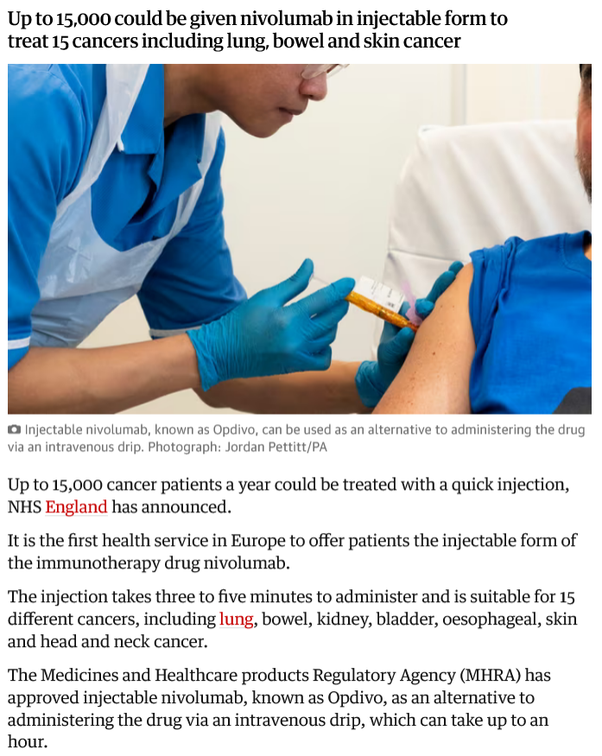
I also read, on my bus trip here, that the UK has been making “anti-cancer injections” available to the public for addressing about fifteen common varieties of cancer. It’s a treatment that appears to function like a vaccine by boosting a body’s immune system and training it to recognize cancer cells, to remove them naturally in their early stages. The article was, however, rather skimpy on detail, so I will research it further in depth when I get home.


(Here we go — my appointment was far shorter than I feared.):

Cancer patients in England to be first in Europe to be offered immunotherapy jab

NHS England » NHS Cancer Vaccine Launch Pad


I think simple remedies for complex medical challenges that we struggle with today would also be another feature of a utopian environment.

Other features of an advanced society to me would include, along with many technological advances for assisting with biological issues, transportation, and the provisioning of various resources like education and access to community administration processes for public engagement, would include access to resources permitting one’s development of a meaningful vocation without being distracted by meeting basic survival challenges.

Whatever interests a person might have would be easy for them to explore without encountering numerous barriers preventing them from developing their interests in ways that engage and benefit the public.

For example, I read about an eleven-year-old girl developing a means of testing for lead contamination in water.

While we can celebrate the innovation and ingenuity demonstrated by a remarkable youngster, we often overlook how such a child would have required access to supports not common to most to have been privileged enough to pursue an interest to such a degree that their idea can save lives.

One of the most destructive limitations we place on human potential is the misanthropic attitude many people display, cultivated by an economic system distorted by toxic competitiveness.

A utopic society would have cleansed our collective psychologies of the many mental health maladies that we’ve inherited from centuries of generational CPTSD. The most potent form of utopic boost to our potential as a species is our ability to support one another while possessing the courage to address the psychological dysfunctionalities that hamper our development.

A utopia would be a humanity free from the burden of many of the toxic aspects of human psychology that are the cause of so much pain and suffering on levels that would be considered outlandish in fiction and a bloody horror show of sociopathic stupidity in real life.

This kind of shit, for example, would not exist in a Utopia because we would have matured enough to acknowledge, first and foremost that this is a treatable medical condition that should disqualify these people from operating in any position of authority. This kind of broken mentality should be considered a socially destructive mental health issue in which the effects are severe enough to warrant mandates for compulsory treatment before being allowed to participate in activities that could be harmful to others.

A Utopia would not be suffering from a mental health pandemic affecting one in five people and resulting in a whopping majority (70%-80%) of families being dysfunctional.

Until we can deal with our mental health issues, however, any form of utopia will remain a pipe dream as we allow our species to be consumed by the chaos created by our psychological dysfunctionalities.

When I witness casual examples of people breaking stereotypes, however, such as a male with burgundy nails, I think that although we may be dragging our asses into maturity as a species, at least we can see some subtle signs of progress.

Is it better to have faith or not?

This post is a response to a question posed in its complete format: “Dear Atheists, do you think its better to have faith, or no faith?”

Believers should learn to understand how various forms of faith exist that don’t require you to check your brain out of service to maintain them.

For example, one can have faith in all the other drivers on the road to mostly observe the rules of the road.

One can also have faith in the referee for your game who is sincerely interested in being objective.

One can also have faith that the person they hire for a job sincerely wants to succeed and contribute to your success.

None of these forms of faith are guarantees against misjudgment but are optimistic expectations that will generally pan out positively. The odds of a negative outcome are far fewer than a positive outcome.

These are forms of faith based on an awareness of the world and an objective understanding of how people generally behave.

We know there are outliers and sometimes disappointments, but for the most part, one’s faith in these conditions is met with positive results.

This is a justifiable form of faith.

What is not a justifiable form of faith that essentially amounts to wallowing in self-serving delusion is believing in the existence of a human-like entity endowed with magical powers seen nowhere else in the universe… particularly when assuming such an omnipotent being of galactic proportions will intervene in the life of something less than a speck of bacteria to it… and most especially in matters of convenience like one’s favourite team winning a ballgame or a parking spot opening up in a timely manner.

Otherwise, it is much better to have enough faith in oneself to ignore the naysayers in one’s life than not because one will never have any hope of realizing one’s goals or dreams without it.

Is karma real?

This post is a response to a question posed in its complete format: “Do you believe in karma? Is karma real and happen to everyone whether they believe or don’t believe?”

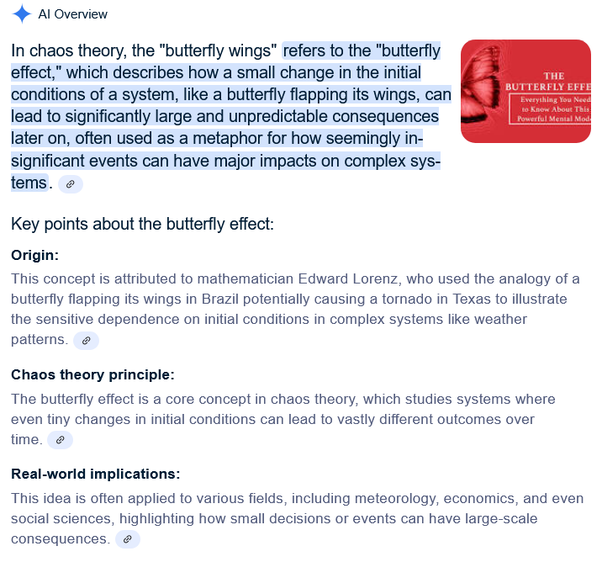
Cause and effect is physics, and so is Chaos theory, which is encapsulated within a concept called the “Butterfly Effect.”

In essence, it’s impossible to confidently predict the consequences of human behaviours because human societies are chaotic systems in which the most minor actions can lead to highly dramatic outcomes.

Whispering the correct sequence of words in the right tone into the correct ear can initiate a domino effect that can destroy an entire civilization (to translate the Butterfly Effect into a highly dramatic potentiality within the space of human dynamics).

That is valid science supported by observation and math.

Karma is “woo” — wishful thinking connecting a cause to an unconnected but desired outcome. It is supported only by the desire of the individual who hopes for a specific result. Reality doesn’t work that way, but coincidence can cause people to believe it does.

Having said that, if enough people desire an outcome, such as stopping a malignant force like Trump’s rabid destruction of the nation, then people will take action to affect an outcome through intent. This isn’t “Karma,” which suggests some invisible hand of the “human interaction space” (like the magical “invisible hand” of the free market) but cause and effect.

What will result from the escalation of conflict through the initiation of several protests as pushback to what the Trump administration is attempting through their implementation of Project 2025 is unknown. The only predictable aspect of where we are now is the guarantee that conflict will continue to escalate until it reaches a crescendo that can result in a complete breakdown of civilization through unmitigated chaos. How far all of this goes is anyone’s guess. We won’t know until the dust settles. We can only hope for a specific outcome based on the degree of public engagement and the escalation of protests against the takeover of the nation by a fascist entity.

That’s not karma because we can lose, while karma implies a guaranteed win. This is cause and effect in action, and the outcome is unpredictable.

People will call Tesla’s worldwide sales tanking karma because it feels good to say that. The reality, however, is that it’s the effect of a Nazi salute on the marketplace by a public that hasn’t forgotten the horrors of the Nazi scourge that extinguished millions of lives.

In short, I prefer to know the variables that can affect an outcome than hope some magical cosmic intelligence is balancing some invisible scale according to how I would wish the universe to operate.

Effects flowing from causes are reality, while karma is just wishful thinking.

How do atheists think this brief existence is all there is?

This post is a response to a question posed in its complete format: “How do atheists think this brief existence is all there is? Don’t you have a yearning in your heart that there must be something over the rainbow?”

That’s not exactly how that works.

This brief existence is all there is for this thing we call “ego.”

This thing we call “ego” is far from being “all there is” and is, in effect, as relevant to the universe as a speck of dust on our planet. The problem here isn’t the insignificance of ego but the ego’s addiction to being (or being perceived as) relevant beyond its existence.

There is much, much more to existence beyond the human ego, but as soon as each life ends, so too does that frail construct that demands immortality for itself on the sole basis of simply recognizing its own existence.

What we should be doing with human egos is learning how to train them to focus on the lives they get so that the benefits of existence are maximized for themselves and through others because that’s the only way for the ego to validate itself within the context of its limited existence.

Pissing away one’s life by catering to delusions of egotistical immortality is the most toxic form of grooming for one’s ego that invariably metastasizes it into a cancerous tumour for human society.

Whatever may exist “over the rainbow” is not for the human ego to experience.

This existence is all there is for the human ego.

The sooner the human ego can embrace that, the sooner it can grow to appreciate a gift that can vanish at any moment for any reason. Appreciation for the finiteness of one’s existence is precisely the point of a limited existence. There is no other way to transcend this limitation.

How can I motivate myself and feel less miserable?

This post is a response to a question posed in its complete format: “Sometimes I cry inside myself that I’m not like other intelligent people in my school and it hurts me every single day. I want to do my best but it just feels hard and my motivation dies off quickly. How can I motivate myself and feel less miserable?”

You joined Quora about three years ago and appear to have only two questions, including this one. The other question is about the lack of support and apparent abuse you endure from your parents.

It seems you are dealing with some intense emotional struggles that you do not deserve. However you perform in your academics and to improve yourself and achieve your goals, your parents have a moral obligation to be supportive.

Since they are not, you get saddled with the doubly hard challenge of finding your way through life’s confusing mess.

It’s not fair to you, but it may help you to understand how utterly broken most of the world is. We live in a world where a whopping majority (70%-80%) of families are dysfunctional.

You are not alone.

You can overcome your challenges.

A few things to consider while struggling to make something worthwhile of your life include;

  1. Focus on doing what you love doing. By investing your energies into something that brings you joy, you can create successes that will help you develop the confidence and motivation to succeed in other areas of your life.
  2. Find people who can empathize with your struggles — mainly because they endure similar struggles. Develop friendships with them to experience the emotional support your parents cannot give you.
  3. Read and read a lot to experience life through different eyes and learn to understand the complexities of life and its struggles through perspectives different from your own. Learn from what other minds have to teach you, and you will find strength within that you cannot feel now.
  4. Get a pet, if you can — a dog or a cat that can fill your heart with unconditional love and give you a reason to carry on through your toughest challenges.
  5. Spend as much time as you can with nature to feel that you belong here and to something much greater than the box of sorrow you have been given to bear.
  6. Know that nothing matters more than your ability to grow and change and adapt to an increasingly chaotic world undergoing a dramatic change that is pushing all of us to our limits. If we can survive this period of change, we will find a much friendlier world awaiting us on the other side of these challenges.
  7. Believe in yourself even when you make mistakes. Indeed, feel good about recognizing your mistakes because they are lessons you have succeeded in learning. It is much worse to make mistakes without identifying them as mistakes. It means you will repeat them like banging your head against a wall and hurting yourself even more.
  8. Allow yourself to see your parents as human beings like all other human beings. All of us have been damaged in some form or another by life, and it is a consequence of having undergone generations of struggle to emerge from a darkness of barbarism.
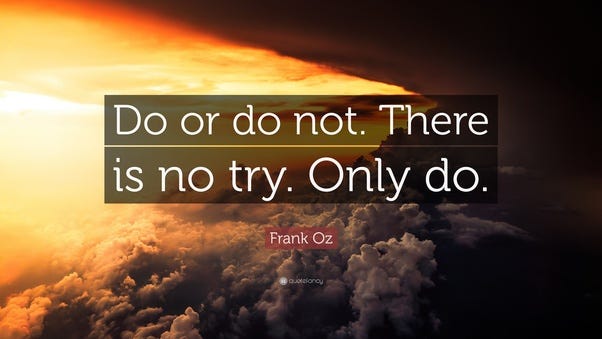
  9. Whatever you do, if you approach it with honesty, you are doing your best. You don’t have to try to do your best. You will always do your best if you are honest with yourself about what you do. Expect nothing more from yourself than complete honesty because knowing yourself matters most in your life. Knowing yourself is where you will find the strength to endure all the many challenges your life has in store.

I wish you all the best in your journey through this madness called “life.”

Temet Nosce

How do we stay hopeful when fascism is on the rise?

This post is a response to a question posed in its complete format: “How do leftists stay hopeful/resilient in times like these where fascism is on the rise and history is repeating itself?”

History has shown us that fascism always gets beaten back when the public realizes how much less they like fascism than the chaos of democracy. Every time and after enduring a period of suffering under the rule of despots, voter turnout makes a strong comeback as fascism encourages the apathetic non-voters to rethink their strategy of staying home.

Think of fascism as a lesson in consequences where people need to suffer enough to realize just how precious the delicate balance of freedom is in society and how vital the sausage-making process is, no matter how boring and dry it may otherwise seem.

People eventually learn they prefer to get off the couch and go to the polling stations to cast their votes for people they want to trust to represent their best interests. They also eventually learn that no matter how much the fascists want to paint their opposition as being identical to them, they’re not. The fascists inevitably piss off the people enough to go to war against them, and that’s precisely what Trump and Musk are inviting from the world.

They’re poking a tiger, and they’re going to get burned while they set the world aflame.

The only real question left on the table is, Just how much more pain will the people endure before the riots break out?

This isn’t even about being hopeful because we already know, just like everyone who’s been pushed past their limits, that once the anger takes over, there’s no stopping it. That neighbour who’s been pissing you off with their loud music invariably gets an earful that may embarrass you afterward. Still, it’s an emotional explosion that can’t be controlled during its moment of emotional release.

My guess is that if Luigi Mangione gets the death penalty, that might be the final trigger before all hell breaks loose. It’s hard to tell because Americans seem able to tolerate incredible horrors without doing anything substantial about them.

I know that if I was living in Flint, Michigan, for example, and I had a kid who died from the poisoned water, I would have pulled a Luigi myself. If a kid of mine were gunned down in a school while my local representative did nothing to institute sensible measures to prevent this from happening again, I’d lose my shit.

As it stands right now, from what I’ve been put through on a personal level, I’m already doing everything I can to keep from doing something stupid while attempting to resolve an issue in the most civilized manner possible. As it stands, the bullies responsible for destroying my life are behaving as if they’re going to walk away without suffering any consequences for their actions as they tell me to shut up and die quietly.

I know I’m not the only person at the end of their rope, and all it will take is the right match to set this nightmarish dystopia ablaze.

People like Musk will have to come around or beef up their security because it’s only a matter of time before their arrogance blows back like a nuclear bomb in their faces.

“Those who make peaceful evolution impossible make violent revolution necessary.”

The trouble with this dynamic is that millions of people have to be pushed to their breaking point before they realize how much less pain there is in risking death in a revolution than to continue enduring a walking death in slow motion toward oblivion.

This is all just history repeating itself.

It’s not new by any stretch of the imagination.

Those who refuse to learn from history force us all to replay it, and we all get uglier about it each time we must endure the stupidity of people who refuse to read the writing on the wall.

The only salient aspect of hope in this mess is that we can avoid the worst chaos before returning to sanity.

Would hastening societal collapse do more harm than good?

This post is a response to a question posed in its complete format: “Attempting to increase global problems to bring societal collapse sooner, would that do more harm than good?”

Societal collapse is, by definition, the most harm that can be done.

It may seem like the easiest way to address the rampant corruption we see today, but there is no guarantee against a new and next-generation form of corruption taking root in the ashes of the old. The odds are greater that a new form of corruption will be even more corrupt because they will have better learned how to protect themselves from reprisals.

If you look at the responses to Brian Thompson’s execution for crimes against humanity, there is no remorse being displayed by the monsters among us. They feel righteous anger at having been assaulted so violently.

Their response to a situation where their victims strike back is to hunker down with increased security measures.

They learn nothing from random acts of violence.

It may be the case that destroying all of them at once will eliminate the currently most powerful of the corrupt among us. There are always new generations following who are eager to outdo their forerunners.

Indeed, this generation of corruption defining the ownership class is a case study of learning from their prior mistakes. It is precisely why they have essentially co-opted all media.

The best thing we can do is build from where we are while learning to embrace values and contribute to solidifying the social contract we share.

We must stand up against the corrupt in whatever way we can. We must also be evident in our statements so that the world understands how violence is treated as a last resort after all other options have been exhausted. This is the only way to minimize the destruction of everything we have built together. This is the only way to preserve and protect the best of what we want for our society and our children’s future.

From Marvel’s Loki Series

Do atheists believe in having faith, hope, and wisdom?

This post is a response to a question initially posed on Quora, and can also be accessed via “https://divineatheists.quora.com/Do-atheists-believe-in-having-faith-hope-and-wisdom-14

Neither of those concepts is exclusive to believers. That you ask this question means you’ve been subjected to disparagements about atheists by other believers who spread hatred instead of the peace and love your faith alleges to represent.

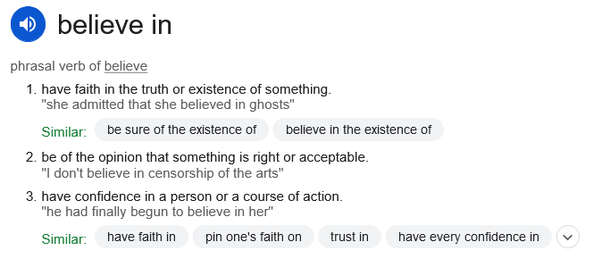
This particular atheist now cringes every time I see the words “believe in” because I know it’s coming from a believer who doesn’t understand belief. They overuse that expression as a shortcut for every bit of conceptual data their brains can accommodate.

It’s like watching someone put ketchup on everything they eat, from eggs to steak to cakes and doughnuts. It just gives me the heebie-jeebies.

I am learning to hate the expression “believe in” more and more every day because the people who are supposed to understand the implications of belief the most are the least capable of comprehending the implications of a belief.

Many believers confuse belief with entrenched insularity; nothing could be more toxic to the concept.

Many believers behave as if zealotry and belief are synonymous, but they’re not. They’re just excuses to refuse to learn, grow, and change. Invoking beliefs for believers is often the equivalent of a child whining about cleaning their room or taking their medicine. Letting go of toxic beliefs is just too much “woke” for far too many.

I have faith in myself and my ability to find a way to make it through this exceptionally challenging period in my life, but I have to accept that I may fail. I rely on hope to carry me through while smoothing out the rough edges and allowing me to maintain the necessary motivation to overcome adversity. I don’t see wisdom as a statically defined state of being but as an ideal, like a utopia, which serves more as a compass setting than a destination. There is no point in which a maxim of wisdom is attainable. Wisdom is often contextual and a subjective perception one has of another. To think of oneself as wise is just another means by which one admits membership into the Dunning-Kruger club.

I hope I have enough wisdom to survive my travails, but I have faith that I may succeed even if I don’t.

How do I cope with not being good enough?

This post is a response to a question posed in its complete format: “How do I cope with life knowing I am not good enough to do what I want?”

Life is about learning to cope.

One goes about coping by not obsessing over what one cannot do but by finding joy in what one can do.

There is no “good enough” because that’s an illusion that limits your potential and destroys your capacity for finding joy in doing something meaningful for yourself.

When you think about it, being “good enough” is a metric others apply toward you. You can choose to either accept other people’s insulting views of you, learn to internalize them and begin feeding a growing suicidal ideation, or you can stand up and say, “Fuck you.”

Almost everyone who has done something special has faced people who judge them as “not good enough.”

You can either accept the judgment of people who will never know “the real you” that you know lives within, or you can assert “that real you hidden inside” and embody it to become the “real you” that you know exists and is bursting to have a life of its own free from judgmental assholes.

Here’s a secret most don’t understand: Whenever someone judges you as not good enough, they confess to their insecurities that they are too afraid of not being good enough. So they project them onto people they can victimize. It’s an expression of a mentality called “crab psychology” — if they can’t be good enough, they will do what they can to ensure you’re not good enough.

Whatever you do with your life, don’t become one of those assholes. Be sure to encourage people to be their best because that’s the only way we’ll be able to crawl out of this hole of primitive barbarism that we’re still trapped in.

Temet Nosce