A Dialogue on Existence


Today’s post is a slight shift in gears. Rather than the simple formula of posting an answer to a question, I’ve included a dialogue following a short answer given to a question, which, in its complete format, is, “If we died and stopped existing, how long would we have to wait to be born as a new animal? Would time fly? Would we recognize we had been dead for hundreds of years?”

The universe is at least thirteen billion years old. Do you have any awareness of anything outside your experience of life?

No, because you did not exist before existing now. You will not exist again.

When you die, you stop existing. There is no “waiting” for anything. There is no time. Death is not a timeout from life.

This finite period of existence is all there is.

Learn to appreciate it as much as possible because once it’s gone, it’s gone.


Commenter (CS): I think a lot of you are missing the point if you don’t exist the universal find a way for you to exist

AA: Nope… you are missing the point. Once you’re dead, you’re dead. Whatever it is that you think constitutes “you” is gone forever.

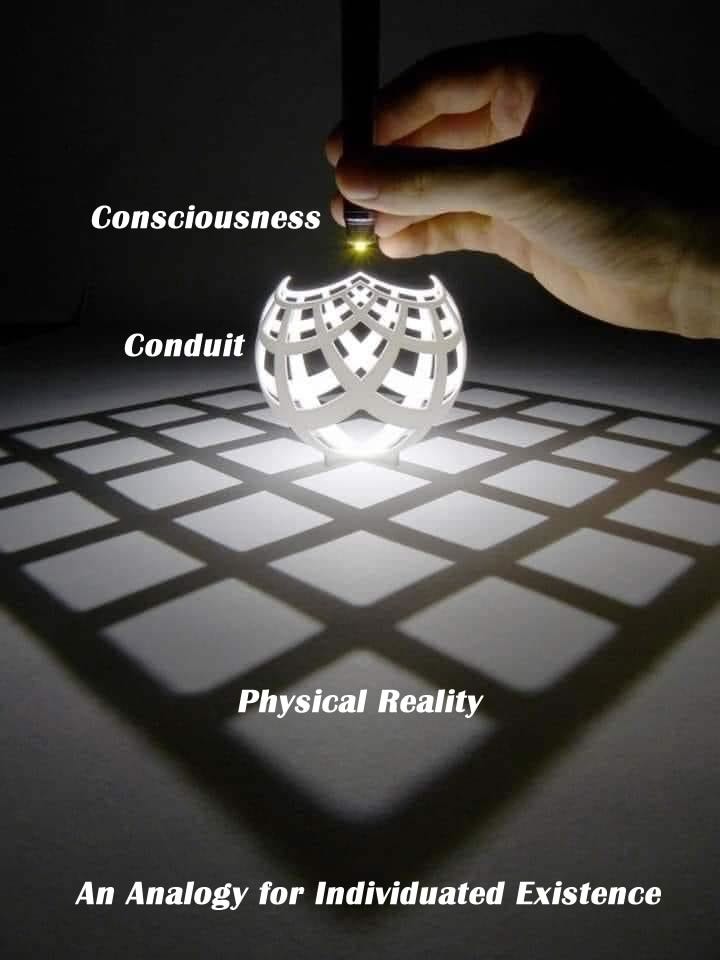
If something that you might speculate exists beyond the “you” that exists in physical reality is something which makes you “you” and that you are a part of, it is not “you”… it is something else. If something else you speculate exists beyond physical existence, the “spark” makes you you. It accomplishes that task through physical phenomena, resulting in epiphenomena known as “ego, superego, and id.

“You” are not that “eternal thing.” “You” are a temporary thing called “ego.” “You” are the flame on a match that disappears into nothing when the wood has burnt.

Accepting this truth is the broad lesson of humility all of humanity must learn to transcend this tentative existence.


Commenter (CS): I agree with you to a point we will be dead yes . but if something doesn’t exist something that exists in the future . will be atoms that once made us meaning we will live again but not as us I’m not talking about reincarnation I’m simply talking evolution atoms are the building blocks of life if we don’t exist the atoms will make us exist.

AA: No. Atoms merely form the physicality of our existence as conscious beings. If physicality is the limit of our existence as conscious beings, then that only reaffirms the argument that there is nothing more beyond this finite existence for any of us.

The religious take on existence is that we are part of something greater. Our latest investigations into the concept of consciousness indicate that something of that notion may be true. For example, “Integrated Information Theory” (IIT) posits that all of the universe’s physicality essentially is information that persists indefinitely, if not infinitely.

That means whatever constitutes a life persists long after that physical life is complete… like a library of documentaries. This begs the question of whether or not that library is accessible and accessed by something speculative.

Whatever the case may be, the fact is that the “you” which exists within this finite frame of spacetime exists only within this finite frame of spacetime. The two concepts in these two paragraphs also imply that the “you” experiencing your life is something else experiencing a “documentary,” and it ends when the “you” that you experience ends.


Commenter (CS): that’s a very good point but that’s still doesn’t explain when something decomposes and turns into nothing nothing can be made . before we were spam we came from nothing the atoms in the universe made us when we didn’t exist meaning over time after the bodies decomposed it will do the same possibly on a different planet where evolution is still new.

AA: There is no such thing as “nothing.” That’s a religious concept. Decomposition reduces physical materials into chemicals that are reintegrated into the environment. That’s a long way from “nothing.”

Molecular arrangements construct chemicals. Atomic arrangements build molecules. Quantum arrangements construct atoms.

Quantum bits of matter exist in flux between virtual and physical states. The virtual state exists in a theoretical state called “Quantum foam.” “Virtual particles” theorized to exist within “quantum foam” are described as potentialities because we can identify their physical state when manifested and extrapolate their “virtual existence” from behaviours we can observe.

The “state of quantum foam” exists “outside” the parameters we quantify as “spacetime.”

IOW. Reality “extends beyond” the physical universe.

Adding to that is the relatively recent discovery of microtubules in the human brain, which appear to interact with the universe on a quantum level.

This all suggests a connection between consciousness and whatever may exist outside the framework of our physical universe.

This implies human identity as a construct, not unlike a liquid, which takes the form of the mould into which it is poured.

IOW. “You,” as you experience “you,” exists only within the context of the mould you are poured into. Once that mould has deteriorated, there can be no more “you.”
Is it okay to be different and not be like everybody else?

This post is a response to a question initially posed on Quora, and can also be accessed via “https://www.quora.com/Is-it-okay-to-be-different-and-not-be-like-everybody-else/answer/Antonio-Amaral-1

Got news for you… you ARE different.

You may think similarly to many others.
You may like similar things.
You may do similar things.
You may believe similar things.
You may be so similar in so many ways that it’s hard to differentiate your identity from the group identity you are affiliated with, but you are different.

You don’t have any choice in the matter because you see through your own eyes, hear through your ears, think with your mind, and have different experiences, even if your experiences are defined by strict adherence to a group protocol.

You are different because no one else can live your life. Your experiences, thoughts, and feelings are irreplaceable, making you a unique and significant individual.

You can share as many details of your life, thoughts, beliefs, ideas, and dreams as you want, as much as anyone else is willing to tolerate, but they will never know life through your eyes.

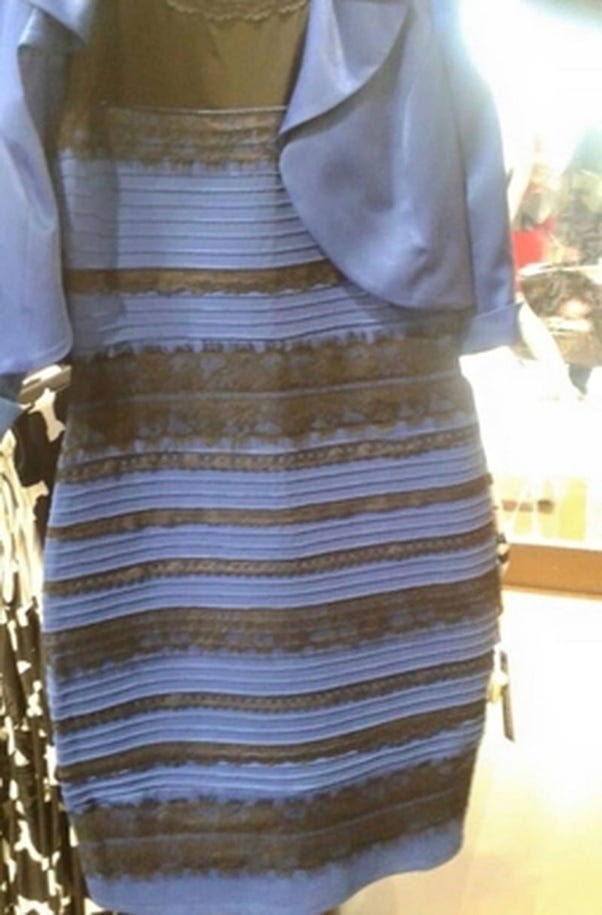
Here is an example of how different individual perspectives are through an issue that went viral about a decade ago. It was a photograph of a dress which, dependent upon the context of one’s biological composition of rods and cones in their eyes, their state of mind, and the lighting in the room at the time of examining this photo, people would see either a black and blue dress or a white and gold dress.

The dress — Wikipedia

Physically, psychologically, geographically, and within the context of your environment, you ARE different. You cannot help but be different.

You should acknowledge and embrace that fact about yourself and the human condition before deciding how much you might want to be like everyone else.

Wanting to be like everyone else is a generally healthy desire to feel like one belongs somewhere, that they have a place in this world, a community, and a family that supports their existence and accepts them for who they are as they are.

Belongingness is a crucial component of a healthy psychology. Belongingness is a fundamental need we all share in different ways.

We have survived and prospered as a species because we are interdependent beings. We rely on our community bonds to achieve our potential. When we work together, we can accomplish miracles through a force multiplier called “synergy.”

To this degree, wanting to be like “everyone else” can be a healthy motivator to fit in with one’s community and explore one’s unique contributions to achieve one’s potential through support from one’s community.

The downside to being “like everyone else” is to subsume one’s identity to the group and lose one’s sense of identity. The negative consequences are many, varied, and often horrifying, as we have been exposed to numerous nightmares arising out of toxic conformism to a group’s identity and mandates.

Ranging from the inculcated fears of communism that hyper-capitalists invoke as their favourite boogeyman of doom to the cyanide-infused Flavour-Aid victims of cult conditioning, we have all been exposed to the inherent danger of toxic conformism.

Human societies and groups have all evolved along a vector resulting from the conflicts we’ve experienced between two oppositional poles in our thinking about which is the preferred option for a social contract — independence versus conformity.

Neither in their pure form is healthy for any society or group.

The major problem with wanting to be like everyone else is that you can’t be like everyone else precisely because you can’t know what everyone is like beyond the superficial characteristics you identify that make them appear similar to your perceptions.

Your unique perspective identifies similarities unique to your viewpoint. All your efforts to be like everyone else are attempts to be what you imagine everyone else in your group is like.

It’s a subjective approximation of what you perceive as reality, not an objective representation. It can’t be because everyone is just as unique as you.

No matter how hard you try to be like everyone else, you will fail because there is no “everyone else” outside the confines of your imagination. You may even associate yourself with large groups where everyone agrees that everyone else is like them. The reality is that they’re just agreeing with themselves and validating their bias with people who validate their own by acknowledging others who express a similar bias.

It’s a rabbit hole of agreement in which the similarities are no more profound than wearing similar clothing.

The worst part of all of the effort to be like what one imagines of everyone else is that one loses sight of one’s own identity, unique nature, unique path in life, and the unique nature of one’s potential contributions to the world.

It’s almost a paradox in which the more solidarity humanity can achieve, the more we all benefit from the synergy of united effort. At the same time, the more homogenized we become as individuals, subsuming ourselves into a group, the more exposed we are to decay and threat by systemic collapse.

As in all things, the answer to your question is that it is much better to consider this:

There is light within dark and dark within light. While acknowledging this, one arrives at the most crucial understanding of the nature of dichotomies: neither one nor the other is superior — or can even exist without the other because they both exist as a dynamic.

In essence, the best way to be okay is by finding a balance between the two that work best for your unique you.

Temet Nosce