Will atheists go to heaven or hell?

This post is a response to a question posed in its complete format: “ATHEISTS! Maybe you’ll go to heaven, or hell, or maybe you’re right. Not for me to say. But know that God loves you. And so do I even if you hate him (or the idea of him) and even if you hate me. It cost nothing to be kind. How bout that?”

You should consider why you felt compelled to write this.

You’ve made numerous presumptions that do not match reality, but they suit your bias.

For example, you presume hatred is a part of the equation or makeup of an atheist mindset. It’s not. Hatred is an individual phenomenon that grows into a group phenomenon when people are trained to think alike. This means hatred is more prevalent among believers than it is among atheists.

The counter-assumption I have just provided you that refutes your presumption of hatred is supported by reality. Religions have been catalysts for war between people for centuries. Bigotries toward minorities are stoked within religious institutions. That includes your biased attitude toward atheists that you display within your post (which isn’t even a real question).

This means that your presumption of atheists being motivated by hatred is a projection on your behalf. On some subjective level, you’ve recognized a particular prevalence of hatred in your environment and, rather than seek out its source, you’ve chosen to deflect responsibility for that hatred onto atheists.

Do you see how that works?

You can sense hatred in your environment and understand how corrosive it is. You express a desire to do something about it by imposing your bias onto a group of people you can more easily scapegoat than hold the people you have grown fond of accountable for their behaviours.

Your behaviour is an exhibition of a common psychological phenomenon called “deflection.”

It’s a way of lying to yourself to help you avoid an uncomfortable truth.

This brings us to the last line in your post.

Kindness indeed costs nothing, and that’s why I’ve taken the time to provide you with a calmly worded and detailed explanation of your behaviour — in the hopes that you’ll take some time to ponder how it is that your intention to display kindness is, in reality, an offence, not a kindness.

It would be far kinder of you to at least refrain from making negative presumptions about atheists and accusing them of things about them that are untrue. After all, your scriptures caution you against bearing false witness.

Instead of proferring advice from a tone of arrogance and condescension, you would have been more aligned with your professed saviour (and your extoling of kindness) by keeping your counsel to yourself, praying over your consternation with the prevalence of hatred you have detected, and offering assistance to your fellow believers in helping them to overcome their hatreds.

Please note how my response to you came from a place of love for humanity, not from some imaginary figurehead that I can pretend grants authority to my words. This is just one human speaking honestly and respectfully to another.

No God is required to justify kindness.

We all have that potential within us.

We must only be honest within ourselves to display genuine kindness to another, rather than use the pretext of kindness as a disguise for disparagement or malice.

Is it better to have faith or not?

This post is a response to a question posed in its complete format: “Dear Atheists, do you think its better to have faith, or no faith?”

Believers should learn to understand how various forms of faith exist that don’t require you to check your brain out of service to maintain them.

For example, one can have faith in all the other drivers on the road to mostly observe the rules of the road.

One can also have faith in the referee for your game who is sincerely interested in being objective.

One can also have faith that the person they hire for a job sincerely wants to succeed and contribute to your success.

None of these forms of faith are guarantees against misjudgment but are optimistic expectations that will generally pan out positively. The odds of a negative outcome are far fewer than a positive outcome.

These are forms of faith based on an awareness of the world and an objective understanding of how people generally behave.

We know there are outliers and sometimes disappointments, but for the most part, one’s faith in these conditions is met with positive results.

This is a justifiable form of faith.

What is not a justifiable form of faith that essentially amounts to wallowing in self-serving delusion is believing in the existence of a human-like entity endowed with magical powers seen nowhere else in the universe… particularly when assuming such an omnipotent being of galactic proportions will intervene in the life of something less than a speck of bacteria to it… and most especially in matters of convenience like one’s favourite team winning a ballgame or a parking spot opening up in a timely manner.

Otherwise, it is much better to have enough faith in oneself to ignore the naysayers in one’s life than not because one will never have any hope of realizing one’s goals or dreams without it.

Why do people become poor and broke?


This post is a response to a question initially posed on Quora, and can also be accessed via “https://www.quora.com/Why-do-people-become-poor-and-broke/answer/Antonio-Amaral-1

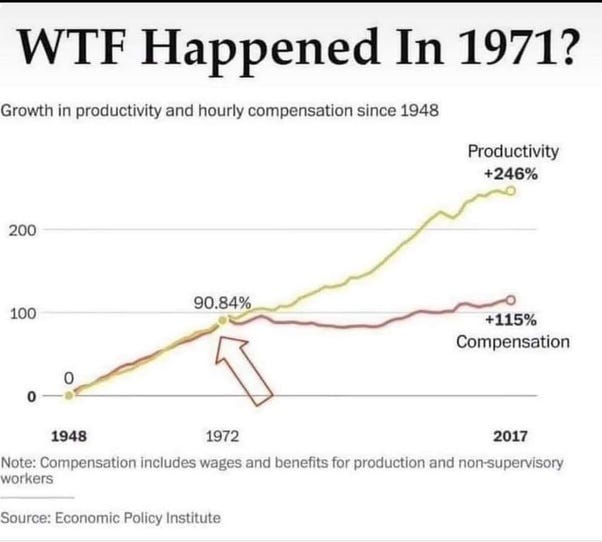
Setting aside the failings of individuals who make bad decisions and cause problems for themselves, because there is always a tiny percentage of people who need more guidance to make better decisions, the vast majority of people suffering in poverty have done everything right with their lives and are still struggling.

A big part of the reason why that happens is that too many people waste their time wallowing in a misanthropic belief that poverty is due to the victims of it being responsible for creating their poverty and that if they just did something different with their lives, they, too, would be among the wealthy in society.

This myth that poverty is a self-imposed sentence is precisely what the thieves in our lives want the people to believe.

This myth that poverty is a self-imposed sentence helps people to believe they won’t become victims of poverty themselves.

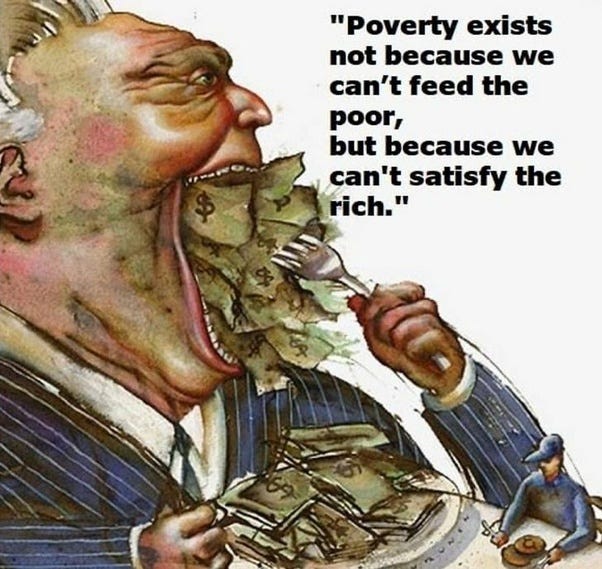
This myth that poverty is a self-imposed sentence overlooks how our culture is geared entirely around impoverishing the majority in favour of the sociopaths who are willing to destroy lives to achieve personal material benefit.

This myth that poverty is a self-imposed sentence is why people become poor and broke because believing this nonsense allows poverty to exist in a post-scarcity world that could easily eradicate poverty overnight — if we could only address the rampant greed corroding the social contract to be the actual cause of poverty instead of shaming the victims suffering unnecessarily in a state of poverty that would not exist if economic justice existed.

There hasn’t been a time in my life where I have not been blamed for the clients who have stiffed me after praising me for doing work they benefited from.

Try to make sense of that.

It’s precisely what Donald Trump does when he calls the contractors that worked for him losers. He put thousands of people out of business throughout his life by not paying them for doing work on his behalf, and as far as he is concerned, it’s their fault.

This question embodies a corrupt attitude that pervades society, and it is this attitude that permits poverty to exist.

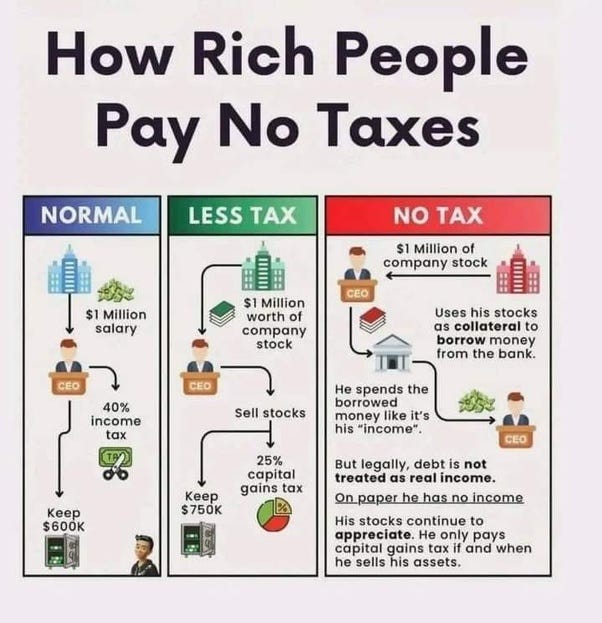
It’s the same attitude that admires how people can avoid paying taxes and envies that ability enough to want it for themselves.

This question enables the attitude of greed to characterize the rot infecting humanity and destroying human civilization because it teaches us to forget that we are all in this together.


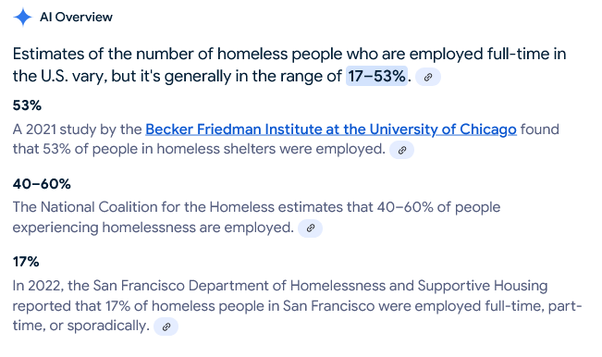
Up to about half the people who are homeless in the U.S. are working full-time jobs.

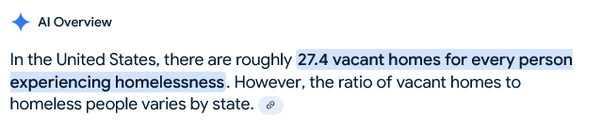
There are over 25 times more vacant homes in the U.S. than there are homeless people.

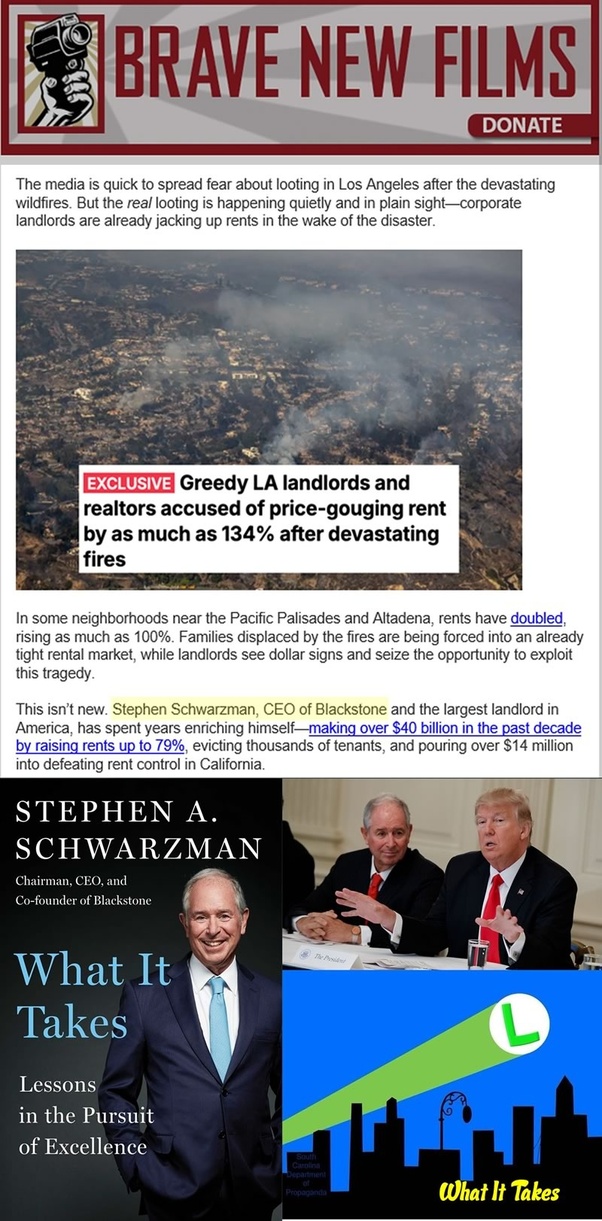
Try to make sense of that… and then get pissed off about this:

How can the concept of authority be explained?

This post is a response to a question initially posed on Quora, and can also be accessed via “https://www.quora.com/How-can-the-concept-of-authority-be-explained/answer/Antonio-Amaral-1

There appear to be two distinct perceptions that dominate public responses to authority.

On the one hand, an authority is an entity with the power to issue demands, impose edicts, and enforce compliance. On the other hand, an authority is a trusted entity that serves as a resource for empowering people and enabling their ambitions.

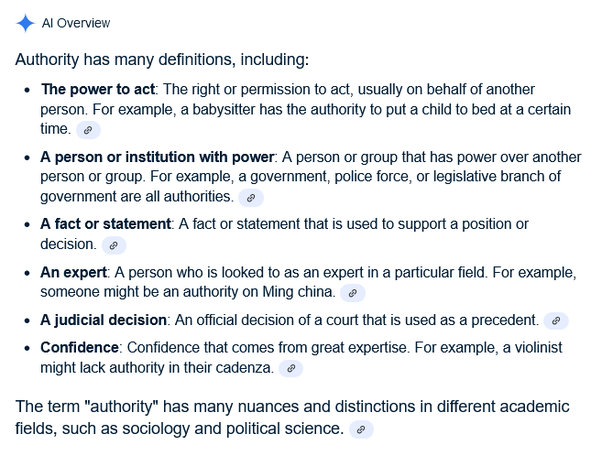
Our good friend and authoritative source of plagiarized information, AI Bot (Ayebot? iBot? EyeBot? — It needs a name so that it can be further anthropomorphized. “Gemini” seems a bit too much like impersonal woo.), provides a bit more detail:

Wikipedia has this definition, which appears to favour an interpretation based on an exercise of power:

Authority is commonly understood as the legitimate power of a person or group over other people.[1][dead link][2] In a civil state, an authority may be practiced by legislative, executive, and judicial branches of government,[3][need quotation to verify] each of which has authority and is an authority.[4] The term “authority” has many nuances and distinctions within various academic fields, from sociology to political science. ”

Let’s comb the world of language authorities to see how they interpret authority:

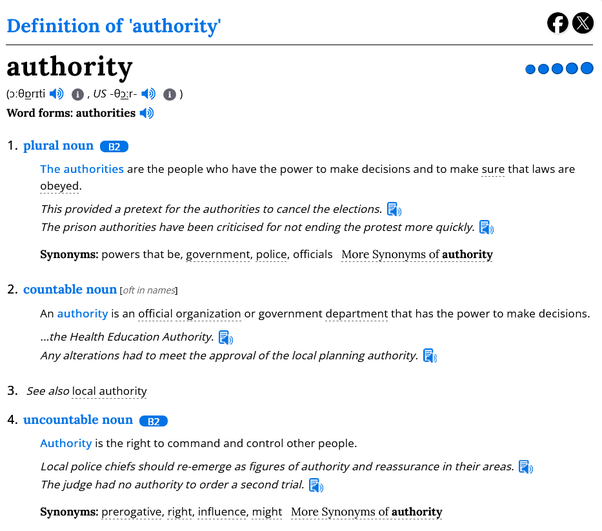
Collins has this to say about authority:

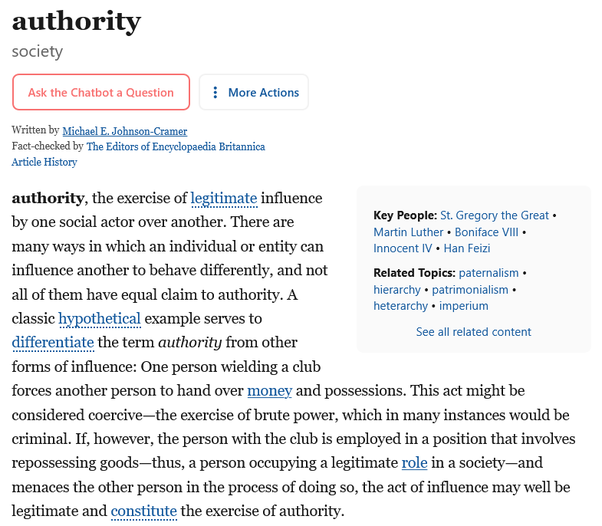
Britannica attempts a more concise definition favouring “influence” over “imposition” like Collins.

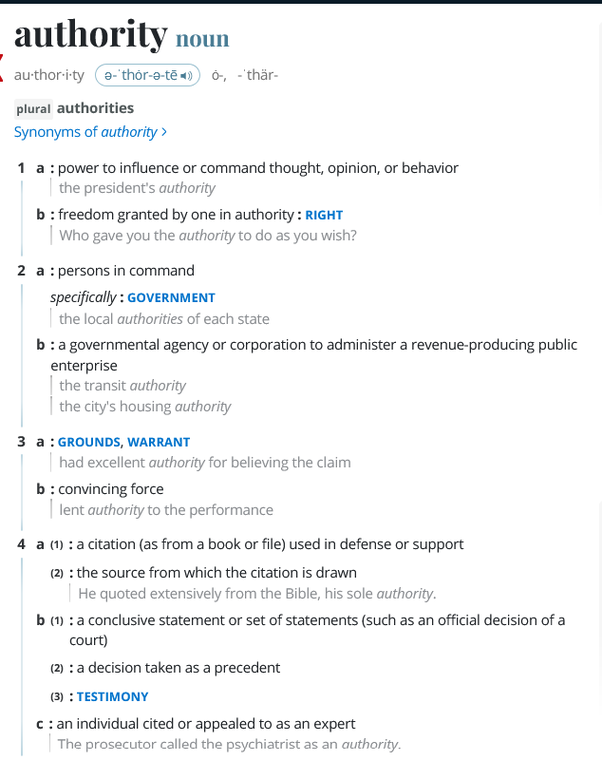
Merriam-Webster provides a more comprehensive overview of how “authority” is apprehended and implemented in society — although imposition precedes influence in its hierarchy of interpretations.

Interestingly, two of the world’s premiere language authorities place a profit premium on sharing basic definitions for words… which begs the question of the value of definitions versus profit and whether these institutions actually are authorities in realms beyond basic definitions.

Oxford at least asks for personal information to be granted access to elementary information, while Cambridge’s efforts are laughable.

These last two efforts suggest to me that their authority is entirely contingent upon reputation — part of the “old boy’s club” of authoritative prestige in the world, which essentially shuts out the plebians among us who must wrestle with “inferior language authorities.”

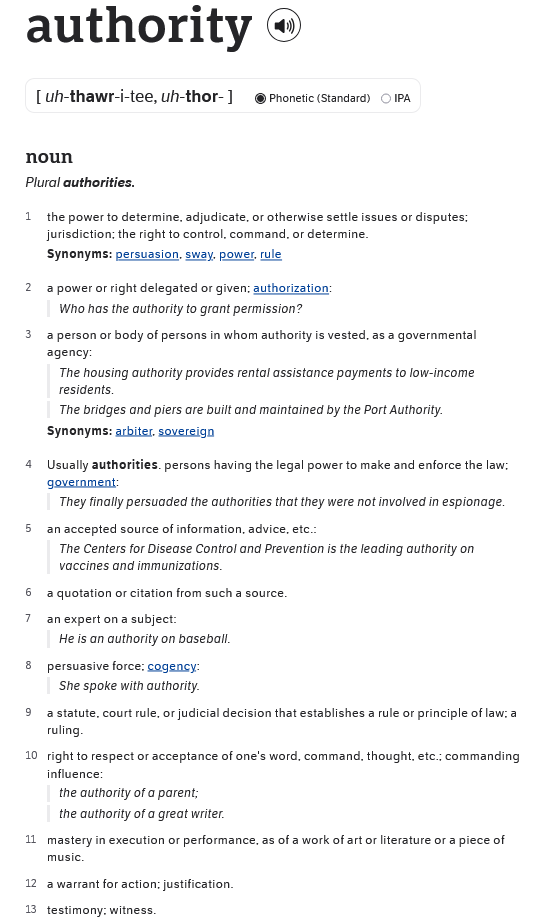
Meanwhile, freebie entity Dictionary dot com presents itself as a superior authority in marketing and business development to the two staid elements of anachronistic society above and provides an even more comprehensive set of definitions than Merriam-Webster.

This tells us that authority is actively cultivated by those who desire it and then, once achieved, is actively protected and zealously guarded beyond levels resembling reason. At the same time, newcomers overturn established authorities who fade into oblivion as the barbarians at the gates no longer storm them out of existence but supplant them through more effective forms of adapting to an ever-changing world.

In short, “authority” can be explained entirely by the dynamics of ego, power, and how much one is addicted to asserting their prominence in a chaotic world.

Interestingly, the most respected authorities throughout history have rejected the impositional form of authority flowing from within in favour of empowering the people at large by serving as a resource for enabling their assertions of personal authority within their relative spheres of influence.

For example, people still recognize the names of rare individuals who embodied humility, such as Gautama Buddha — or even a more modern instance like Nelson Mandela. Still, few outside dedicated historians can remember the many “authorities” throughout history who imposed their will upon the public. Those remembered are often anomalies serving as massive engines of destruction whose names are whispered rather than revered. Few among those whose authority was impositional in nature are remembered for their introspective wisdom, like Marcus Aurelius and Sun Tzu, but are revered for their insights in contrast to those of the conquerors like Alexander the Great or Genghis Khan, who are studied for their strategies (and often critiqued for their human failings).

For example, I predict that if humanity survives in some form resembling the humanity we know today, Jimmy Carter will be remembered with deep reverence and respect one thousand years from now. In contrast, Donald Trump will be remembered as the cautionary tale of a bull in a china shop whose lesson for humanity is the necessity of restraint and accountability.

As an atheist, how do I rid myself of clinging remnants of religion still existing in me?

This post is a response to a question initially posed on Quora, and can also be accessed via “https://divineatheist.quora.com/As-an-atheist-how-do-I-rid-myself-of-clinging-remnants-of-religion-still-existing-in-me-8

You don’t in the same way you don’t get rid of scars. They’re a part of you for life.

The injury may no longer affect you, but you will live with a reminder of it until you die.

That’s just life.

There is no point in fighting with yourself over “clinging remnants,” especially when they can still be helpful as shields against the perpetual assaults of believers.

Being aware of your “clinging remnants” gives you deeper insights into the effects of religion on a person’s mind and helps you to develop an objective perspective of yourself while improving your ability to help someone else when they’re struggling with the impact of their conditioning.

Being aware of “clinging remnants” helps you to be more aware of other forms of conditioning or manipulations like gaslighting because you’re more attuned to the subtle implications of words and their meaning.

Whatever may be clinging today may drop off over time to be forgotten while other remnants you were unaware of begin to crop up and occupy your attention. This is a natural part of the healing process that helps you to develop deep insights into the tangled web of confusion that religion weaves into one’s consciousness and unconsciousness.

This deconditioning process is a valuable experience in developing self-knowledge and awareness of oneself in depths many never achieve. They may irk you for a long time, and even for the rest of your life, but you will find moments where their presence allows you to perceive events or a situation on levels of subtlety that surprise you how people can miss what appears evident to you.

The most important goal is not to fight against the remnants but to develop an objective perspective of them. Understanding one’s sensitivities is like a vaccine against being conditioned in other areas and ways by different types of bad actors one encounters.

Good luck.