Should the Earth get a break from humans?

This post is a response to a question posed in its complete format: “Do you ever get the feeling that we should just give up and let the bombs start flying? I think it’s time that the Earth gets a break from humans. Can you think of anything better than A nuclear or holocaust to do this?”

While cleaning up my Quora content, including A2As like this one. I sometimes make what I’m unsure of is a mistake or not to check out a profile. My first inclination is to pass on the question, but I’m sometimes more curious than I should be about the profile behind the question. When checking out this profile, I thought this would be another troll to mute and block. Then I started scanning the rest of the content, expecting more unhinged lunacy.

I spotted content from someone who appeared somewhat sane, non-trollish, and aware enough to grant the benefit of the doubt about this question by interpreting it as an extreme expression of frustration. We all have moments when we realize afterwards that we could have gone a different route in our expressions.

This may be one of them, so I decided to answer it instead of passing on it and blocking the querent.

I’ve never felt that destroying all life on the planet was a solution to anything. I view it as a kind of MAGAt “burn it all down” attitude that I immediately dismiss as unhinged emotionality.

Although I have encountered this sentiment occasionally, I generally scroll past or get triggered into lambasting it.

This time, however, I will respond with a simple question:

Why should all the rest of the animal and plant life be extinguished to quell the frustrations of a few humans who have lost tolerance for bullshit?

It seems rather like the kind of narcissistic attitude that’s gotten us into this mess in the first place.

Why not just pull a Frank Herbert and create a virus to eliminate humans, allowing the rest of life on Earth to continue? (Okay… Frank’s virus in “The White Plague” didn’t extinguish all life, but you get the picture.)

That seems much more representative of justice to me and perhaps even a better step in owning up to our shit as humans. By allowing all other species to learn from our stupidity (at some point in an imaginary evolutionary future) instead of turning the traces of our existence into glass that can never serve any potential life that may or may not follow, we can at least make up in part for our destructive behaviours.

There’s no upside to this kind of genocidal cleansing of life. Getting rid of humans is one thing, but taking away the opportunity to live away from all other forms of life beyond bacteria and cockroaches seems like adding insult to injury.

This reasoning reminds me of someone considering infanticide. Just because one’s life sucks, it doesn’t mean their families need to be extinguished as well. Eat a bullet or play hopscotch on a freeway to get your misery over with. If the lives you want to extinguish along with yours are innocent of causing harm, and of harming you in particular, how do you factor in punishing them? That makes absolutely no sense to me.

One should at least pick targets directly responsible for their misery, and let everyone else live, so they can learn something of value going forward.

Luigi Mangione chose this route, and he’s now viewed as a hero by many. I’ve even read claims (however trustworthy they may have been) from people about how insurance companies briefly relaxed their policies after Brian Thompson’s exit from this plane. People who would otherwise have been denied coverage and died were accepted for treatment and cured. They are still among the living when they would have died otherwise. One cannot but consider some nobility within an ignoble act.

The entire point of violence as a last resort is that it’s supposed to address the causes of unendurable misery, not eliminate all life. The Bush Doctrine’s advocacy of preemptive action seems to have proven that leading with violence is always the worst strategy to take. It’s supposed to instill hope in the lives of those left behind to continue struggling through difficult situations. That’s what Luigi accomplished.

Turning the planet into a giant glass ball accomplishes nothing more than turning the Earth into a giant glass ball. Nothing is left to praise the heroes who sacrificed their treasure for the sake of protecting the treasures of others.

Sure… I can understand wiping out mosquitoes, but what has any rabbit ever done to you to deserve wiping them all out?

Were you somehow hurt by a carrot or traumatized by tomatoes? Perhaps apples give you gas?

I’ve never met a squirrel that hasn’t made my heart flip.

I don’t see how anyone who isn’t indulging in extremely narcissistic thinking could imagine a nuclear holocaust as a solution to anything.

Please do try to think about how it is precisely that kind of self-serving thinking driving the Orange Nazi freak who likely contributes to your extreme attitude.

It’s a strategy that gives the bastards their coveted win.

What makes you think Trump isn’t trying to get revenge on all of life in precisely that way, because he’s reaching the end of his? Right now, he seems like the guy who got into office to party like there’s no tomorrow because he knows there isn’t much longer for him. In a 1992 interview, he spent an hour talking to Charlie Rose, bragging about how much he loves revenge on people he feels have betrayed him.
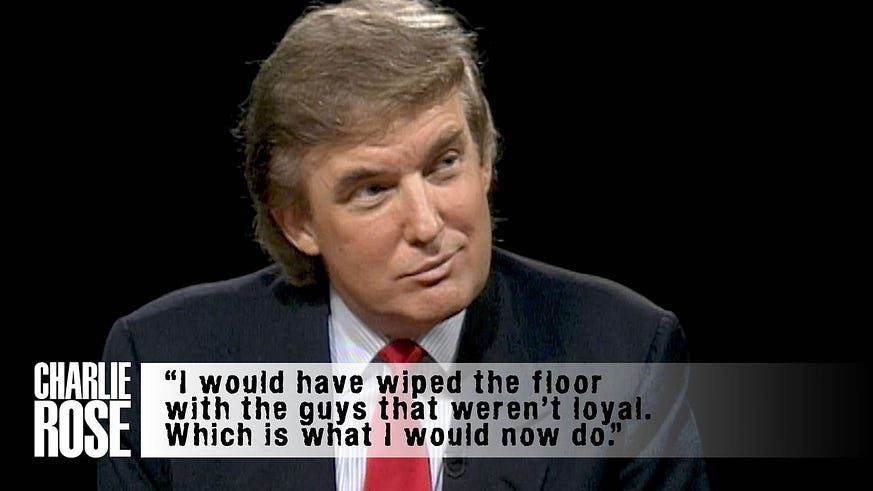
1992 Charlie Rose Interview with Donald Trump

Why do you think Republicans are making such a fuss about Biden’s decline and faking outrage about it “being hidden” in the dastardly, devious way Democrats always do? My guess is that’s just another projection on their behalf.

I will predict that we’ll discover insiders within the Republican party are acting precisely in ways that run interference on TACOman to hide his decline. He may not even make it to the end of his term.

It would not surprise me to discover Jake Tapper’s got another book in progress to mirror the one he’s hawking right now.

In short… No, I can’t think of anything worse, not better than a nuclear holocaust. Feeling as if cats, dogs, or even leopards can evolve enough to rule the world comforts me.

Mondays may suck, but they don’t suck that badly.

Kamandi — Last Boy on Earth – DC Comics — by Jack Kirby
Kamandi — Last Boy on Earth — DC Comics

What would be some hallmarks of a Utopian civilization?


This post is a response to a question posed in its complete format: “If you lived in an advanced-utopian civilization, what would likely be some of the hallmarks of said thriving and freedom loving society?”

On my way to where I am now to undergo a first-time experience that I’m not looking forward to, I had the opportunity to observe a passenger on the bus who prompted me to think about the environment I grew up in.

This person, who appeared somewhat masculine in his maleness, was adorned with a few piercings that were never seen in the backwoods troglodyte village of toxic masculinity I grew up in, but that was not what caught my eye. I’ve seen enough piercings, tattoos and a variety of body decorations now that most of it goes unnoticed.

In this case, his nails first caught my attention, and the colour he had painted on them appeared an aesthetically pleasing burgundy. That’s what prompted me to notice the rest of his presentation.

My cultivated biases assumed unimportant superficial characteristics about this person. Still, upon further glances, I felt them melt away because, beyond the decorations, he appeared like a typical CIS male to me.

I wondered how much of that approach to aesthetics I would have adopted had I been raised in a “more modern” setting.

I never experienced more than passing thoughts about getting an ear pierced or getting some tattoos that I never found the courage to do. Still, I would have if it were not for the rather conservative upbringing I experienced in a low education and highly biased environment that has left me with a lingering self-consciousness of doing so.

Then I arrived at my destination, and while patiently waiting for an appointment (that would consume most of my day but won’t begin for another hour, even though I was expected to arrive two hours before admission), I encountered this question on my notifications feed.

My first thought went to the person I observed and how social expectations would be far less regimented and myopic in a Utopian environment.

Another characteristic I would expect is that my waiting experience to perform a standard procedure would be done at home with far less discomforting advanced prep and greater expediency.

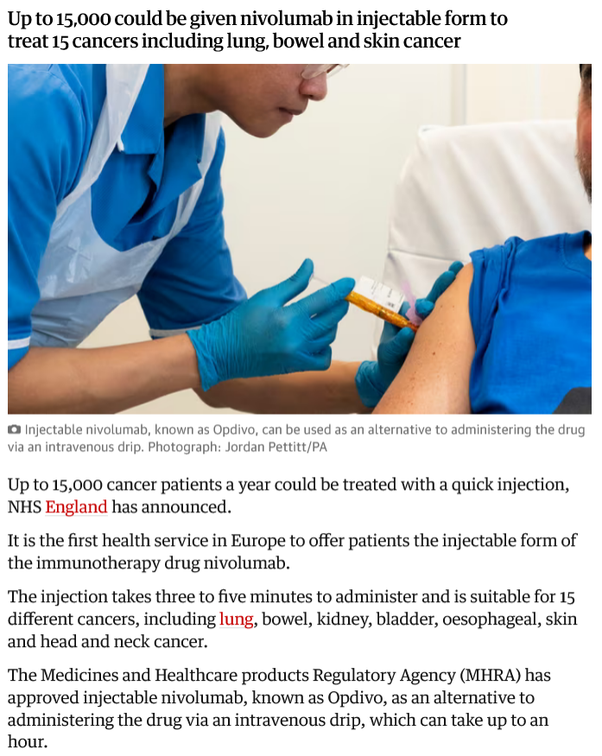
I also read, on my bus trip here, that the UK has been making “anti-cancer injections” available to the public for addressing about fifteen common varieties of cancer. It’s a treatment that appears to function like a vaccine by boosting a body’s immune system and training it to recognize cancer cells, to remove them naturally in their early stages. The article was, however, rather skimpy on detail, so I will research it further in depth when I get home.


(Here we go — my appointment was far shorter than I feared.):

Cancer patients in England to be first in Europe to be offered immunotherapy jab

NHS England » NHS Cancer Vaccine Launch Pad


I think simple remedies for complex medical challenges that we struggle with today would also be another feature of a utopian environment.

Other features of an advanced society to me would include, along with many technological advances for assisting with biological issues, transportation, and the provisioning of various resources like education and access to community administration processes for public engagement, would include access to resources permitting one’s development of a meaningful vocation without being distracted by meeting basic survival challenges.

Whatever interests a person might have would be easy for them to explore without encountering numerous barriers preventing them from developing their interests in ways that engage and benefit the public.

For example, I read about an eleven-year-old girl developing a means of testing for lead contamination in water.

While we can celebrate the innovation and ingenuity demonstrated by a remarkable youngster, we often overlook how such a child would have required access to supports not common to most to have been privileged enough to pursue an interest to such a degree that their idea can save lives.

One of the most destructive limitations we place on human potential is the misanthropic attitude many people display, cultivated by an economic system distorted by toxic competitiveness.

A utopic society would have cleansed our collective psychologies of the many mental health maladies that we’ve inherited from centuries of generational CPTSD. The most potent form of utopic boost to our potential as a species is our ability to support one another while possessing the courage to address the psychological dysfunctionalities that hamper our development.

A utopia would be a humanity free from the burden of many of the toxic aspects of human psychology that are the cause of so much pain and suffering on levels that would be considered outlandish in fiction and a bloody horror show of sociopathic stupidity in real life.

This kind of shit, for example, would not exist in a Utopia because we would have matured enough to acknowledge, first and foremost that this is a treatable medical condition that should disqualify these people from operating in any position of authority. This kind of broken mentality should be considered a socially destructive mental health issue in which the effects are severe enough to warrant mandates for compulsory treatment before being allowed to participate in activities that could be harmful to others.

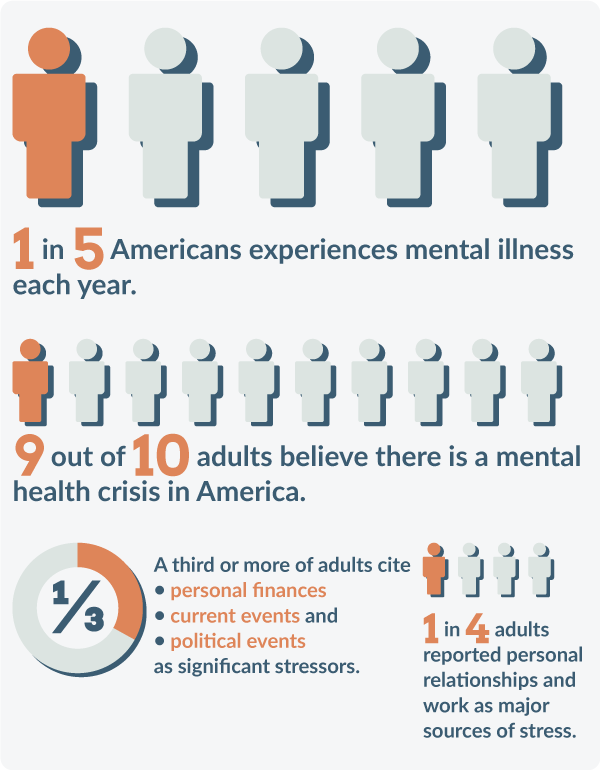
A Utopia would not be suffering from a mental health pandemic affecting one in five people and resulting in a whopping majority (70%-80%) of families being dysfunctional.

Until we can deal with our mental health issues, however, any form of utopia will remain a pipe dream as we allow our species to be consumed by the chaos created by our psychological dysfunctionalities.

When I witness casual examples of people breaking stereotypes, however, such as a male with burgundy nails, I think that although we may be dragging our asses into maturity as a species, at least we can see some subtle signs of progress.

If aging feels like things get worse, how can we deal with living 200 years?


This post is a response to a question posed in its complete format: “If older generations tend to get fed up with the following generations, and feel that people are stupider, societal values, music, culture and everything else is worse, how could humans ever deal with living to be 150 or 200 years old?”

This question is based on a flawed presumption and a form of projection because “older generations” is a monstrously huge brush comprising hundreds of millions worldwide.

That number of humans don’t think alike, and they certainly do not all “get fed up with etcetera generations.” However, people who employ broad brushes when making judgments about people they don’t know are also exhibiting precisely the mindset that disparages people and renders broadly negative judgments about “things getting worse.”

Thinking in these negative terms and judgments is often a means of rationalizing one’s negative attitude. By believing age leads to negative judgments, one is permitting oneself to develop one’s negative judgments.

The reality, however, is that many people remain “young-minded” and optimistic throughout their old age and consequently live happier and longer lives.

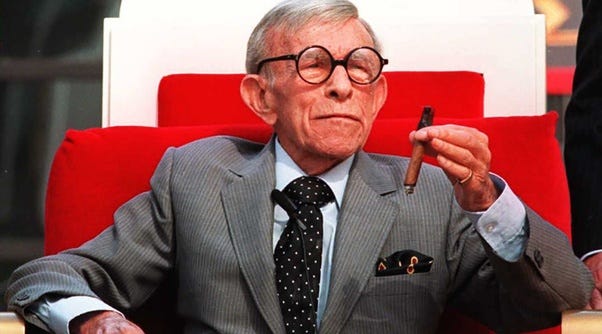
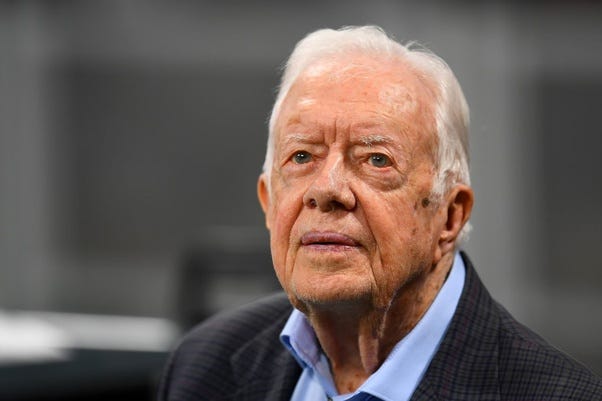
Here are some examples of people who remained optimistic throughout their long lives:

George Burns 1896–1996

Grandma Mose — Anna Mary Robertson Moses — September 7th, 1860 — December 13, 1961

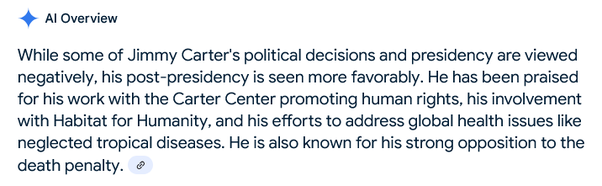
Jimmy Carter — October 1, 1924 — December 29, 2024


After having pissed away valuable time on another post dealing with toxic incels whining about how unfair life is that they don’t get to control the women they impregnate, I’ve arrived at this question with the attitude that people choose to believe the world is getting worse because they’re not able to control every aspect of it. That frustration wears them down over time, and they develop a negative attitude toward life and people in general.

I was a child during the “Dawning of the Age of Aquarius,” and was a preteen during the flower power generation with love-ins, and an optimistic view of a hopeful future.

Then came the 1980s, when people’s mindsets appeared to change from an open-minded view of society to a rather cynical and dispirited view based on a self-centric model of getting what one could for oneself, even at the expense of others. It seemed the era of sharing and caring was vanishing.

Throughout it all, I still maintained my somewhat naive but hopeful view that we would recover the community spirit I remember being moved by, while reminded of it each night, as the television stations shut down their programming for the evening, with the Brotherhood of Man song, “United We Stand, Divided We Fall.”

Although I have perceived, throughout the last forty-five years, since the beginning of the 1980s, a general increasing separation between people, many changes have distracted my mind from it. I could sense it occurring, but I mostly ignored it as I went along with it while focusing on the developing technologies and learning to leverage skills and knowledge to carve out a sustainable career for myself. I was caught up in my optimism for a hopeful future for myself, and became increasingly introverted and isolated from interpersonal interactions and a community I could rely on.

Since that was taken from me, maintaining optimism has been quite a struggle. Still, I understand on a deeply visceral level how succumbing to negativity is quite much like drinking poison. The intensity of my experience has made it abundantly clear that a destructive mindset also harms one’s physical health. It creates a feedback loop of self-destruction, which allows one to wallow in broadly negative views toward life in general.

I believe that insight clarifies that living 150–200 years (which no human has ever done) depends on one’s frame of mind and maintaining an optimistic outlook.

If people develop such a negative perception of life that they believe everything is perpetually worsening, they don’t live as long as they otherwise could. Our attitudes toward life constitute a life-shortening way of ensuring we don’t have to cope with hopelessness.

This is part of the reason optimism has increased in importance for me, particularly since I still find myself venting against the prevalence of negativity we see every day and almost everywhere we look.

I can accept that much negativity exists in this world, but I don’t have to accept enduring it, so I get carried away with challenging it. I’ve gotten quite sick and tired of the rampant cynicism. I would like to see a resurgence of hope filling my senses like it did when naive hippy optimism of peace, love, and tree-hugging do-gooders captured public attention, even if it may have mainly been performative or just acting out against previous dark periods in human history, like the Second World War.

I want to believe we’ve arrived at a form of “peak darkness,” and a crossroads in our future as a species and a civilization where we can change course and restore hope to protect our longevity. The alternative is to allow ourselves to succumb to oblivion because we cannot survive an existence sustained by cynicism.

To that end, I do what I can to find examples of young people who give me hope for our future because, with each generation, we have both Kyle Rittenhouses and Greta Thunbergs, just like we have had for generation upon generation before them.

We must choose whether we want long lives of optimistic hope or shortened lives of cynical darkness.

Perhaps I’m just on a high from Canada’s recent election and getting the good news today about Australia following suit. Still, I think — or at least can start feeling some hope that the MAGA madness may finally reach its breaking point. It’s impossible to know if we’re experiencing a sea-change or a temporary lull in the degradation of our values. Still, I’d prefer to adopt an optimistic belief in our future than a cynical one because that’s too toxic a burden to endure. We may still require a world war to break this century’s “MAGAt fever,” or we may have learned something from our history, at least enough not to have to turn our world into a humongous bowl of ashes and regret before we finally start making hopeful and community-minded decisions to grow together instead of tearing each other apart.

At any rate, life may suck but feeling sucky about it only makes it suckier. Even if life sucks, thinking optimistically about a positive future at least makes the suckiness easier to deal with, and that’s why I equate long life with attitude and posted a few well-known examples of people who we can all learn something from.

In short, it’s not about “older generations” but about “old minds.”

Temet Nosce

When did humans become so judgmental and predatory?

This post is a response to a question posed in its complete format: “What happened to us, where and when did the human race decide to become so judgmental and predatory, what happened to the old fashioned sense of community?”

wut?

Here’s a rule of thumb about reality: Noticing something for the first time doesn’t mean that thing hasn’t been around for a long time.

It only means that your mind has clicked something into focus that had previously been on the periphery of your vision.

You are not unaware that wars have been waged practically everywhere on the planet throughout human history.

You are not unaware that hatred of very many forms, including racism and misogyny, along with sex and gender bigotries, have existed for centuries and have been a part of our story since the dawn of human civilization.

The only thing that has changed is our ability to tune it out because we are now in an information age.

We can no longer retreat into the comfort of ignorance while lying to ourselves that the suffering of those we have been overlooking is not caused by our inability to face the harsh truth about humanity. We are a psychologically damaged species, and the sooner we can face that, the sooner we can learn to heal ourselves and our species.

We haven’t “gone wrong,” because we are awakening to realities we have had the luxury of ignoring. We cannot heal ourselves until we accept the truth about ourselves, and that’s a harsh and bitter pill to swallow.

We are undergoing the first and most necessary step in our healing, awareness of our broken nature. We must first accept that we are suffering as a species, and this time of awakening is a necessary part of the process.

We cannot mature as a species if we cannot accept that we have been struggling, and the only way to end the struggles is not to ignore the suffering but to acknowledge its existence.

One in five people is suffering from a visible form of mental health issue. A whopping majority 70%-80%) of families are dysfunctional.

We cannot ignore these statistics and pretend there is nothing wrong with humanity.

We can only learn to embrace our broken selves and work together to help each other heal.

There is no other path to a better world.

The sooner we accept that, the sooner we can progress toward achieving a better world for everyone.

It is true, however, that our focus on community has taken a beating as our community boundaries have expanded beyond quaint notions of imaginary lines dividing us into becoming a global community.

The challenge is acknowledging that our community is no longer a geographic boundary but a global one in a much larger and inaccessible community among the stars.

Most people embrace the potentiality of exploring beyond our current home and wonder if we can join a broader community of life. We must first unite as a community in our house before the universe can open its arms to accept us as a species among the stars.

Looking past our limitations, we may find the synergy we need within the community to manifest our aspirations to travel the stars.

There is something better ahead to hope for, but we cannot ever reach it without acknowledging what is holding us back, and that begins with the state of our psychological health as a species.

In short, nothing “has happened to us” that has not been happening all along; we are only learning to understand how we must face these issues together as a community.

How much does insufficient time contribute to a lack of invention?

This post is a response to a question posed in its complete format: “To which degree is not having enough time, and being relatively busy, contribute to most people not being able to come up with new ground breaking ideas, make new inventions, or even making novels, manga etc.?”

Many answers are the typical soporifics based on the presumption that today’s economics are “normal.” There is no accommodation for the dysfunctional state of economic affairs people live with today.

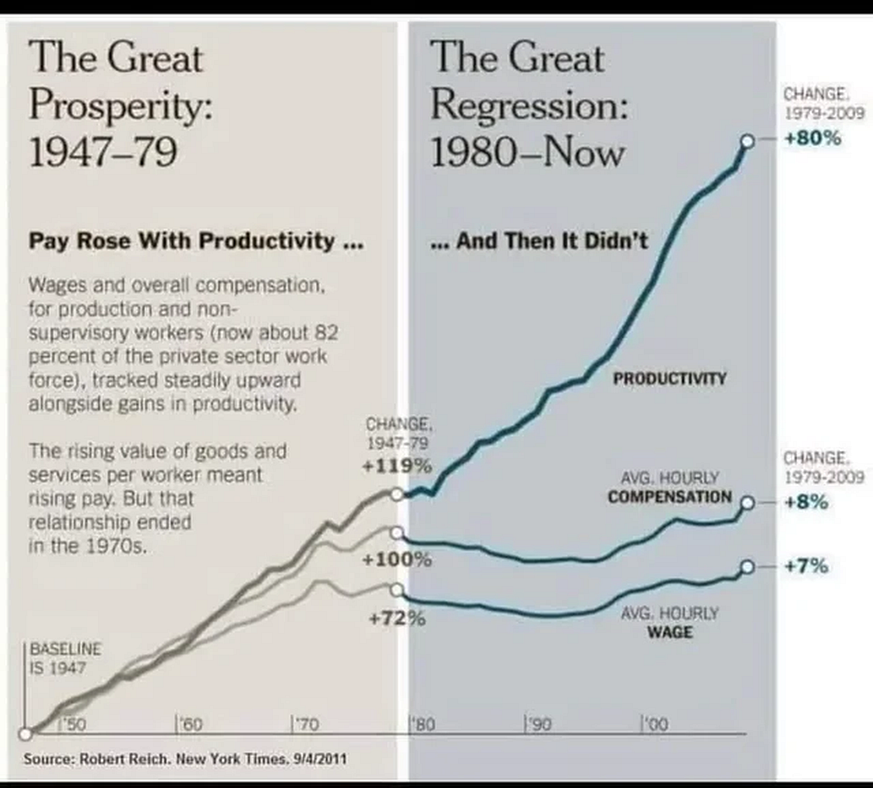
People can conceptualize how one income earner per family was the norm 50 years ago. Still, they can’t imagine the math well enough to understand the differences between then adequately and now when a two-income family can barely make ends meet.

During the heyday of the middle class and the economics of a time we’ve lost, blue-collar labourer dad could earn enough from his low-skilled job to afford a mortgage, a relatively new vehicle, and an annual vacation for himself, his wife, and their two-and-a-half kids.

That’s just a pipe dream which no longer exists for the average citizen, particularly not when a large contingent of full-time employees can’t afford stable housing.

Unskilled labour means being unable to afford to live. In the U.S., one needs two full-time jobs to afford to rent a cheap private suite. Shared accommodation is the only way to make ends meet. Consolidating incomes to meet basic survival needs has become the norm.

One job is no longer enough to survive on.

Forget investing in one’s future.

Income mobility has all but vanished.

Everyone today has been living with a supplemental income in a gig economy while learning to monetize every waking moment to feed and clothe themselves for so long that it’s become a normalized existence.

There’s no time left for a social life, let alone any entrepreneurial initiative. Topping that challenge off, no disposable income exists to permit investments in education or capital purchases to allow expansion. One must scrimp and save while sacrificing meeting sleep and nutritional requirements to cobble together something of a hope for building a better future.

It’s insane, and no one knows any better because the period in which trillions have been stolen from the working class has happened so slowly that one would have to understand what starting from scratch then was like compared to what starting from scratch today is like.

How unfortunate for me but fortunate for those who will listen. The difference between then and now is nightmare and day.

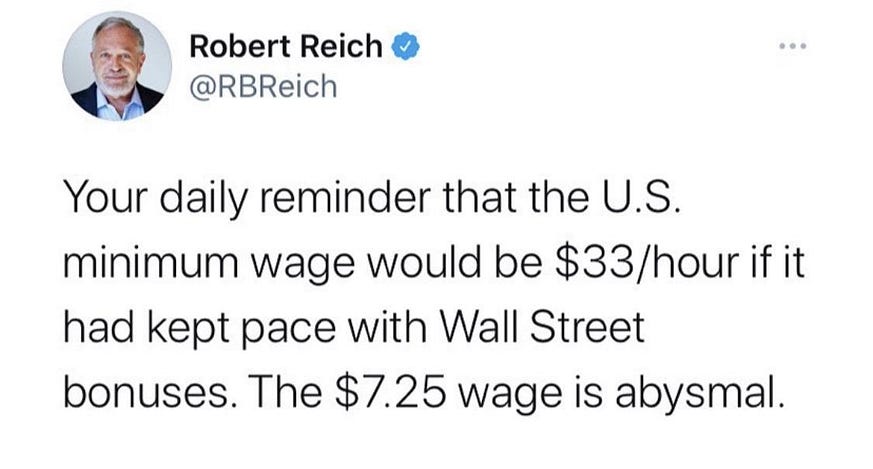
Getting a job that would not only pay for living expenses and a social life while having plenty left over to bank and save for an education was a matter of a decent paying labour job during summer break from school and a part-time job during the academic year. Even with those financial burdens, there was still plenty of disposable income to afford a very healthy social life. A concert back then, for example, didn’t cost a week’s worth of pay but half of a shift for one night’s work — a movie cost less than one hour’s worth of labour. A movie night out now is an entire day’s worth of labour.

I think it’s essential to stop counting numbers on the level of an abstraction like money and start counting the increasing costs we’ve been enduring based on our time because that’s the most valuable commodity each of us has.

It’s much easier to ignore the costs we’ve been increasingly enduring without matching increases in our income when they’re treated like abstractions. If we were to look at how much time has been stolen from our lives, I’m pretty sure the guillotines would be out in full force right now.

The problem with factoring economic changes based on dollar figures is that it allows the victim-shaming mindset we see displayed by so many sycophants for the wealthy to assert their nonsense positions with righteous indignity.

They can remain utterly oblivious to reality and the delusional nature of presumptions autonomically adjusted to a dysfunctional economy while failing to account for the severe impact on one’s time that has been stolen from the working class.

It’s been slightly over ten years ago now that I had my life destroyed by a nuclear bomb being dropped on it, not because of anything I did but because others assumed their fraudulent righteousness permitted the devastating assault. That was a severe lesson in the extent to which overcompensating behaviour can become a destructive force in society — that I intend to share in more detail but not here because it’s a distraction from the point of this answer.

At any rate, I can unequivocally state that if that had happened to me when I first started carving out my niche for a professional future almost 50 years ago, it would have been a relatively minor event in my life. I would have recovered within a couple of years and been well on my way to having put that traumatic nightmare in my rearview mirror.

Instead, I’ve struggled to regain my footing for over ten years. The life I had is gone and unrecoverable.

Instead of making small bits of progress on the road to recovery, I’ve been enduring an increasing degradation in my quality of life as I find bits of it and my dignity being slowly stripped from me every day, not because of my bad decisions or because of anything I’ve done to warrant this nightmare, but because others choose to pile on their abuses atop the mountain that weighs me down.

For example, I’m currently scrimping to put together enough of a buffer in my economics to afford a minor upgrade to a graphics card that will allow me to become more efficient and competitive in the marketplace while allowing me to work at resolutions that can secure income. It’s funny how an obscure specification such as image resolution can hinder success, but that’s our world today. Forty years ago, such a minor upgrade would have been, at most, a couple of months of saving up spare cash to pay cash for the upgrade. I’m saving to afford an additional monthly payment for an 18-month commitment.

The world we live in today is characterized by a lifestyle I first became familiar with in art school with the dynamic of patrons. Relationships between artists and their patrons financed art production in the Middle Ages. Today’s equivalent to that in the high-tech world is an “incubator.” For general entrepreneurs, it means a guest appearance on Shark Tank to hope a capitalist can see a parasitic profit relationship from your initiative by doing nothing but assume control over your enterprise and collecting cash for your efforts.

The alternative for the little people is to turn to the government to find themselves herded through an infantilization process and vetted to identify the value to be extracted from them by financial enterprises that have developed relationships with pseudo-government entities called “Stewardship.” They are intended to provide business development services but don’t do anything beyond setting you up to be bilked by predatory lenders from whom they get a cut.

In my case, I went along with the puppy mill program with a naive attitude that I could trust a government-aligned agency to tell me the truth about my options. I went along with the program to develop a concrete plan for recovering my entrepreneurial income within a couple of years with a product idea and niche that would generate over $100 thousand per year working for myself without needing support staff.

A simple demand loan of less than $15,000 would have been sufficient to get my life back on track. I discovered early on that it wasn’t even on their radar for a support option. As it turned out, the $10,000 in financing I was promised was not even close to possible by the time I had completed their program.

I was informed at the outset that I was eligible for a grant that would have made financing possible. At the end of my programs for creating my business and financial planning documents, I asked what had happened to the grant. I received crickets as a response and then was insulted with condescension by someone who’s never been an entrepreneur and nothing more than a bookkeeper.

The fact that I had progressively managed to succeed on my terms for over 25 years and that I had proven I knew what I was doing when I provided an advanced business plan in greater detail than they expected or had ever seen through their program was irrelevant. (Most people I met in the rudimentary courses I was herded through were quite naive about business processes. I found myself contributing value on a level that augmented the instructors’ efforts — and in which they expressed a sincere appreciation because it increased class engagement).

Everything, every entity, and every stage in society is rigged at every level from a predatory perspective to drain value from anyone unlucky enough to have to rely on their “altruistic” roles in society. It’s become a game of indentured leveraging, not unlike the days of gladiators who would agree to a couple of years in the arena getting beaten and stabbed to get themselves out of debt.

Had I been living through the same economy as when I started, I would not have even needed to rely on external support. I would have had sufficient disposable income from a typical labour job to use my initiative to climb out of this nightmare of a hole I’ve been dumped into — within only a few years.

The short answer to the question posed after this long-winded rant is that it is to EVERY degree that the little people no longer have a hope of income mobility. The ideas, inventions, and initiatives still exist. It’s the resources we once had that have vanished from the landscape. It’s the disposable income that we could rely on to improve our lives that no longer exists.

That is the most motivationally destructive assault the wealthy have perpetrated upon us, and I would not be able to restrain myself in the presence of many of the sociopathic assholes who are playing games with our lives. While increasing their hoards to historic levels of obscenity, they parasitically drain our value from us.

The dynamics of today’s economy are enraging on a level I could never have imagined experiencing, but here we are. I’m now someone who, after a lifetime of being vehemently against capital punishment, endorses precisely that with guillotines for the 1% in our society if they don’t wake up and start taking economic restorations seriously and beginning with supporting UBI.

With UBI, all the repressed creativity withheld from society and human progress will be released into a new era to make our first Renaissance appear like a trial run. We are on the verge of a fully automated society. The only thing holding us back from an explosion of creativity and initiative is the sick competition among the most parasitic among us to become the world’s first trillionaire.

Does Elon Musk think we have a problem with empathy?

This post is a response to a question posed in its complete format: “Elon Musk apparently didn’t dismiss empathy entirely, but thought that we have a problem with empathy for the wrong people. How do you judge?”

I partly disbelieve this moronic assertion but won’t deny it’s possible he would say something so stupid.

I wouldn’t put it past him because he disowned a daughter that he paid to ensure she was born physically as a male.

He got pissed that he didn’t get what he paid for and punished his child for daring to assert her identity.

Suppose he lacks empathy, which he seems to demonstrate while bemoaning his inability to experience empathy proudly. In that case, he’s a walking-talking case for how badly screwed up some kids can be when their sociopathic parents severely screw them over.
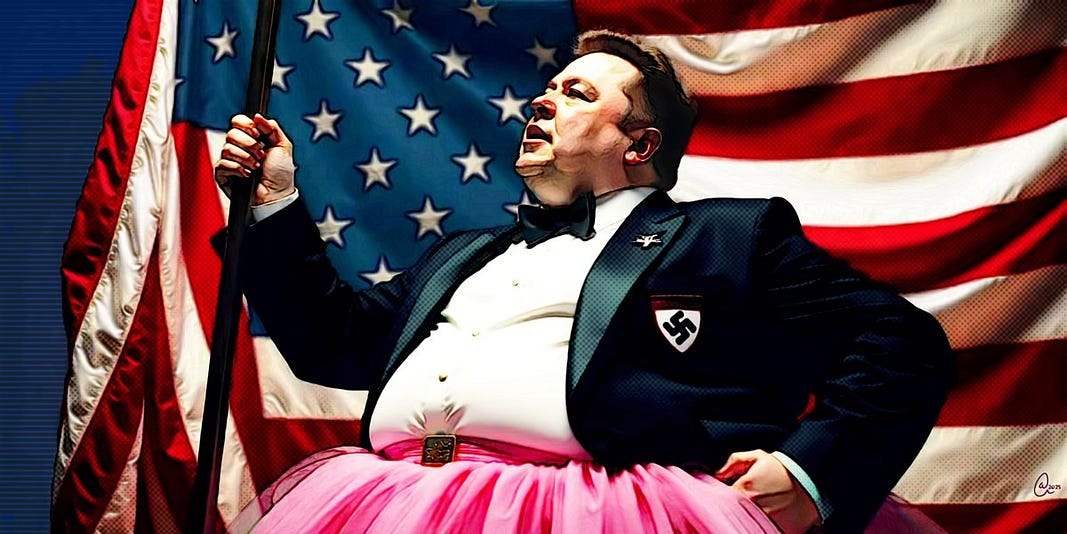
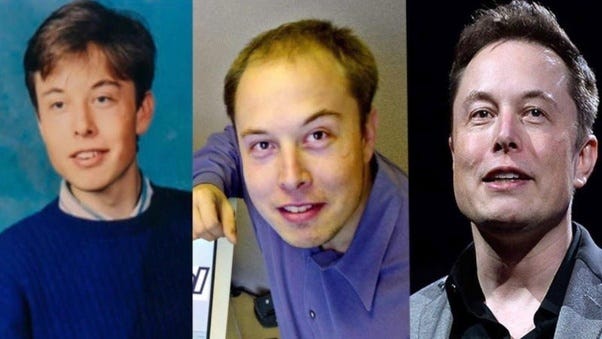
It still amazes me when I look at photos of him as a kid because he appears as a somewhat sensitive type of nerd who tried being himself but was abused for it.

That’s the only explanation I can devise that makes sense of his severe state of dysphoria (minus the drug addiction of both the chemical kind and the egotistical drug of power through his wealth).

He appears as a youth to be a typical “sensitive” who would likely have been highly empathetic. Still, it’s been beaten out of him through likely mostly verbal abuse (because he doesn’t appear to show typical traits of physical abuse — such as scars or even an emotional coldness in his demeanour). (Unlike DonOld Trump, whose physical abuse is written all over his demeanour. You can almost read the number of times his father physically beat him like counting rings on a tree trunk.)

Statements like the one attributed to him show the child attempting to speak through the cracks of a semi-polished exterior.

Empathy is like any other characteristic, which presents itself in varying degrees throughout the population. Empathy is like muscle mass; it has a developmental potential but must be cultivated to show itself in its most developed form.

In his case, his capacity for empathy was stripped from him and has been starved to (near?) non-existence.

I suspect some vestiges of empathy remain alive within him but that he’s trapped in a world where he cannot trust, allowing himself to experience it because the fear of permitting himself to experience it openly has been beaten out of him by his parents.

It’s not that the “wrong people have empathy” but that people have had their empathy wrongly denied their right to experience it without adverse repercussions.

Is it a good bet that no Republican will ever win the presidency again?

This post is a response to a question posed in its complete format: “With the stock market plummeting, market prices soaring, and unemployment on the rise, is it a good bet that no Republican will ever win the presidency again?”

One would think so. One would hope so.

However, history dispels that delusion.

If people remembered who was responsible for what, there would be few Republican members of Congress today.

DonOld Trump is considered “below water” in his numbers at an historical level, but that only means less than half of 350 million people support his performance.

Here are the daily results on Real Clear Politics, which aggregates results from multiple pollsters:

President Donald Trump Job Approval Ratings and Polls | RealClearPolling

47.8% Approve of his performance and 48.5% disapprove of his performance.

From a polling and historical perspective, these numbers are considered disastrous for this president. Still, the reality is that almost half of the nation, by extrapolation, supports this wrecking crew of an administration.

There are over 150 million people who should be paralyzed with fear over the prospects of their future who are cheering on the destruction engine as it wreaks havoc over every aspect of their lives that they count on to survive.

These people are more focused on politics as a team sport in which they view themselves winning even though they may be losing everything. As long as their team remains in power to hurt those they hate, they care for nothing more beyond that because they expect the lives they’ve grown accustomed to living to stay as they’ve expected. None can conceive of the great steamroller bearing down on them because they believe it’s meant to destroy only the neighbours they hate.

They won’t realize the horror of the situation they are creating for themselves until being directly confronted by it. Even then, they won’t admit to being responsible for making their fates and will deflect responsibility onto their ideological enemies.

The greatest lesson we are learning about modern humans that we have been able to overlook throughout history, primarily, is the impact of mental health on the stability of our societies.

We have been living with generational PTSD for thousands of generations and have accepted many toxic attitudes and behaviours as “normal,” while in today’s world, we’ve begun asserting a need to address these toxicities. The consequence has been an escalation of toxicity because those most afflicted cannot and will not seek help for their dysphoric conditions. They will escalate their rejection of responsibility for their destructive behaviours and attack those who seek to address those behaviours to help cure our species of their horrifyingly destructive impacts.

Anyone who has dealt with abusive behaviours understands how the abuser becomes most dangerous when they feel that their grip on power is loosening. They despise it when their victims become more capable of defending themselves against them. Their response is rarely an act of introspective self-awareness, leading to acknowledging how they are being asked to transcend their hatred. Their responses are almost always an escalation and a vicious attack against those who shine a light into their darkness to force them to confront its ugliness.

DonOld Trump will never acknowledge his responsibility for escalating international conflict because he sincerely believes himself to be victimized by his victims for not simply rolling over and capitulating to his demands.

Almost 150 million Americans think like he does to varying degrees and that means Americans will be plagued by Republican betrayals of basic human decency until, like addicts, they hit rock bottom and realize they won’t survive without acknowledging how much they depend upon the support of the international community in which they belong to and begin begging for assistance.

That won’t happen until at least after they trigger a deep depression.

That also won’t happen mainly because their opposition is also in denial over the severity of their problems. They still mistakenly believe that they can reason their way back to sanity.

The DNC is still primarily in denial that they and their nation are in a war that will destroy them unless they can stir up the passion of love of country to match the passion of destruction driving their opposition. They’re still trying to play by the rules of decorum while denying how those rules are irrelevant to a monster who ignores them at best and who weaponizes them against the DNC.

This approach turns off a large contingency of potential voters because it is construed as cowardice, and to a large degree, it is. They can’t help but continually lose against an aggressive enemy when they perpetually move toward compromise.

At some point, compromise is more toxically destructive than full-on aggression, and the DNC hasn’t yet realized that it has long passed that threshold. They lost the ability to compromise when they didn’t hold the Bush administration accountable for their war crimes and now the chickens have come home to roost.

This does not bode well for America’s future and spells hardship, at best, for the rest of the world.

This is a period in human history and global politics with at least as significant an impact on our international culture as WW2 has had. How much more severe the impacts will become is impossible to guess because we haven’t even come close to the horizon that will allow us to perceive, let alone acknowledge how massive the engine of destruction is that bears down upon us all.

Is being employed by Elon Musk a good idea?

This post is a response to a question posed in its original format: “Do you think it’s a good idea to be employed by Elon Musk?”

It’s not, and this question is a horrifying indictment of the dystopic dysfunctionality of modern-day employment.

Specifically, dealing with Musk as an employer would be career suicide. You have no job security in a position that would disappear on a whim. You would have an extremely spiteful megalomaniac who would destroy your opportunities to make vertical moves outside his control. You would be lucky to make a lateral move out of the organization and onto another.

Generally speaking, however, the employment landscape has become a corporatist nightmare.

Fifty years ago, you pretty much had a guarantee of lifelong employment with almost every employer. You also had many opportunities to gain employment with endless choices in who you would work for. You could join practically any organization, and it would feel like a small community in which you could fit in like a human being.

The people you worked with were people, not potential competitors. Meanwhile, in today’s corporate environment, you are taught to mistrust your coworkers because they’re so focused on career development that you are regarded as a potential threat to their ambitions.

I discovered an example earlier today when I checked out a basic dispatcher job from a generic notification I received on Farcebook.

Taking on a simple dispatching role in a remote capacity for extra dollars is no longer a simple job for an employer who needs a person to fulfill a functional need.

Every job today is plugging into a vast corporate network with massive amounts of leverage to dictate terms.

Their screening processes are draconian and violate privacy laws in Canada.

What gave me a chuckle and a shudder down my spine, in this case, was the tagline below the company logo: “A Family of Businesses.”

I may have become jaded by experience, but every abusive employer I have ever encountered described themselves as a family.

In a world where a whopping majority (70%-80%) of families are dysfunctional, it feels like the world as a whole has been slowly morphing into a Stepford community.
I have always preferred smaller environments totalling no more than 100 people because I prefer to work with people, not drones, whose role is to perform at a sociopathic level of disengagement, meeting robotic criteria.

If you’re okay with constantly looking over your shoulder and viewing coworkers as enemy combatants that you can’t trust won’t knife you in the back while wondering when Damocles will drop his sword and escort you out of the heavily secured building with multiple checkpoints, have at it.

I prefer to keep my humanity intact, even if I die in poverty.

What best discerns a true patriot from a fake?

This post is a response to a question posed in its complete format: “What question/s and their answer/s best discern a true patriot from a fake one?”

This question is problematic on several levels because a “true patriot” is essentially a subjective assessment until one’s actions are identified as universally consistent within a broad recognition of patriotism.

For example, Mike Pence could have been easily viewed as a traitor while serving alongside Donald Trump, but he proved otherwise with his final official act in office as a VP.

Luigi Mangione can be viewed as someone who has betrayed the social contract by extinguishing another’s life. Still, he can also be considered as paying the ultimate price to protect the lives of countless thousands within a dysfunctional system that preys upon people while victimizing them for profit. Few actions are more patriotic than sacrificing one’s life to end corruption. Whether that’s considered patriotic is a matter for history to pass judgment.

The same applies to Edward Snowden, Julian Assange, Joe Darby, Karen Silkwood, Daniel Ellsberg, Frank Serpico, Chelsea Manning, and a panoply of whistleblowers throughout history.

List of whistleblowers — Wikipedia

Patriotism is far too nuanced to identify within a survey methodology.
People are not static objects.
People’s actions do not align directly within predictable margins, fitting generic descriptions of subjectively defined concepts that evolve as society changes.

A question as simple as “Do you love your country?” is quickly answered through deception, malicious intent or naively justified expedience. A person can believe they do love their country while acting in a treasonous way. Conversely, a person can be perceived as hating their country and acting supremely patriotic by sacrificing their life to protect it.

Adding further complications to this question is that communication is a nuanced process. At the same time, the more subjective the concepts that any survey attempts to address, the less effective the multiple-choice answers are.

Adding another level of complexity to the mix is the notion of “true” as a qualifier for suggesting patriotism is a binary state. Where is the distinction between “true” and “not true?” Is “not true” the equivalent of “false,” or can there be states of patriotism between “true” and “false?” I think I’ve already identified some of those intermediary states above.

I don’t believe any specific question or answer can identify some nebulous standard for a largely subjective state of mind that can change according to circumstances.

Ultimately, the only way to know is if the person in question can appreciate and value the social contract such that it’s the highest priority in their mind when considering political positions because it indicates a community perspective over a narcissistic one. That’s not information one can determine through a survey approach.

Is karma real?

This post is a response to a question posed in its complete format: “Do you believe in karma? Is karma real and happen to everyone whether they believe or don’t believe?”

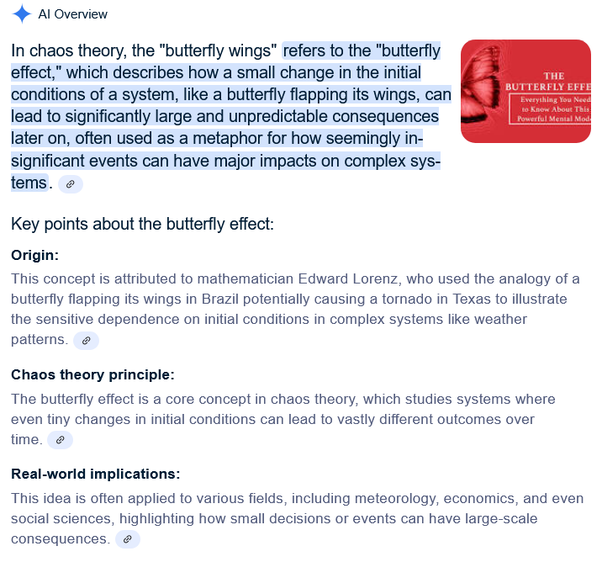
Cause and effect is physics, and so is Chaos theory, which is encapsulated within a concept called the “Butterfly Effect.”

In essence, it’s impossible to confidently predict the consequences of human behaviours because human societies are chaotic systems in which the most minor actions can lead to highly dramatic outcomes.

Whispering the correct sequence of words in the right tone into the correct ear can initiate a domino effect that can destroy an entire civilization (to translate the Butterfly Effect into a highly dramatic potentiality within the space of human dynamics).

That is valid science supported by observation and math.

Karma is “woo” — wishful thinking connecting a cause to an unconnected but desired outcome. It is supported only by the desire of the individual who hopes for a specific result. Reality doesn’t work that way, but coincidence can cause people to believe it does.

Having said that, if enough people desire an outcome, such as stopping a malignant force like Trump’s rabid destruction of the nation, then people will take action to affect an outcome through intent. This isn’t “Karma,” which suggests some invisible hand of the “human interaction space” (like the magical “invisible hand” of the free market) but cause and effect.

What will result from the escalation of conflict through the initiation of several protests as pushback to what the Trump administration is attempting through their implementation of Project 2025 is unknown. The only predictable aspect of where we are now is the guarantee that conflict will continue to escalate until it reaches a crescendo that can result in a complete breakdown of civilization through unmitigated chaos. How far all of this goes is anyone’s guess. We won’t know until the dust settles. We can only hope for a specific outcome based on the degree of public engagement and the escalation of protests against the takeover of the nation by a fascist entity.

That’s not karma because we can lose, while karma implies a guaranteed win. This is cause and effect in action, and the outcome is unpredictable.

People will call Tesla’s worldwide sales tanking karma because it feels good to say that. The reality, however, is that it’s the effect of a Nazi salute on the marketplace by a public that hasn’t forgotten the horrors of the Nazi scourge that extinguished millions of lives.

In short, I prefer to know the variables that can affect an outcome than hope some magical cosmic intelligence is balancing some invisible scale according to how I would wish the universe to operate.

Effects flowing from causes are reality, while karma is just wishful thinking.